• Skip to primary navigation
  • Skip to main content

International Salsa Magazine

  • HOME
  • Previous editions
    • 2026
      • ISM / May 2026
      • ISM / April 2026
      • ISM / March 2026
      • ISM / February 2026
      • ISM / January 2026
    • 2025
      • ISM / December 2025
      • ISM / November 2025
      • ISM / October 2025
      • ISM / September 2025
      • ISM / August 2025
      • ISM / July 2025
      • ISM / June 2025
      • ISM / May2025
      • ISM / April 2025
      • ISM / March 2025
      • ISM / February 2025
      • ISM / January 2025
    • 2024
      • ISM / December 2024
      • ISM / November 2024
      • ISM / October 2024
      • ISM / September 2024
      • ISM / August 2024
      • ISM / July 2024
      • ISM / June 2024
      • ISM / May 2024
      • ISM / April 2024
      • ISM / March 2024
      • ISM / February 2024
      • ISM / January 2024
    • 2023
      • ISM / December 2023
      • ISM / November 2023
      • ISM / October 2023
      • ISM – September 2023
      • ISM – August 2023
      • ISM July 2023
      • ISM Edition June 2023
      • ISM – May 2023
      • ISM April 2023
      • ISM March 2023
      • ISM February 2023
      • ISM January 2023
    • 2022
      • ISM December 2022
      • ISM November 2022
      • ISM October 2022
      • ISM September 2022
      • ISM August 2022
      • ISM July 2022
      • ISM June 2022
      • ISM May 2022
      • ISM February 2022
      • ISM January 2022
    • 2021
      • ISM December 2021
      • ISM November 2021
      • ISM October – 2021
      • ISM September 2021
      • ISM August 2021
      • ISM July 2021
      • ISM May 2021
      • ISM April 2021
      • ISM June 2021
      • ISM March 2021
      • ISM February 2021
      • ISM January 2021
    • 2020
      • ISM December 2020
      • ISM November 2020
      • ISM October 2020
      • ISM September 2020
      • ISM August 2020
      • ISM July 2020
      • ISM June 2020
      • ISM May 2020
      • ISM April 2020
      • ISM March 2020
      • ISM February 2020
      • ISM January 2020
    • 2019
      • ISM December 2019
      • ISM November 2019
      • ISM October 2019
      • ISM Septembre 2019
      • ISM August 2019
      • ISM July 2019
      • ISM June 2019
    • 2016
      • ISM December 2016
  • Spanish
  • Download Salsa App
    • Android
    • Apple

Search Results for: son cubano

Miguelito Cuní recognized among the best soneros of Cuba

Miguelito Cuní. Pinareño recognized among the best soneros of Cuba, who shared the stage with Benny Moré, Arsenio Rodríguez, Félix Chapotín, Richard Egües, Enrique Jorrín, among others.

Miguel Arcángel Conill, better known as Miguelito Cuní (Pinar del Río, May 8, 1917 – Havana, March 3, 1984), was a Cuban music singer. He was one of the emblematic voices of Cuban son in the 1940s and 1960s.
He was born in Pinar del Río, the westernmost province of the island of Cuba, into a humble family.
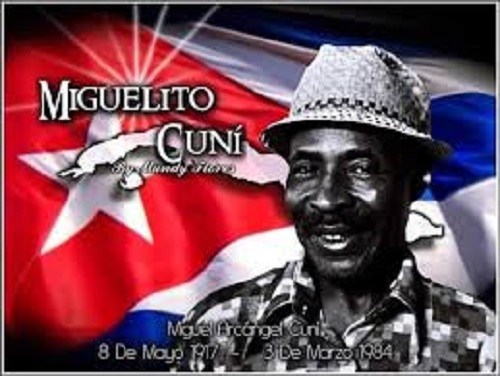
Miguelito Cuní Pinareño reconocido entre los mejores soneros de Cuba

During his school days he dedicated himself to the exercise of minor trades to help support the family. In 1932, at the age of fifteen, he began as a vocalist in the group “Los Carameleros”.
Soon after, he was the vocalist of Septeto Lira, Septeto Caridad and other groups in his province.
In 1938, already in Havana, he joined Arsenio Rodríguez’s group, and also worked actively with the orchestras “Melodías del 40” and Arcaño y sus Maravillas, making recordings and performing live and on the radio.
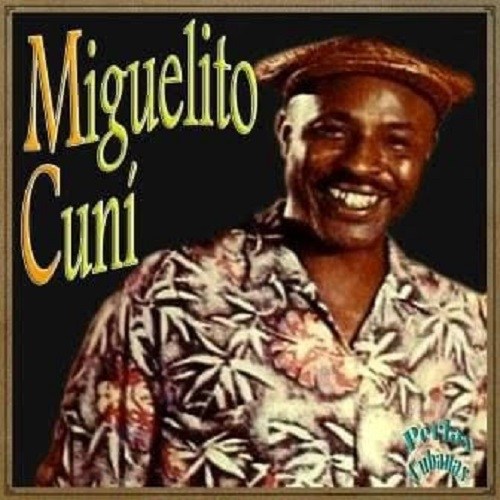
Miguelito Cuní
Miguelito Cuní

During the forties he developed an intense artistic life, he lived two years in Panama and in 1949 he settled in New York, as director of the orchestra of trumpeter Félix Chappottín.

He worked with Cuban music icons such as Beny Moré and in 1956 he traveled to Caracas to work with the “Bárbaro del Ritmo” with the group “La Tribu”. In 1960 he returned to New York, where he made several presentations, including the famous “Palladium”.

He returned to Cuba in 1966 where he founded his own group.
He participated in the film “Nosotros, la música” and other documentaries.

Some of the melodies that reached popularity in his voice were Con maña se rompe, No hay amor sin caridad, Viejo Socarrón, Nos estamos alejando, Canallón, Quimbombó, Yo sí como candela, Ay qué Canuto, Ya tú ves campeón, Cuento na’ ma, Mi son, mi son, mi son, mi son, Alto Songo, Canto al monte, Cuchillo para la piña cubana, Sacando palo del monte, Camina y prende el fogón, Rompe Saragüey, Convergencia, La protesta de Baraguá, Todos bailan con la guajira, Cárdenas, Guachinango, El carbonero, among others, most of them recorded with the group Chappottín y sus Estrellas, a group with which he achieved great projection and in which he sang until his death.
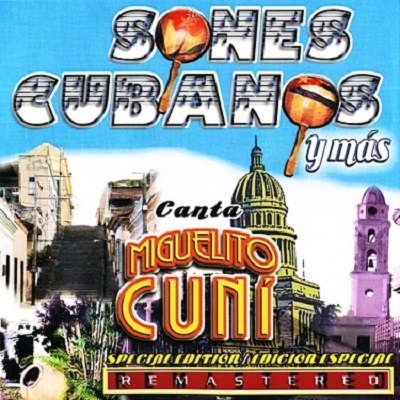
Sones Cubanos con Miguelito Cuni

In his last recording he interpreted the bolero “Lágrima” from the long-playing record entitled “De nuevo Arcaño”. His last trip abroad was to Mexico in 1982.

Composer

Besides being a singer, he ventured into the world of musical composition, of his authorship are cited: Congo africano, Ay mamita!, Batanga africana, A bailar con la guajira.
Sones montunos from the late 1950’s, the boleros: Lloró Changó, Toque santo, Las ansias mías, A ti, Benny Moré.
And the guaracha “Esto no se ve”, among other titles.

He died in Havana on March 3, 1984, three months after his dear friend and companion of countless days, Félix Chapotín, who had passed away on December 21, 1983.

Tribute

Miguelito Cuní was admired by all those who knew him, highlighted by all his friends and close ones as a man of excellent human qualities, in homage to his trajectory the Commander of the Revolution, Juan Almeida composed the lyrics “Este son homenaje”, which was interpreted by the singer-songwriter Pablo Milanés.
In the artistic field, he deserved the recognition of his colleagues and thousands of admirers, and in the personal field, those who treated him remember him as a man of impeccable words and good speech, Miguelito Cuní was a true Creole gentleman.

Source: Ecured

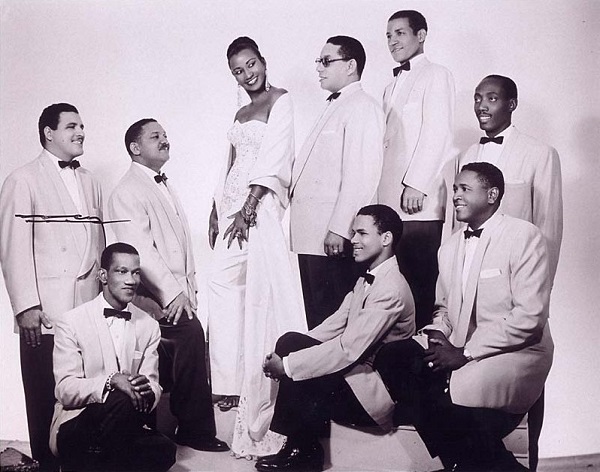
La Sonora Matancera musical congregation of long trajectory and its sound quality, is one of the most popular in the Caribbean island “Cuba”

It was founded in Matanzas in 1924 under the name of La Tuna Liberal.

Its first members were: Valentín Cané, director and tres player, Manuel Valera, guitar and second voice, Manuel Sánchez (Jimagua), timbal, Ismael Governa, cornetín, Pablo Vázquez Govín (Bubú), double bass, Domingo Medina, guitar, Ismael Goberna, cornetín, Julio Govín, guitar, José Manuel Valera, guitar, Juan Bautista Llopis, guitar.

In 1926 Carlos Manuel Díaz Alfonso (Caíto), falsetto voice and maracas, and Rogelio Martínez Díaz (El Gallego), guitar, joined the group and it adopted the name Sexteto Soprano.

On January 12, 1927, under the name of Estudiantina Sonora Matancera, they moved to Havana. In November of that year they recorded their first two recordings for the Victor label: Fuera, fuera, chino, by José Manuel Valera, and El porqué de tus ojos, by Valentín Cané.

With the definitive name of Conjunto Sonora Matancera, it began its transmissions on the radio station El Progreso Cubano (later Radio Progreso). At that time it appeared on Radio Atwater Kent; in 1932, at the suggestion of Rogelio Martínez Díaz, it took the name of Sonora Matancera, and began its performances in the Havana Sport dance academies, and later in Marte and Belona, and later became part of the cast of CMQ Radio. In 1935, trumpeter Calixto Leicea joined the group; in 1939, composer, pianist and orchestrator Severino Ramos, who gave the Sonora its distinctive sound with his orchestrations.

La Sonora Matancera congregación musical de larga trayectoria y su calidad sonora, es una de las más populares en la isla caribeña “Cuba”

In 1944 pianist Lino Frias and trumpeter Pedro Knight Caraballo joined the group, who with Calixto Leicea formed the most interesting trumpet duo in the history of Cuban ensembles; in 1945 singer Bienvenido Granda Aguilera; in 1948, Angel Alfonso Furias (Yiyo), tumbadora. At this time the Sonora Matancera was formed by Rogelio Martínez Díaz, director, guitarist and chorus; Pablo Vázquez Govín (Bubú), double bass; José del Rosario Chávez (Manteca), timbal; Ángel Alfonso Furias (Yiyo), tumbadora, who replaced Valentín Cané; Calixto Leicea, first trumpet; Pedro Knight Caraballo, second trumpet; Lino Frías, pianist; Carlos Manuel Díaz Alfonso (Caíto), falsetto voice and maracas; Bienvenido Granda, singer and claves; and Celia Cruz, who soon became the stellar singer we knew and the mainstay of the Sonora Matancera hits. Thus began a period that critics have called the golden age of the Sonora.

In 1950, with the advent of television, the Sonora Matancera was one of the first musical groups to perform on this medium. It also signed a contract with the Seeco record company, with whose recordings it made a name for itself in the international market. In 1952, Raimundo Elpidio Vázquez replaced his father, Pablo Vázquez, on double bass (when Rogelio Martínez Díaz died in 2001, he took over the leadership of the group).

In 1926, it changed its name to “Septeto Soprano”. That same year, Carlos M. Díaz “Caíto” accompanied Eugenio Pérez in the choir.

Later in 1927, on Caíto’s recommendation, Rogelio Martínez joined the group and the name of the group was changed to Estudiantina Sonora Matancera.

Sonora Matancera
Sonora Matancera

With a great desire to improve the group travels to Havana where they get in touch with the record company “RCA Victor” and make their first recording on January 12, 1928.

At the beginning of the thirties, the group began to adapt to the new rhythms that were appearing at that time as well as adapting new instruments, such as the grand piano, which was played for the first time in the group by Dámaso Pérez Prado, who years later would become the “King of the Mambo”.

But it was in 1935 when the group took the name La Sonora Matancera, and with this change it introduced a new trumpet player: Calixto Leicea, who replaced Ismael Goberna, who died a few months later due to health problems.

The unforgettable José Rosario Chávez “Manteca”, who replaced the resigned “Jimagua”, also joined the band. Humberto Cané joined the group playing the tres and his father Valentín Cané began playing the tumbadora.

In 1938, Dámaso Pérez Prado retired and left the vacant piano position to Severino Ramos, who soon after became the musical arranger of the group.

During the first years of the forties they made presentations in dance academies, cabarets and in Radio Progreso Cubano, they also included in their repertoire: guarachas, montunos.

On January 6, 1944, two musicians from Arsenio Rodriguez’s group joined the group: Lino Frias (author of the popular song Mata Siguaraya) who began to play the piano and Pedro Knight who became the second trumpet player of the Sonora Matancera.

In the month of December, Bienvenido Granda enters the band recommended as vocalist, being his first recording “La Ola Marina” by Virgilio González, and with him they sign a contract with the nascent record label Panart Records. Valentín Cané, Israel del Pino, Caíto and Humberto Cané made recordings with this label.

In the middle of 1946 the founder Valentín Cané suffers asthmatic problems that force him to leave the group, dying two years later. Before the group joined Panart Records, it recorded other songs for the “Varsity” label, without the name of the Sonora Matancera appearing on the labels, here the first version of “Se Formó la Rumbantela” by Pablo Cairo, “Tumba Colorá”, “El Cinto De Mi Sombrero”, Bienvenido Granda and Humberto Cané participated in these numbers.

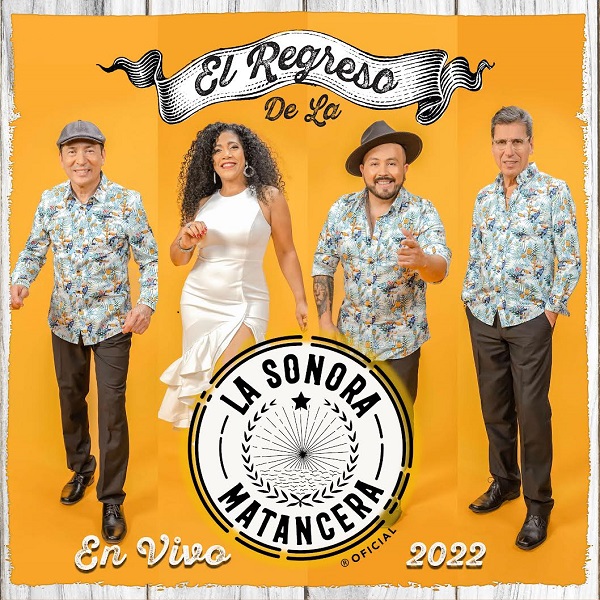
El Regreo de La Sonora Matancera 2022 2023

Members

Trumpets: Calixto Leicea and Pedro Knight

Double Bass: Elpidio Vázquez, replacing his father Pablo Vázquez, “Bubu”.

Piano: Lino Frías

Timbales, Bongó and Campana: José Rosario Chávez “Manteca” Chávez

Tumbadora: Ángel Alfonso Furias “Yiyo”.

Guitar and Choir: Rogelio Martínez

Maracas and Chorus: Carlos Díaz Alonso “Caíto”.

Claves and Choir: Bienvenido Granda.

Last January 13, 2023 they turned 99 years old and are still going strong from generation to generation.

Source:

Enrrique “Culebra” Iriarte, Venezuelan pianist, arranger and orchestra conductor.

Bibliography: Ecured Cuba

La Sonora Matancera 

You can read: Carlos “Patato” Valdés one of the best percussionists in the history of Latin Jazz

3 Reasons To Stay In Paris This Season

We show you the different places to visit with authentic Salsera fun

Paris (France) has always been a popular tourist destination with musical tradition, and the rhythm of Salsa is no exception. There are plenty of places to dance if you like this Afro-Caribbean tune, but what makes it especially appealing this season? We show you three reasons why you will want to spend more time in the capital of this beautiful Western European country during December 2022.

Latin New Year’s At Cabaret Sauvage

Cuarteto Cubano has toured France’s stages for four years

The biggest Latin New Year’s Eve in Paris will be at Cabaret Sauvage with the live presentation of Cuarteto Cubano playing the great classics of Cuban and French music that will make you travel through old Havana and give French hits an air of partying and joy. The Cuban Quartet www.cuartetocubano.com has toured the stages of France since 2018, always with the same goal of “making people dance and smile”.

Then, the wild mixes by DJ El Dany, DJ Hot Rod, and DJ El Cuco will begin with the best of Salsa, Merengue, Bachata, Guaracha, Reggaeton, Dembow, Funk, and Cumbia together with the magical voice of Cuban singer Denis Mora.

All of this is accompanied by the show of the Latin Cabaret and intelligent Pitshow that will take you into the idyllic atmospheres of the Latin American carnivals with the performances of the divine Cuban dancers Roima and Diane Alcalá who form the duo “Las Mulatas del Sabor” that will transport you to a paradise of the burning party of Havana, Cuba.

Cabaret Sauvage will open its magical doors on Saturday, December 31st, 2022, from 10 PM to 5:30 AM on Sunday, January 1st, 2023. Tickets are already available for reservation, but if you want to purchase them at the box office, they will have a value of €50 all night. Cabaret Sauvage is located at 59, bd MacDonald – Parc de La Villette – Paris 19 M° Porte de La Villette.

¡Vamos Pa’ La Rumba!

Cabaret Sauvage starts Christmas on December 3rd

If you like to dance Salsa, then you can go to Cabaret Sauvage https://www.cabaretsauvage.com/agenda throughout this season. Yes, we continue with the Latin party in this magnificent place.

The ingredients are assembled on the table to make La Rumba an unmissable event for all lovers of Latin music and Latin American culture in a unique party experience in Paris.

The Salsa Concerts will present the best current and classic pieces from the orchestras that make life in the capital of this country, renowned for its wines and haute couture brands.

On the stage of Cabaret Sauvage on Saturday, December 3rd, you will satisfy your Salsa cravings with Salsa Caleña classes with Calisabor instructors, a performance by the Jim López & La Nueva Edición orchestra, and tonight will be enlivened by the Show Super Heroes of Salsa and the mixes of DJ El Dany, DJ Dominicano, and DJ El Cuco de la Salsa.

On the second Saturday of the month (December 10th), the Rumba continues with the second edition of El Perreo de Navidad: Mega Reggaeton Party with the opening of its doors at midnight. Here, you will find until 6 AM the best selection of this urban rhythm that has guaranteed its permanence at the top of popularity among the youngest in France and the world. The DJs present will be DJ El Dany, DJ Ortega Dogo, DJ Lina, and DJ Driver MC. The ticket price at the box office is €20.

France’s  Clubs

Le Balajo nightclub
Le Balajo nightclub

This season you can have fun in Paris with its landscapes, winter climate, cultural offer, sophisticated gastronomy, and above all in the various clubs that offer a palette of Afro-Caribbean colors and Salsa enjoyment, among which the Le Balajo nightclub stands out https://www.balajo.fr/ open since 1936. Every Tuesday there are Salsa and Bachata classes for beginners and intermediate level dancers followed by a Latin party hosted by DJ Karim until 2 AM.

The Parisian Restaurant/ Bar/ Nightclub Pachamama https://www.pachamama-paris.com/index.php/en/home-alt-2/ is located at 46-48 rue du Faubourg Saint Antoine, 75012, in a historic building from the 19th century designed by Gustave Eiffel in the neo-vintage colonial style. It has three levels and is open from Thursday to Saturday from 8 PM to 5 AM with resident DJs lighting up the dance floor (Ground Floor) with harmonious mixes between Latin Music, Soul, Pop, and Deep House.

Finally we bring you the Bar/ Restaurant/ Club La Pachanga https://www.lapachanga.fr/, a place of reference for lovers of Salsa, it is located near the Eiffel Tower at 8, rue vandamme 75014.

At La Pachanga you can attend two-hour Cuban Salsa and Puerto Rican Salsa dance classes from Tuesday to Thursday from 7:30 PM to 9:30 PM, continuing with social dancing and a DJ set until 2 AM. On Saturdays La Pachanga closes its doors at 5 AM.

You Can Also Read: Where To Go Dancing Salsa In Paris?

Don’t Think About Not Attend The Alocubano Salsa Festival

It Starts On October 7th in Stockholm, Sweden

Dos hombres vestidos de blanco y un hombre con chaqueta y sombrero azul
Los asistentes deben guardar su entrada impresa o como recibo digital en su dispositivo móvil.

One of the most anticipated Afro-Caribbean events in Stockholm (Sweden) is the Alocubano Salsa Festival. This year, as usual, they will focus on the culture of the Cuban island and will once again do magic with the multiple Bootcamps led by Cuban instructors of trajectory that will focus on the technical development of each dancer that will make them feel comfortable and at home.

To maintain public health security, the Swedish government has drawn up a plan for the lifting of restrictions concerning the COVID-19 pandemic and a return to a more normal daily life. This derogation is based on the gradual elimination of limitations in the country with a maximum of five steps: The first step refers to the extension of restaurant openings until 10:30 PM and releases in the maximum amount of participation in activities at the open-air (Coming from June 1st, 2021). Steps two and three continue with the permission to give training and hold meetings in general without limits of square meters in open and closed spaces (It came into effect from July 1st, 2021). The fourth and fifth steps are estimated to be exposed in mid-September of this current year.

For this reason and in compliance with the measures adopted by the Swedish government, the Alocubano Salsa Festival will be held in 2021 with the main Latin genres of the moment Bachata, Cuban Salsa, Top Mambo, and urban music on four dance floors with eight Spanish-speaking DJs: DJ Javier La Rosa, DJ La’Fe, and DJ Flecha will mix the best Cuban Salsa, while DJ Soto-Mayor and DJ Raymon will make sure the attends do not leave the dance floor with the Reggeaton, moreover, DJ York and DJ DLux will do the same to the rhythm of Bachata, and similarly DJ Mauri will be mixing the best music for Top Mambo.

Venue: Royal Park Stockholm. Frösundaviks allé 15, 169 03 Solna, Sweden

Choose Your Bootcamp

Instructor de baile con camisa blanca y pantalón negro.
During the event, there will be filming and photographs that may include images of private participants

In the Bootcamps, participants will have the opportunity to be in small groups of 20 people, thus achieving a more personalized treatment during the four intensive hours of class, distributed as follows: two hours on Thursday night and the last two night hours will be finished on Friday. Additionally, you will learn a unique and exclusive choreography that you will perform with Cuban instructors on stage during the party on Saturday. (This participation is not mandatory).

Mambo Fusion: Designed for intermediate and advanced dancers. They will have a dress code that will be announced days before the event. The Cuban instructors are Rodrigo & Asya.

Bachata Traicionera: Four intensive hours of exclusive training. Instructors: Sergio and Ana. Level: Intermediate / Advanced. For the performance in the Sergio and Ana show, the participants will use a dress code that will be announced days before the event.

Cuban Salsa: It will last four hours divided into two hours of night practice on Thursday and the remaining two hours will be dictated on Friday. The choreography will be given by Cuban teachers: Seo Fernández and Bárbara Jiménez in individual Bootcamps. Level: Intermediate / Advanced. Essential dress code. The announcement will be on the eve of the event.

Date: Thursday, October 7th – Sunday, October 10th

Full Pass: 210 EUR

  • You Can Also Read: Enjoy Salsa In The New Zealand Winter

Extraordinary Concert with Havana D’ Primera & Alexander Abreu

Orquesta Havana D 'Primera despidiéndose en el escenario con luces azules
Before the concert, there will be two hours of the workshop, followed by Latin parties (before and after HDP) with DJ Soto Mayor and DJ La’Fe

Havana D’ Primera is a Cuban timba band founded by Alexander Abreu in 2007 and made up of 17 of the best Cuban musicians. The orchestra is led by the main composer Abreu, who has stood out for his melodic voice and ability to fuse genres through Salsa such as Jazz, Funk, and other Afro-Cuban rhythms.

“Since its inception, the band has released five studio albums and one live album. Following the release of the debut album Haciendo Historia with EGREM in 2009, its first release for the record label Páfata Productions, Pasaporte in 2012, received favorable reviews from the international press and was voted one of the best Latin alternative albums of the year.

Likewise, they have followed the success of “Pasaporte” with four more albums, released through Páfata Productions, and the last one in co-production with Cuban Producciones Abdala. “La Vuelta al Mundo” was released in 2015. A live album, “Haciendo Historia LIVE”, arrived in 2016, and then “Cantor del Pueblo” in early 2018, earning the orchestra a Latin Grammy nomination for Best Salsa Album.

Finalmente, en 2021 se edita el disco “Será Que Se Acabó”, como homenaje a la música popular cubana de los 80 y 90 ”. Fragmentos extraídos de la biografía de La Habana D ‘Primera

Fecha : Domingo 31 de de octubre de st

Hora : 6:30 PM – 10:20 PM

May 8, 2021 Day of the Cuban Son

On May 8, Cuban Son Day is celebrated on the birth of Miguelito Cuní and Miguel Matamoros, great exponents of the Creole genre.

This article is dedicated to exalt the most Creole of Cuban music, especially son.


This day is a tribute to this music-dance expression and to the musical legacy of its great exponents included Miguel Matamoros and Miguelito Cuní, reported the Cuban Music Institute.

The Official Gazette of the Republic said on 2 October that the Decree 19 of the Council of Ministers recognizes Cuban son as part of the intangible heritage since 2012.

This day is a tribute to this musical-dance expression and to the musical legacy of its great exponents, Miguel Matamoros and Miguelito Cuní, informed the Cuban Institute of Music.
May 8th Cuban Son Day

This declaration consolidates the file for its proposal to this candidacy.

The information has also been shared by the chief proponent of this initiative, maestro Adalberto Álvarez, who said on his Facebook page that the joy of having our Son Day is very great.

Cuban son is a vocal and sanceable instrumental genre that constitutes one of the basic forms within Cuban music that blends African musical elements with Spanish musical elements.

May 8 is a representative day, since the births of Miguelito Cuní and Miguel Matamoros are commemorated, that is why this date was the one proposed, said the 2008 National Music Award.

Likewise, the Caballero del Son, as Adalberto Álvarez is known, declared that this is only part of the task, since we already have the Day of the Cuban Son, we still have to get the son to be named Intangible Heritage of Humanity.
May 8 is a representative day

In addition, the Caballero del Son, as Álvarez is known, stated that this is just a part of the task, so we already have Cuban Son Day, we still have to get son to be named an Intangible Heritage of Humanity.

This is a vocal and danceable instrumental genre that constitutes one of the basic forms within Cuban music that blends African musical elements with Spanish musical elements.

It reportedly was born in the easternmost region of Cuba and was developed in provinces such as Guantánamo, Baracoa, Manzanillo and Santiago de Cuba in the late 19th century, even though there are testimonies that the most ancien Cuban sones date back to the 16th century such as the Son de la Má Teodora by the 1562 and performed by two Dominican sisters, Micaela and Teodora Ginés.

 DECREE 19, CUBAN SON DAY Single Article. To declare May 8 “Day of the Cuban Son” as a tribute to this music-dance expression and to the musical legacy of its great exponents. IT SHALL BE PUBLISHED in the Official Gazette of the Republic of Cuba. DONE in the Palace of the Revolution, Havana, to the next two days of September 2020, “YEAR 62 OF THE REVOLUTION”.

BE IT PUBLISHED in the Official Gazette of the Republic of Cuba. GIVEN at the Palace of the Revolution, in Havana, on the 2nd day of the month of September 2020, "YEAR 62 OF THE REVOLUTION".
The Cuban Son was born from the blending of Afro-Cuban and Spanish crossbreeding.

History of Cuban Son

Cuban Son was born by mixing Afro-Cuban and Spanish cross-breeding. Its origin is intimately linked to Changüi, considered as the mother rhythm of son.

Son came from the East to Havana around 1909. The “Cuarteto Oriental”, created in 1916, became the Sexteto Habanero in 1918, establishing itself as the traditional format of the son bands. In the 1920s, with the emergence of commercial radio broadcasting, the rise and popularization of son began, being the Septeto Nacional de Ignacio Piñeiro one of the main representatives from this time.

The upper classes of Cuba, who are fond of danzón (Cuba’s first native genre) sat watching son warily, seeing it as a slumming and classless genre. However, son was gaining popularity and ended up imposing on danzón, which was consigned to oblivion.

Apart from the fans son has always had in Cuba, the importance of this genre also lies in the influence it has had on the emergence of other genres such as son montuno, mambo, and salsa. In contrast of danzón, son has always been present in Cuba, either directly or within other later musical genres.

Son montuno is a type of son that was played and danced in the last part of Danzón. The importance of this son was its influence in the creation of salsa, in both in music and dance.

Dancing

This dance is only played at the last minute in a salsa club room if the deejay is Cuban, and hardly anyone dances it well.

The base of this dance is three steps followed by a pause, such as salsa. The figures are very simple and similar to those of Cuban salsa. The fundamental difference with salsa is the way of taking the steps. They are more energetic, such as mambo, with a wider hip movement and the pause more marked than in salsa. In other words, instead of the rhythm fast-fast-slow on salsa. In the case of son, it could be considered as fast-fast-fast-fast-slow.

The rhythm of son is, in general, slower than that of salsa, which allows the dancers to recreate in adornments and flirtations. The rhythm is better followed with the key, which is usually very marked.

There are no enchuflas, which are typical of Cuban salsa. The side steps, cockroach style, the couple turn, the walk, the side walk, the side walk, and the step forward-back are widely used.

A very typical and spectacular figure is when the man crouches or even is placed in a horizontal position, leaning the point of the foot on the floor, and the girl takes hom by his hand and walks around him, making him turn the sole of his foot.

Source:

great exponents of the Creole genre.
Cuban Son Day is commemorated on May 8 on the occasion of the birth of Miguelito Cuní and Miguel Matamoros.

[email protected]


Home

  • « Go to Previous Page
  • Page 1
  • Page 2
  • Page 3
  • Page 4
  • Page 5
  • Page 6
  • Interim pages omitted …
  • Page 19
  • Go to Next Page »

International Salsa Magazine (ISM) is a monthly publication about Salsa activities around the world, that has been publishing since 2007. It is a world network of volunteers coordinated by ISM Magazine. We are working to strengthen all the events by working together.