• Skip to primary navigation
  • Skip to main content

International Salsa Magazine

  • HOME
  • Previous editions
    • 2026
      • ISM / May 2026
      • ISM / April 2026
      • ISM / March 2026
      • ISM / February 2026
      • ISM / January 2026
    • 2025
      • ISM / December 2025
      • ISM / November 2025
      • ISM / October 2025
      • ISM / September 2025
      • ISM / August 2025
      • ISM / July 2025
      • ISM / June 2025
      • ISM / May2025
      • ISM / April 2025
      • ISM / March 2025
      • ISM / February 2025
      • ISM / January 2025
    • 2024
      • ISM / December 2024
      • ISM / November 2024
      • ISM / October 2024
      • ISM / September 2024
      • ISM / August 2024
      • ISM / July 2024
      • ISM / June 2024
      • ISM / May 2024
      • ISM / April 2024
      • ISM / March 2024
      • ISM / February 2024
      • ISM / January 2024
    • 2023
      • ISM / December 2023
      • ISM / November 2023
      • ISM / October 2023
      • ISM – September 2023
      • ISM – August 2023
      • ISM July 2023
      • ISM Edition June 2023
      • ISM – May 2023
      • ISM April 2023
      • ISM March 2023
      • ISM February 2023
      • ISM January 2023
    • 2022
      • ISM December 2022
      • ISM November 2022
      • ISM October 2022
      • ISM September 2022
      • ISM August 2022
      • ISM July 2022
      • ISM June 2022
      • ISM May 2022
      • ISM February 2022
      • ISM January 2022
    • 2021
      • ISM December 2021
      • ISM November 2021
      • ISM October – 2021
      • ISM September 2021
      • ISM August 2021
      • ISM July 2021
      • ISM May 2021
      • ISM April 2021
      • ISM June 2021
      • ISM March 2021
      • ISM February 2021
      • ISM January 2021
    • 2020
      • ISM December 2020
      • ISM November 2020
      • ISM October 2020
      • ISM September 2020
      • ISM August 2020
      • ISM July 2020
      • ISM June 2020
      • ISM May 2020
      • ISM April 2020
      • ISM March 2020
      • ISM February 2020
      • ISM January 2020
    • 2019
      • ISM December 2019
      • ISM November 2019
      • ISM October 2019
      • ISM Septembre 2019
      • ISM August 2019
      • ISM July 2019
      • ISM June 2019
    • 2016
      • ISM December 2016
  • Spanish
  • Download Salsa App
    • Android
    • Apple

Search Results for: son cubano

Azúcar Club Cubano – Brazil

Meet the “ Azúcar Club Cubano ” of Sao Paulo, Brazil:

Since the Salsa boom in the sixties, “60” invaded the ears of many Latinos and North Americans, later Europeans, Africans and Asians in restaurants, Academies, clubs, parties and events since they were the novelty of the moment and they had something that made his guests dance with seasoning and fun and for future talents (artists) a new style and / or musical genre.

Brazil is the largest country in South America and is one of the countries with the most energy and positivity. The good humor of its people and its constant party atmosphere make this Brazilian culture one of the pillars of world dance. Among the dances that exist in Brazil, the “Samba” stands out, which is danced during festivals and popular celebrations such as the Carnival, some of the most popular versions include “carioca”, “a baion”, “conga”, “mesemba”, “a batucado” and “carnivale”.

Outside of the carnival there is the Carimbó, Capoeira, Lundu, Baião and “Xote” (typical type of lining dance that is incredibly versatile and has several variations throughout the country, it is a dance that has a mixture of European and African influences, it also incorporates elements of salsa, mambo and rumba, depending on the region of Brazil).

Night Club
Azucar Club Cubano is open

Despite everything in Brazil other musical rhythms are also danced but in less quantity such as salsa and bachata in nightclubs and in Brazil there are a great variety of Latin academies, restaurants and clubs where you can enjoy pleasant music and if what You want to dance Merengue, Salsa and Cumbia, you can go visit the “Azúcar Club Cubano” which is a disco and nightclub that is located at Rua Dr. Mário Ferraz, 423 Itaim – Bibi, São Paulo, Brazil.

Which was inaugurated in August 2000; being the first Latin house in Sao Paulo at that time thanks to the Latin inspiration with its flirty and great Caribbean music. Currently it is recognized for being very cheerful and with excellent service where it had great successes and that until today it opens its doors to all people who like Latin rhythms, both music played by DJs and live music are also performed. events, concerts, festivities (birthdays, anniversaries, celebrations, among others).

Azucar Club Cubano working
In the Azucar Club Cubano

They also have a bar where the most requested alcoholic beverages are Rum and Tequila and among their cocktails are ” El Margarita “, ” El margarita con Tequila ” and ” Mojito “, the latter known as the best in all of Sao Paulo, Brazil; They also have a varied menu so that people can taste good food and the music that they are playing at that time.

The Club opens its doors to the public from Tuesday to Friday from 7:00 p.m. (7:00 p.m.) and on Saturdays from 8:00 p.m. (8:00 p.m.) and there one can pay with any credit card or debit.

Cocktails
cocktails are “El Margarita”, “El margarita con Tequila” and “Mojito”,

For more information you can search through:

WebSite:

Facebook: @ azucarclubcubano

Instagram: @ azucarclubcubano

Correo: azucar@ azucar.com.br

Teléfono: +55  11 3074 3737

Tripadvisor:

 

Home

10 The Cuban Salsa Festival

Europe / Germany / Munich

10 The Cuban Salsa Festival, Munich 27 Jan 2017 – 29 Jan 2017

10 The Cuban Salsa Festival Germany, Munich 27 Jan 2017 – 29 Jan 2017

In January 2017, Munich will be able to experience a high class weekend full of dance and music, again. Inspired by “Baila en Cuba”, the annual dance and music event in Havanna (Cuba), we brought this festival to life. And moreover we want to import a part of the wonderful atmosphere of its big Cuban counterpart to Munich.

With the 10th “El Festival Salsa Cubana” We will continue our legendary winter festival series. Salsa Cubana is more than a dance – it’s an attitude towards life! Who does not inevitably associate typical Cuban music, Cuban ambience and Son Cubano (the most traditional of all Cuban dances) with these words?

Festival Salsa Cubana stands for this very diversity. No matter if dancer, music lover or just fancier of the Caribbean atmosphere – you will get your money’s worth!

Cuban atmosphere and total joy of life!

  • Top event for all dancers in and around Munich!
  • Salsa, Afro, Reggaeton and a lot more!
  • Great party with show acts!
  • Taster’s session Salsa Cubana
  • Rueda de Casino: Dancing Salsa with other couples in a circle. Nice combinations with the exchange of the dance partners provide pure fun!
  • Up to 50 workshops with best in class instructors
  • For all dancers and future dancers a “must do”: authentic teaching with guest instructors! From beginner to master class!
  • Awesome and high class parties and show acts!
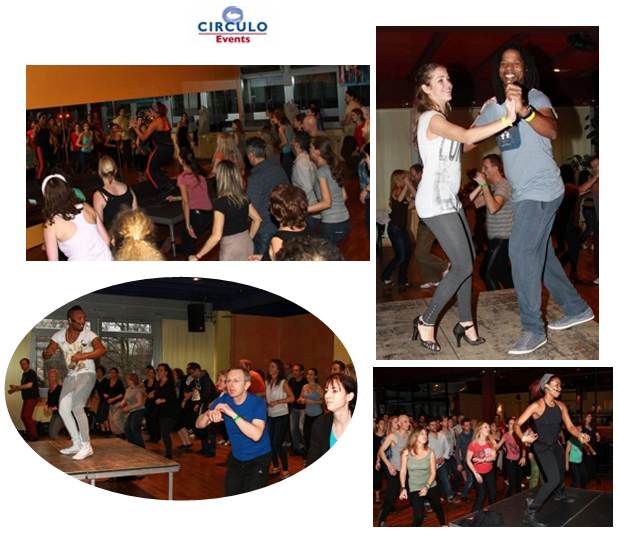
Photo 1: The Cuban Salsa Festival

Location

The festival is located in the rooms of the CIRCULO. CIRCULO is the biggest dance school for Salsa Cubana in Munich. Additionally, as a salsateca, with legendary salsa parties and a lot of Salsa live concerts, CIRCULO is an integral part of Munich’s salsa scene.

CIRCULO’s address is Rosenheimerstrasse 139, in Munich. With its seven, highly equipped rooms, it is predestined for the realization of all classes and parties that are part of the Festival Salsa Cubana.

The studio in the back has two dance rooms with a bar area. Since the expansion in January 2007, we have 3 additional classrooms with an inviting bar area. And NEW since October 2014, with the latest extension we have another 2 additional rooms with a bar area, which connects the two studios.

Mobile walls separate the single rooms from each other, but can be removed to form one big room for party and dancing. Premises with a very classy interior, a flexible stage excellent quality of light and sound prevent parties and training in greatest atmosphere.

Photo 2: The Cuban Salsa Festival

10th Festival Salsa Cubana

Europe / Germany / Munich

Circulo Events presents 10th Festival Salsa Cubana

Circulo Events presents 10th Festival Salsa Cubana
Munich - Germany / January 27th - 29th 2017

“In January 2017, Munich will be able to experience a high class weekend full of dance and music, again. Inspired by “Baila en Cuba”, the annual dance and music event in Havana (Cuba), we brought this festival to life. And moreover we want to import a part of the wonderful atmosphere of its big Cuban counterpart to Munich”…

Cuban atmosphere and total joy of life!

Let yourself get carried away and dive into the world of Salsa & Co.

“Salsa Cubana is more than a dance – it’s an attitude towards life! Who does not inevitably associate typical Cuban music, Cuban ambience and Son cubano (the most traditional of all Cuban dances) with these words?

Festival Salsa cubana stands for this very diversity. No matter if dancer, music lover or just fancier of the Caribbean atmosphere – you will get your money’s worth!

This year again with the Percussion Ensemble Live: Drums Secret”

http://www.festival-salsa-cubana.de/en.html

This winter’s music and dance event!

  • Top event for all dancers in and around Munich! • Salsa, Afro, Reggaeton and a lot more!
  • Great party with show acts!
  • Taster’s session Salsa Cubana
  • Rueda de Casino: Dancing Salsa with other couples in a circle. Nice combinations with the exchange of the dance partners provide pure fun!
  • Up to 50 workshops with the best in class instructors • For all dancers and future dancers a “must do”: authentic teaching with guest instructors! From beginner to masterclass!
  • Awesome and high class parties and show acts!

http://www.festival-salsa-cubana.de/en/the- festival.html

WORKSHOPS

WORKSHOPS - 10th Festival Salsa Cubana
WORKSHOPS – 10th Festival Salsa Cubana

Up to 70 lessons in 5 rooms. Be inspired by the best teachers and artists and enjoy a weekend very special cuban weekend!See the workshops schedule at:

http://www.festival-salsacubana.de/en/festival/kursplan.html

Workshop Topics and ContentFestival Salsa Cubana offers up to 70 high class workshops and training lessons!

  • Salsa elegante / Musicalidad en la Salsa
  • Salsa figuras / Nudos en la Salsa
  • Salsa con rumba – Rumba en la Salsa!
  • Salsa con pasitos / Pasitos en la salsa • Rueda de Casino
  • Son cubano
  • Manstyling
  • Ladystyling
  • Salsa suelta
  • Cubaton/Reggaeton
  • Afro – Movimientos afrocubanos • Afro-cuban Dances (ACD)
  • Makuta / Palo
  • Guaguancó – black soul of the Cuban Salsa!
  • Columbia
  • Bantu
  • Shangó
  • Ογά
  • Kizomba
  • Semba

Photo 1: 10th Festival Salsa Cubana

Photo 2: 10th Festival Salsa Cubana

See the information about workshop content and topics at: http://www.festival-salsa-cubana.de/en/festival/kursinhalte.html

Location

The festival is located in the rooms of the CIRCULO. CIRCULO is the biggest dance shoool for Salsa Cubana in Munich. Additionally, as a salsateca, with legendary salsa parties and a lot of Salsa live concerts, CIRCULO is an integral part of Munich’s salsa scene. CIRCULO’s address is Rosenheimerstrasse 139, in Munich. With its seven, highly equipped rooms, it is predestined for the realization of all classes and parties that are part of the Festival Salsa Cubana.http://www.festival-salsa-cubana.de/en/location.html

See more information at:

  • http://www.circulo.de/
    http://www.festival-salsa-cubana.de/en.html
    https://www.facebook.com/events/1121917691219559/

Ignacio Piñero Septeto Nacional has played an important role in Cuba’s music for more than seven decades

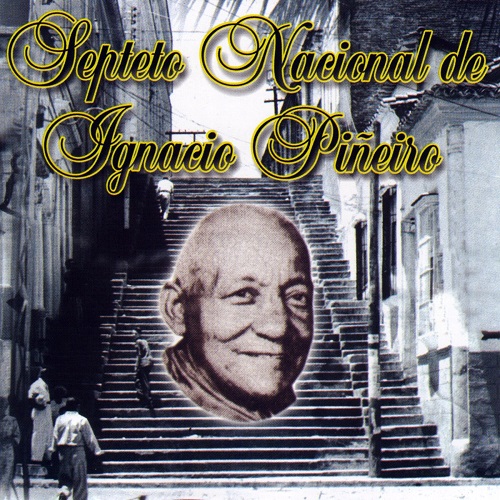
Founded by Havana-born bassist and vocalist Ignacio Piñero in 1927, the Septeto Nacional De Ignacio Piñero has played an important role in Cuba’s music for more than seven decades.

Fundado por el bajista y vocalista nacido en La Habana Ignacio Piñero en 1927

Pioneers of son, a rhythmic blend of African and Cuban music that evolved into salsa, mambo and Latin jazz, the group was the first son band to incorporate the trumpet as the main instrument.

Ignacio Piñero’s Septeto Nacional gained worldwide recognition with its performance at the 1928 Universal Exposition in Seville, and was reportedly the first group to mention “Salsa” in a song “Echale Salsita” recorded in 1933. The song composed by Piñero, was adapted by George Gershwin for the opening theme of his “Cuban Overture”.

Since Piñero’s death in 1968, after 41 years at the helm of the band, the Septeto Nacional De Ignacio Piñero has been led by a series of leaders.

Guitarist and composer Rafael Ortiz, who took over after Piñero’s death, bequeathed the position to vocalist Carlos Embale in 1982.

After leaving the group due to illness in 1998 Embale’s leadership was inherited by guitarist Richard Aymee Castro. True to their original musical roots, Ignacio Piñero’s Septeto Nacional continues to offer a danceable blend of montano, merengue, bolero, rumba and cha cha cha. Craig Harris.

Ignacio Pineiro
Ignacio Pineiro

Ignacio Piñero was one of the Pioneers of Son Cubano

In 1906 he already knew and had assimilated the different toques of the African cabildos that existed in the neighborhood of Pueblo Nuevo, which he later incorporated into some of his creations.

He began his artistic career with the group claves and guaguancó El Timbre de Oro, later he directed Los Roncos de Pueblo Nuevo, in which he developed as a decimist and director, at the same time he took his first steps as a composer.

From this stage are: Cuando tú, tu desengaño veas, Dónde estabas anoche, El Edén de Los Roncos, Mañana te espero, niña. Later he joined the group Renacimiento de Pueblo Nuevo.

To the folkloric values that Piñeiro cultivated in these groups, he contributed a wider melodic-harmonic development and a greater depth and poetic flight.

In 1926 he was one of the founders, together with María Teresa Vera, of the Sexteto Occidente, with which he made his first tour to the United States in order to record an album with this group.

In 1927 he founded the Sexteto Nacional, formed by Ignacio Piñeiro, director and double bass; Alberto Villalón, guitar; Francisco González Solares, tres; Abelardo Barroso, lead vocals; Juan de la Cruz, tenor; Bienvenido León, baritone and maracas, and José Manuel Carrera Incharte (El Chino), bongo; that same year trumpeter Lázaro Herrera joined the group. With this septet he traveled to New York, where he recorded his first works.

In 1929 he participated with the Septeto Nacional in the Fair-Exposition of Seville, Spain; in that country they were hired as exclusive artists by the company SEDECA, and toured other cities of that country: Vigo, La Coruña, Santander, Madrid and Valladolid; in addition, they performed in the theaters Torero, Jovellanos, the Cine-Teatro Grado, and the cabaret Maicú, all in Madrid. In 1930 he was one of the founders of the National Association of Cuban Soneros.

Pioneros del son, una mezcla rítmica de música africana y cubana

They performed at the Sans-Souci cabaret (1930); in 1931 they performed at the Lavín and CMCG radio stations; in 1932, at the Dos Hermanos Hotel, he premiered Buey viejo; that same year the American composer George Gershwin came to Havana, at the CMCJ radio station he listened to Piñeiro’s son Échale salsita, from which he later used the theme played on the trumpet in his Cuban Overture.

In 1933 he performed at the Fair-Exhibition A Century of Progress, held in Chicago, United States.

In 1934 Piñeiro retired from the septet, which from 1935 was directed by trumpeter Lázaro Herrera. In 1954, Piñeiro reappeared as leader of the septet, with which he appeared on the television program Música de Ayer y de Hoy.

As a composer, Ignacio Piñeiro broke, although he took elements from the form of the oriental son, in which its creators used the quatrain and the tenth; an example of this break is his son Buey viejo, from 1932:

Carretero no maltrates a ese pobre buey tan viejo, que ya doblbla la cabeza por el peso de los tarros, y por senda de guijarros va tirando la carreta, y nunca llega a la meta, término de su dolor.

Piñeiro was one of those synthesis cases that managed to capture, develop and express the full richness of the son.

The structural modifications, the cadence, the rhythm and the use of refined melodies and lyrics, achieved by this creator and interpreted by the Septeto Nacional, make it possible to say that the work of this singular artist, although he did not mark the boundaries of son (which corresponded to the Sexteto Habanero), he did turn it into a son that today we can call classic, which became a model for its further development.

When Ignacio Piñeiro founded the Septeto Nacional, his purpose was to be a high exponent of the Cuban son and its various variants, he himself made use of those variants, composing guajira-son, canción-son, afro-son, so he worked with the elements offered by the oriental son, to which he gave a broader treatment, both musically and literary.

According to Miriam Villa: “If we analyze the organization of the literary text, we observe in his work the formal use of metrically heterogeneous links subjected to rhythm, characterized by the presence of accented and unaccented elements within the system of units that are repeated at intervals between them.

Piñeiro must not have been concerned about the meter in the text as a pattern, since through the rhythm of the composition he achieves the contrast relations, making the change of meter express a change in the thematic movement, either from intermittences or accentuations or sometimes both, which give it different semantic nuances and alternations of tensions and distensions.

And elsewhere Villa states: “Another aspect that in relation to the literary text is reflected in Piñeiro’s creative work is that of the thematic contents; these are shown from a diversification with greater scope in relation to his contemporaries.

His work can be divided into multiple themes among which are love, homeland, philosophical reflection, politics, the bucolic, the infantile, expressed in a variety of forms: satirical, apologetic, humorous and with greater depth than in the sonorous production that preceded him and even with which he shared.

With the Septeto Nacional, Piñeiro appears in the musical short El frutero, and in the film Nosotros la música, by director Rogelio París.

Ignacio Piñeiro Septeto Nacional

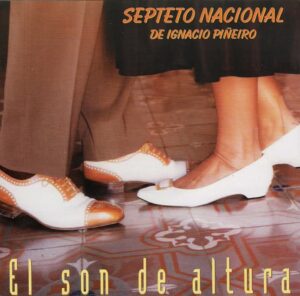
Septeto Nacional de Ignacio Piñero El Son de Altura

El Son de Altura (1998)

Tracks:

  1. Mayeya – No Juegues Con Los Santos (Son) (I. Piñeiro)
  2. Bardo (Bolero-son) (I. Piñeiro)
  3. Lejana Campiña (Guajira-son) (I. Piñeiro)
  4. Canta La Vueltabajera (Guajira-son) (I. Piñeiro)
  5. Guanajo Relleno (Guaracha-son) (I. Piñeiro)
  6. Esas No Son Cubanas (Son) (I. Piñeiro)
  7. Suavecito (Son) (I. Piñeiro)
  8. Alma Guajira (Guajira-son) (I. Piñeiro)
  9. Castigador (Son) (I. Piñeiro)
  10. Échale Salsita (Son-pregón) (I. Piñeiro)
  11. EI Viandero (Son-pregón) (Ernesto Muñoz)
  12. Son De La Loma (Son) (Miguel MGllamoros)
  13. Trompeta Querida (Boleró-son) (Lózoro Herrera)
  14. La Mujer De Antonio (Son) (Miguel Matamoros)
  15. La Cachimba De San Juan (Son) (l. Plñeiro)
  16. EI Alfiler (Son) (l. Plñeiro)
  17. Noche De Conga (Son) (l. Plñeiro)
  18. EI Paralitico (Son) (Miguel Matamoros)

By:

EcuRed

Dj. Augusto Felibertt

L’Òstia Latin Jazz

Also Read: From Cuba El Septeto Son de Nipe vienen Abriendo Caminos

Maite Hontele in CONCERT!

Europe / France / Utrecht

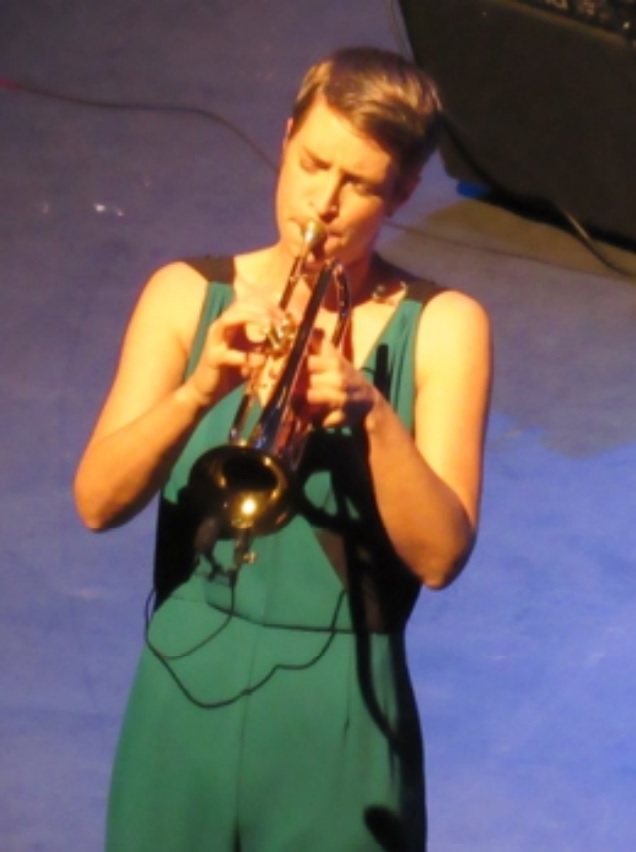
A great musician is someone who can enlighten the stage only with his/her presence, this is the case when Maite Hontele is on stage. Full-house, the stage full of colors and all the audience is ready to dance and enjoy the best rhythm: SALSA!

International Salsa Magazine had the honor to be part of the last concert of Maite Hontele, the incredible dutch trumpeter, in Caracas, Venezuela.

Maite Hontele in concert

The silence is interrupted with the beautiful sound of a characteristic trumpet playing a melody, the stage gets full of musicians and Maite comes out with the biggest smile that characterize her.

She starts with a speech where she explains how thankful she is for being there, talks a little bit about Colombia, and then the party starts! Two hours full of hits of herself, Oscar d’ Leon, and many other artists, with the performance of her Colombian band by her side.

Maite Hontele
Maite Hontele

But let’s get deeper in who is her. Maite Hontelé is a trumpeter who was born in Utrecht, Holland, and was raised with music. Her parents owned a huge collection of salsa and son Cubano, and every day she would listen to Latin music, quite unusual for a Dutch girl. After playing a few years with the local brass band, she decided to become a musician, and studied latin and jazz trumpet at the Conservatory of Rotterdam.

Her first big tour was life-changing. She went to Colombia, the country where she now lives. In 2004, Maite Hontelé toured with the world-famous Buena Vista Social Club. In 2009 Maite launched her first album, Llegó la Mona, a salsa-tribute to Colombian music. This album was made with the purpose to tour more in Colombia. Among the gigs she played was the Medellin Jazz Festival.

That year has been very important for her. Not only did Maite record her first album, she also found the place where she wanted to continue to live and make music. That’s when she decided to move to Medellin, Colombia.

Maite Hontele
Maite Hontele

In 2010, she released her second production, Mujer Sonora. The album is focused on oldschool styles such as son and charanga, but also contains some spicy salsa-tracks. This album was presented at the 2010 North Sea Jazz Festival, and on various international tours. In 2011 and 2012 Maite toured many countries with her band, and was a guest with Ruben Blades, Yuri Buenaventura, Issac Delgado, Diego Galé (DVD-recording), Juan Carlos Coronel, Oscar D’León, and many others.

Her 3rd album, Déjame Asi, was released in April 2013. She is currently touring Europe and Latin America.

“My Outlaw Loredo is the most elegant gig-bag in the universe. A perfect match for me!” Maite Hontelé

Maite Hontele in concer - Photo
Maite Hontele in concert – Photo

The show ends with the best energy. Maite Hontele is not only an amazing trumpeter, but also a great singer and composer. We are glad to be part of his musical journey.

  • « Go to Previous Page
  • Page 1
  • Interim pages omitted …
  • Page 3
  • Page 4
  • Page 5
  • Page 6
  • Page 7
  • Interim pages omitted …
  • Page 19
  • Go to Next Page »

International Salsa Magazine (ISM) is a monthly publication about Salsa activities around the world, that has been publishing since 2007. It is a world network of volunteers coordinated by ISM Magazine. We are working to strengthen all the events by working together.