• Skip to primary navigation
  • Skip to main content

International Salsa Magazine

  • Home
  • Previous editions
    • 2026
      • ISM / January 2026
      • ISM / February 2026
    • 2025
      • ISM / December 2025
      • ISM / November 2025
      • ISM / October 2025
      • ISM / September 2025
      • ISM / August 2025
      • ISM / July 2025
      • ISM / June 2025
      • ISM / May2025
      • ISM / April 2025
      • ISM / March 2025
      • ISM / February 2025
      • ISM / January 2025
    • 2024
      • ISM / December 2024
      • ISM / November 2024
      • ISM / October 2024
      • ISM / September 2024
      • ISM / August 2024
      • ISM / July 2024
      • ISM / June 2024
      • ISM / May 2024
      • ISM / April 2024
      • ISM / March 2024
      • ISM / February 2024
      • ISM / January 2024
    • 2023
      • ISM / December 2023
      • ISM / November 2023
      • ISM / October 2023
      • ISM – September 2023
      • ISM – August 2023
      • ISM July 2023
      • ISM Edition June 2023
      • ISM – May 2023
      • ISM April 2023
      • ISM March 2023
      • ISM February 2023
      • ISM January 2023
    • 2022
      • ISM December 2022
      • ISM November 2022
      • ISM October 2022
      • ISM September 2022
      • ISM August 2022
      • ISM July 2022
      • ISM June 2022
      • ISM May 2022
      • ISM February 2022
      • ISM January 2022
    • 2021
      • ISM December 2021
      • ISM November 2021
      • ISM October – 2021
      • ISM September 2021
      • ISM August 2021
      • ISM July 2021
      • ISM May 2021
      • ISM April 2021
      • ISM June 2021
      • ISM March 2021
      • ISM February 2021
      • ISM January 2021
    • 2020
      • ISM December 2020
      • ISM November 2020
      • ISM October 2020
      • ISM September 2020
      • ISM August 2020
      • ISM July 2020
      • ISM June 2020
      • ISM May 2020
      • ISM April 2020
      • ISM March 2020
      • ISM February 2020
      • ISM January 2020
    • 2019
      • ISM December 2019
      • ISM November 2019
      • ISM October 2019
      • ISM Septembre 2019
      • ISM August 2019
      • ISM July 2019
      • ISM June 2019
      • ISM May 2019
      • ISM April 2019
      • ISM March 2019
      • ISM February 2019
      • ISM January 2019
    • 2018
      • ISM December 2018
      • ISM November 2018
      • ISM October 2018
      • ISM September 2018
      • ISM August 2018
      • ISM July 2018
      • ISM June 2018
      • ISM May 2018
      • ISM April 2018
      • ISM March 2018
      • ISM February 2018
      • ISM January 2018
    • 2017
      • ISM December 2017
      • ISM November 2017
      • ISM October 2017
      • ISM September 2017
      • ISM August 2017
      • ISM July 2017
      • ISM June 2017
      • ISM May 2017
      • ISM April 2017
      • ISM March 2017
      • ISM February 2017
  • Download Salsa App
    • Android
    • Apple
  • Spanish

Search Results for: trumpeter

Luis “Perico” Ortiz: six decades of impeccable musical trajectory

The lobby of the Centro de Bellas Artes in Caguas served as a prelude to the concert, entitled Tocando y contando historias (Playing and telling stories), for which we came to enjoy “Perico” and his guests. Mario Ortiz, Jr. brought together a dozen trumpet players (Luis Figueroa, Richie Segarra, Roby Texeira, Rafael Lebrón, Kevin Ibáñez, Ricardo Marrero, Kenneth Torres, Rubén Días, Ricky Zayas and Simón Rivera) to pay tribute to Luis “Perico” Ortiz by performing his most emblematic solo: ‘Coro Miyare’.
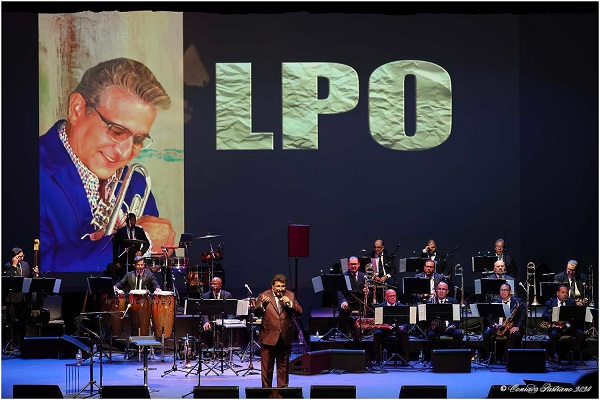
Luis "Perico" Ortiz and his Orchestra
Luis “Perico” Ortiz and his Orchestra

Once in the concert hall, the child trumpeter Daniel Torres (whom Perico predicted would be his successor) and Luis “Perico” Ortiz kicked off the concert with a fun trumpet correspondence. The musicians, turned into actors, shared with us the scene in which we saw Luis “Luisín” Ortiz as a child, playing ‘Quítate de la vía Perico’ with his trumpet; introduction that gave way to the custodian of Ismael Rivera’s legacy (“Moncho” Rivera) to sing the emblematic theme to which “Perico” owes his nickname, while the audience enjoyed images of “Maelo” on a giant screen. The short film defined how “El Sonero Mayor”, personified by “Moncho” told “Luisín”, that from that moment on he would be called “Perico”.

Moncho also interpreted ‘Bilongo’, a song in which Richard Carrasco stood out on the bongo after the saxophones made themselves felt with forcefulness. “Perico” also claimed his turn with the trumpet solo that preceded a resounding “Buenas noches” in the voice of the virtuoso trumpet player.

The orchestra was integrated by: Luis “Perico” Ortiz on musical direction; Yturvides Vilchez, Jan Duclerc and Rolando Alejandro Lora on trumpets; Rafy Torres, Jorge Díaz, Randy A. Román, Mario Alonso Ángel Marulanda on trombones; Roberto Calderón on baritone saxophone, Luis Daniel Valentín Muñiz on tenor saxophone; Antonio Luis Orta and Luis Fernando Hernández on alto saxophones; David Marcano on timbales; Gadwin Vargas Vélez on congas; Richard Carrasco Ayala on bongo; Juan Manuel Rivera Colón on piano; Carlos Luis Martínez Peña on bass; Henry Santiago and David Carrero on backing vocals.
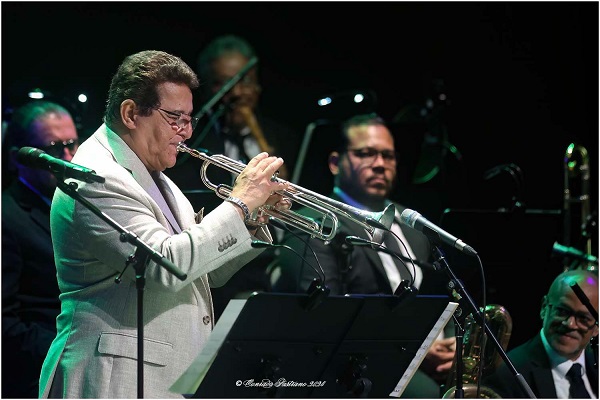
Luis “Perico” Ortiz
Luis “Perico” Ortiz

Then, Henry Santiago received the microphone to sing ‘Tres grandes amigos’. For the song, which refers to Tito Rodríguez, Tito Puente, and Machito; “Perico” introduced “Manolito” Rodríguez and Arianelys Ortiz Cruz, a blind autistic timbalera player.

He was followed by Norberto Vélez, who performed ‘Julián Del Valle’ (1978, Súper salsa) and ‘De patitas’ (1979, Luis “Perico” Ortiz, One of a kind) – songs of great vocal and interpretative difficulty, popularized by the unmistakable voice of Rafael De Jesús – with his usual sympathy. Nor-Bert once again demonstrated his powerful voice, and was matched by the saxophones, whose forcefulness did not diminish the power of Vélez’s voice.

“La India” arrived with her usual energy to interpret ‘Químbara’ and “Manolito” did his part singing ‘La Reina es la rumba’, in company of “La India”, alternating on the soneos.

Coro Miyare” made use of Richard Carrasco’s unbeatable performance in the bongo solo with drumsticks -which had been popularized by Roberto Roena-, followed by the crushing solo by “Perico”, the piano solo by Juan Rivera, the conga solo by Gadwin Vargas and the timbales solo by David Marcano.
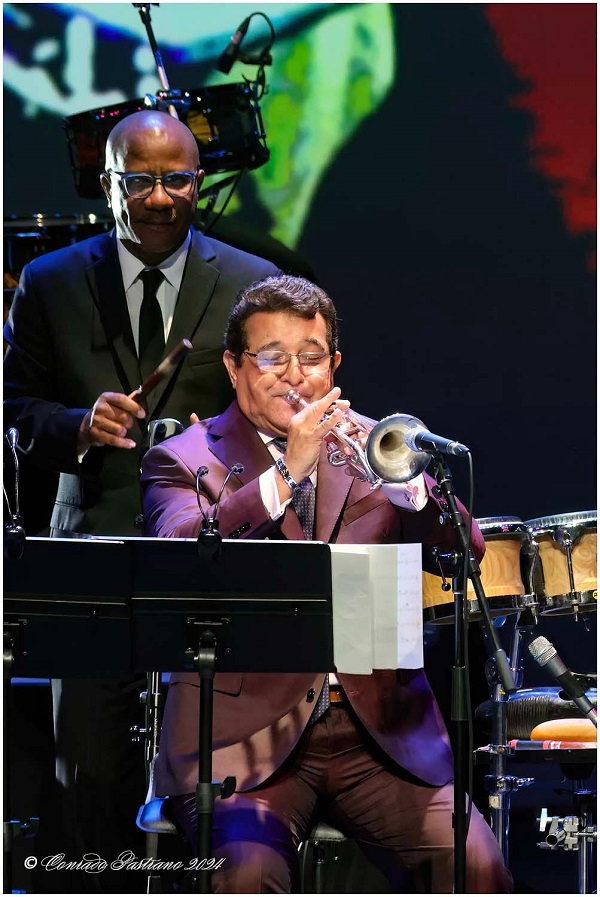
Richard Carrasco Ayala en el bongó y Luis “Perico” Ortiz

The highlight of the concert was Gilberto Santa Rosa’s brilliant renditions of ‘Atrevida’ and ‘Planté bandera’; recorded and immortalized by Tommy Olivencia’s La Primerísima, to which Santa Rosa briefly belonged.

After the intermission, as a tribute to the “Niño bonito de la salsa”, “Perico” invited Tony Vega to the stage to perform ‘Así se compone un son’ and ‘Borinquen tiene montuno’, the latter adorned with an elaborate trumpet solo by “Perico”.

“Perico” brought Gerardo Rivas to the stage to perform ‘Río abajo va’ (1985, La vida en broma), popularized in the voice of Domingo Quiñones. Gerardo explained that he had accepted the invitation to participate in the concert without knowing which song he was going to sing, in a clear allusion to the vocal difficulty of reaching Domingo’s vocal register. Gadwin Vargas sprinkled the theme with a conga solo with a mozambique beat, very well achieved. Gerardo’s second song, ‘Perico lo tiene’, brought to the stage the cacique of the Rivas dynasty (“Jerry” Rivas, singer of El Gran Combo de Puerto Rico) on the tres and Richie Bastar (bongos player of La Universidad de la Salsa). While Bastar took over on the bongo and the bell, Richard Carrasco took over the güiro. At the end of the intervention, “Jerry” asked for a round of applause for the mulato mayor, Don Rafael Ithier, who was enjoying the concert with all of us who were there.

Then, “Perico” dedicated ‘Perfume de gardenias’ to his mother; a speech that was enjoyed with an instrumental prelude performed by “Perico” and a great vocalization by “El Caballero de la Salsa”.

Next up was Rubén “Panamá” Blades, who received a standing ovation from the audience. This made visibility difficult, although it did not affect our enjoyment of the audio. Blades was in charge of the big hits ‘Plástico’ and ‘Pedro Navaja’ (1978, Siembra). During ‘Pedro Navaja’ Gadwin Vargas replicated the conga sound that Eddie Montalvo immortalized on the recording.

The stage was full when all the guests arrived to perform ‘Como vivo yo’, after Perico announced with a trumpet solo the song that would end the show.

As Luis “Perico” Ortiz said, the vote of love and confidence that we witnessed there will be remembered as an unrepeatable evening, which detailed what has been six decades of impeccable career that the trumpeter, composer, arranger and music producer has achieved.
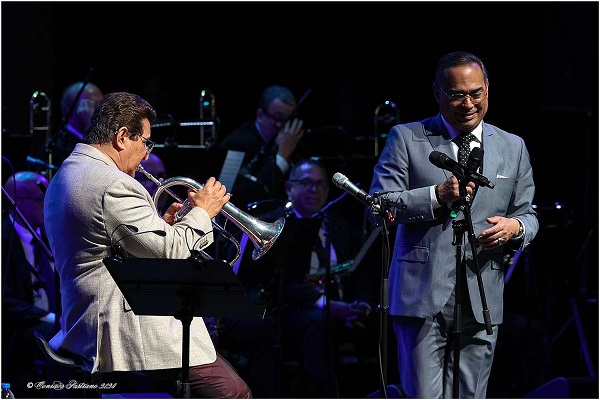

Luis “Perico” Ortiz y Gilberto SantaRosa
Bella Martinez Puerto Rico 


Also Read: ¡Attack Sergio! Unbreakable: A fun read because of the contradictory content

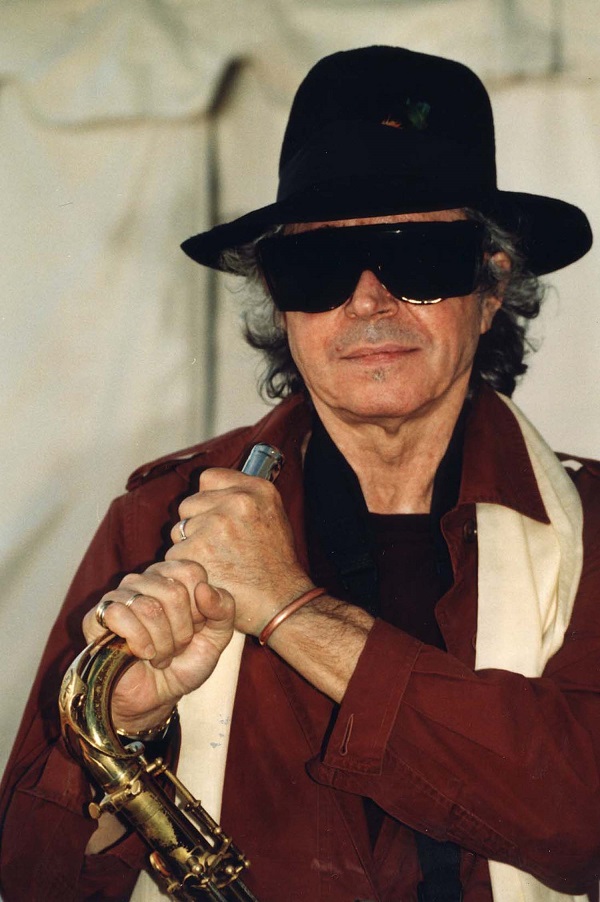
Gato Barbieri was an excellent and virtuoso Argentine saxophonist par excellence

The Argentine musician takes us on a journey through his illustrious career.

Gato Barbieri

Editor’s note: Famed saxophonist Leandro “Gato” Barbieri passed away on Saturday, April 2, 2016, in New York City. He was 83 years old.

In 2015, the Latin Grammy Award for Musical Excellence was presented to Argentine composer Gato Barbieri, one of the most deserving musicians to be honored for his extensive career, throughout which he created a bridge between Latin music and an international audience.

In love with jazz since his formative years in the city of Rosario, Barbieri trained playing with great figures of American jazz during the 1960s.

The eternal radiance of Gato Barbieri

But his heart never left his Latin American sensibility. When he came to fame as a soloist and leader of his own group, he sold millions of records, forging a personal language that draws inspiration from tango, Brazilian cadences, the sounds of the Andes and South American folklore.

Over the past few years, Barbieri, who turns 83 on November 28, has suffered several health complications. From his home in New York, the musician spoke with remarkable sincerity about this new stage of his life, now far from his youth, but full of acceptance and hope.

You recently performed at the Blue Note club in New York and sold out. How does it feel to be a jazz legend at the age of 80-something?

When I play here at the Blue Note, people come from Russia, from Europe, from everywhere, because people identify with what Gato has done.

Now, I’m a little sick and it’s hard for me to walk. I don’t like that. I have to do exercises and things like that. I’m going to be 83 years old and it’s necessary to do these things that put me in a horrendous mood [laughs].

Life is like that, it has nice things and ugly things, and you have to keep walking, walking, walking…It’s like a tango. If you pay attention, tango talks about beautiful things: people, siblings, loves, the sweet details of existence. To this day, there are some tango songs that I find incredible.

What memories do you cherish from the beginning of your career?

When I started playing with the Casablanca orchestra, when I was 17. We played bebop music, which for me was something incredible. We used to perform at carnivals in the provinces of Argentina.

He is the most influential Argentine saxophonist in the global jazz scene.

I also have fond memories of playing in Europe with trumpeter Don Cherry, because I learned so much. He never said anything; he didn’t talk to us or explain anything about the music we were going to play. When we played together, we improvised, and he never stopped changing his compositions. It was a great thing.

And then, in 1972, came the music for Last Tango in Paris, which brought you international fame. What was it like to write the soundtrack for such a controversial film?

It was a magical thing, because Bernardo [Italian director Bernardo Bertolucci] is an incredible guy, an incredibly talented director. I was in good spirits, but it wasn’t an easy job because there were 50 moments in the film that needed music.

I remember we took a piano up to Pepito Pignatelli’s [owner of a legendary jazz club in Rome] house, which was on the fifth floor. Doing something like that 50 years ago was not easy, but when we recorded it, it was a beautiful thing. Sometimes the difficult things are the most beautiful.

And that unforgettable main theme, which is repeated throughout the film, how did it come about?

Bernardo called me and asked me to present him with several melodies, and that they should be as beautiful as possible. We had just gone to Italy to play some concerts, and we met Bernardo. I played him three or four tunes, and he immediately chose one and said: “This is the theme from The Last Tango in Paris”.

What do you think has been the secret of your success?

Gato Barbieri
Gato Barbieri

From 1970 onwards, I recorded about 45 records. That’s a lot. I was a guy who was always doing something, for me that lifestyle was a great satisfaction. As for the sax, I never knew much about chords. I make up my own chords, put one thing on top of them… and that’s it.

It’s hard to explain why I made the artistic choices I did. I wanted to do a little bit of everything, play an Argentine chacarera, or record with an Italian singer like Antonello Venditti [the hit ballad “Modena”, in 1979]. I always chose to play music from many different countries, and people identify with that.

Undoubtedly, you have lived a privileged life….

Yes, in a certain way, yes. Michelle [his first wife, who died in 1995] helped me a lot. She’s always in my heart, because she was incredible. She knew about film, art, so many things. In that sense, I learned a lot from her. And now I am living with Laura, my wife, who is a great person.

She has given me my only son, who is now 17 years old. He is tall and very intelligent, although a bit lazy, as I was myself at his age. It must be hereditary [laughs].

EL PAMPERO (1971)

After El Gato left his native Argentina, but before becoming a Latin jazz star, Gato Barbieri spent the second half of the 1960s collaborating with great, avant-garde musicians: trumpeter Don Cherry, vibraphonist Gary Burton and bassist Charlie Haden, among others. Capping a career for Barbieri as the leader of his own group, El pampero is an album recorded live at the Montreux Jazz Festival. Four tracks with extensive improvisations, steeped in South American nostalgia.

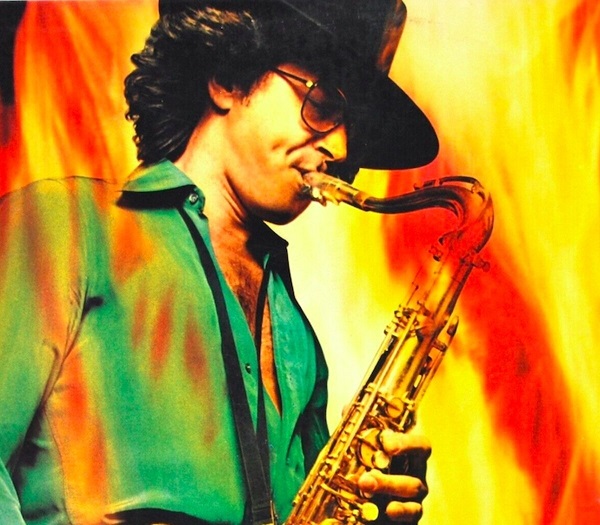
Gato Barbieri Album Caliente 1976

Gato Barbieri: Latin ‘jazz’ with a touch of pop and South American folklore.

By: Ernesto Lechner

Also Read: Irakere was a Cuban group that developed an important work in Cuban popular music and Latin Jazz under the direction of Chucho Valdés

Héctor Martignon has been one of the most sought-after pianists on the Latin jazz scene in New York

New York based-, Colombian born Hector Martignon has composed, orchestrated, produced, performed and recorded music in a wide spectrum of genres, from Classical and Crossover, to Jazz and World Music, to Rock and Pop.

His five albums as a leader, two as co-leader (MOZART’s BLUE FANTASIES and BACH’s SECRET FILES) as well as his work on over a hundred albums, scores for five feature films, three Broadway Musicals and multiple other projects, showcase his wide-ranging area of expertise.

At Mozart Studios recording Carlos Jimenez’ second CD, + Ruben Rodriguez + Vince Cherico. A pleasure!

After several nominations as a sideman, two of his five solo CDs were nominated for a GRAMMY Award (REFUGEE, 2008, and SECOND CHANCE, 2010).

He arranged and performed parts of the score of Ang Lee’s OSCAR-nominated movie EAT, DRINK, MAN, WOMAN.

His first professional recording was at age 18 (Mikis Theodorakis’s “Canto General”) while one of the most recent was on legendary rock band CHICAGO’s latest production, the Latin-tinged “EXITOS”.

He has written symphonic orchestrations, performed and recorded by the Russian Philharmonic Orchestra and compositions like ABRE LOS OJOS, CIERRA LOS OJOS, commissioned and premiered by the MUSICA DE CAMARA STRING ORCHESTRA at St Patrick’s Cathedral in April 2011.

Hector Martignon is currently working on a first CD with his BANDAGRANDE Big Band + String Quartet as well as an album with selections out of a series of  7 solo piano recitals at the Ludwigsburg University of Education (Germany), where he conducts a “compact seminar” on Classic Music-based improvisation every November.

Our trio in Tokyo
Our trio in Tokyo

As a requested sideman he has toured the world with such greats as Paquito D’Rivera, Ray Barretto, Gato Barbieri, Steve Turre, Don Byron, Tito Puente and was featured pianist with Max Roach’s PROJECT AMERICA at the 92 St Y.

His joy of teaching has made him a requested guest-lecturer and performance teacher in music faculties and academies in several countries of Europe, Japan, North- and South America.

Hector wrote an instructional book on Latin piano commissioned and published by Hal Leonard, the SALSA PIANO BOOK.

Martignon’s abilities as a pianist have always been enriched by his interest in varied musical genres.

He paid for his studies of classical piano and composition at the prestigious Freiburger Musikhochschule in Germany by performing with the best Afro-Cuban and Brazilian bands of Europe, backing stars like Celia Cruz and Ismael Quintana on their European tours, and recording with Tata Güiness and Arturo Sandoval.

At the same time he was attending seminars of contemporary composition with masters like Gyorgi Ligetti, Luigi Nono and Karl Heinz Stockhausen.

He also performed classical music in recitals and concerts in Germany, Italy and his native Colombia, specializing in Chopin, Bach and Debussy.

One of his latest endeavors has been a Jazz-Classical crossover  project, co-lead with star virtuoso trumpeter Joe Burgstaller, in which the music of the classics, from Bach to Ellington is re-created in a chamber-jazz setting, to be enjoyed on their two releases, “Mozart’s Blue Fantasies” and “Bach’s Secret Files”.

Living in Brazil for a one-year love affair with that country and its music, Martignon soon became a requested studio musician and worked for star producer Carlinhos Brown.

Luquillo Beach, PR
Luquillo Beach, PR

Since relocating to New York City, Martignon has been one of the most sought-after pianists on the Latin jazz scene.

He’s toured North and South America, Europe, and Asia with the bands of Mongo Santamaría, Gato Barbieri, Steve Turre and Don Byron, who had him record in his latest CD.

He was featured pianist with the bands of Tito Puente, Mario Bauzá, Chico O’Farrill, Paquito D’Rivera, and Max Roach in his “Project America.”
Most notably, Martignon was pianist for the late Ray Barretto’s various ensembles.

During his eight-year association with Barretto, his contributions as pianist, arranger, and composer were fundamental in shaping the sound of the now famous New World Spirit Sextet.

One of his last collaborations with Barretto, “My Summertime,” was a favorite nominee for a Grammy award.
Martignon’s versatility has also made him extremely active in the film and television industries.

Besides playing all piano parts, he arranged and produced many parts of the score for the Oscar-nominated film “Eat, Drink, Man, Woman” by Ang Lee and performed the piano and keyboard parts for many movie scores (i.e., “Gloria”, “Relativity”).

He is composer of the original music of two feature films, one of which, “Septimo Cielo”, won international awards. He also collaborated in the production of many Broadway musicals (“Chronicle of a Death Foretold”, Paul Simon’s “The Capeman”, “Selena Forever”) as conductor, arranger, and co-composer.
In the fall of 2003 Hector visited Slovenia and Russia to collaborate with singer-songwriter Vitaly Osmsçko’s first symphonic CD.

The Russian Philharmonic Orchestra recorded in Moscow the orchestrations written by Hector.

As a composer, producer and arranger of TV and radio music his record is no less impressive. In 2001 he landed two spots for HBO Latino, and one for Coca Cola.

HECTOR” S FOREIGN AFFAIR
In 1998 Martignon performed with his quartet “Foreign Affair”at the Brooklyn Academy of Music’s famed annual festival “The Next Wave” on a triple bill with Tito Puente’s “Top Percussion” and Don Byron’s “Music for six Musicians”.

This proved to be a turning point for him and his ensemble, which evolved from the strictly acoustic trio sound of the first two CDs to a more eclectic and electric quartet sound.

The new configuration that evolved from that memorable concert started a series of concerts and recordings, with guitarist Mark Whitfield, Cameroonian bassist Richard Bona and Cuban drummer Horacio “Negro” Hernández.

This quartet performed and recorded live during a weeklong stint at New York’s famous Birdland.

The group has also performed on BET television festivals, at jazz clubs in Manhattan, and made various appearances in clubs and open-air festivals in his native Colombia and in Europe.

Martignon’s third solo project, to be released in the fall of 2003, is not only a reflection of the group’s new musical direction but also of his interaction with other world class musicians.

Eddie Gomez, Jeff Watts, Mathew Garrison, John Benitez, Dafnis Prieto, Willard Dyson have all made their unique contribution to this, Martignon’s new sound of Jazz.

Hector In Amsterdam with daughter Leticia

Hector Martignon never fails to surprise, challenge and delight us. Stay tuned and get involved in this affair.

Site: Héctor Martignon

Also Read: “El Sol de la Música Latina” el primer premio Grammy para el histórico disco de Salsa Eddie Palmieri

Mario Bauza

North America / United States / New York

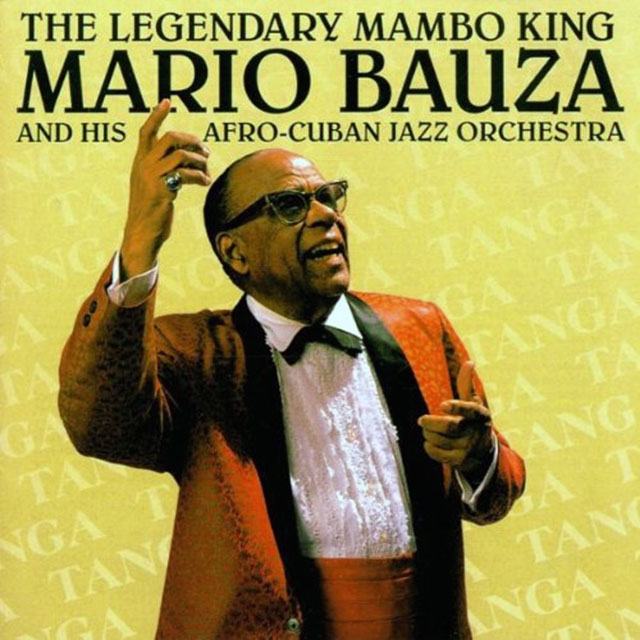
Mario Bauza, Pioneer of Afro-Cuban jazz in New York, Clarinetist, saxophonist, trumpeter and arranger

Mario Bauzá (Havana, April 28, 1911 – Manhattan, July 11, 1993) was a Cuban saxophonist, clarinetist, trumpeter, arranger and composer.

Known above all for having been the musical director of the Machito orchestra (of whom he was also a brother-in-law), he was a pioneer of what is now known as Afro-Cuban jazz.

Mario Bauza The Legendary Mambo King
Mario Bauza Pioneer of Afro-Cuban jazz in New York

Bauzá played the clarinet in the Havana Philharmonic Orchestra. However, after traveling to New York in 1927 with the Antonio María Romeu orchestra, he was so impressed by the Big Bands of Paul Whiteman, Fletcher Henderson and Tommy Dorsey, and by the Harlem music revues, that in 1930 he decided to emigrate definitively to USA.

During the trip, he became friends with Antonio Machín. Mario Bauzá would return on the same boat in which Don Aspiazu’s orchestra was travelling, who immediately began the arrangements to record El manisero.

Upon arriving in New York, Bauzá went to live in Harlem with his cousin, the trumpeter René Endreira. Bauzá began playing the saxophone at house parties with pianist Lucky Roberts and began to absorb African-American culture.

Mario Bauza
Pioneer of Afro-Cuban jazz in New York

Between 1930 and 1931, he was a trumpeter in the Antonio Machín quartet and made important recordings with this group in New York City. Anecdotally, it is said that he had learned to play the trumpet in just two weeks.

His first jobs were with the orchestras of Cass Carr, Noble Sissle and Sam Wooding.

In 1933 he entered Chick Webb’s orchestra as first trumpet, where he ended up as music director. He then worked with Don Redman and Fletcher Henderson, eventually landing Cab Calloway.

Being in that band, Mario brought the young trumpeter Dizzy Gillespie to the orchestra.

Bauzá married Estela Gutiérrez, sister of Francisco Raúl Gutiérrez Grillo, known as Machito.

On December 3, 1940, he debuted with Machito at the Park Plaza, a dance hall, with the Afro-Cubans, later working for almost four years at the La Conga club.

Bauzá works for Machito as artistic director, taking care of the arrangements and hiring the musicians.

The style of the Afro-Cubans mixes the son montuno of Cuba with features of swing bands.

Mario Bauzá Pioneer of Afro-Cuban jazz in New York

Thanks to this, musicians like Dizzy Gillespie or James Moody introduced Afro-Cuban rhythms into jazz, starting in 1947.

He became interested in jazz when he heard Frankie Trumbauer play the saxophone performing Rhapsody in blue with the Paul Whiteman orchestra.

In the forties, Mario will develop the sound of Afro-Cuban jazz. His work as a clarinetist, trumpeter, saxophonist and arranger in the Machito orchestra constitutes one of the main pillars in the emergence and development of that Cuban genre.

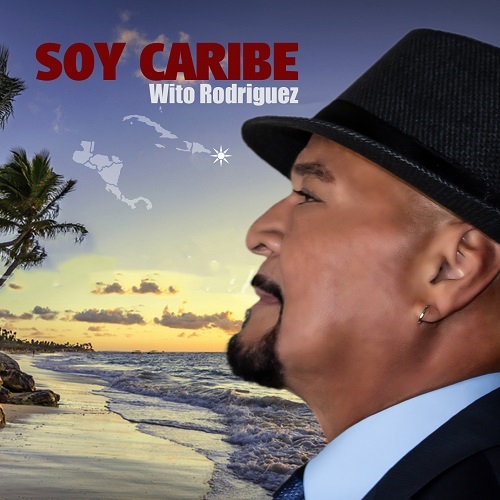
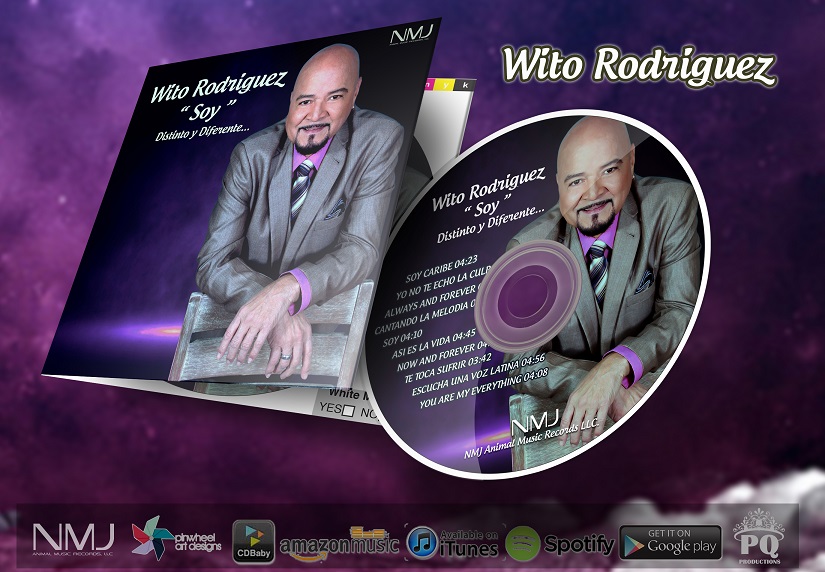
1 New artist Wito Rodriguez “I am distinct and different”

Norte America / Estados Unidos / Florida

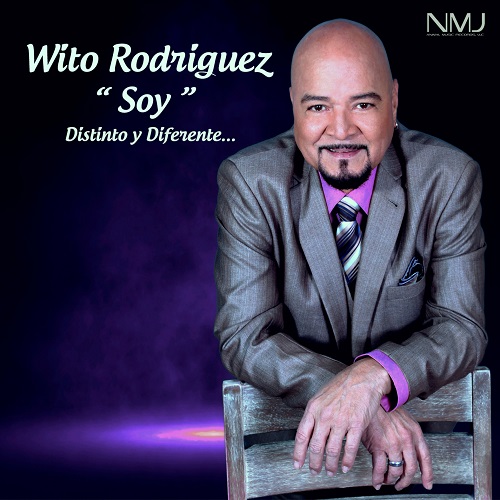
Wito Rodriguez. “I am distinct and different”

Irwin “Wito” Rodríguez was born in Chicago to Puerto Rican parents and got his start in the musical field as a singer and musician. During his teenage years, he performed with a Rock and Roll band as a guitarist.

In 1968 Wito Rodriguez decided to move to “La Isla Del Encanto”, Puerto Rico, in order to search for his musical roots and experience the spicy sounds of his beloved Latin Ritmo.

His first encounter in the Salsa genre was with a Puerto Rican percussionist from the 60’s called “Chacón y su Orquesta”, where Wito learned all the Latin rhythms such as Guaguancó, Boogaloo, Mozambique, etc.

Chacón was his coach in Latin percussion instruments and Wito also fell in love with maracas.

Wito Rodriguez returned to Chicago in 1971 to join “Orquesta La Justicia” a local band that opened shows for artists such as: Ismael Rivera, Ray Barreto, Willie Colón, El Gran Combo and the legendary “Fania All Stars”.

Like many young men of that time, in 1973 Wito Rodriguez decided to join the United States Army and was sent to Europe.

During his stay in Germany, Wito Rodriguez took singing lessons with the Opera singer Barbra Sutton, and at the same time he created two bands with the names of “El Conjunto Sabor” and “La Sonora Antillana”.

These orchestras accompanied artists of the Salsa genre such as: Adalberto Santiago, Ismael Miranda, Tito Allen, Santitos Colón, Pete “El Conde” Rodríguez and the queen of Salsa, Celia Cruz.

After his retirement from the army, Wito joined forces with German band leader Rudi Fuesers and created the European Salsa Orchestra “Conexion Latina”.

With Conexion Latina, Wito Rodriguez recorded two albums; “Calorcito” and “Un Poco Loco”.

He also had the great experience of recording two songs with the band of Director and Arranger Peter Herbolzheimer.

During the 80’s, Wito wanted to broaden his horizons by forming his own groups called “Wito Rodriguez y Orchestra” and “Wito Con Cache”.

Missing his family and friends, Wito “crossed the pond” to return to the United States to finish his Army career.

He never gave up his passion for music, a new big band sound was on his mind, and he returns to the spotlight with the Wito Rodriguez Salsa Jazz Orchestra under the musical direction of trumpeter and arranger, Gino Picart.

“What a wonderful world” or “What a Wonderful World” is his third album released in January 2015.

Although busy in 2016 with live performances, a new album had also been produced and recorded between South America Venezuela and Orlando, Florida.

The most recent production called “Como el Viento” will be released in 2017. This album contains a compilation of songs recorded over the years in Europe than ever for the Western Hemisphere. I hope you enjoy your first solo release… What a wonderful world!

In 2018 Wito released another CD called “The Best of Wito” which has a mix of all the songs that fans thought were the best and respected their preferences.

Wito also has four new singles that he has released from his new album, which will be available from February 2019.

Through the internet platforms you can find these releases.

Always and Forever, Soy Caribe, Yo No Te Echo La Culpa and Now and Forever are the ones that have been released so far.

“As a bilingual singer, I am blessed to contribute to the music industry in my songs, singing them in English and Spanish, unity through my music in a mix of salsa and R&B, etc.” Wito Rodriguez

In the year of 2018. Wito Rodriguez was blessed to be nominated at the Hollywood Music Media Awards (HMMA) in Los Angeles, CA in November 2018.

You can also see his certificate as an honoree at the Fox Music Awards USA, Miami in November 2018, who was nominated and honored for being the Army Veteran Salsero Singer.

The Chicago Salsa Congress was one of its great events in 2018.

In March 2019 his new bilingual production Soy Distinto Y Diferente came out with the song Soy Caribe already nominated at the Hollywood Media Music Awards on November 20, 2019 in Hollywood California.

NMJ Animal Music Records LLC. [email protected]

PQ Promotions/Management Jenny Morales [email protected]

(682-554-4851 or (813-785-3086))

  • « Go to Previous Page
  • Page 1
  • Interim pages omitted …
  • Page 8
  • Page 9
  • Page 10
  • Page 11
  • Page 12
  • Interim pages omitted …
  • Page 19
  • Go to Next Page »

International Salsa Magazine (ISM) is a monthly publication about Salsa activities around the world, that has been publishing since 2007. It is a world network of volunteers coordinated by ISM Magazine. We are working to strengthen all the events by working together.