Charanga, styling itself after the French charanga, represents one of the most distinguished, elegant, and influential orchestral formats within the universe of Afro-Caribbean music.
Its birth in Cuba in the early 20th century responded to an aesthetic and social need: adapting salon music meant for more intimate, closed, and aristocratic spaces, gradually replacing the traditional brass orquesta típica, whose volume proved deafening for such environments.
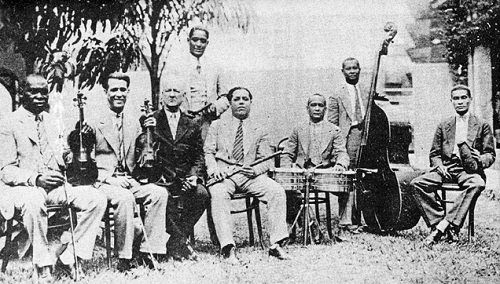
Far from losing strength due to the absence of heavy brass, its sound was consolidated thanks to the unique and refined contrast between the sweet, virtuous timbre of the strings and the flute, which rests firmly upon a deep, swinging, and highly danceable Afro-Caribbean rhythmic foundation.
Classical Instrumentation and Orchestral Format
The instrumental core of a typical charanga stands out for a very particular sound architecture that balances melodic delicacy with robust rhythmic engineering. Each section fulfills a fundamental role:
Flute (Wooden or Metal): Traditionally, the five-key wooden flute or the metal Boehm-system transverse flute was used. It is the solo instrument par excellence, responsible for executing high-pitched guajeos, melodic flourishes, and virtuosic improvisations (descargas) in high registers, especially in the third octave.
String Section: Usually composed of two or three violins and, in some expanded formats, a cello. They provide the essential harmonic cushion, in addition to dynamic textures through the use of pizzicato and heavily marked rhythmic guajeos that give it its characteristic texture.
Percussion Section:
-
- Paila or Timbales: The central instrument that replaced the old concert timpani of symphonic music. It marks the cáscara beat, characteristic rolls (abanicos), and fills (repiques).
- Güiro: An indispensable pulse instrument that guides and defines the swing, tempo, and overall speed of the charanga.
- Congas (Tumbadoras): Progressively introduced during the 1940s to round out and consolidate the Afro-Cuban groove.
- Harmonic-Rhythmic Foundation:
- Piano: Responsible for sustaining the rhythmic montuno and weaving the bridge between harmony and percussion.
- Double Bass (or Baby Bass / Electric Bass): Fulfills the vital function of marking the tumba precisely, usually emphasizing the weak beats—that is, the “two” and the “four” of the measure.
- Vocals: Composed of a lead singer and a chorus that performs in unison or through simple harmonies, frequently backed and complemented by the orchestra’s own musicians.Historical Evolution
The trajectory of the charanga has successfully transformed over the decades, adapting to the demands of each era without losing its essential identity:
Emergence (Early 20th Century): It was born in Cuba by dispensing with the brass (trumpets, cornets, and trombones) of the traditional orquesta típica, replacing them with violins and a flute to perform the danzón in the salons of the Havana aristocracy in a more harmonious and elegant way.
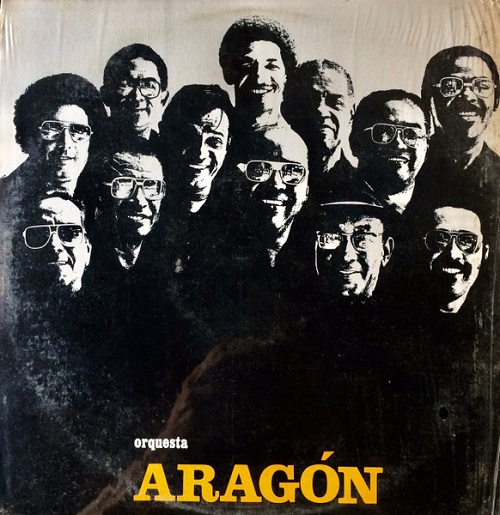
The Cha-Cha-Chá Boom (1950s): Spearheaded by composers like Enrique Jorrín and emblematic groups such as Orquesta Aragón, the charanga reached its international golden age. The format demonstrated absolute versatility in interpreting danzones, danzonetes, and the burgeoning, catchy rhythm of the cha-cha-chá.
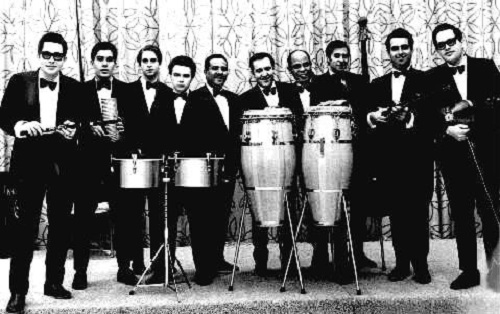
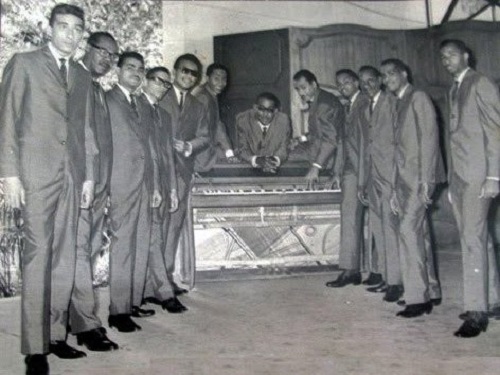
Pachanga and New York Charanga (1960s): In the vibrant New York scene, formations like Charlie Palmieri’s Orquesta Duboney, Ray Barretto’s projects (Pachanga with Barretto), Belisario López, and the legendary Orquesta Broadway sparked the pachanga craze. These groups combined the traditional finesse of the format with the speed, power, and energy of the New York urban environment.
Influence on Salsa and Timba: The format served as direct inspiration for later hybridizations. Experimentation led to the addition of trombones in the modern charanga, and later, cutting-edge Cuban groups like Charanga Habanera and Los Van Van took the core structure of the charanga and combined it with songo, the electrification of instruments, and contemporary arrangements.
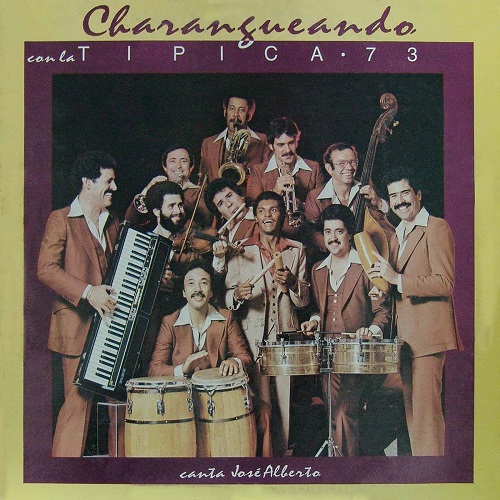
Fundamental Referents
To fully comprehend the historical weight of this format, it is essential to review the ensembles that marked a before and after in its development:
| Ensemble | Main Contribution |
| Antonio María Romeu Orchestra | Pioneer in incorporating the piano as a leading and harmonic instrument within the traditional charanga. |
| Orquesta Aragón | The ultimate global reference for the format; definitively styled the sound of the cha-cha-chá and pachanga on a global scale. |
| Orquesta Ritmo Oriental | Revolutionized the rhythmic sense, syncopated bass execution, and the violin section during the 1970s. |
| Orquesta Broadway | A solid bulwark of the traditional charanguero sound, rooted and triumphant in New York since 1962. |
| Típica 73 / Charanga 76 | New York exponents who masterfully fused charanga instrumentation with the aggressive nuances of contemporary salsa. |
Also Read: Hansel and Raúl, The Charanga Legend duo

- The Elegance of Charanga: History, Instrumentation, and Legacy in Afro-Caribbean Music - October 29, 2026
- Luisito Carrión: The Sensational Voice and Identity of the Sonero from Arecibo - October 29, 2026
- Teresa Carreño: The Walkyrie of the Piano Who Conquered the World - September 29, 2026