• Skip to primary navigation
  • Skip to main content

International Salsa Magazine

  • HOME
  • Previous editions
    • 2026
      • ISM / September 2026
      • ISM / August 2026
      • ISM / July 2026
      • ISM / June 2026
      • ISM / May 2026
      • ISM / April 2026
      • ISM / March 2026
      • ISM / February 2026
      • ISM / January 2026
    • 2025
      • ISM / December 2025
      • ISM / November 2025
      • ISM / October 2025
      • ISM / September 2025
      • ISM / August 2025
      • ISM / July 2025
      • ISM / June 2025
      • ISM / May2025
      • ISM / April 2025
      • ISM / March 2025
      • ISM / February 2025
      • ISM / January 2025
    • 2024
      • ISM / December 2024
      • ISM / November 2024
      • ISM / October 2024
      • ISM / September 2024
      • ISM / August 2024
      • ISM / July 2024
      • ISM / June 2024
      • ISM / May 2024
      • ISM / April 2024
      • ISM / March 2024
      • ISM / February 2024
      • ISM / January 2024
    • 2023
      • ISM / December 2023
      • ISM / November 2023
      • ISM / October 2023
      • ISM – September 2023
      • ISM – August 2023
      • ISM July 2023
      • ISM Edition June 2023
      • ISM – May 2023
      • ISM April 2023
      • ISM March 2023
      • ISM February 2023
      • ISM January 2023
    • 2022
      • ISM December 2022
      • ISM November 2022
      • ISM October 2022
      • ISM September 2022
      • ISM August 2022
      • ISM July 2022
      • ISM June 2022
      • ISM May 2022
      • ISM February 2022
      • ISM January 2022
    • 2021
      • ISM December 2021
      • ISM November 2021
      • ISM October – 2021
      • ISM September 2021
      • ISM August 2021
      • ISM July 2021
      • ISM May 2021
      • ISM April 2021
      • ISM June 2021
      • ISM March 2021
      • ISM February 2021
      • ISM January 2021
    • 2020
      • ISM December 2020
      • ISM November 2020
      • ISM October 2020
      • ISM September 2020
      • ISM August 2020
      • ISM July 2020
      • ISM June 2020
      • ISM May 2020
      • ISM April 2020
      • ISM March 2020
      • ISM February 2020
      • ISM January 2020
    • 2019
      • ISM December 2019
      • ISM November 2019
      • ISM October 2019
      • ISM Septembre 2019
      • ISM August 2019
      • ISM July 2019
      • ISM June 2019
      • ISM May 2019
      • ISM April 2019
      • ISM March 2019
      • ISM February 2019
      • ISM January 2019
    • 2018
      • ISM December 2018
      • ISM November 2018
      • ISM October 2018
      • ISM September 2018
      • ISM August 2018
      • ISM July 2018
      • ISM June 2018
      • ISM May 2018
      • ISM April 2018
      • ISM March 2018
      • ISM February 2018
      • ISM January 2018
    • 2017
      • ISM December 2017
      • ISM November 2017
      • ISM October 2017
      • ISM September 2017
      • ISM August 2017
      • ISM July 2017
      • ISM June 2017
      • ISM May 2017
      • ISM April 2017
      • ISM March 2017
      • ISM February 2017
      • ISM January 2017
    • 2016
      • ISM December 2016
      • ISM November 2016
      • ISM October 2016
      • ISM September 2016
  • Spanish
  • Download Salsa App
    • Android
    • Apple

Teresa Carreño: The Walkyrie of the Piano Who Conquered the World

From Venezuelan prodigy to an indispensable figure in classical music: the story of a virtuoso who defied her era.

Teresa Carreño (Caracas, 1853 – New York, 1917) was not only Latin America’s most prodigious pianist and composer, but also one of the most influential virtuosos in the history of classical music.

Nicknamed the “Walkyrie of the Piano” for her extraordinary technical power and overwhelming passion, Carreño shattered the stereotypes of her time and dominated the major concert halls of Europe and the Americas for over five decades.
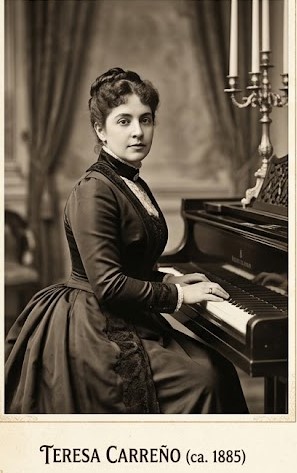
Teresa Carreño La Walkiria del piano que conquistó el mundo

Education and International Stature

Born into a family with deep intellectual and musical roots—her grandfather Cayetano Carreño was a chapel master, and the famed educator Simón Rodríguez was close to the family circle—she displayed precocious talent under the tutelage of her father, Manuel Antonio Carreño.

Following her family’s emigration to New York in 1862 due to political instability in Venezuela, she made her international debut at just nine years old.
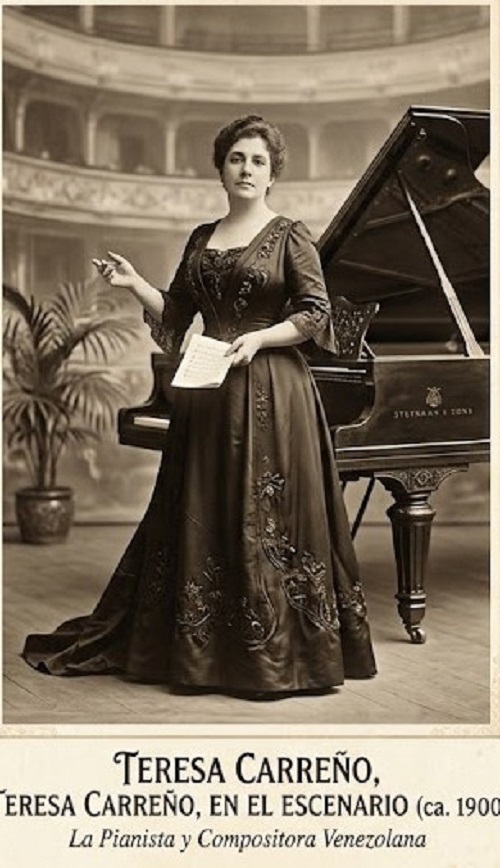
De prodigio venezolano a figura imprescindible de la música universal la historia de una virtuosa que desafió su época
  • Historic Encounters: In the United States, she gave a private recital at the White House for President Abraham Lincoln. Later, in Paris and Berlin, she refined her technique under the guidance of masters like Louis Moreau Gottschalk and earned high praise from legends such as Franz Liszt, Anton Rubinstein, Johannes Brahms, and Edvard Grieg.
  • European Acclaim: In 1889, she sealed her international standing with a historic debut alongside the Berlin Philharmonic.

A Multifaceted Career and Musical Legacy

Beyond being a top-tier concert artist, Teresa Carreño was a prolific composer, opera singer (mezzosoprano), conductor, and music educator.
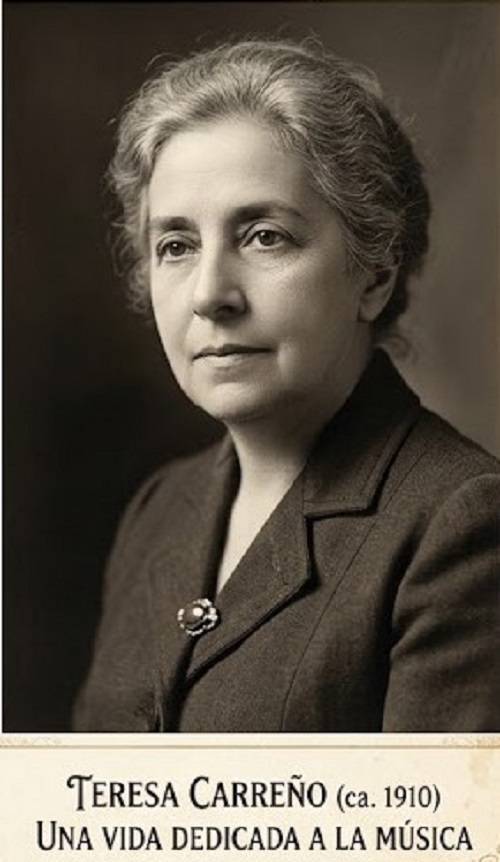
Teresa Carreño (Caracas, 1853 – Nueva York, 1917) no solo fue la pianista y compositora más prodigiosa de América Latina
Field Key Details
Composition Wrote over 70 works for piano, orchestra, and chamber ensembles. Her most iconic piece is the Mi Teresita Waltz, dedicated to her daughter.
Chamber Music Notable works include her String Quartet in B minor and Serenade for String Orchestra, both showcasing remarkable stylistic maturity.
Pedagogy Developed groundbreaking teaching methods centered on muscular relaxation and cultivating a critical approach to performance.

Immortal Legacy

Teresa Carreño’s legacy extends far beyond her performances preserved on player piano rolls. In 1977, her remains were interred in the National Pantheon in Caracas.

In her honor, the Teresa Carreño Cultural Complex—inaugurated in 1983—remains the epicenter of the performing arts in Venezuela, ensuring that the impact of this classical music pioneer endures for generations to come.

Key Highlights & Historical Context

  • The Abraham Lincoln Incident: How an out-of-tune piano at the White House didn’t stop her from mesmerizing the U.S. President.
  • Her Roles as Conductor and Singer: How she stepped up to conduct the orchestra and sing roles on short notice during her opera tour in Venezuela (1885–1887).
  • Pedagogical Impact: How her techniques on arm weight and posture revolutionized modern piano instruction.

Important Note:

The Teresa Carreño Theater, located in the Los Caobos neighborhood of Caracas, is one of the most iconic cultural complexes in Venezuela and Latin America. It is distinguished by its Brutalist reinforced concrete architecture, which integrates large geometric volumes with open spaces and incorporated artworks.
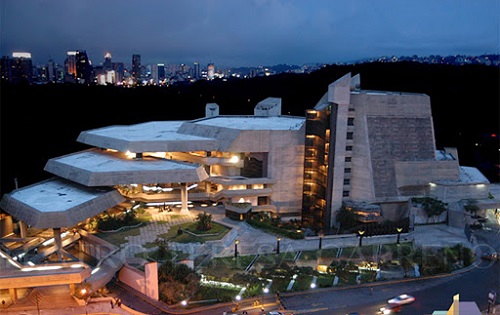
El Teatro Teresa Carreño, ubicado en la urbanización Los Caobos en Caracas

Location Details:Address: Paseo Colón, between Plaza Morelos and Luis María Campos Park (Los Caobos Park), Bellas Artes, Caracas. Nearby Access: Bellas Artes Metro Station (Line 1)

Also Read: Chick Corea Pianist, composer, arranger, producer, teacher. Acoustic and Electric

 By: Dj. Augusto Felibertt

  • Author
  • Recent Posts
Augusto Felibertt
Augusto Felibertt
Latin America Coordinator at International Salsa Magazine LLC
[email protected]

P.O. Box 50631
Palo Alto, CA 94303
+1 408 287-9500
Augusto Felibertt
Latest posts by Augusto Felibertt (see all)
  • Teresa Carreño: The Walkyrie of the Piano Who Conquered the World - September 29, 2026
  • Charlie Palmieri The Giant of the Blancas y las Negras - September 29, 2026
  • Ray Barretto: The Unshakable Beat of Latin Jazz and Salsa - September 29, 2026

International Salsa Magazine (ISM) is a monthly publication covering salsa activities around the world and has been publishing since 2007. It is a worldwide network of volunteers coordinated by ISM Magazine. Together, we work to strengthen salsa events around the world.