From the Streets of Santurce to the Pinnacle of the Global Salsa Movement.
The history of Latin music cannot be written without dedicating a chapter of honor to Andrés Montañez Rodríguez, known universally as Andy Montañez.
Born on May 7, 1942, in the working-class neighborhood of Trastalleres in Santurce, Puerto Rico, Andy didn’t just become one of the most prodigious and charismatic voices in the genre he also became a fundamental pillar in bringing salsa to international acclaim and preserving its legacy.

Growing up in a humble environment rich with musical nuance shaped his artistic sensitivity from a young age. Influenced by the boleros of the era, música jíbara (Puerto Rican folk music), and the Afro-Caribbean rhythms echoing from every corner of his neighborhood, young Andrés quickly proved to have a powerful, pitch-perfect baritone voice packed with an incomparable emotional quality. However, no one could have imagined that the boy from Trastalleres would ultimately become a living legend of Caribbean music.
The Golden Era with El Gran Combo de Puerto Rico (1962–1977)
His definitive leap into professional music came in 1962. Following the breakup of Cortijo y su Combo, Rafael Ithier founded El Gran Combo de Puerto Rico and recruited Andy Montañez as a lead vocalist alongside Pellín Rodríguez. This vocal duo became the driving engine that propelled the group toward resounding success for fifteen years.
Together with “La Universidad de la Salsa” (The University of Salsa), Andy immortalized tropical music classics that remain alive in the collective memory of dancers to this day. Tracks like “Las Hojas Secas,” “Julia,” “Un Verano en Nueva York,” “El Barbero Loco,” “Vagabundo,” and “Un Alma Buena” not only dominated radio charts across Latin America, but also defined the sound of salsa throughout the 1970s.

Key Milestone in His Career:
Andy Montañez’s time with the Puerto Rico All Stars represents a brilliant chapter in the history of salsa boricua. Conceived in the mid-1970s under the leadership and vision of trombonist and producer Frankie Gregory, the supergroup was born as Puerto Rico’s answer to the New York Fania All-Stars phenomenon, bringing together the island’s elite instrumentalists, arrangers, and vocalists.
“His participation in the Puerto Rico All Stars not only reaffirmed the group’s musical patriotism, but also served as a bridge to sonic maturity just before he went on to establish his own orchestra in 1980.”
For true connoisseurs and collectors of salsa dura, the presence of “El Niño de Trastalleres” in the Puerto Rico All Stars left an indelible mark, proving that his voice fit just as seamlessly into a charanga or combo format as it did into the technical rigor of a big band or all-star super-orchestra.
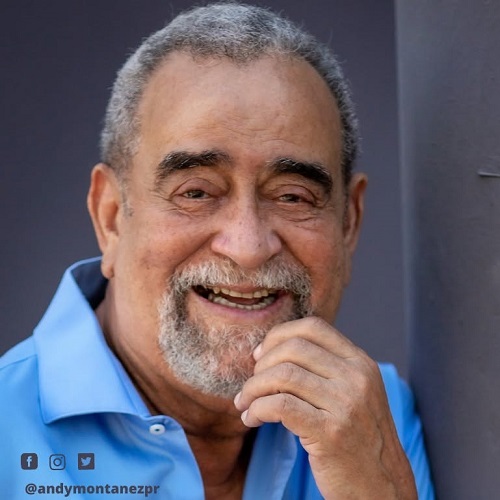
His ability to transition from a rhythmic guaguancó to a romantic bolero with equal mastery solidified the foundation of his popularity.
La Dimensión Latina and International Consolidation:
In 1977, Andy Montañez made one of the riskiest and most talked-about decisions of his career: leaving El Gran Combo to move to Caracas and join La Dimensión Latina, filling the shoes left by Oscar D’León.
Although the challenge was daunting given the massive void left by the departure of the “Sonero del Mundo,” Montañez showcased his versatility and profound respect for the clave.
In Venezuela, he built a brilliant era, recording timeless hits such as “El Eco de un Tambor,” “Son de la Loma,” “Cantares,” and “Pan de Piquito.”
His tenure with La Dimensión Latina reaffirmed his status as a premier vocalist and further strengthened his emotional bond with the Venezuelan public, where he became a beloved cultural icon.
Solo Career and New Sound Fusions:
In the early 1980s, Andy returned to his homeland to launch his solo career, backed by his own orchestra and collaborating consistently with top-tier arrangers.
During this period, he managed to stay at the top of the romantic and sensual salsa scene without losing the gritty street groove and authentic Caribbean sabrosura.
Memorable anthems that defined generations emerged from this era, including:
- “Casi Te Envidio”
- “Payaso”
- “Cobarde, Cobarde”
- “Me Gusta”
- “Milonga para una Mirada”
True to his restless creative spirit, Andy never hesitated to experiment. Throughout the 1990s and 2000s, he explored musical fusions by incorporating elements of traditional bolero alongside Trío Los Andinos, as well as venturing into reggaeton and urban rhythms with young Puerto Rican artists like Daddy Yankee and Julio Voltio. This open-minded approach allowed him to connect with new generations of listeners without ever betraying his salsa roots.
Legacy, Cultural Impact, and the Stamp of “El Niño de Trastalleres”:
Andy Montañez’s legacy extends far beyond his discography; he represents a symbol of Caribbean identity and pride.

His talent has been recognized with numerous global awards, including the prestigious Latin Grammy Lifetime Achievement Award in 2006 (for his album AM/PM Línea Directa alongside Cuban singer-songwriter Pablo Milanés), underscoring his ability to build bridges between salsa, trova, and the singer-songwriter tradition.
Beyond his flawless vocal range and undeniable stage presence, what truly sets Andy Montañez apart is his human warmth, genuine charisma, and the grounded humility he has always maintained.
Despite performing on the world’s grandest stages, he has never forgotten where he came from he will always proudly be “El Niño de Trastalleres.”
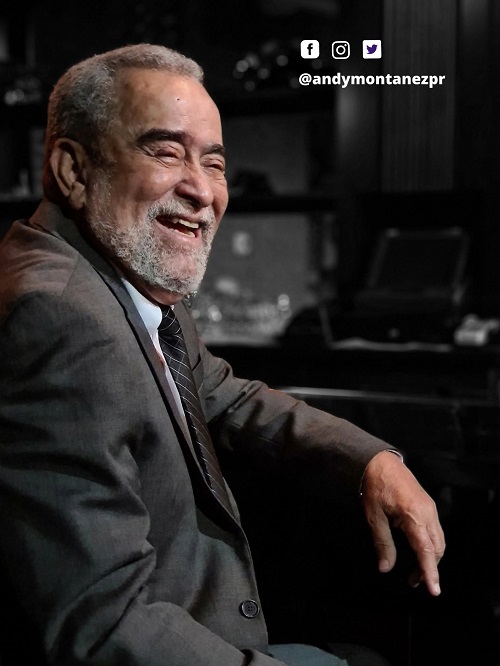
His voice remains a guiding light and an essential reference point for soneros everywhere who seek to master the art of singing with heart, rhythm, and authentic Caribbean soul.
Read Also: El Mulato Mayor Jerry Rivas and His Half-Century Legacy with El Gran Combo de Puerto Rico

- Teresa Carreño: The Walkyrie of the Piano Who Conquered the World - September 29, 2026
- Charlie Palmieri The Giant of the Blancas y las Negras - September 29, 2026
- Ray Barretto: The Unshakable Beat of Latin Jazz and Salsa - September 29, 2026