• Skip to primary navigation
  • Skip to main content

International Salsa Magazine

  • HOME
  • Previous editions
    • 2026
      • ISM / May 2026
      • ISM / April 2026
      • ISM / March 2026
      • ISM / February 2026
      • ISM / January 2026
    • 2025
      • ISM / December 2025
      • ISM / November 2025
      • ISM / October 2025
      • ISM / September 2025
      • ISM / August 2025
      • ISM / July 2025
      • ISM / June 2025
      • ISM / May2025
      • ISM / April 2025
      • ISM / March 2025
      • ISM / February 2025
      • ISM / January 2025
    • 2024
      • ISM / December 2024
      • ISM / November 2024
      • ISM / October 2024
      • ISM / September 2024
      • ISM / August 2024
      • ISM / July 2024
      • ISM / June 2024
      • ISM / May 2024
      • ISM / April 2024
      • ISM / March 2024
      • ISM / February 2024
      • ISM / January 2024
    • 2023
      • ISM / December 2023
      • ISM / November 2023
      • ISM / October 2023
      • ISM – September 2023
      • ISM – August 2023
      • ISM July 2023
      • ISM Edition June 2023
      • ISM – May 2023
      • ISM April 2023
      • ISM March 2023
      • ISM February 2023
      • ISM January 2023
    • 2022
      • ISM December 2022
      • ISM November 2022
      • ISM October 2022
      • ISM September 2022
      • ISM August 2022
      • ISM July 2022
      • ISM June 2022
      • ISM May 2022
      • ISM February 2022
      • ISM January 2022
    • 2021
      • ISM December 2021
      • ISM November 2021
      • ISM October – 2021
      • ISM September 2021
      • ISM August 2021
      • ISM July 2021
      • ISM May 2021
      • ISM April 2021
      • ISM June 2021
      • ISM March 2021
      • ISM February 2021
      • ISM January 2021
    • 2020
      • ISM December 2020
      • ISM November 2020
      • ISM October 2020
      • ISM September 2020
      • ISM August 2020
      • ISM July 2020
      • ISM June 2020
      • ISM May 2020
      • ISM April 2020
      • ISM March 2020
      • ISM February 2020
      • ISM January 2020
    • 2019
      • ISM December 2019
      • ISM November 2019
      • ISM October 2019
      • ISM Septembre 2019
      • ISM August 2019
      • ISM July 2019
      • ISM June 2019
    • 2016
      • ISM December 2016
      • ISM November 2016
  • Spanish
  • Download Salsa App
    • Android
    • Apple

Latin America

Argentina Tango Salon Festival

Latin America / Argentina / Rio de Plata
Argentina Tango Salon Festival 2017

Tango is a passionate and dramatic dance, characteristic of the Rio de la Plata region and its surrounding areas—primarily the cities of Buenos Aires (Argentina) and Montevideo (Uruguay).

From [Month] 12th to 16th, the Argentina Tango Salon Festival returns for its fourth edition. As one of the most popular festivals in the circuit, it draws over 500 attendees, not only from Buenos Aires and throughout Argentina but also from Europe, Russia, and Asia.

Tango Mas Tango is the company of the moment, renowned for its subtlety and the perfect blend of Tango de Pista (Social Tango) and Stage Tango. The company features six world-class couples, including three World Tango Champions.

The Argentina Tango Salon Festival (ATSF) was envisioned, produced, and directed by Roberto Zuccarino and Magdalena Valdez. It was born out of a desire to provide the Argentine public with a tango festival featuring international stars. These legendary figures and masters come together at ATSF to share their knowledge, legacy, and experience.

Argentina Tango Salon Festival 2017 - Show
Argentina Tango Salon Festival 2017 – Show

This fourth edition of the festival features:

  • 5 days of classes.
  • 19 masters and 29 workshops.
  • 5 nights of milongas with live traditional orchestras.
  • The premiere of the new show by the Tango Más Tango Company, also directed by Roberto Zuccarino and Magdalena Valdez.

Featured Artists for the 4th Edition:

  • Sebastian Achaval & Roxana Suarez
  • Daniel Nacucchio & Cristina Sosa
  • Jonathan Saavedra & Clarisa Aragon
  • Romina Levin & Leandro Gomez
  • Nuria Lazo & Fede Ibañez
  • Sebastian Arce & Mariana Montes
  • Virginia Pandolfi & Jonatan Aguero
  • Christian Marquez & Virginia Gomez
  • Johana Copes
  • Roberto Zuccarino & Magdalena Valdez

“We look forward to seeing you for five days of the festival—European style, but right here in the City of Tango, Buenos Aires,” says Magdalena Valdez.

For more information regarding class rates and locations, please visit: www.argentinatangosalon.com.ar

Panama Jazz Festival 2017

Latin America / Panama / Panama
Panama Jazz Festival 2017

Although our magazine primarily focuses on Latin rhythms like Salsa, Kizomba, and Bachata, our editorial mission also includes promoting both emerging and established artists, as well as the academies and festivals within our scene. We believe these are synonymous with the Latin musical culture that enlivens our very souls.

Jazz is one of the most famous genres in the world, and as it has spread globally, it has evolved into various styles. In the Americas, it gave birth to Latin Jazz, which thrives on the fusion of rhythms and forms originating from Latin music. One of the world’s most renowned celebrations of this genre is the “Panama Jazz Festival,” an acclaimed cultural project where creativity, exchange, talent, and inspiration have made the event an international benchmark.

For its 14th edition (Note: The original text says 4ta/4th, but the 2017 festival was the 14th), the Panama Jazz Festival pays tribute to Violeta Green, whose voice brought a unique tone to Panamanian Jazz. Her career, drive, and spirit of perseverance transcend time and remain part of the musical legacy the festival seeks to share from “the heart of America to the rest of the world.”

Romero Lubambo - Panama Jazz Festival 2017
Romero Lubambo – Panama Jazz Festival 2017

Esperanza Spolding - Panama Jazz Festival 2017
Esperanza Spolding – Panama Jazz Festival 2017

Bill Dobbins - Panama Jazz Festival 2017
Bill Dobbins – Panama Jazz Festival 2017

Many remember Violeta Green for her humility, gentle nature, and versatility across musical languages, including Jazz, Blues, and Calypso—the latter being a quintessential Caribbean style known for its upbeat, catchy rhythm.

With her passion for song and rhythm, Violeta Green was admired for qualities that led her to perform internationally in the United States, Colombia, and Central America. However, in Panama, she is best known for leaving an indelible mark on the music scene by blending Jazz with Calypso to create a truly special sound. This year, the festival is proud to honor her contributions.

This magnificent festival will take place from January 10th to the 14th, turning Panama’s capital into a global jazz stage. This is made possible through the support of the government, private sector, NGOs, and the invaluable passion and loyalty of both local and international audiences.

Panama Jazz Festival 2017 - Retro Jazz
Panama Jazz Festival 2017 – Retro Jazz

Panama Jazz Festival 2017 - Photo 1
Panama Jazz Festival 2017 – Photo 1

Panama Jazz Festival 2017 - Photo 2
Panama Jazz Festival 2017 – Photo 2

Panama Jazz Festival 2017 - Dianne Reeves
Panama Jazz Festival 2017 – Dianne Reeves

The festival will feature an illustrious lineup of artists. Confirmed international performers include:

  • Dianne Reeves, Esperanza Spalding, and Romero Lubambo.
  • Bill Dobbins, Terri Lyne Carrington, and John Patitucci.
  • The Electric Guitar Quartet (featuring Adam Rogers and Steve Cardenas).
  • Children of the Light (Danilo Pérez, John Patitucci, and Brian Blade).
  • The Rony Eytan Quartet (presented by the Embassy of Israel).

Representing Panama, the festival will showcase the talent of Joshue Ashby & C3 Project, Graciela Nuñez and the Black Tea Project, Karla Lamboglia, Omar Díaz, Carlos Agrazal, Luis Carlos Pérez, and Los Beachers.

Additionally, the festival will feature “Retro Jazz,” a group from the Dominican Republic. Their repertoire reimagines popular Dominican songs through the lens of Jazz, Bossa Nova, Latin Jazz, and Funk—combining the elegance of Dominican classics with the harmonic depth and improvisational energy of Jazz.

The festival is the most important annual event organized by the Danilo Pérez Foundation, which uses music as a tool for positive social transformation. As Danilo Pérez says: “I invite you to celebrate with music to create a rhythm that inspires peace, love, and brotherhood.”

Panama Jazz Festival 2017 - Schedule
Panama Jazz Festival 2017 – Schedule

Contact Information:

  • Web: http://panamajazzfestival.com/
  • Phone: +507 317-1466
  • Facebook: https://www.facebook.com/ Panama JazzFesti/?fref=ts
  • Instagram: https://www.instagram.com/ panamajazzfestival/
  • Twitter: https://vimeo.com/ panamajazzfestival
  • Youtube: https://www.youtube.com/user/panamajazzfestival
  • Vimeo: https://vimeo.com/ panamajazzfestival
Panama Jazz Festival 2017 Flyers


Nano Cabrera Presents “Échate Pa’ Cá

North America / Puerto Rico

Renowned Puerto Rican singer-songwriter Nano Cabrera presents his theme for this holiday season titled “Échate Pa ‘Acá”. This song has mergers with urban music. It was written by Marinés Colón and can be downloaded for free via the Nano channel on the Sound Cloud digital platform.

“I present this song with a lot of humility and I hope you enjoy it, we did it with the purpose of downloading it and enjoy it at your parties.” Christmas is the best time of the year! It’s when forget the problems because the Christmas represents parrandas, joy and sharing in family, “said Nano.

The contagious joy to which we are accustomed, is demonstrated in the musical arrangement of the song “Échate Pa ‘Acá” that was created by the own Nano and counted on the co-production of Durand tla Elite.

Nano Cabrera - Echate Pa aca
Nano Cabrera – Echate Pa aca

Cabrera, responsible for successes such as: “Que le den, que le den” and “Este Pueblo tiene sabor”, is a graduate of the Conservatory of Music of Puerto Rico and dominates the execution of guitar, bass, piano, cuatro and percussion. In addition, it has participated in 65 record productions.

“The Christmas theme can be downloaded for free through the Sound Cloud digital platform”

Nano Cabrera

Date of Birth: March 1, 1952

Place of Birth: Puerto Rico

Nano Cabrera Biography

Nano Cabrera
Nano Cabrera

Nano Cabrera was born in the context of a musical family. In his childhood years he began to manifest his talent with the guitar and already in his adolescence he founded his first Latin rock group, “Dios, Madre y Patria”. In that stage of rocker that occurred in the years when the movement of the new wave reigned, Nano composed, arranged and played bass. Already in the late 60’s the young musician coincided with the arrival of the duo Nelly and Tony, with whom he worked for several years as arranger, bassist, composer and vocalist.

Graduated from the Conservatory of Music in the 70’s Nano was a founding member of the new group, Haciendo Punto en Otro Son. With this group, distinguished as one of the pillars of the new Puerto Rican trova, Nano remained for two years, thus polishing his knowledge as arranger and composer. In addition to playing the bass, Nano added to the group a singular falsetto that became the characteristic sound of Haciendo Punto.

Nano Cabrera - Nuevo Viejo
Nano Cabrera – Nuevo Viejo

After his work with the group, Cabrera began a career as a soloist popularizing the theme “Que le den, que le den” with which he won an exclusive contract with

Wapa Televisión (today Televicentro). At this stage comes his famous “Este pueblo tiene sabor” that brought so much popularity by becoming the jingle of a well-known soft drink.

In his career, Nano has recorded more than a dozen albums as a soloist, in which he has popularized songs such as “María Isabel” and “Ramito de azucenas”.

Part of his artistic career includes performances in the Dominican Republic, Colombia, the United States and Spain.

Since always his shows have been characterized by creating a fresh, original and full of positive energy. Today, along with twelve other musicians and some dancers, Nano Cabrera has managed to create a fusion of sounds and visual elements that allow spectators to make an imaginary journey through different musical genres.

Main Discography

  • A ella le gusta – 2000
  • Amiga de la luna – 1995
  • Con buena nota – 1997 (junto a Ismael Miranda)
  • Tropimusical – 1990
  • Caribe soy – 1986
Nano Cabrera - Exitos y algo mas
Nano Cabrera – Exitos y algo mas

“Sonido Bestial Sinfónico” solidifies classical sound in salsa

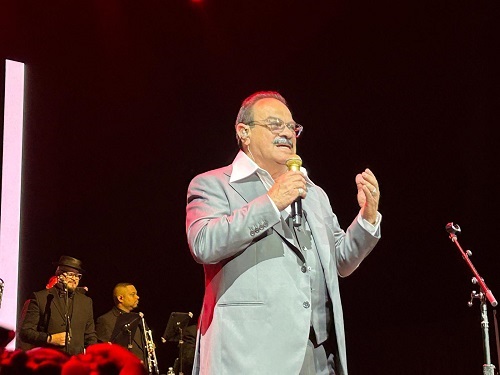
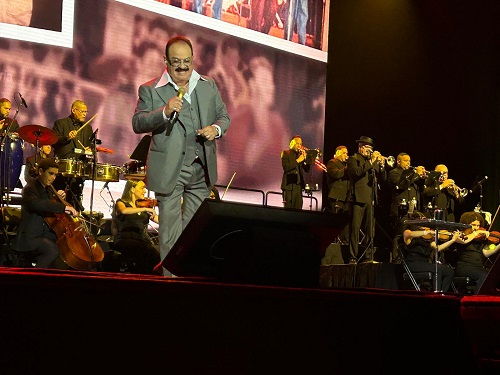
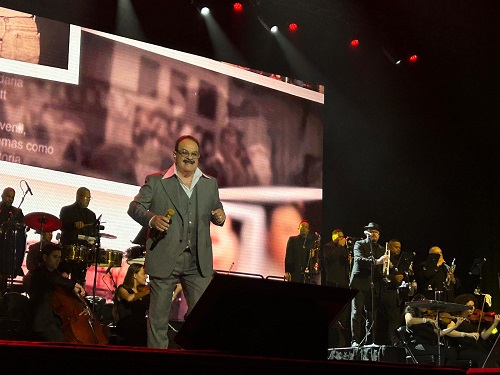
The February 27, 2026, performance of Sonido Bestial Sinfónico, which reunited “The Kings of Salsa,” Richie Ray and Bobby Cruz, at Puerto Rico’s Coca-Cola Music Hall, served as a farewell for Bobby Cruz. With a sold-out crowd thanks to Alexandra Fuentes’ production and a promotional alliance with the radio station Salsoul the legendary salsa vocalist said goodbye to the stage, insisting that while death had come looking for him, it had taken Willie Colón instead.

"Sonido Bestial Sinfónico" solidifies classical sound in salsa
“Sonido Bestial Sinfónico” solidifies classical sound in salsa

During Sonido Bestial Sinfónico, the audience also celebrated the 81st birthday of virtuoso pianist Richie Ray (born February 15) and the 88th birthday of singer Bobby Cruz, who celebrated his birthday the day before the event. Midway through the performance, the duo took a moment to blow out the candles on a cake brought onto the CCMH stage.

The concert was conducted by maestro Cucco Peña, featuring the voice of Yanira Torres and the Philharmonic Orchestra of Puerto Rico. From the local salsa scene, standout musicians included timbalero maestro Edwin Clemente, Emanuel Navarro on congas, and Richie Carrasco on bongo and cowbell, alongside the essential bass swing provided by Edwin Morales, director of the Orquesta Mulenze. Richie Ray’s wife, Angie Maldonado, and Jerry Medina were featured on backing vocals.

This symphonic concert, which celebrates more than six decades of “The Kings of Salsa” in music, had been postponed from its original date of October 25, 2025.

The repertoire included major hits popularized by the duo that have become classics of tropical music. Following a symphonic medley opening, the setlist included “Sonido Bestial,” “Agúzate,” “Richie’s Jala Jala,” “La Lluvia,” “Míster Trumpetman,” “El Diferente,” “Mi Amigo Juan,” “Yo Sé Que Te Amo,” “La Zafra,” “Juan en la Ciudad,” “A Mi Manera,” and a reprise of “Sonido Bestial,” among others.

The performance on Friday, February 27, 2026 of the Symphonic Bestial Sound concert that reunited "The Kings of Salsa", Richie Ray and Bobby Cruz
The performance on Friday, February 27, 2026 of the Symphonic Bestial Sound concert that reunited “The Kings of Salsa”, Richie Ray and Bobby Cruz

The show’s pinnacle featured Cucco Peña singing “Idilio” alongside Norberto Vélez in a heartfelt tribute to the late Willie Colón. The conductor acknowledged that figures like Willie Colón have made it possible for Puerto Rico to hold an important place on the global stage, affirming that “music is the face of Puerto Rico to the world.”

Richie Ray interjected a segment in which he shared his testimony of conversion to Christianity, extending an invitation to anyone who wished to join the ministry he now leads as a pastor. During this segment, the song “Hombres de Valor” was performed.

Another significant moment occurred when Bobby Cruz sang “La Novia,” clarifying that he is “free, but not available.” In addition to the hits achieved during the duo’s monumental and historic musical career, Richie Ray led several classical music pieces adapted for salsa.

The Coca-Cola Music Hall in Puerto Rico served as Bobby Cruz's farewell concert. It was a sold-out show.
The Coca-Cola Music Hall in Puerto Rico served as Bobby Cruz’s farewell concert. It was a sold-out show.

The patriotic finale featured the performance of “Mi Bandera,” which served as a farewell from both Richie and Bobby to the island, as both artists reside within the Puerto Rican diaspora in the continental United States. Events of this magnitude are what give deep meaning to maestro Cucco Peña’s statement: “Music is the face of Puerto Rico to the world” within the universal musical scene.

Bella Martinez Puerto Rico


Also Read: Don Perignon and La Puertorriqueña Release Classique et Savoureux


“El Caballero de la Salsa” Kicks Off “Íntimo” in Puerto Rico

With performances on February 14 and 15, 2026, at the Coliseo de Puerto Rico, Gilberto Santa Rosa started the year “at home” with two sold-out shows and the successful launch of his “Íntimo” tour. That is always the goal. On the island, the audience is as demanding as they are generous and the singer knows it. Following the concerts, “El Caballero” posted on social media: “Puerto Rico, thank you for giving us two nights full of love, dancing, and so much music at home! What a thrill it is to sing at home!”

“El Caballero de la Salsa” Kicks Off "Íntimo" in Puerto Rico
“El Caballero de la Salsa” Kicks Off “Íntimo” in Puerto Rico

On January 30 of this year, the album that shares the tour’s title was released. In Puerto Rico, two shows were scheduled for Valentine’s Day weekend. The first coincided with Valentine’s Saturday; the second was added for the following day due to how quickly the first round of tickets sold out.

At exactly 6:46 PM on Sunday, February 15, 2026, the stage of the Coliseo de Puerto Rico welcomed Gilberto Santa Rosa’s orchestra to begin the second concert, marking the salsa singer’s long-awaited reunion with the Puerto Rican public. According to a press release from Edumil Ruiz’s agency: “These performances are part of a series of special concerts celebrating the month of love (…) and represent the long-awaited reunion of ‘El Caballero de la Salsa’ with his Puerto Rican audience after two years since his last performance on the island.”

A Night of Rhythms and Ovations

The performance began with high energy and impact from the very first track. The opening bars were seasoned with the sounds of the Puerto Rican cuatro, played by Fabiola Muñoz. “Déjate querer” featured a timbal solo by Pete Perignon, while “Cartas sobre la mesa” highlighted Saviel Cartagena’s saxophone. These were followed by “Ahora o nunca,” “Tú,” “Amor para la historia,” “Quiéreme,” and “Almas gemelas,” which featured Juan Carlos Vega on an aerophone solo; followed by “Yo no te pido” and “Conciencia,” for which the audience gave the artist a thunderous standing ovation.

Between songs, Santa Rosa took a moment to address the crowd: “I was born, raised, and live here. And it moves me to know that here in Puerto Rico, I am still dearly loved.” He added that he is a fan of singing to the brokenhearted with “scorned” lyrics set to savory, danceable arrangements. Addressing the contradiction of that combination, he stated, “We Puerto Ricans are capable of crying and dancing at the same time,” capping the explanation with: “That’s just how passionate we are.”

152 With the performances on February 14 and 15, 2026 at the Coliseo de Puerto Rico, Gilberto Santa Rosa began the year in "his home" with two sold-out shows.

152
With the performances on February 14 and 15, 2026 at the Coliseo de Puerto Rico, Gilberto Santa Rosa began the year in “his home” with two sold-out shows.

After his remarks, “Gilbertito” explained he would welcome a beloved artist to sing “Misterio,” an urban salsa track with lyrics “about a relationship where you don’t know if it’s coming or going, starting or ending.” Gerardo Rivas took the lead in his solo role, which required Pete Perignon to fill in on the congas while Pedro Marcano took over the timbales.

Tributes and Special Guests

Later, Gilberto Santa Rosa dedicated a segment of the concert to a legend Puerto Rico bid farewell to last December. He stated that Rafael Ithier was a musical genius whom he considered a mentor and a father in music, dedicating the iconic “Las hojas blancas” to him. Notably, the production featured a team of sign language interpreters who translated the entire concert in real time.

The repertoire also included “Vino tinto,” “Cosas nuevas” highlighting Pedro Marcano on the flugelhorn and “No me dejes solo,” which kicked off with a mozambique rhythm and rumba clave on the drums, courtesy of Gerardo Rivas and Tito Echevarría. The most anticipated moment arrived when Santa Rosa asked the crowd to join him in a chorus that allowed “El Caballero” to pay his respects to special guests. The “Choliseo” vibrated as the crowd chanted: “Mira quien llegó / Quién está ahí / Qué bueno que te vino a ver” (Look who arrived / Who is there / How good they came to see you). The tenacious sonero greeted the following guests in perfect rhyme and with his trademark elegance: Don Perignon, Luisito Ayala, Luis Vázquez, Juan José Hernández, Elwood Cruz, Marilin Pupo, Cucco Peña, Lissette Álvarez, Willie Chirino, his wife Alexandra Malagón (whom he called “The owner of my heart”), and Ismael Miranda, among others.

The evening continued with “No pensé enamorarme otra vez” and “Para vivir,” for which he was joined by Yeika Álvarez and “a representation of the Arturo Somohano Philharmonic Orchestra of Puerto Rico.”

Gerardo Rivas (Hijo de Jerry Rivas el reemplaso de Jimmie Morales), Gilberto Santa Rosa y Pete Pergnon

A Monument to Nostalgia

“Tengo una muñeca,” followed by a fusion that progressed from boogaloo to cha-cha-cha and finally to salsa with Gilberto showcasing his skill on the maracas led us into a monument of nostalgia. The memory of the conga player Santa Rosa had worked with since their days in Willie Rosario’s orchestra until his passing in 2021 was honored with “Impaciencia.” The song showcased the Jimmie Morales Signature Series drums by Remo Percussion©, which sponsored “El Rey del Seco” (The King of the Dry Hit) from 2005 to 2016.

During this segment, “El Caballero” displayed his own skills as a talented conguero while singing, accompanied by Gerardo Rivas (the orchestra’s conga player) and Pete Perignon (the timbalero) on either side. While the audience was spellbound by the sight of the three musicians at their drums, this writer wondered if Gilberto was reminiscing about the days when he used to imagine he was a singer, using an upside-down trash can as a drum in the group led by Don Perignon.

The “Army of One”

This intervention was followed by “La agarro bajando,” which preceded the introduction of the band members, “musically directed by the master of the trombone,” Georgie Torres. The lineup included:

  • Backing vocals: Yeika Alvarez and Gino Ramírez.
  • Puerto Rican Cuatro: Fabiola “The one who holds her own” Muñoz.
  • Trumpet: Rebecca Zambrana (with the orchestra for 29 years) and Pedro Marcano.
  • Trombone: Anthony Rosado (also a ballroom dance champion).
  • Saxophone/Flute: Francisco “Paquito” Cruz and Saviel Cartagena.
  • Piano: Luis Marín.
  • Congas: Gerardo Rivas.
  • Timbales: Pete Perignon Morales.
  • Bongos: Rafael “Tito” Echevarría.
  • Bass: The legend Johnny Torres.
  • Keyboard/Aerophone: Dr. Juan Carlos Vega.
  • Vocals: Michael Pérez.

Santa Rosa also praised the technical and audiovisual teams, producer Rafo Muñiz, and Edumil Ruiz, noting that “all these people make this work.”

After identifying his team who gave a masterclass in what the military calls an “Army of One” the hits “Conteo regresivo,” “Perdóname,” “Que alguien me diga,” and “Que manera de quererte” rang out. Gilberto Santa Rosa celebrated Valentine’s weekend by once again proving why he holds the loyalty and preference of his Puerto Rican fanbase.

From the start, the energy never wavered. The crowd sang and danced along with the artist, the musicians, and the dancers on stage. The vast repertoire serves as a reminder of the countless hits “El Caballero de la Salsa” has collected throughout his prolific career.

Bella Martinez Puerto Rico


Also Read: Bandleader and conga player Tony Rosa tells us how he built his career

  • « Go to Previous Page
  • Page 1
  • Interim pages omitted …
  • Page 4
  • Page 5
  • Page 6
  • Page 7
  • Page 8
  • Interim pages omitted …
  • Page 93
  • Go to Next Page »

International Salsa Magazine (ISM) is a monthly publication about Salsa activities around the world, that has been publishing since 2007. It is a world network of volunteers coordinated by ISM Magazine. We are working to strengthen all the events by working together.