• Skip to primary navigation
  • Skip to main content

International Salsa Magazine

  • HOME
  • Previous editions
    • 2026
      • ISM / March 2026
      • ISM / February 2026
      • ISM / January 2026
    • 2025
      • ISM / December 2025
      • ISM / November 2025
      • ISM / October 2025
      • ISM / September 2025
      • ISM / August 2025
      • ISM / July 2025
      • ISM / June 2025
      • ISM / May2025
      • ISM / April 2025
      • ISM / March 2025
      • ISM / February 2025
      • ISM / January 2025
    • 2024
      • ISM / December 2024
      • ISM / November 2024
      • ISM / October 2024
      • ISM / September 2024
      • ISM / August 2024
      • ISM / July 2024
      • ISM / June 2024
      • ISM / May 2024
      • ISM / April 2024
      • ISM / March 2024
      • ISM / February 2024
      • ISM / January 2024
    • 2023
      • ISM / December 2023
      • ISM / November 2023
      • ISM / October 2023
      • ISM – September 2023
      • ISM – August 2023
      • ISM July 2023
      • ISM Edition June 2023
      • ISM – May 2023
      • ISM April 2023
      • ISM March 2023
      • ISM February 2023
      • ISM January 2023
    • 2022
      • ISM December 2022
      • ISM November 2022
      • ISM October 2022
      • ISM September 2022
      • ISM August 2022
      • ISM July 2022
      • ISM June 2022
      • ISM May 2022
      • ISM February 2022
      • ISM January 2022
    • 2021
      • ISM December 2021
      • ISM November 2021
      • ISM October – 2021
      • ISM September 2021
      • ISM August 2021
      • ISM July 2021
      • ISM May 2021
      • ISM April 2021
      • ISM June 2021
      • ISM March 2021
      • ISM February 2021
      • ISM January 2021
    • 2020
      • ISM December 2020
      • ISM November 2020
      • ISM October 2020
      • ISM September 2020
      • ISM August 2020
      • ISM July 2020
      • ISM June 2020
      • ISM May 2020
      • ISM April 2020
      • ISM March 2020
      • ISM February 2020
      • ISM January 2020
    • 2019
      • ISM December 2019
      • ISM November 2019
      • ISM October 2019
      • ISM Septembre 2019
      • ISM August 2019
      • ISM July 2019
      • ISM June 2019
  • Download Salsa App
    • Android
    • Apple
  • Spanish

North America

Rubby Haddock is one of the greatest exponents of our most danceable Latin Music in the Island of Enchantment

Our orchestra was born at the end of 1969, year in which we also began to record the 1st production “Presenting” which was released at the end of 1970.

Many talented musicians have passed through our orchestra such as Juancito Torres, Mario Ortiz, Rey Santos, Frank Morell, Hugo Dumont and many more that we will mention later.

Rubby Haddock is one of the greatest exponents of our most danceable Latin Music in the Island of Enchantment

Singers such as Sergio Cariño, Juan Acosta, Raul Carbonell Jr., Tony Rivas, Cucho Caro, Andres Reyes, Pedro Arroyo, Ricky Ramos, Tito Gomez, Yolanda Rivera, Eddie Rosario and Johnny Maldonado.

Rubby Haddock is one of the greatest exponents of good Latin music. His orchestra is known as one of the most danceable “Big Bands” on the Island.

He is called “El Maestro” by his followers and fellow artists. Because of his long artistic career, exposed to the world of show business, Rubby has become one of the best connoisseurs in the history of Latin music.

Born in Manhattan, New York on February 6th to Puerto Rican parents. His mother lived in Miami most of her life and in the late 60’s his father, Ruben Haddock who was a musician in New York, founded the most famous Dance Club in Puerto Rico, MIRAMAR CENTER when he owned El Club Coameño in Rio Piedras and El Club Caborrojeño in Bayamon.

A glorious time where his Producer Father brought to the Island of Puerto Rico the biggest stars of Latin music such as: TITO RODRIGUEZ, TITO PUENTE, LA LUPE, EDDIE PALMIERI, RICKY RAY, JOEY PASTRANA, JOE CUBA, WILLY COLON, HECTOR LAVOE, LARRY HARLOW, ISMAEL MIRANDA, CHIVIRICO DAVILA, TNT BAND among others, besides being manager and producer of ROBERTO Y SU NUEVO MONTUNO.

Rubby Haddock grew up with his father as a teenager in Puerto Rico within the entire business operation of Don Ruben, knowing these top stars of our music and hence the vein of musician and producer during his artistic career and experience in show business.
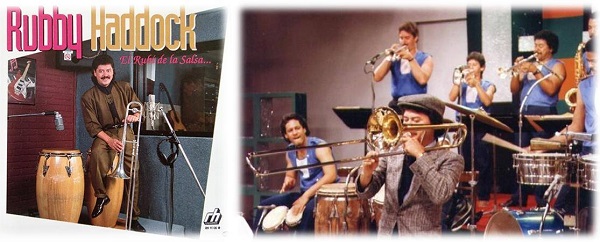
Celebrating the Rubi of Salsa Rubby Haddock. One of the greatest exponents of good Latin music

Rubby Haddock studied piano but showed that his passion was playing trombone.

For the years 1972 under the label UNIART, Rubby Haddock launches his first record production, “PRESENTING ORCH HADDOCK” becoming a powerful hit on the Island with the musical cut MONACILLO Y CORREA COTTO as some of the hits of this production.

In this first stage of Rubby’s musical career are among the different recordings: “PRESENTING”, “ASI ME LLAMAN”, “LA LEYENDA”, “DE REGRESO”, “UNLIMITED”, “2ND CONCIERTO FAMILIA TH”, “THE ENTERTAINER”, “THE ENTERTINER 2”, “OTRA VEZ”, “SALSA TROPICAL”, “EL RUBI DE LA SALSA”, “PASAPORTE MUSICAL”, “EL RUBI DE LA SALSA” and “PASAPORTE MUSICAL”.

In the second stage of his career, in 1978, when Rubby was the most popular in Puerto Rico with the song “Son Los Nervios”, one of the songs that propelled merengue on the island, Rubby surprised everyone by joining the U.S. Armed Forces in San Antonio Texas and Washington State, where in addition to completing medical courses, he also completed his Bachelor of Music Education at the Universities of Puget Sound and Pacific Lutheran.

In the 9th Infantry Div. Rubby became a member of the 9th Infantry Division Band where in addition to the Division Military Orchestra, Rubby most enjoyed the experience of being a member of the JAZZ ENSEMBLE BAND and the Big Band Jazz.

It didn’t take long for some of these great musicians to come and join Rubby’s Orchestra… At the request of a great Puerto Rican friend, and high ranking Army officer Eddie Velez, Rubby agreed to form his Orchestra back in Tacoma Washington State.

Remembering beautiful moments lived outside of his homeland until 1980, when he returned to Puerto Rico for a recording contract with the firm TH RECORDS, In this “come-back” in his return to Puerto Rico for the 80’s Rubby produces one of his most successful works: “De Regreso” with songs like: A Mi Jibarita, El Amor, Maria Teresa, Sra. Temptation with singers Raul Carbonell and Tony Rivas.

At the end of the 80’s Rubby Haddock ventured into Puerto Rican television, Wapa TV and Telemundo Channel 2, as producer of shows such as “Un puertorriqueño para la Historia (José Feliciano)”, New Year’s Eve Specials, etc.

Rubby Haddock y Sus Amigos, where the most prestigious artists such as: José José, José Feliciano, Mongo Santamaría, Barry Rogers, Eddie Palmieri, Julio Angel, and many more paraded in this section produced within the Midday Show. …. This show remained on the air for five and a half years.

Rubby Haddock
Rubby Haddock

By 1992 Rubby Haddock y su Orquesta represented Puerto Rico in the Puerto Rican Pavilion at Expo 1992 in Seville, Spain.

In the mid 90’s, although Rubby still continued as the Director of his Orchestra, he also ventured as an Entrepreneur with his own commercial Advertising Agency, where in addition to directing the entire operation of the agency Haddock & Haddock Adv, he was also the Creative, being in charge of all the production of Radio, Press and Television commercials for all the clients of the Agency.

By that time Rubby had already founded his own Recording Studio (Pentagrama Round), where he produced his three most recent productions of this decade in addition to sharing recordings for artist friends such as: Omar Alfano with Son By 4, it was from this studio that hits such as “A puro Dolor” were released.

His recording engineer was the outstanding engineer Sonny Hernandez. With him he shared works with artists such as: Danny Rivera, Andrés Jiménez, Ismael Miranda, Elvis Crespo, Melina León, Edwin Colon Sayas, Trió Borinquén, and others.

In 2000 Rubby moved to the United States where he currently lives. His fans constantly ask him to re-form his Orchestra because they miss his music and they also ask him for a compilation of his hits and a “Historia DVD” exposing the History of his Salsa, which seems to be Rubby Haddock’s next endeavor as an Artist.

Rubby has 3 sons, the first 2 Reuben Haddock and Rubby Haddock Jr, dedicated their careers to the business world and his youngest son Randy Haddock, who currently lives in New York, is a musician, singer and composer, already demonstrating great talent and the vein that comes from Don Ruben (grandfather) and Rubby (his father).
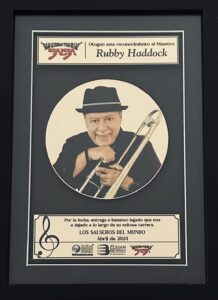
A very special thanks to Edgar Berrio and all the staff of Las Leyendas Vivas De La Salsa #8 for this great recognition, on behalf of Rubby Haddock and his family

Sources:

https://www.rubbyhaddock.com/news

pequi34 via Musica.com

Also Read: Jerry Ferrao says in salsa key: “My life is a drum”.

Puerto Rican singer Irma Kaché speaks exclusively to us

Irma Kaché is a talented singer born in Ponce, Puerto Rico, who has a very interesting story behind her, so we have set about communicating with her to talk about the most important facts of her life and career.   

Irma Ortiz, the artist’s real name, shows us that it is possible to achieve a lot with little whenever there is the will and desire to get what we want. What she tells us below proves it.   

Irma was born in Ponce
Talented singer Irma Kaché was born in Ponce, Puerto Rico

How Irma first became interested in music   

In her native Puerto Rico, music was always in Irma’s home since she was very young, as her mother was a singer in a radio station and won talent shows, but all that changed when she got married and had children, since it was not seemly for a wife participate in such activities.   

However, she and her siblings inherited the taste for music from their mother and she always instilled in them everything related to it. This is how the children began to play and sing the songs they listened to at home, many of which belonged to Los Condes, Los Panchos and other trios from that time.   

Although Irma’s mother was proud that her children played music as one of their main hobbies, she did not think they would follow it professionally. Irma’s older brothers already have their own orchestras and one of them calls himself Julio Kaché. That is where she took the name of Irma Kaché. 

While it is true that music had a very important place in her life, Irma finished high school and studied social work at the Pontifical Catholic University of Puerto Rico, so she did not practice her great passion at that time. She only limited herself to imitate her favorite artists of the time such as Yolandita Monjes, Ednita Nazario, Sophy, among others. 

Upon graduation, she moved to New York with the hope of singing professionally, but she became a single mother and found it difficult to have evening performances with a small child. In addition to that, her son presented certain language problems and had to attend therapy constantly. She only had her older sister’s support, who is also a singer by profession.    

On top of that, breaking into salsa as a woman was very complicated in a world dominated by men.    

Irma’s beginnings were not easy
Irma’s beginnings in music were not easy, but her talent and effort led her to be the artist she is today

Irma’s transit in music   

Just as Irma met ”dream merchants” who caused her to lose time and money with empty promises that went nowhere, she also met people who supported her and contributed a lot to her career as the composer and singer Miguel Angel Piñeiro, who is a very prominent figure in the salsa scene. 

Piñeiro discovered her on the local TV show Diamante Show, contacted her and they became good friends for a while. At that time, she was working with a record company, but things were not going as she wanted, so she let her new friend guide her in many aspects of her career. Piñeiro accompanied her to the studio, rehearsed with her, introduced her to important people in the industry and many other things that helped her become the singer she is today. 

Among those people she met thanks to Piñeiro, we can mention arranger Harry Rios, who was the one who made each and every one of the arrangements for her new album and played a pivotal role in its final result. 

In addition to this, he made a small monetary investment in Tumbao Media Productions, which is a marketing and PR agency, which has been highly beneficial for his career and the chance to become known to a wider audience. In addition to this, the work she has done in her own social networks to create her own community around her music.   

Con Clase Y Sabor
Cover of the album ”Con Clase Y Sabor”

Orquesta Salsa Libre NY 

Irma has been part of the Orquesta Salsa Libre NY since 2008 without uninterrupted, although the group has been through hard times such as the pandemic, which caused the loss of its most important members. This led Miguel, director of this orchestra, to seek new musicians to replace the previous ones. 

The pandemic had also prevented them from performing live for a very long time and Irma was anxious to return to sing in front of an audience, so she talked to Miguel to remedy the situation and be back to the stage as soon as possible. This is how Miguel, who was also Irma’s producer, contacted the Sound of Brazil (SOBs) nightclub to study the possibility of performing a small concert there. So, Miguel and Irma accepted the venue’s proposal and got to work.   

In fact, the Puerto Rican singer and her orchestra performed a wonderful show at SOBs with renowned producer and vocalist Javier Luis, who was already experienced in singing in that place and many others of its kind, so most of the responsibility fell on his shoulders. He was the one who made the arrangements for the show and sent her copies of the emails so that she could see how the organization of a show like theirs was handled.   

In the end, the performance was a success and Irma learned a lot from this experience, which would help her to replicate the right steps on other occasions. In addition, that night opened many doors for both of them. 

Read also: The road to success for Venezuelan harpist and cultural entrepreneur Ángel Tolosa 

Exclusive with tres player Iván Camblor from the group Pellejo Seco

Cuban musicians have always found the way to stand out in the entertainment world thanks to their talent and commitment and one of those examples is Ivan Camblor, tres player and vocalist with whom we have had the privilege to talk about his career and what was achieved with the group led by him right now, which is Pellejo Seco. 

During the conversation, the artist elaborated on a few topics we found relevant to discuss and we were pleased to hear some of the most important data of one of the most important Cuban son groups in the Bay Area today.   

Ivan playing the tres
Cuban musician Iván Camblor playing the Cuban tres live

Iván Camblor’s beginnings in music   

As is the case of many other artists of his kind, Ivan showed a very early interest in music, specifically since he was at school in his hometown, Havana, Cuba. He defines himself as a self-taught composer who began his musical learning on the street, while he attended classes like any child his age.   

From a very young age, many veteran musicians saw in him the enormous potential he had for music, so they began teaching him all they knew, leading him to the path of Cuban son and traditional Cuban music. Today, these genres is still his north after so many decades. 

The Felix Varela School of Music 

When he was old enough, Iván attended the Félix Varela School of Music, where he studied music appreciation theory, but unfortunately the island’s economic situation affected that part of his learning. Over time, the conditions of the institute started to worsen, making many teachers resign and leave students without chances to continue their studies, including Ivan, who could not see the classes he wanted because of the lack of staff. 

Being unable to study what he wanted, Ivan decided to continue learning on his own with the musical groups he had contact with and that is how it continued until today. 

His singing, composition and ability to play the Cuban tres came with the experience he acquired on the street and with friends who knew more about music than he did. He refers to guitarist and tres player Octavio Sánchez ”Cotán” and El Niño Rivera as his greatest teachers and influences.   

With the experience gained, he had the opportunity to go through all the Cuban music companies, since there were not many tres players at that time and tres teaching was very new.  

Ivan with Chucho Valdez
Pellejo Seco vocalist Sulkary Valverde, Cuban pianist Chucho Valdez, and Iván Camblor

Music composed by Iván for films 

Just as Iván was in several groups, he also had the opportunity to compose original music for films and such was the case of the film ”Hacerse El Sueco” directed by his great friend Edesio Alejandro, who contacted him to support him in the musical part of the production.   

It is then when he proposed him to write four or five original tracks to be used for the film, but Ivan did not mind getting credit, but helping his great friend with his project, so all the material is under his label Orula Music.    

However, he is grateful for the experience and the opportunity to help a good friend who needed his talent at that moment.   

Ivan’s coming to the United States   

Ivan remembers his coming to the United States as one of the most difficult things he had to do, since it is not easy to leave his roots and everything he knows to seek a different kind of future in other lands.   

At first, Ivan was not at all convinced of this decision, but his then partner and mother of his only son made him see that it was the best for them to leave Cuba and go to the United States to try their luck, to which the artist finally agreed.    

For many years, the tres player thought the worst of his host country because of the ideas the he grew up with in Cuba, but upon arrival, he found that the reality was very different from the propaganda he was bombarded with in his childhood and youth.   

Once he was there, he started working on the area of music that he liked most since he was in Cuba, composition. It was then that the idea of forming his own musical group started going round his head.    

Iván creó el Pellejo Seco
Iván Camblor conceived Pellejo Seco as a Cuban son and traditional Cuban music group

How the group Pellejo Seco was created   

Ivan conceived Pellejo Seco as a project in which he would pay homage to the Cuban community, so he tried to find the best musicians for the task. One of them was Cuban trumpeter Marcos Diaz, Puerto Rican Hector Lugo, trumpeter Mario Silva, Liban Montoya, Mexican singer Rogelio Maya and singer German Donatien. This is the original group with which the artist started his band, but others have already joined other orchestras or have started something on their own.   

That was more than 20 years ago and, today, Pellejo Seco has managed to consolidate itself as one of the main Cuban music groups in the Bay Area. Now, it is the most required traditional Cuban music sextet in the area. 

As for the name of the band, Ivan chose the name ”Pellejo Seco” as a tribute to the Cuban peasants whose skin is hard and dry as leather due to the sun and the working conditions that they are exposed to. 

Read also: Israel Tanenbaum from The Latinbaum Jazz Ensemble in ISM 

Patrón Latin Rhythms manager talks about the band and its plans

Patrón Latin Rhythms is one of those many bands from the San Francisco Bay Area that continue to demonstrate the taste the inhabitants of the area and its surroundings have for Latin music and other rhythms stemming from it. For this reason, we decided to talk to Vanessa Ojeda, the band manager, to know more in depth her work and everything that has to do with the group.   

Vanessa, manager of Patrón
This is Vanessa Ojeda, manager of Patrón Latin Latin Rhythms

Vanessa’s beginnings in music   

Vanessa told us that music has always been present in her life, as she remembers, from an early age in San Leandro, California. Her father was responsible for managing musical groups, so he taught his daughter all he knew about the administrative and business part.   

In fact, the young woman recalls that, since she was five years old, she already saw her father playing his trade and explaining some things about it. As she got older, she gained more responsibilities and learned more about the internal functioning of a group. She started answering e-mails, drawing up contracts, making reservations, among other things.   

When her father sadly passed away about three years ago, Vanessa had to learn to do the rest of the things on her own, so she greatly appreciates the prior learning she experienced before the time came.    

Today, she is in charge of all the band’s contacts, social networks, publicity, promotion, musician fees, hotel bookings, travel, among other tasks.   

Beginnings of Patrón Latin Rhythms   

Vanessa explained that it was her father who initially selected the musicians and talent that made up the band. He began by looking for the congueros, whom he took home to determine who was the best choice for the group. He also had some friends who were dedicated to music and he knew they would do a great role if they joined his project, so he contacted them to make the proposal. 

Later, the first musicians selected to be part of the group created their own orchestra, which led Vanessa’s father to look for new musicians and a different name to the proposal that he had in mind and search for the right talent for it. This is how Patrón Latin Rhythms was born. 

Vanessa comments that her father was a lover of the musical work by Poncho Sanchez, Tito Puente, Santana, among other artists of this style, so he was looking for musicians who could emulate those sounds and ways of playing. He also wanted the new members of the new 10-piece band to understand what he wanted at that time, which was the salsa of the time. 

As for the name of the band, Vanessa and her father wanted something attractive and playful for the audience, so after thinking about many things, they decided that ”patrón” was a memorable term and that made them think of something or someone ”strong” and ”with character”, just as they wanted the band’s music to be.   

Patrón plays Latin and American music
Patrón Latin Rhythms is capable of playing both Latin and American music without any problem

Musical background of the musicians 

Another thing Vanessa’s father was very careful with was knowing very well the background of each of the musicians he selected and, of course, ensuring that they came from reputable bands. ”My father knew many of the musicians before forming the group, so he knew they would do an excellent job if he gave them the chance. In fact, some of them are still with me despite my father’s death and the time elapsed,” said Vanessa.   

The permanence of most of the old team is considered by Vanessa as a sign that Patrón Latin Rhythms is much more than just a job for its members. It is also like a family that they take care of and strive to make it better every day.    

This was achieved thanks to the training provided by her father, who always made sure that Vanessa knew all the details related to the band’s operation so that she would be able to take care of it and its members after his passing. One of the most important things he taught her is that she should always treat others as she would like to be treated, which she has very much in mind to this day.   

Genres played by Patrón Latin Rhythms   

Regarding the genres played by the group, Vanessa said that they have tried to incorporate a lot of salsa into their repertoire recently. Her father was a big fan of Latin rock, which occupied a privileged place in the band’s work, but when Vanessa took the reins of the project, she began incorporating a little more salsa and diversify the rhythms played by Patrón Latin Rhythms. To this we must add that she likes R&B a lot, so it was also taken into account to be part of the group’s repertoire.    

It is precisely this blend of genres that the group always seeks to achieve is what guarantees them a mixed audience in which all nationalities and tastes converge. Something that stands out from the group’s musicians is that many of them have their own salsa repertoire due to the experience they bring from other orchestras, which helps them attract audiences of different generations.   

In addition to that, Latin and American public tend to enjoy Patrón Latin Rhythms’ music depending on the genre being played at any given time.   

 Patrón playing live
Patrón Latin Rhythms playing live

How Patrón Latin Rhythms handles arrangements on the covers 

At the time of creating a cover of a well-known song, the musicians of the group take into account the characteristics of the audience they are going to entertain that day, and one of them is the crowd size. If the audience is big, they know they should play faster songs, but if the group of attendees is smaller, then they start with something softer and calmer.   

However, in all their performances, they try to vary all genres so that their shows do not become monotonous and the audience does not get bored. In fact, their repertoire has included from songs by Marc Anthony or Santana to others by Bruno Mars or the group Chicago, which shows how diverse a Patrón Latin Rhythms concert can be.    

On this subject, we can say that each musician is a fundamental part of the orchestra, as each one plays a role in each song they are going to play because not everyone can play everything. In fact, Vanessa tells an anecdote in which one of the musicians quit and it was difficult for the rest of the them to play the chords and the percussion part of certain songs he played. For the same reason, each member and instrument is of vital importance in the band and it is not always easy to cover some of them. 

Read also: Eric Maldonado from La Paris All-Stars’ work behind the scenes 

19va Entrega Anual de los Latin Grammy

North America / USA / Las Vegas

19th Annual Latin Grammy Awards. The most important award ceremony of the Latin American Music Industry will be held for the fourth time in Las Vegas, Nevada

The main international event in Spanish that brings together the best of Spanish-speaking music reaches its nineteenth live broadcast, from the MGM Grand Garden Arena in Las Vegas, Nevada for the fourth time, to reward and honor the achievements of professionals of music throughout the year. The ceremony of the 19th Latin Grammy Awards is here, and on November 15 you will be able to enjoy it through the Univisión signal for the United States and with the #LatinGrammy you will be able to follow it minute by minute during its three hours of transmission by all social networks.

19 Latin Grammy Nominaciones
The most important night of Latin music 19 Latin Grammy
Congratulations Latin Grammy Nominees

Each year the Latin Recording Academy awards recognition to Latin music in 49 categories for work recorded in two languages: Spanish and Portuguese. This prestigious institution also endorses musical genres, identifies new talent, recognizes legendary living artists, and preserves and archives both recordings and videos in order to preserve the valuable Latin American musical culture.

The global impact that Spanish-language recordings have caused this 2017-2018 has proven once again that this year each category will be close to its maximum exponential, which shows that MUSIC made by Latinos has an enormous export capacity, and further evidence that the Latin Grammy awards continue to be one of the specials with the largest audience in the country, as it integrates the largest audience of diverse generations united to witness the annual event with the greatest presence of artistic talent gathered in the same show.

FOR THIS 19TH AWARD OF THE LATIN GRAMMYS, THE NOMINEES ARE:

BEST SALSA ALBUM

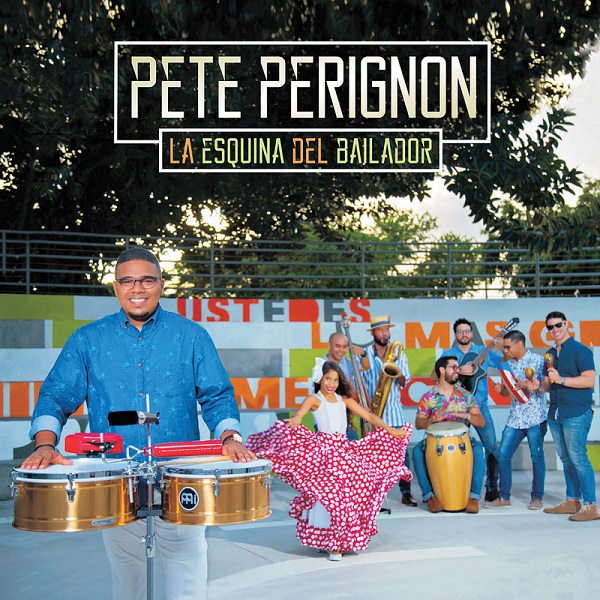
  1. Dancer’s Corner

Pete perignon

Record Label: Pete Perignon Music

“La Esquina Del Bailador” is the second production by musical director and master percussionist, Pete Perignon. This album contains five unreleased singles and five re-interpretations of classics. “Gotita Falling in Key” was his first promotional theme. This album released in 2017 has versions of classics with modern arrangements such as: “De Mi Para Ti” (Bossa recorded by Tito Puente and Santos Colón), “El Beso Discreto” original from the Cuban songbook Trio Matamoros, among many other original songs and versioned

Pete Perignon
Pete Perignon
  1. Village Singer

Alexander Abreu and Havana D’ Primera

Record Label: Páfata Productions

Alexander Havana D Primera - Cantor del Pueblo
Alexander Havana D Primera – Cantor del Pueblo
  1. For My People

Charlie aponte

Record Label: CA Records Inc.

Charlie Aponte
Charlie Aponte
  1. The Sound Makers

Chiquito Team Band

Record Label: Planet Records

Chiquito Team Band - Los Creadores
Chiquito Team Band – Los Creadores
  1. 7/25

Victor Manuelle

Record Label: Sony Music Latin

Victor Manuelle y Juan Luis Guerra

BEST TRADITIONAL TROPICAL ALBUM

  1. To Me What – Tribute To The Cuban Classics

José Alberto El Canario & The Santiaguero Septet

Record Label: Los Canarios Music

In this category, the Septeto Santiaguero, originally from Cuba, is nominated for its fourth album “A Mí Qué- Tributo A Los Clásicos Cubanos”. This ensemble founded in 1995 recorded this production in the company of the Dominican interpreter José Alberto “El Canario” and other music stars. This record material has 13 Tracks and was released on May 25, 2018.

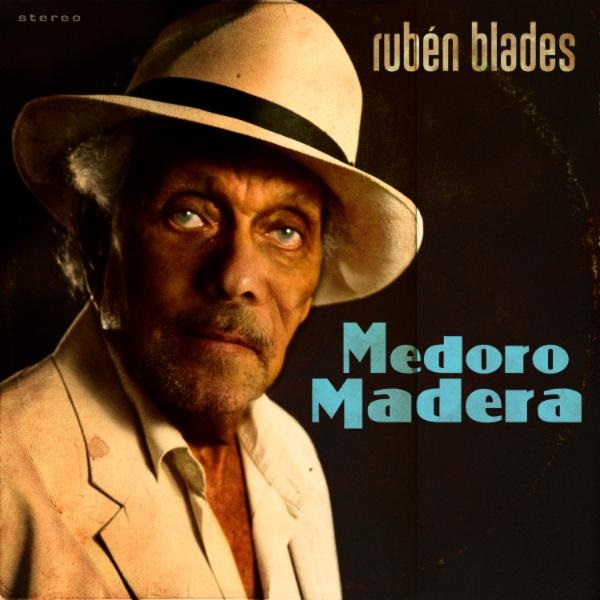
  1. Medoro Madera

Rubén Blades With Roberto Delgado and Orchestra

Record Label: Ruben Blades Productions

Medoro Madera
Medoro Madera
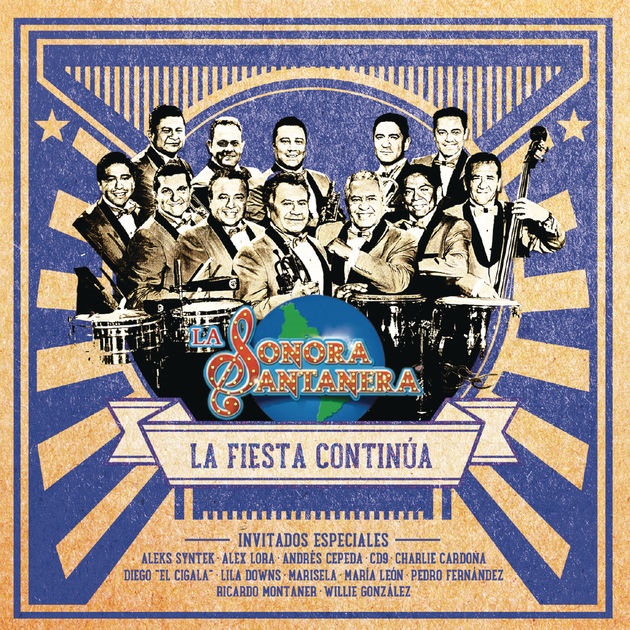
  1. The Party Continues

The Sonora Santanera

Record Label: Sony Music

Sonora Santanera
Sonora Santanera
  1. Omara Always

Omara Portuondo

Record Label: Egrem

Omara
Omara
  1. Reasons

Maria Rivas

Record Label: Angel Falls Artists Inc.

Maria Rivas
Maria Rivas

BEST TROPICAL SONG

  1. I want time

Juan Carlos Luces & Víctor Manuelle, songwriters (Víctor Manuelle Featuring Juan Luis Guerra)

Cut off: 7/25

Record Label: Sony Music Latin

Victor Manuelle 25/7

The prominent Puerto Rican singer-songwriter and producer, Víctor Manuelle, began his professional career in 1993, and to date has sold millions of records worldwide. He has earned 16 LATIN GRAMMY and GRAMMY nominations, thus establishing himself as one of the most admired artists of his generation. He has placed 46 singles on Billboard’s weekly Hot Latin Songs chart. Eleven of his albums have reached the place of honor in the Salsa genre for sales in the United States and Puerto Rico.

His hit “Imaginar” (2016) as a duo with urban artist Yandel, broke records, reaching #1 on the tropical charts thanks to his fusions of salsa with urban rhythms. In addition, it was named the most popular tropical song of that year, marking the third time that Víctor has obtained this important recognition, after his hits “Me Da Lo Mismo” and “ Tengo Ganas”.

Tonny Succar
Tonny Succar

In this 2018, Víctor celebrates his silver anniversary as a professional artist with his new record label “25/7” under the Sony Music Latin label. This album nominated for best Salsa album features collaborations with international artists, such as: Wisin, Bad Bunny, Juan Luis Guerra, Gilberto Santa Rosa and Glenn Monroig. The single “Quiero Tiempo” taken from this production is designated as one of the candidates to win the award in this important category.

  1. Marry Me

Silvestre Dangond, Nicky Jam, Juan Medina, Mauricio Rengifo & Andrés Torres, songwriters (Silvestre Dangond Featuring Nicky Jam)

Record Label: Sony Music Entertainment US Latin

Marry Me Silvestre Dangond ft Nicky Jam
  1. Fall in love dancing

Jorge Luis Piloto, songwriter (Reynier Pérez y Su Septeto Acarey Featuring Gilberto Santa Rosa)

Cut from: Fall in Love Dancing

Record Label: Independent

SEPTETO ACAREY
SEPTETO ACAREY
  1. I fall more in love with you

Jorge Luis Piloto, Jean Rodríguez & Tony Succar, songwriters (Tony Succar Featuring Jean Rodríguez)

Record Label: Unity Entertainment

  1. Simple Hearts

Fonseca, Mauricio Rengifo & Andrés Torres, songwriters (Fonseca)

Record Label: Sony Music Latin


BEST LATIN JAZZ/JAZZ ALBUM

  1. Mind of a Master

Bobby Valentin & The Latin Jazzists

Record Label: Bronco Records

Bobby Valentin
Bobby Valentin
Tracks:
1. De Nuevo a la Carga 7.El Cumbanchero
2. Latin Gravy 8.Mellow Funk
3.Orocoa 9. Endless Love
4.Smooth Ride 10.Freedom
5.Blast Off 11. God Bless the Child
6. Coco Seco  


Roberto Valentin, better known as Bobby Valentin, was born on June 9, 1941 in the town of Orocovis on the island of Puerto Rico. At a very young age, Bobby learned to play the guitar thanks to the teachings of his father. At just 11 years old, he formed his first musical trio with which he won his first prize, after participating in a local competition. In 1963 Bobby Valentin joined the Tito Rodríguez orchestra traveling to Venezuela twice.

This phenomenal bass player and arranger belonged to the Fania All Stars for 20 years and also arranged music at the same time for celebrities such as: Charlie Palmieri, Joe Quijano, Willie Rosario and Ray Barretto.

In 1975 he formed his own record label “Bronco Records” and released the album, “Va a la Cárcel” Vol. 1 and Vol. 2, among others.

Over the years, Bobby has made collaborations on recordings for great artists of international fame, such as: Larry Harlow, Ismael Miranda, Roberto Roena, Cheo Feliciano and the always remembered, Celia Cruz.

Likewise, Valentin has taken over the stages performing live in the United States during this year, and more recently launched his new production “Mind of a Master”, on April 14, 2018, with which he is nominated. for this important award.

  1. The House Of A Jazz Pianist

Adrian Iaies Trio

Record Label: DBN

  1. Universal Nature

Hermeto Pascoal & Big Band

Record Label: Scubidu Music

  1. Back To The Sunset

Dafnis Prieto Big Band

Record Label: Dafnison Music

PRIETO
PRIETO
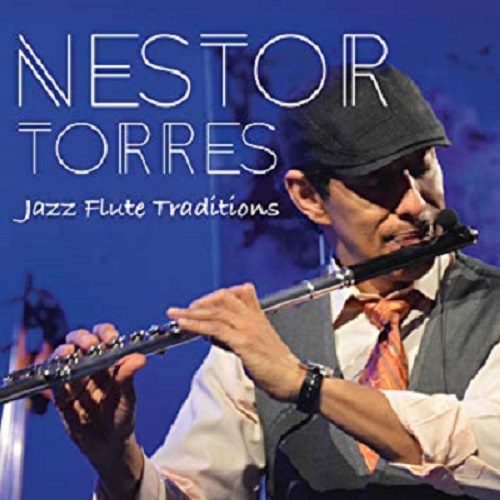
  1. Jazz Flute Traditions

Nestor Torres

Record Label: Alfi Records

Nestor Torres
Nestor Torres

For more information visit the official website of the Latin Recording Academy:

https://www.latingrammy.com/en

  • « Go to Previous Page
  • Page 1
  • Interim pages omitted …
  • Page 48
  • Page 49
  • Page 50
  • Page 51
  • Page 52
  • Interim pages omitted …
  • Page 129
  • Go to Next Page »

International Salsa Magazine (ISM) is a monthly publication about Salsa activities around the world, that has been publishing since 2007. It is a world network of volunteers coordinated by ISM Magazine. We are working to strengthen all the events by working together.