• Skip to primary navigation
  • Skip to main content

International Salsa Magazine

  • HOME
  • Previous editions
    • 2026
      • ISM / March 2026
      • ISM / February 2026
      • ISM / January 2026
    • 2025
      • ISM / December 2025
      • ISM / November 2025
      • ISM / October 2025
      • ISM / September 2025
      • ISM / August 2025
      • ISM / July 2025
      • ISM / June 2025
      • ISM / May2025
      • ISM / April 2025
      • ISM / March 2025
      • ISM / February 2025
      • ISM / January 2025
    • 2024
      • ISM / December 2024
      • ISM / November 2024
      • ISM / October 2024
      • ISM / September 2024
      • ISM / August 2024
      • ISM / July 2024
      • ISM / June 2024
      • ISM / May 2024
      • ISM / April 2024
      • ISM / March 2024
      • ISM / February 2024
      • ISM / January 2024
    • 2023
      • ISM / December 2023
      • ISM / November 2023
      • ISM / October 2023
      • ISM – September 2023
      • ISM – August 2023
      • ISM July 2023
      • ISM Edition June 2023
      • ISM – May 2023
      • ISM April 2023
      • ISM March 2023
      • ISM February 2023
      • ISM January 2023
    • 2022
      • ISM December 2022
      • ISM November 2022
      • ISM October 2022
      • ISM September 2022
      • ISM August 2022
      • ISM July 2022
      • ISM June 2022
      • ISM May 2022
      • ISM February 2022
      • ISM January 2022
    • 2021
      • ISM December 2021
      • ISM November 2021
      • ISM October – 2021
      • ISM September 2021
      • ISM August 2021
      • ISM July 2021
      • ISM May 2021
      • ISM April 2021
      • ISM June 2021
      • ISM March 2021
      • ISM February 2021
      • ISM January 2021
    • 2020
      • ISM December 2020
      • ISM November 2020
      • ISM October 2020
      • ISM September 2020
      • ISM August 2020
      • ISM July 2020
      • ISM June 2020
      • ISM May 2020
      • ISM April 2020
      • ISM March 2020
      • ISM February 2020
      • ISM January 2020
    • 2019
      • ISM December 2019
      • ISM November 2019
      • ISM October 2019
      • ISM Septembre 2019
      • ISM August 2019
      • ISM July 2019
      • ISM June 2019
  • Download Salsa App
    • Android
    • Apple
  • Spanish

North America

Thank you Rafael for all you have done for Salsa. Without you many of us would not be salseros

On August 29, 1926, Rafael Ithier was born in Rio Piedras, Puerto Rico. Brilliant and talented pianist, composer, arranger, producer and founding director of the University of Salsa “El Gran Combo de Puerto Rico”.

Thank you Rafael for all you have done for Salsa.

Former member of Cortijo y su Combo. Don Rafael Ithier is by his own merit an authentic living legend of salsa worldwide.

The Korean War was imminent. The young Puerto Rican soldier Rafael Ithier, in the service of the U.S. Army, feared being sent to the battlefield. Music was his thing.

He had been a pianist in several ensembles in his native San Juan before his military service.

His mission at that time (1950) was to organize an orchestra to liven up the parties at the military base.

But the group did not progress because the soldier with the soul of a musician did not hurry the coupling of the incipient band.

He wanted to buy time. “Sorry, sergeant, the band is not ready to perform,” Ithier would say every time he was called upon. In the end, his cunning saved him from war. Several of those musicians would later form the Borinqueña Mambo Boys band. From then on, Ithier would earn his living at the piano.

With that same astuteness, and after six glorious years and a painful separation from Combo de Cortijo, one of the most successful groups in West Indian music, this self-taught musician founded El Gran Combo de Puerto Rico.

He called several of the best musicians of the defunct Combo and two very young singers: Andy Montañez and Pellín Rodríguez.

May 26, 1962 marks the birth date of the orchestra, which today has become a living legend of the genre, with 48 years in the salsa music scene and 57 recordings.

Since its first presentation at the Rock and Roll saloon in Bayamón (Puerto Rico), the Gran Combo revolutionized West Indian music with an innovative clave rhythm for that time, which was aimed at the dancer’s ear.

The jocular lyrics of their songs with Andy Montañez’s and Pellín Rodríguez’s strong voices made an immediate impact.

In addition, the band’s fresh image and colorful choreography soon gave the band its own identity, at a time when orchestras were proliferating.

For its founder, “fidelity to an original style, but at the same time adaptation to musical evolution and group discipline have allowed us to get to where we are today,” says the 84-year-old bandleader. With this formula they survived the difficult times of the industry, the genre and the passing of the years and fashions.

Thank you Rafael for all you have done for Salsa. Without you many of us would not be salseros

One of the difficult moments that Ithier remembers was when the two flagship voices of the group left in the seventies. According to the musician, “many decreed the death of the Gran Combo”.But once again, the director’s wisdom came to the fore when he found two voices that matched the band’s style.

The arrival of the new singers (Jerry Rivas and Charlie Aponte) reflected Ithier’s knowledge and leadership in managing his orchestra. When Rivas, white and blond, was introduced to replace the stellar Andy Montañez, the other musicians, most of them dark-haired, looked at him with suspicion. Ithier, with his traditional good humor, responded: “You can rest assured, he’s a black man painted white”.

On the cusp of success today few remember the vicissitudes to consolidate, after the disintegration of Cortijo y su Combo (due to indiscipline of the musicians, among them Ismael Rivera), from where the base of musicians of the Gran Combo came from. Ithier recalls how they were branded as “traitors” by the public and the musical milieu.

“Several times we were hired in clubs and when we arrived to play and they saw us, they closed the doors. Those were difficult times, we didn’t even have a place to rehearse”. The orchestra was on the verge of disappearing, says its director, who, disillusioned, locked himself in his house, determined to give up music.

Rafael Ithier received Honorary Doctorate Degree

“The musicians came looking for me and after begging me to conduct for a while, I returned. The truth is that with so many problems I thought the group would last one or two years at most and look where we are now,” confesses Ithier.

But the constancy, the iron but friendly discipline and the virtuosity of the 14 members of the group paid off. In 2005 alone, they performed in 137 shows around the world.

Los Mulatos del Sabor, La Bandera Musical de Puerto Rico or La Universidad de la Salsa, nicknames by which the legendary group is known, are now in their 48th year.

The successful musical life of El Gran Combo de Puerto Rico is linked in every musical note to the style andpersonality of its director and founder Rafael Ithier. This pianist describes himself as a self-taught musician who never attended a conservatory.

His musical school was the street and his discipline to learn from the musicians of his time. Ithier, born in Rio Piedras, Puerto Rico, in 1926, has proven throughout his 63-year career to be a visionary of Latin music. In the 1960s, when he founded the group, he cemented his own style based on the rhythms that dominated the music scene of the time, such as bogaloo, jala-jala, bomba and plena. As for him, he was always a classical pianist.

In the seventies he understood the new direction that West Indian music was taking, already known as salsa, and he adapted to the changes.

He introduced the trombone to the brass section to give it a modern sound. Thirty years later, when the romantic salsa trend emerged, the Gran Combo knew how to stay current and worked in this line, without losing its style, but even so, the critics came.

“Music evolves like everything else and we adapt to the changes. Many orthodox of the genre do not accept it and criticized us, but for this reason many orchestras disappeared”. However, Ithier is one of the defenders of classic salsa and a critic of the so-called salsa monga (romantic), today in decline due to the resurgence of salsa dura.

“Those little guys missed the formula. They didn’t know what the clave was and they took away all the flavor of our music, they all did the same thing and that scared the dancer away. They even said that the clave was a delay in the music”.

In Latin music industry and genre circles, his influence is more than recognized.

It was Ithier who Gilberto Santa Rosa sought out for advice and support to become a soloist after having played with orchestras such as Willie Rosario’s. At present, Rafael Ithier continues in the direction of the Gran Combo and has no plans to retire, although he has not sat at the piano for three years due to hearing loss, according to himself, “due to an illness poorly cared for by not stopping traveling with the orchestra.”

Source: Alejandro-Gonzalez Teodoro (Dr Ted Alejandro Jr)

Also Read: The Royalty of our Latin Music Pete “El Conde” Rodríguez first singer signed by Fania Records label

Yari More Latin Band, the orchestra that accompanied Celia Cruz

Yari More Latin Band is one of those groups whose history shows us that dreams do come true and that there is always the possibility to meet our greatest idols. Today, Yari More, with whom we were able to talk a little about his history as an artist and his band, is an example of what Latin artists in general have achieved over the past decades.   

Yari posing for the camera
This is Yari More posing for the camera

How Yari More first became interested in music 

Juat like most musicians, he became interested in music when still a child. He remembers getting together with his friends from the block to play with makeshift instruments, moments that he keeps in memory and that marked the beginning of what would become his great adult vocation.    

Some time later, he joined the army in his native Colombia, specifically the navy, but that was not the only thing he devoted his time. It turns out that he found a great taste for several of the songs from acclaimed Spanish singer Raphael and started imitating his voice in musical events of the armed forces. He was so good that he began to be called as ”El Rafael de Colombia” by his acquaintances, but the event that would make him see music as a serious profession was yet to come. That came later.   

A night where he was celebrating a friend’s birthday in a night club, another boy in the group asked the orchestra director to let Yari sing with them. The audience liked his performance so much that he started going to the same place every weekend to continue delighting those present with his melodious voice, eventually leading the orchestra he was performing with to offer him the position of singer on an ongoing basis.    

Never in his wildest dreams did Yari imagine such an offer, but he accepted it, so he began to balance his activities in the orchestra with his daily work in a factory at that time. Since both jobs took up so much of his time, he eventually had to decide on just one, which was, of course, music. It can be said that this was the official beginning of his career.  

From then on, he was in several groups both in Colombia and in the neighboring country Ecuador until he was given a great job opportunity in the United States, more specifically in Los Angeles. After some time with the orchestra that hired him there, he decided it was time to pursue a solo career with romantic music.    

Yari with Celiz Cruz
Yari More Latin Band playing live with ”La Guarachera de Cuba” Celiz Cruz

Yari More Latin Band 

In the 1990s. he decided to form his own orchestra which he named Yari More Latin Band. Since he already had plans about undertaking such a project, he visited universities and talked to many friends in the industry in order to hire the best musicians he could find for his band. 

His success earned him the possibility of signing with the company RMM Records & Video owned by the popular Latin music promoter Raphy Mercado. This label was the same one that signed ”La Guarachera de Cuba” Celia Cruz, with whom they shared the stage, since Yari More Latin Band was the orchestra that accompanied her in her performances on the West Coast.    

In addition to Celia Cruz, he has also accompanied other musical luminaries like Rubén Blades, Willie Colón, Eddy Santiago, Tony Vega, Tito Nieves, El Grupo Niche, El Gran Cobo de Puerto Rico, Oscar D’ León, Joan Sebastian, Las Chicas del Can and many others. 

Yari says he has learned a lot from each and every one of the aforementioned singers and groups, details that he has added to his own orchestra in order to improve it every day more and more.  

Yari with Oscar D’ León
Yari More next to ”El Sonero Del Mundo” Oscar D’ León

Private Events 

Yari More Latin Band offers its talent for all kinds of private events such as weddings, quinceañeras, corporate parties, charitable activities, award shows, festivals, Latin nights in clubs, among others.  

Yari told us that those interested in hiring the orchestra simply have to contact him through his official website, Instagram and Facebook. These are the channels he uses to agree with the client on the conditions, the place, the date and the economic arrangement.   

‘‘Fortunately, we have a lot of work here in the Bay Area and many events of all kinds for the rest of the year” said Yari on this subject.   

Read also: Puerto Rican singer Irma Kaché speaks exclusively to us 

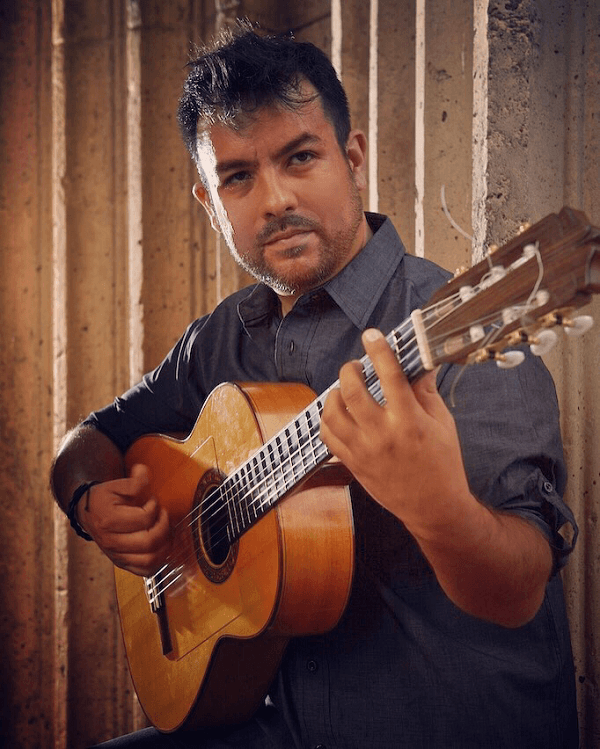
Bolivian guitarist Gabriel Navia and his love for music

We have had any number of Latin music artists of various nationalities in this section, but we are pleased to announce that, for the first time, we will tell the story of a Bolivian who brings pride to his flag with his great talent. 

We are talking about Bolivian producer, composer and guitarist Gabriel Navia, with whom we were fortunate enough to talk by Zoom about the most important details of his fruitful career. In the following lines, some of the most important issues addressed in the conversation.  

Bolivian guitarist Gabriel
This is Bolivian producer, composer, and guitarist Gabriel Navia

How Gabriel’s love for music began 

Gabriel tells us that the love he has always felt for music was instilled in him by his parents, especially his father, who was professionally dedicated to it to the point of having his own band. In the 70’s, Eddy Navia, Gabriel’s father, was in an iconic Bolivian band called Sal Y Andina that played instrumental music, much of which was composed by him at the time.   

In his mother’s case, she had a great sense of rhythm and a beautiful voice, so she did her best to make her son learn as much as possible about the fundamentals of music and how to play various instruments. This shows that she was also a key piece in his training as an artist. 

Gabriel also points out that, at home, he and his family listened to music of all kinds, but New York salsa was very important in the path the young man would later take.   

Gabriel and the charango 

When reading a little of Gabriel’s history, we found that he played with his father in the group Sukay, with which he experimented a lot with the charango that, as he explains, is a five-stringed instrument very similar to the banjo. It was the first instrument he played in his life and the one that would inspire him to play the guitar later on.   

After his parents split, his father went to live in the United States and met his second wife, with whom he runs Sukay. That is when Gabriel began to visit the country and, soon after, he was playing in a theater for more than 2000 people. Then, he knew that this was what he wanted to devote the rest of his life to.    

Gabriel played the charango
Gabriel started his career by playing the charango with the group Sukay

Multi-instrumentalist   

While it is true that the instrument for which Gabriel is best known today is the guitar, it is not the only one he is dedicated to.    

The artist can be defined as a multi-instrumentalist, that is, someone who plays a considerable number of musical instruments with excellence such as piano, saxophone, quena and many others. ”I have always been curious to learn how to play new instruments and learn new things every day. That’s how I’ve managed to specialize in so many at the same time” Gabriel said about this.   

He has become more dedicated to playing the guitar since, during his time with the group Sukay, he had to replace the guitarist who was not available at the time, which makes him feel a special affection for the instrument as he used it. 

Not to mention that some of his instruments were robbed in his native Bolivia and one of the stolen objects was his charango. This event left him so depressed that he put the charango aside for years and devoted himself fully to the guitar, during which time he studied it in detail at a theoretical and practical level. He also began to listen to jazz and flamenco records in which the guitar is widely used, making him experiment with new styles. In this sense, an artist who inspired him a lot was Spanish guitarist Paco de Lucia.   

Gabriel playing live
Gabriel Navia playing his guitar live

Music education   

Gabriel has had the opportunity to study in several of the most important musical institutions in the world, which have been fundamental in the professional training of the artist.   

The first thought that came into his head was the Instituto Eduardo Laredo in Cochabamba. He described it as an arts school that has a very traditional style during the mornings, while the afternoons its teachers focus on the musical part. It is here where Gabriel learned all about theory, solfege, harmony, scores and many other important details.    

Some time later, in the United States, he entered the San Francisco Conservatory, where he studied with the famous classical guitarist Scott Tennant. In the same country, he won a scholarship to study some courses at Berklee College of Music.   

In Barcelona, he also received a scholarship to study a master’s degree in flamenco at the Conservatori del Liceu thanks to Fundación Carolina, whose main beneficiaries are Latin American applicants without the resources to study there.    

”I feel very fortunate to have been able to study in all these institutions which have been very important in my career, but I believe that a musician learns the most important things on stage. You can learn all the theory in the world, but if you haven’t had street experience and gone to practice, you will be an incomplete artist” Gabriel remarked on this subject.   

”In fact, I believe that many of the most prodigious musicians in the world have not been trained in academies, but in the streets, because they have had to make themselves from the beginning. Academic education is important, but the main place where music is born is in the heart” he continued.   

Navia Productions, LLC   

Gabriel had always worked as an independent artist, but there came a point in his career when he realized he needed something more to level up.   

Given that the best way to do business in the United States is through registered companies and brands, Gabriel created his own music company which he named NAVIA PRODUCTIONS, LLC, so that his project could be identified with a legally registered entity and avoid any legal problems.    

The company was basically created with the purpose of giving a legal basis to Gabriel’s work to stand on, but he still considers himself an artist as independent as the first day. 

Read also: Exclusive with tres player Iván Camblor from the group Pellejo Seco 

Yes, I speak the ancient African Lucumi toungue: The second language of salsa

Many Latin Americans have left the name of their culture very high around the world, making people from other nationalities and even continents feel fascinated by these elements and end up adopting them as their own. Such is the case of Nigerian Oluwakemi Odusnya, better known as Kemi, who has been kind enough to share with us a little of her story, her knowledge of the Lucumi language and her relationship with Latin music.   

people practicing Yoruba
A group of people practicing the Yoruba religion

Kemi’s coming to the United States   

Kemi tells us that she was born in Nigeria, but moved to the United States when she turned 18 in search of a better future for herself. That was more than 10 years ago, so the young woman already had a good idea of how things are handled in her country of residence.   

Taking advantage that this is the land of opportunity, she studied computer science and graduated as a software engineer, the profession she is in now.   

Additionally, she discovered other passions and hobbies such as Latin music and dancing, especially tango, but we will talk about that a little later on.   

In his country of origin, he learned to speak English, which is the official language of Nigeria, and Lucumi, which we will talk about in the next section.   

Lucumi and its relationship with Latin music   

After talking a little bit about her personal life, Kemi went on to explain what the Lucumi language was and how it was perceived today. Contrary to what many online sources might say on the subject, the Nigerian explained that Lucumi and Yoruba were pretty much the same thing, but with a different name.   

The group of people who spoke Locumi are no longer called that way because many Nigerians have moved to other countries, so there are other terms to define them today.  

Kemi moved on by explaining that, in her country, there are about 300 languages in general, but the official one is English. This in order that the speakers of the other languages can communicate with each other without any problem. Among these native languages, we can mention the ”Pidgin English” which is the result of mixing English with elements from local languages.   

In the specific place Kemi grew up, villagers speak Yoruba, which was formerly known as Lucumi. The name change of the language and many terms used in it have been the direct reault of the immigration of many Nigerians to other countries, especially to the West.    

In Kemi’s particular case, she was pleasantly surprised to discover the lyrics of Celia Cruz and to find many of the words of her own Lucumi language.    

Yoruba dancing
Yoruba dancing and singing in Cuba

Lucumi and Latin music 

For Kemi, the relationship between Lucumi and a part of Latin music is more than evident. Something that particularly caught his attention was that several songs by Cuban artists constantly made reference to the Yoruba divinities: Oshun, Yemayá, Changó, Elegguá, Oggun, Oyá and Obbatalá.   

”For me it was very impressive to see the extent of our culture, since there are many Africans who have had to leave their lands in search of a better place to live, but they do not want to distance themselves emotionally from their country. On the contrary, they want to be as connected as best they can to their country and Latin music, specifically Cuban music, is an excellent tool to stay bonded to their roots” said Kemi on the subject.   

”Many just like me who have come to this country find in Latin music and dance a way to stay connected to our traditions. Sometimes, even we feel that we and Latinos have the same ancestors,” Kemi says with a laugh.   

How new generations perceive Yoruba culture and its elements   

Something Kemi pointed out is that the new Nigerian generations no longer perceive Yoruba culture in the same way. In fact, a large portion of the immigration from the African country no longer feels a real connection with the customs of their own country because they became ”westernized” in some way, especially the younger part.  

Another important detail highlighted by Kemi is that, in today’s Nigeria, Santeria and other religions like that have begun to be perceived as dark, so many people no longer feel comfortable practicing these cults. In fact, there has been a rise of Christianity and Islam in the country, so not a few locals ended up designing their own ritual by mixing these religions with Yoruba culture so that the latter is not seen as impure.   

Those who practice the Yoruba religion in Nigeria are aware that their worship is a mixture of Yoruba culture and Christianity, but they can not say it openly because it looks bad,” Kemi says about this.   

To close, Kemi also said that she is neither a Santera nor a practitioner of any religion. Her family is Muslim and she grew up adhering to Islam, but that changed when she moved to the United States. Today, she has a great deal of respect for these aspects of the Yoruba religion, but does not perform any of these practices.  

Kemi in our interview
Kemi during our interview via Zoom

Kemi’s love for tango 

Kemi has a great love for tango, to the point that she practices it two or three times a week for entertainment and physical activity. 

Initially, Kemi enjoyed dancing salsa because it reminded her so much of the music of her homeland and Yoruba culture, but after some health complications on her hips, she had to opt for something slower and calmer. That’s when she started to try tango and ended up liking it very much. 

After the pandemic, she found that there was a dance academy near he rhome, which motivated her to dance tango to the point where these lessons have become a very important part of her life. She also sees dancing as a way to connect with others and be on the same page.   

Read also: Patrón Latin Rhythms manager talks about the band and its plans 

Some events of Robby Ruiz and Bobby Valentin’s in USA

North America / USA

Robby Ruiz Launches his Bachata Single “In my feelings” 

The moment´s revelation of Tropical Music brings a theme that will vibrate the deepest emotions

Para ser ubicado en: South – South Atlantic – Florida- Miami

Robby Ruíz is the newest EQS Music´s young artist, and “In My Feelings” is his first song and marks his debut as a Bachata revelation singer. This single is an original cover track by Canadian singer, Drake. The theme of this song is about relationships and how the the main character of the story finds himself in a power struggle with his feelings. “In My Feelings” from Robby Ruíz is an amazing Bachata Remix.

Robby Ruiz
Robby Ruiz

Release Date: July 20th, 2018

Video: https://www.youtube.com/watch?v=py6x_Pa7HCY


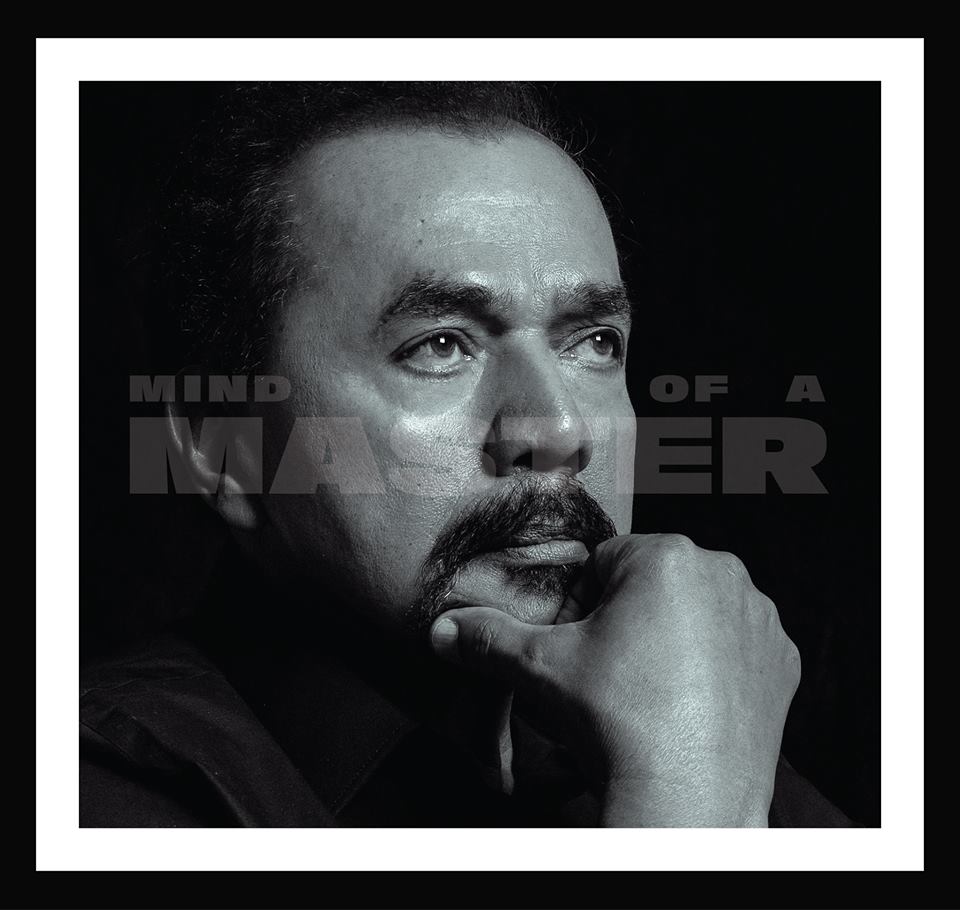
Bobby Valentin’s new album “Mind of a master” is already here!

An Authentic Work of Art to Collect

To be located in: NORTHEAST – MIDDLE ATLANTIC – NEW YORK

Bobby Valentin
Bobby Valentin

The new Latin Jazz Album “Mind of a Master” by Bobby Valentin & The LJ’s is the current sensation of the Latin musical Market containing important collaborations of international renowned figures in 11 tracks. Since its release this recording has marked a precedent with hundreds of unloads in four months by the world fans that support it and you will be able also to be part of that, by downloading “MIND OF A MASTER” in all digital platforms!!!

Release Date: April 14th, 2018

Credits:
Bobby Valentin Arrangements & Bass
Eliut Cintron Trombone
Angie Machado Trumpet
Ángel Luis Torres Alto – Sax
Eduardo Zayas Piano
David Marcano Battery
Javier Oquendo Congas
Special Guests:  
Iván renta Tenor – Saxo
José Nelson Ramírez Hammond Organ
Orlando Santiago String Sets
Tracks:
1. De Nuevo a la Carga 7.El Cumbanchero
2. Latin Gravy 8.Mellow Funk
3.Orocoa 9. Endless Love
4.Smooth Ride 10.Freedom
5.Blast Off 11. God Bless the Child
6. Coco Seco  


“Thanks to all the media and the public for the support they have given me in my new Latin Jazz CD, Mind of a Master”. Bobby Valentin


Roberto Valentin, better known as Bobby Valentin, was born on June 9th, 1941 in Orocovis – Puerto Rico. His father taught him to play the guitar at a young age. When he was 11 years old, he participated in a local talent contest with a trio that he had formed. He played the guitar and sang for the trio and they won the first place prize. In 1963, Valentin joined Tito Rodriguez and traveled twice with Tito’s orchestra to Venezuela. He also made musical arrangements for Tito and at times for Charlie Palmieri, Joe Quijano, Willie Rosario, and Ray Barretto.

Bobby was also the musical arranger for the Fania All Stars, and is featured in a live recording of the conglomerate’s song “Descarga Fania” (which he also wrote) playing a bass guitar solo. In 1975, He left Fania and founded his own record label “Bronco Records” and released the album “Va a la Carcel” Vol 1 and Vol 2, recorded “live” at “El Oso Blanco”, Puerto Rico’s oldest state penitentiary.

During the years Valentin has been featured in recordings (and occasional live performances) by Larry Harlow, Ismael Miranda, Roberto Roena, Cheo Feliciano and the always remembered, Celia Cruz.

For more information contact him through this social channel: https://www.facebook.com/Bobby-Valentin-660486604066057/ or visit him in his official webpage: http://broncorecordsinc.com/


Video: https://www.facebook.com/660486604066057/videos/1325583834222994/


  • « Go to Previous Page
  • Page 1
  • Interim pages omitted …
  • Page 46
  • Page 47
  • Page 48
  • Page 49
  • Page 50
  • Interim pages omitted …
  • Page 129
  • Go to Next Page »

International Salsa Magazine (ISM) is a monthly publication about Salsa activities around the world, that has been publishing since 2007. It is a world network of volunteers coordinated by ISM Magazine. We are working to strengthen all the events by working together.