• Skip to primary navigation
  • Skip to main content

International Salsa Magazine

  • HOME
  • Previous editions
    • 2026
      • ISM / March 2026
      • ISM / February 2026
      • ISM / January 2026
    • 2025
      • ISM / December 2025
      • ISM / November 2025
      • ISM / October 2025
      • ISM / September 2025
      • ISM / August 2025
      • ISM / July 2025
      • ISM / June 2025
      • ISM / May2025
      • ISM / April 2025
      • ISM / March 2025
      • ISM / February 2025
      • ISM / January 2025
    • 2024
      • ISM / December 2024
      • ISM / November 2024
      • ISM / October 2024
      • ISM / September 2024
      • ISM / August 2024
      • ISM / July 2024
      • ISM / June 2024
      • ISM / May 2024
      • ISM / April 2024
      • ISM / March 2024
      • ISM / February 2024
      • ISM / January 2024
    • 2023
      • ISM / December 2023
      • ISM / November 2023
      • ISM / October 2023
      • ISM – September 2023
      • ISM – August 2023
      • ISM July 2023
      • ISM Edition June 2023
      • ISM – May 2023
      • ISM April 2023
      • ISM March 2023
      • ISM February 2023
      • ISM January 2023
    • 2022
      • ISM December 2022
      • ISM November 2022
      • ISM October 2022
      • ISM September 2022
      • ISM August 2022
      • ISM July 2022
      • ISM June 2022
      • ISM May 2022
      • ISM February 2022
      • ISM January 2022
    • 2021
      • ISM December 2021
      • ISM November 2021
      • ISM October – 2021
      • ISM September 2021
      • ISM August 2021
      • ISM July 2021
      • ISM May 2021
      • ISM April 2021
      • ISM June 2021
      • ISM March 2021
      • ISM February 2021
      • ISM January 2021
    • 2020
      • ISM December 2020
      • ISM November 2020
      • ISM October 2020
      • ISM September 2020
      • ISM August 2020
      • ISM July 2020
      • ISM June 2020
      • ISM May 2020
      • ISM April 2020
      • ISM March 2020
      • ISM February 2020
      • ISM January 2020
    • 2019
      • ISM December 2019
      • ISM November 2019
      • ISM October 2019
      • ISM Septembre 2019
      • ISM August 2019
      • ISM July 2019
      • ISM June 2019
  • Download Salsa App
    • Android
    • Apple
  • Spanish

North America

Luis Perdomo

North America / USA / Nueva York

Luis Perdomo, one of the most eager jazz pianists in New York.

Luis Perdomo is one of the most active jazz pianists in New York. Originally from Venezuela, she began playing the piano at age 10, and by age 12 she was playing professionally on radio and television, as well as in concerts and clubs.
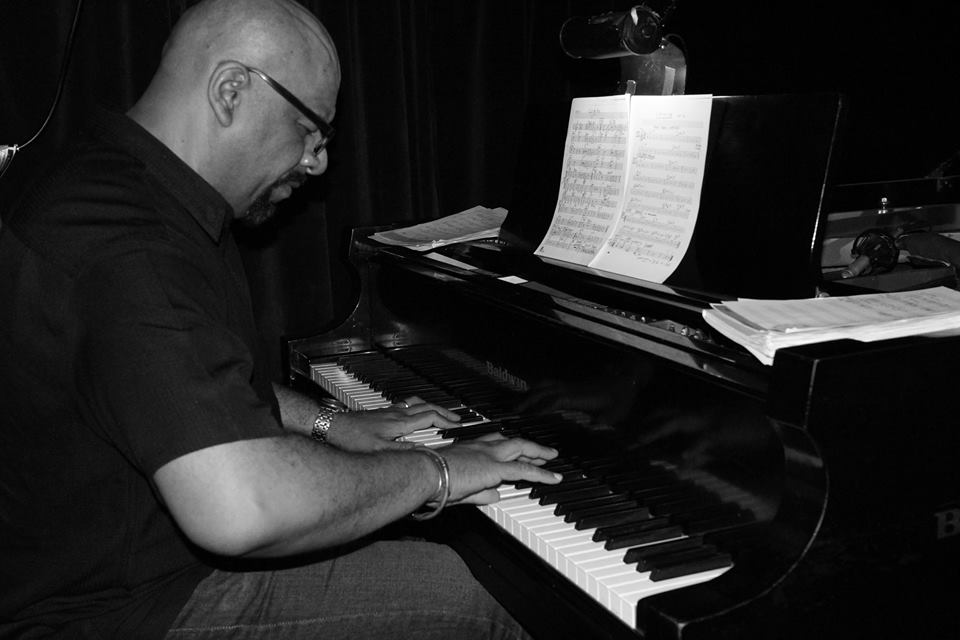
Luis Perdomo playing the piano

Luis later moved to the US to attend the Manhattan School of Music on a scholarship, graduating in 1997 and later earning a master’s degree from Queens College, where he was a student of the great pianist Sir Roland Hanna.

Shortly after moving to New York, he quickly established himself as an in-demand pianist amassing an impressive resume.

Some of the artists Luis has recorded and/or performed include Ravi Coltrane, David Sanchez, Tom Harrell, John Patitucci, Ray Barretto, Brian Lynch, Miguel Zenon, Dave Douglas, David Weiss and The Cookers, David Gilmore, Ralph Irizarry and Timbalaye, Henry Threadgill, and Steve Turre, among others; a roster that is as remarkable for its high standard as it is for its diversity.

Luis is also recognized as a member of several bands, especially the groups led by Ravi Coltrane, with whom he spent 10 years and Miguel Zenón, with whom he has had a collaboration that is currently in its 18th year.

Luis has also made a mark as a performer. Composer and arranger on recordings by Ray Barretto, Ignacio Berroa, John Benitez and Ralph Irizarry.

He has also been commissioned as a composer by the Jazz Gallery, The Afro Bop Alliance and Arturo O’Farrill’s Afro Latin Jazz Orchestra. He can be heard most recently on Ravi Coltrane’s Grammy-nominated “Spirit Fiction” and Miguel Zenón’s “Típico.”

In 2002 he won the 2nd Grand Prize at the “3rd Martial Solal Jazz Piano Competition” in Paris, among a group of 66 international pianists. He can be heard most recently on Ravi Coltrane’s Grammy-nominated “Spirit Fiction” and Miguel Zenón’s “Típico.” In 2002 he won the 2nd Grand Prize at the “3rd Martial Solal Jazz Piano Competition” in Paris, among a group of 66 international pianists. He can be heard most recently on Ravi Coltrane’s Grammy-nominated “Spirit Fiction” and Miguel Zenón’s “Típico.” In 2002 he won the 2nd Grand Prize at the “3rd Martial Solal Jazz Piano Competition” in Paris, among a group of 66 international pianists.

As a sideman, Luis has performed at most major music festivals and venues in over 50 countries, and as a frontman, he has toured Europe, Japan, South America, and the United States.

Luis has also been very active around the world in recent years as a teacher, soloist and as the leader of his own trio: The Controlling Ear Unit and various other projects, and has released nine highly praised recordings as a leader: “Focus Point”. (2005), “Awareness” (2006), and the highly acclaimed “Universal Mind” with Drew Gress and Jack Dejohnette (2012) for Ravi Coltrane’s RKM Music label. “Pathways” in 2008, the “Childhood” project in 2012 and “Links” in 2013 were recorded for Criss Cross Jazz.
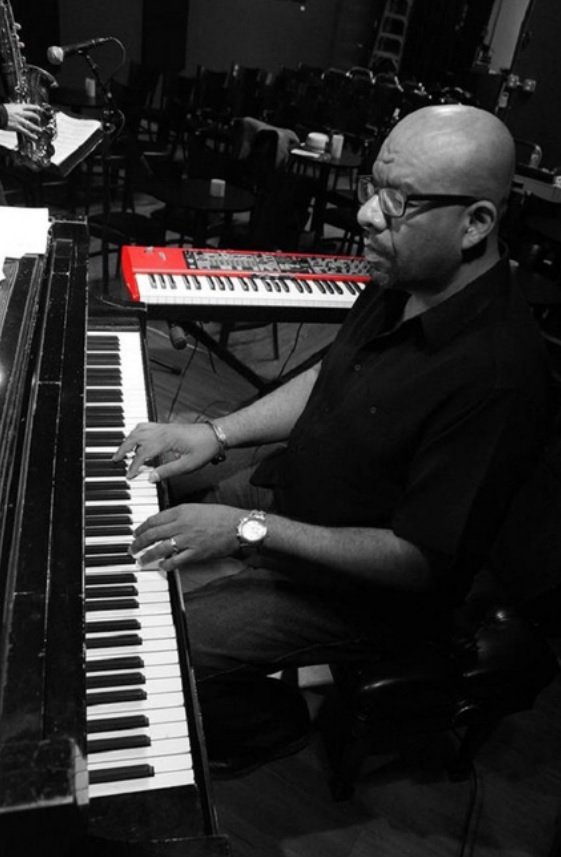
Luis Perdomo
Luis Perdomo

His “Twenty – Two” project, featuring “Controlling Ear Unit”, was released in 2015 on the Hot Tone Music label. This high-octane CD teams Luis with bassist/vocalist Mimi Jones and drummer Rudy Royston. The two most recent CD’s: ” Montage “; Luis’s first piano outing and “Spirits and Warriors”; a quintet release for the Criss Cross Jazz label featuring drummer legend Billy Hart, was released in May 2016. Luis Perdomo has also participated in over 200 recordings as a sideman.

As an educator, Luis has taught master classes at conservatories in Amsterdam and Paris, Princeton University, Hochschule Fur Musik und Theater (Munich, Germany), Berklee (Valencia, Spain), IUDEM (Caracas, Venezuela), Esmuva (Madrid, Spain) ; and the School of Jazz in Berkeley, California, among others.

He has taught jazz summer camps, including “Jazz in July” at the University of Massachusetts, Langnau Jazz Nights in Switzerland; The Banff International Workshop and the University of Manitoba in Canada, Badajoz Jazz Worshop in Spain; EAFIT University in Medellin; Tonica Jazz Festival in Guadalajara, Mexico and Guimaraes Jazz Workshops in Portugal, among others.

In 2016, Mr. Perdomo served as artistic director of the Langnau Jazz Workshops in Switzerland. Luis has also taught at the New School for Social Research, and is currently an adjunct professor of piano at Queens College in New York City.

For more information, visit www.luisperdomojazz.com.
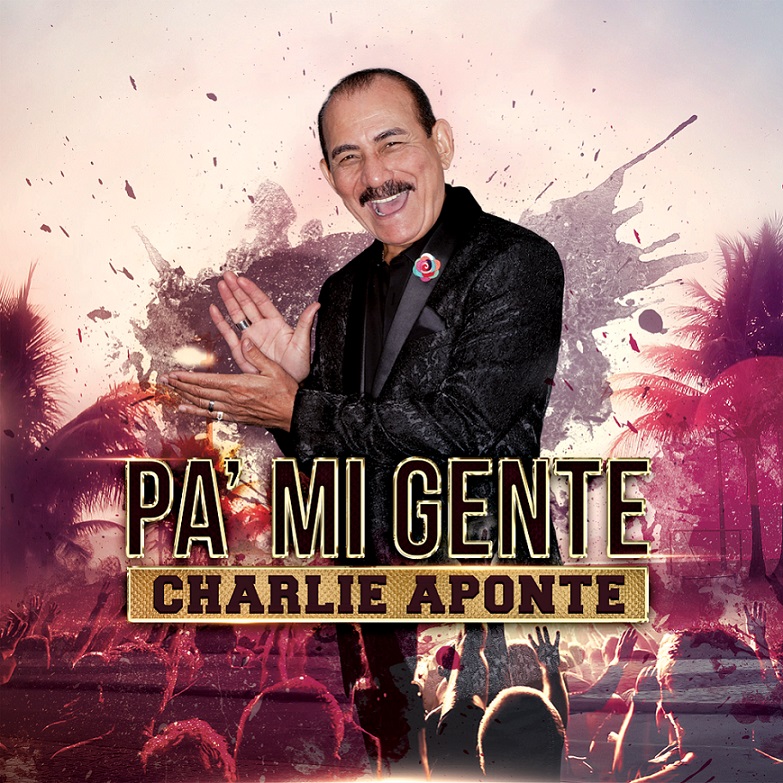
Charlie Aponte presents his best salsa album

North America / USA / Las Vegas

Charlie Aponte presents his best Salsa album. Partying with his first Latin Grammy 2018 nomination

Puerto Rican salsero Charlie Aponte has plenty of reasons to celebrate his first Latin GRAMMY nomination, with his second production

Charlie Aponte Flyer

“Pa’ Mi Gente” which was recognized in the category of “Best Salsa Album” for the nineteenth installment of these prestigious awards that will be delivered on Thursday, November 15 in Las Vegas.

“Very grateful to the Recording Academy, especially its members, for this important support that is definitely one more step to continue reaping success” said the artist who is reaching his five years as a solo artist.

“Pa’ Mi Gente” achieved an important debut, reaching the top of the “record pools” lists, with its songs, “La Salsa se Hizo Pa’ Bailar” and “No se le Presta el Alma”, which have been the most listened to, likewise; “Nobody takes away what you dance”, which was the first promotional single and which contains a video on his official YouTube channel, by this artist who works independently with the Criollisimo Inc. label.

This album is made up of 11 songs, among them one of his own authorship under the guidance of the musical director on the album and all his presentations, maestro Sammy García, who together recorded this production in the MÁS Audio studio of the sound engineer and producer Angelo Torres.

Charlie Aponte, who will soon release his new music video “Besos de Azúcar”, continues with his artistic commitments, including New York, Medellín and various presentations in his native Puerto Rico, and to end the year he will be with the public of Colombia, in the “Heroic City” Cartagena.

Biography Charlie Aponte:

Charlie Aponte
Charlie Aponte

Charlie Aponte, one of the most beloved voices remembered by thousands of salseros around the world, returns to the stage as a soloist in 2015 after 41 years of belonging to the salsa university, “El Gran Combo de Puerto Rico” Now he’s back as a solo artist.

Born in Caguas, PR on February 2, 1951. It was in 1973 when, after the departure of Pellín Rodríguez, he joined the “Mulatos del Sabor”. Since then there have been many successes that have been proclaimed as successes through Charlie’s voice. He has contributed as a vocalist and displayed his capacity as a sonero in hits such as “Brujería”, “Amor Brutal”, “La Loma del Tamarindo”, “Compañera Mía”, “No hay cama pa’ tan tan Gente”, “Hojas Blancas”, “ Rice with Beans”. Among many others.

In 2014, together with the multi-award winning producer, Maestro Sergio George (Top Stop Music), he presented his new musical proposal “Una Nueva Historia”. This new proposal has the best and most recognized composers and arrangers. Presenting the song “Para Festejar” as his new single in promotion, and grateful for the public’s reception of his musical production, which was on the Billboard charts for 10 consecutive weeks, which catalogs it as an excellent piece of music.

He debuts as executive producer of his new proposal “Pa’ Mi Gente”, a production by the best musicians, arrangers, composers, available in all major stores and digital platforms. In this new project he has a bolero composed by the artist, among other surprises for the public that follows him.

Accustomed to leaving his soul in each of his performances, he assures that with this album he intends that his followers listen to him, dance and continue to appreciate the quality with which his music is made.

The King of Bass Mr. Bobby Valentin

North America / USA / Nueva York

One step away from the Latin Grammy. The King of Bass Mr. Bobby Valentin

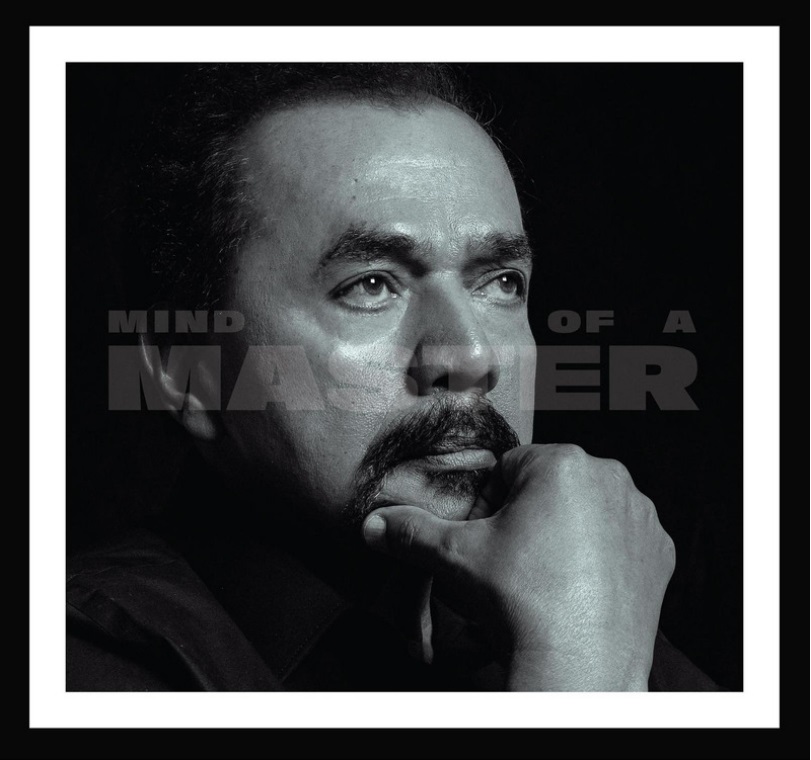
The Latin Grammy nomination of the experienced Bobby Valentin in the category of Latin jazz with the production “Mind of a Master” is another recognition of honor for his half-century musical career as an arranger and conductor.

“Mind of a Master” is the production with which Bobby Valentín enters the competition on the nineteenth day of the Latin Grammy. (Archive National Foundation for Popular Culture). Bobby, nominated last year in the category of salsa with “My rhythm is good”, is one of the five contenders for the Latin Grammy in the “Best Latin Jazz Album” section.

The other finalists are also Puerto Rican Néstor Torres (“Jazz Flute Traditions”), Adrian Laies (“The house of a jazz pianist”), Dafnis Prieto (“Back To The Sunset”) and Hermeto Pascoal (“Universal Nature”). . In a conversation with this medium, Bobby said that he will immediately capitalize on the nomination to promote the album at international festivals.

“We have sent to several festivals in the United States a report of what the album is and my career. We are waiting for answers. Right now I have a presentation at the Interamericana on Wednesday, October 17, which celebrates the 20th anniversary of the Music Department and there is a person interested in going to Costa Rica. It’s slow, but I have a lot of faith that little things will continue to appear. Latin jazz is another audience, although I know that many people who like salsa like it”.

Bobby Valentin
Bobby Valentin

The King of the Bass added that he feels as if he has won the precious golden phonograph. “The nomination of what is a salsa album is another style. This is another corner. What I’m saying is that after one is competing, even if you don’t win, the competition is good, as is being nominated among so many productions. For me the competition in Latin jazz is stronger than in salsa”. Bobby presents “Mind Of A Master” alongside The Latin Jazzists, who are mostly the musicians from his salsa orchestra, like Angie Machado and Eliud Cintrón. Bobby isn’t worried about purists arguing that they’re not jazz soloists.

“The musicians are happy. It is a genre that they like. Here they have been more concerned with projecting their styles and expressions”, Bobby reacts. A salsa musician can play jazz. This is how history supports it. Mongo, Puente, Machito, Mario Bauzá, Mario Rivera, Eddie Palmieri, Hilton Ruiz and Jerry González, among others, began in mambo and Afro-Caribbean dance music, prior to their foray into jazz.

“Like Ray Barretto, who was also linked to jazz. Finally, we all look for that corner. The same Néstor Torres, who started with Batacumbele. After one has done so many things in the tropical genre, one seeks satisfaction as a musician by looking for another corner”.

Jazz, however, is not new to Bobby Valentín. “Latín Gravy”, “Codazos”, “Shinny Stockins” and “Maiden Voyage” are several of the works recorded on his salsa albums. “It always caught my attention. When I was in New York, Latin jazz was mambo jazz. Later the name changed, but before it was done for the dancer, although there were solos. It’s no longer for the dancer. Now people sit down to listen to him. It was a good change.”

Bobby has not decided if he will travel to Las Vegas to be present at the awards ceremony, to be held in November. “I still don’t think so. It’s not because I’m going to win or not. To be competing even if I don’t win is reason for joy. I feel very happy. I have no plans yet”.

Next Wednesday the 17th he will perform with The Latin Jazzists at the INTER Metro Jazz Festival. That night he will perform the “Mind Of A Master” sequence. “I feel very happy. This record is like a baby to me. Although we have played tropical music, this is a new baby and that it is nominated for a Latin Grammy makes me feel very happy”.

Ralph Rivera’s rol in the promotion of Latin Culture

Just as we have talked about musicians and singers who have left to the Puerto Rican culture in the highest in the rest of the world, it is also time to highlight the role of other figures who have contributed immensely to the way in which the Island of Enchantment is perceived by others: the cradle of several of the best artistic exponents from Latin America. One of them is Ralph Rivera.

From the Spaha Salsa Harlem Museum, we have always sought to promote Latin culture by giving space to figures who do their part in making sure we are respected on an artistic level. Such is the case of writer, producer and financial executive Rafael J. Rivera-Viruet, better known as Ralph Rivera, to whom we will dedicate the next lines of this article.   

Financial Executive Ralph Rivera
Puerto Rican financial executive and writer Ralph Rivera

Who is Ralph Rivera?   

Ralph Rivera was born in a coffee farm in the municipality of Utuado, the third largest municipality in Puerto Rico, which is located behind Ponce and Arecibo and is part of the mountainous region known as La Cordillera Central.   

Like many other Puerto Ricans of the time, his parents were seeking a better future for themselves and their child, so they made the decision to move to New York City, United States, thus becoming part of ”The Great Migration” in the 1940s, which consisted of a massive exodus of Puerto Ricans to Uncle Sam’s country as a result of its growing dominance over the island and the devastation caused by ”The Great Depression”, with which Puerto Rico was greatly affected.   

Once in the United States, the family settled in the South Bronx, where little Ralph spent his childhood and youth being part of New York’s public school system. It was full of children who wanted to get out of poverty through education and hard work. Ralph was certainly no exception, as he wanted the same thing and would do what he could to make it happen.   

Over the years, the young man acquired all the knowledge he could in the area he was most passionate about: business. Of course it was not an easy road, but Ralph managed to reach important positions in this field. When he worked for the auditing firm Price Waterhouse, he was hired by the talent agency Ashley Famous to handle the company’s financial affairs.  

Ralph’s beginnings were not easy
Ralph’s beginnings were not easy, but at the end he achieved all his goals

When he gained enough experience, he went for bigger challenges in his career. That was when he met his greatest mentor, fellow executive Marvin Josephson, with whom he created mergers and acquisitions in order to found International Creative Management (ICM) the Behemoth Talent Agency. 

Moving to Los Angeles 

At this point, Ralph had already fulfilled many of the dreams he had set out to achieve professionally, but he still has plenty to prove in the field. It turns out that, in the 1980s, he was given the opportunity to move to Los Angeles to work closely with Martin Starger, former president of ABC television, and Sir Lew Grade, who at the time was the head of Marble Arch Productions, a famous entertainment company in England. 

‘‘Sophie’s choice” and ”On Golden Pond” are among the projects the entrepreneur took on with the company, but his aspirations just kept growing and led him to work with Marvel Comics and Stan Lee himself on the television animation production side. Some of the Marvel titles Ralph worked on include ”Iron Man”, ”Spider Man”, ”The Fantastic Four” and many others.   

In the mid-1990s, he returned to his native island of Puerto Rico and settled in its capital, San Juan, to focus on producing documentaries about Hispanic American culture, including politics, cinema and, of course, music.   

Ralph’s book
Cover of the book ”HOLLYWOOD Se Habla Español

Ralph as a writer   

The multifaceted executive is not limited to the aforementioned facets, but is also a writer and author of the acclaimed book ”HOLLYWOOD: Se Habla Español”, which has won multiple awards since its release. 

In the text, Ralph describes some of the most important achievements of Hispanics in Hollywood films over the last century, stories that should make all of us Latinos who read them proud. They are proof that all the effort we have put into being recognized worldwide has finally paid off despite the obstacles.

Johnny Cru ISM corresponde in New York City


Read also: Pedro »Pacholo» Segundo apoya al Spaha Harlem Salsa Museum 

Vocalist of La Moderna Tradición Eduardo Herrera and his fascinating story

This time, we are very pleased to have been able to talk with a talented Venezuelan who has left the name of his country well off thanks to his talent and professionalism. We are talking about bandleader and singer Eduardo Herrera, who was kind enough to speak exclusively to us and give us details on his personal and professional life so that we can get to know a little more about him.    

Venezuelan singer Eduardo Herrera
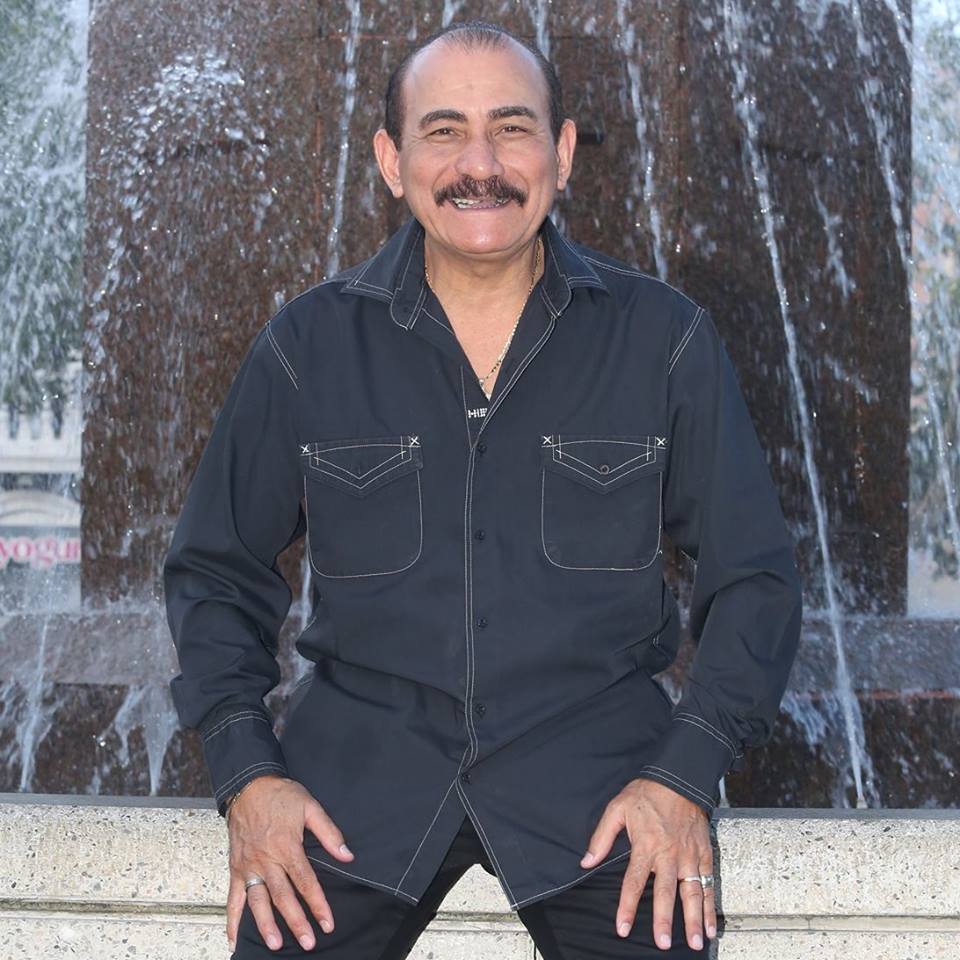
This is vocalist of La Moderna Tradición and Venezuelan singer Eduardo Herrera

How did Eduardo Herrera become interested in music?   

Eduardo comments that his parents always spent their time singing in a very cheerful way since he was a child, so his best childhood memories are with music. 

He grew up in Caracas, so he always had close contact with all kinds of music and listened to a great variety of artists starting with Celia Cruz, La Sonora Matancera, La Billo Caracas Boys, Los Melódicos, Benny Moré, Oscar D’ León, Daniel Santos, Los Adolescentes La Dimensión Latina, La Fania, among others. These artists strongly encouraged him to lean towards salsa in the 1970s.   

In his hometown, he began playing with the Teresa Carreño Chamber Choir, which was his first professional contact with music and, in his own words, was a great school for him during his time there. 

In 1987, being already in the state of California, United States, there was an orchestra called Radiante that played Puerto Rican salsa. Eduardo worked with them for a year until he joined Orquesta Sensual, whose strength was romantic salsa that was fashionable at the time.   

After that, he also worked with Orquesta Charanzón, which at that time was led by Anthony Blea, a famous violinist from the Bay Area. It was with this band that he began to fully discover Cuban music and develop a great passion for it, which would lead him to continue along this path in the following years.    

In those years, he played with an unlimited number of orchestras with which he gained a lot of experience and learned to perform properly on stage. However, his big break came with the Orquesta La Moderna Tradición in 2021, when he was offered to participate with the group in some projects.   

Even so, the latter did not prevent him from working with other groups of this style throughout the San Francisco Bay Area, as he has no problem with playing with anyone who wants to invite him.   

Eduardo Herrera and Tregar Otton
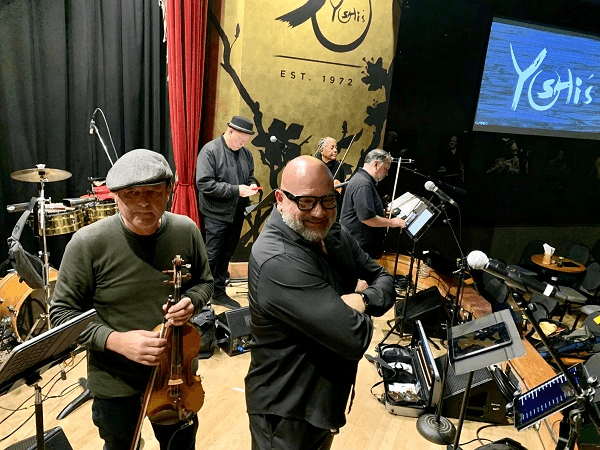
Eduardo Herrera next to director, arranger, composer and violinist Tregar Otton at Yoshi’s

Reasons to leave Venezuela and go to the United States   

Like any other immigrant, Eduardo’s primary reason for leaving his country was the search for new opportunities. Eduardo goes on to explain that he was awarded a scholarship by the famous Gran Mariscal de Ayacucho fellowship programme and managed to obtain his degree in biology in the United States, but unfortunately with the change of government, the things that were promised to him and other fellows such as jobs and revalidations were not kept. As a result, the young man was left in a limbo that made it nearly impossible for him to practice biology.    

With his options reduced to almost zero in Venezuela, Eduardo had no choice but to return to the United States, where he started working as a high school teacher until 2023, when he finally retired from his basic profession. In total, he taught for more than 40 years at the secondary level. During most of this time, he combined his school activities with his second profession, which was music.   

Other areas of music explored by Eduardo 

The singer explained to us that his voice has always been his most important instrument when he gets on stage, but he also confesses to having experimented with hand percussion instruments such as the maracas and the güiro. He pointed out that both are very easy to learn at first glance, but they have their level of complexity once you try them. 

At present, he only uses his voice in the orchestras in which he currently plays.  

Orquesta La Moderna Tradición   

”La Moderna Tradición reached out to me at the beginning to record one of their CDs and I started singing backup and the harmonies, which is how you should always get you started in any group. When you master those areas and have the talent, you may think about being a soloist and that’s exactly what happened with me” Eduardo started saying about the issue. 

La Moderna Tradición’s music was mostly instrumental at that time and they wanted Eduardo for their second album, which would include choirs for the first time, but the group had no singer at that time. In view of the good results offered by the vocalist, he found himself in frequent demand to give voice to other old numbers, but now with a singer.   

Years later, he finally received the proposal to be part of the orchestra as such, together with Ramón ”Monchi” Estévez on vocal. Already for the third album, all the songs had a singer, who was Eduardo most of the time. 

From then on, the artist has continued to be part of La Moderna Tradición with some interruptions because he moved from the Bay Area to the Central Valley in Manteca, which made it more complex for him to play with the orchestra on weekday evenings. 

At the same time, he worked with the group Vissión Latina, Carlos Caro’s orchestra or any other that invited him to play on weekends, which were on his days off. 

Eduardo Herrera performing
Eduardo Herrera performing live

What Eduardo has learned from La Moderna Tradición and other artists he has played with 

The most important things Eduardo says he has learned from the great artists he has played with are the study, humility, knowing your limits and the development of the love of music. He says the latter is fundamental, because if you do not love music, you will not do the job right.   

”With music, you sacrifice your time and the pay you receive in return does not always go according to what you do, but it is something you’re supposed to do for the love you have for the craft. If you do not love what you do, you will hardly do it well and use your skills in it” said Eduardo. He added that ”you are an eternal student and you never know everything about everything. There is always something to learn from other singers and seeing any of them on stage is an opportunity to emulate what they do as long as it is useful for your career. 

He also said that ”the ego of many artists is a really depressing thing because it prevents them from moving forward and takes their focus away from what is really important, which is the love of the genre and the opportunity to learn as much as you can”.  

Complex moments for Eduardo personally and professionally  

Eduardo mentioned to us that one of the hardest moments for him personally and professionally was his move outside of the Bay Area, which we had already talked about. Being so far away from the area where he did most of his performances was a blow to him, as he had to be near his wife and children.   

Eduardo was very late from work and his wife had a job which made her to leave home for several days, so it was up to him to stay with the children during all that time. For the artist, his family comes first every time and no job or hobby goes above that. 

His responsibilities with his children let him to distance himself from music little by little, since not being always available to play, orchestras would look for other singers to replace him. This made his opportunities to sing to be reduced, but Eduardo assures that the sacrifice has been worth it, as quality time with his children is the most main thing for him. 

Eduardo’s plans to create his own orchestra  

Eduardo was able to conduct an orchestra for a few months, which allowed him to see what the work of a director would be like and the truth is that he did not like it. ”During the time that I was conducting an orchestra, I could see I don’t have the right personality for it. I’m not good for working with adults who are irresponsible and many musicians tend to be late for the engagements and not to take this profession very seriously. I’m a very perfectionist person who has very high standards and I don’t expect anyone to work less than me, so I know it would be torturous for me to have a responsibility of that magnitude,” Eduardo said. 

He says that being a bandleader is far beyond what he wants to do with music and that he wanted to keep developing as a singer. In addition to this, going back to the family issue, such a position would have forced him to be away from his family again and that was something he was not willing to do. 

He also took into account the little stability offered by music as a profession. His work as a biology teacher was much more stable and allowed him to have secure income without having to worry about the bad times of orchestras. He loves music to a fault, but does not like uncertainty and insecurity.  

Eduardo Herrera and Maru
Eduardo Herrera performing with Maru Pérez-Viana, La oderna Tradición manager and chorister

Other groups  

In addition to playing with La Moderna Tradición, he also works with a Cuban group called Pellejo Seco, with which he recorded an album that is currently being remastered in Cuba. The material was recorded just before September in California, but will soon be released to the public. 

Eduardo works directly with Ivan Camblor, director of the orchestra and professional tres player. In this part of the conversation, the artist was very complimentary about Camblor and highlighted his great potential as a bandleader and musician. 

Something he likes about Pellejo Seco is that his main genre is Cuban son and it focuses a lot on very rural and traditional Cuban rhythms, so he can explore other elements different from what he does with La Moderna Tradición. They are very different groups with different genres and different characteristics. 

Read also: Nicaraguan singer and guitarist Yelba Heaton in an exclusive interview 

  • « Go to Previous Page
  • Page 1
  • Interim pages omitted …
  • Page 49
  • Page 50
  • Page 51
  • Page 52
  • Page 53
  • Interim pages omitted …
  • Page 129
  • Go to Next Page »

International Salsa Magazine (ISM) is a monthly publication about Salsa activities around the world, that has been publishing since 2007. It is a world network of volunteers coordinated by ISM Magazine. We are working to strengthen all the events by working together.