• Skip to primary navigation
  • Skip to main content

International Salsa Magazine

  • HOME
  • Previous editions
    • 2026
      • ISM / June 2026
      • ISM / May 2026
      • ISM / April 2026
      • ISM / March 2026
      • ISM / February 2026
      • ISM / January 2026
    • 2025
      • ISM / December 2025
      • ISM / November 2025
      • ISM / October 2025
      • ISM / September 2025
      • ISM / August 2025
      • ISM / July 2025
      • ISM / June 2025
      • ISM / May2025
      • ISM / April 2025
      • ISM / March 2025
      • ISM / February 2025
      • ISM / January 2025
    • 2024
      • ISM / December 2024
      • ISM / November 2024
      • ISM / October 2024
      • ISM / September 2024
      • ISM / August 2024
      • ISM / July 2024
      • ISM / June 2024
      • ISM / May 2024
      • ISM / April 2024
      • ISM / March 2024
      • ISM / February 2024
      • ISM / January 2024
    • 2023
      • ISM / December 2023
      • ISM / November 2023
      • ISM / October 2023
      • ISM – September 2023
      • ISM – August 2023
      • ISM July 2023
      • ISM Edition June 2023
      • ISM – May 2023
      • ISM April 2023
      • ISM March 2023
      • ISM February 2023
      • ISM January 2023
    • 2022
      • ISM December 2022
      • ISM November 2022
      • ISM October 2022
      • ISM September 2022
      • ISM August 2022
      • ISM July 2022
      • ISM June 2022
      • ISM May 2022
      • ISM February 2022
      • ISM January 2022
    • 2021
      • ISM December 2021
      • ISM November 2021
      • ISM October – 2021
      • ISM September 2021
      • ISM August 2021
      • ISM July 2021
      • ISM May 2021
      • ISM April 2021
      • ISM June 2021
      • ISM March 2021
      • ISM February 2021
      • ISM January 2021
    • 2020
      • ISM December 2020
      • ISM November 2020
      • ISM October 2020
      • ISM September 2020
      • ISM August 2020
      • ISM July 2020
      • ISM June 2020
      • ISM May 2020
      • ISM April 2020
      • ISM March 2020
      • ISM February 2020
      • ISM January 2020
    • 2019
      • ISM December 2019
      • ISM November 2019
      • ISM October 2019
      • ISM Septembre 2019
      • ISM August 2019
      • ISM July 2019
      • ISM June 2019
    • 2016
      • ISM December 2016
      • ISM November 2016
      • ISM October 2016
  • Spanish
  • Download Salsa App
    • Android
    • Apple

Search Results for: Eduardo Guilarte

Lawyer in the USA talk about Visas and entering the country

Interview: Bill Martinez and Eduardo Guilarte


The term “vet”  was originally used in horse-racing, referring to the requirement that a horse be checked for health and soundness by a veterinarian before being allowed to race. Thus, it has taken the general meaning “to check”. It is a figurative contraction of “veterinarian,” which originated in the mid-17th century.

The colloquial abbreviation dates to the 1860s; the verb form of the word, meaning “to treat an animal,” came a few decades later—according to the Oxford English Dictionary, the earliest known usage is 1891—and was applied primarily in a horse-racing context (“He vetted the stallion before the race,” “You should vet that horse before he races,” etc.). By the early 1900s, “vet” had begun to be used as a synonym for “evaluate,” especially when searching for flaws.

“Vetting” in reference to immigration in the United States of America involves investigations by the State Department’s security units, which include various branches of security. This process is used to assess individuals applying for visas or those who already have visas or residency status. The purpose of vetting is to ensure that individuals entering or remaining in the country are not a security risk and that they maintain their lawful status.

Eduardo Guilarte

Okay, so I’m talking with immigration attorney Bill Martinez about the current immigration situation here in the United States and the impact that the executive order is having. Bill, tell us what’s going on?

Bill Martinez

Well, since the elections, there’s been a chilling effect on the artists, presenters, promoters, everyone involved in bringing international artists over to the United States, particularly from certain country-designated countries. The executive order that Trump announced divided countries into different categories: red, yellow, and green. If you’re coming from a “red” country like Cuba or Venezuela, the vetting process is tougher.

The vetting process, which involves investigations by the State Department’s security units (which are multi, the various “ramas,” various branches of security), can delay the processing of visas for a long, long time, in some cases years. I had somebody vetted for a couple of years; he was always supposed to be here for two months. This was just last year. A famous Cuban artist was going to be honored as the best of his instrument, just to get an award.

Eduardo Guilarte

Who was that?

Bill Martinez

I can’t tell you. I don’t want to…I feel like I can’t give you that information. But it was someone very well known. Okay, and he ended up missing that opportunity. We’re going to try to bring him in again, but for right now, it’s very unsure and uncertain whether an artist will get a Visa or not.

It’s not just Cubans, but it’s across the board. The process under the executive order continues throughout, even if you have residency, even if you seem to have a Visa and you’re okay. At any point, if there’s some red flag of uncertainty, you are subject to having a Visa revoked and being returned to your home country, or in the majority of the cases for Cubans, you suffer really long delays for administrative processing, which means security clearances.

We just lost out on getting 15 young artists from the jazz school “Diana,” who were going to be in Berkeley on April 10th (or I think it was October). They were invited to go to Berkeley for about 10 days, and their visas were denied under the executive order because they come from a country whose ideology is contrary to the United States.

These are kids, and they’ve been practicing since July to come and do this wonderful exchange with their colleagues at Berkeley High School. The Berkeley High School people, the kids and supporters, were really excited for this to happen, and there was sadness for them after they got interviewed in December. They were told, “Why are you getting the administration involved? We need to vet, we need to investigate more and more.”

Finally, about three weeks ago, we found out, “Well, we made a decision because they come from a country whose etiology is going for the United States.” These are young kids, and their hearts were broken equally.

The Berkeley students wanted to reciprocate; Berkeley students to go to Cuba every year for the past eight years. They wanted to reciprocate, but they couldn’t. Similarly, a project we had with a famous Broadway producer…

Our licensed activity was essentially to send (this happened) the day after we got the denials of these kids, three days (or two days) later, I could not get visas for two of the three original members of the Buena Vista Social Club and Ibrahim Ferrer Jr., the son of Ibrahim Ferrer from the original Buena Vista Social Club. I could not get their visas to attend.

Did one of these Social Club members play on Broadway? We were only asking for one day, so the 30 kids from “Diana,” that’s nice, and the Broadway play…

Eduardo Guilarte

So, let me ask you about artists like Isaac Delgado. What’s his status right now?

Bill Martinez

I’m not sure because I know he does a yearly tour over here, I believe, and I could be wrong, but he now has dual citizenship. I’m not talking about citizenship and people who have become residents or permanent residents with permanent residence. The vetting process isn’t just to get the visa originally; it continues throughout. I mean, it is subject to review at all times. It’s an exhaustive review of the entire vetting process, and that continues even if you have residency. So, they will continue to investigate to assure that you maintain your lawful status, even when you think everything is okay.

Eduardo Guilarte

So, let me ask you this question: Let’s say that I am a permanent resident, and have been here for 20 years. Are you saying that if I am against Trump, they could potentially cancel my residency?

Bill Martinez

You can see what happened to the medical doctor, at Rutgers University. She’s a Lebanese doctor who went home to visit her family for a couple of weeks, and they wouldn’t let her back in. She had an H-1B visa. (referring to MD Rasha Alawieh, which while some initial reports mentioned Rutgers, also affiliated with Brown Medicine and had a clinical appointment at Brown University).

There was a…I forget which country this gentleman was from; I think he was a journalist, and he tweeted something against Donald Trump, and he had residency and was not allowed back yet. So, it’s a risky proposition to leave the country, even if it’s lawful and everything’s cool. You think it’s not a time to be taking risks.

Eduardo Guilarte

Thank you, Bill.

Bill Martinez

It’s a dark place right now.Bill Martinez 2025

Liz Rojas and John Narvaez share their experience with the San Francisco Salsa Festival

The San Francisco Salsa Festival is one of the most important Latin music events in The Bay Area and California in general, so we could not miss it. Eduardo Guilarte, senior editor of International Salsa Magazine attended on our behalf to witness firsthand everything that happened over the three days of the festival, as in previous years. 

To learn a little more about the most important facts related to the festival, Elizabeth Rojas and John Narvaez have made room in their busy schedule to talk with us and relate some elements and details of this fifteenth edition, which we are infinitely grateful. 

John, Liz, and Angie at the festival
John Narvaez, Angie Seminario y Liz Rojas

How was the 15th edition of the San Francisco Salsa Festival organized? 

Liz tells us that the organization of this edition started last year immediately following the previous festival to avoid wasting time and handle contingencies as soon as possible. Whenever they complete an edition, they immediately start to organize the next one, since all the details to keep in mind are too many to leave them for another time.

Liz and John always have to confirm orchestras and artists in advance, but they have a very efficient team of friends and partners to help them with everything related to the event. For this reason, every year it has become easier to make the preparations faster and more efficiently.

Novelties compared to other years

As for the novelties of this edition compared to other years, it could be shown that there was much more influx of people wanting to enjoy the activities offered. In addition to that, the dancers made sure that the program included more guests for classes, dance workshops on Friday, shows and competitions, which in turn helped to attract more interested public.

Another innovative detail was the invitation to local teachers in order to attract their students and people from their academies in general.

Latin Rhythm Boys at the festival
The Latin Rhythm Boys playing at the San Francisco Salsa Festival

Adding to all this, Liz and John sought to take much more into account the bachata dancers and artists in order to offer a little more variety in terms of musical genres and not just salsa.

Situation with the Orquesta La Máxima 79

No matter how majestic an event can be, there are always facts that can tarnish a little the satisfaction of organizers with all that has been achieved. This not so pleasant situation was the regrettable absence of the orchestra La Máxima 79, which was unable to travel to the United States at the last minute because of visa related issues.

John described how the days went by and the visas for the members of the group were not issued, to the point that the immigration department had not even conducted the first interviews. Because of this, they began to consider the possibility that La Máxima might not perform their show as planned. 

However, this didn’t stop them from having a card up their sleeve, so replacing La Máxima 79, they hired the amazingly talented Ray de La Paz, whose concert was amazing and delighted the audience with his fabulous show. They had to do much more publicity in the last few days due to the unforeseen change, but fortunately, it was all worth it.

They met Ray de La Paz in Hong Kong in 2004 during one of his shows where they were dancers on stage with him. Although they did not know him at the time, they really liked how he sang, so they called him up for the festival. They proposed to him to participate through Javier Cabanillas, another musician hired for the festival, who was a friend of his and kindly provided them with his contact information to invite him.

Ray at the festival
Ray de La Paz on the red carpet at the San Francisco Salsa Festival

When we wanted to know how the organization deals with last-minute inconveniences, Liz commented that they already had a plan B for such an eventuality. The main organizer of the event, Angie Seminario, and John had already talked about what to do in a situation of this kind. Likewise, they did not wait for the last moment to replace the missing orchestra, but acted quickly and worked on an alternative in parallel. At this point, John highlighted the importance of cultivating good connections and relationships with many musicians, so that they can count on them in emergencies.

Despite everything, they do not give up and will do whatever it takes to bring La Máxima to the festival next year. They are already working on this issue with the company’s lawyer.

The hardest thing to organize the San Francisco Salsa Festival

Together with last-minute absences, another problem which Liz and John face when organizing the festival is the hotel booking process for the time planned. Booking for the selected days and times of the festival and the multiple activities to be developed can turn to a headache, even more so than the organization of the workshops and concerts.

Also, the economic and time requirements can be very complex depending on what an event needs. The fines imposed by the government on venues that exceed the time limits with their events are well known, so planning failures should be avoided at all costs. 

John also added that it is always very complicated to deal with people and the selection process of the best staff to work with is not always easy. ”We always look for people who are equal or better than us. We make sure to surround ourselves with people who are even smarter and more capable than us so that they can see what we can’t” said the dancer and entrepreneur.

John, Anfie, Liz, and Ray at the festival
John Narvaez, Angie Seminario, Liz Rojas, and Ray de La Paz

How John and Liz feel now in comparison to the first festival

When compared this latest edition with the first one, John says that both he and Liz are extremely proud of what has been achieved so far. The artist assures that for him it is a great honor to be able to have Liz by his side, then thanks her for accompanying him and making the festival and the rest of the things they have achieved possible. 

Meanwhile, Liz fully agrees with her partner and also said she feels very proud of what they have accomplished all these years. Since we have seen other artists doing big dance events, John and I set out to achieve the same thing someday and we are very proud to have been able to make it possible” said the dancer ending her speech.

Julio at the festival
Julio Bravo playing the maracas during Ray de La Paz concert

Read also: Kiki Valera and his talented and special family’s great legacy

Caesar Salad

North America  / Mexico / Tijuana
By Eduardo Guiarte

Internationally famous “Caesar Salad” was created in the small border town of Tijuana, Mexico.  Many persons are surprised when they first hear this fact.  I confess that when I first heard it, it made me wonder.  Dancing the night away, a healthy sexual appetite and a good meal are gifts from the Gods. Was the story true?  As an amateur chef, I needed to know the whole story. So off I go on a flight to San Diego, with plans to cross the border on foot.

Caesar Salad Hotel
Caesar Salad Hotel
Restaurant Photo
Restaurant Photo
Restaurant Photo 2
Restaurant Photo 2
Restaurant Photo 3
Restaurant Photo 3

I just got off my flight and am in my Uber.  We are heading for the border crossing station.  My driver is a talkative Anglo-Saxon, elderly gentleman.  He knows the restaurant and tells me of the great Caesar Salad and that they have a mean Beef Wellington.  The driver tells me that it is now in a hotel, on the Avenida Revolucion.  “Oh you will have a great meal and not break the bank”, says my driver.

That was enough for me to make my reservation and requested to interview someone who could speak for the house.  We are greeted by Josue Corral, the captain.  Jossue sat down and told us the story.  The story starts with some aviators who showed up late one night and are told that they did not have anything available.

They ask Caesar Cardini if he could put anything together for them as they were starving.  Mr. Cardini went into creative mode and blended some garlic, anchovies, Dijon Mustard, Worcester Sauce, black pepper, the yolk of an egg, lemon juice, olive oil, crutons and some parmesan cheese.  The Romaine lettuce leaves were then swiped through the blended sauce and the result was a total success.

Everyone loved the creation and whenever they returned they would request the same salad.  The salad became known as “The Aviator’s Salad.”

You cannot tell the story of Caesar Salad without speaking of one of the most controversial figures in English history, Wallis Simpson aka Duchess of Windsor.  Bessie Wallis Warfield was born some 70 miles from Baltimore.  Wallis’ stepfather was the son of a prominent Democratic Party Boss.  Wallis was able to attend the most expensive girl’s school in Maryland.  At the school Wallis befriended Renee du Pont, of the famous du Pont’s.

Jimmy Donahue with the Duchess

Wallis developed social aspirations.  Her first marriage was with Earl Winfield Spencer Jr. (aka Win), a Navy aviator. There is talk of heavy drinking by Win.  Wallis is said to have had an affair with an Argentine diplomat, Felipe de Espil.  Wallis is also said to have had an affair with Count Galeazzo Ciano, Mussolini’s son-in-law, and became pregnant.  It is said that a botched abortion left Wallis infertile.  In 1927 the divorce was finalized.

The second marriage came seven months after her divorce.  Wallis married Ernest Aldrich Simpson.  Both Ernest and Wallis were diligent in climbing the British social latter.  It is said that they lived beyond their means.  At a house party they met Edward, Prince of Wales.

Guy Marcus Trundle
Guy Marcus Trundle
Ernest Simpson
Ernest Simpson

Edward was reputed with having an affair with Lady Furness a friend of Wallis.  While Lady Furness was in New York, Wallis and Edward started having an affair.  Ernest looked the other way while the affair was going on.  The local press would ignore the rumors, but not so the international press.

Queen With Wallis Simpson


Wallis became the most hated woman in the British Empire.  Edward VIII ascended to become king of England.  Edward would not break his relationship with Wallis and wanted her to be granted the HRM (Her Royal Majesty.) Wallis could only be addressed as “Your Grace” as she was not accepted as true royalty.

Winston Churchill fought bitterly and argued that Edward was the head of Anglican Church, The Defender of the Faith, and that Edward owed sacrifice to his people, who would never accept Wallis as their Queen.  Wallis was hailed as an American whore who would not leave their king alone.  After 11 months on the throne, Edward abdicated the throne to his brother, who became King George VI.

The third marriage was with Edward VIII.  Had an affair with Jimmy Donahue, heir to the Woolworth fortune and who was said to be a notorious homosexual.

Photo with Richard Nixon – then Hitler – then with the Queen Elizabeth who blamed her for her husbands death.

Wallis Simpson and her husband greeting Adolf Hitler

In the book it was hailed as the greatest love affair in the world.  It is said that in the notebooks of Anne Seagrim, secretary to the royal couple, Edward asked Wallis to break off her affair with reputed promiscuous homosexual Jimmy Donahue, heir to the Woolworth fortune.  19 years her junior.

The grandson of millionaire Frank W. Woolworth, Says Charles Higham in his book that on March 18, 1946 Jimmy and his pals took a number of sailors, soldiers and Marines to his mother’s apartment.  Theere they stripped a GI naked and began to shave his body hair using an old fashion razor.  It is said that accidentally Jimmy castraded the soldier.  Jimmy’s mother is said to have paid close to a quarter of a million dollars to drop the charges and Jimmy fled to Mexico for two years.

At one time I came to the understanding that you don’t need to be a great writer to gain fame.  You can write about famous people who will promote your book about them. In a way this is how this wonderful dish got its start.  Famous people flee from prohibition and drink to their hearts content just crossing the border, Tijuana, Mexico.

It was chick and fashionable.  Wallis was the ambassador for this dish.  Wallis Simpson a highly controversial personality who while still married was said to be the lover of the King of England, Edward VIII.  Many Brits hailed her with hatred as the American Whore who stole their king.  Edward VIII abdicated when confronted with the reality that his people would not accept Wallis as their Queen.

Eduardo Guilarte in Caesar Cardini Hotel Photo

Being the personality that Wallis was, she visited the most famous restaurants around the world, Paris, London, New York, Buenos Aires, and Wallis always liked to be involved with cuisine and would personally instruct the Chef as to how she wanted the meals prepared.  Well every famous chef had to learn to make Caesar Salad, by the Royal Command of Wallis Simpson.

Love Story Book changed the publics reaction to the couple.  Wallis was received as royalty in Baltimore,

Tried to work things out with Hitler and was received.  His brother did not appreciate and was seen as interfering.  The Queen had visited Roosevelt and the alliance was made between the USA and England.  Most hated woman in England.

Before, during and after suspected of being Nazi sympathizers.  Was suspected of passing information on the Nazis.  They asked them to leave France when they visited.

Cardines - Creator of the Caesar Salad
Cardines – Creator of the Caesar Salad
Cardini's Creator of the Caesar Salad - Sauce
Cardini’s Creator of the Caesar Salad – Sauce
Cardini's Creator of the Caesar Salad - Sauce
Cardini’s Creator of the Caesar Salad – Sauce

Necesitiy or accident, july 4th, 1924 group of pilots and there was nothing to offer them.  They asked the chef, Caesar Cardini.  It then became known as the “salad of the flyers”.  La ensalada de los aviadores.

In the 30’s Cardini baptized it with his name. Dry law in USA, and people went to TJ andCaesars they spread the word.  A lot of famous people would go to Tijuana, it was a place where you could get away from prohibition.  Wallis Simpson, went and she wrote the recipe and wherever she went Wallis would make all the chefs prepare it the way she learned from Mr. Cardini.  Since 2nd street, 1916.  In 1927 they moved location.

Avoid the restrictions of prohibition. Fashionable among Hollywood and other celebrities.  the Cardini’s brand was sold, and is now owned by the T. Marzetti specialty salad dressing company. It is still popular and offers more than a dozen varieties of the original recipe.

Caesar Cardini
Caesar Cardini

Caesar Cardini, a famed restaurateur who, according to lore, invented the dish in Tijuana, Mexico, in 1924 when a rush of diners on the Fourth of July strained his kitchen’s resources and he had to make do with whatever ingredients were left on hand.

Restaurantecaesar http://caesarstijuana.com/

My mother sang tango

One of the Latin genres that is currently on the rise is tango, so it is common to find more and more people linked to it. There are even many who have made tango one of the most important passions of their lives, as in the case of Carlos Álvarez Guevara, with whom we have had the fortune to talk exclusively about this and other interesting topics.   

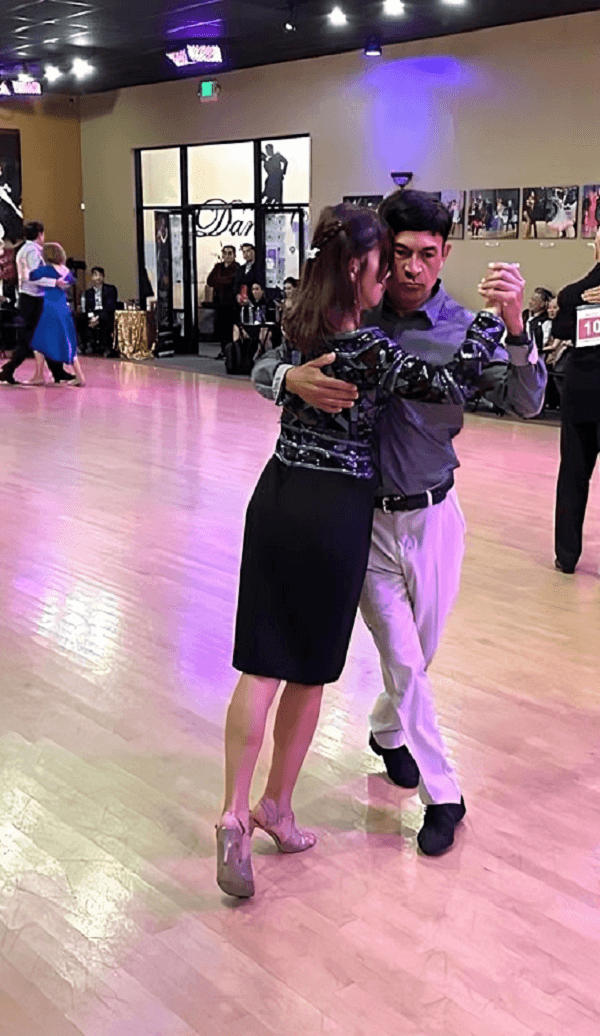
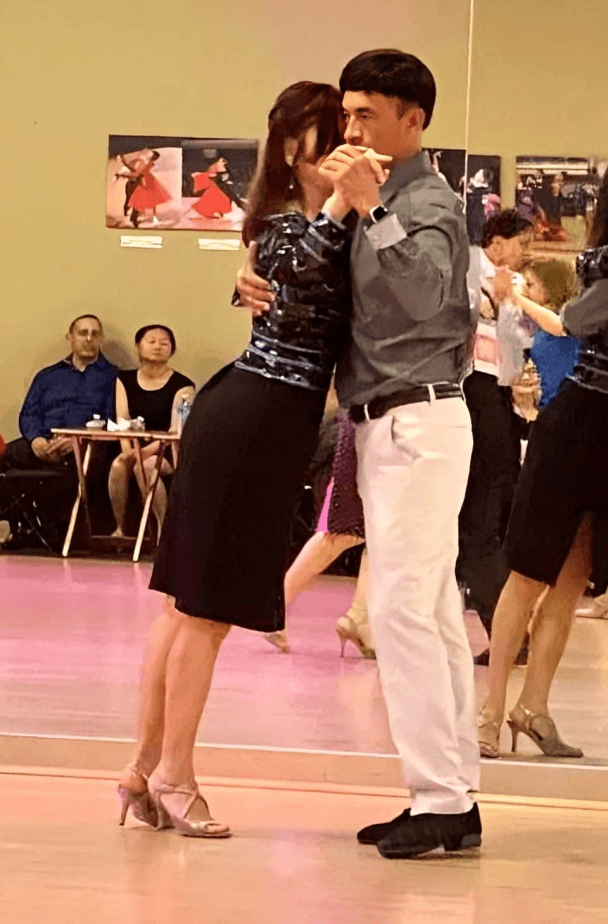
Carlos dancing tango
Carlos dancing with his dance partners in tango classes

Childhood with a tango singer mother   

Carlos’ contact with tango began during his early childhood thanks to his mother, who was a tango singer and dancer.   

Carlos describes his early live in El Salvador and points out that, back then, there were no cassettes or CD players with which to listen to music, so people had to make do with what they heard on the radio. His mother went to a well-known radio station to take part in singing competitions.   

It is then that the boy would listen to his mother rehearse for the competitions with old tango songs, which made him memorize them perfectly and be able to sing them in full. The rest is history.   

How Carlos sees tango today   

Today Carlos is a tango and salsa dancer, a genre that has also been important in his musical journey. However, he sings the songs he dances to at amateur level.   

For many years, he left aside music to devote himself to become a mechanic, a job from which he recently retired after more than 40 years of hard work. It was when he turned 45 that he fully resumed his love for tango and enrolled in dance classes to remember everything he had learned with his mother. 

This is why Carlos says that he is much more professional in dancing than in singing, since he dedicated much more time and effort to the former to become an expert in the field. Dancing, of course, is accompanied by singing, but it has less hierarchy in terms of the artist’s priorities.   

He has reached such a level of excellence in these disciplines that some friends of his put him in touch with Eduardo Guilarte, director of International Salsa Magazine, so that he could talk to us and his talents would become better known.    

Carlos was a mechanic
Carlos was a mechanic during a great part of his life, but tango is his biggest passion

Time dedicated to mechanics and dance   

Regarding the time dedicated to his formal work and dancing, Carlos claims he never had any problems, since he knew how to organize very well in this aspect. 

He always devotes his time to dance on weekends, days where he frequented, and still frequents, nightclubs with friends with whom he dances and spends very pleasant moments that clear his mind of everyday life.   

In addition to that, he also has a karaoke machine at home with which he also sings and practices his repertoire to delight anyone who wants to hear him on any nightclub stage.   

What Carlos has learned from tango   

Just as Carlos has been dedicated to singing and dancing tango, he has also invested time in learning about its history to give more depth to the knowledge he has about this genre and he wanted to share with us a little of what he has learned.  

He told us that one of the things he was most fascinated to learn is that tango has roots from many places and times around the world, although nowadays it is seen as an Argentine genre. Something that many do not know is that it has its origins in the arrival of Africans in the ”New World”, which played a fundamental role in the emergence of tango in Argentina and Uruguay, which were under Spanish rule.    

Both countries were transit ports for slave traffic, so the new inhabitants of these places brought with the their music and customs, which were mixed with the local music and customs to give rise to what is known today as tango. 

A very interesting detail he told us is that, when European sailors stopped in these countries and went to bars to look for drinks and some company, so the ladys in these places danced tango to seduce and provoke them. At that time, this kind of music was perceived as the lowest level of society to the point that the Catholic Church demanded its parishioners not to dance tango, but it turns out that the genre was pleasing to the people and nothing could be done about it.    

In the end, puritans had no choice but to embrace this wonderful dance and, today, people of all social classes, ages and races enjoy it without any complex.   

Carlos with his family
Carlos with his mothers, brothers and dog Mozote

The lyrics and references of tango    

Since Carlos has very extensive knowledge of everything about the genre and its lyrics, we wanted to know what he has studied about it.    

‘‘Tango can be many things at the same time. It can touch on issues related to the moral conduct of the individuals and, like many Latin genres, it also serves to mock and criticize politicians. It can also be an ode to love, spite and regret for having lost the loved one” Carlos shared with us on the subject.    

‘‘This genre can deal with many subjects at the same time, but one of the most recurrent is frustration with failed love and I don’t think that will change in a long time” said Carlos.   

Regarding the issue of the greatest artists who have inspired him to dance and sing tango, he mentioned Carlos di Sarli, Carlos Gardel, Oswaldo Pugliese and Enrique Rodríguez.   

What Carlos feels at singing and dancing tango   

Carlos describes listening to any tango song as ”listening to your own national anthem in a foreign country”. For him, listening to any piece sung by his parents in the past is a source of pride and takes him back to the most beautiful moments of his childhood. 

Carlos pointed out that ”when you are driven by loving emotions and some thoughts are trapped, you can express them through singing and dancing, which is what I always do”.    

The artist pointed out that he loves this world and it is one of the things that fills him the most in life, so he is grateful to be able to talk about it in International Salsa Magazine and express what it makes him feel to the world. 

Read also: Bolivian guitarist Gabriel Navia and his love for music 

Spanish Harlem Salsa Gallery & Johnny Cruz: ¡Que viva la Salsa!

North America / USA / California

Spanish Harlem Salsa Gallery & Johnny Cruz: ¡Que viva la Salsa!

A private collection that was built over four decades has opened its doors to the public in El Barrio, New York, becoming the only permanent exhibition dedicated to salsa and its heritage

Johnny Cruz Photo
Johnny Cruz Photo

By Carmen Mercedes Aular

With the magic and passion of Johnny Cruz as host, Spanish Harlem Salsa Gallery opened its doors to the New York community and the world a year ago, after 5 years of starting as a private gallery for an exclusive audience.

Spanish Harlem Salsa Gallery

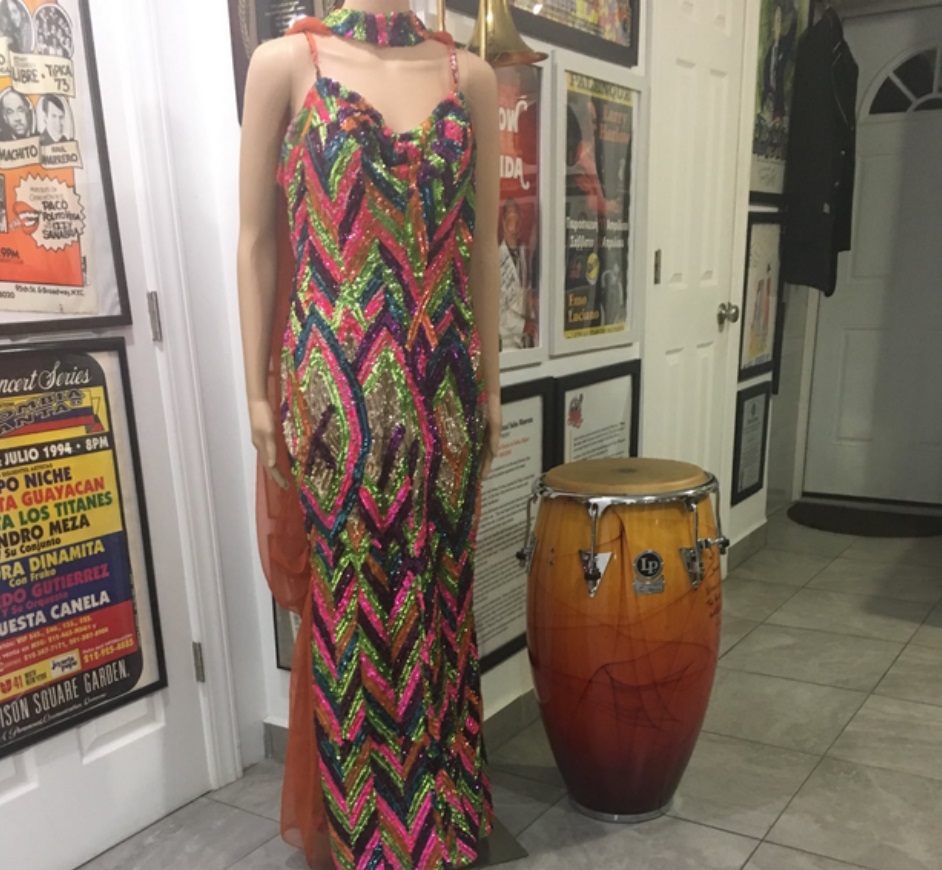
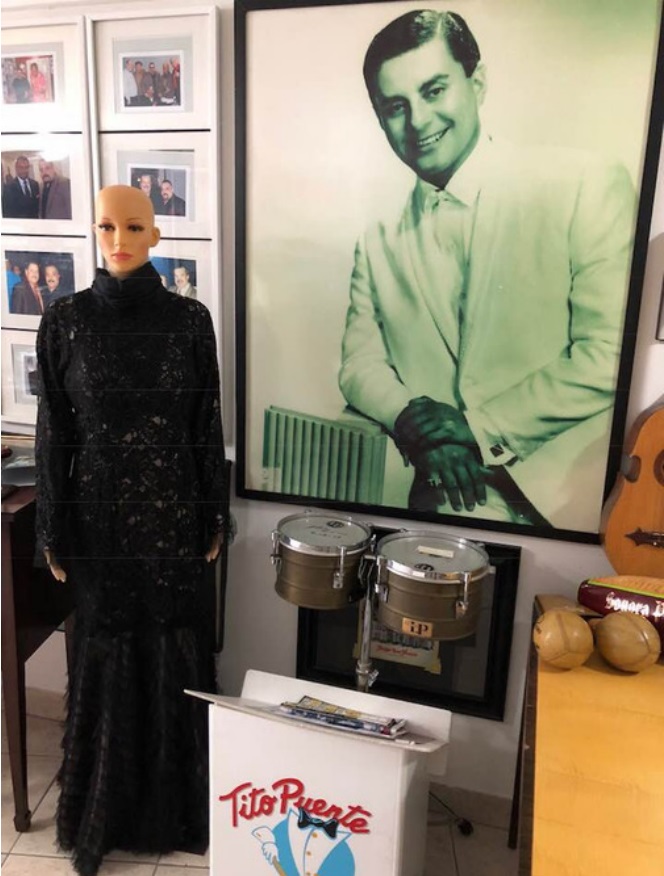
In this extraordinary place are exhibited 40 years of music, experiences and memories that now everyone can relive and consequently know the history behind each instrument, behind each object that rests in this immaculate space and carefully organized by Cruz. The collection includes instruments, pictures, newspapers, clothing and several gadgets donated by great musicians of Latin music.

Must share the good things

The initiative to bring the VIP experience to more people was conceived by Johnny Cruz to realize the positive impact that the gallery would have on the community of El Barrio and the way in which, through it, he could get more involved with schools from the neighborhood. The goal is to continue teaching children and adults the history of Latin music and show them how music is part of history and culture, and how it’s also part of El Barrio.

Spanish Harlem Salsa Gallery Photo

Cruz hopes to tell the story of each element of the gallery to anyone who wants to listen, and continue to increase the collection with donations from the stars of Latin music. Anyone interested in the history of music can learn something new and continue to share this information with other people so that the successes of these artists are never forgotten and kept alive in the collective memory.


In the near future, they hope to carry the information from the gallery to schools and universities in New York. In addition, they are working to collect resources to expand the collection and preserve exposure in the best and safest way possible, and become a source of employment for the community.


What awaits you at SpaHa Salsa Gallery?

At 1708 Lexington Ave NYC, you can find a wide variety of instruments, costumes, and other items from top artists of Latin music. One of the pieces of more recent data is the costume used by Sophy from Puerto Rico, in the tribute concert to Rafael Hernández at the Center for Fine Arts of Puerto Rico.

Photo by Spanish Harlem Salsa Gallery

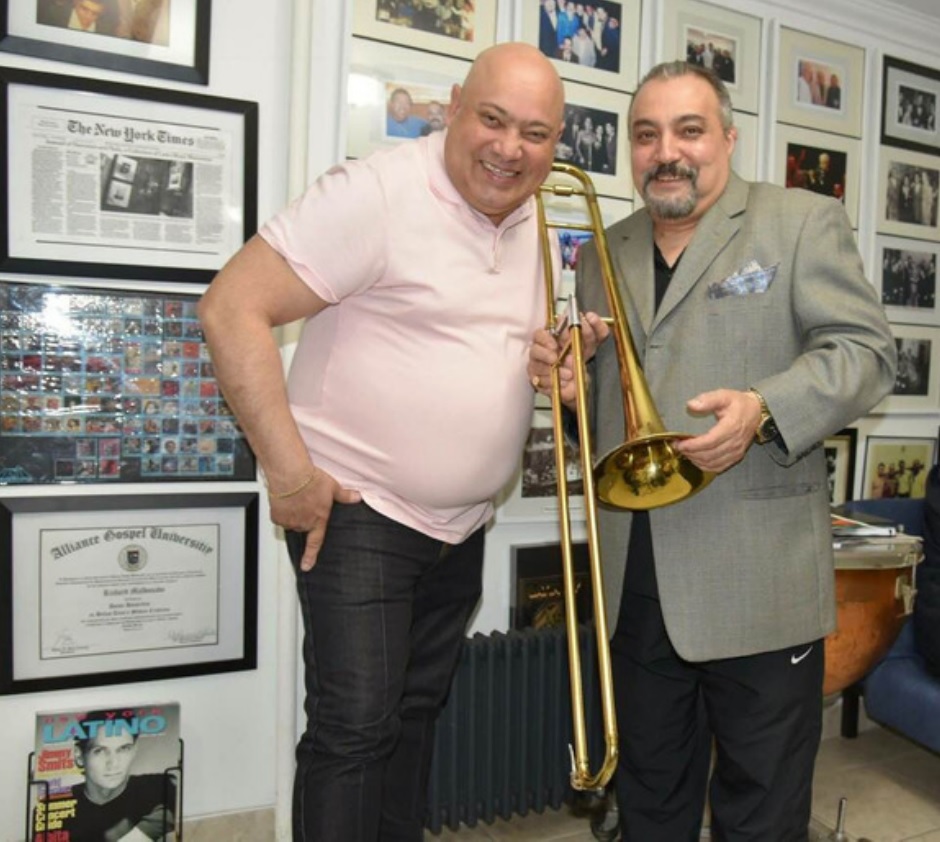
The great Eric Vélez supported the gallery by donating the congas that are in the permanent exhibition. You can also appreciate the tuxedo that Adalberto Santiago used in his 55th anniversary concert and a Bobby Cruz costume. A piece that you definitely have to watch is the colorful and vibrant Celia Cruz’s dress. Mike Rodriguez donated his güiro, maracas and tamboril. Willie Álvarez’s trombone also rests in this exposition.

Spanish Harlem Salsa Gallery photo 4

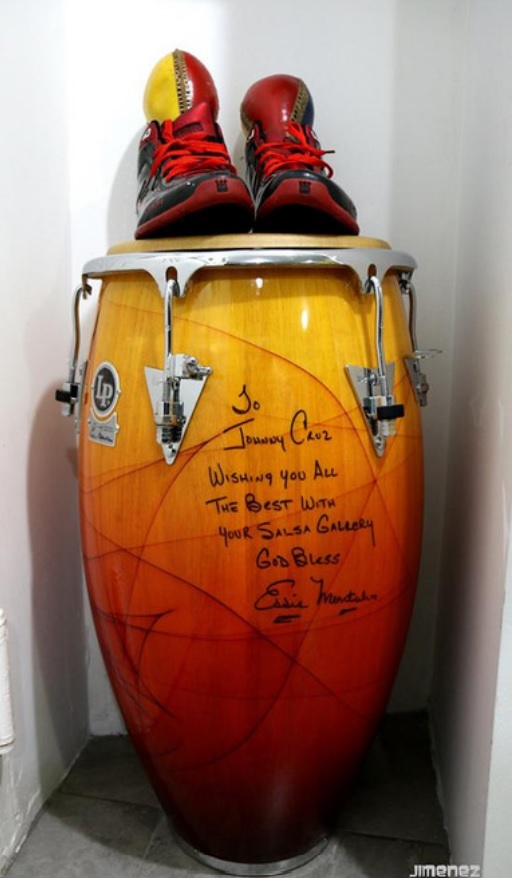
Tourists and locals can learn about the history of objects belonging to musicians of La Fania All Stars or La Sonora Ponceña, the shoes of Héctor Casanova perched on the congas of Eddie Montalvo and numerous pieces full of anecdotes that will always, very gladly, share their host. The commitment of the gallery, and Johnny Cruz, is reaffirmed every day with donations of great glories that have a single purpose: to keep the music alive.

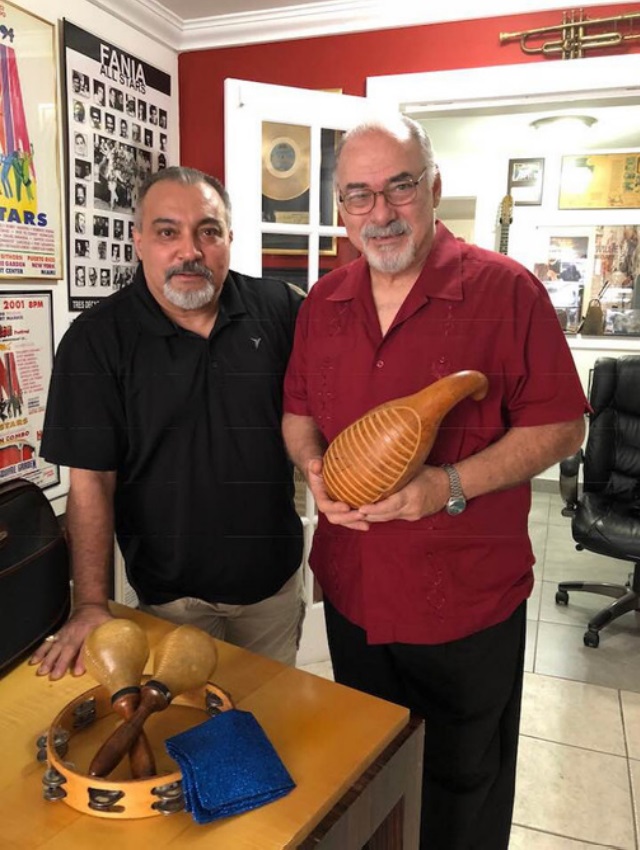
Eduardo Guilarte and Johnny Cruz

Soon, you will have access to the membership of the SpaHa Salsa Gallery, with which you will get information about the events before the general public and discounts in a wide network of restaurants in town, among other benefits, as a way to promote the gallery and obtain funds for its expansion and maintenance.

Within the gallery’s events programming for this month is Pablito Rosario and Cachete Maldonado’s visit, a celebration for Governor Andrew Cuomo for his triumph in the primaries vote in the state of New York, and another for Assemblyman Roberto Rodríguez, who has the support of the Latino community in the area where SpaHa Salsa Gallery lives. Moreover, Nicky Marrero, musician of the Fania All Stars, will donate the timbales he used recently in a tribute to Celia Cruz, so you can meet him in the gallery; on that day, he will be signing the instrument to formally deliver it to the collection.

Spanish Harlem Salsa Gallery photo 3
Drum - Photo
Drum – Photo

The gallery is open to the public from Wednesday to Friday from 4:00 pm to 7:00 pm, and Saturdays from 1:00 pm to 8:00 pm at 1708 Lexington Ave. NY 10029 (El Barrio).

You can get more information about events, membership and donations by calling 917-747-8505.


About the precursor of the initiative

Johnny Cruz has a history of 40 years in the world of Latin music, during which he has been collecting musical instruments. In the last 5 years he created Spaha Salsa Gallery in El Barrio in New York City and a year ago he shares it with friends, contacts, tourists and the community.

Adalberto Santiago flyer

He has been a percussionist for the last 40 years and is passionate about music, singing it, producing it, composing it, telling it, living it today and keeping it alive forever. He has worked closely with some of the most outstanding Latin musicians in the business throughout his career and has been honored with a variety of awards over the years.

Photo by Johnny Cruz with more music instruments

At this time, he produces a public access television program for mnn.org called The Windows of Latin America. The program has been on the air weekly for 20 years, and it is the only TV space in New York where salsa is broadcast.

Jhonny Cruz and Adalberto Santiago

In a few days he will be premiering a collaborative production with Adalberto Santiago, with songs that recap his musical career of more than six decades and have the admiration and gratitude of Cruz. Within the framework of this launch, there will be an event in which great Latin music personalities will meet again at the Spanish Harlem Salsa Gallery to share a fun time with fans and friends.


Since the beginning of this trip, his desire has been to create a space for the community. Sharing these artifacts is their way of giving back to a community that they have had the pleasure of being part of for many years, a bit of their culture and their heritage for the world.

Johnny Cruz
Johnny Cruz
  • « Go to Previous Page
  • Page 1
  • Page 2
  • Page 3
  • Page 4
  • Go to Next Page »

International Salsa Magazine (ISM) is a monthly publication covering salsa activities around the world and has been publishing since 2007. It is a worldwide network of volunteers coordinated by ISM Magazine. Together, we work to strengthen salsa events around the world.