• Skip to primary navigation
  • Skip to main content

International Salsa Magazine

  • HOME
  • Previous editions
    • 2026
      • ISM / June 2026
      • ISM / May 2026
      • ISM / April 2026
      • ISM / March 2026
      • ISM / February 2026
      • ISM / January 2026
    • 2025
      • ISM / December 2025
      • ISM / November 2025
      • ISM / October 2025
      • ISM / September 2025
      • ISM / August 2025
      • ISM / July 2025
      • ISM / June 2025
      • ISM / May2025
      • ISM / April 2025
      • ISM / March 2025
      • ISM / February 2025
      • ISM / January 2025
    • 2024
      • ISM / December 2024
      • ISM / November 2024
      • ISM / October 2024
      • ISM / September 2024
      • ISM / August 2024
      • ISM / July 2024
      • ISM / June 2024
      • ISM / May 2024
      • ISM / April 2024
      • ISM / March 2024
      • ISM / February 2024
      • ISM / January 2024
    • 2023
      • ISM / December 2023
      • ISM / November 2023
      • ISM / October 2023
      • ISM – September 2023
      • ISM – August 2023
      • ISM July 2023
      • ISM Edition June 2023
      • ISM – May 2023
      • ISM April 2023
      • ISM March 2023
      • ISM February 2023
      • ISM January 2023
    • 2022
      • ISM December 2022
      • ISM November 2022
      • ISM October 2022
      • ISM September 2022
      • ISM August 2022
      • ISM July 2022
      • ISM June 2022
      • ISM May 2022
      • ISM February 2022
      • ISM January 2022
    • 2021
      • ISM December 2021
      • ISM November 2021
      • ISM October – 2021
      • ISM September 2021
      • ISM August 2021
      • ISM July 2021
      • ISM May 2021
      • ISM April 2021
      • ISM June 2021
      • ISM March 2021
      • ISM February 2021
      • ISM January 2021
    • 2020
      • ISM December 2020
      • ISM November 2020
      • ISM October 2020
      • ISM September 2020
      • ISM August 2020
      • ISM July 2020
      • ISM June 2020
      • ISM May 2020
      • ISM April 2020
      • ISM March 2020
      • ISM February 2020
      • ISM January 2020
    • 2019
      • ISM December 2019
      • ISM November 2019
      • ISM October 2019
      • ISM Septembre 2019
      • ISM August 2019
      • ISM July 2019
      • ISM June 2019
    • 2016
      • ISM December 2016
      • ISM November 2016
      • ISM October 2016
  • Spanish
  • Download Salsa App
    • Android
    • Apple

Search Results for: Eduardo Guilarte

Edgardo Cambon will celebrate his 40-year career at Yerba Buena Gardens

A few years ago, we had the great honor of interviewing Uruguayan bandleader, director, composer, percussionist, and singer Edgardo Cambón, with whom we talked again about his career anniversary as a musician next month.

Obviously, we wanted to recount the most important and interesting details of his wonderful career, but we could not fail to ask him how he has been the last few years, and that is how we wanted to begin our conversation today.

One of the things he revealed is that he recently released his new album, “For Export,” under the record label Latinbaum Records during a show at a venue known as The Fright, an event in which he enjoy the opportunity to celebrate his 65 years of life in April 2025. There were about 450 people present, with whom an excellent music video was filmed and the previously mentioned CD was released. 

At the end of last year, he made about eight radio appearances, one on TV, and another one live in Bogotá, Colombia, which is one of the locations where the producer of Latinbaum Records, arranger, producer, composer, and pianist Israel Tannenbaum, is based. We have also had the opportunity to interview him on other occasions.

He says he is very happy with the five albums he has recorded so far and how active he has been over the past year due to his many promotional trips to places like Puerto Rico.

Edgardo playing
Edgardo Cambon playing live at the Cigar Bar & Grill

How has Edgardo Cambón managed to remain relevant after so many decades?

After being performed for nearly 40 years continuously, it is important to know how Edgardo has managed to remain relevant for such a long time, which in his own words, has been possible thanks to the originality of his sound and lyrics. He has never stopped writing original material, but that does not mean he has not dared to experiment with other people’s compositions, as was the case with “Imagine” by John Lennon. The artist created his own salsa version of this classic, which is an extremely risky thing due to how different salsa is from the soft rock we all remember from the original song.

More importantly, he has never been afraid of changes, and that can be seen in all the genres with which he has experimented, except for reggaeton, since he cannot support many aspects of culture that accompanies this type of music and its leading artists.

He made romantic salsa songs when that genre was very fashionable, but he always tried not to be swayed by the thing of the moment, but to seek himself in each style. Something to acknowledge Israel Tannenbaum is to be the first producer to mold him as an artist and give him so much valuable advice such as reducing the duration of a song or how to keep the message with a shorter length of time.

Another big change to which he had to adapt over the years was the fact that his understanding of the local scene could no longer be the same. One of the many things that changed was the appearance of salsa congresses where DJs, who usually played the hottest tracks of the moment, took center stage. This led Edgardo and many other artists to adapt their repertoire and include covers of much better-known songs, as that was what a whole segment of the public demanded most.
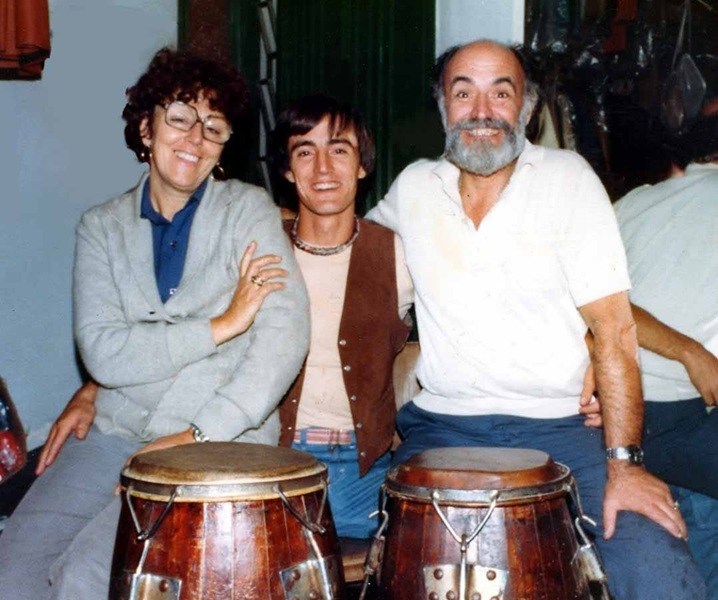
Edgardo and his parents
Edgardo Cambon with his parents Blanca Fraga and Jose Maria Cambon in 1981

Performance at the San Francisco Salsa Festival

One of the festivals he has attended was the 2026 edition of the San Francisco Salsa Festival, organized by John Narvaez and Elizabeth Rojas, who had previously hired him to offer percussion classes. Edgardo & Candela had an extremely successful performance on Thursday, March 26, which was the day of the opening.

The artist took the opportunity to remind us that he has also been performing for years at the San Jose Jazz Festival and the Monterrey Jazz Festival, the first time the organizers hired a Uruguayan bandleader, and he was one of the few to perform salsa that day. In addition, he had the honor of introducing candombe (a traditional Uruguayan rhythm) mixed with salsa and traditional drums.  

Top moments of his career

After such a long career, he has logically experienced moments that marked a watershed that forced him to adapt to the new trends. One of those changes was the replacement of the vibraphone (a very delicate instrument) by the trombone, which represented a significant sonic leap, as the musicians had to switch from a percussion instrument played with drumsticks to a brass instrument that runs on air and lip pressure.

With the arrival of Karl Perazzo, he proposed to Edgardo that they start using trombones, and he agreed to when seeing the potential of the instrument. So, that was when the group became a septet, having previously been a small ensemble in which the three percussionists played and sang simultaneously, making the band sound bigger than it really was.
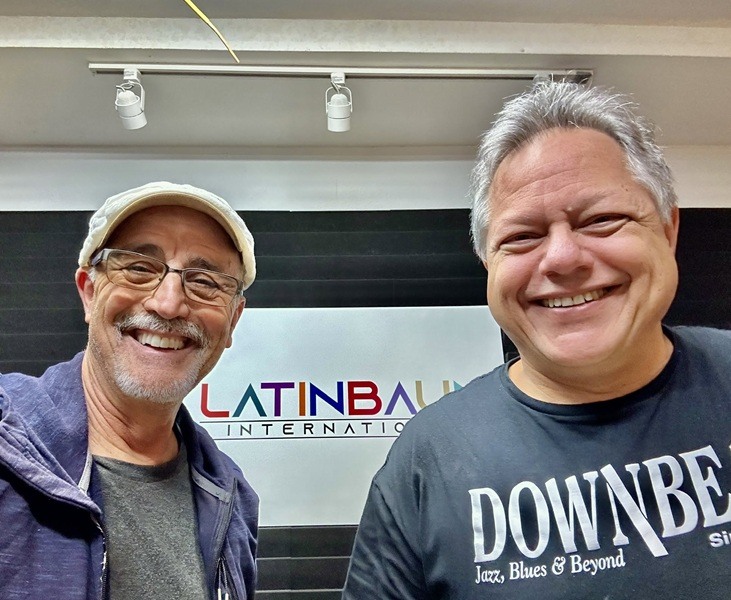
Edgardo and Israel
Edgardo Cambon and Israel Tannenbaum

Some time later, Edgardo made a series of trips to Cuba that completely transformed his mind and his way of seeing and playing music, since anyone could not go on stage in that country. It was then that he felt inspired to release his album “Madre Rumba, Padre Son,” in which he gives all credit to what he learned from Cuban music and its greatest exponents. He also took the opportunity to mention some of his other biggest influences, such as the politicized lyrics of Ruben Blades in the 1970s, Los Van Van, Isaac Delgado, and many others.

Another aspect that changed over the course of his career was the way the media, radio specifically, was transforming as the years went by. However, there were always communicators willing to promote his work, such as Chuy Varela, Louis Medina, and Chata Gutiérrez, who supported him at the time despite being a local artist from Uruguay playing salsa in such a competitive environment.

Thanks to all those moments and the support he received, Edgardo managed to meet his biggest dreams such as making great music, continuing to live from music, and achieving international popularity. Although he hopes to continue reaping the fruits, he feels he has already achieved what he set out to do early in his career.

Edgardo traveled to Bogota
Edgardo Cambon during his last trip to Bogota

40 Anniversary of Edgardo Cambon’s career

Before telling us of his plans for his 40-year career, he reminded us how he celebrated his 20-year career at Yerba Buena Gardens, where he released his album “20 Años de Sabor.” The event was so successful that he will use the same venue to celebrate his 40th anniversary on August 6 this year. The concert will be completely free, suitable for all ages, and outdoor from 6:00 p.m. to 7:30 p.m.

That day, he will perform the best of his repertoire together with special guests who will make it a very special night, especially for Edgardo and his team.

And Edgardo also wanted to thank International Salsa Magazine, its editor Eduardo Guilarte and me for such a very positive interview on the occasion of celebrating the anniversary of his amazing career. The honor is all us and it is what a first-class artist deserves for leaving our heritage high. 

Read also: The Latin Ensemble enchants the United States and Spain with its talents

La Bodeguita del Medio Costa Rica

Latinoamerica / Costa Rica
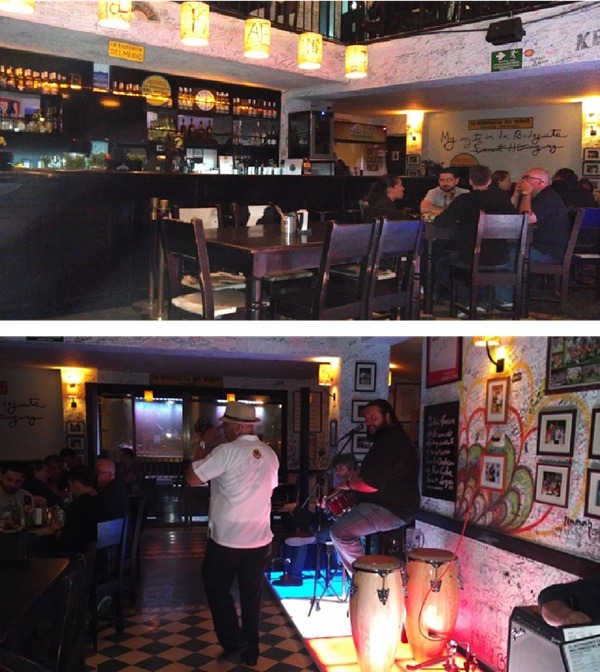
La Bodeguita del Medio Costa Rica Photo with Eduardo Guilarte

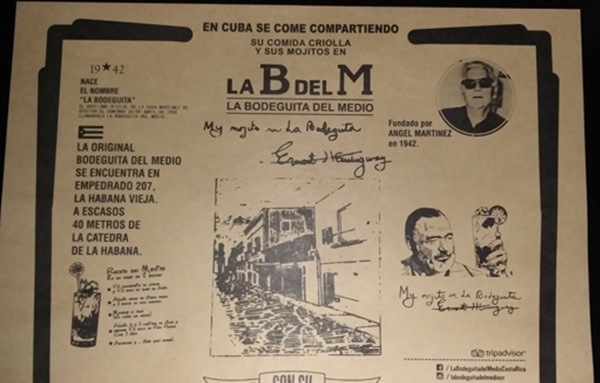
One of the most renowned and famous establishments is “La Bodeguita del Medio” in Havana, Cuba. And in San José, Costa Rica, there’s a branch that offers great live music and excellent mojitos. This is because this Cuban restaurant is the most famous in the world for being the creator of the authentic Mojito.

“La Bodeguita del Medio” was officially named at the Martínez house on April 26, 1950. It’s worth noting that the original Bodeguita del Medio is located at Empedrado 207, in Old Havana, just 40 meters from the Havana Cathedral.

La Bodeguita del Medio Costa Rica - Drinks
La Bodeguita del Medio Costa Rica – Drinks

This restaurant provides excellent quality Cuban food, and there’s never an entrance fee. Opening hours are from 12 noon until midnight, depending on the number of customers at that time. One of the groups that plays at this venue is “Grupo Chocolate los hijos del Son,” who perform live, playing original music and traditional Cuban songs for all audiences daily, from Monday to Saturday, starting at 8 pm. This group has been playing at the Bodeguita since the restaurant opened.

This restaurant is also known as an ideal place to enjoy excellent afternoons and evenings full of flavor, with live music and an unbeatable Cuban atmosphere—in short, a very cheerful atmosphere with a true Latin flavor. Our Editor-in-Chief, Mr. Eduardo Guilarte, visited and enjoyed the quality of both the service and the company.

La Bodeguita del Medio Costa Rica - Photo 1
La Bodeguita del Medio Costa Rica – Photo 1
La Bodeguita del Medio Costa Rica - Photo 2
La Bodeguita del Medio Costa Rica – Photo 2

For more information, please contact:

  • Phone: +506 2255 8383
  • Location: 200 meters south of BCR Paseo Colón, San José, Costa Rica
  • Email: [email protected]
  • Facebook: LaBodeguitadelMedioCostaRica https://www.facebook.com/LaBodeguitadelMedioCostaRica/
  • Instagram: labodeguitadelmediocr
La Bodeguita del Medio Costa Rica

Actress, comedian, and singer Carmen Nydia Velázquez tells us about the best of her career

Through a very kind friend of our editor Eduardo Guilarte, María del Carmen, we have been fortunate to make contact with the extremely talented Puerto Rican actress, comedian, and singer Carmen Nydia Velázquez, with whom we had the opportunity to talk with for our report on Bad Bunny’s Super Bowl halftime show.

It turns out that her career is so fascinating that we obviously had to talk to her and know much more about her artistic journey, both in her native Puerto Rico and abroad. Without further ado, these are the highlights of our conversation.

Carmen Nydia cantando
Carmen Nydia Velázquez singing live

Carmen’s education and start in acting

When it came to her academic background, theater always caught her attention, but she also loved to sing. These tastes led her to study drama at the University of Puerto Rico, where she brought out her histrionic talent and showed just how good she would be at doing comedy in the future.

Even before graduating, she already worked in theater and appeared in Francisco Arrivi’s play *Vejigantes*. At that time, she was in her last academic year, and the play was a tribute to the great Puerto Rican actress Lucy Boscana, who had died back then. For many years, Boscana played the character of Toña, and Carmen did the same when it was her turn in this new version, which had so much impact that it led to a film based about the same story.

Then, in the 1970s, she joined the musical group Moliendo Vidrio, led by Gary Núñez, and was there for about 11 years, while doing theater and television. The group took up a lot of Carmen’s time and was part of the New Song movement in those days.

Kiosko Budweiser and Susa Cruz

In 1983, Carmen first portrayed who is still considered one of her most iconic characters to this day, Susa Cruz. Channel 7, known at the time as Teleluz, first aired the comedy segment Kiosko Budweiser, featuring the beloved Susa alongside other iconic characters such as Epifanio, Johnny El Men, Humberto, and El Negrito.

Carmen Nydia and Victor
Carmen Nydia Velázquez (Susa) and Víctor Alicea (Epifanio)

When Teleluz ceased to exist, Carmen took a break from the character to continue her theatrical activities and start singing professionally. However, later, Channel 4, Guapa Televisión, called the actors back to do the segment again, which is when it became a media phenomenon and gave immense fame to the characters, especially Susa and Epifanio.

The high popularity of the show and its stars made them appear on TeleOnce, which continues to air today, and Telemundo, where they are recurrent figures during the regular programming.

People enjoyed Susa and Epifanio so much that they have even hosted a radio show, and both Carmen and Víctor Alicea (Epifanio) will soon celebrate their 38th anniversary as an artistic couple, though they have not yet decided what to do for that day. 

Tiempo de Cantar

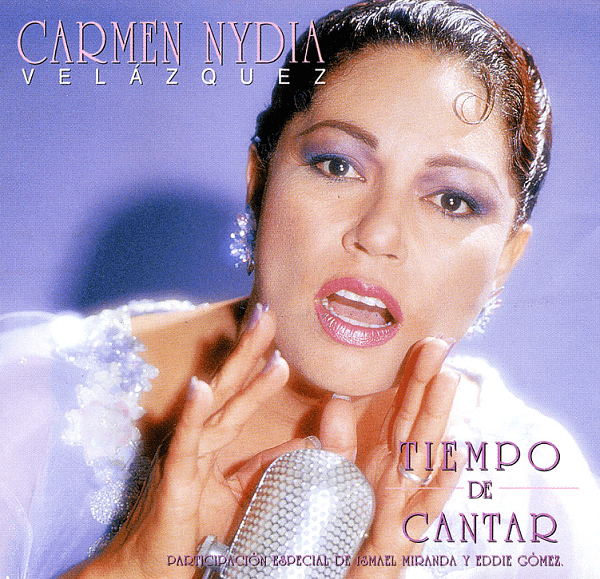
By the late 1990s, she released an album of boleros titled “Tiempo de Cantar,” which was her first solo production. It all started with a show by Susa and Epifanio in the south of Puerto Rico, where they met a musician friend of hers named Cacho Montalvo. 

He has spent many years urging her to go back to singing, but she ws not entirely sure due to all the professional commitments she already had, added to the fact that she did not have very fond memories from the time in which she had to promote her own music of the New Song movement which, being so traditional, did not receive the media coverage it deserved. This killed Carmen’s enthusiasm, as she took for granted that she would never sing professionally again.

However, Montalvo and Carmen’s husband “conspired” to some extent to convince her, and they succeeded. On the album, the artist pays tribute to the songs she grew up with and used to hear on the radio as a child, achieving a result she loved. 

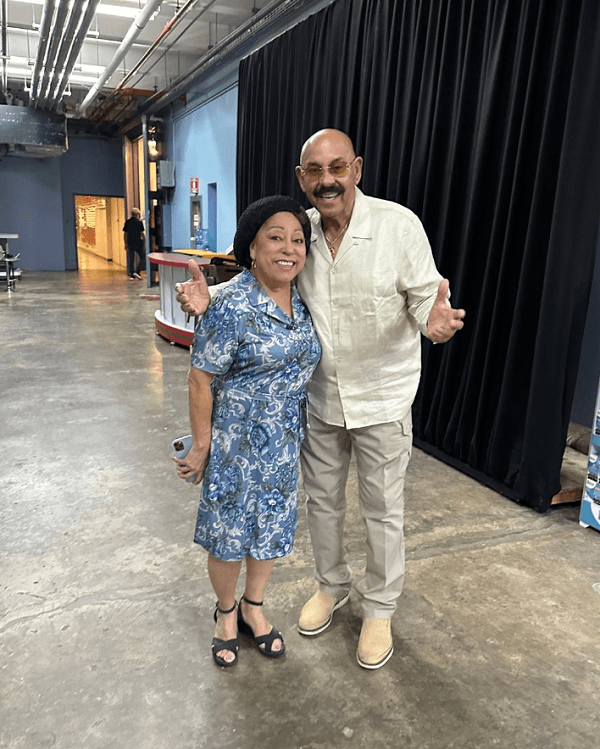
Carmen Nydia and Oscar
Carmen Nydia Velázquez y Oscar D’ León

Her solid background in theater gave her the ability to convey her feelings through her voice and expressions, which made her have a wide acceptance. In fact, she is now a member of the Music Hall of Fame in Puerto Rico, a venue dedicated to romantic and bohemian music that hosts live events featuring artists associated with those genres. 

Hacienda Susa

Among the many projects she was involved in, Carmen also ran a restaurant and activity center called “Hacienda Susa.” She describes this stage of her life as interesting, yet exhausting and demanding at the same time.

Due to the success she had on television, the project did very well, so she and her team were there doing shows for visitors from all over the island practically every day. The problem was that it was too much work for her at the time, and she told us that sometimes, she had to leave the hacienda to perform a show outside, return to meet her commitments there and then close the venue. 

The above, added to the fact that everyday fewer people were coming to the venue and the extremely high rent Carmen had to pay, made her ask herself if it was really worth continuing with the project in exchange for those dividends. That was when she finally got tired of it and decided to close the venue indefinitely to focus on what she was truly passionate about: acting.

Album by Carmen Nydia
Cover of the album ”Tiempo de Cantar” by Carmen Nydia Velázquez

Read also: Background and reactions to Bad Bunny’s halftime show in The Super Bowl

Compay Segundo The Eternal Patriarch of Cuban Son

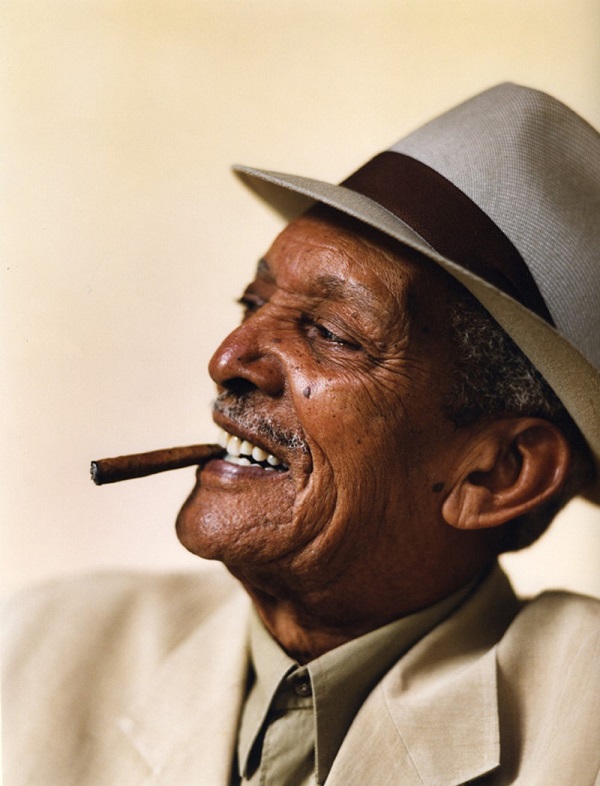
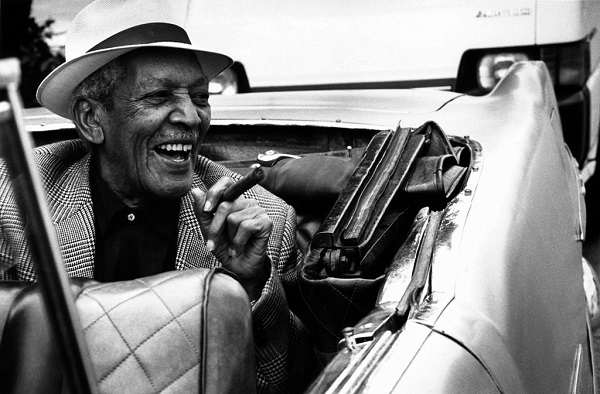
Máximo Francisco Repilado Muñoz better known as Compay Segundo (1907-2003) The voice that conquered the world in the nineties.

Máximo Francisco Repilado Muñoz, globally known as Compay Segundo, is one of the most emblematic and essential figures in traditional Cuban music.

Born on November 18, 1907, in Siboney, Santiago de Cuba, his life was a dedication to music that culminated in a late, but well-deserved, global fame before his passing in Havana on July 13, 2003.

Máximo Francisco Repilado Muñoz, known worldwide as Compay Segundo

Origins and Musical Training

Compay Segundo was raised in a highly musical and manual environment. His father, Máximo Repilado, was a bricklayer and a great lover of traditional santiaguera music, while his mother, Caridad Muñoz, provided a strong cultural influence.

Coming from a large family, his brother Lorenzo Repilado was also an active figure in the Santiago music scene.

His beginnings were typical for the era. Compay started his career as a clarinetist in the Santiago Municipal Band, consolidating his training by later joining the Army Band. In the 1930s, he migrated to Havana, a crucial step that fully integrated him into the capital’s professional circuit.

Compay Segundo se crio en un ambiente musical y manual

Los Compadres and the Birth of the Name

The stage that would give him his artistic name and national fame was the formation of the Dúo Los Compadres in the 1940s alongside Lorenzo Hierrezuelo.

  • The Nickname: The name “Compay Segundo” (Second Compadre) arose because Máximo Repilado always sang the low harmonic or “second” voice (segundo) in the song, while Hierrezuelo performed the main voice. Hence, the affectionate Cuban diminutive “Compay” (short for compadre) plus “Segundo” (Second).
  • National Success: The duo became a sensation throughout Cuba, leaving behind unforgettable classics of son oriental such as “Macusa,” “Mi Son Orientál,” and the early version of what would become his most famous song: “Chan Chan.”
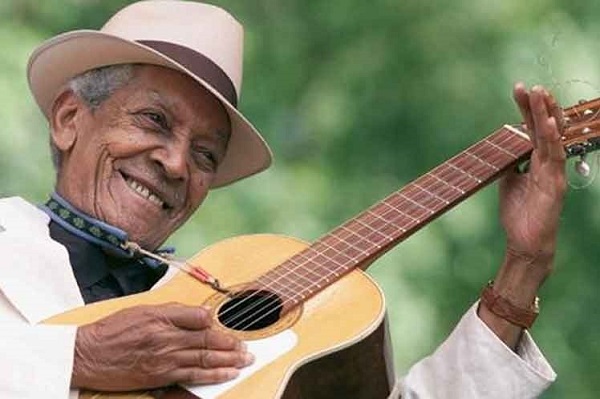
Compay created the armónico, a hybrid between a Spanish guitar and a Cuban tres, with 7 strings

The Armónico: His Instrumental Contribution

One of Compay’s most unique contributions was the invention of the “armónico,” an instrument he designed himself. It is a seven-string hybrid, halfway between the traditional Spanish guitar and the Cuban tres. This instrument allowed him to simultaneously execute bass lines, harmony, and melody, creating a unique sound that became the foundation of his style.

The Buena Vista Social Club Phenomenon

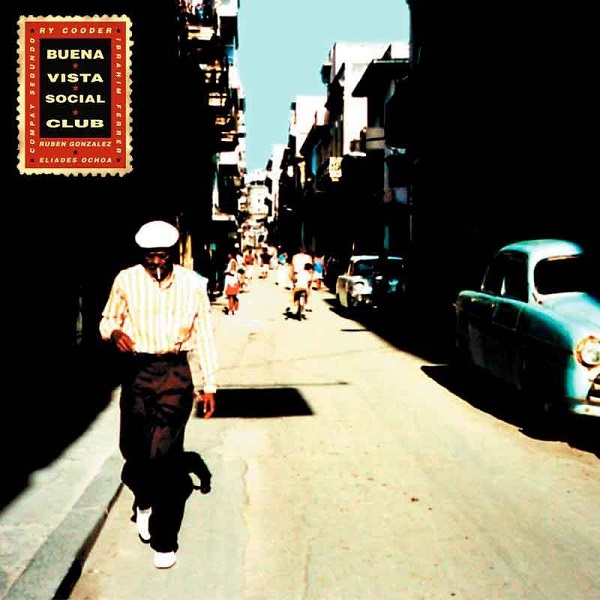
When it seemed Compay’s career was waning, destiny reserved the most glorious stage for him. In 1997, at the age of 90, he was invited by American musician Ry Cooder to participate in the recording of the album “Buena Vista Social Club.”

  • Global Fame: The success of the album and the subsequent documentary directed by Wim Wenders catapulted him to worldwide fame.
  • The Anthem: His unmistakable voice and the magical rendition of the song “Chan Chan” turned him into an international superstar, leading him to perform on the world’s most prestigious stages and bringing Cuban son to audiences of all ages.
The Buena Vista Social Club Phenomenon

Legacy and Family Continuity

Compay Segundo left behind a repertoire of songs considered national treasures. His most prominent tracks include “Chan Chan,” “Sarandonga,” “Las Flores de la Vida,” “Orgullecida,” and the popular bolero “Veinte Años,” which he popularized.

Compay was a father to at least nine children. His musical legacy not only lives on through his recordings but also through the activity of his descendants:

  • Basilio Repilado (1954–2012): Founder and arranger of the Grupo Compay Segundo.
  • Salvador Repilado: Upright bass player and current director of the Grupo Compay Segundo, the official international touring ensemble.

Furthermore, the younger generations (grandchildren and great-grandchildren) such as Yohel, Alejandro, and Yurisley Repilado continue the tradition in Havana with the ensemble “Los Herederos de Compay Segundo” (The Heirs of Compay Segundo), ensuring that the unmistakable sound of the Patriarch of Cuban Son continues to resonate in Cuba and the world.

Collaboration: 

Sr. Eduardo Guilarte

Also Read: Son Cubano is one of the most popular musical styles in Cuba and Kiki Valera is one of its leading exponents

The composer and singer Carlos Xavier reveals unpublished details of his career

The composer and singer with Nicaraguan roots Carlos Xavier is a very good friend of the house due to his collaboration with the Editor of International Salsa Magazine Eduardo Guilarte and we are extremely pleased to have invited him to this edition and to know him in a more personal way. The artist born in San Francisco talked to us about his musical career, his facet as a composer, his great inspirations, among other relevant topics.

Carlos Xavier is a friend
Composer and singer Carlos Xavier is a great friend of the house

Carlos’ beginnings in music

From a very young age, Carlos was already in close contact with music thanks to his father and older brother, since they always sang, played the radio or listened to records they bought. At home, he listened to all kinds of music in both English and Spanish, but it was not until he was 16 years old that he became really interested in singing in a more serious way. He was not accompanied by a teacher to tell him exactly what to do, so he had to start practicing alone and be guided by what he saw in professional singers like Christian Castro, Luis Miguel and Marc Anthony when it was his turn.

As for his musical debut, in 1999, Carlos ventured to look for an orchestra to sing with once he felt ready to prove his vocal skills on stage in front of a crowd. Then, he found Orquesta Caché, which had just been created and was looking for a singer, a post for which he was finally selected and made his first performance with the group that same year. This concert took place at the well known Café Cocomo and, since then, the artist has not stopped. 

Interest in Latin music

Although Carlos states that he likes English music and has recorded several songs in English, he also clarifies that his focus is and always has been Latin music. He has worked on other people’s projects in which English is the base, but whenever he releases something of his, he always tries to base it on Latin or salsa music and always in Spanish. It’s a matter of preference.

This is partially thanks to his parents, who always made sure that their children had as much contact as possible with their Nicaraguan roots through the rest of his family, music, food and Nicaraguan culture in general.

In addition, most of his family also went to live in the United States, so he always spent time with them, which helped Carlos to know much more about Nicaragua and the way of life in that country. They always instilled in him the pride of being Latino and he still keeps that feeling intact. 

Carlos Xavier singing
Carlos Xavier singing live

Solo debut

Although Carlos spent many, many years playing with orchestras, he says that becoming a soloist at some point was always his greatest goal. That moment came in 2010 when the singer released his first single as a soloist called ‘’Mientes’’, which was the piece that gave him the confidence to know he could have a solo career and write his own music. 

When we wanted to know the biggest challenges faced by him, he replied that he never thought of his solo career that way, but that he was working for a purpose, drawing inspiration from his greatest idols who had already achieved what he wanted. He simply saw his goal as something he had to achieve at some point, not as a challenge that would make the path more difficult for him. 

Vive Todo Ahora

‘’Vive Todo Ahora’’ was the representation of the dream of Carlos, who always wanted to be able to release an album of the same quality as those of Marc Anthony, La India, and Frankie Negrón. The fact that it was his first album did not mean that the singer was going to let his first album reveal his inexperience in this field, so he hit the deck and contacted producer Efrain Davila. At that time, Davila was working with Victor Manuelle, Marc Anthony and Carlos Vives, so Carlos decided to send him a message and show him his song ‘’Mientes’’ to cover it in salsa. 

The producer responded enthusiastically that he liked the song and accepted the proposal, leading ‘’Mientes’’ to be released as a single in 2014 and the rest of the album was made and released in the same way. Fortunately, Carlos succeeded in including some of Marc Anthony’s musicians such as bassist Ruben Rodriguez, percussionist Luisito Quintero, backing vocalist Guianko Gomez, among others.

Carlos Xavier and Luis Enrique
Luis Enrique and Carlos Xavier posing for the camera

His facet as a composer

Another facet that has been of vital importance to Carlos’ growth as an artist has been composition and, of course, he has his own creative process, although it is not extremely complex. He simply sits down at the piano and looks for the most beautiful melody he can think of, but it is a creation that is born from the inside of him.

n the year 2000, together with the Orquesta Caché, he had the opportunity to record a cover in Peru, but he told the members of the group that he wanted to write that song in his own hand and they agreed. That is when he created ‘‘Marchate’’ and it was the material they recorded in the aforementioned country.

Even then Carlos showed that he wanted to be original and follow his own ideas, which he finally achieved thanks to his perseverance.

Clubs where he currently plays

As mentioned above, Carlos worked closely with Eduardo Guilarte at Charley’s LG Club in Los Gatos, California for some time a few years ago. Of that time, Carlos recalls that Guilarte was one of the few people who truly praised him for his talent on stage, which he appreciated today. He mentioned that he always offered him nice words and advice regarding the way the industry works, so he has the best memories of his collaboration with the editor of International Salsa Magazine.

For the time being, he keeps playing at other clubs such as Building 43, Vino Godfather Winery, The Dawn Club, among others.

Carlos and Viviana
Carlos Xavier during an interview with Viviana Paez and Brian Lozado on Univision

Read also: Eduardo Ron and his Fondo Blanco Band liven up great events in Miami

  • Page 1
  • Page 2
  • Page 3
  • Page 4
  • Go to Next Page »

International Salsa Magazine (ISM) is a monthly publication covering salsa activities around the world and has been publishing since 2007. It is a worldwide network of volunteers coordinated by ISM Magazine. Together, we work to strengthen salsa events around the world.