• Skip to primary navigation
  • Skip to main content

International Salsa Magazine

  • HOME
  • Previous editions
    • 2026
      • ISM / April 2026
      • ISM / March 2026
      • ISM / February 2026
      • ISM / January 2026
    • 2025
      • ISM / December 2025
      • ISM / November 2025
      • ISM / October 2025
      • ISM / September 2025
      • ISM / August 2025
      • ISM / July 2025
      • ISM / June 2025
      • ISM / May2025
      • ISM / April 2025
      • ISM / March 2025
      • ISM / February 2025
      • ISM / January 2025
    • 2024
      • ISM / December 2024
      • ISM / November 2024
      • ISM / October 2024
      • ISM / September 2024
      • ISM / August 2024
      • ISM / July 2024
      • ISM / June 2024
      • ISM / May 2024
      • ISM / April 2024
      • ISM / March 2024
      • ISM / February 2024
      • ISM / January 2024
    • 2023
      • ISM / December 2023
      • ISM / November 2023
      • ISM / October 2023
      • ISM – September 2023
      • ISM – August 2023
      • ISM July 2023
      • ISM Edition June 2023
      • ISM – May 2023
      • ISM April 2023
      • ISM March 2023
      • ISM February 2023
      • ISM January 2023
    • 2022
      • ISM December 2022
      • ISM November 2022
      • ISM October 2022
      • ISM September 2022
      • ISM August 2022
      • ISM July 2022
      • ISM June 2022
      • ISM May 2022
      • ISM February 2022
      • ISM January 2022
    • 2021
      • ISM December 2021
      • ISM November 2021
      • ISM October – 2021
      • ISM September 2021
      • ISM August 2021
      • ISM July 2021
      • ISM May 2021
      • ISM April 2021
      • ISM June 2021
      • ISM March 2021
      • ISM February 2021
      • ISM January 2021
    • 2020
      • ISM December 2020
      • ISM November 2020
      • ISM October 2020
      • ISM September 2020
      • ISM August 2020
      • ISM July 2020
      • ISM June 2020
      • ISM May 2020
      • ISM April 2020
      • ISM March 2020
      • ISM February 2020
      • ISM January 2020
    • 2019
      • ISM December 2019
      • ISM November 2019
      • ISM October 2019
      • ISM Septembre 2019
      • ISM August 2019
      • ISM July 2019
      • ISM June 2019
  • Spanish
  • Download Salsa App
    • Android
    • Apple

Search Results for: Academy

Sammy Figueroa is an exceptional percussionist known for his versatility and for playing in a multitude of musical styles

Sammy Figueroa, a percussionist with an excellent career.

Sammy Figueroa was born in the Bronx, New York, in 1948. He is the son of bolero singer Charlie Figueroa, whom he never knew, as his father passed away at the age of 32.

Sammy moved to Puerto Rico as a child to live with his grandparents and escape the Bronx’s gang violence.
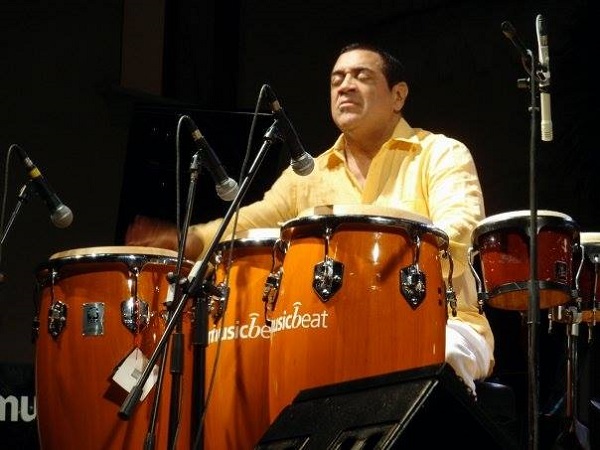
Sammy Figueroa is an excellent percussionist who has stood out for his versatility, playing in a multitude of musical styles

At 18, he started his professional career with bassist Bobby Valentín’s band. Throughout his career, he has stood out for his versatility, playing in a multitude of musical styles and contributing to nearly 400 albums, ten of which are platinum.

He has collaborated with major pop artists like David Bowie, Chaka Khan, and Mariah Carey, as well as with distinguished jazz musicians such as Miles Davis, Sonny Rollins, Quincy Jones, and George Benson. In 1977, he became a founding member of the Latin rock fusion group Raíces.

In 2001, Sammy Figueroa moved to South Florida and formed his own group, Sammy Figueroa and His Latin Jazz Explosion. His albums And Sammy Walked In and The Magician were nominated for a Grammy for Best Latin Jazz Album.
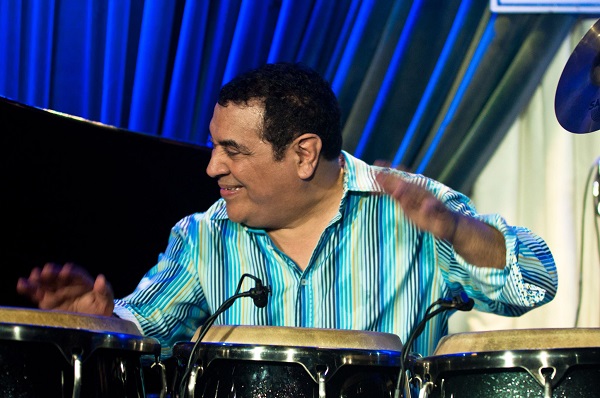
Sammy Figueroa, a percussionist with an excellent career

Sammy Figueroa, a percussionist with an excellent career

His 2023 album, Searching for a Memory / Busco Tu Recuerdo, is a tribute to his father. The project, produced by his wife, Rachel Faro, with whom he has also co-produced other albums, allowed Sammy to reconcile with his father’s legacy. On this album,

Sammy sings on a record for the first time and transforms his father’s classic boleros into modern Latin jazz arrangements. The album was nominated for a Latin Grammy in the “Best Jazz/Latin Jazz Album” category.

Sammy Figueroa has received numerous awards, including two Percussionist of the Year awards from the National Academy of Recording Arts and Sciences (NARAS), two Drummie Awards for Best Hand Percussion, and a Best Percussionist award from the Jazz Journalists Association.

Discovered by jazz flutist Herbie Mann, Figueroa became a well-known session and studio musician, touring and recording with The Brecker Brothers, Average White Band, Morrissey – Mullen, The Mahavishnu Orchestra John McLaughlin, and Miles Davis.

He has also appeared with Blondie, Sonny Rollins, David Sanborn, Quincy Jones, Dave Grusin, George Benson, Chet Baker, Stanley Clarke, Grover Washington Jr., Al Jarreau, Lena Horne, Joe Williams, Mark Murphy, Mike Mainieri, Néstor Torres, Chico O’Farrill, Mike Stern, Chuck Loeb, Bobby Watson, Dave Valentin, Arturo Sandoval, Paquito D’Rivera, Rubén Blades, Eddie Palmieri, Bobby Valentín, Tania Maria, Mariah Carey, James Taylor, Dr. John, Mick Jagger, David Bowie, Celine Dion, Blues Traveler, Natalie Merchant, David Lee Roth, Hall & Oates, Joe Cocker, Rickie Lee Jones, Annie Lennox, Whitney Houston, Anita Baker, Grace Jones, James Ingram, Diana Ross, Roberta Flack, Aretha Franklin, and many others.

Some of the R&B hits he is featured on include Sister Sledge’s “We Are Family,” Luther Vandross’s “The Night I Fell In Love,” and Ashford & Simpson’s “Solid (as a rock),” as well as most of Nile Rodgers and Bernard Edwards’ hits on the Chic and Sister Sledge record labels.

Michel Camilo wrote the song “And Sammy Walked In” in his honor, and it was also recorded by Giovanni Hidalgo. Two of his CDs, And Sammy Walked In and The Magician, have been nominated for Grammy Awards in the “Best Latin Jazz Album” category. Figueroa hosts a Latin jazz show on WDNA-FM in Miami, Florida.
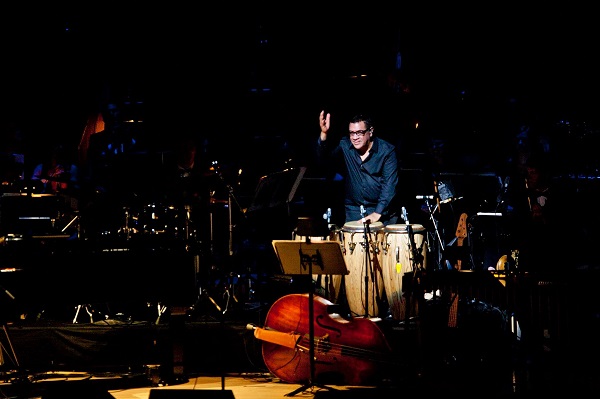
Sammy Figueroa was born in the Bronx, New York, in 1948

If you’re not very familiar with Sammy Figueroa’s work, you can try an experiment with this album: listen closely to see if you can guess what his instrument is. In a medium-sized combo, what instrument seems to take center stage? The answer: it’s impossible to guess, which says something about Figueroa’s maturity as a leader.

It’s also surprising to see how pared down his forces really are this sextet sounds like a big band. (Spoiler alert: he’s a percussionist.) It also says something about him that the term “Explosion” is a misnomer for his band. There are no pyrotechnics, no crazy tempos, and no wildly layered rhythms here.

But there are some very impressive horn arrangements (check out “Cha Cha Pa’ Ti” and the lovely “Cuco y Olga”), along with some of the sweetest, most tender ballads to appear on a jazz album of any genre in recent years (“Queen from the South” and “Zuliana” are the best examples).

For a percussionist acting as a bandleader, giving this kind of sustained, loving attention to compositions that only make a tenuous use of his talent is further proof of Figueroa’s taste and maturity. Let’s hope Figueroa keeps going in this vein. Rick Anderson.

Sammy Figueroa & His Latin Jazz Explosion – Urban Nature (2011).
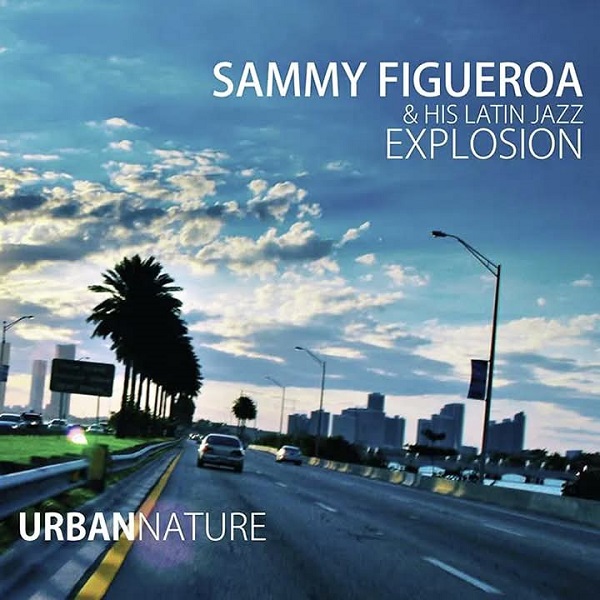
Sammy Figueroa & His Latin Jazz Explosion - Urban Nature (2011)
Sammy Figueroa & His Latin Jazz Explosion – Urban Nature (2011)

Tracks:

  1. Gufillo (Silvano Monasterios)
  2. Urban Nature (Gabriel Vivas)
  3. Latin What? (Michael Orta)
  4. Zuliana (Silvano Monasterios)
  5. 7th Door From The Left (Silvano Monasterios)
  6. Cuco y Olga (Nicholas Martines)
  7. Cha Cha Pa’ Ti (Gabriel Vivas)
  8. Queen From The South (Silvano Monasterios)
  9. Funny Talk (Gabriel Vivas)

Musicians:

  • Sammy Figueroa (Percussion)
  • Silvano Monasterios (Piano)
  • Gabriel Vivas (Acoustic bass)
  • John Michalak (Sax)
  • Alexander Pope Norris (Trumpet)
  • Nomar Negroni (Drums)

Guest Musicians:

  • Ed Calle (Sax)
  • Mike Orta (Piano)
  • José Gregorio Hernández (Percussion)

Website: Sammy Figueroa

By:

Dj. Augusto Felibertt

L’Òstia Latin Jazz

Also Read: Carlos “Nene” Quintero comes from a family of musical prodigie

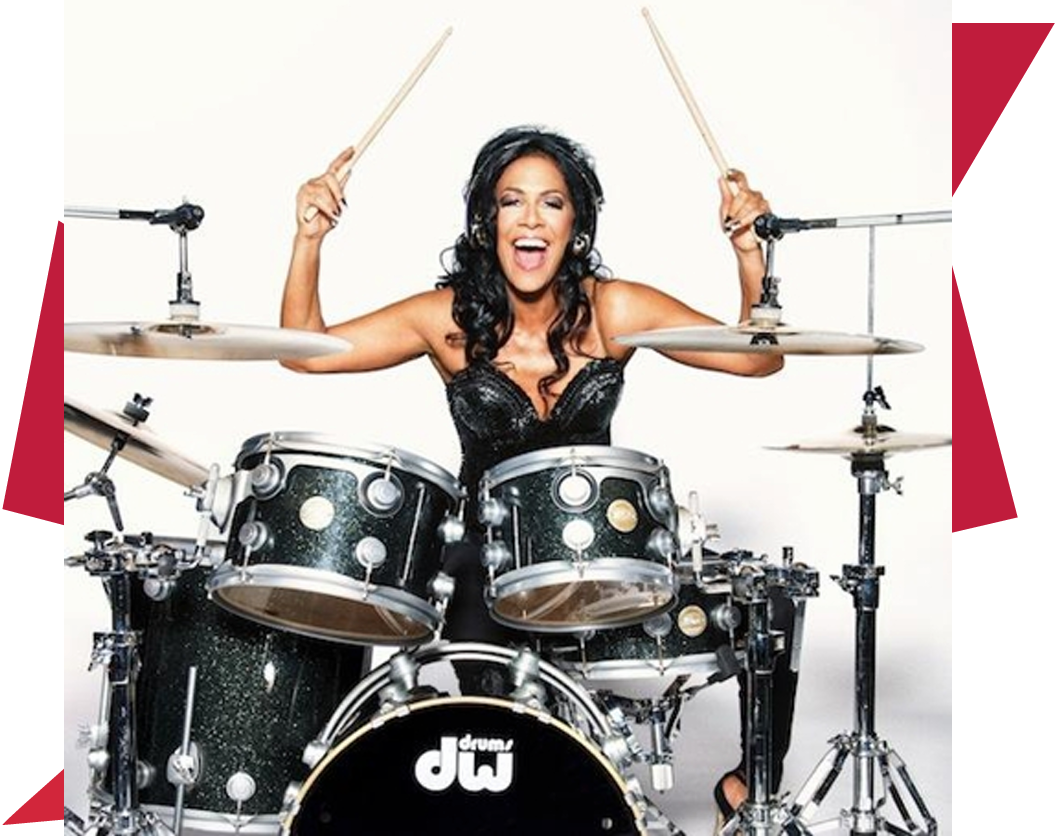
Sheila E. A drummer with a Latin heart

European Union

Guided by the forces of family, faith, and music, Sheila E. has made a name for herself as one of the most talented musical icons over the decades. With a fearless nature and a passion for sharing her gifts with others, Sheila truly follows the beat of her own drum. She touches the lives of so many, with her dynamic music career at the heart of everything. Sheila’s eagerness to share her music, openness as an author, and fire for her ministry make her such a relatable, inspirational figure for people of all ages.

Sheila E.
Sheila E.

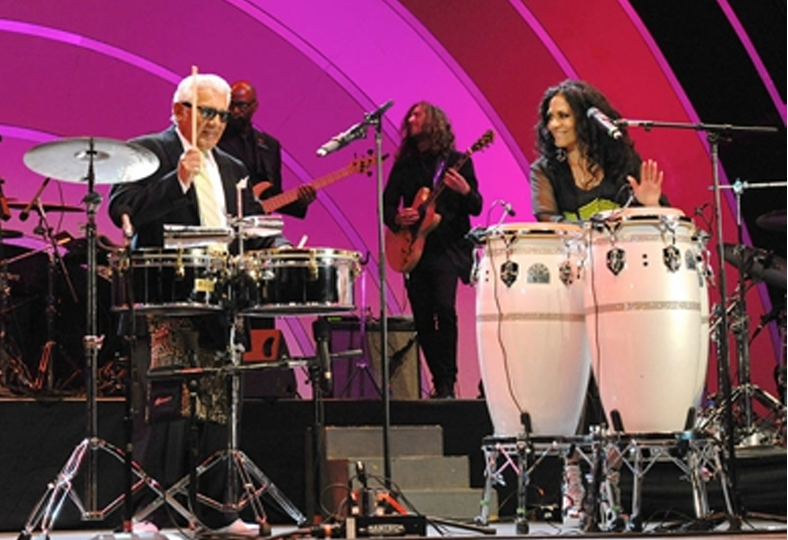
Born into a musical family, Sheila Escovedo (Sheila E.) has been driven by an inner rhythm her entire life. As a young girl, she was immersed in the diverse music scenes of the Bay Area-influenced and inspired by her percussionist father Pete Escovedo; musical uncles Coke Escovedo, Alejandro Escovedo, Mario Escovedo, and Javier Escovedo; and godfather Tito Puente. Growing up in the Escovedo household, musical instruments were for everyone. “Nobody cared as long as you could keep time (or have a good time),” she writes in her memoir, The Beat of My Own Drum.

“The idea to record another solo album was actually spawned while I was writing the autobiography”, recalls Sheila E. “I realized that some of the experiences I was writing about should be songs. That’s when I also began looking back at songs I’d written several years earlier and forgotten about, but whose themes needed to be talked about in the book. Both fed each other”.

As the musical half of Sheila E.’s storied life and career, Icon pulsates from start to finish with colorfull fusions of the pop, R&B, funk, rock, Latin and jazz influences that shaped her unique style.

“The 16-track set opens with the soaring “Butterfly,” the first of four interludes that subtly yet powerfully illuminate the versatile talent behind the music. “Butterfly” reflects part of the journey in my book,” explains Sheila E., nicknamed butterfly by a family friend. “It’s who I am as a person. I always wanted to fly, to be the first female astronaut on the moon. It’s me running track, running free. That’s how I play.” The album takes off from there, with most songs produced live, specifically solos, in one or two takes. “I’m used to playing live,” says Sheila E., who also produced the project. “Why would I punch in my soul?”

She unleashes that soul on feisty first single, “Mona Lisa.” Drawn from Sheila E.’s Latin roots, the track vibrantly chronicles a story about a woman who never lost sight of her dream: to perform. That’s just one of several potential singles on Icon. “Fiesta” opens with guest rapper B. Slade’s teasing declaration, “Just drop that beat on that.” T

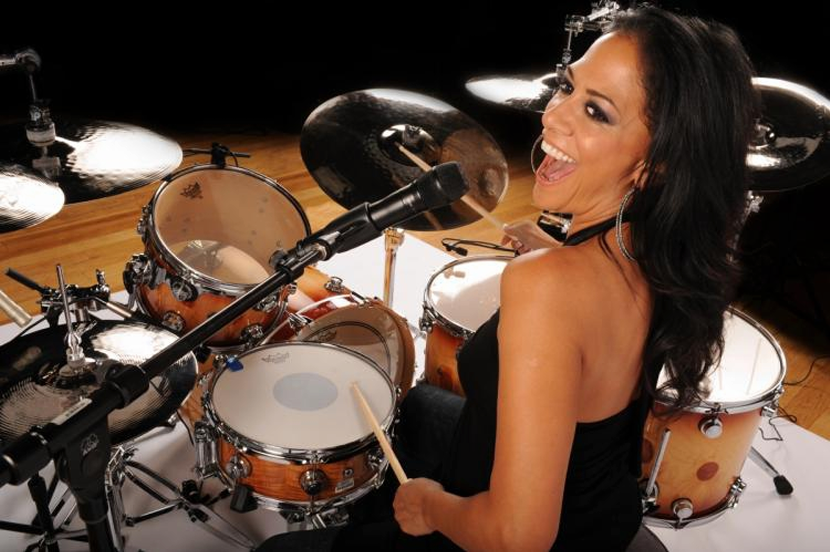
Sheila E. Photo 1
Sheila E. Photo 1

hen the hot club jam powers up as Sheila E. drums out an infectious beat throbbing with intensity-“Can’t nobody rock a party like Sheila E.,” raps B. Slade-before closing with her coquettish laugh. A mid-tempo downshift yields the feel-good track “Lovely Day.” Its message about focusing on the bright side of life takes the song on a surprising turn as it morphs into a gospel/funk vibe reminiscent of Sly Stone.

Joining Sheila E. on her musical reverie are two singular storytellers in their own right: singer Ledisi and pioneering rapper MC Lyte. The latter’s signature edgy flow spices up the saucy themed “Nasty Thang,” while outlining the drama and glamour that often com 1 es with a life in the music industry. Ledisi adds a poignant touch to “Girl Like Me,” an honest, empowering message about surviving abuse.

An abuse survivor herself, Sheila E. originally penned the song to perform with her 2007 female band C.O.E.D. (Chronicles of Every Diva). Rounding out Icon is a new version of the funky tour de force “Leader of the Band.” The song features Sheila and the E Family (father Pete and brothers Juan and Peter Michael) as well as Prince, on piano. “I love playing this song,” says Sheila E., “so I re-recorded, while still leaving a little room for Prince. It’s about how I was influenced by my pops [the legendary Pete Escovedo] and [songwriter/producer/ musician] George Duke.

That a female can be in charge and bring it just as hard.” Icon ends as it begins with another moving interlude, “Now Is the Hour.” A duet featuring Sheila E. and her beloved “moms,” Escovedo matriarch Juanita, the clip dates back to Sheila E.’s childhood. Family, faith and music were guiding forces for Sheila E. growing up in the Bay Area. In addition to percussionist dad Pete, the Oakland, Calif. native counts former Santana member/Azteca founder Coke Escovedo, solo recording artist Alejandro Escovedo, The Dragons front man Mario Escovedo and from The Zeroes Javier Escovedo as uncles

Fellow Latin star Tito Puente was her godfather. In addition to being weaned on Latin jazz and Motown, Sheila E. was exposed to a diverse array of Bay Area acts and artists. Those influences ranged from the rock of Jefferson Airplane and the Grateful Dead to the R&B/pop of the Pointer 1 Sisters and the funk of Tower of Power and Sly & the Family Stone. “I used to sit on the corner outside of the local community center with Twinkies and 7-Up listening to Tower of Power, Sly and Larry Graham rehearse,” recalls Sheila E. “The sounds of the Bay Area molded me.”

Sheila E. Photo 2
Sheila E. Photo 2

So it’s no surprise that after such a music-immersive childhood, the gifted drummer/percussionist began amassing an impressive string of credits playing not only with her dad but also with pioneering talents like George Duke, Marvin Gaye, Lionel Richie and Herbie Hancock. Following a Bay Area gig in the late ’70s, Sheila E. met Prince backstage.

Their Purple Rain recording sessions-including her vocals on the 1984 classic “Erotic City”-morphed into launching her solo career that same year. Debut album The Glamorous Life spun off the Grammy Award-nominated top 10 hit of the same name plus a second top 40 single “The Belle of St. Mark.”

Between her ’80s tenure as drummer, songwriter and musical director for Prince’s backup band, Sheila E. released three more solo albums (Romance 1600, Sheila E. and Sex Cymbal) and scored two more classic hits with “A Love Bizarre” and “Hold Me” a romantic ballad. After taking some time away from the spotlight, she then decided to tap into her Latin Jazz roots and under the name E-Train, released (Writes of Passage and Heaven).

Sheila E.’s fierce, dynamic verve onstage has made her a major concert draw since the ’90s. Along the way, she has acted in several films (“Krush Groove,” “The Adventures of Ford Fairlane,” “Chasing Papi”) and launched various music projects (E Train, The E Family). Adding to her arsenal of credits such names as Ringo Starr (as a member of Ringo Starr’s All Star Band in 2001, 2003 and 2006), Gloria Estefan and Beyoncé as well as performing on the 2012 Academy Awards with pop hitmaker Pharrell Williams and composer Hans Zimmer.

Sheila E. in concert

She was the first female Music Director for a late night talk show (“The Magic Hour” with Magic Johnson) and received an Emmy® nomination as Musical Director for “Fiesta Latina – A Performance at The White House.” Sheila E. was recently among the rost 1 er of stars chosen to perform at the Kennedy Center Honors whose 2013 honorees included artists Herbie Hancock, Billy Joel and Carlos Santana. Away from the spotlight, music doubles as a source of healing and giving back for Sheila E. In tandem with the city of Oakland, she staged the first annual “Elevate Oakland” benefit concert in February of 2014.

A host of Bay Area artists and other acclaimed musicians performed at the city-donated Fox Theatre. The goal: to raise funds to improve student academic achievement and attendance through music and arts programming. But this isn’t Sheila E.’s first time giving back. Between gigs, she has also crisscrossed the country, speaking at schools and colleges, shelters, church organizations, music classes and clinics about music’s effect on her life and career. “Sharing music in any way I can is my ministry,” she 1 says. And that was part of the inspiration for penning the autobiography “The Beat of My Own Drum.” Several years ago Sheila E. publicly acknowledged she was an abuse survivor

“The book was the beginning of the healing,” says Sheila E. “I’d talked about the abuse in my ministry and addressed it in some of the song lyrics I’d written. But it was challenging to sit down and really write about it in detail for the book. But through pain comes realization, understanding and the opportunity to help others overcome those challenges.” After ringing in 2014 in concert with Sergio Mendes on New Year’s Eve at Disney Hall, Sheila E. is now ready for her Icon debut.

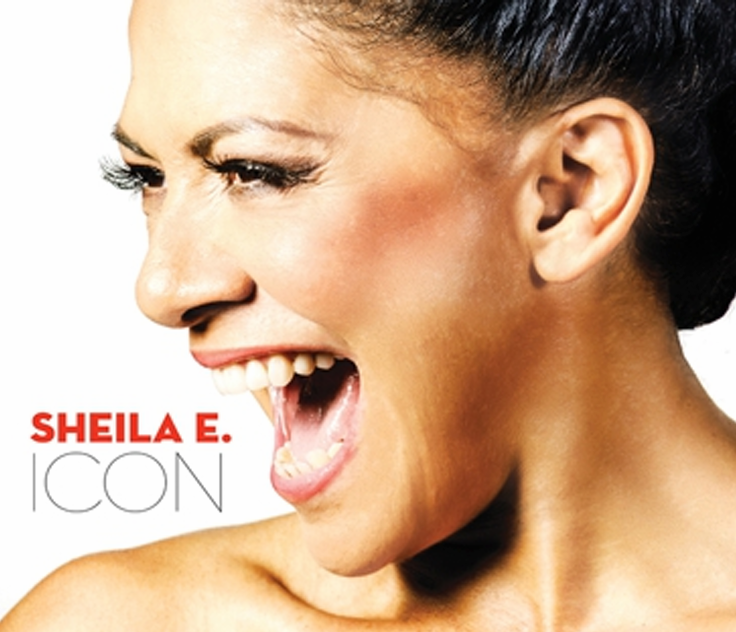
Sheila E. Icon
Sheila E. Icon

With no Google or YouTube artist script to follow back then, she says her career drive was propelled by one thing: “I just did it because I loved it. And that’s what Icon represents. I started all this as Sheila Escovedo then became this persona named Sheila E. Now Sheila E. and Sheila Escoved 1 o are the same person, still making music that comes from the heart.”

Cuban singer-songwriter Osmay Calvo shows his versatility in the New Jersey music scene

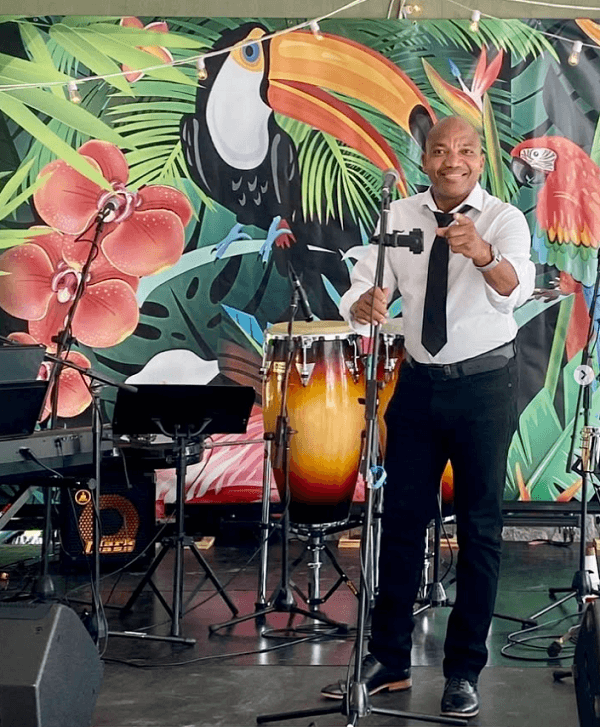
Osmay Calvo is just one of many examples of why Cubans have triumphed so many times in the United States, which is why his story and that of many of his compatriots always serve as inspiration for those seeking a career in the music industry but who do not dare to do it because of the misfortune of being born in a place that did not offer them the necessary opportunities for this.

Calvo was kind enough to take a few minutes of his time to talk about all that had happened to his career to date, so it is an honor for us to describe what was discussed in the following lines.

Osmay performing
Singer Osmay Calvo performing during a birthday

How Osmay became interested in music

Osmay tells us that, from an early age, he loved popular music, so he began to participate in school music events when he was just six years old in Tarará, east of the city of Havana. At the same time, his mother enrolled him in singing lessons and he spent much time with his family musicians, including his uncle, singer Pedrito Calvo, who was a member of Los Van Van.

A few years later, he began to attend various types of contests and joined the Mariana de Gonitch Singing Academy, directed at the time by maestro Hugo Oslé, thanks to which he met Pacho Alonso, Ela Calvo, Mundito González, and many other important figures of Cuban popular music.

Official beginning of his professional life

Osmay’s professional start was in Cuba when he joined the Adolfo Guzmán company in 1995, which is when he had his first paid job in music. Although it is true that the Cuban government got a huge percentage of the money earned by the artists, Osmay appreciates the experience and the chance to know other countries through his activities with the company.

Some time later, he had the opportunity to travel to Spain and then to Mexico, where he participated in a music competition and won first prize with the song “La Bamba.” He then spent another month in Spain for an event until returning to Havana and winning the Mariana de Gonitch Singing Contest, obtaining the prize for the great popular generation of national music award, which led him to travel through the 14 provinces of Cuba to offer his services and make himself better known.

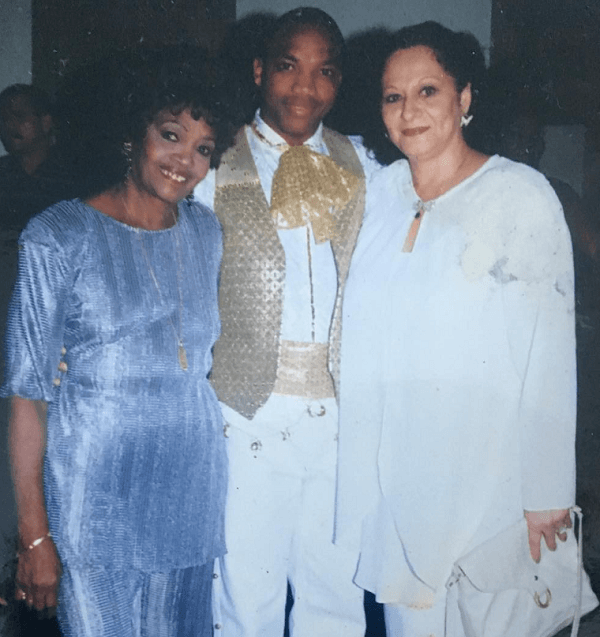
Osmay, Ela, and Beatriz
Singer Ela Calvo, Osmay Calvo, and ”La Musicalísima” Beatriz Marquez

Moving to the United States

It was in 2002 that Osmay finally decided it was time to look for other roads and leave Cuba to no longer return. He was going to sign a contract with Mambo Records in Miami, but things did not go according to plan, so he started recording his own music and went to New Jersey, where he began to organise his own orchestra with which he has 16 original songs written by himself, but also numerous covers of hits by other artists.

He has not been back to his native country for about 24 or 25 years. In fact, most of his family also lives in the United States and Canada, except for his uncle Pedro Calvo, some cousins, friends, and his music teachers.

However, after all the time he has been gone, things have not been entirely easy for Osmay, especially in the beginning. The hardest thing for him was language learning and how little he knew about his new place of residence, but the artist quickly learned and was gradually integrated into this new music scene, thanks to which he was able to play with many orchestras and meet great figures such as Oscar D’León at the Coco Bongo Club in Elizabeth, New Jersey, and Fernandito Villalona, for whom he opened one of his shows.

In New York, he played with many bands and learned a lot of music that was played locally. Osmay brought an academic background in lyrical and symphonic singing from Cuba, but New York has mostly restaurants, nightclubs, and fairs, so he had to adapt to a completely new format and audience. 

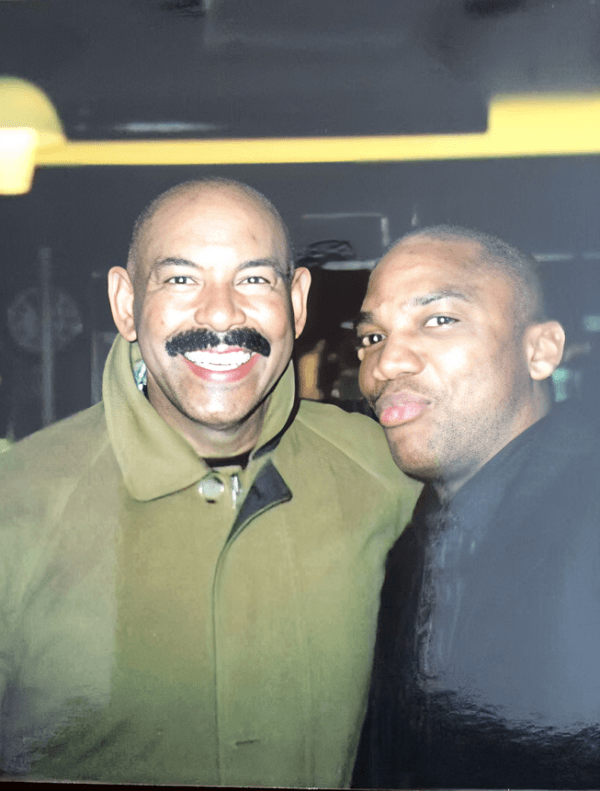
Osmay, and Oscar
”El Sonero del Mundo” Oscar D’ León and Osmay Calvo

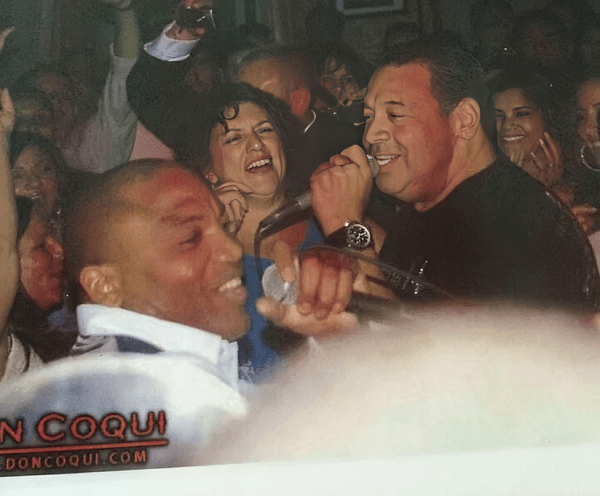
Fortunately, he got it and was recommended by other musicians to play in many places until one night he was asked to play at Don Coqui and was told that Tito Nieves would be there. Then, when it was time for Osmay and nine other musicians to perform on stage, Jimmy Rodríguez, the owner of Don Coqui, approached them to say that Nieves might come and play with them later. A little while later, the Puerto Rican actually did approach with a microphone in his hand, and both he and Osmay began to improvise, and the show lasted until two o’clock in the morning. For the Cuban, it was an exceptional experience and an unforgettable moment in his career.

Haberte Conocido

After all the progress made, in 2021, Osmay felt ready to release his first independent album, which he titled “Haberte Conocido”. This was a goal to fulfill since Hugo Oslé, who was also his singing teacher, told him and the rest of his students that it was very important to be an independent artist who wrote and recorded his own songs. 

In addition to that, he remembers that everyone in the class was a bolero singer, so he wanted to do something that would set him apart from the rest, and that is how he began to turn to salsa and other genres. This made him a much more versatile artist who could sing almost any genre coming his way. From then on, he stopped learning the original soneos of the songs and started to improvise on many occasions, which eventually led him to compose. Finally, in 2021, he wrote “Haberte Conocido,” which he put together from ideas that came to his mind and that he saved on his mobile phone during rehearsals. Then, stanza by stanza, he created the first song of his own. 

Osmay and Tito
Osmay Calvo singing with Tito Nieves at Don Coqui

Read also: Multi-instrumentalist Ian Dobson talks about his trips and academic background

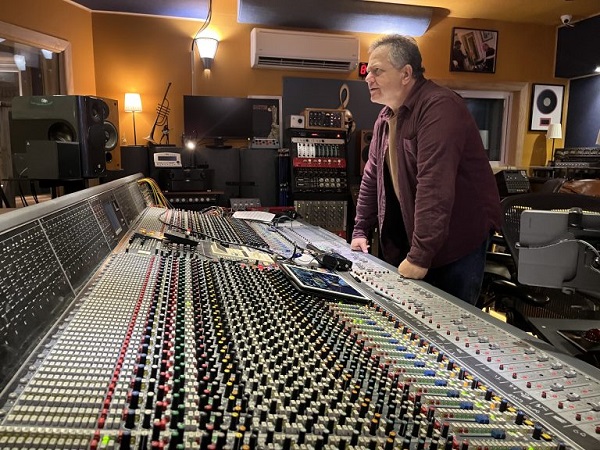
How to make money today as a recording artist with record labels and digital platforms

Israel Tenenbaum Interview: The Changing Music Industry

The music industry has evolved, and artists’ income streams are no longer limited to album sales. Today, an artist can monetize their work in multiple ways, with or without the support of a record label and digital platforms.

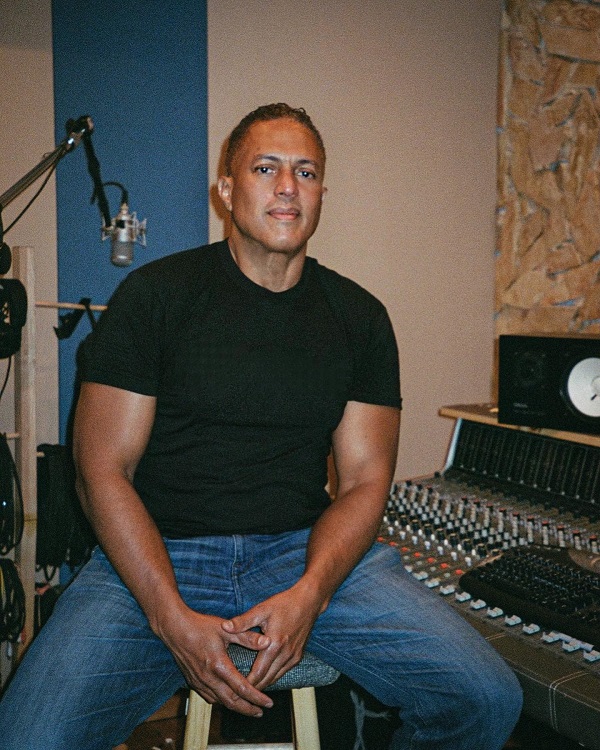
Israel Tenenbaum (Los Angeles, California) is an American pianist, arranger, and music producer with a notable career in salsa and Latin jazz. He has worked with renowned artists and has lived in several countries, including Puerto Rico and Colombia.

Israel Tenenbaum (Los Angeles, California) is a pianist, arranger, and music producer.

1) What is the current process for recording, music production, and royalty distribution for Mr. Tenenbaum?

Well, let’s see. You’re talking about the current recording process, which is essentially the same, but it’s now generally done remotely. We grew up with recording environments where we would gather everyone (the musicians) in one place and record everything there.

But with remote recording capabilities, many musicians are now very well-equipped and they record at home. You can also take advantage of this because it gives you access to other talents, beyond the local environment you’re in. They don’t compare to what a musician or band leader might have locally, or for finding other guests, and so on.

So, remote recording is definitely in operation. I’ve been working with remote production for a while. In fact, it was pure chance that about six or eight months before the pandemic hit, I had just moved to California and I started to solidify and organize my global network of musicians, recording studios, producers, and a bunch of arrangers, and so on.

And when the pandemic hit, I was ready because I had already organized everything. Everyone thought it was a 90-day vacation. After 90 days, they thought, “Well, it’ll take a little longer.” And by the time they realized it was going to be a long haul, six months had already passed. It took them almost six more months to get organized themselves.

It was advanced, pure chance. And so that served me a great deal. And currently, I have that very solidified. I work with a dozen cities in seven countries. Thank you, thank you.

How does royalty distribution work? Does that still exist?

Yes, royalties still exist. What has changed dramatically is the way royalties are generated.

Let me explain it very simply. When we lived in the era of the physical product—which was what sold the most, whether it was the LP or the CD—you might earn 7, 8 cents per song on each copy in the U.S. If you wrote all your compositions and recorded all your compositions and recorded 10 songs on your album, you would automatically get 8 cents for each song on every album sold. So if you sold, say, 10,000 copies, that’s 10 songs at 8 cents, which is 80 cents per album. Then you have about $8,000, more or less. And on top of that, you have royalties because you’re selling the album. The album has two sources of copyright: the recording itself.

The owner of the recording has one royalty, and the composer has a completely separate royalty. So, these are the royalties you earn money from through sales, usually.

So, the record label would give a piece to the artist, say, 10%. That’s a huge royalty. And has that changed today? Nowadays, that hasn’t changed. It’s still between 7 and 15%, maybe 20% if you’re a superstar, but it’s more or less the same, somewhere between 7 and 12%. The difference is that now, that’s not what’s selling.

So this hasn’t completely changed because it was one thing to earn 8 cents every time your song was sold. Those were very easy numbers. If I earned a dollar for the compositions and then I earned another dollar or two more from the album sales, that’s three dollars per album. And if it was 10,000 albums, it was thirty thousand dollars. Simple as that. Now, it’s not like that. Now you’ll be paid thirty thousand dollars at a rate of approximately a third of a cent.

2) What is the impact of digital platforms that artists use to place their music?

Of course, for Israel, the use of digital platforms is almost inevitable because that’s how music is being distributed.

So, there’s a certain “democratization” in a sense—there’s easier access to that distribution—but the thing is, thousands and thousands of songs are uploaded to platforms every day. So, you’re competing with hundreds of thousands and millions of people, artists, and songs that are being uploaded all the time. And you have to compete with that to be found among those millions of people who are all competing for the public’s attention.

So, there are some interesting impacts. For example, it forces those who are really looking to build a career to think of themselves as a business from a promotional standpoint. “What do I do to promote my music? How do I get afloat? How do I show myself? How do I stand out from the crowd to get noticed?”

So that’s one thing that happens with artists. The artist really just wants to create, so part of the impact is an additional burden that takes artists away from their creative space. They have to spend a lot of time worrying about whether they’re getting plays, whether the numbers are moving, whether they’re being heard, how they can promote, whether to invest money in promotion. I mean, there are a lot of scattered impacts. It’s a loaded question with many answers, depending on the act you’re listening to and what you’re looking at.

The impact is certainly very strong… there’s access, and as an artist, I can reach and distribute my music so that it’s accessible to a large number of people that I didn’t have access to before.

Of course, it forces me to make a much bigger effort to try to stand out in that environment, among so many others who are competing for listeners’ attention. The royalties don’t really justify all the effort; they don’t pay for the effort.

The album, the music, and the recording have always been a promotional tool for the artist itself. It has never been a major source of income, but at least before, there was a system where the possibility of a real income existed. Now it’s practically nil.

So, there are a number of things behind that loaded question.

3) How is income distributed once the product is finished? How is the distribution? You already explained it in the first question, but a little more in detail.

It depends on the arrangements, the agreements the artist has. If it’s a solo artist, they’re hiring other people to come to the studio to record their album. So, those people are working on a commission basis, and they don’t have any other benefits beyond the payment they receive for coming to do the recording.

But it could be a group, a band, and in that group, they divide what the group generates, what the recording generates, into equal parts, let’s say.

It depends if you’re with a record label or a performing rights organization. I don’t remember what it’s called in Venezuela. In Colombia, it’s called SAYCO. In the United States, it’s called ASCAP or BMI (here in Venezuela, it’s SACVEN). Correct, SACVEN.

So, how that distribution is made depends on many factors. But in general, let’s say that the distribution platforms, which are the most widely used means today for artists who are 90 to 95% independent, use these distribution platforms that are aggregators. They put your music and distribute it to Spotify, iTunes, etc., etc., all the others. They collect money and pay you normally between 80 and 100% of what it generates. That also generates other income; it generates author’s rights that are paid directly from the platform. That is, Spotify pays for author’s rights. So it pays two types of royalties: one is for the composition and the other is for the recording. So for the composition, it pays one amount of money, and for the recording, the performance, it pays another amount depending on how that platform is organized.

For the copyright, they pay for the performance of the album because it’s considered a sale.

At the moment, what’s the difference between platforms and radio? You’re listening to the radio, and you can’t choose what’s going to play. You’re at the mercy of the DJ or the programmer or the radio station and the playlist that person has made, and you’re bound to what they chose to play.

On platforms like Spotify, you can listen to a playlist, but if you want to skip a song, you skip it, and if you want to repeat it, you repeat it, or you can make your own playlist.

So, if you have control of the recording and you can arrange it, when that happens, it’s considered that they have to pay a royalty as if it were a sale. A different royalty is generated, which is different from what happened, for example, with Pandora. Pandora was basically sitting and listening, and you could give Pandora information, telling it, “I like this music more,” or you’re listening to a playlist. Perfect. Besides that, well, that’s basically it, and obviously, anything that sells physically, because it’s still selling, and vinyl and LP sales are increasing. That’s back in style and is growing.

CDs are still being made. There is still a CD market, depending on the music you make, but there is a market, for example, for Latin music, for jazz. Something moves in Japan and China, but in Japan and some European countries, the CD still moves in a real way.

4) Name some current business models. You as a producer.

Let’s say there are several possibilities of what can happen. I can work as a producer, I can work with an artist strictly on the production—a business model where the artist is completely the owner of their own work.

As the owner of the LatinBaum Records label, I have to manage and participate directly with the artist. We cover costs and make investments alongside the artist to produce and promote the music in exchange for an equitable distribution of the profits.

The big record labels, the multinationals, are working with artists on what are essentially called “360-degree contracts” in which the record label is involved and has a piece of all professional activity, including merchandise such as hats, t-shirts, mugs, pens, whatever. As a record label, I get a piece of what’s sold in souvenirs; that’s marketing. Also, the work you do physically, meaning your events and presentations.

So, they control your book, they control your schedule, they control the artist’s schedule. They earn between 20 and 50% from the artist’s presentations, depending on the artist, their popularity, etc. And they also earn from composition royalties, they earn from album royalties, they earn from every angle.

Now, that business model depends on the investment that each party is willing to make. As they say in Colombia, “you eat rarer.” In other words, it depends on the circumstances of the moment, the artist, a number of factors. There isn’t just one business model that works now. You can also consider the artist doing everything themselves.

That’s another possibility; the artist has to set up their entire production infrastructure, etc. That’s another matter. It’s more complicated because the artist has to understand that their career and their art are now part of a company’s assets. They have to think of themselves as a business and develop their own business model that works for them within their capabilities and what they’re willing to do and their knowledge, right? Above all, “How much can I do?” I’m a single person, so I can compose the songs, I can do the arrangements, I can make the sheet music, I can hire the musicians, hire the recording studio, do the promotion, design the ads, I can do the marketing, I can also sell myself as an artist for presentations. I also sweep the floor, I also make the coffee, and I also serve. Do you get me? I mean, there’s a point of being multi-talented.

Yes, but there’s a very important point where one, or the artist, feels this obligation or has the obligation to have to do so many things that they don’t do any of them well. This is where record labels still play an important role in helping to guide the artist and providing them with services at a moderate price or within the artist’s reach according to their sales, their popularity, the things they can do. And also, these independent labels play the role of guiding and helping the artist and making certain things easier for them because they have some infrastructure that makes the artists’ work a little easier. So, the record label hasn’t disappeared. What has disappeared is what never really existed, which is money. The musician is always fighting for a few bucks to be able to do things, and if they’re lucky, they find an independent label that’s willing to help and invest time, effort, and money in advancing and promoting their career.

But the matter of the dream of being “discovered,” that no longer happens. It no longer exists. The only one who discovers themselves is you, and it’s up to you to show yourself to the world and look for connections, look for opportunities, and for business.

5) What strategies do artists use to monetize their work in the digital environment?

The work that the artist has to do on platforms is definitely a matter of persistence. It’s about regularly posting and telling their story, showing their art, and sharing their art and the reason for their art with the public. We are trafficking in emotions. That’s what the artist does; that’s the currency. It’s about making those emotions known and moving them and telling your story so that people identify with your story, with your music, with your art, and become a support for your career.

The most important thing here is consistency, persistence, always being on top of it. It’s not about “I’m eating a fried egg, let me take a picture of the fried egg.” No. If that’s what moves you and that’s what moves your audience, then go for it, but that’s not what it’s about.

People sometimes confuse being regularly present with having to take selfies all the time, and pictures of their food, and a picture of the neighbor’s dog, and “I’m laughing, and I already put on some crazy pants,” and so on. It’s not that. It’s about sharing your personality with the public, and to the extent that you, as an artist, define it, you should do it regularly. That’s on one hand. On the other hand, advertising is key. You have to invest in advertising.

Someone once spent about $30,000 on a production and went to several record labels, and none of them wanted to buy it. They didn’t want to take the product. Finally, they told one record label, “I’ll give you the album for free. You don’t have to give me a dime in royalties. I’ll sign the contract, but please release it.” The obligation and the commitment here are for you to release the album. And they didn’t take the money. Why? Because a production that costs $30,000 still has a cost of $60,000 or $80,000 that needs to be put into promotion for it to be heard, for it to sell. That’s what it is; that’s what they say.

That’s why it’s so hard for the small musician or artist to compete with the big stars, because they have enormous budgets with which they can produce their work, and the small one can’t compete. That’s why consistency is important, because it’s a way to promote and advertise yourself in a way that is, shall we say, theoretically free, right? It’s at your fingertips or has a very low cost, and if you do it constantly, you gain a space.

But you definitely have to invest money in advertising and promotion. There’s nothing like running an ad and telling everyone on a massive scale, “Here I am, here’s my product, this is my music.” At the end of the day, it’s like selling a can of beans; it’s the same thing. You have to put a good label on it; you have to run an ad on television, in the newspaper, on the radio, whatever it takes to sell your brand of beans. It’s that simple.

When you’re in the recording studio, 90% of what you do is art, and 10% is profit, plotting the commercial side, the hook. The moment the product leaves the studio, that’s inverted 180 degrees. It becomes 10% art and 90% commerce, 90% business, and what you have to do is take advantage of the tools.

Bonus Track.

6) What do you think about us Latinos creating a campaign to create a platform like Spotify, on a global level, so that musicians receive their royalties and money directly without going through other hands?

What do you think? Latin music, all Latin artists.

I think it’s a good idea, but what would be the purpose of… for musicians to have all the royalties directly without having to go through all that advertising, but to do their productions directly.

“Here’s the public, they stream it, and the money goes directly to the musicians, to you.”

Well, advertising cannot be avoided. How is the public going to find out that the music is there and that your music is available?

First of all, there has to be promotion, which can’t be avoided. One or two, you’re going to have to deal with all the Latin artists. The circumstances and conditions of your platform are no different from Spotify’s, or iTunes’, or any other. Why? Because you have to deal with different conditions that already pre-exist. That is, there’s a system that already pre-exists. All the music that is created and distributed, they have to deal with those predispositions. You have to deal with the SACVENs of the world, ASCAP, SAYCO, or whatever. You have to deal with the distribution chains; you have to pay either the author or you have to pay SoundExchange. You have to go through that whole procedure anyway. It’s exactly the same.

The idea is nice, but it’s utopian because there are systems in place globally, and you have to find that other formula to try to achieve what you’re proposing behind your question.

Thanks, Augusto. Likewise, I’m at your service for whatever I can help with. Blessings and greetings to the family.

Ralph Riley (Hong Kong)

Music Producer

Ralph Riley en Rolo Estudio. Puerto Rico

1. The Recording and Production Process

When it comes to recording and production, the proper process involves capturing tracks for multitrack recording on tape or disk, followed by mixing and mastering. The technical complexity of the process is directly proportional to the number of tracks and artists involved in the production. Production costs and logistics also affect the final quality of the music produced.

Regarding copyright, it involves several key players: composers, publishers, record labels, and Performing Rights Organizations (PROs). Copyright royalties are generated from different uses of the song, such as streaming, physical sales, public performances, and synchronization in other media. It can be a complicated process that a lot can be written about and one that is constantly changing. The best advice is to do a lot of research or enlist the help of professionals who offer this consultation and/or full service for a fee.

2. The Impact of Digital Music Platforms

Digital music distribution platforms have significantly impacted how artists create, share, and monetize their music. They have democratized access to audiences around the world, providing opportunities for independent artists to bypass traditional gatekeepers and reach global listeners directly. However, this shift has also created challenges related to revenue generation and competition for visibility.

Here are some of the key challenges:

  • Revenue Inequity: Streaming royalties are often perceived as low, making it difficult for artists to generate substantial income from streaming alone.
  • Market Saturation: The ease of access to digital distribution has led to a highly saturated market, making it challenging for artists to stand out and get noticed.
  • Competition for Visibility: Artists need to actively promote their music and engage with their audience to compete with the sheer volume of content available on these platforms.
  • Dependence on Algorithms: Success isn’t solely dependent on the quality of the music, but is also influenced by the platform’s algorithmic recommendations, which can be unpredictable and require a strategic approach to navigate.

In conclusion, digital platforms have revolutionized the music industry, offering unprecedented opportunities for artists to connect with global audiences and build their careers. However, navigating the complexities of these platforms and finding sustainable income models remains a key challenge for artists in the digital age. This revolution, especially in the age of AI, continues to evolve rapidly.

3. Final Thoughts on Fairness

In summary, it seems to be always a little unfair to the vast majority of artists. It’s a complicated topic and I’d recommend a resource such as, for example, https://www.indiemusicacademy.com/blog/music-royalties-explained for better insights.

4. Popular Business Models

Some popular business models used in the music industry for record production include traditional record label deals, revenue-sharing models, and direct-to-fan approaches. Sometimes, it’s a combination of these. Streaming services and digital distribution also play a significant role in the current landscape.

For example, the direct-to-fan approach can include:

  • Direct Sales: Artists can sell their music directly to fans through their own websites, online stores (like Bandcamp), and social media platforms.
  • Crowdfunding: Platforms like Patreon allow artists to connect with fans and receive direct financial support through subscriptions or one-time donations.
  • Streaming Platforms: Artists can directly upload their music to platforms like SoundCloud, Bandcamp, and even Spotify and Apple Music.

5. How Artists Get Paid in the Digital Realm

Artists can typically monetize their music in the digital environment through streaming platforms, digital downloads, merchandise, fan subscriptions, live streaming, and licensing. Additionally, artists can explore opportunities in social media monetization, crowdfunding, and brand partnerships.

Here’s how the payment system works and the factors that influence an artist’s earnings:

The “Pro-Rata” Payment Model

Spotify doesn’t pay artists directly for each play. Instead, it uses a “pro-rata” model:

  1. The company pools all its revenue (from Premium users and advertising) into a common fund for a set period, typically a month.
  2. Spotify keeps a portion (about 30%), and the rest (around 70%) goes into a “royalty pool” for rights holders.
  3. An artist’s share of this pool is determined by their “stream share,” which is the percentage of their streams compared to the total streams on the platform during that period.

Average Per-Stream Rate

While there’s no fixed rate, many sources estimate the average payout to artists on Spotify is between $0.003 and $0.005 per stream. This means an artist would need approximately 1 million streams to earn between $3,000 and $5,000.

Factors Affecting the Payout Rate

The actual amount an artist receives can vary significantly based on these factors:

  • Listener’s Location: Subscription prices and ad revenue vary by country. A stream from a user in a country with a higher subscription fee (like the US or UK) will generate more revenue than a stream from a country with a lower fee.
  • Listener’s Subscription Type: A stream from a Premium subscriber is worth much more than a stream from a free user (with ads).
  • Artist’s Deal: Spotify pays the rights holders (record labels, distributors, publishers), not the artists directly. The artist’s contract with their label or distributor determines what percentage of the royalties they receive. Independent artists who use a distribution service typically keep a larger percentage.
  • Minimum Threshold: As of early 2024, Spotify requires a song to have at least 1,000 streams in the previous 12 months to be eligible to generate royalties.

In short, an artist’s earnings on Spotify aren’t a simple calculation. They are the result of a complex revenue-sharing system that is influenced by a global audience, different subscription types, and each artist’s specific contracts.

I also manage music production through cassiorecords.com

How to make money today as a recording artist with record labels and digital platforms

Also Read: Understanding the music business

Kaem and Marina. The Dynamic Duo in France

Europe / Francia

Kaem and Marina are most known as choreographers, international instructors & performers. They are the creators of the AsOne style in kizomba, and the founders of the KizAcademy Studios and the KizAcademy TEAMS worldwide.

Photo 1: Kaem and Marina

They owe their international success to the stunning emotional power of their improvisations, the huge diversity, creativity and complexity of their moves and the artistic depth of their performances.

Their workshops became among the most praised in the world thanks to their groundbreaking methods of training inspired by hip-hop, contemporary, martial arts, athletics, acting, but also Tao, zen meditation, mindfulness therapy and spiritual practice.

Their 10 hours programs aim to make the student able to connect to himself, free himself from fears and judgement, dive in his creative world, learn to see his own technical flaws, master the movements in a very deep way, fully connect to his partner emotionally, master the energy flow between the partners, and the most important: learn to train by himself and build his own tools to become independent, and therefore free.

In June 2017, after 21 months of dedicated research and preparation, they created the KizAcademy Instructors School: the world’s finest and most complete program for instructors. Kaem & Marina’s career probably had one of the fastest growths the afro-Latin dance world has ever witnessed.

Only 10 months after they started learning kizomba, they made ” THE PIANO SOLO” a kizomba video that hit 1 million views within 4 days, and got them teaching and performing in festivals and events all over the world. After only one year of international career, they decided to stop working with festivals, to work with their teams and to launch their own schools worldwide.

Photo 2: Kaem and Marina

They created the AsOne style, and reached their goal within 4 months and been able to welcome around 70 students in every class they taught. That allowed them to be totally independant from any other institution and to focus full time and with total freedom on their pedagogy, their technical mastery, and most importantly:

Their creative journey. But why is this path relevant?

Such a fast and rare evolution was only possible thanks to 9 pillars every artist has: o Vulnerability, self-acceptance, self-discovery and self-mastery.

  • Inspiration and exploration of what touches one’s heart
  • Developing one’s own style ,with sincerity and overcome the fear
  • Creating a program of training for oneself
  • Training on the deepest layer of movement : the natural motion and the biomechanics
  • Creating a program of workshop
  • Public speaking ,pedagogy and psychology of learning
  • Choreography drafting and cinematic video making
  • Expansion strategy, marketing and management

Anyone with an open and curious mind can learn all those things, The issue is that no one, so far, was teaching them.

Most of the masterclasses only focus on succeeding at making fancy moves. They totally disregard the development of the creative universe of the students, and they ignore all the other skills that make a complete creative dancer and a successful artistic entrepreneur.

Photo 3: Kaem and Marina

During their carrier, Kaem & Marina became more and more aware of this mismatch between the existing concept of masterclass and what is really important to grow as an artist and have an international career. Therefore, they decided to create a full program for instructors that would prepare for the most important journey a dancer could ever experience: Self Discovery, Technical and creative Mastery and full self-expression.

For further information and courses https://www.facebook.com/KaemMarineAsone/

  • « Go to Previous Page
  • Page 1
  • Interim pages omitted …
  • Page 3
  • Page 4
  • Page 5
  • Page 6
  • Page 7
  • Interim pages omitted …
  • Page 28
  • Go to Next Page »

International Salsa Magazine (ISM) is a monthly publication about Salsa activities around the world, that has been publishing since 2007. It is a world network of volunteers coordinated by ISM Magazine. We are working to strengthen all the events by working together.