
 |
 |
 |
 |
 |
|
 |
|
 |
|
 |
|
 |
|
 |
|
 |
|
 |
|
| Do you enjoy Latin music? Would you like to get more involved in this genre and share your passion for Salsa, Bachata, Kizomba, Merengue and more. Why not joint our Global Team of volunteers as a correspondent? | |
| |
|
|
|
|
|
|
|
|
|
|
|
|
|
|
|
|
|
|
|
| Do you enjoy Latin music? Would you like to get more involved in this genre and share your passion for Salsa, Bachata, Kizomba, Merengue and more. Why not joint our Global Team of volunteers as a correspondent? | |
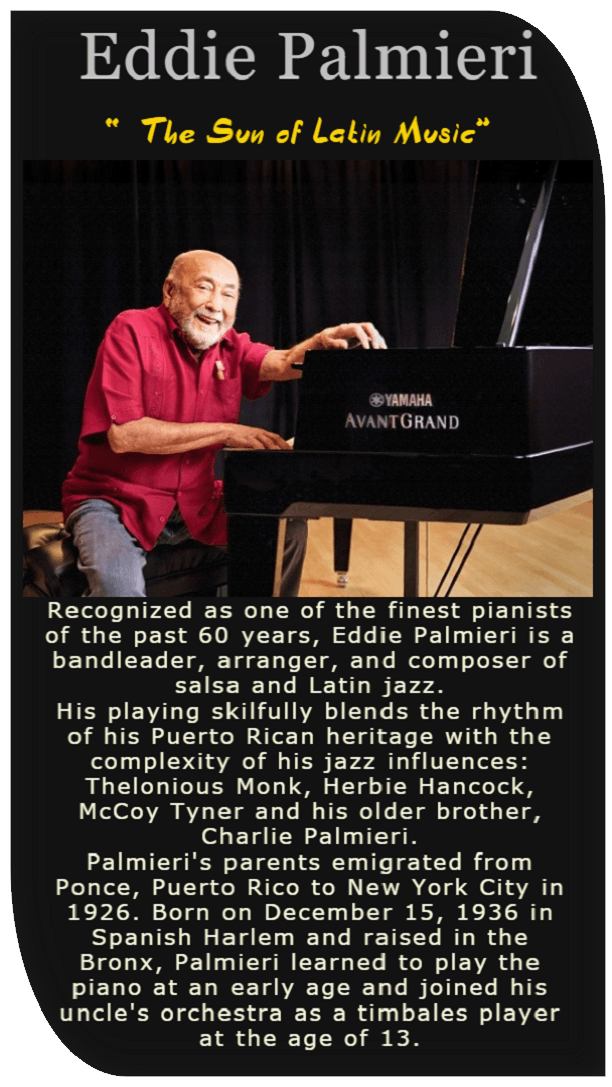
In the early 1970s, the American social landscape was dominated by the Vietnam War and the birth of several protest movements advocating for equality, justice and the defense of human and civil rights, and from sing sing a historic concert.
In the midst of all that collective turbulence, Eddie Palmieri and his orchestra were giving free rein to their social rebellion with a sweeping musical proposal.
But Palmieri’s rebelliousness was not only reflected in his music, but also in his decision to take his group’s sound to atypical and controversial scenarios that would attract the attention of the authorities.
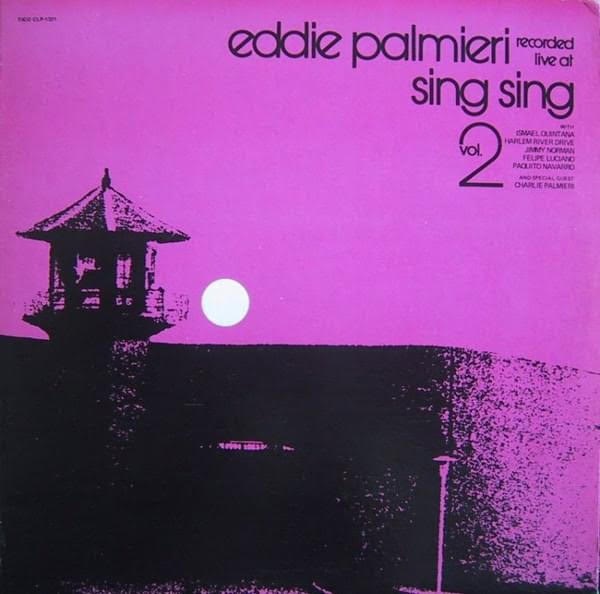
In those days, a good friend of Eddie Palmieri was incarcerated in the sinister and historic Sing Sing Correctional Facility, also known as Sing Sing Prison, infamous for the reputation of its inmates and for its executions with electric chairs.
It was at that moment that the idea of an unprecedented performance at the facility was born.
Palmieri’s group was not only the orchestra of choice for Hispanics, it was also favored by the majority of African-Americans in the Latin dance world, and at that time the prison population at Sing Sing was composed mostly of Hispanics and African-Americans, so the stage was perfect.
However, it was not easy to perform a concert in a maximum security prison like the dreaded Sing Sing Prison.
However, at the request of Eddie Palmieri himself and with the coordination of Roulette Records and the prison administration, the performance took place on Wednesday, April 12, 1972.
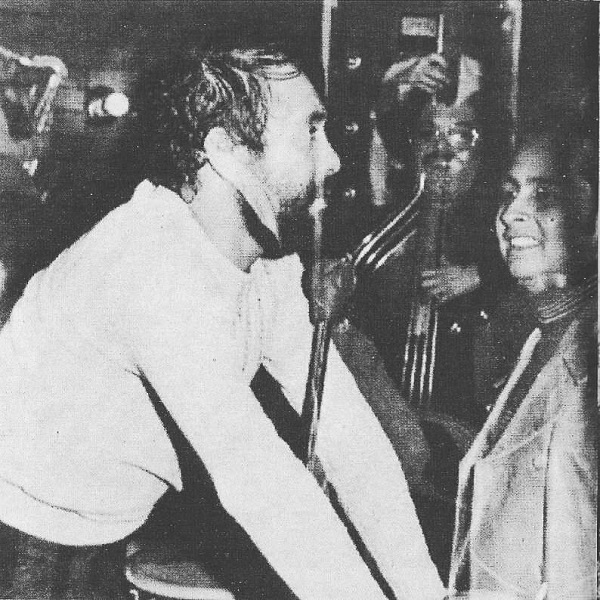
It was the third prison in New York State, built in 1825. The state legislature allocated $20,100 to purchase the Silver Mine farm. The prison was to be self-supporting and not require a state budget.
Elan Lynds, a jailer at Auburn Prison (New York’s second prison), brought 100 convicts from Auburn to the new prison and employed them for its construction.
Harris A. Smiler was the first person executed by electrocution at Sing Sing on July 7, 1891. From 1914 until 1971, only the electric chair at Sing Sing was used for executions.
On January 8, 1983, more than 600 inmates in B Block started a riot, taking 17 officers hostage; it ended 53 hours later.
Sing Sing in popular culture
Near the end of Herman Melville’s short story Bartleby, the Scribe, it is mentioned that Monroe Edwards died of tuberculosis in Sing Sing Prison.

In addition, it was performed live by the band Corizonas (union of Arizona Baby and Los Coronas) in their live album “Dos bandas y un destino”.
There is a song by the salsa group Conjunto Clásico on the album El panadero released in 1986, called A los muchachos de Sing Sing, which has a message of encouragement to convicts.
There is a song by the French-Tunisian singer-songwriter (Michel) Laurent entitled Sing Sing Barbara, from 1971, which tells the story of an inmate who sends desperate messages of love to his wife from this prison.
There is a song by the Madrid group Los Nikis entitled Diez años en Sing Sing, which also gives title to the tribute album to that group.
There is a song by the Basque group Sorotan Bele titled Sing Singatiko Folk & Rolla.
In 1932 the film Twenty Thousand Years in Sing Sing was shot, directed by Michael Curtiz and starring Spencer Tracy and Bette Davis. The film is based on the book of the same name by Lewis E. Lawes.
In the film Constantine, and in the official Constantine comic book, John Constantine is seen to use the Sing Sing prison chair to connect to hell.
In the film Citizen Kane, protagonist Charles Kane threatens his political rival, Jim Gettys, to send him to Sing Sing, when Gettys informs Kane that he will publish his affair with Susan Alexander in the newspapers if he does not withdraw from the election.
In the film The Pilgrim, Charles Chaplin plays the role of a convict recently escaped from prison, who, when he is at the train station, moves his finger without looking over the board of destinations to choose one at random and falls on Sing Sing, so he repeats the process again when he realizes his unfortunate choice.
In the movie Breakfast at Tiffany’s, Holly Golightly periodically visits inmate Sally Tomato at this prison.
In the movie and musical The Producers, the main characters stop at the same prison and create a musical called Prisoners of Love.
In the video game Driver Parallel Lines, the protagonist spends 28 years in Sing Sing.
In the ABC television series Castle, Sing Sing is cited during an episode of the fourth, fifth and eighth seasons.
In the film noir movie Odds Against Tomorrow, Johnny, the character played by Harry Blafonte, says, “I know they changed his color when they rehabilitated him in Sing Sing.”
In the AMC television series Mad Men, Sing Sing is quoted during an episode of the third season.
In the series Breakout Kings, prisoners are transferred to Sing Sing for their help.
In the song Báilalo como tú quieras, by artist Tego Calderón, the phrase “If rapping was a crime, I’d be in Sing Sing!” appears.
In the horror movie saga Maniac Cop, cop Max Cortell is killed in Sing Sing prison by inmates and is resurrected in the form of a “maniac cop”.
In the Netflix series The Punisher, Arthur mentions to Billy Russo having been imprisoned 10 years in Sing Sing, in episode 4 of the second season.
In the novel “The Ppsychoanalyst” by John Katzenback published in 2002, the Sing Sing prison where a man served six months is named.
In Georges Simenon’s novel The Hound Dog starring Commissar Maigret, one of the characters spends several years in Sing Sing prison.
In the comics “Mortadelo y Filemón”, by cartoonist Francisco Ibáñez, when a character has done something barbaric, he is sentenced to Sing Sing prison and appears with the typical black and white striped prisoner’s suit, chopping stone with an iron ball chained to his leg.
In the series Law and Order the Sing Sing prison is constantly mentioned.
Also Read: Carlos “Nene” Quintero comes from a family of musical prodigies
 |
 |
|
|
 |
|
 |
|
 |
|
 |
|
 |
|
 |
|
 |
|
 |
|
| Do you enjoy Latin music? Would you like to get more involved in this genre and share your passion for Salsa, Bachata, Kizomba, Merengue and more. Why not joint our Global Team of volunteers as a correspondent? | |
 |
 |
|
|
 |
 |
 |
 |
 |
 |
 |
 |
 |
Martin Franco is a talented New York’s producer, sound engineer, composer, vocalist, percussionist and saxophonist who has had a big trajectory in music, which he shared with us in a half-hour conversation we had.
The artist of Colombian parents has been kind enough to reveal some of the most important details of his artistic career and the process by which he has managed to become the professional in the music field he is today, so we hope the information revealed here will be liked by those who usually follow our publications.
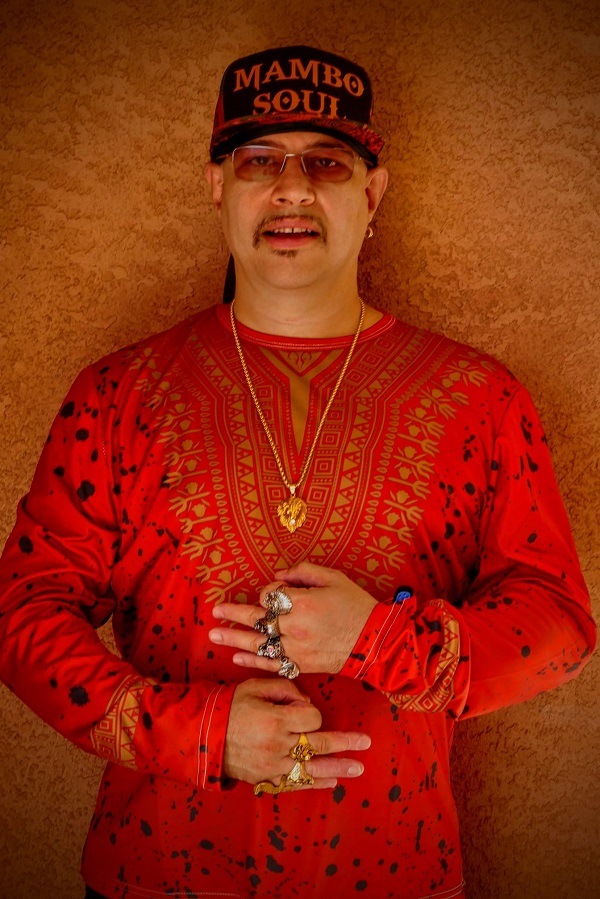
Something important we did not know about Martín is that, although both his parents are Colombian, they moved to Mexico when he was little and he spent the first eight years of his childhood in that country, before moving to Laredo, Texas.
At his new school in the US, he and his classmates were allowed to choose the instrument they liked most to learn to play it and the boy chose the saxophone, as he thought it was ”the most beautiful” at the time.
When Martin began his training, he discovered that he had a real taste for music and began to see it as a pleasant pastime and not an obligation, which led his mother to buy him his own saxophone and tell him to ”throw forward to music” if that was what he liked.
When he turned 12, the family moved back to New York, where Martin started to take music more seriously and meet people related to the industry. That was when percussion and tropical music also caught his attention, as Texas was packed with Mexican cumbia and other such rhythms.
On the other hand, New York had an immense Puerto Rican community and even his own aunts had married Puerto Ricans. Since this was the dominant community in the city in those years, Martin began hearing the conga, the keyboard, the trombone, the timbales and all the music made by the Fania. It was then when his musical tastes and plans began to change.
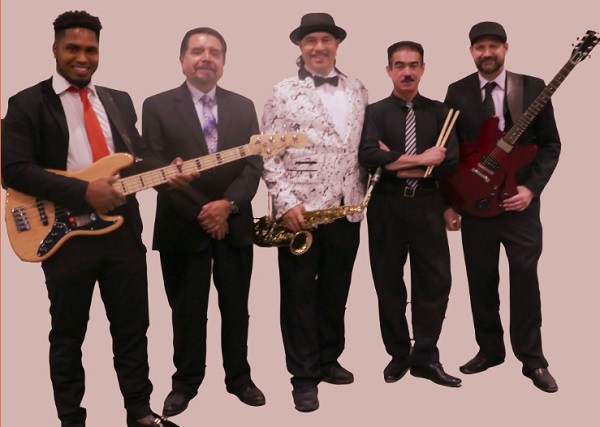
When he arrived in New York, Martin was not old enough to start a professional career, so he was engaged to play with friends in the streets, houses, apartments and private parties. However, this time helped him a lot to gain experience and his family was a great support in all this.
Martín, his family and some of his friends used to go to see live Latin artists and orchestras such as Celia Cruz, Héctor Lavoe, Tito Puente, Eddie Palmieri, Ray Barretto, Mongo Santamaría, among others. This also represented part of his motivation to do salsa in the future, although he also liked American jazz, which features the saxophone, his favorite instrument.
The mix of Latin and American genres resulted in the music that became popular in those years, and the music Martin makes today has much of what he learned back then. It was a mix of Caribbean tropical rhythms, jazz and American funk.
The musician considers that American and Latin rhythms have complimented each other over the years and he always tries to unite them in his performances, just like English and Spanish.
The name ”Mambo Soul Band” is a mixture of ”mambo”, which means ”to greet someone” or ”to communicate” in some African dialects, and ”soul” in English. This resulted in something like ”to communicate from the soul”, a concept that fascinated Martin. At the same time, both are the names for well-known musical genres, the one Latino and the other American.
He selected these genres as the name of his band because they contain what influenced him musically speaking. Latin jazz, soul and funk were the genres on which Martin based his songwriting for the band he was creating and he hired musicians who had experience with these rhythms. And in case they do not master any of them, he teaches them.
According to Martín, guitarists and bassists are the ones who usually have more problems when playing or learning to play these genres, while a percussionist usually has a greater dominion over these areas.
Another variant of the same project also led by Martín is Mambo Soul Jazz, which offers music and songs much more inclined to the American way. Mambo Soul Jazz is more aimed at quiet events where people do not usually dance much and just want background music to enjoy the evening.
The choose of one or the another will vary depending on the public of the day, although the basis of everything is always Latin music.
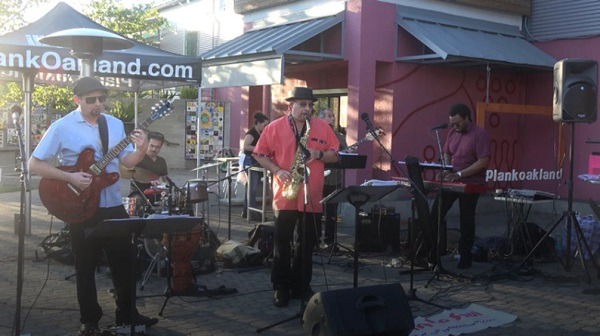
In the view of Martin based on his experience, one of the most challenging things for him and his musicians is the economic issue. At the level where they are, they do not make big profits from their work, which contrasts to the high cost of living in California.
This situation has led many of the musicians to have parallel jobs that allow them subsistence since it is very difficult to make a living from music. The only alternative is to constantly tour with famous groups, but not everyone is willing to do that, so they prefer to work on other things.
In his particular case, he can afford to live only from music because he is the leader of the orchestra and the one who is in charge of getting contracts and shows for the group.
What we took from the conversation
From the beginning, we have noticed that Martin is a man absolutely passionate about his Latin roots and all that comes with them, especially the musical part. He always stressed that everything he does is for his love of music.
It is our pleasure to have the opportunity to talk with this great exponent of Latin and Afro-Caribbean music and we offer him our best wishes for success from now on.