• Skip to primary navigation
  • Skip to main content

International Salsa Magazine

  • HOME
  • Previous editions
    • 2026
      • ISM / July 2026
      • ISM / June 2026
      • ISM / May 2026
      • ISM / April 2026
      • ISM / March 2026
      • ISM / February 2026
      • ISM / January 2026
    • 2025
      • ISM / December 2025
      • ISM / November 2025
      • ISM / October 2025
      • ISM / September 2025
      • ISM / August 2025
      • ISM / July 2025
      • ISM / June 2025
      • ISM / May2025
      • ISM / April 2025
      • ISM / March 2025
      • ISM / February 2025
      • ISM / January 2025
    • 2024
      • ISM / December 2024
      • ISM / November 2024
      • ISM / October 2024
      • ISM / September 2024
      • ISM / August 2024
      • ISM / July 2024
      • ISM / June 2024
      • ISM / May 2024
      • ISM / April 2024
      • ISM / March 2024
      • ISM / February 2024
      • ISM / January 2024
    • 2023
      • ISM / December 2023
      • ISM / November 2023
      • ISM / October 2023
      • ISM – September 2023
      • ISM – August 2023
      • ISM July 2023
      • ISM Edition June 2023
      • ISM – May 2023
      • ISM April 2023
      • ISM March 2023
      • ISM February 2023
      • ISM January 2023
    • 2022
      • ISM December 2022
      • ISM November 2022
      • ISM October 2022
      • ISM September 2022
      • ISM August 2022
      • ISM July 2022
      • ISM June 2022
      • ISM May 2022
      • ISM February 2022
      • ISM January 2022
    • 2021
      • ISM December 2021
      • ISM November 2021
      • ISM October – 2021
      • ISM September 2021
      • ISM August 2021
      • ISM July 2021
      • ISM May 2021
      • ISM April 2021
      • ISM June 2021
      • ISM March 2021
      • ISM February 2021
      • ISM January 2021
    • 2020
      • ISM December 2020
      • ISM November 2020
      • ISM October 2020
      • ISM September 2020
      • ISM August 2020
      • ISM July 2020
      • ISM June 2020
      • ISM May 2020
      • ISM April 2020
      • ISM March 2020
      • ISM February 2020
      • ISM January 2020
    • 2019
      • ISM December 2019
      • ISM November 2019
      • ISM October 2019
      • ISM Septembre 2019
      • ISM August 2019
      • ISM July 2019
      • ISM June 2019
      • ISM May 2019
      • ISM April 2019
      • ISM March 2019
      • ISM February 2019
      • ISM January 2019
    • 2018
      • ISM December 2018
      • ISM November 2018
      • ISM October 2018
      • ISM September 2018
      • ISM August 2018
      • ISM July 2018
      • ISM June 2018
      • ISM May 2018
      • ISM April 2018
      • ISM March 2018
      • ISM February 2018
      • ISM January 2018
    • 2017
      • ISM December 2017
      • ISM November 2017
      • ISM October 2017
      • ISM September 2017
      • ISM August 2017
      • ISM July 2017
      • ISM June 2017
      • ISM May 2017
      • ISM April 2017
      • ISM March 2017
      • ISM February 2017
      • ISM January 2017
    • 2016
      • ISM December 2016
      • ISM November 2016
      • ISM October 2016
      • ISM September 2016
  • Spanish
  • Download Salsa App
    • Android
    • Apple

Search Results for: Africa

Argenis Carruyo is known in the music scene as “El Volcán de América” (The Volcano of America) due to the power of his voice

Carruyo He was born in Maracaibo on August 22, 1953 at the Chiquinquira Hospital in Maracaibo, located in the same sector where he grew up.

Argenis Carruyo he had the good fortune of being a neighbor of Los Blanco, who 12 years after his birth hired him as an instrument picker, an experience that served to awaken in him the love for music, a feeling that was nurtured when he discovered in him an unmistakable talent to make singing his life support.

“The Volcano of America” because the power of his voice makes the senses of those who have the opportunity to listen to him rumble; so sings Argenis Carruyo, from Zulia, who from a very young age began to demonstrate the vocal quality that characterizes him.

Argenis Carruyo is known in the music scene as "El Volcán de América" (The Volcano of America) due to the power of his voice
Argenis Carruyo is known in the music scene as “El Volcán de América” (The Volcano of America) due to the power of his voice

He has stood out as an interpreter of the gaita zuliana and during the 1970s and 1980s belonged to the Dimensión Latina.

The 80’s was a very busy decade for this multifaceted character; he sang with Orlando y su Combo, and did a duet with Ender Carruyo in the orchestra “Los Hermanos Carruyo” and then again with the Super Combo Los Tropicales, until 1985 when he decided to found his own group called “Argenis Carruyo y su Orquesta”.

He began his musical career with the youth group Los Larkings. Later, he was part of Los Juglares and Los Casinos.

In 1973, he joined the ranks of Súper Combo Los Tropicales and in 1977 he was recruited by Dimensión Latina, with whom he sang until 1981. Later he joined the group Los Melódicos.

During the 1980s he had an intense artistic activity in which he sang with Orlando y su Combo, duetted with Ender Carruyo in the orchestra Los Hermanos Carruyo, worked again with the Súper Combo Los Tropicales and, in 1985, formed his own group: Argenis Carruyo y su Orquesta.

Argenis Carruyo and his Orchestra

Sabor a Gaita:

Apart from his work with rhythms such as guaracha and salsa, Carruyo has also performed the gaita zuliana.

The Volcano of America has not only stood out among the great interpreters of the Caribbean for playing rhythms such as the guaracha, he has also honored his land by making famous great gaita compositions.

During his time in the genre he worked with groups such as El Número Uno, Rincón Morales, Guaco, Los Morillo and Gaiteros de Pillopo.

He owes part of his fame to the gaita, because the Zulian melody accompanied him on stages and still accompanies him in his veins as it does to anyone who appreciates being a worthy Maracaibero.

During his artistic life he has received numerous recognitions, as well as the publication of a book with his biography.

In 1975 he won the Festival de Cantantes y Compositores Zulianos and has received the Mara de Oro (1993, 1994, 1995) and Gran Cacique de Oro awards as best singer, the Gran Aguila de Venezuela as best singer and dance orchestra (1995, 1996, 1997, 1998, 1999, 2001), and the Catatumbo de Oro as best popular singer (1993) among others.

"The Volcano of America"
“The Volcano of America”

His orchestra received the Orden Ciudad de Maracaibo in its first class as best dance group.

He has performed in the most important nightclubs in Maracaibo, the country and abroad, alternating with the most recognized figures of the song, which is why he is considered one of the most genuine interpreters of tropical Caribbean genres in the Zulian region, such as salsa, guaracha, cumbia, merengue and bolero.

With a prolific career of more than twenty-five years that has served to demonstrate his talents as a vocalist and his own characteristic style, which gives him his most authentic identity.

Argenis Carruyo, with pride from Maracaibo, proclaims that he owes to Zulia the success and fortune that always accompanied him since he discovered the enormous talent he carried in his blood, his homeland became his main fan, to Maracaibo he owes his life and to its inhabitants the affection and the memory that will always keep him alive through his songs.

For 2023 Argenis was specially invited to participate in the excellent group Quintero’s Salsa Project – Tributo A La Dimension Latina directed by New York based percussionists Luisito Quintero and Robert Quintero.

Luisito Quintero grew up in the Latin and African percussion tradition. His father is as percussive as his uncle Carlos Nene Quintero and cousin Roberto Quintero. He became a member of the Venezuelan Symphony Orchestra, but soon joined ensembles such as Grupo Guaco and El Trabuco Venezolano and toured with Oscar D’León.

He then moved to New York, where he met Latin jazz musicians like Willie Colon, Eddie Palmieri, Tito Puente and Celia Cruz worked. He then turned to the fusion of jazz, funk, salsa and African music and played with George Benson, Herbie Hancock, Ravi Coltrane and Toshiko Akiyoshi, but also with pop musicians such as Gloria Estefan and Marc Anthony. Louie Vega produced his first album with him.

Quintero’s Salsa Project – Tribute To The Latin Dimension

Tracks: Ya Tu Lo Véras; Sin Tu Cariño; Cara de Guabina; Sigue Tu Camino; Irimo; Dulce Cantar; De Quintero a Dimensión; Ahi Nama; Te Conocí; Parampampam; Arroz Con Manteca; Frutas del Caney.

Musicians: Argenis Carruyo; Jimmy Bosch; Marcial Istúriz; Roberto Quintero, Luisito Quintero.

Record labels in which Argenis Carruyo has participated.

Top-Hit (TH), Maracaibo Record’s, Argenis Carruyo, Discos VRZ, SonoVen Records, L. G. Record’s C. A; iMusician | EDGARSARMIENTO, Palacio, among others.

Argenis Carruyo y Dj. Augusto Felibertt

Sources:

La Buena Musica: Argenis Carruyo

La Salsa es mi vida: Quintero´s Salsa Project – Tributo A La Dimension Latina

Also Read: Víctor Porfirio Baloa Díaz, more commonly known as Porfi Baloa

Tempo Latino: Creating Connections Through Music

An Interview with Eric, Founder of Europe’s Premier Latin Music Festival

On the last week-end of July, a festival celebrates Latin and Afro-Cuban music and brings thousands of music lovers to a small town in France. Eric, the festival’s creator, shares its origins, inspirations, and evolution.

Interview with Eric Duffau
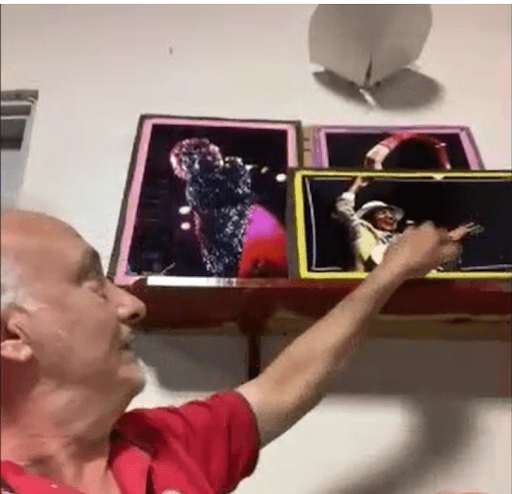
Eric Duffau showing a photo of Compay Segundo

Since its inception in 1994, the Tempo Latino festival has welcomed incredible artists to this small town in the Southwest of France.

Creating a Musical Oasis in Vic-Fezensac

Having lived across France, Eric settled in Vic-Fezensac, where he felt the need to create something beyond work. His passion for Latin and Afro-Cuban music led him to start Tempo Latino, aiming to provide what he missed – concerts of these genres.

A Journey of Music and Discovery

Eric’s radio inspiration and his love for vibrant rhythms ignited the idea for a music festival. He yearned to introduce others to the music he cherished, giving birth to Tempo Latino in 1994. The inaugural edition featured Fatal Mambo and Mambomania, attracting 2,800 attendees. Now the festival attracts over 10,000 people.

Eric’s selection process for artists is fueled by genuine connections, resulting in a diverse lineup that weaves different styles into a harmonious experience. His curation creates unique narratives each night. Pairing artists with contrasting energies, like Lila Downs and Cimafunk, creates a captivating tapestry that reflects the festival’s essence. Eric’s journey involves tireless pursuit and strong artist relationships. From Bernard Lavilliers to Excelencia, his commitment to music’s magic and meaningful collaborations remains steadfast.

A Melodic Journey Unfolds

The festival’s theme guides its trajectory, from Africa’s heart to New York’s energy. Lavilliers’ Paris and the Caribbean’s vibrancy unite through music, creating a diverse yet cohesive experience.

In a digital era, Tempo Latino reminds us of music’s power to unite. Eric’s dedication and knack for blending genres into harmonious narratives continue to resonate.

Tempo Latino: 28 Years of Latin Rhythms, Community, and Artistry

The charm of Vic-Fezensac, a small town in France, transforms every year as over fifty thousand people gather for the renowned Tempo Latino Festival. In an exclusive interview, Eric, the festival’s creator, discusses the intricacies of managing such an event in a local community and the relationship it shares with the town.

Mural for the entrance of the 2023 Festival, by Martin, a local graffiti artist.
Martin, the local graffiti artist, putting the final touches on the entrance mural.

Local Community and Involvement

Eric sheds light on the local engagement, emphasizing that while not everyone participates, the festival is supported by some local partners. What brings him contentment is the transformation he witnesses each year as the town welcomes an eclectic crowd of festival-goers. The festival’s vibrant audience, composed of diverse backgrounds, gives life to the town’s streets and squares in ways that were once unimaginable.

Eric reminisces about the support he received from the former mayor, Jean Arnaud, whose open-mindedness and appreciation for the festival’s diverse attendees left a mark. Jean Arnaud’s encouragement and acknowledgment of the festival’s contribution to cultural diversity added an emotional connection between the festival and the town.

Fostering Relationships with Artists

Eric’s dedication to music and fostering connections with artists has been at the heart of the festival’s growth. He shares anecdotes about musicians like Oscar D’Léon and Celia Cruz, who have left an indelible mark on the festival’s history. These relationships, he emphasizes, are more than business; they’re rooted in mutual respect and genuine affection.

Celia Cruz – Yuri Buonaventura
Oscar D’Léon – Cachao

Overcoming Challenges

Throughout its 28 editions, the festival has faced numerous challenges, both financial and logistical. Eric reflects on early deficits, weather-related disruptions, and organizational intricacies. Each year’s success has hinged on meeting these challenges head-on, often pushing the festival to its limits.

The Ever-Evolving Vision

Eric’s vision for the festival’s future remains unwavering – bringing together people from diverse backgrounds through music. He acknowledges the changing landscape of music and dance styles, highlighting the importance of maintaining a balance between cultural integrity and evolving tastes.

Looking Ahead

With the 30th edition approaching, Eric envisions continued growth while staying true to the festival’s roots. He expresses his desire to bring acclaimed artists like La India and Carlos Santana to the stage, continuing the legacy of diverse and passionate musical experiences.

In the grand tapestry of the Tempo Latino Festival, Eric’s passion, dedication, and genuine relationships have woven together a cultural masterpiece. The festival remains a beacon of unity, showcasing the power of music to transcend boundaries and create shared experiences. As the festival moves towards its next milestone, it stands as a testament to Eric’s unwavering commitment and the enduring magic of Latin and Afro-Cuban rhythms.

Mark your calendar and plan your trip for the 2024 Tempo Latino on the last weekend of July 25 to 28, 2024.

Visit for more information

[Read more…] about Tempo Latino: Creating Connections Through Music

Eduardo Paim: The Father of Kizomba

Eduardo Paim
Eduardo Paim

Eduardo Paim, the creator of the musical genre called Kizomba, is well-cherished in the Latin Dance community for being one of the most influential musicians in Latin music history. He is internationally renowned as the godfather of Kizomba music.

Born in Angola in the 1980s, Kizomba music is a blend of Kilapanga, Semba, and Angolan Merengue. Semba is the traditional Angolan music. As compared to Semba, Kizomba has a more sensuous rhythm. It’s slower and more romantic than Semba. As the principal language of Angola is Portuguese, therefore Kizomba songs are mostly sung in Portuguese. Coming from the Bantu term “Kimbundu”, Kizomba means fiesta or party. The forefathers of Kizomba are Eduardo Paim and his band SOS that he founded in 1982.

Eduardo Paim

Though it was the album “Luanda minha banda” Eduardo Paim made his successful debut with, his real breakthrough is considered “Do kaiaia” which was his second recording in 1992.

This album exceeded 50,000 copies. Later on, he released the album “Kambuengo” which was a great success too. “Ka-Ne-La” “Rosa baila” and “Chindu a tempo” are still on the top of the list of his popular songs.

The father of Kizomba, Eduardo Paim, calls himself “the precursor of Kizomba”. According to him, it was in the early 80s that the process of creating Kizomba started. There were two groups, namely SOS and Afro Sound Star (ASS). The use of kilapanda (type of music and dance from Angola. It is related to semba and kizomba, two other popular genres of Angolan music) as a reference style by the group Afro Sound Star inspired him a lot. Moreover, traditional African music such as Semba also contributed to his inspiration for the development of a new music genre. Today, kizomba is danced worldwide.

Just like everything else in this world, Eduardo Paim also had his ups and downs in his journey to music. Having said that, a time came when his schedule was just reduced to one show per year from six shows a month! At this point, he dreamed to build up his own record studio, and started working for it. And yes, he succeeded in earning a name as a producer in Angolan music industry. He named his studio “EP Studios”. Being a producer, he supported many Angolan singers of the new generation. With his release of the album “Maruva na taca” he made his comeback to the music industry in 2006.

Eduardo Paim with Paulo Flores

Though it was the album “Luanda minha banda” Eduardo Paim made his successful debut with, his real breakthrough is considered “Do kaiaia” which was his second recording in 1992. This album exceeded 50,000 copies. Later on, he released the album “Kambuengo” which was a great success too. “Ka-Ne-La”, “Rosa baila”, and “Chindu a tempo” are still on the top of the list of his popular songs.

Many musicians of the new generation of Angolan music participated in his album “Maruva na Taca”. Yuri da Cunha, Nancy Vieira, Paulo Flores, Big Boss, and Bonga are to name a few. He also released his new cd “Etu mu dietu” a long period after “Maruva na taca”. You can keep yourself updated about his shows and releases by subscribing to Eduardo Paim Official Channel on YouTube.

Eduardo Paim, the father of Kizomba, has given birth to such a music genre that knows no borders. Known for having a sensuous, slow, and insistent rhythm, Kizomba is danced not just in Angola but also in other African countries and in USA and Europe as well. Moreover, Kizomba is also gaining a lot of fame in China, especially in cities such as Shenzhen, Shanghai, and Beijing.

https://www.youtube.com/channel/UCXO-PNPuF1K6eNSed203RMQ

https://www.facebook.com/EduardoPaimOficial/about

ISM – August 2023

titule salsagoogle.com is International Salsa Magazine

Adrian Suarez Composer, arranger, trombonist and percussionist

Trombonist Adrian Suarez’s musical career began when he was very young at a music school.

“From the age of five they put us to study theory and solfège, and four years later I managed to get my hands on an instrument.”

However, once he was able to play an instrument, he took a break to dedicate himself to baseball. “It was at the age of 14 that an uncle took me to some Latin percussion lessons and soon after that I started with the trombone.”

On April 23, 1969, in Caracas, Venezuela, Adrian Suarez was born.

Excellent composer, arranger, trombonist, percussionist and researcher.

Bachelor of Arts (UCV-1994), he studied music, trombone and composition at the Escuela Superior José Ángel Lamas.

He also studied Afro-Caribbean percussion and Afro-Venezuelan percussion (1985-1990). He was a researcher and advisor for the foundation of ethnomusicology and folklore, fundef, between 1993 and 1995.

Adrian Suarez Composer, arranger, trombonist and percussionist

He studied composition at the Cátedra Latinoamericana de Composición Antonio Estévez, with maestro Juan Carlos Núñez from 1994 to 1996. In Germany he obtained a master’s degree in composition.

As a professional, he has collaborated with the Papel Musical Magazine (1992); he has been a researcher and advisor for the Foundation of Ethnomusicology and Folklore (FUNDEF) under the direction of Dr. Isabel Aretz; and he has worked as a documentary advisor for visual arts exhibitions.

He studied composition with Helmut Lachenmann and Marco Stroppa. In 2001 he received his master’s degree in composition from the Staatliche Hochschule für Musik und Darstellende Kunst in Stuttgart, Germany.

Since 1999 he has been a founding member of the international group of composers Aspect, based in Germany, and since 1991 of the Musikós Association in Caracas. He participated in the Latin American Composition Chair Antonio Estévez, under the direction of Juan Carlos Núñez (1994-1996).

He has received numerous awards, including the Unique Prize of the Manuel Enrique Pérez Díaz National Composition Competition (CONAC, Caracas, 1998) for his work “Soledades”, “Hommâge à Octavio Paz”, for two guitars and harp, the Municipal Music Prize (Caracas, 2002 and 2017), the National Culture Prize (2010) as well as the Prize of the Ibero-American Composition Competition for Symphonic Band Ibermúsicas-Oaxaca (2016).

El 23 de abril de 1969, en Caracas, Venezuela, nació Adrian Suarez

He has worked as author and director of musical-dramaturgical shows in Venezuela, including titles such as: “Lamas siempre” (1995), “Proyecto Música e Hipótesis Aleatorias” (1997), “Atavismos del Sol y de la luna” (2000), “Maithuna” (2009), “Watunna” (2010), “Meñé Ruwa, los dueños del canto” (2011) the first musical theater play in the continent for instrumental ensemble and two shamans and “La salsa es trombón” (2012, 2015, 2017).

He led a band integrated by a group of the best musicians of the salsa scene nationwide: Tuky Torres, on piano; Carlos Rodríguez, bass; Víctor Cardona, on timbal and bongo; Freddy Rivas, congas; Johan Muñoz, trombone; Eliel Rivero, trombone. Special guests included soneros Edgar Dolor Quijada, Reinaldo Torcat, as well as a group of batá drummers.

Creator of the Ensemble Lux Aeterna, dedicated to the interpretation of spiritual and sacred works of all times. He is also founder of the Akoustikos New Music Festival in 2009.

As a trombonist, he has cultivated popular music from all over the continent, with special emphasis on Venezuelan and Caribbean music. His work as a researcher, composer and performer has allowed him to take his work and music to several countries in the Americas, Europe, Africa and Asia.

La carrera musical de Suárez inició desde cuando era muy joven en una escuela de música

“It won’t be a master class in history,” says Venezuelan musician and composer Adrián Suárez with a chuckle; in reality it is a musical show, with hints of theater and dance, that will show the public the evolution of the trombone, and its relationship with the salsa genre from prehistoric times to contemporary times.

Adrián Suárez brings sacred sounds and turns them into music.

Suárez won the Second Iberoamerican Composition Contest for Symphonic Band Ibermúsicas, in the Mexican city of Oaxaca, with his work Aerofanía, retumbos místicos para banda sinfónica.

Salsa is trombone, Suárez assures, “It is a beautiful show that is not only educational, but also seeks to inspire the audience through the values and feelings it promotes”.

The artist and researcher’s expectation is that his audience will be completely involved with the sound and ambience: “To completely move the energy, since it is not only music to dance to, it is to sit down and listen to it carefully”.

Víctor Porfirio Baloa Díaz, more commonly known as Porfi Baloa
Adrián Suárez

  • « Go to Previous Page
  • Page 1
  • Interim pages omitted …
  • Page 28
  • Page 29
  • Page 30
  • Page 31
  • Page 32
  • Interim pages omitted …
  • Page 53
  • Go to Next Page »

International Salsa Magazine (ISM) is a monthly publication covering salsa activities around the world and has been publishing since 2007. It is a worldwide network of volunteers coordinated by ISM Magazine. Together, we work to strengthen salsa events around the world.