


• Skip to primary navigation
  • Skip to main content

International Salsa Magazine

  • HOME
  • Previous editions
    • 2026
      • ISM / April 2026
      • ISM / March 2026
      • ISM / February 2026
      • ISM / January 2026
    • 2025
      • ISM / December 2025
      • ISM / November 2025
      • ISM / October 2025
      • ISM / September 2025
      • ISM / August 2025
      • ISM / July 2025
      • ISM / June 2025
      • ISM / May2025
      • ISM / April 2025
      • ISM / March 2025
      • ISM / February 2025
      • ISM / January 2025
    • 2024
      • ISM / December 2024
      • ISM / November 2024
      • ISM / October 2024
      • ISM / September 2024
      • ISM / August 2024
      • ISM / July 2024
      • ISM / June 2024
      • ISM / May 2024
      • ISM / April 2024
      • ISM / March 2024
      • ISM / February 2024
      • ISM / January 2024
    • 2023
      • ISM / December 2023
      • ISM / November 2023
      • ISM / October 2023
      • ISM – September 2023
      • ISM – August 2023
      • ISM July 2023
      • ISM Edition June 2023
      • ISM – May 2023
      • ISM April 2023
      • ISM March 2023
      • ISM February 2023
      • ISM January 2023
    • 2022
      • ISM December 2022
      • ISM November 2022
      • ISM October 2022
      • ISM September 2022
      • ISM August 2022
      • ISM July 2022
      • ISM June 2022
      • ISM May 2022
      • ISM February 2022
      • ISM January 2022
    • 2021
      • ISM December 2021
      • ISM November 2021
      • ISM October – 2021
      • ISM September 2021
      • ISM August 2021
      • ISM July 2021
      • ISM May 2021
      • ISM April 2021
      • ISM June 2021
      • ISM March 2021
      • ISM February 2021
      • ISM January 2021
    • 2020
      • ISM December 2020
      • ISM November 2020
      • ISM October 2020
      • ISM September 2020
      • ISM August 2020
      • ISM July 2020
      • ISM June 2020
      • ISM May 2020
      • ISM April 2020
      • ISM March 2020
      • ISM February 2020
      • ISM January 2020
    • 2019
      • ISM December 2019
      • ISM November 2019
      • ISM October 2019
      • ISM Septembre 2019
      • ISM August 2019
      • ISM July 2019
      • ISM June 2019
  • Spanish
  • Download Salsa App
    • Android
    • Apple

Search Results for: Africa

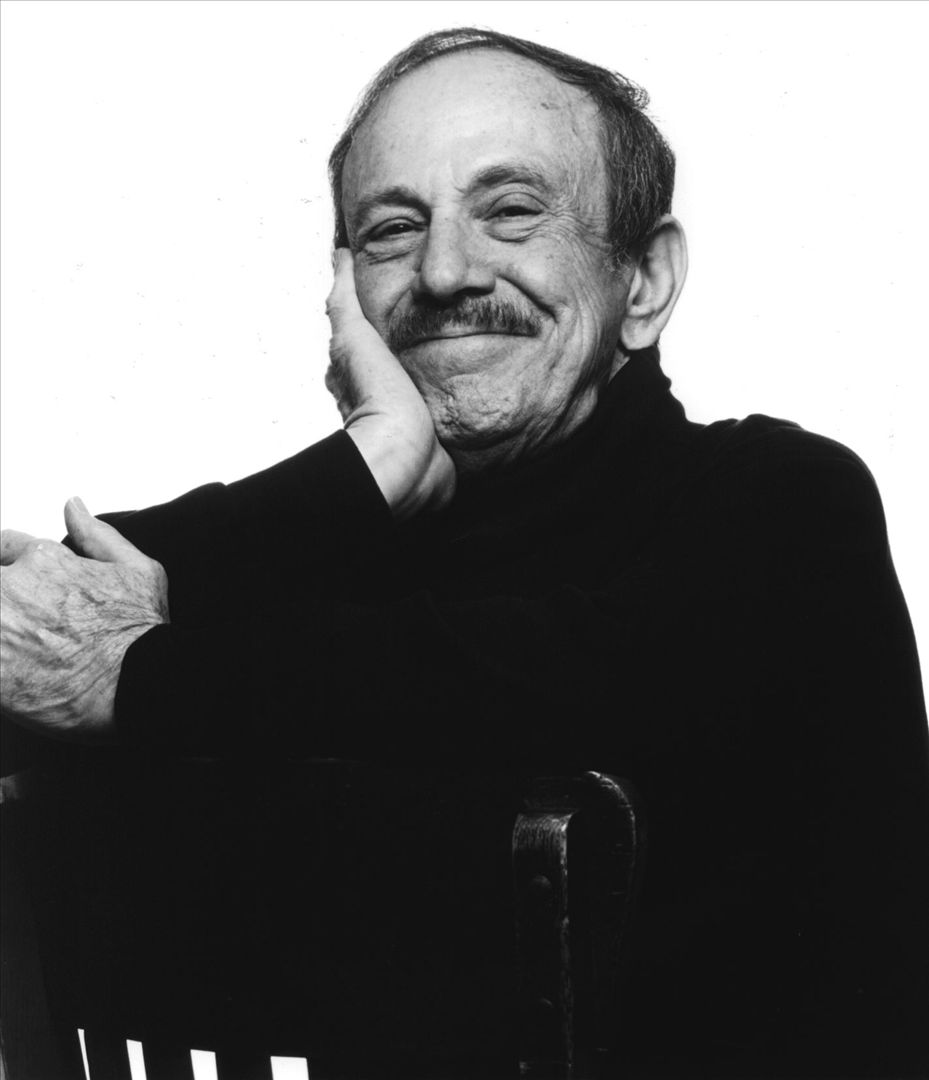
Joe Bataan’s music remains in force

Joe Bataan in the Spaha Salsa Gallery

There are many artists of international stature have been in the Salsa Museum and left some valuable object in our facilities, and this month, it was the turn of American singer and musician Joe Bataan, who was kind enough to share with producer Johnny Cruz and his show partner Boris Calderón. 

Joe Bataan and Johnny Cruz in the Spaha Salsa Gallery

In one of the videos taken during the visit, the artist mentioned that the place was awesome and had expanded so much that another building would have to be made soon for so many valuable acquisitions. Let’s remember that both the artists and their families have been donating all kinds of garments, instruments and things related to their careers to be exhibited in the museum with the purpose of showing the public this valuable part of our culture.

After such an extraordinary exchange, we believe it believe to talk a little about the story of this talented man and how he has reaped all the success obtained at the time.

Story of Joe Battan

Bataan Nitollano is a New York singer of African-American and Filipino origin from his parents, but he grew up in the neighborhood of Harlem, where he got in trouble with the law and was trained in music.

Joe Bataan signing a jacket in the Spaha Salsa Gallery

While he spent a short time in prison, he studied music, and trained in playing the piano, something that would be extremely important for his artistic career. Once he was released, he formally began his career as a singer and formed his first group, which he named ”Joe Bataan and the Latin Swingers”. At that time, the young man was heavily influenced by two genres that were very fashionable at the time, which are boogaloo and Afro-American Doo-wop.

Although Bataan was not the first to enter the aforementioned genres, his very particular talent made him worthy of the attention of the newly created record label Fania Records, which signed the artist in 1966 and released his first single ”Gypsy Woman” the following year. The song ended up being a huge hit in the Latin community in New York City and laid the foundation for what would end up becoming what we know today as Latin Soul.

During the time Joe worked with Fania, he recorded about eight albums, which became a true sensation due to their mix of Doo-wop in Latin rhythms with English soul, which was quite new at the time. Everything was going well until he had some frictions with the label manager Jerry Masucci concerning the economic issue, so the singer ended up leaving the company to launch his own label Ghetto Records.

The artist's signature
The artist’s signature

In the 1980s, he spent a long time away from music to devote himself to teaching at the same center where he was held and experienced some health declines that kept him silent for quite some time until he ws back in play in 2005, when he released his album ”Call My Name” whose rhythms were based on Latin soul and got many positive reviews. This album proved that Bataan was still a talented artist even though his genres are no longer the most popular.

Today, he is a person with extensive experience in the world of music who is always willing to give his everything to any fan who wants to listen to him. The Spaha Salsa Gallery team is pleased to have had his presence in recent days, so we hope that meetings like this one can be repeated.

Read also: Life and career of Ernie Acevedo

Contact: Johnny Cruz. 917-747-8505. [email protected].


By Johnny Cruz, ISM Correspondent, New York, New York City


Quinteto D’Amore

Latin America / Cuba / Havana

Quinteto D’Amore, cultivating traditional Cuban music throughout the world

Quinteto D'Amore - floridita
Quinteto D’Amore – floridita

Quinteto D’Amore was founded in 2000 with an acoustic format, cultivating traditional Cuban music, although its repertoire includes international themes, it has made various national and international presentations.

In all these years different musicians have integrated the group, currently two years ago the group has been renewed and is composed of Bass, Tres, Violin, bongo, minor percussion and soloist.

Quinteto D'Amore & integrants
Quinteto D’Amore & integrants

They are characterized by combining music, voices and choreography in some of their songs, filling those who can enjoy their show with joy and energy.

Yasney (violin): Graduated from the Higher Institute of Art in the specialty of Violin (ISA). Member of the UNEAC, he was a member of the National Symphony Orchestra of Cuba, has participated in record recordings of outstanding groups and soundtracks, as well as in the CD “Mi Querido Pablo II” with Pablo Milanés and his guests: Milton Nacimiento, Lucecita Benítez,

Fito Páez, Joaquín Sabina, Alberto Cortes, and in the concert offered at the National Auditorium of Mexico.

He has made numerous artistic tours and concerts with the band “Mambo Así”, the group “Sol y Arena”, “Piel Morena” among others in various countries such as: Moscow, Spain, Thailand, Hong Kong, Isla San Martín and Guadalupe, Italy. , Angola. yasney joined D’Amore in May 2014.

Quinteto D'Amore & integrants - Photos
Quinteto D’Amore & integrants – Photos

Yonel (three/four Cuban guitar) I started in music at the age of 6 when I learned to play the guitar since then I sang some songs and accompanied others like my brother. At the age of 7 I started at the art school of Sgt.

From Cuba to study the violin for more or less three years, over time I got to know other instruments such as the piano, percussion until I got to the bass with which I spent several years with the group Son Chévere de Matanzas.

Then I came to Havana and started playing the tres until I transformed it into a CUATRO, adding a couple more strings and it is the instrument I currently work with in Quinteto D’Amore.

Quinteto D'Amore & integrants
Quinteto D’Amore & integrants

Evelyn (soloist), began studying music when she was little, receiving piano and music theory lessons at age 11, she received her first prize as a solo singer awarded by the pioneer organization, she also received dance classes at the National Ballet School of the Havana and contemporary dance workshops, integrating several dance companies and performing in the 2nd Tropicana Show. She is a mid-level micro operator graduate. I study at the school of art instructors.

As a singer, he began his professional career integrating several groups such as: Lady Salsa Mix, Cuban Salsa Orchestra, Las Canelas, Ketlman Ferrer and his orchestra, etc. She is currently the solo singer of the Quinteto D’Amore.

Photo of Quinteto D'Amore & integrants
Photo of Quinteto D’Amore & integrants

Orley (Bass): He studied Bass and Double Bass, he began his musical career in Ciego de Ávila as part of different groups of small and large format such as: Orquesta Eclipse, Conjunto Campesino “Campo Lindo”, among others, later he joined groups in Havana as the Tradition Septet, the group of the singer Leyanis López traveling to France (Paris) under the record label “Luz Africa”, from 2007 to 2011 in the Maykel Blanco Orchestra and its Salsa Mayor making several international tours by Italy, Sweden, Denmark, Germany, Poland, Switzerland, Belgium and Peru, thus participating in the recording of their 2 albums.

From 2011 to 2013 he was a member of the groups “Amor y el Son”, Pepitín y su CumBachá”, and Habana Midic, performing in Egypt, Jordan, Tunisia and Lebanon. Orey joined D’Amore in May 2014.

Daymé (Director, tres and bongó): Graduated in Telecommunications and Electronics Engineering at ISPJAE, and in intermediate level in music in the specialty of “Tres”, she belonged to the movement of amateur artists for 14 years, participating in international festivals, more Later as a professional, he joined several small-format groups performing in Cuba at the “Dos Gardenias” complex, La Bodeguita del Medio, at the Floridita Restaurant and in various hotels, abroad he has fulfilled various contracts in Jamaica, Qatar, United Arab Emirates (Abu Dhabi, Dubai and Al Ain), Jordan, Egypt, Japan, Spain, Turkey and China, she is currently the bongo player and director of the DÁmore Quintet.

Maria Carla (2nd violin) She began her music studies at the “Alejandro García Caturla Conservatory” where she reached the level of Junior High School and the 7th year of violin.

In 2006 he entered the “Amadeo Roldán Conservatory” to continue his studies up to the upper middle level of violin. During his student stage he was part of the orchestras of the respective schools participating in meetings, competitions and concerts both as an instrumentalist and as a vocalist in choirs.

Upon graduation, he taught in the province of Pinar del Río and for two years taught at the Vocational School of Art in the city of Pinar del Río.

Since 2010 he has been part of the National Symphony Orchestra of Cuba, collaborating simultaneously with various groups of both classical music and popular music with groups such as “La Camerata del Son”, “Ensemble Alternativo”, “Quinteto D Amore”, “Orquesta Panorama”, “Quinteto Doble Sabor”.

María Carla also participated in several events and festivals: National Meeting of Symphony Orchestras, International Fair

Cubadisco, Encounter of Choirs, -Festival América Canta, Festival of Contemporary Music, Festival of Young Pianists,

Danzón Festival, International Book Fair of Havana as well as in various recordings of phonograms with artists such as José María and Sergio Vitier, Toni Pinelli, Rafael Guedes, Aldo López-Gavilán.

He has also accompanied renowned soloists such as pianists Lang Lang, Chucho Valdés, Frank Fernández, Aldo López Gavilán, singer Omara Portuondo, violinists Ryu Goto, Francesco Manara, clarinetist Keisuke Wakao, guitarist Joaquín Clerch.

I work under the baton of directors such as Yoshikazu Fukumura, Marin Alsop, Francesco Belli.

Photo of Quinteto D'Amore & integrants
Photo of Quinteto D’Amore & integrants

Quintet D’Amore Repertoire

Latin/English Recent Hits

Havana – Camila Cabello

Someone Like You ‐ Adele

Don’t You Remember ‐ Adele

Unbreak My Heart ‐ Tony Braxton

Rehab ‐ Amy Winehouse

Whenever Whatever ‐ Shakira

Dancing – Enrique Iglesias,

Lambada‐Kapma,

Macarena ‐ Those of the River,

Mambo No 5 ‐ Lou Bega,

Nossa Nossa ‐ Miechl Telo

I Have Your Love ‐ Si7e

I just want to give you a kiss – Prince Royce

Despacito – Luis Fonsi & Daddy Yankee

English Pop, Rock, Blues, Jazz, R&B

Stand By Me ‐ Ben E. King

Yesterday ‐ The Beatles

Only You (And You Alone) ‐ The Platters

New York New York ‐ Frank Sinatra, Liza Minelli

Misty ‐ Errol Garner & Johnny Burke / Johnny Mathis

Girl From Ipanema ‐ Pery Ribeiro, Frank Sinatra

Flying To The Moon ‐ Frank Sinatra, Doris Day, Tony Bennett, Diana Krall

Summertime ‐ Ella Fitzgerald, Janis Joplin, Billie Holiday …

Autumn Leaves ‐ Nat King Cole, Andrea Bocleli, Eric Clapton …

My Way – Jacques Revaux, Paul Anka / Claude Francois, Frank Sinatra, Elvis Presley

I Just Called To Say I Love You ‐ Stevie Wonder

Somewhere Over the Rainbown ‐ Harold Arlen and Yip Harburg / Judy Garland, Israel

For Ever And Ever ‐ Demis Roussos

Hotel California – Eagles …

Cuban/Latin Salsa, Son, Rumba, Cumbia, Bolero

The Modern Yerbero ‐ Celia Cruz,

Quimbara ‐ Celia Cruz

Life is a Carnival – Celia Cruz

Idyll ‐ Wilie Colon

El Cartero ‐ Buena Vista Social Club

Tula Room ‐ Buena Vista Social Club

Discreet Kisses ‐ Compay Segundo

Chan chan ‐ Compay Segundo

Goodbye, Commander ‐ Carlos Puebla

Husbands Majaderos ‐ Perdro Luis Ferrer

Yolanda ‐ Pablo Milanes

I’ll be back – Diego Verdaguer

Pile of Stars ‐ Polo Montañez

Cariñito ‐ The Children of the Sun

Hey How It Goes ‐ Tito Puente / Carlos Santana

Nel blu dipinto di blu (Volare) ‐ Dean Martin …

Cocoon of Aleli ‐ Catean Veloso

Dos Gardenias ‐ Daniel Santos, Buena Vista Social Club

The Pale Flower ‐ Polo Montanez / Marc Anthony

Perfidia ‐ Alberto Domínguez / Los Panchos, Perez Prado, Nat King Cole, Ben E. King,

Luis Miguel

Guantanamera ‐ Celia Cruz, Compay Segundo, Tito Puente, Joan Baez

Black Tears ‐ Trio Matamorros, Omara Portuondo, Celia Cruz, Compay

Segundo/Cesaria Evora

Grinding Coffee ‐ Jose Manzo Perroni / Mario Suárez, Xiomara Alfaro, Ricardo

Montaner

El Manisero ‐ Rita Montaner, Antonio Machin, Mistinguett, Louis Armstrong

Story of a love ‐ Carlos Eleta Almaran, Guadalupe Pineda

Besame Mucho ‐ Consuelo Velasquez / Los Panchos, Pedro Infante, Louis Arnstrong,

Andrea Bocelli

Maybe Maybe Maybe ‐ Osvaldo Farres / Bobby Capo, Celia Cruz, Nat King Cole

The cumbanchero ‐ Rafael Hernandez / Tito Puente

Que Sera, Sera ‐ Jay Livingston and Ray Evans / Connie Francis, Natalie Cole

Pink Cherry ‐ Los Tecolines

Photo of Quinteto D'Amore & integrants
Photo of Quinteto D’Amore & integrants

www.quintetodamore.com

www.facebook.com/QuintetoDAmore

Youtube Quinteto D’Amore

Contact us at [email protected]


Origins of Kizomba

Kizomba is a very catchy musical genre that has its origin in Angola, Africa. It can be said that its birth was in the 1980s; but if we want to understand its history, we must look further back to the 50s and 60s.

Kizomba class photo
Kizomba class photo

It was then that certain traditional dances of the African country and one of them was semba, began mixing with other rhythms both from its country of origin and other cultures after Africa was colonized by Europe in the 14th century. It is from there that a fusion of rhythms begins in which partner dancing takes center stage.

However, the old continent did not do all the work. Argentina and Cuba also played an essential role in the form in which semba must be danced.

In Portugal, the word Kizomba has its origin in all musical rhythms that derive from zouk, with which it is often constantly confused. It is a type of dancing laden with great sensuality and highly contagious that has become very popular with the passage of time, particularly in countries such as the United States, Canada, France, Spain, Poland, Belgium, Denmark, among others. Many Latin Americans consider that this is a breath of fresh air because it does not seem like anything they previously knew in terms of dance.

One of the reasons that it became so famous around the world is that this dance is very easy to learn due to its softness and simple dance steps. If you want to learn to dance, kizomba is a very good option to begin with.

Kizomba lets the couple play the music they dance. The more intimate the members of the couple, the more likely that the dance will be much more sensual and there will be much more complicity between men and women who enjoy this pleasure.

How kizomba originated

As we have said previously, kizomba has its origin in Angola, which was a colony of Portugal in the mid-1970s. With the arrival of Cuban military personnel, certain rhythms came from the Caribbean island that started to be used by various Angolan artists for their musical projects. The result was a fabulous mix of fast local rhythms with much slower, romantic and partially synthetic sounds.

The resulting genre was danced with semba and merenque, which made it known as kizombadas and, subsequently, kizomba.

By the 90’s, the word kizomba started to be used in Portugal to refer to all African rhythms danced in the nightspots of the most important cities in the European country. With the passage of time, the term would be used to refer to the musical genre and many other sub-genres with which it shares history.

Once this type of dance began to take hold in the rest of Europe, it was in France where all these rhythms that resemble one another started to be called kizomba, leading to the controversy over whether it and soft zouk are the same. Given that on certain islands belonging to France they were the cradle of zouk, it can be assumed that this has kindled heated debate even further still.

At the beginning, kizomba was only able to spread throughout the African continent, but migration allowed it to reach Europe and America respectively where a lot of passionate dance groups of this genre began to appear. The number of followers accumulated by this genre in countries such as Portugal, France or Spain was very huge.

Currently, there are a number of exponents of this kind of music that became famous worldwide such as Nelson Freitas, Djodje, Anselmo Ralph, Matias Damasio, among many others.

Kizomba dancer in Europe
Kizomba dancer in Europe – Origins

Kizomba in Europe

It is incredible the number of places where you can enjoy this spectacular dance. One of them is the world famous Eiffel Tower, where there are many options to learn or improve the dance steps. In France, the genre has been very popular, so much so that many places for dancing celebrate exclusive kizomba nights known as kizomba soirées by the locals. Considering the major African influence on this dance, those wishing to find out more will be able to enjoy a wonderful mix of dance styles and cultures that will leave no one indifferent.

In these places, you can share with a very impressive amount of tourists and foreigners from around the world. This contributes enormously to linkages and friendships between people of other cultures and other ways of seeing the world, which may be very rewarding from all points of view.

In the case of Lisbon, Portugal, it can be said that this is another place that every lover of kizomba in Europe should visit. Besides being a city that receives all its visitors with genuine hospitality, the dancing and music are ever-present. Among the many places you can go to enjoy the dance, it is important to mention the Estudio Sabor & Dança dance studio, the Academy World Dance and the Kizomba Power Dance School.

Kizomba class in Europe

Regarding Barcelona, Spain, what can be said is that this is one of the best European cities for dancing as there is a gigantic variety of musical styles that can be found there. There are always parties and events worth attending. One of those dances that can be found in the city’s nightlife is kizomba that has gained popularity in recent years.

Latin music events and festivals were based on salsa and bachata, but kizomba has completely changed that reality. Today, it is very common to find festivals and congresses dedicated exclusively to this dance and its most loyal lovers. If you want to learn to dance this genre, there are a number of schools and workshops that could be very useful such as Así se Baila, Seven Dance and Baila Barcelona.

Kizomba in Latin America

Many people who do not know the origin of the kizomba think that it originated in Latin America due to its type of dancing, but the fact is that this dance was not even known in most countries of the continent. In fact, its main boom started relatively recently in some places such as Colombia, where it began to be known not long ago. In that country, there are currently academies and teachers who are dedicated exclusively to this musical style, which has started to happen in other Latin nations.

In Venezuela, it is said that it has been danced for more than 10 years, but it began to be known a short while ago thanks to some videos on the major social networks after it became famous in Europe. The pioneers of this practice were a certain number of instructors born in the Caribbean country after being trained in Brazil. Following this, kizomba was the subject of a great deal of interest in many young Venezuelans who want to learn to dance it. There are not many records on places to dance where this genre may be found, but there is no doubt that soon it will be like this.

Kizomba dancer in Europe

Kizomba in Asia

There are many events and congresses linked to kizomba in Asia, which have a great influx of visitors, even when it is commonly believed that Asians are not fans of this type of rhythm. Experience with congresses of the last years has given the impression that this is not true. In fact, there are many fans of this rhythm from the continent who want to know all events and competitions details that are carried out in their countries for the coming months.

Japan is one of the nations where this type of event can be found the most. Such is the case of the Japan Kizomba Festival that has been going on in the country for many years due to the high level of attendance of visitors.

Video: https://www.youtube.com/watch?v=6WOVBNULkYc


Carlos David Suarez

North America - USA - Texas - Houston

Carlos David Suarez, Professional dancer, choreographer, instructor and musician

Art has been in his veins since he was born, and Carlos David Suarez has cultivated his artistic gift, going far and traveling the world teaching and learning

He was born in Caracas, Venezuela, and grew up in the west of the city in the 23 de Enero, a well-known area to give birth and raise artists, athletes and talented people.

Carlos knew from a very young age that he wanted to be a musician (timbalero) … At 7 or 8 years old, his parents took him to the house of one of the best percussionists in Venezuela and from that moment he began his career in the art world.

Later, his mother could not take him to music classes anymore and unfortunately had to leave them aside, and continue with his primary studies. Although in one way or another, he was always connected with the stage and the dance. At school, he was part of plays, acts, traditional dances and everything related to the arts.

Photo by Carlos David Suarez

Years later, he started playing soccer, and soon realized that he was in love with the sport, and began training hard to thrive within teams.

One of his main strengths is discipline, so he applied it to both: art and sport. He came to play on good teams and was seen himself playing professionally outside of his native country.

“Yes, I always saw myself outside Venezuela, not because of any specific situation, but because as a child I saw myself traveling the world with music, art, or sports.”

Years later, when he was 14, his older brother took him to Imagenes Latinas, an incredible artistic dance school where he trained, and the only one he attended for at least 8 years. There he studied ballet, contemporary dance, jazz, hip hop, funky, Latin genres and above all; Salsa.

“I had great teachers who gave me the opportunity, seeing that desire to be a better artist every day, especially Arelis Guevara, owner and choreographer of the company”

After many efforts, sacrifices, study and, above all, hours after hours of rehearsals, Carlos become the first dancer of the professional company for three consecutive years. He traveled with the company to many national and international events, conferences and TV shows … South America, USA, Europe and Asia.

After his stay in the company, he decided to take other roads, take his own path and do new things. It was part of a ballet where he made musicals and all kinds of varied shows. He learned a lot about other disciplines such as tap, flamenco, nationalist dance, tango; and even a little acting.

He was in the ranks of this ballet for two years and then took his path as a soloist. For the first time, he had the opportunity to travel outside his country; to Miami.

“I was working on famous nightclub shows; then I went to Los Angeles to work with another dance company that I was in for a short time and then I went to Panama. ”

He worked for a short time in Panama; he returned for a short time to Venezuela, and moved to Casablanca, Morocco, where he worked in Salsa and Bachata shows. After two years, and to continue evolving in his artistic career, he decided to go to Europe. He arrived to the city of Amsterdam, Holland, where he was doing shows and workshops at congresses as a soloist.

Soon, he moved to Germany to pursue his dance training … He lived in Germany for two years, worked at various dance schools, and began to expand his horizons, making himself known at Salsa conferences throughout Germany, Europe and Africa. Then after another job offer, and pursuing more dreams and learning, he moved to Milano, Italy, where he lived for a couple of years and the opportunities to go to conferences and festivals were multiplying, giving classes and workshops in Europe, Africa and the United States.

At the time of this interview, Carlos is based in the United States completing art projects with other companies.

Carlos David Suarez pose

“I have had the joy of playing as a musician, and working with excellent companies, dancers, famous awards and great artists such as Juan Luis Guerra, Gilberto Santa Rosa, Pitbull, Chino & Nacho, El Gran Combo de PR, Los Adolescentes, among others. .. ”

Carlos Suárez continues to study, train and learn more and more from this career, which in his opinion is infinite to learn. He continues to work as an instructor, choreographer and dancer, doing shows at many festivals, giving his best at every step, respecting his work, image, integrity and ethics.

Get to know Carlos David Suarez more closely

International Salsa Magazine (ISM): Define in 5 lines, who is Carlos Suarez?

Carlos Suarez (CS):

A person who respects everyone, considering that we are equal, and each one has a different knowledge, talent and strength. A person who aspired, fought and achieved his dream of being an artist, despite all the experiences. Lover to be able to help and teach everyone. Someone who always gives all the support and love to his family and friends. Very disciplined with himself and with his students.

ISM: What do you enjoy most about your profession?

CS: Being able to get to know many countries, cultures, new people, and above all, being able to inspire others to believe in a discipline such as art.

ISM On what platforms and upcoming events (face-to-face and virtual we will see you)?

CS: To see me on platforms or social media, you can go to my Instagram: @casu__ or my Facebook page: CaSu – Dance & Beats. On these two platforms I always leave all my videos of classes, shows, workshops, musicals, etc. Right now due to the pandemic I do not have specific information on where I will be presenting myself, but if you follow me on the social media, you will know just when I know it.

ISM: How do you see yourself in 5 years?

CS: Good question …

I still see myself exercising my career as an artist and dedicating myself much more to music, which is one of the things that I’m most passionate about, and I haven’t had the opportunity to dedicate myself 100%. I see myself as an even more trained person and with much more knowledge, I also see myself dedicating love to a family and above all … I see myself being happy without hurting anyone.

Carlos David Suarez
Carlos David Suarez

ISM: What is your advice for those young people who, like you, are fighting for their dreams in the dance world?

CS: My advice is to never let anyone make fun of your dreams, nor do you make fun of the dreams of others … I believed, I bet on myself, and I won … I am the artist I wanted to be and I still have a long way to go, but all this does not come alone … It is a process that costs a lot, studying, preparing, always staying mentally and physically fit, learning languages ​​so that they can defend themselves in the world and, above all, be people who love and respect their work … Art.

Wilmer Sifontes “Music is one of the most important things in society”

Music has no boundaries, it has the magical power to bridge social and cultural divides. Such is the case of percussionist Wilmer Sifontes, born in Caracas on March 21, 1968, a year of great events worldwide, a native of the parish of La Vega.

In 1992 he travelled to the United Kingdom for the first time to participate with the Entreverao Group in the World Music Festival “Spirit of The Earth” of the BBC in London.

Thanks to his (Wilmer Sifontes) participation with this group, he got several offers to return to the United Kingdom, so from 1996 he decided to settle down definitively in that country.

His musical duality has allowed him to work with different musical groups and bring the intoxicating rhythms of the American continent to those latitudes. He tells us that; “Fortunately, music is a universal language, it is the flag that one carries and allows you to make your way in other spaces”.

Wilmer, sometimes we imagine that the passion for music comes from a family inheritance, I see that this is not the case with you, how were your musical beginnings?

“In my family there are no musicians, however, as a child I always listened to music, on the way to my house there were places where the orchestras rehearsed, and that I liked it, I started playing salsa, it was always my forte, the music worm began at 10 years old, when the theme of Pedro Navaja with Ruben Blades and Willie Colon was in fashion, in the classroom a classmate imitated that little grave on the desk, this impressed me so much that from that moment the message came to me and I said -this will be my thing-“.

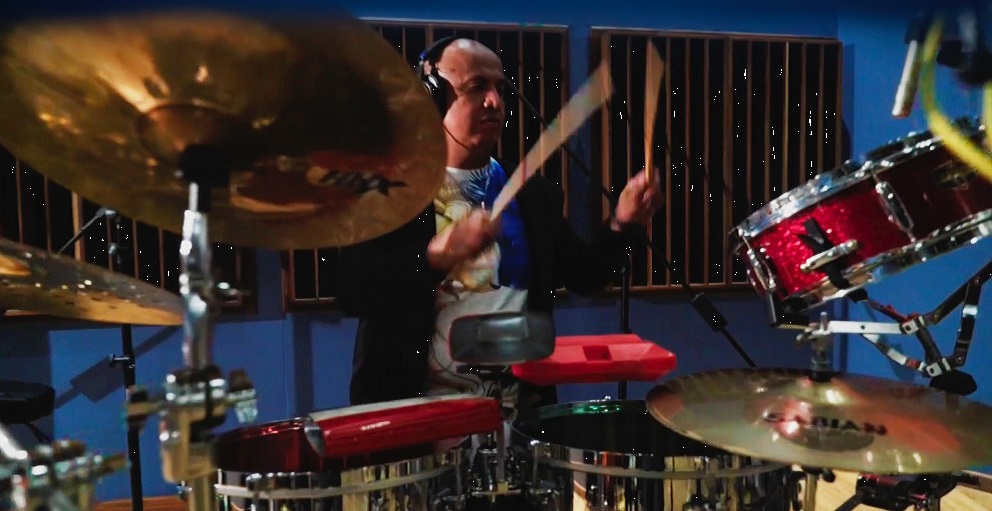
Wilmer Sifontes and his drums

That would be his entrance to the world of music

 “Yes, that was a message -but look at it-, I was a sportsman -I played Volleyball and Basketball-, and my sportsman friends wanted to be musicians, they were all adults and I was always with them as a boy, but they had no musical skills, no instruments, this prompted me to look for someone who would help me get into music, so, through my cousin I met the bassist José Machado

-he belongs to a family of musicians from La Vega-, they were my first teachers, they were always rehearsing and I saw, -a visual teaching – because I was a kid, they had a Cuban Son group called “Los Machados”.

At some point he played with them

 “After a while we started playing with the “Machados”, people were impressed to see such young boys playing, from him I received my first drumsticks, although I wanted to play bongo”.

How was that evolution?

 “In the neighborhood I continued with different groups, then with my cousin we created the “Orquesta La Conclave” and here we developed, we played in all the cultural events”. “We were rehearsing at Catia and Jesús Gómez -one of the singers of Sonero Clásico del Caribe- was always passing by and one day he told us that he needed a timbalero and a pianist, that if we wanted to work with him and we said yes, they played every night at La Caneca, a very famous place that was on Sucre Avenue in Catia”.

“This was my first night job, then I went to Silencio and played in different clubs”.

Wilmer Sifontes in the company of various artists

He is an empirical musician

“I made several attempts to study but… It was a little difficult, there were very rigorous classical schools at the time and I could not enroll, in one I went – La Lamas- together with my cousin, we took the exam and they scratched us (laughs), it is a very nice anecdote, we both sang without knowing the Black Tomasa”.

How does it come to perfection then?

 “I was playing by ear, it wasn’t something formal, as he already works in the nights in the clubs, a friend told me that in the Central University of Venezuela, Alberto Borregales and Orlando Poleo were giving classes, when I arrived I saw a great amount of people and I said: -whoa, here they are not going to accept me with that crowd- by chance, the teacher Borregales, makes a small group due to the little space that there was in the classroom, and at that moment I was going to evaluate them to decide who was left and who was not, fortunately I passed the test and I stayed”.

The experience of the street helped him

“(laughs), yes.”

Formally, Borregales was their teacher

 “Yes, but my first teachers were the Lp, besides the radio, I listened to a program called “Latin America the Cosmic Race”, with Borregales I entered with a greater discipline, he taught me to analyze, he indicated us what to read, what to listen. Later I was with Poleo in Caricuao, then in San Agustín and eventually went to Sarria. In the neighborhood I learned from Carlos “Tabaco” Quintana, he was one of my favorites, he was my inspiration, he was a timbalero with a terrible swing, excellent, in the neighborhood there were many good ones”.

“Apart from them I also learned from; Daniel Milano Mayora, Jesus Milano Palacios, in the Aquiles Nazoa Library -of Caricuao-, the Bigott Foundation and the Grupo Autóctono de la Vega”.

How was that jump from salsa to folklore?

 “I was offered to join the Grupo Autóctono de la Vega, with a great trajectory -it must be 40 or 50 years old by now- there is no role for the amount of people who have passed through there, it is the first group that makes the San Juan demonstrations in Caracas, this is from the Rivas and Ochoa family, it was my first school of folklore, they did dances, sports and then it was dedicated only to folklore music, both have been my teaching, I did not leave either of them”. “Then I played with many other folk and salsa groups, music is one of the most important things in society.”

The Grupo Autóctono de la Vega opened its doors to him, but the Agrupación Entreverao marked his future

“Yes, Entreverao marked my future, let’s say it was a show group, a quartet, its musical structure was very particular, harp, bass, drums and singer, then the percussion was introduced, the percussionist Rhay Herrera was their Director, I got a lot of experience with this group, we had a lot of work and learning, with them we made the first trip to the UK in 92”.

Wilmer Sifontes on stage

How did you decide that London would be your destination, why not another place more tropical, warmer, you did not think that you would face another culture, another language, another climate?

 “I was playing with Erick Franchesky, at that time he had 3 songs stuck in New York, we were going to go four or five of the band, it was almost confirmed, but it didn’t happen, music is like that, sometimes it offers you villas and castles and tomorrow you have nothing.” “I also had other proposals to come to the United Kingdom, the first thing that came out was this, that is, my destiny wanted me to come here”.

“Being out of your country, you learn other things, and that’s one of the particularities of my work, you learn to be more tolerant with people, as I know a lot of folklore from other places has allowed me to arrive, the culture is different to ours, is strong above all if you do not master the language, even if it is the basics, the climate if it was a shock, this is a fridge, (laughs)”.

I can’t imagine the English dancing and listening to Salsa, do they like the genre?

 “In the 90’s Salsa was very fashionable around here, there were many places to play, the acceptance of the music is excellent, when the Salsa boom, everyone wanted to learn to dance it, there are clubs to learn to dance, they have fallen in love with Latin American culture, they have been very receptive to those we have come to work with”. “I am the first Venezuelan to make a legal Folkloric Group in this country”.

Tell us a little about that project; AfroAmerica Project

 He founded it in 2007, it is an official group of typical and traditional Afro-Venezuelan music, people love Latin American music, they receive it very well, the name is due to a magazine that Jesus “Chucho” Garcia made, which speaks of Afro-Cuban music”.

 He continues to work with this project

“Yes, it is a group like Un Solo Pueblo, 90% is Venezuelan music, fulia, tambor, parranda, Calipso, Larense music, there are people who are outside Venezuela and do not know their music, then, we must show what we are, show our culture”.

Photo of Wilmer Sifontes and his instruments

What groups have you worked with in the UK?

 “Any number of bands, when I arrived in the UK I started with a man named Kora, he played an African harp, his band was World Music, his music was a mix of African rhythms and the idea was to play Latin American percussion, as I have the virtue of playing different styles of music work with him”.

“Although I did a lot of Salsa in the early years, the other bands I remember are Conjunto Sabroso, Hussein Zahawy, Tumbaito, Ensamble Criollo, La Papayera, Salsa Nueva, The Voices of Naturale, La Charanga Rivera, Tango Tierra, Ensamble Criollo, Clara Rodríguez, Ola Onabule, AfroAmerica Project, Cubanito, Chacón y Su Timba, Bahareque, Salsa Céltica, Kora Colours, Los Charlys Orchestra, Classico Latino, Bilongo all Stars, among others”.

It’s easy for him to move through different genres

“Yes, I owe this to my country, thanks to all that learning I have been able to do so many things and share with so many people in different parts of the world.”

Thanks to this duality you have worked with and accompanied different artists, which ones do you remember?

“Among those I remember are Herman Olivera, Willie González, Maelo Ruiz, José Mangual Jr, Luisito Carrión, Roberto Torres,Tony Vega, Pedro Brull, Tito Gómez, Tito Nieves, Cano Estremera, Giovanni Hidalgo, Andrés Cepeda, Aterciopelados, Leroy Burges, Rodolfo Arcardi, Henry Fiol, Alci Acosta, and the Bands and groups in Venezuela are; Orquesta la Grande, Catatumbo, Entreverao, Criollo y Sabroso, Orquesta la Raza, and with whom I have participated are; Grupo Cosecha, Grupo Autóctono, Jesús Ruiz, La Gran Compañía and Eric Franchesky -who- among many others”.

Wilmer Sifontes in the studio with his instruments

Celtic Sauce, explain that to me, it sounds a little strange

“It’s a Scottish group that mixes Celtic music with Salsa, with them I started doing substitutions for the timbalero, it’s very nice and interesting, they use the traditional instruments of Scottish Folk and the instruments of Salsa and Latin Jazz, they have also mixed it with pop, with rock, with Indian music, that gives them a unique and characteristic sound to this group, with this group I have traveled the world”.

Another band you have worked with is Sidestepper, very famous for fusing elements of Antillean and Colombian music with electronic music.

“Yes, the band was formed in Colombia, by the English producer Richard Blair, he revolutionized the traditional sounds of the region by mixing them with avant-garde sounds, with them I made an interesting work”.

Tell us about the Salsa Nueva Project

“That is the project of the Venezuelan pianist Elena Riu, is the fusion of Salsa with classical arrangements, you can be listening to a kind of montuno, a tumbao’ on the piano and the minute it disappears and leaves a passage well classic, is Latin in classical music, had original themes, is a theme that is called sal-si-ta -so separated-, had songs by Ruben Blades, Ismael Rivera, very cool.

“She needed a rhythmic element and invited me to accompany them, two months later we recorded an album in a church”.

 How do you feel about conducting one of the most popular bands in London, El Conjunto Sabroso?

“It has given me a lot of foundation and satisfaction, it was founded by Mrs. Luisa Elena Caicedo, since I arrived here I started to work with them, she listened to my references and called me to make substitutions, then I was their director and assistant director”.

Wilmer Sifontes in the studio

With you, the saying goes… No one is a prophet in his own land

“I think that yes, many people have been prophets, but… after death or after many years -laughs-, I don’t know, at this moment it is so difficult to put a definition to this, although I believe that nobody is a prophet in his land”.

From whom or from whom has he taken his musical influence?

 “There are several, the list is long, Carlos “Tabaco” Quintana, Orlando Poleo, Alberto Borregales, Alfredo Villamizar, Orestes Vilato, Tito Puente, Dave Wackel, Ray Barreto, Un Solo Pueblo, Guaco, Paquito de Rivera, Giovanni Hidalgo, Paoli Mejias whom I had the pleasure to meet and accompany, El Trabuco Venezolano, La Fania All Star, Irakere Orchestra, and Puerto Rican and New York Salsa, among many others”.

How has your musical growth been?

 “I have learned a lot from each culture, from the Colombian, Cuban, Argentinean, African, knowing the folklore of other places teaches you a lot, sharing with people from all over makes you grow and learn every day, this is part of the particularity of my profession.”

How do you see the market right now, there is a great variety of music, everyone has their own style, what do you think of all this new, but sometimes not good?

 “I don’t know if it’s taking a turn or not, the truth is that Europe is different, it has another kind of market, which is not that I’m involved, previously there were many festivals, pop and rock are the popular music of this country, but, reggaeton has been influenced by society, it has been injected with a lot of money, apart from the impact of social networks, it reaches more people, social networks have changed the way music is sold in the world.

“People are scared of reggaeton, for me it depends on who is doing it, the market has changed because of the networks, anyone makes music, anyone plagiarizes music from others, we are in a time of change and music does not escape from it.”

What do you think about tributes and copies, is the musician’s creativity running out?

“When people are alive it is always good to highlight their contribution to the world, there will always be a reference to someone, but it is good that people are creative, and there are the brazen ones who shoot the songs and put other lyrics on them, it is like winning people over with other people’s work”.

“The musical genius has not declined, what happens is that there are no promotions, people who do not do commercial work, it costs a little more to reach, fight against the great machines that bet on other things, musical geniuses are born for generations, are counted.”

Wilmer Sifontes and his records

The first production of the Conjunto Sabroso is entitled “Ya tengo lo que quería, realmente”

 “You never get to have everything you want, but at that moment, we had what we wanted, in that production there are arrangements by Naty Martínez”.

Among your personal projects, which ones would stand out and what new proposals do you bring to the public?

“I was the founder of Ensamble Criollo, we still work with this, AfroAmerica Project, Wilmer Sifontes y Su Combo Caribe, Will Sifontes and his Latin Sound and I’m still working with Conjunto Sabroso as musical director, besides, I’m making a solo album, -let’s say it’s called Latin Jazz- it’s a mix of everything, of my musical career, I already have 3 numbers, there will be duets, quartets, guests, the production is going to be called “Handmade”.

If you were to choose between folklore and salsa

“I’ll take them both, they’re different loves, I still do folklore, salsa and fusions.”

What recommendation do you have for the relay generation

“My recommendation is that they prepare themselves, musically, but first of all their idiosyncrasy, we have to have very clear the bases of what we are and develop them with modern techniques and other elements from other countries, to have discipline, today it is easier to have the information, there are more institutes, the internet”.

Wilmer Sifontes
Wilmer Sifontes


By Eling Blanco, ISM Journalist Correspondent, Caracas, Venezuela


  • « Go to Previous Page
  • Page 1
  • Interim pages omitted …
  • Page 29
  • Page 30
  • Page 31
  • Page 32
  • Page 33
  • Interim pages omitted …
  • Page 51
  • Go to Next Page »

International Salsa Magazine (ISM) is a monthly publication about Salsa activities around the world, that has been publishing since 2007. It is a world network of volunteers coordinated by ISM Magazine. We are working to strengthen all the events by working together.