• Skip to primary navigation
  • Skip to main content

International Salsa Magazine

  • HOME
  • Previous editions
    • 2026
      • ISM / May 2026
      • ISM / April 2026
      • ISM / March 2026
      • ISM / February 2026
      • ISM / January 2026
    • 2025
      • ISM / December 2025
      • ISM / November 2025
      • ISM / October 2025
      • ISM / September 2025
      • ISM / August 2025
      • ISM / July 2025
      • ISM / June 2025
      • ISM / May2025
      • ISM / April 2025
      • ISM / March 2025
      • ISM / February 2025
      • ISM / January 2025
    • 2024
      • ISM / December 2024
      • ISM / November 2024
      • ISM / October 2024
      • ISM / September 2024
      • ISM / August 2024
      • ISM / July 2024
      • ISM / June 2024
      • ISM / May 2024
      • ISM / April 2024
      • ISM / March 2024
      • ISM / February 2024
      • ISM / January 2024
    • 2023
      • ISM / December 2023
      • ISM / November 2023
      • ISM / October 2023
      • ISM – September 2023
      • ISM – August 2023
      • ISM July 2023
      • ISM Edition June 2023
      • ISM – May 2023
      • ISM April 2023
      • ISM March 2023
      • ISM February 2023
      • ISM January 2023
    • 2022
      • ISM December 2022
      • ISM November 2022
      • ISM October 2022
      • ISM September 2022
      • ISM August 2022
      • ISM July 2022
      • ISM June 2022
      • ISM May 2022
      • ISM February 2022
      • ISM January 2022
    • 2021
      • ISM December 2021
      • ISM November 2021
      • ISM October – 2021
      • ISM September 2021
      • ISM August 2021
      • ISM July 2021
      • ISM May 2021
      • ISM April 2021
      • ISM June 2021
      • ISM March 2021
      • ISM February 2021
      • ISM January 2021
    • 2020
      • ISM December 2020
      • ISM November 2020
      • ISM October 2020
      • ISM September 2020
      • ISM August 2020
      • ISM July 2020
      • ISM June 2020
      • ISM May 2020
      • ISM April 2020
      • ISM March 2020
      • ISM February 2020
      • ISM January 2020
    • 2019
      • ISM December 2019
      • ISM November 2019
      • ISM October 2019
      • ISM Septembre 2019
      • ISM August 2019
      • ISM July 2019
      • ISM June 2019
    • 2016
      • ISM December 2016
  • Spanish
  • Download Salsa App
    • Android
    • Apple

Search Results for: Afro Latin Jazz

Gerardo Rosales meets Orlando Poleo, who invites him to study Afro-Caribbean percussion in Caracas

Gerardo Rosales was born on July 6, 1964, in Caracas, Venezuela. He has been living in the Netherlands since 1993.

At the age of 8 he started studying piano and at the same time he became interested in playing congas and bongo.

In 1977, at the age of 13, he met Orlando Poleo, who invited him to study Afro-Caribbean percussion at the “Taller de Arte” in the Sarría neighborhood in his hometown Caracas.

From 1977 to 1980, he studied congas and bongo with Orlando Poleo, and timbales with Alberto Borregales.

In 1985, he studies Afro-Venezuelan percussion with Alexander Livinali at the “Fundación Bigott”.

Gerardo Rosales Mr. Tambo

In 1987 Gerardo starts his career with very important figures such as: Soledad Bravo, Cecilia Todd, Canelita Medina, Alberto Naranjo y el Trabuco Venezolano, Maria Rivas, Joe Ruiz, Ilan Chester, Orquesta Café, Trina Medina y Yarake, Victor Cuica among others.

At the same time, Gerardo began his own orchestra called “Salsa 70” and with it he toured the neighborhoods, theaters and night spots of the capital.

In 1992, he receives an invitation to participate in the Expo Sevilla in Spain, with the group ‘Caracas Son 7’.

From that moment on he decided to settle in Europe. In 1993, he releases his first CD “Gerardo Rosales y su Salsa Pa’lante”, in Spain, which was recorded in Venezuela.

At the same time, Gerardo started his own orchestra called "Salsa 70" and with it he toured the neighborhoods, theaters and nightclubs of the capital.
In 1992, he received an invitation to participate in the Expo Sevilla in Spain, with the group “Caracas Son 7”.

From this moment on he is invited to work in France with Alfredo Rodriguez and Orlando Poleo; in Germany with Conexión Latina and Nicky Marrero and in Holland with Saskia Laroo, Jose Avila y su Quimbombo and Cedric Dandaree. In 1995, Paquito D’Rivera invited him to participate in the recording of the CD “Bebo rides again” together with the legendary Cuban pianist Bebo Valdés.

From 1996 until now, Gerardo Rosales has been touring Europe with his own salsa and Latin jazz projects. Gerardo has earned the respect and admiration of the public through his concerts and recordings, managing to spread and project rhythms from Venezuela, Cuba, Puerto Rico, Colombia, Peru, Curaçao, Suriname and the Caribbean.

In 2002, he produced the music for the film “Madamme Jeanette” directed by Paula van der Oest which was nominated for an Oscar as a Dutch film.

These are the titles of his CDs: “Salsa pa lante” (1992), “Venezuela Sonora” (1996), “Señor Tambó” (1998), “El Venezolano” (1999), “Rítmico & Pianístico” (2001), “La Salsa es mi Vida” (2001), Tribute to Fania all stars (2003), Charanga La Crisis “Salsa Antigua” (2005), Mongomania “Tribute to Mongo Santamaria.

Gerardo Rosales has accompanied on tours, recordings and performances in Europe artists such as:

Dee Dee Bridgewater, Benny Bailey, Paquito D Rivera, Bebo Valdés, Toots Thielemans, Jimmy Bosch, Juan Pablo Torres, Herman Olivera, Oscar D’León, José Alberto “El Canario”, Andy Montañéz, Meñique, Edy Martínez, Carlos “Patato” Valdés, Conexión Latina, Orlando Valle “Maraca”, Alfredo Rodríguez, Armando Peraza, Luisito Quintero, Robert Quintero, Ramón Valle, Larry Harlow, Adalberto Santiago, Frankie Vázquez, Oscar Hernandez, Africando, Chamaco Rivera, Luisito Carrion, Jorge Herrera, Edgar Dolor, Dorance Lorza, Ajo Porro, Luisito Rosario, David Cada and Tito Allen.

Discography by Gerardo Rosales:

Gerardo Rosales has accompanied artists on tours, recordings and performances in Europe
Discography by Gerardo Rosales:

2019 Gerardo Rosales “Cachandera and Singapore Vibes” (Single)

2016 Gerardo Rosales “Salsa Vintage” (Download – CD )

2014 Gerardo Rosales “Son Del Sofa” (Single) ITunes

2013 Gerardo Rosales “Síguelo” (CD)

2011 Gerardo Rosales “Chano Pozo’s Music” (CD)

2011 Gerardo Rosales “30 Aniversario” (CD)

2010 Cachao Sounds “La Descarga Continúa” (CD)

2010 Gerardo Rosales “Buscando Chamba” (CD)

2009 Venezuelan Masters Orchestra “Toros y Salsa” (CD)

2008 Gerardo Rosales “Salsa Mundial” (CD)

2007 Our Latin Groove “Bringin’ it All On Back” (CD)

2005 Gerardo Rosales “Mongomanía” (CD)

2005 Charanga La Crisis “Salsa Antigua” (CD)

2004 Gerardo Rosales “Tribute to Fania” (CD)

2001 Gerardo Rosales “La Salsa es mi Vida” (CD)

2001 Gerardo Rosales & Edy Martínez “Rítmico y Pianístico” (CD)

1999 Gerardo Rosales “El Venezolano” (CD)

1998 Gerardo Rosales “Señor Tambó” (CD)

1996 Gerardo Rosales “Venezuela Sonora” (CD)

1992 Gerardo Rosales “Salsa Pa’lante de Venezuela” (CD)

1991 Gerardo Rosales “Salsa Pa’Lante de Venezuela” (33 RPM Vinyl)

Discography of Gerardo Rosales with other artists:

Orquesta Cafe “Criollisima” 1987 (Fama) Venezuela ( Salsa )
Joe Ruiz – Javier Plaza – Jose Torres – Gerardo Rosales

Bebo Valdes “Rides Again” 1994 ( Messidor) Germany ( Latin Jazz )
Bebo Valdes – Paquito D Rivera – Patato Valdes – Amadito Valdes – Gerardo Rosales

Conexion Latina – “La Conexion” 1996 (Enja) Germany ( Salsa )
Rudi Fuesers – Leslie Lopez- Anthony Martinez – Nicky Marrero – Gerardo Rosales

David Rohschild “Looking Up” 1997 (Via) The Netherlands ( Salsa )
David Rothschild – Adalberto Santiago – Banjamin Herman – Gerardo Rosales

Leslie Lopez “Bomba Moderna” 1999 (Buitenkunst) The Netherlands (Latin Jazz)
Leslie Lopez – Ramon Valle – Joe Rivera – Nils Fischer – Gerardo Rosales

The Rosemberg Trio “Suenos Gitanos” 2001 (Polydor) The Netherlands ( Latin )
Rosemberg Trio – Toots Thielemans – Leonardo Amuedo – Gerardo Rosales

Ronal Snijders “Bijlmerjazz 2004 (Independent) The Netherlands (Jazz)
Ronal Snijders – Randal Corsen – Jesse van Ruller – Gerardo Rosales

Cubop City Big Band “Arsenio 2004 (Tam Tam) 2004 The Netherlands (Cuban)
Lucas van Merwijjk – Edy Martinez – Nelson Gonzalez – Gerardo Rosales

Drums United “World of Rhythm” 2006 (Tam Tam) 2004 The Netherlands (World Music)
Lucas van Merwijk – Nils Fischer – Aly N ‘ Diaye Rose – Gerardo Rosales

Samba Salad – Metropol Orkest “Live Vredenburg” 2006 The Netherlands (World Music)
Herman Link – Dick Bakker – Maurice Luttikhuis – Rita Iny – Gerardo Rosales

Aquilez Baez “ La Patilla” 2007 (Cacao) Venezuela (Latin Jazz)
Aquilez Baez – Anat Cochen – Huascar Barradas – Diego Alvarez – Gerardo Rosales

Maria Catharina “Obsecion” 2010 (Independent) The Netherlands (Jazz)
Maria Catharina – Adinda Meertins – Thomas Bottcher – Marc Bischoff – Gerardo Rosales

Masalsa “Resurreccion” 2012 (Independent) The Netherlands (Salsa)
Soeshiel Sharma – Ray de La Paz – Marcos Bermudez – Cachito Vaz – Gerardo Rosales

Izaline Calister “Kandela” 2012 (Coast to Coast) The Netherlands (Latin)
Izaline Calister – Yumarya – Vernon Chatlein – Larc Alban Lotz – Gerardo Rosales

Africando “Viva Africando” 2013 (Sterms Music) France (Salsa)
Boncana Maiga – Oscar Hernandez – Doug Beavers – Luisito Quintero – Gerardo Rosales

Mezcolanza “Headbanger” 2015 (O.A.P Records) The Netherlands (Jazz)
Peter Wenk – Chistof May – David Barker – Mick Paauwe – Gerardo Rosales

Tango Extremo “ Havana” 2015 (JWA) The Netherlands (Latin)
Ben van den Dungen – Rob van Kreeveld – Tanya Schaap – Gerardo Rosales

Orquesta La Potente “ Potente “ 2018 (Independent) Colombia (Salsa)

Coco Ramirez – Guarnizo – Gerardo Rosales

Barry Hay & JB Meijers (Universal Music Group) 2019 The Netherlands ( Pop)

Barry Hay – JB Meijers – Gerardo Rosales.

Gerardo Rosales

( Salsa – Latin – Jazz – Cuban )

Bands – Percussion Workshops – DJ – Percussionist – Shows

+31627862001

[email protected]

The Netherlands

Gerardo Rosales was born on July 6, 1964, in Caracas, Venezuela. He has been living in the Netherlands since 1993
Gerardo Rosales meets Orlando Poleo, who invites him to study Afro-Caribbean percussion in Caracas

José Madera Timbal de Machito and his Afro-Cubans, Tito Puente, Mambo Legends Orchestra and Fania Record Co.

The musician, arranger and composer who has yet to find the time to record and write music for some of the most influential bands in existence.

José Madera, Timbal of Machito and his Afro-Cubans, Tito Puente & Fania All-Stars
osé Madera, born on September 30th

One might think that working for Tito Puente’s famous band can keep a percussionist busy enough.

But musician, arranger and composer Jose Madera had found time to record and write music for some of the most influential bands in the world.

Before joining Tito Puente over 35 years ago, Madera played for four years with the famous Machito Orchestra and recorded with many R&B artists (including James Brown, Diana Ross, David Sanborn and Aztec Two – Step).

Jose musical director of Mambo Legends Orchestra

As an arranger for Fania Records, he participated in several commercial hits, and over the years has composed music for Fania All-Stars, Larry Harlow, Johnny Pacheco, Willie Colón and Celia Cruz.

As an arranger for Fania Records, he participated in several commercial hits, and over the years has composed music for Fania All-Stars, Larry Harlow, Johnny Pacheco, Willie Colón and Celia Cruz.
Jose musical director of Mambo Legends Orchestra

Despite having recorded some 75 albums in 20 years, as well as numerous radio jingles and movie soundtracks, Madera still had time for his other career: for 15 years he worked as a teacher and director at a privately funded performing arts high school in New York City.

Jose has written many arrangements for countless commercial Latino artists and has also recorded or worked with many of them.

Some of them include: Larry Harlow, Johnny Pacheco, Chico O’Farill, the Lincoln Center Afro-Cuban Jazz Orchestra, Celia Cruz, Tito Rodriguez, Fania All-Stars, Willie Colon, Joe Farrell, Machito, Graciela, Mario Bauzá, Willie Rosario, Earl Klughand, Eddie Palmieri, to name a few. Jose also worked and recorded with many pop, R&B and jazz artists.

Some of them include Diana Ross, James Brown, Dizzy Gillespie, Paquito D’Rivera, George Benson and Lionel Hampton, among others.

Jose has participated in over 250 recordings. He has worked on several television show soundtracks, including The Simpsons, and several film soundtracks, including The Mambo Kings Play Songs of Love, where he was the musical arranger and conductor for the Tito Puente film segment.

Jose also taught the art of playing Latin percussion instruments at BOYS HARBOR in New York City for 28 years.

Jose has done and continues to do musical clinics around the country at various schools.

He was the musical director of the Latin Giants of Jazz from 2001 to 2009.

Jose continues his musical direction with Mambo Legends Orchestra, a band composed of former members of the Tito Puente Orchestra, which is dedicated to the execution of new and creative Latin and Latin Jazz concepts, as well as some of the music of Machito, Tito Rodriguez and Tito Puente.

He was the musical director of the Latin Giants of Jazz from 2001 to 2009.
José has participated in more than 250 recordings


Jose has personally recreated and re-arranged much of the music that the bands performed during the heyday of the mambo at the Palladium Ballroom in New York City, which many critics consider to be the “Greatest and Most Innovative Era” in the history of Latin music.

Madera’s father, Jose “Pin” Madera, a saxophonist, was one of the original members of the Machito Afrocubans.

The young Jose was influenced by Machito’s drummer (“the best Latin Big Band drummer I’ve ever heard”). He was later influenced by José Mangual and Tito Puente himself.

Madera's father, Jose "Pin" Madera, saxophonist, was one of the original members of the Machito Afrocubans
José Madera was influenced by José Mangual Padre and Tito Puente himself

Home

Bandleader and conga player Tony Rosa tells us how he built his career

The great percussionist, conga player, and six-time Grammy winner Tony Rosa has honored us with his presence for this February edition, which is full of many interesting things despite being a very short month.

Like so many other artists of this kind, he started very young in this world. Although his musical roots were not so Latin or folkloric, as is common, he ended up falling in love with one of his great passions today: Latin music.

Tony Rosa with his Grammy
Tony Rosa as part of the Latin Grammy Arturo O’Farrill & The Chico O’Farrill Afro-Cuban Jazz Orchestra won

Tony’s beginnings in music

Tony started playing the tumbadora at the age of just 10 in New York, his native city, but when he turned 12, he moved to Los Angeles, California, which is where his formal career as a musician began. It was in Los Angeles that he learned to play percussion, more specifically the conga, in the streets of this new city that welcomed him and his family.

One interesting thing about this is that absolutely everything he knows about instruments he learned by himself, indicating that he did not attend any institution that provided formal training in music. At that time, as a 15-year-old boy, he was already playing for different orchestras and touring with them.

Rock phase

Before becoming integrally involved with salsa, Tony played with some rock bands such as Chicanos. In fact, rock is a genre he still likes very much, and several of his favorite groups are rock bands such as Queen and Santana. However, that phase did not last for ever, and it was not long before, at the age of 16 or 17, he played with orchestras such as Azuquita Y Su Melao. 

In 1997, he moved back to his native New York, where he started collaborating with Conjunto Libre and other groups of salsa and Latin jazz, a genre that was also making him curious.

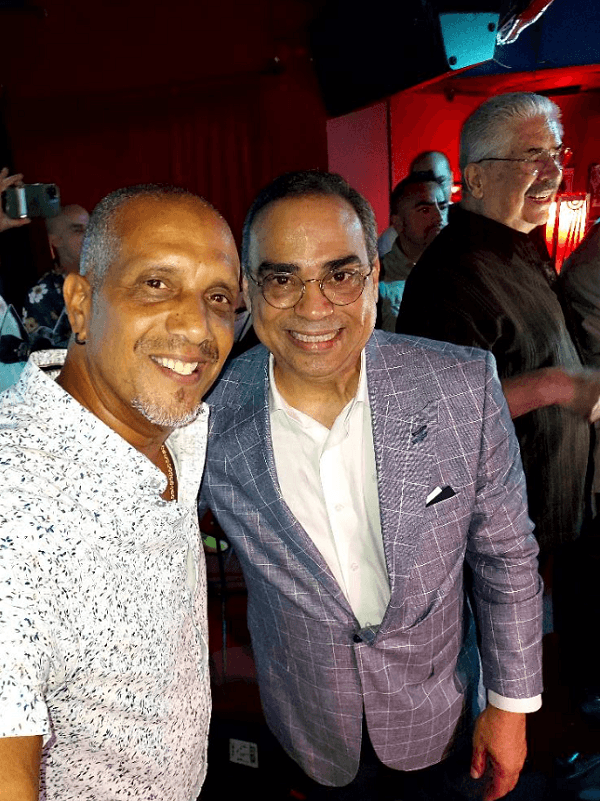
Tony and Gilberto
Tony Rosa and ”The Salsa Gentleman” Gilberto Santa Rosa

Time with the Afro Latin Jazz Orchestra and Arturo O’Farrill

In 2008, while playing with Manny Oquendo, Tony met orchestra leader, composer, and pianist Arturo O’Farrill, who, after witnessing the great talent he had, asked whether he would be interested in joining his Afro Latin Jazz Orchestra, and he said yes. In total, he spent about nine years playing with O’Farrill and it was over five years ago. In fact, when asked if he knew why the Afro Latin Jazz Orchestra would no longer be playing at Birdland, he said he knew absolutely nothing about it.

After that, the artist found the right time to create his own quintet which he named Tony Rosa’s Afrojazz and with which he has songs such as “Mambo Mongo,” “Nothing Personal,” “Alfie’s Theme,” “Isn’t She Lovely,” and “Rica Mulata.”

Tony, Eddie, and Adan
Tony Rosa, legendary pianist Eddie Palmieri, and producer and arranger Adan Pérez

However, he assures us that his affection for O’Farrill and the orchestra remains intact, and they even played together again in a tribute to Andy González at Saint Peter’s Church in Manhattan. He is also grateful for all the experience he gained there, otherwise he would not have the project he currently manages.

Projects apart from Tony Rosa’s Afrojazz

In addition to his work he does with his Latin jazz quintet, Tony is also recording with another musical group called Los Amigos, with which he recently released an album.

And about tours and performances at arenas and well-known venues, he says he does not know yet what he will be doing in the coming months. However, he expects things to start moving as the year progresses.

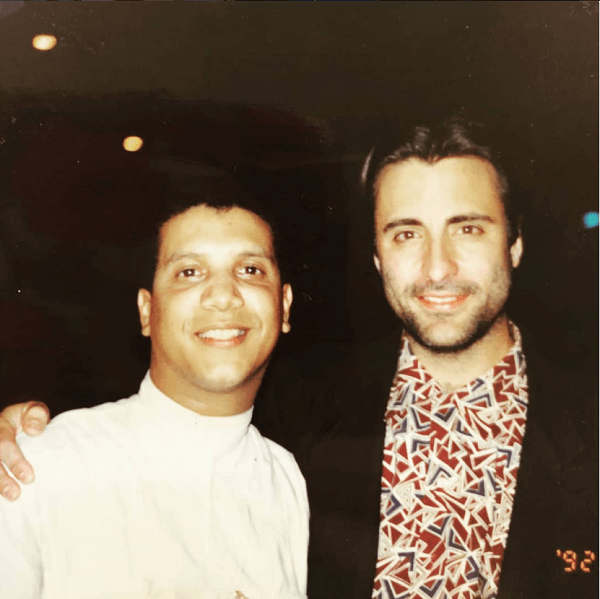
Tony and Andy
Tony Rosa and Cuban-American actor Andy García in 1992

Read also: Bandleader Arturo O’Farrill leaves behind Birdland to look for other opportunities

Bandleader Arturo O’Farrill leaves behind Birdland to look for other opportunities

After making some room in his packed schedule, we finally managed to meet with bandleader, composer, and pianist Arturo O’Farrill, who after arriving in Richmond, Virginia, greeted us and talked about various interesting topics related to his long and successful career.

Of course, we did not miss the opportunity to ask if it is true that he and his orchestra will drop out of performing at Birdland as they had done over the past 29 years and what other projects in door they have from now on.

Arturo O'Farrill posing for the camera
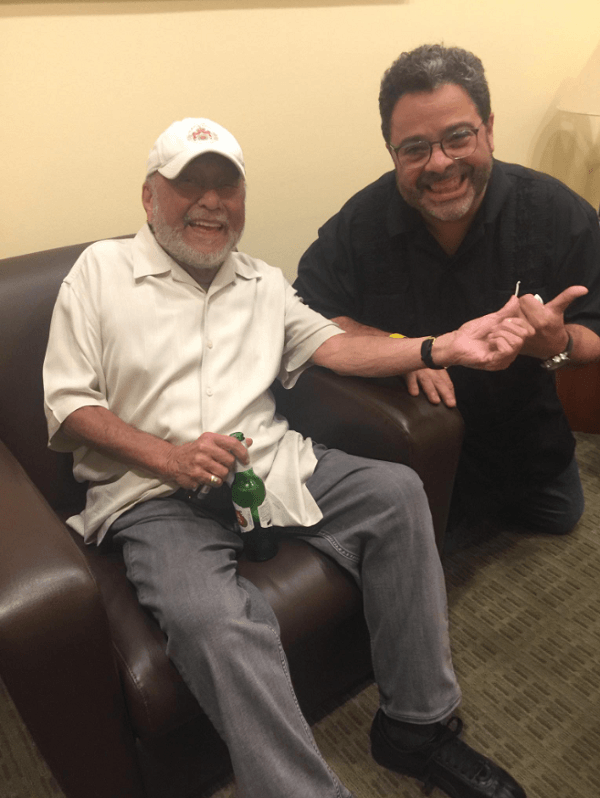
Bandleader and pianist Arturo O’Farrill posing for the camera

What was his childhood like with two artist parents?

Arturo is the son of Cuban conductor, arranger, and musician Chico O’Farrill and Mexican singer Lupe Valero, so it is natural that he would show an interest in art like them. In addition, being the first male child in the family, there was lots of expectations on him and anything he could get, so he was enrolled in piano lessons and fortunately he had good aptitude for the instrument and was very present at his father’s parties and events with many other artists. 

So, he was for a time studying music on Saturdays until he discovered a Miles Davis album in his living room. He says that listening to it changed his life forever, and the song that most marked him was “Seven Steps to Heaven.” At that time, he knew he was going to become a professional musician by choice, not because his father had decided it for him.

He decided to become the best pianist he could be, and because of how busy Chico was with his own career, Arturo studied jazz alongside other young musicians. Some time later, he met bassist Andy González, who finally made him understand his Latin roots and encouraged him to study artists such as Charlie Palmieri and Eddie Palmieri.

“Precisely thanks to Andy, now I understand that our music is a treasure of the Afro-Latin diaspora, and the music my father and so many others of his generation made, for me, is the most incredible thing in the world,” said Arturo.

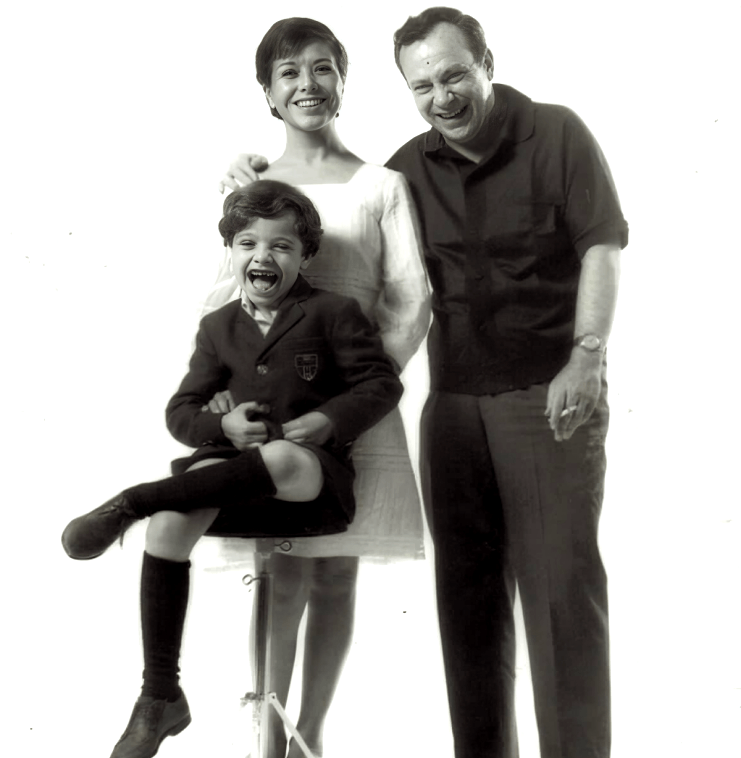
Arturo O'Farrill 02 2026
Arturo O’Farrill with his parents Lupe Valero and Chico O’Farrill

Arturo’s musical education

The artist studied at several top academic institutions, including LaGuardia High School of Music and Art, the Manhattan School of Music, the Brooklyn College Conservatory of Music, and the Aaron Copland School of Music. He clarified that he did not graduate from the Manhattan School of Music, but he does recognize that it was there that he began to truly understand music.

In the case of LaGuardia High School for Music and Art, his parents had to withdraw him because he never attended classes, as he was not interested in history and mathematics, but only in music. He was then enrolled in City As School and got his GED (General Educational Development). Later, at Brooklyn College, he met Professor Teófilo Ruiz, who taught him the importance of forging a social and political conscience, which had a profound impact on his development as a professional and a person. 

While working as a musician, Arturo earned his bachelor’s and master’s degrees at Queens College. He spent some time playing, studying, and teaching until Wynton Marsalis, artistic director of the jazz at Lincoln Center program, asked him to create an orchestra for the venue, which they called the Lincoln Center Jazz Orchestra. He worked there for five years until he knew he had to continue his career elsewhere.

Chico O’Farrill Afro-Cuban Jazz Orchestra

After playing along with the great jazz star Carla Bley and Machito, Arturo finally joined his father’s orchestra, the Chico O’Farrill Afro-Cuban Jazz Orchestra, at a time when they were creating many jingles for commercials. When the world was rediscovering Chico, his health was unfortunately in bad shape, so his son stood by his side to support him any way he could.

In the end, he had no other option than taking charge and, together with the rest of the musicians, recording the band’s last three albums. One thing that he had very clear when he took up this challenge was that he did not want to compete with his dad or be constantly compared to him, though he knew it was inevitable. In fact, after doing a concert with him, when he came home, he found a voicemail from someone saying: “You don’t have a fortieth of your father’s talent. In fact, I’ll see you picking through garbage.”

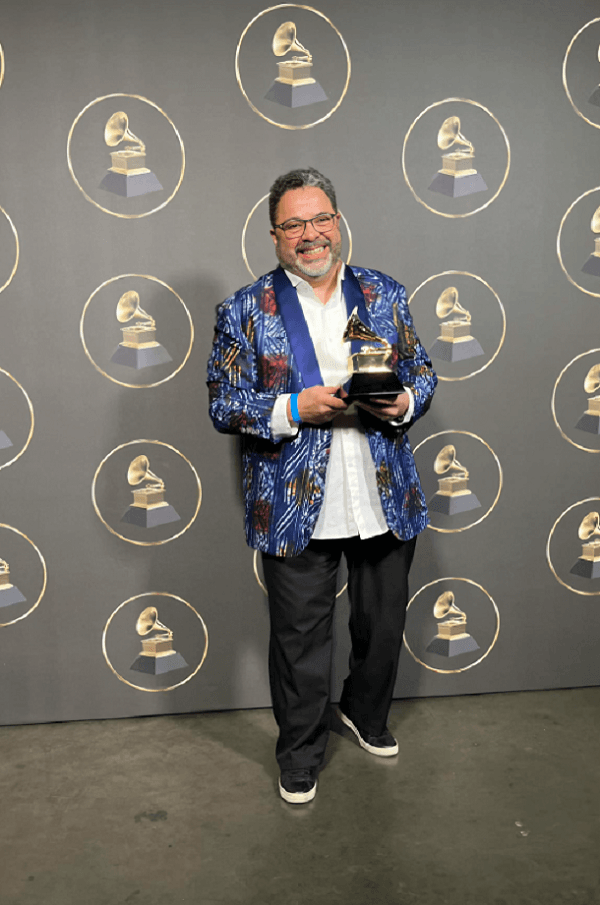
Arturo O'Farrill with the Grammy
Arturo O’Farrill posing with the Grammy he won in 2023

Despite the hurtful comments, it was liberating for him to hear it, since someone had the stupidity to compare him with his father when it did not make sense. That pushed him to use his own compositions in the orchestra, continue creating new music, and have a completely different path from Chico O’Farrill. Unknowingly, the man who insulted him had helped him throw off the mental and artistic chains that bound him by fear of being compared.

Afro Latin Jazz Orchestra

Although Arturo was sorry for leaving Chico’s orchestra, he knew he had to make many changes. One of them was that he wanted intergenerational musicians, more races and nationalities. This also led him to change the name of “Afro-Cuban Jazz Orchestra” to “Afro Latin Jazz Orchestra” because, from his point of view, Latin music must include not only Cuba, but also countries such as Puerto Rico, Colombia, Bolivia, Peru, Mexico, and many others.

Despite these changes, Arturo and his orchestra kept playing every Sunday at the prestigious Birdland jazz club, something they had been doing since 1997, before the death of Chico O’Farrill. However, 29 years after that important proposal, Arturo announced on social networks that he would not perform there anymore, but he was very grateful to the staff and management of Birdland for the opportunity they gave him over so many years.

When we wanted to know the reasons for this decision, the artist just told us that this was largely due to “creative and financial disagreements that were making the working environment very toxic,” so the best thing was to cut to the chase and seek pastures new. He assures us that his words do not want to disrespect anyone and that he wishes the best for both the club and its staff, who always treated him and his musicians the best. 

Eddie and Arturo
Eddie Palmieri and Arturo O’Farrill some years ago

Afro-Latin Jazz Alliance and Casa Belongó

The musician also wanted to talk about his foundation Afro Latin Jazz Alliance, which seeks to educate, play, and preserve. The project has grown so much that today it has 49 teachers, 21 public schools, and a preprofessional program known as “The Fat Cats,” which aims to help young musicians join an orchestra and exploit their talent as never before. 

After several formal requests, New York City finally agreed to construct a building with affordable apartments for residents of East Harlem and the first floors are destined to house Casa Belongó. These spaces will include a theater, a jazz club, a healthy restaurant, rehearsal rooms, classrooms, and much more. “Imagine that the power of our Latino community will physically change New York City history,” she concluded on this topic. 

Read also: Music reviewer and photojournalist Ricky Ricardo describes his work from the last 35 years

Yerba Buena Gardens Festival 2017 in San Francisco

North America / USA / San Francisco

2017 Yerba Buena Gardens Festival (YBG Festival) proudly announces the lineup for its:

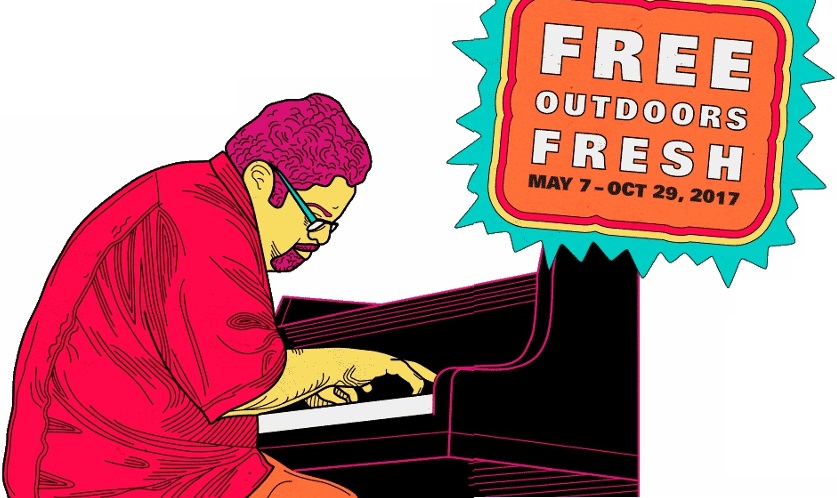
2017 Yerba Buena Gardens Festival - Free out doors fresh
2017 Yerba Buena Gardens Festival – Free out doors fresh

17th Season, which continues its tradition of bringing entertainment to downtown in San Francisco. May 7 – Oct 29, 2017, 760 Howard St. San Francisco, CA 94103

To kick off the new season, the Grammy-winning Arturo O’Farrill & the Afro Latin Jazz Orchestra + VNote Ensemble will open the Festival on Sunday, May 7, the first of this year’s 100 admission-free events. The very popular series Let’s Go Salsa@Jessie also will be present with the best artists. YGB Festival offers you free music, theater, circus, dance, poetry, and children’s programs with artists from the Bay Area and around the world.

Named one of the Best Urban Green Spaces in North America by USA Today, Yerba Buena Gardens is a world-renowned cultural destination for Bay Area residents, families, workers, and tourists alike. Yerba Buena Gardens is located between Mission Street and Howard Street and 3rd and 4th Streets in downtown San Francisco. Visit www.ybgfestival.org or call (415) 543-1718 for more information and complete 17th Season schedule.

Yerba Buena Festival’s exciting 17th Season promises an exceptional array of talent to please all audiences.

YBG Festival Executive/Artistic Director Linda Lucero says, “Everyone needs the spiritual sustenance, inspiration, and communal experience that only live performance offers. This summer, you’ll find your joy at Yerba Buena Gardens Festival!”

2017 Yerba Buena Gardens Festival

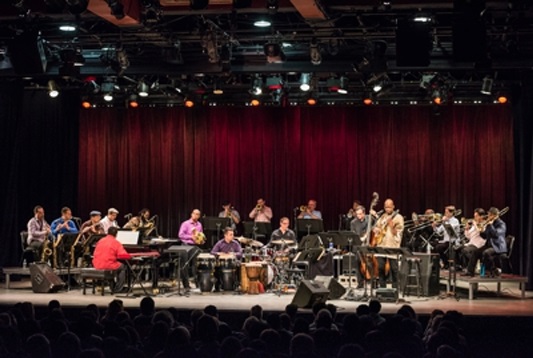
The Grammy-award winning Afro Latin Jazz Orchestra (ALJO), led by pianist, composer, and director Arturo O’Farrill, kicks off the Festival on Sunday, May 7 at 1:00pm. The ALJO brings together the drama of big band jazz, the culture of Latin music, and the virtuosity of eighteen of the world’s most accomplished solo musicians. Twelve years of critically acclaimed performances internationally have firmly established the ALJO as the standard-bearer for creative interpretation of Latin jazz greats such as Tito Puente, Frank “Machito” Grillo, and Chico O’Farrill, as well as the driving force behind new commissions from Latin music’s most talented composers and arrangers.

Arturo O’Farrill & the Afro Latin Jazz Orchestra + VNote Ensemble

Yerba Buena Gardens Festival includes the very popular Let’s Go Salsa@Jessie dance series, the family-friendly Children’s Series, Poetic Tuesdays with Litquake, and Thursday Lunchtime Concerts. Each and every week and weekend, the Festival has curated a lineup of musicians, dancers, poets, and actors from around the world including the Bay Area’s Kitka Women’s Vocal Ensemble on May 13, Brass Convergence II: Protest Brass on May 20, Richard Howell & Sudden Changes on May 27, NEA Heritage Fellows Michael Doucet and Tom Rigney with Flambeau on June 3, Festival-commissioned YBG ChoreoFest, a three-day site-

specific dance festival featuring 9 contemporary dance companies on June 9–11, NYC’s own M.A.K.U. Soundsystem on June 17, Circus Bella on June 23–24, AXIS Dance Company’s The Garden Project on July 1–2, Festival-commissioned Theatre Rhinoceros’ Lear! on July 7–9, Ensemble Mik Nawooj‘s premiere of Death Become Love on July 15, San Francisco Mime Troupe on July 23, SF Uke Jam Summer Uke-splosion! with Ukulenny and Cynthia Lin on July 29, Daymé Arocena + Latin Jazz Youth Ensemble on August 19, Paula West on August 26, Kugelplex with special guest Linda Tillery on September 2, Alsarah & the Nubatones on September 9, and Brooklyn Raga Massive with Classical Revolution performing Terry Riley’s In C on September 16.

Yerba Buena Gardens concert

The Festival closes with the 17th Annual Halloween Hoopla Sunday, October 29.

The popular series Let’s Go Salsa@Jessie, the open-air salsa dance party in Jessie Square (near the Contemporary Jewish Museum), takes place on the third Thursday of each month from May to September from 6:00 pm – 7:30 pm. Performers are Changuí Majadero on May 18, La Mixta Criolla on June 15, Somos el Son on July 20, Bobi Céspedes on August 17, and the Festival return of Ricardo Lemvo & Makina Loca on September 21.

The Festival offers the delightful Children’s Series, interactive performances specially designed for kids and families every Friday from June to August in Yerba Buena Gardens. The series presents performances by kid favorites: Caterpillar Puppets, Ka-Hon, Red Panda Acrobats, Pi Clowns, Venezuelan Music Project, Crosspulse, Unique Derique, and Non Stop Bhangra. The series ends with the wildly popular 17th Annual Halloween Hoopla on Sunday, October 29.

Yerba Buena Gardens Festival Commissions and Special Projects have commissioned the following projects to celebrate in June: Yerba Buena Gardens ChoreoFest, a brand new 3-day dance festival, June 9-11. Playwright/director/actor John Fisher writes and directs Lear!, a site-specific satirical musical based on Shakespeare’s King Lear for Theatre Rhinoceros, the nation’s, and likely the world’s, first queer theater on July 7-9 and Circus Bella on June 23 and 24. Conceived and directed by Abigail Munn and Joel Baker for Circus Bella, the show will feature high level, local and guest circus artists and includes static trapeze, rope walking, juggling, contortion, unicycle, original clowning, acrobatics, and more.

2017 Yerba Buena Gardens Festival - Photo
2017 Yerba Buena Gardens Festival – Photo

The Yerba Buena Gardens Festival also co-presents a series of admission-free outdoor programs with Union Square Live to be announced in April.

  • « Go to Previous Page
  • Page 1
  • Interim pages omitted …
  • Page 8
  • Page 9
  • Page 10
  • Page 11
  • Page 12
  • Interim pages omitted …
  • Page 37
  • Go to Next Page »

International Salsa Magazine (ISM) is a monthly publication about Salsa activities around the world, that has been publishing since 2007. It is a world network of volunteers coordinated by ISM Magazine. We are working to strengthen all the events by working together.