• Skip to primary navigation
  • Skip to main content

International Salsa Magazine

  • HOME
  • Previous editions
    • 2026
      • ISM / May 2026
      • ISM / April 2026
      • ISM / March 2026
      • ISM / February 2026
      • ISM / January 2026
    • 2025
      • ISM / December 2025
      • ISM / November 2025
      • ISM / October 2025
      • ISM / September 2025
      • ISM / August 2025
      • ISM / July 2025
      • ISM / June 2025
      • ISM / May2025
      • ISM / April 2025
      • ISM / March 2025
      • ISM / February 2025
      • ISM / January 2025
    • 2024
      • ISM / December 2024
      • ISM / November 2024
      • ISM / October 2024
      • ISM / September 2024
      • ISM / August 2024
      • ISM / July 2024
      • ISM / June 2024
      • ISM / May 2024
      • ISM / April 2024
      • ISM / March 2024
      • ISM / February 2024
      • ISM / January 2024
    • 2023
      • ISM / December 2023
      • ISM / November 2023
      • ISM / October 2023
      • ISM – September 2023
      • ISM – August 2023
      • ISM July 2023
      • ISM Edition June 2023
      • ISM – May 2023
      • ISM April 2023
      • ISM March 2023
      • ISM February 2023
      • ISM January 2023
    • 2022
      • ISM December 2022
      • ISM November 2022
      • ISM October 2022
      • ISM September 2022
      • ISM August 2022
      • ISM July 2022
      • ISM June 2022
      • ISM May 2022
      • ISM February 2022
      • ISM January 2022
    • 2021
      • ISM December 2021
      • ISM November 2021
      • ISM October – 2021
      • ISM September 2021
      • ISM August 2021
      • ISM July 2021
      • ISM May 2021
      • ISM April 2021
      • ISM June 2021
      • ISM March 2021
      • ISM February 2021
      • ISM January 2021
    • 2020
      • ISM December 2020
      • ISM November 2020
      • ISM October 2020
      • ISM September 2020
      • ISM August 2020
      • ISM July 2020
      • ISM June 2020
      • ISM May 2020
      • ISM April 2020
      • ISM March 2020
      • ISM February 2020
      • ISM January 2020
    • 2019
      • ISM December 2019
      • ISM November 2019
      • ISM October 2019
      • ISM Septembre 2019
      • ISM August 2019
      • ISM July 2019
      • ISM June 2019
    • 2016
      • ISM December 2016
  • Spanish
  • Download Salsa App
    • Android
    • Apple

Search Results for: Afro Latin Jazz

Luis Perdomo

North America / USA / Nueva York

Luis Perdomo, one of the most eager jazz pianists in New York.

Luis Perdomo is one of the most active jazz pianists in New York. Originally from Venezuela, she began playing the piano at age 10, and by age 12 she was playing professionally on radio and television, as well as in concerts and clubs.

Luis Perdomo playing the piano

Luis later moved to the US to attend the Manhattan School of Music on a scholarship, graduating in 1997 and later earning a master’s degree from Queens College, where he was a student of the great pianist Sir Roland Hanna.

Shortly after moving to New York, he quickly established himself as an in-demand pianist amassing an impressive resume.

Some of the artists Luis has recorded and/or performed include Ravi Coltrane, David Sanchez, Tom Harrell, John Patitucci, Ray Barretto, Brian Lynch, Miguel Zenon, Dave Douglas, David Weiss and The Cookers, David Gilmore, Ralph Irizarry and Timbalaye, Henry Threadgill, and Steve Turre, among others; a roster that is as remarkable for its high standard as it is for its diversity.

Luis is also recognized as a member of several bands, especially the groups led by Ravi Coltrane, with whom he spent 10 years and Miguel Zenón, with whom he has had a collaboration that is currently in its 18th year.

Luis has also made a mark as a performer. Composer and arranger on recordings by Ray Barretto, Ignacio Berroa, John Benitez and Ralph Irizarry.

He has also been commissioned as a composer by the Jazz Gallery, The Afro Bop Alliance and Arturo O’Farrill’s Afro Latin Jazz Orchestra. He can be heard most recently on Ravi Coltrane’s Grammy-nominated “Spirit Fiction” and Miguel Zenón’s “Típico.”

In 2002 he won the 2nd Grand Prize at the “3rd Martial Solal Jazz Piano Competition” in Paris, among a group of 66 international pianists. He can be heard most recently on Ravi Coltrane’s Grammy-nominated “Spirit Fiction” and Miguel Zenón’s “Típico.” In 2002 he won the 2nd Grand Prize at the “3rd Martial Solal Jazz Piano Competition” in Paris, among a group of 66 international pianists. He can be heard most recently on Ravi Coltrane’s Grammy-nominated “Spirit Fiction” and Miguel Zenón’s “Típico.” In 2002 he won the 2nd Grand Prize at the “3rd Martial Solal Jazz Piano Competition” in Paris, among a group of 66 international pianists.

As a sideman, Luis has performed at most major music festivals and venues in over 50 countries, and as a frontman, he has toured Europe, Japan, South America, and the United States.

Luis has also been very active around the world in recent years as a teacher, soloist and as the leader of his own trio: The Controlling Ear Unit and various other projects, and has released nine highly praised recordings as a leader: “Focus Point”. (2005), “Awareness” (2006), and the highly acclaimed “Universal Mind” with Drew Gress and Jack Dejohnette (2012) for Ravi Coltrane’s RKM Music label. “Pathways” in 2008, the “Childhood” project in 2012 and “Links” in 2013 were recorded for Criss Cross Jazz.

Luis Perdomo
Luis Perdomo

His “Twenty – Two” project, featuring “Controlling Ear Unit”, was released in 2015 on the Hot Tone Music label. This high-octane CD teams Luis with bassist/vocalist Mimi Jones and drummer Rudy Royston. The two most recent CD’s: ” Montage “; Luis’s first piano outing and “Spirits and Warriors”; a quintet release for the Criss Cross Jazz label featuring drummer legend Billy Hart, was released in May 2016. Luis Perdomo has also participated in over 200 recordings as a sideman.

As an educator, Luis has taught master classes at conservatories in Amsterdam and Paris, Princeton University, Hochschule Fur Musik und Theater (Munich, Germany), Berklee (Valencia, Spain), IUDEM (Caracas, Venezuela), Esmuva (Madrid, Spain) ; and the School of Jazz in Berkeley, California, among others.

He has taught jazz summer camps, including “Jazz in July” at the University of Massachusetts, Langnau Jazz Nights in Switzerland; The Banff International Workshop and the University of Manitoba in Canada, Badajoz Jazz Worshop in Spain; EAFIT University in Medellin; Tonica Jazz Festival in Guadalajara, Mexico and Guimaraes Jazz Workshops in Portugal, among others.

In 2016, Mr. Perdomo served as artistic director of the Langnau Jazz Workshops in Switzerland. Luis has also taught at the New School for Social Research, and is currently an adjunct professor of piano at Queens College in New York City.

For more information, visit www.luisperdomojazz.com.

Arturo O’Farrill’s career and upcoming projects

The story of Arturo

Latin America has given rise to a great number of musical legends who have made history in the United States and Arturo O’Farrill is one of them. Arturo O’Farrill Valero is a bandleader, composer, arranger, pianist and jazz and Latin jazz musician who was born in Mexico City, fruit of the union of his parents Chico O’Farrill and Lupe Valero. Both were closely linked to the world of music since before their son was born, which means that the young O’Farrill followed the footsteps of his parents. 

His family lived in Mexico City until the mid-1960s, when they decided to move to New York City, where Chico began to work as a musician and to establish contacts with some of the greatest musicians of the moment, such as Dizzie Gillespie, Lester Bowie, Celia Cruz, Tito Puente, La Lupe and many others. His first contact with music was at the age of six, when he began taking piano lessons, which he did not like very much, but then he changed his mind and decided that music was what he wanted to dedicate his entire life to. 

One of his big breaks took place when composer and jazz pianist Carla Bley contacted him to play with her band at Carnegie Hall. After getting some kind of piano and organ experience with this group, he started making solo collaborations with Howard Johnson and Steve Turre.   

This is Arturo O'Farrill
Arturo O’Farrill

In the 1990s, he joined his father to help him revive his musical career. Given that Chico was in a rather vulnerable state of health, he had to delegate the hiring of his musicians to others, so Arturo wanted to intervene to help his progenitor and formed the Chico O’Farrill Afro-Cuban Jazz Orchestra that began playing at Birdland every Saturday night. Once his father passed away in 1995, he went on to become the orchestra leader. 

In the early 2000s, Lincoln Center jazz program director Wynton Marsalis contacted Arturo to ask him to help with a concert entitled The Spirit of Tito Puente. The problem was that the Lincoln Canter jazz orchestra did not get what it took to play Latin jazz. As expressed by O’Farrill in the Wall Street Journal, he tried to make the musicians to play jazz in a more Afro-Cuban way, but he could not manage to. They ended up playing a quite traditional type of jazz, but failed to capture the essence of what Arturo wanted to obtain as a result. 

That’s when he knew they needed a very special group of musicians who could play music with the right approach for the genre. After that, Marsalis invited the musician to found and lead an Afro-Cuban jazz band that would perform at Lincoln Center regularly, which was baptized as the Afro Latin Jazz Orchestra (ALJO) after accepting the proposal. One of the things which have characterized the orchestra since its beginnings has been the use of a large instrumentation very typical of traditional jazz bands and a three-piece percussion section. 

Arturo and his piano
Arturo O’Farrill while performing

Arturo O’Farrill’s new album 

According to some media reports, the artist released his latest album entitled Dreaming In Lions on September 24. In the album, O’Farrill leads a very special group of 10 musicians The Afro Latin Jazz Ensemble and receives the cooperation of the Malpaso Dance Company from Cuba. 

The artist was inspired by Ernest Hemingway’s novel The Old Man and the Sea (one of his favorite books at a young age) to give a name to his album. Its protagonist is a Cuban fisherman who starts dreaming of lions prowling the African shores while doing his job at sea. 

What he is trying to achieve is that those who listen to the album are not just listeners of it, but also actively participate in that dream, even if it is not real.   

FIREWALL 

  1. Del Mar
  2. Intruso
  3. BeautyCocoon 
  4. Ensayo Silencio
  5. La Llorona

DREAMING IN LIONS 

  1. Dreaming in Lions 
  2. Scalular
  3. HowI Love 
  4. TheDeep 
  5. WarBird Man 
  6. Strugglesand Strugglets 
  7. IWishWe Was 
  8. Bloodin the Water 
  9. Dreams So Gold
album Dreaming in Lions
Arturo O’Farrill’s new cover album Dreaming in Lions

The Flavor of Barrio La-33 and the Urban Salsa Revolution

The Birth of Swing in Chilly Bogotá

Bogotá, a city nestled more than 8,600 feet above sea level, cold and prone to drizzle, did not seem in the early 2000s like the most obvious birthplace for one of the 21st century’s most influential salsa orchestras.

El Sabor del Barrio La-33 y la Revolución de la Salsa Urbana

However, in 2001, in the heart of the Teusaquillo neighborhood, La-33 was born. Breaking the stereotype that salsa only flourishes on warm coasts, this band proved that Caribbean flavor (sabor) also runs through the veins of the Colombian capital.

Founded by brothers Sergio and Santiago Mejía (musical director/bassist and keyboardist, respectively), the orchestra took its name from the street where they held their first rehearsals: 33rd Street (Calle 33).

From its inception, the project had a clear identity: to rescue the raw, urban, and gritty sound of 1970s salsa brava, evoking legends like Héctor Lavoe, Willie Colón, and the Fania All-Stars, while injecting it with the attitude, energy of rock, and Bogotá’s gritty street vibe. To finance their first album, the band members saved money earned from their gigs in local bars and nightclubs.

The “La Pantera Mambo” Phenomenon

La-33’s rise to international stardom was no accident, but rather the result of a brilliant recording masterstroke. In 2004, they released their self-titled debut album, La-33. The record included a track that would become their ticket to the world: “La Pantera Mambo.”

This piece a spectacular mambo-rhythm version of Henry Mancini’s cinematic classic, “The Pink Panther Theme” fused jazz, suspense, and a powerhouse horn section.

The song instantly became a radio hit and an essential anthem on dance floors from Cali to Berlin, proving that salsa was not a genre of the past, but a living language capable of reinventing Western pop culture.

El año 2001, en el corazón del barrio Teusaquillo, nació La-33

Dynamic Evolution and Discography

Unlike the salsa romántica orchestras that dominated the commercial hit charts in the ’90s and 2000s, La-33 bet on an organic sound heavily influenced by mambo, jazz, pasodoble, and ska.Their music dispenses with excessive synthesizers, prioritizing instead the raw power of percussion, the brilliance of the horns, and lyrics that narrate daily life, urban chaos, and bohemian nightlife.

Throughout their career, they have built an impeccable musical catalog across several studio albums:

  • La-33 (2004): The debut album featuring “La Pantera Mambo” and “Qué Rico Boogaloo.”
  • Gózalo (2007): Nominated for a Latin Grammy, it solidified their success with tracks like “Bye-Bye” and “Soledad.”
  • Ten Cuidado (2009): A more mature record exploring fusions with ska and jazz.
  • Tumbando por ahí (2013): A tribute to the band’s street-smart, party-loving spirit.
  • Caliente (2016): Their fifth studio production, released to celebrate fifteen years on the scene.
  • Si tú quieres salsa (2019): A return to their roots with a powerful, mature, and refreshed sound.

Global Ambassadors of Colombian Salsa

What began as a group of friends rehearsing in a Bogotá house transformed into a global phenomenon. La-33 has toured all five continents, performing at prestigious international events such as the Sziget Festival in Budapest, the Cali Fair (Feria de Cali), and various jazz and world music festivals across Europe, Asia, Africa, and the Americas.

Their ability to get audiences who don’t even speak Spanish dancing is a testament to the universal power of their horn section and rhythmic core.

La 33 El nacimiento del swing en la fría Bogotá

Today, La-33 is not just an orchestra; it is an institution of Colombian alternative music. They proved that salsa can be played wearing leather jackets and a punk attitude while maintaining absolute respect for Afro-Latin roots making it clear that to have swing, all you really need is passion.

Band Members

  • Sergio Mejía (Bandleader and electric bass)
  • Santiago Mejía (Keyboards)
  • Guillermo Celis (Vocals)
  • David Cantillo “Malpelo” (Vocals)
  • Edison Velásquez (Vocals and flute)
  • Alejandro Pérez (Congas)
  • Juan David Fernández “Palo” (Timbales)
  • Diego Sánchez (Bongos)
  • Vladimir Romero (Trombone)
  • José Miguel Vega (Trombone)
  • Adalber Gaviria (Saxophone)
  • Roland Nieto (Trumpet)
  • Javier Galavis (Sound engineer)
  • Ray Fuquén (Field producer)

 Also Read: Colombia’s legendary Grupo Niche and its founder Jairo Varela

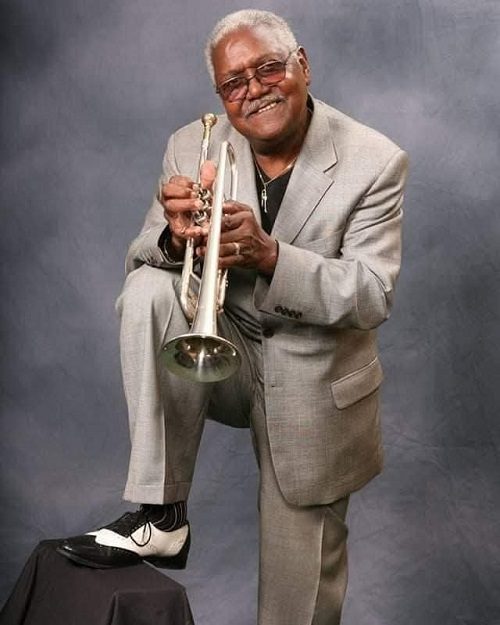
Alfredo “Chocolate” Armenteros: The Golden Legacy of the Cuban Trumpet

The history of Latin music cannot be written without mentioning the metallic brilliance and elegant phrasing of Alfredo “Chocolate” Armenteros.

Regarded by musicologists and peers as the “Latin Louis Armstrong,” Armenteros was more than just a trumpet virtuoso; he was a sonic architect who bridged the gap between traditional Cuban son, New York jazz, and the high-energy explosion of salsa.

Chocolate Armenteros🇨🇺fue una leyenda excelsa de la música cubana

Born on April 4, 1928, in Las Villas, Cuba, Armenteros carried the soul of his homeland to the world’s most prestigious stages.

His nickname, which became a hallmark of artistic quality, originated from a curious anecdote the musician shared in 2013: a young woman had mistaken him for the famous boxer “Kid Chocolate.”

What began as a case of mistaken identity ultimately became the name of a legend who would deliver his “knockouts” not with fists, but with perfect notes.

The Forging of a Master: From Arsenio Rodríguez to the “Bárbaro del Ritmo”

The career of Chocolate Armenteros serves as a detailed roadmap of the Golden Age of Cuban music. In 1950, he joined the ensemble of the “Blind Marvel,” Arsenio Rodríguez.

Alfredo Chocolate Armenteros el Legado de Oro de la Trompeta Cubana

Under Rodríguez’s tutelage, he recorded essential pieces of the Caribbean songbook such as “Deuda,” “Tengo que olvidarte,” and the iconic “La vida es un sueño.”

This period was vital in defining his style: a fusion of technical discipline and a gift for organic improvisation.

His rise was meteoric. By 1953, he was already a member of Sonora Matancera, the island’s most influential musical institution. That same year, he participated in a historic milestone: the founding of the band led by his cousin, the great Benny Moré.

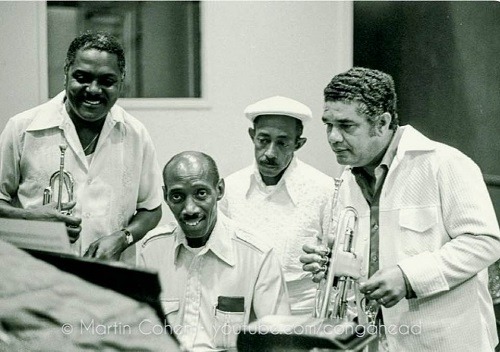
Alfredo Chocolate Armenteros, Lino Frias, Carlos Patato Valdez y el Negro Vivar 1973

The sound of Chocolate’s trumpet was a key gear in the machinery of Moré’s “Tribu,” cementing his status as the most sought-after instrumentalist of his generation.

Conquering New York and the Global Stage

In November 1958, Armenteros’ destiny changed forever. He traveled to New York with the Fajardo y sus Estrellas orchestra for a private performance at the Waldorf Astoria Hotel.

The event carried high-level political weight: it was a gala for the presidential campaign of then-candidate John F. Kennedy. Following this encounter with the Big Apple, the trumpeter decided to settle permanently in the city, becoming an ambassador for Caribbean rhythms at the epicenter of jazz.

In New York, his talent flowed through the most influential groups of the era:

  • The Machito Orchestra (1963): Where he fused Cubop with Afro-Cuban jazz.
  • Eddie Palmieri (70s): Contributing his power to the experimental sound of salsa brava.
  • Tico-Alegre All Stars (1975): Sharing the stage with giants like Celia Cruz, Tito Puente, Ismael Rivera, and Cachao.

An Endless and Eternal Style

In the late 70s and early 80s, Armenteros not only returned to collaborate with Sonora Matancera but also took the definitive step as a bandleader.

Under his own direction, he left behind memorable productions such as Chocolate Dice (1982) and Estrellas de Chocolate (1987), proving that his creative well never ran dry.The most admirable aspect of Armenteros was his artistic longevity. He remained active in festivals and concerts well into his 80s, preserving a privileged embouchure and a sense of timing that seemed to defy the laws of physics.

Alfredo Chocolate Armenteros y Eddie Moltalvo

Today, nearly a century after his birth, Alfredo “Chocolate” Armenteros remains the gold standard for trumpeters. His life was a testament to elegance, his music a bridge between nations, and his trumpet an eternal echo of Cuban identity that continues to resonate in every jazz descarga and every salsa step around the world.

Also Read: Larry Harlow and Ismael Miranda: The birth of “Arsenian Salsa,” a tribute to the music of Arsenio Rodríguez the creator of Son Montuno and the “King of Guaguancó.”

‘‘El Griego Rumbero’’ visited the Salsa Museum and donated some objects

The artist we will talk about today is a very particular case, since he comes from a country which is not usually related to salsa or Latin music in general. However, the passion for these rhythms has captivated people from all over the world, so it is not surprising that our guest has experienced the same thing.

We’re talking about the Greek-born trombonist and composer Demetrios Kastaris, whom El Rubio Boris and I were fortunate to welcome at the Salsa Museum. Here’s a little of his fascinating story.

Demetrios Kastaris playing
Demetrios Kastaris playing the trombone

Demetrios’ early years

Demetrios was born in Thessaloniki, Greece, but moved with his family to the United States when he was just two years old. After living in Ohio for a few years, the family moved again, but this time to St. Louis, Missouri, a place that would be critical to the training of the Young man in the times to come.

The first contact of the boy with music was in elementary school during a live performance by a classical music quintet, but what really captivated him was a demonstration of a slide trombone by a member of the St. Louis Symphony Orchestra. It was at that instant the aforementioned instrument inspired Demetrios to take trombone lessons and join the school concert band.

More importantly, as Demetrios grew older, he spent countless hours practicing the trombone, especially in summer when he was free from school work. Finally, On reaching the age of 17, his perseverance began to bear fruit, and he got the opportunity to rehearse with the Stan Keaton Jazz Orchestra, which was the first great experience for the teenager. Just one year later, he sang as a soloist at the Classical Rimsky-Korsakov Concerto. 

Other than that, Demetrios received the John Philip Sousa Band Award just before graduating from high school. He then studied music education at the University of Missouri-St. Louis, when he played in the jazz band and won several awards with the group.

Cover of the album ''El Griego Rumbero''
Cover of the album ”El Griego Rumbero” by demetrios Kastaris

Moving to New York

Two years after having studied in Missouri, Demetrios moved to New York, where he received a scholarship that allowed him to attend New York University and take more steps in his musical career. While completing his studies, he met a bandleader on the subway and was invited to a rehearsal where he was given the opportunity to arrange Afro-Cuban jazz pieces for the first time in his life.

Latin music and its rhythmic features made such an impression on Demetrios that he began attending concerts by many of its great exponents, such as Willie Colón, Eddie Palmieri, Ray Barretto, Tito Puente, Mongo Santamaría, and many others. This led him to transcribe and conscientiously analyze these artists’ songs to satisfy his curiosity and learn more about these rhythms.

After graduating with honors, he earned a masters degree in jazz from the Manhattan School of Music. Soon after, he was already teaching in public schools while performing with one of the bands of the Concord Resort Hotel.

Other important details of his career

For over 50 years of artistic career, Demetrios has had the opportunity to perform with big Latin stars such as Tito Puente, Luisito Quintero, Alfredo De La Fé, Ray Barretto, Charlie Palmieri, Herencia Latina, Oscar Hernández from The Spanish Harlem Orchestra, and many others. 

Already in the decade of 1980, the artist founded the Latin-Jazz Coalition and recorded several of his original compositions in genres such as Brazilian and Afro-Cuban jazz. In certain Circles, his work has earned him the nickname of “El Griego Rumbero”, a moniker by which he is still known today.

Johnny Cruz, Demetrios Kastaris and El Rubio Boris

Much more recently, Demetrios was invited to play with Los Leales de Cuba at the Buena Vista Curry Club and also to rehearse with Los Muñequitos de Matanza, which was a very learning afternoon and a memorable experience for him. Thereafter, he traveled to Cuba on several occasions to learn much more about this music.

Visit to the Salsa Museum

Just two years ago, Demetrios visited the Spanish Harlem Salsa Museum directed by yours truly and spent an enjoyable time with our entire team but he did not come alone. He brought us his photograph and a poster of the Latin Jazz Coalition, which were mounted on a wall alongside many other photographs of stars such as The Fania All Stars, Hector Lavoe, Tito Puente, Celia Cruz, El Gran Combo de Puerto Rico, Larry Harlow, and many others. 

His childhood trombone was also added to our extensive display of objects donated by artists and their families. This took place on March 20, 2024, and the instrument remains at our institution to this day as a reminder of a Greek man’s love for our music and a thank you to his dedication over the years.

Johnny Cruz ISM

Read also: Rey Ruíz visits the Salsa Museum and talks about his prolific career

  • « Go to Previous Page
  • Page 1
  • Interim pages omitted …
  • Page 9
  • Page 10
  • Page 11
  • Page 12
  • Page 13
  • Interim pages omitted …
  • Page 37
  • Go to Next Page »

International Salsa Magazine (ISM) is a monthly publication about Salsa activities around the world, that has been publishing since 2007. It is a world network of volunteers coordinated by ISM Magazine. We are working to strengthen all the events by working together.