• Skip to primary navigation
  • Skip to main content

International Salsa Magazine

  • HOME
  • Previous editions
    • 2026
      • ISM / May 2026
      • ISM / April 2026
      • ISM / March 2026
      • ISM / February 2026
      • ISM / January 2026
    • 2025
      • ISM / December 2025
      • ISM / November 2025
      • ISM / October 2025
      • ISM / September 2025
      • ISM / August 2025
      • ISM / July 2025
      • ISM / June 2025
      • ISM / May2025
      • ISM / April 2025
      • ISM / March 2025
      • ISM / February 2025
      • ISM / January 2025
    • 2024
      • ISM / December 2024
      • ISM / November 2024
      • ISM / October 2024
      • ISM / September 2024
      • ISM / August 2024
      • ISM / July 2024
      • ISM / June 2024
      • ISM / May 2024
      • ISM / April 2024
      • ISM / March 2024
      • ISM / February 2024
      • ISM / January 2024
    • 2023
      • ISM / December 2023
      • ISM / November 2023
      • ISM / October 2023
      • ISM – September 2023
      • ISM – August 2023
      • ISM July 2023
      • ISM Edition June 2023
      • ISM – May 2023
      • ISM April 2023
      • ISM March 2023
      • ISM February 2023
      • ISM January 2023
    • 2022
      • ISM December 2022
      • ISM November 2022
      • ISM October 2022
      • ISM September 2022
      • ISM August 2022
      • ISM July 2022
      • ISM June 2022
      • ISM May 2022
      • ISM February 2022
      • ISM January 2022
    • 2021
      • ISM December 2021
      • ISM November 2021
      • ISM October – 2021
      • ISM September 2021
      • ISM August 2021
      • ISM July 2021
      • ISM May 2021
      • ISM April 2021
      • ISM June 2021
      • ISM March 2021
      • ISM February 2021
      • ISM January 2021
    • 2020
      • ISM December 2020
      • ISM November 2020
      • ISM October 2020
      • ISM September 2020
      • ISM August 2020
      • ISM July 2020
      • ISM June 2020
      • ISM May 2020
      • ISM April 2020
      • ISM March 2020
      • ISM February 2020
      • ISM January 2020
    • 2019
      • ISM December 2019
      • ISM November 2019
      • ISM October 2019
      • ISM Septembre 2019
      • ISM August 2019
      • ISM July 2019
      • ISM June 2019
    • 2016
      • ISM December 2016
  • Spanish
  • Download Salsa App
    • Android
    • Apple

Search Results for: Afro Latin Jazz

Kadenza Dance School

Latin America / Argentina/ Buenos Aires

Kadenza Dance School is a dance academy located in Buenos Aires, Argentina. They don’t just teach people the steps of a musical rhythm; they demonstrate through their teaching that dancing nourishes the spirit of those who practice it. Not only that, but dance also allows for a connection with emotions, giving students more freedom for their spirit or soul.

KADENZA is a school geared toward students of all ages and with different goals, whether they wish to pursue a professional path or use dance as a form of recreation or therapy. All their students and teachers benefit from a comfortable reception area, spacious studios equipped with mirrors, barres, wooden floors, high-quality sound systems, and Wi-Fi throughout the studio. In short, it’s an ideal place to learn with passion, as the atmosphere is full of joy, respect, and good vibes, where one can enjoy what they love to do most… which is dancing.
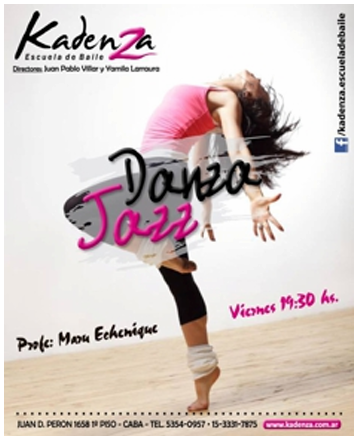
Kadenza Dance School - Danza Jazz
Kadenza Dance School – Danza Jazz

They also state that they are seriously committed to the quality of instruction, where qualified professors and instructors give their best in every class. This ensures their students incorporate the essentials of each technique and develop the maximum potential of their learning in the rhythms chosen by the student.

The Directors: Yamila Larraura and Juan Pablo Villar

The School’s Directors are Yamila Larraura and Juan Pablo Villar, who mention that, “Anyone can open an Academy, but few are the ones that make a difference.”

If we want to know more about the history of these two directors, we can start with Yamila Larraura, who was born in Argentina. Since she was a child, she began listening to Afro-Latin music thanks to her father, “Jorge Washington Larraura,” who was of Uruguayan origin. When she was 14, she went on vacation to Villa Gesell with her parents and a friend of theirs. It was on this trip that her interest in Salsa was awakened, as she went to a place near the beach that played Salsa music and offered classes in the afternoon with all the people from the beach.

One of the songs heard back then was “El Muerto se fue de Rumba” by the group “Las Sabrosas Zarigüellas,” which was very catchy for everyone who heard it. After her vacation, she decided to enroll in Salsa classes, where her teachers were Pablo Demaro and Kimena Puente.

As for Juan Pablo Villar, during his youth, he worked as a waiter in a bar and took theater classes, which also included lessons in national folklore and Latin rhythms (Salsa). This was his first contact with dance, and from that moment, he developed an interest in it. One day, a person came to the bar and mentioned that they taught classes in a studio, asking if they could leave flyers at the bar for people who wanted to dance. Knowing this, Juan Pablo Villar decided to go to the Salsa classes taught by Professor Pablo Demaro.
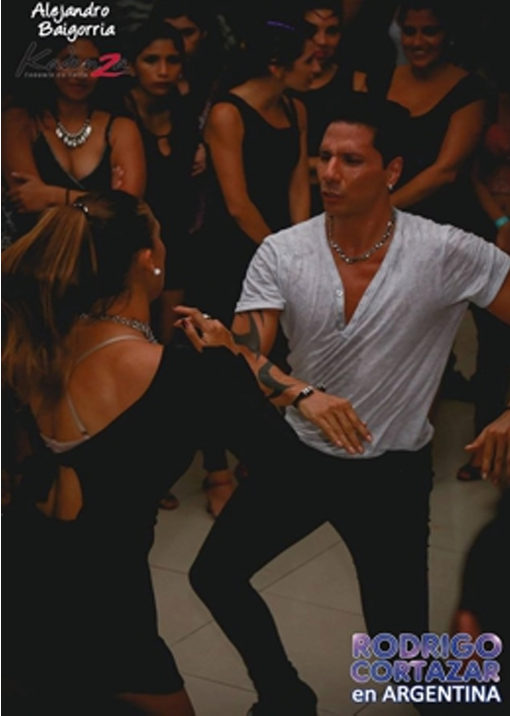
Kadenza Dance School - Social
Kadenza Dance School – Social

They explain that the Salsa classes back then were in a Cuban style, which featured fairly simple movements and figures. It was in these very classes that the future directors of KADENZA, Juan Pablo Villar and Yamila Larraura, first met.

The Journey to Kadenza

To gain a better experience, and to teach and give classes, they had to learn new techniques. They decided to seek out the best teachers in Argentina, who at that time were from the “Escuela de Mambo en Dos,” led by teachers Liz Paredes and Carlos Aragón, until they moved to Italy in 2007.

Afterward, they formed a dance group with their colleagues called “Combo Bayres,” during which time they toured the country and performed on various stages. In 2007, Liz Paredes and Carlos Aragón returned from Italy and formed the “Compañía Mambo en Dos,” where Yamila Larraura and Juan Pablo Villar joined the project. They gained great experience in the artistic world, traveling to different Argentine cities like Mar del Plata, Rosario, among others.

They also had the opportunity to travel abroad, attending the Salsa Congress in Uruguay, and later going to the United States, to New York City, to present at the Salsa Congress where they met great dance legends like Eddie Torres. Another great experience they had was the honor of being the official dancers for the famous Venezuelan Salsa singer “Oscar D’León” and the Dominican Salsero José Alberto, also known as “El Canario.” By 2010, they left the Mambo en Dos company to start their own school.

The academy’s beginning went without a name for a year, simply referred to as Pablo and Yamila’s school, but they were always looking for a name that would identify the essence they wished to convey. They eventually came up with “Cadenza,” which in Italian means “style of free rhythms.” To make the name more original, they changed it to “KADENZA,” feeling proud of their choice.
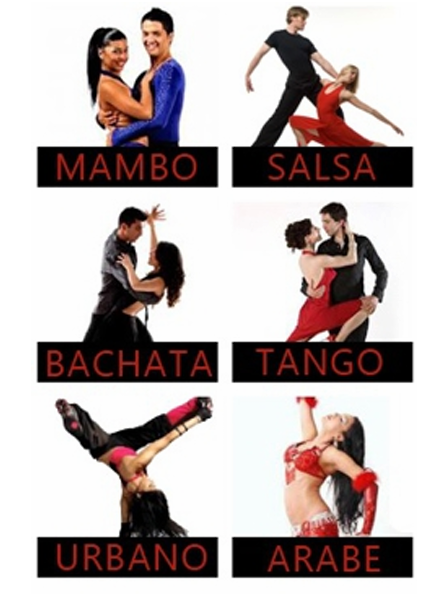
Kadenza Dance School - Mambo, Salsa, Bachata, Tango, Urbano, Arabe
Kadenza Dance School – Mambo, Salsa, Bachata, Tango, Urbano, Arabe

Contact Information

For more information, contact them at:

  • Website: http://www.kadenza.com.ar
  • Facebook:escueladebaile
  • Phones: 5354-0957 / 15-3331-7875
  • Email: [email protected]
  • Google Plus: https://plus.google.com/106664874547676369685
  • Youtube: https://www.youtube.com/channel/UC-he58RYqrJwoxoH8OID3ZA
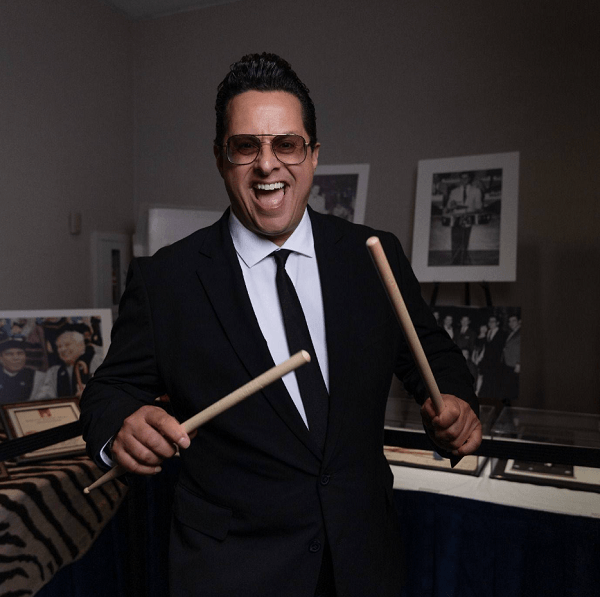
 

Tito Puente Jr.: perpetuating a legacy with its own rhythm

In International Salsa Magazine, we cannot contain our joy for the conversation we had with the son of one of the greatest legends of Latin music, who is now writing his own story of grandeur thanks to the education he has received practically since birth. This is none other than New York producer, composer, and percussionist Tito Puente Jr., who shared about 40 minutes of his time to answer some questions exclusively for Augusto Felibertt and yours truly, Karina Garcia. 

Tito puente jr. smiling
Producer, composer, and timbalero Tito Puente Jr. smiling for the camera

The burden of Tito Puente’s iconic legacy

Having a successful father is a great blessing, but sometimes, it can become a veritable martyrdom for a son who wants to follow his path, as comparisons between them will always be inevitable. Being able to share with Tito Puente Jr., son of the legendary King Of Timbales Tito Puente, gives us the opportunity to get his perspective on this interesting and important subject. 

Fortunately, the artist does not see this legacy as a burden, but quite the opposite. Although he admits that his father is one of the greatest masters and ambassadors Latin music and our culture in general have ever had, and that it is not easy to fill his shoes, he proudly bears his father’s surname and promotes his music.

Moreover, he sees the surname “Puente,” as well as the Spanish word implies, as a union among several generations because many young people this day do not know Tito Puente, Celia Cruz, and many other exponents of that salsa’s golden era. Tito Jr. wants to be part of that “bridge” between generations so that people of all ages can learn about these prodigies, including, of course, his father.

Childhood with Tito Puente as his father

Regarding his childhood and adolescence, Tito emphasized that he always saw his father play all types of instruments such as timbales, marimba, saxophone, percussion, and many others, which inspired him and made him want to imitate him from the beginning. Today, his career is largely influenced by everything he saw at home, and he plays his father’s arrangements and compositions, which are divided between a total of 186 albums. 

Everything learned within his family has taken him so far professionally, to the point that he now has seven Latin Grammys and 14 nominations, all thanks to the legacy he carries. 

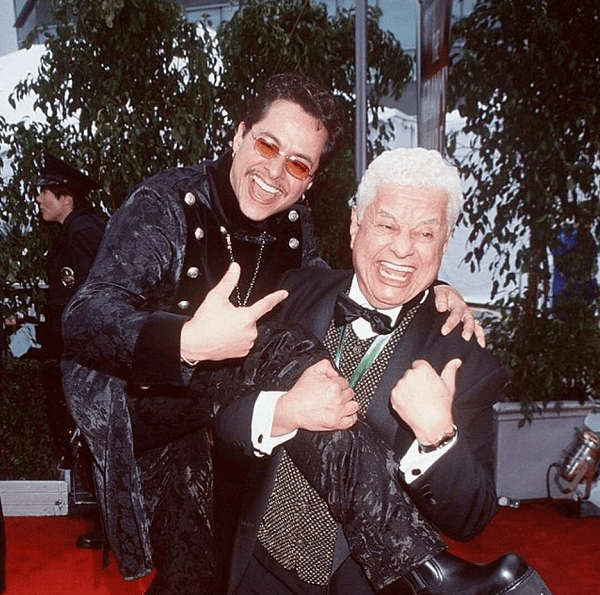
Tito Puente and Tito Puente Jr.
Tito Puente Jr. and his father Tito Puente on the 1998 Grammy Awards red carpet

The Puente family today

On the more personal side, Tito is the youngest of his brothers, among whom he is the only one who works on music as a profession. To some extent, this has made him take upon his shoulders Tito Puente’s legacy through his own art.

The musician currently resides in southern Florida, specifically in Miami, although he works with orchestras from different cities and countries. He is married and has two children who are Miranda, 18, and Tito Puente Jr. Jr., 17. Miranda studies marine biology at university, while her younger brother is in high school but travels constantly with his father and enjoys composing and playing the guitar.

He also told us a little about his wife, who loves salsa but is not in music. On the other hand, he spoke lovingly of “the boss,” his mother Margarita Puente, who is currently in charge of royalties, record labels, publicity, and the documentary on Tito Puente’s life.

He also has two siblings: Audrey Puente, 55, who is a television meteorologist, and Rony Puente, 77, who is also a musician like his father and younger brother. 

Other musical influences besides that of his father

In addition to salsa, mambo, and guaguancó, Tito really enjoys English rock and several bands such as Metallica, Slayer, Iron Maiden, Black Sabbath, and others into this style. These tastes of his have led him to the idea of, at some point, blending heavy metal with mambo to see which result he gets.

As well as he can really enjoy the music of Bon Jovi and Ozzy Osbourne, he is also fascinated by El Gran Combo de Puerto Rico, which he finds to be a very interesting mixture of genres that he would like to experiment with someday. 

He also said laughing that his father did not share his musical tastes and that the only rock band he liked was Santana, and that was because they did their own version of the hit “Oye Cómo Va” in psychedelic rock and Latin rock. 

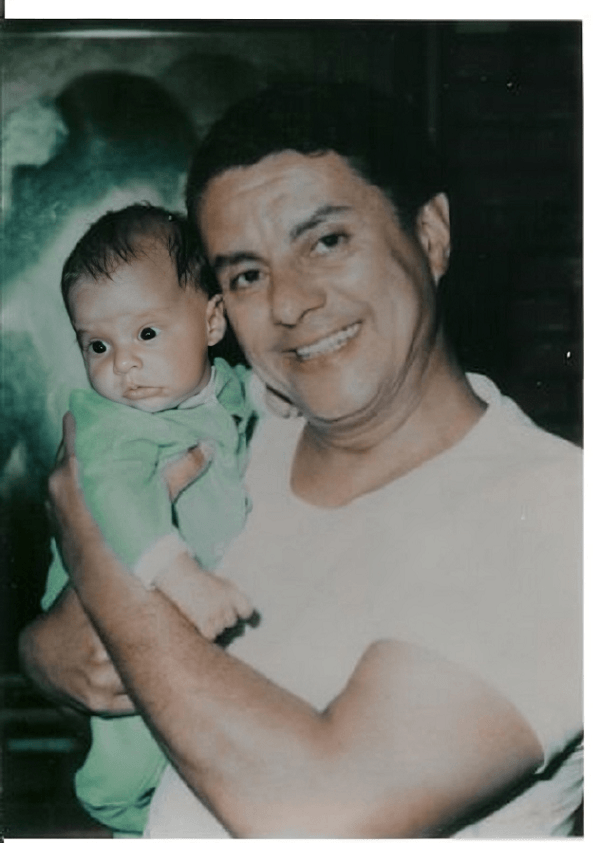
Tito Puente holding his son
Tito Puente carrying his son Tito Puente Jr.

Current singers

Today, Tito works with various singers, including Aymee Nuviola, Lucrecia, Yolanda Duque, and his great friend, “La Princesa de La Salsa” La India. His father worked with great vocalists such as Tony Vega, Michael Stuart, Oscar D’León, José Alberto “El Canario,” Miguel Ángel Barcasnegras Díaz “Meñique,” and many more. 

Tito’s latest album, “The King And I,” also features other big voices such as Domingo Quiñones, Frankie Negrón, José Alberto “El Canario,” Tony Vega, Sheila E., Pete Escovedo, and many other salsa superstars of today and yesterday. 

The timbalero has worked with many figures who also worked with his father in the past, so it is clear that they see him and respect him as the continuation of his musical legacy.

Tito’s views on academic training in music

On the important issue of academic training in music, Tito pointed out that there are not enough educational programs aimed at teaching Afro-Cuban music in schools and universities, which in his view needs to change as soon as possible.

In fact, he noted the importance of promoting programs in educational institutions around the world so that their students learn much more than just symphonic music and become more rounded professionals. Although he recognizes the importance of knowing Beethoven and Tchaikovsky, he also believes that aspiring musicians should know about Eddie Palmieri, Charlie Palmieri, Larry Harlow, Pupi Campo, and other artists in this style. 

The artist believes that the above mentioned artists and many others related to jazz and salsa are part of a very important era of music in the world, which is why he believes that teachers must take them into account during their classes. For him, it is a mission to promote both his father’s music and that of other exponents of his kind in the academic field.

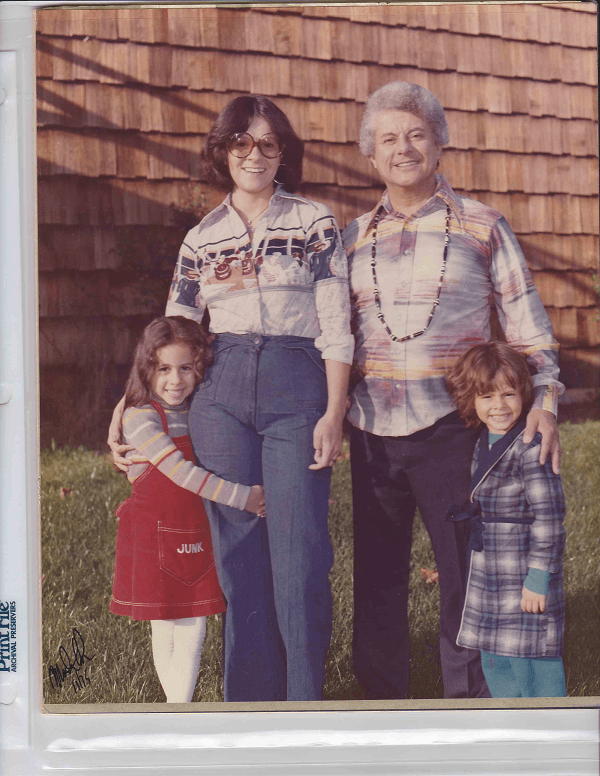
Tito Jr. and his family
Audrey, Margarita, Tito, and Tito Jr.

Upcoming tours

For our research, we could notice that Tito has several performances and tours scheduled for the rest of the year, more specifically for November. In this regard, he told us that in the first week of September, he went to play his father’s music on his weekly show Mambo Mondays, which is held to delight dancers eager to keep enjoying Tito Puente’s music.

About international tours, he plans to go to Germany in February next year and Spain next summer. He is also close to release a documentary in 2026 and a new album with the Los Angeles Symphony Orchestra, which has 77 musicians and instruments such as violins, violas, harps, bagpipes, flutes, French horns, among others.

Tito Puente Jr. and his son
Tito Puente III and his father Tito Puente Jr.

Final comment

We still cannot believe we had this great conversation with the talented Tito Puente Jr. and it has been a great pleasure to share this time with him. Those who wish to contact him can do so through his social media channels, which are as follows:


Facebook: https://www.facebook.com/TitoPuenteJr/

Instagram: https://www.instagram.com/titopuentejr/

X: https://twitter.com/titopuentejr

Tik Tok: https://www.tiktok.com/tag/titopuentejr 

Spotify: https://open.spotify.com/intl-es/artist/2ROkqvVDXj5JgmN6z2uFrM

Read also: Venezuela violinist and former musician in El Sistema Ali Bello has many interesting things to say

Venezuela violinist and former musician in El Sistema Ali Bello has many interesting things to say

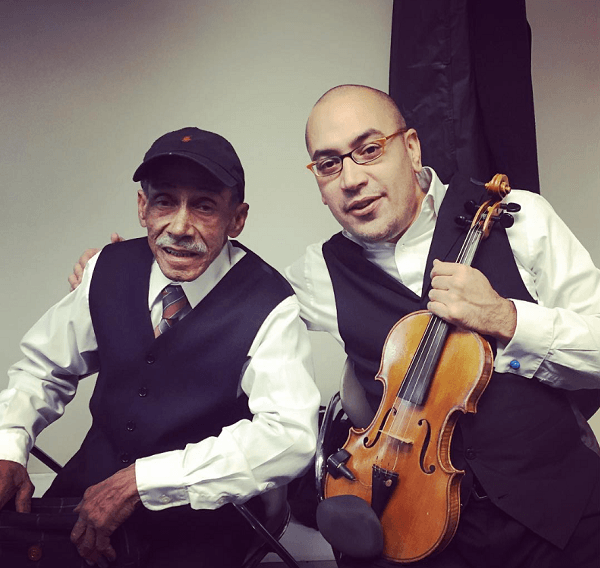
Venezuelan musician Alí Bello has become one of the best Latin music violinists in New York, so we could not miss the opportunity to talk to him and learn as much as we could about his fascinating story. The young man has given his best to become a true icon of Latin Jazz in his current city of residence, so do not miss this great conversation.

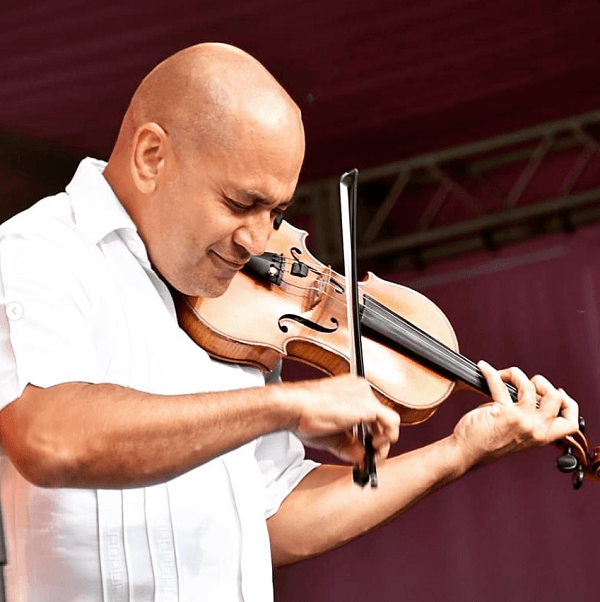
Ali playing the violin
Venezuelan musician Ali Bello playing the violin live

Alí’s beginnings in the world of music thanks to El Sistema

From a young age, Alí became interested in music, which led him to join the National System of Youth and Children’s Orchestras and Choirs of Venezuela, where he studied classical music as an extracurricular activity. This in order for Alí and his classmates to be busy in any activity until their parents came to pick them up after work.

This was when an orchestra or school of music was formed clase to his father’s work, so Bello was enrolled in these classes from 2 to 5 p.m. after school. So it went for him since he was in kindergarten, and he learned to play the xylophone and the recorder. When the boy was seven years old, the school orchestra located in La Rinconada, Caracas, was officially created, but due to how small Ali was, the only instrument the school could assign him according to his size was the violin, which he keeps playing diligently to this day.

After many years of being part of the National Youth Orchestra, he got ahead with his musical career and decided to go to the United States to continue his university studies and train as a professional musician.

Other instruments besides the violin

In addition to the violin, Alí also plays a lot of percussion, since he considers it very important. He thinks every folk and Latin musician must handle percussion as efficient as possible and each of its rhythms in order to internalize the style they want to play on any instrument.

“Percussion and singing have always fascinated me, so I try to devote myself to both even a little bit, but it is undeniable that the violin has always been my main instrument. I’ve tried to focus all styles and everything I work on towards the violin to turn it into the main element,” the musician added on this subject.

Ali and Gustavo
Ali Bello, his son and maestro Gustavo Dudamel

How the opportunity to study in the United States came about

Initially, Alí was supported by his violin teacher Margaret Pardee, who taught at the Juilliard School and went to Venezuela to give master classes. It was Pardee who encouraged Alí to continue his education in New York, which he finally achieved thanks to the Gran Mariscal de Ayacucho scholarship fund and the Simón Bolívar Musical Foundation.

This is how the Venezuelan artist obtained his bachelor’s degree, master’s degree, and PHD.

At college, he met Johnny Almendra, thanks to whom he discovered genres other than classical music, in which he was not only the performer of melodies but could also create his own music. He then discovered styles of Venezuelan and Latin music that inspired him to explore more varied rhythms different from what he had known before.

He played regularly with Johnny Almendra and his modern charanga group Los Jovenes del Barrio for a time and subsequently played for La Típica Novel and other orchestras. As Alí gained experience in the world of charanga and Latin music in general, he started having opportunities to learn and explore other genres such as Brazilian music, Afro-Cuban music, Latin jazz, and many more. 

Collaborations with major artists in the industry

All this hard-won ground gave Alí the opportunity and the honor to collaborate with great artists in the industry such as Tito Puente, Eddie Palmieri, Johnny Pacheco, Rudy Calzado, Pedro Cortés, José Fajardo senior, Pupi Legarreta, and many more. All these figures helped him not only to have a better understanding of the Afro-Cuban style and tradition, but also of the influence of New York on music.

Ali and Pupy
Maestro Pupy Legarreta and Ali Bello

Thanks to this knowledge base, he had the courage to release a record album, La Charanga Syndicate, in which, as the name suggests, he uses charanga and all the influences coming from the musicians he has known and continues to know. For this reason, he feels he now has something to say and bring to the style. 

Another important thing for his career was his participation in Jay-Z’s concert to celebrate the anniversary of the release of his first album. The rapper wanted to mark the occasion by playing with a symphony orchestra, so hired many musicians of all kinds to make a great show at Radio City Music Hall in New York. Fortunately for Ali, he was well-known in the music scene at the time, so he was contacted to participate in the event.

In that sense, the violinist is very happy to be in New York, as the world’s greatest artists always take this city into account for their concerts, which gives musicians like him the opportunity to have access to these great figures in the industry.

Ali as an arranger

In addition to being a percussionist and violinist, Ali has also ventured into musical arrangements quite successfully thanks to all the academic training he had received up until then. However, as he became a more experienced professional, he began to notice that his own ideas and thoughts came to life in his work. So, having the theory in his head, he could take those ideas he had had and develop them within the rhythmic and stylistic elements which are willing to use on each occasion.

In addition to that, the artist also works on production and mixing a bit to achieve the necessary sound. He even has his own studio where he plays for his own productions and other artists’ records as a freelancer.

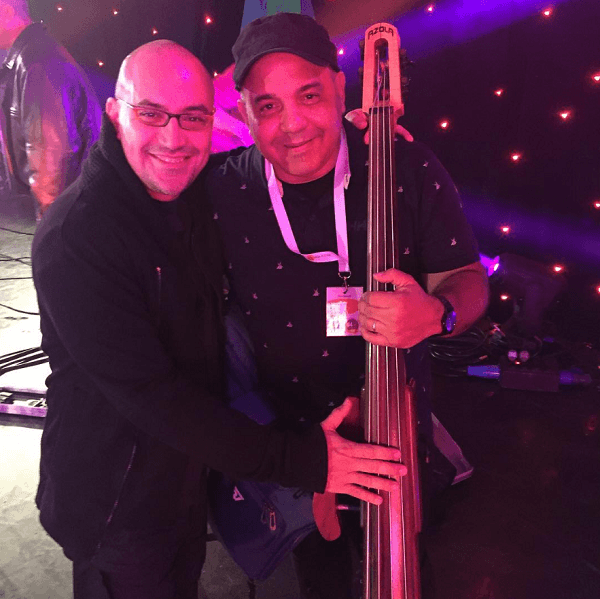
Ali and Juan
Ali Bello and Juan Carlos Formell from Los Van Van in Poland

Read also: Omar Ledezma Jr. shares with us the new from his project with Azesu

Bachata Festival 2017 in San Francisco, California

North America / USA / California
Bachata Festival 2017 in San Francisco, California

The Ultimate Bachata, Salsa, Kizomba and Zouk Experience… A Dance Convention for Beginners, Intermediate & for all levels of dancing! The 9th Annual SF International  Bachata Festival

  • Date: JULY 21st – 24th, 2017
  • Bachata | Kizomba | Zouk | Salsa (4-Party Rooms)
  • 3 days and  3 nights of dancing
  • Friday, Saturday & Sunday from 10am until 6am!
Photos from the 2017 Bachata Festival in San Francisco

Transform your dance skills in one weekend with these world renowned dance instructors plus a dance experience of a lifetime!

  • Live Band
  • Dance Workshops from 10am to 5pm
  • Performances Every Night Ÿ Social Dancing until 6am
  • Jack and Jill Contest prize Giveaways

SFIBF, (San Francisco International Bachata Festival) is the largest and hottest Bachata festival in the world, located in one of the greatest city in the world – San Francisco. Created by Rodney Rodchata Aquino, along with its sister event Reno Bachata Festival, they are the first Bachata festivals in the USA. It celebrates the music and dance of Bachata, preserving its roots and accepting its evolution, as well as Salsa, Zouk and Kizomba.

Marriot Flyer
Marriot Flyer

Festival Line-Up

More than 20 instructors, DJs and Live Band for this year’s festival!

Adam Taub (Colorado)/ Bachata:

Adam Taub is one of the few ones who have seriously studied authentic bachata (the way Dominicans dance). SFIBF is extremely proud to present him with his special music, history and dance workshops at the San Francisco International Bachata Festival – July 21-23, 2017.

Adam Taub
Adam Taub

Adam Taub is a documentary film director from Colorado whose films include La Quinceañera, Don Angelo, and El Duque de la Bachata. His film La Quinceañera won the 2007 award for Best Documentary at the Angelus Student Film Festival in Hollywood, California and Best Documentary at the San Diego Latino Film Festival.

Alberto & Nola (Australia) / Bachata:

Nola Komis is the Founder, Director and Principal Instructor of A Touch of Salsa Latin Dance Studios in Sydney, Australia. A Touch of Salsa runs classes in Salsa, Bachata, Zouk and Kizomba. They also offer competition courses, workshops, performance courses and more and will this year will be celebrating 11 years.

Alberto and Nola
Alberto and Nola

Nola Komis and Alberto Torres-Perez have been teaching together for the past five years and they are both passionate and love sharing their passion for dance. Nola and Alberto have both travelled to Athens, Geneva, New Zealand, Hawaii and all over Australia where they have taught workshops at Festivals/Congresses to packed participants and have received many great reviews for their classes.

Nola and Alberto are looking forward to being part of the San Francisco Bachata Festival in July 2017.

Emelie Andagan (Sacramento) / Salsa:

The Yemaya Salsa Dance Company was founded by Emelie Andagan & Heather Wong-Xoquic in October, 2000. Emelie learned to dance salsa after only a few years due to her extensive dance background of over 20 years and many years of experience as a ballet and jazz student, and later a teacher at the Ballet Theatre of Dover Dance Conservatory.

Emelie Andagan
Emelie Andagan

The troupe started as a small group of only four couples that rehearsed twice a week in various garages and practically anywhere with a smooth surface. She owns and manages Yemaya Dance Studio in Sacramento, and is the main director of Yemaya dance Company.

Emelie Andagan
Emelie Andagan

Luis Aguilar (San Francisco) / Salsa:

Luis Aguilar debuted in 2000 with the Salsa Mania Dance Company in San Francisco. Since then, he performed with such giants in the Latin music industry as El Gran Combo de Puerto Rico, the Tito Puente Orquestra, Celia Cruz, Ray Barretto, Jose “El Canario” Alberto, Oscar de Leon, Eddie Palmieri, the Spanish Harlem Orquestra and Sonora Carruseles. In addition to his impressive performance credits, Luis has taken 1st place in many Latin dance competitions and Congresses such as The San Francisco International Salsa Congress and the Bay Area Salsa Dance Competition.

Luis Aguilar
Luis Aguilar

Since joining forces in 2007, Luis and Anya have become the ON 2 WORLD SALSA CHAMPIONS for the second year in a row, along with having become two time undefeated San Francisco Congress Salsa champions in ’09 and ’10, undefeated two time New York Congress champions in ’09, ’10, Puerto Rico Hustle and Salsa champions ’09, and are currently the North American Salsa Champions and two time winners of the NY/NJ salsa open. With their combined backgrounds, Luis and Anya make a dynamic duo that brings a fresh new element to the salsa dance floor.

Benga Da Beatz (Ohio) / Kizomba:

Benga is a Nigeria born international dancing sensation, with backgrounds in several African dances, ballroom dances, American dances, and latin dances. From Waltz to Tango, Makoussa to Kizomba, hip hop to west coast swing, and Irish dance to Bollywood. Benga has intensive dancing experiences all across the globe.

Benga Da Beatz
Benga Da Beatz

An Afro Beats and Afro-cuban solo performer, and a latin dance instructor well known to many now as the Da Beatz. With 26 years of African Dancing and 6 years of professional latin dancing, Benga is teaching and promoting at every Latin events possible with his own vibrant style of Fun Swagness.

Cymeone Mopao (France) / Kizomba:

Cymeone Mopao
Cymeone Mopao

Cymeone Mopao is a well-known kizomba instructor based in Paris. He is one of the first instructors to have taught kizomba in France beginning in 2009. Born into a family of musicians, he was accustomed to lots of music and quickly adapted to the dance lifestyle. As he immersed himself into dance, he became proficient in African style dances such as ndombolo and coupé décalé.

Cymeone Mopao
Cymeone Mopao

When he was 18, he joined a group of dancers called “les coeurs brisés “. From there he became interested in other Afro style dances like Zouk, Kompa and Kizomba. He gave his first Kizomba class in 2009 and became one of the most wanted instructors in international festivals. In 2010, he was the first French instructor to teach Kizomba in the United States (New York).

Bruno & Olga (Los Angeles) / Zouk:

Bruno and Olga started dancing together in November 2015 and have since taught and performed at numerous events around the country from local workshops to large international congresses.}

Bruno & Olga
Bruno & Olga

In 2016 they took second place in the semi-pro division of the Zouk US Open with their now well-known choreography piece “Worth It” and shortly after got featured in the “Fences” movie, that’s currently in production stage. Olga has a rich dance background in classical ballet, modern, contemporary and commercial jazz, as well as hip hop and heels choreographies. She is also an All-Star west coast swing dancer. Bruno is trained in hip hop, salsa, kizomba, tarraxinha, semba, and of course brazilian zouk.

He has been on the social dance scene of his hometown Braga, Portugal since he was 14 years old. Since his move to the US he’s been mainly focusing on zouk and kizomba, training and teaching around the country with his partner, performing in ISDC dance company for a while, and currently codirecting the Zouk team at Ivo Vieira’s Dance company and learning from the best dance professionals in the world.

Sandro (Brazil) / Zouk:

Sandro Soncini is a dancer, choreographer and dance instructor from Florianopolis, Brazil. He has studied and trained in dance for over 10 years. Sandro is experienced in many partner dance styles, and has intensively studied the concepts of body movement driven by his training in tango.

Sandro
Sandro

In 2010 Sandro moved to Argentina to continue to develop his dance skills and education at DNI tango school. Sandro has participated in various congresses and competitions, including BAILA FLORIPA DUO, where in 2012 together with his partner he placed 3rd.

Sandro has taught in zouk throughout Canada, United States and Brazil. Currently Sandro is living in Vancouver, Canada with a focus on promoting zouk in the Pacific North West.

Bachata Festival 2017, Tickets / Passes:

  • Tickets: Full Passes $200.00 Unlimited. (EXP July 15th)
  • Tickets at Doors: $250 Buy Your Passes in mybachatafestival.com

Location: The SF Marriott Hotel 1800 Old Bayshore Hwy, Burlingame, CA 94010 Discounted Nightly rate of $141 a night (you must use the site – www.sfibf.com) Free Shuttle 24 hours a day.

Bachata Festival 2017

David Atanacio Percussionist, Composer and Singer Unveils a New Sound

David Atanacio, grounded in the values of honesty, integrity, loyalty, responsibility, and respect, appears to be an individual of strong moral and ethical character. He is someone who can be fully trusted, a faithful and committed friend and colleague who always tells the truth and acts with righteousness.

His sense of responsibility ensures he fulfills his commitments, while his respect makes him a considerate, open person capable of building harmonious relationships. Together, these values suggest a dependable, upright, and kind personality, making him a positive and admired presence.

Born in New York City and raised in Puerto Rico, specifically in the municipalities of Bayamón and Cataño, David Atanacio has cultivated a unique musical identity rooted in a powerful fusion of Cuban rumba, flamenco rumba, and Afro-Caribbean influences.

David Atanacio Percussionist, Composer and Singer

In 1993, he began his musical journey as a bongo player for his uncle’s “Grupo Típico,” later joining a local orchestra as a conguero in 1996. In 1997, he was presented with the opportunity to become a singer, marking a turning point in his musical destiny.

Recruited to co-found “Grupo Folclórico Yuba Iré,” it was with this group that he began to perfect his mastery of rhythms like La Bomba, La Plena, El Guaguancó, El Yambú, and more. During this same period, David Atanacio discovered his talent for composing and began writing his first songs, including one titled “Lo que dice el Tambor” (What the Drum Says).

He was recommended to work with the “Orquesta Abran Paso” from Puerto Rico, with whom he accompanied luminaries such as Ismael Miranda, Adalberto Santiago, Junior “Hommy” González (RIP), Larry Harlow (RIP), among others.

He then received a call from the Puerto Rican Maestro “Paoli Mejías,” percussionist for “Carlos Santana’s” group, who invited him to be part of his first musical project, “Mi Tambor.” On this album, David’s song “Lo Que Dice el Tambor” was recorded, appearing as Track No. 7. The album was nominated for “Best Latin Jazz Album” at the Latin Grammys in 2004.

David Atanacio: Percussionist, Composer, and Singer Unveils a New Sound

David Atanacio: Percussionist, Composer, and Singer Unveils a New Sound

In 2003, the King of Rhythm, Mr. Afinque “Don Willie Rosario,” invited David to join the front line of his orchestra, where he remained until 2005. After leaving Willie Rosario’s Orchestra, David decided to move with his family to Tampa, Florida.

Even in his new home, David never lost touch with his roots. One day, he received a call to contribute background vocals to the production “Sobrevolando” by the acclaimed Puerto Rican group “Cultura Profética” (2019). This production earned them the Latin Grammy for “Best Alternative Album” in 2020 and a nomination for “Best Latin Rock or Alternative Album” at the 2020 Grammy Awards.

David Atanacio is a “Sonero de Calle” (Street Sonero), with ample talent and ability to succeed. He is a percussionist, composer, and possesses the added artistry of the “Soneo del Guaguancó” (Guaguancó vocal improvisation).

Atanacio is now releasing his musical proposal, “David Atanacio & Champán D’ Barrio,” featuring aged salsa and plenty of flavor.

David Atanacio & Champán D' Barrio
David Atanacio & Champán D’ Barrio

The album contains ten tracks, eight of which are his original compositions. The production features special guest Herman Olivera, who performs a duet with David on a meticulously crafted song titled “De la Vieja Escuela” (From the Old School). The first single from this project, “Lo que dice el Tambor,” is hitting the airwaves, now presented under his orchestrated concept, “David Atanacio & Champán D’ Barrio.”

The Puerto Rican sonero recently released his latest single, “No Me Llores Más” (Don’t Cry For Me Anymore), a masterfully interwoven piece that pays homage to the musical genres that have shaped his artistic journey. The song perfectly fuses Cuban rumba, guaguancó, Spanish flamenco rumba, and son.

More than just a song, No Me Llores Más is a deeply personal sonic exploration that honors the genres that have influenced David Atanacio since his beginnings.

More than just a song, “No Me Llores Más” is a deeply personal sonic exploration that honors the genres that have influenced David Atanacio since his beginnings. Rhythms such as trova, décimas, aguinaldo, bomba, and plena have profoundly impacted his musical development, adding unique nuances to his artistic expression and reaffirming his commitment to the cultural heritage of his homeland and the Caribbean.

“No Me Llores Más” Credits:

  • Lyrics, Music, and Lead Vocals: David Atanacio
  • Background Vocals: Herman Olivera Jr. & Adriel González
  • Musical Arrangement: Carlos García
  • Piano: Yassel Puppo
  • Bass: Kevin Pagan
  • Trombone Solo: Carloscar Cepero
  • Percussion: Diego Centeno
  • Spanish Guitar: Alex García Potia

With an exquisite arrangement by Carlos García and impeccable execution by top-tier musicians, “No Me Llores Más” marks a new chapter in David Atanacio’s career. It’s where tradition and vanguard embrace to the rhythm of the drum, the guitar, and pure emotion.

This track will be available on all digital platforms starting June 14, 2025.

The rumba lives, the son renews, and David Atanacio’s voice celebrates it!

Press Contact: David Atanacio [email protected] 813-569-9581

Reference: Luis Rojas

Also Read: Herman Olivera the sonero of the 21st century

  • « Go to Previous Page
  • Page 1
  • Interim pages omitted …
  • Page 12
  • Page 13
  • Page 14
  • Page 15
  • Page 16
  • Interim pages omitted …
  • Page 37
  • Go to Next Page »

International Salsa Magazine (ISM) is a monthly publication about Salsa activities around the world, that has been publishing since 2007. It is a world network of volunteers coordinated by ISM Magazine. We are working to strengthen all the events by working together.