• Skip to primary navigation
  • Skip to main content

International Salsa Magazine

  • HOME
  • Previous editions
    • 2026
      • ISM / May 2026
      • ISM / April 2026
      • ISM / March 2026
      • ISM / February 2026
      • ISM / January 2026
    • 2025
      • ISM / December 2025
      • ISM / November 2025
      • ISM / October 2025
      • ISM / September 2025
      • ISM / August 2025
      • ISM / July 2025
      • ISM / June 2025
      • ISM / May2025
      • ISM / April 2025
      • ISM / March 2025
      • ISM / February 2025
      • ISM / January 2025
    • 2024
      • ISM / December 2024
      • ISM / November 2024
      • ISM / October 2024
      • ISM / September 2024
      • ISM / August 2024
      • ISM / July 2024
      • ISM / June 2024
      • ISM / May 2024
      • ISM / April 2024
      • ISM / March 2024
      • ISM / February 2024
      • ISM / January 2024
    • 2023
      • ISM / December 2023
      • ISM / November 2023
      • ISM / October 2023
      • ISM – September 2023
      • ISM – August 2023
      • ISM July 2023
      • ISM Edition June 2023
      • ISM – May 2023
      • ISM April 2023
      • ISM March 2023
      • ISM February 2023
      • ISM January 2023
    • 2022
      • ISM December 2022
      • ISM November 2022
      • ISM October 2022
      • ISM September 2022
      • ISM August 2022
      • ISM July 2022
      • ISM June 2022
      • ISM May 2022
      • ISM February 2022
      • ISM January 2022
    • 2021
      • ISM December 2021
      • ISM November 2021
      • ISM October – 2021
      • ISM September 2021
      • ISM August 2021
      • ISM July 2021
      • ISM May 2021
      • ISM April 2021
      • ISM June 2021
      • ISM March 2021
      • ISM February 2021
      • ISM January 2021
    • 2020
      • ISM December 2020
      • ISM November 2020
      • ISM October 2020
      • ISM September 2020
      • ISM August 2020
      • ISM July 2020
      • ISM June 2020
      • ISM May 2020
      • ISM April 2020
      • ISM March 2020
      • ISM February 2020
      • ISM January 2020
    • 2019
      • ISM December 2019
      • ISM November 2019
      • ISM October 2019
      • ISM Septembre 2019
      • ISM August 2019
      • ISM July 2019
      • ISM June 2019
    • 2016
      • ISM December 2016
  • Spanish
  • Download Salsa App
    • Android
    • Apple

Search Results for: Afro Latin Jazz

Maelo y su Klan want to bring tropical rhythms to the whole world

Maelo y su Klan is the latest project, and one of the dreams, of the producer with more than twenty years of experience, Johnny Ysmael Salaverria Dicurú. The popular “Maelo” as his dearest friends call him, continues his career by working and pouring his heart into this project. With them the first genre fusion between Son and Kizomba is known. In the following lines we will talk about Maelo and his most beloved project.

Who is Maelo?

Johnny Ysmael Salaverria Dicurú was born in San Juan parish, in Caracas, capital city of Venezuela, where he spent his childhood surrounded by the joy of the Caribbean “soneros and salseros”. He was a child when he first expressed his interest in one of the most popular tropical Caribbean rhythms, salsa. Part of his influences came from his uncle, Héctor Bruno Dicurú.

Ysmael D´La O, is his artistic name on stage and producing, but his closest friends call him “El Tiburón de la Salsa”. He left with $80, and a luggage full of dreams, to look out for adventures abroad. His destiny was Tenerife, where he quickly earned the love and respect of the natives, and was embraced as an adopted son.

Maelo as a producer has worked with renowned soloists and groups, from all over the world. To name a few: Nicky Jam, El Binomio de Oro, Tito Rojas, Oscar D’León, Porfi Baloa, Tony Vega, La Dimensión Latina, Ray Sepúlveda, Guayacán, El Grupo Niche. As a promoter and producer of events, one of his greatest achievements was El Gran Combo De Puerto Rico who celebrated their 50th anniversary, and visited Europe hand in hand with him.

We can call Maelo, the cultural ambassador of Caribbean rhythms, making more than 30 countries listen and enjoy them. He was the first Latin American to have 100 continuous virtual conversations during the pandemic, a time when creativity was the escape of many artists.

Among his awards and recognitions is being nominated as International Producer of the Year in 2020, Producer and Promoter of the Virtual Euro Festival in the 20/21 edition. But soon more will come, since Maelo’s talent is infinite.

Defining Maelo and his Klan

The band stands out in danceable rhythms such as: Son, Charanga, Guaguancó, Salsa, Tropical, Latin Jazz and a lot of fusion with an original sound, which is inspired by African rhythms. Of course, with the influences of great masters of the old tropical school. In this way, a combination is created that generates a modern sound, worthy of the new generation. But what most characterizes this Klan is the creation of the fusion of the genres between Son and Kizomba.

The works of Maelo y su Klan have the collaboration of the renowned arranger and director of Billo’s Caracas Boys, the Venezuelan Julio Cesar Estrada. Also by Paquito Barón, ex-member of the Orquesta Bronco of Venezuela, in the musical production.

The Klan has all the merits and the support of the Anglo-Saxon and Asian public. One of his productions entitled ¡Cultura viva! Fusion is positioned as the new sound in Afro-Caribbean music. Maelo not only puts his talent for the band, but also puts all his knowledge of the tropical rhythms of Latin America, as well as its movements through Europe and Asia. Let’s hope that the journey of Maelo y su Klan will be a very long one, full of great successes, so that they can continue to please the public that loves these tropical rhythms.
Two radio programs of the salsa movement in California

Introduction

After the entire journey, the cultural salsa movement in the state of California is well established, which includes a good number of media outlets that focus on this and other Latin music genres. In this article, we are going to talk a little about two very important radio shows in Los Angeles, which play a very important role in the spread of salsa and its greatest exponents today.

They are the radio shows ”Alma Del Barrio” and ”Canto Tropical”, whose work has provided an immense contribution to the world of music and gained a huge audience both in Los Angeles and in the rest of the world.

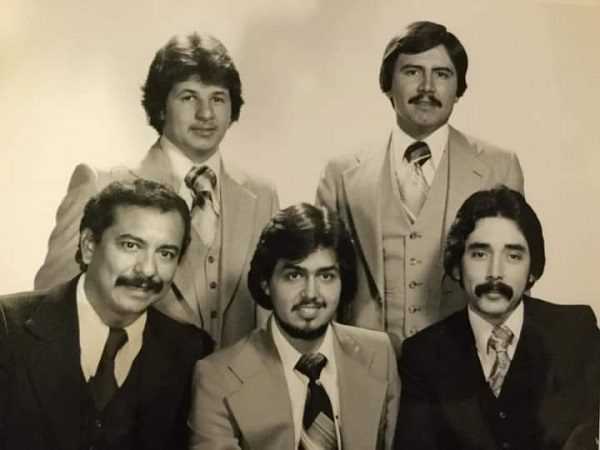
Five of the six Alma Del Barrio DJs Steve Lopez, founder Enrique Kiki Soto, Gustavo Aragon, Eddie Lopez, and Hector La Voz Resendez

Alma Del Barrio

In the autumn of 1973, what would become one of the most important Latin radio shows in Los Angeles started to go on the air, which is known as ”Alma Del Barrio” to this day and its main founders were Enrique Soto and Raul Villa, who were still university students at the time. What Raul and Enrique were looking for with this show was to educate the audience musically speaking and ensure that listeners to learn much more about their favorite artists.

A key part of this show is to interview the greatest exponents of the salsa genre and some of these have been Celia Cruz, Chucho Valdes, Manny Oquendo, Tito Puente, Roberto Roena and many more. Thanks to these conversations, fans of these artists have managed to learn more about their favorite artists and their future projects.

From the day of its founding, the show has been broadcast through the radio waves of KXLU, which is one of the largest radio stations in Los Angeles and offers all kinds of variety and musical genres in its programming.

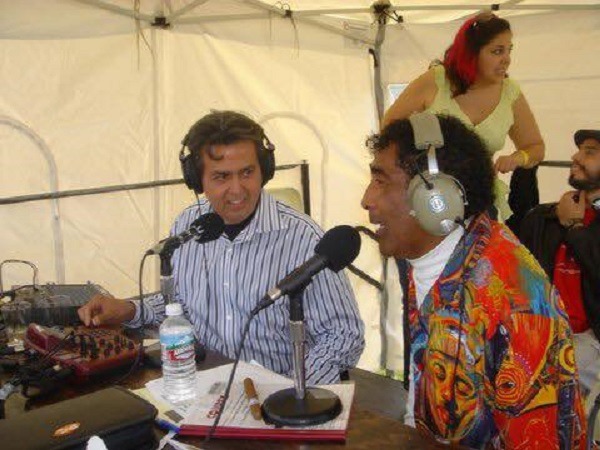
Host Eddie López and Venezuelan Latin music bandleader Rudy Regalado

Canto Tropical

”Canto Tropical” is a radio show created with the firm intention of serving as a bridge to unite generations, cultures and countries that appear to not have anything to do with each other. The main musical genres on which the programming is based are salsa, Latin jazz, merengue, Afro-Cuban rhythms, among others. The music comes from all over the world, but most of the material comes from South and Central America and the Caribbean.

In addition to being always aware of the latest Latin music, hosts Kathy Diaz and Hector Resendez always make sure to get the best interviews with the most famous local and foreign artists so that their fans can get to know them better both personally and professionally. Likewise, listeners have the possibility to participate in contests and sweeptakes to win free tickets to concerts and events that are of their interest.

One of the requirements to be met by the show is to always invite local artists and singers to help them promote their music, new albums and concerts. In this way, the audience is aware of what local talent is currently doing. In fact, there are many figures who are still thankful for the exposure given the program, thanks to which they have achieved the popularity they were seeking.

Another detail that cannot be overlooked is that several social and community organizations have publicly thanked the show for its voluntary work and its hosts Kathy and Hector, who have even written for major publications such as Hispanic, Bilboard Magazine CASHBOX, among others.

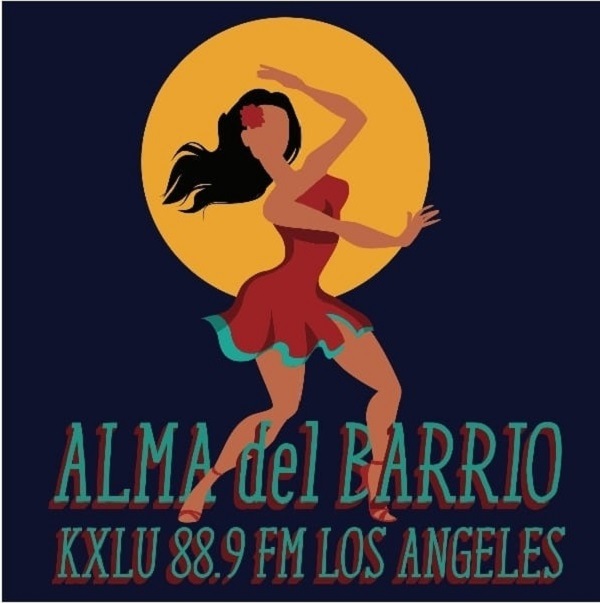
Alma Del Barrio's logo
Alma Del Barrio’s logo

Read also: Son Del Monte’s musical director and timbalero Manuel Rivera

Miguel “Angá” Díaz the percussionist who made his name in the ranks of Cuba’s legendary and enigmatic Irakere group

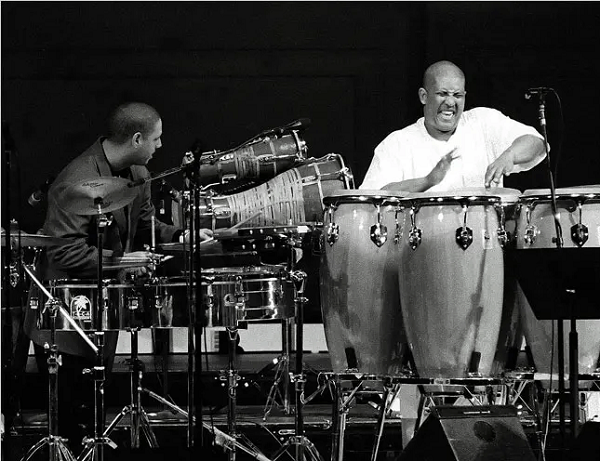
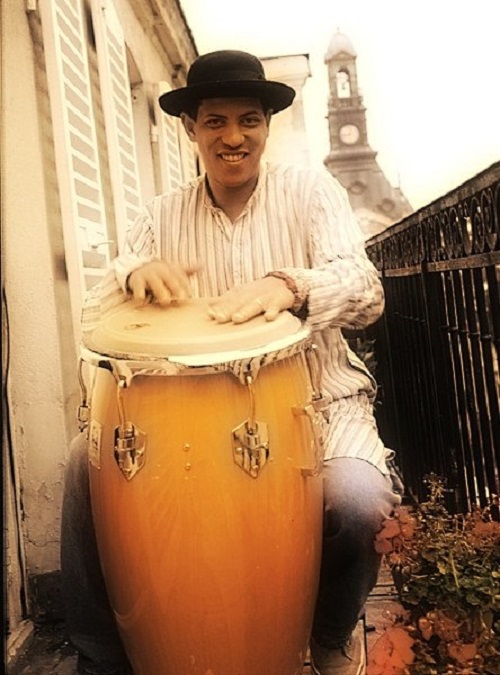
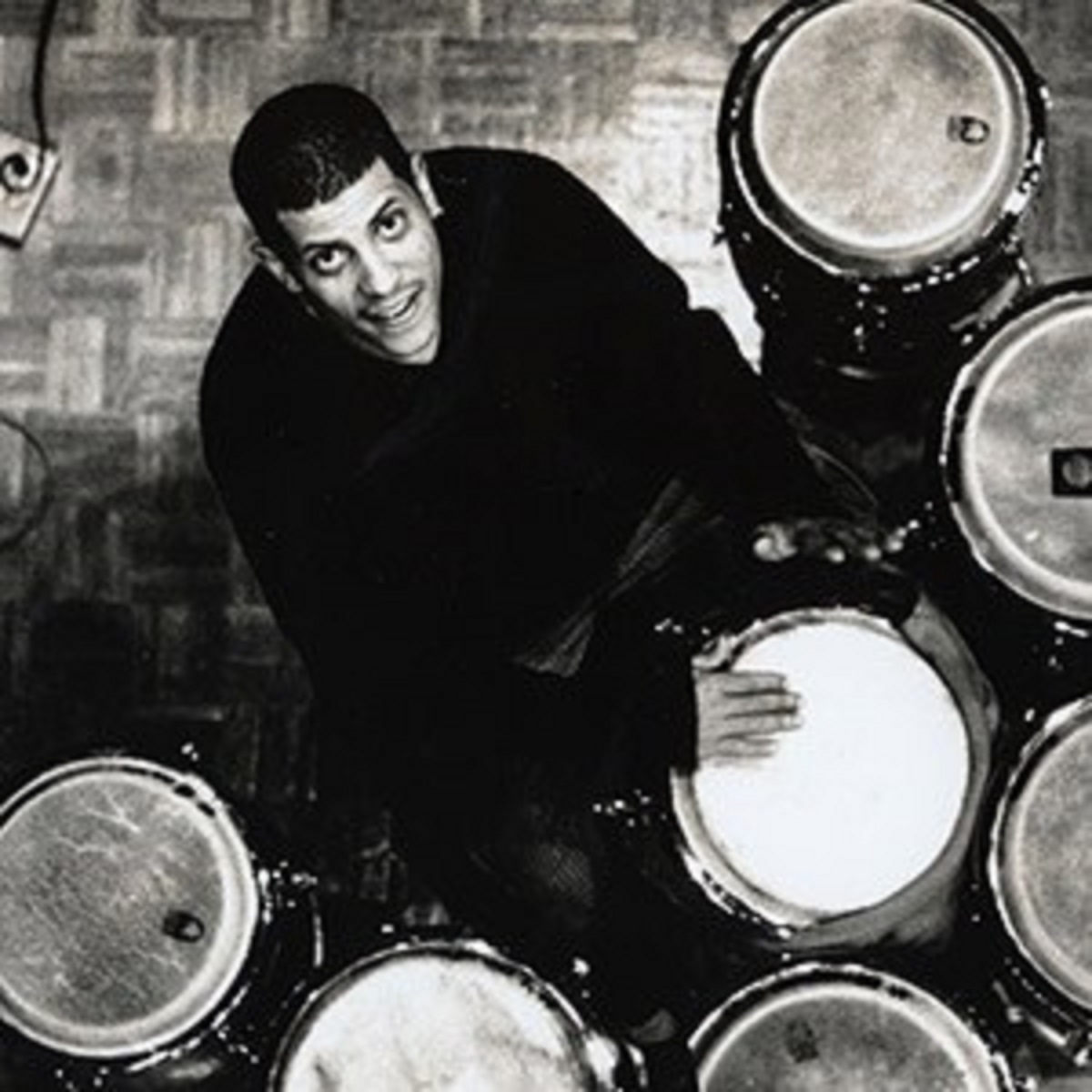
Miguel “Angá” Díaz (1961-2006) was a valuable and prolific Cuban percussionist. With his explosive solos and the creation of five conga toques, “Angá” was widely acclaimed as one of the world’s great congueros.

One of the mainstays of Afro-Cuban rhythm in recent times, Angá played with a multitude of jazz stars, from Chucho Valdés, Chick Corea or Steve Coleman, to Roy Hargrove, Minino Garay, Chano Domínguez and Herbie Hancock, among others.

The claim that he was one of the best percussionists in the world is backed up by the Grammy awards he won, his participation in such important projects as Buena Vista Social Club and the Afro-Cuban All Stars, and his status as sideman of geniuses like Tito Puente, Herbie Hancock, Carlos Santana or Danilo Pérez, as well as his membership in legendary groups like Irakere, according to Más i Más, the organizer of his concerts in Barcelona.

 Miguel "Angá" Díaz el percusionista que se dio a conocer en las filas del legendario y enigmático grupo Irakere de Cuba
 Miguel “Angá” Díaz el percusionista que se dio a conocer en las filas del legendario y enigmático grupo Irakere de Cuba

Father of three daughters – the eldest living in Cuba and the two younger ones in Paris – Angá never stopped searching for new forms of musical expression, experimenting with the fusion of different styles, such as jazz, African sounds, rock and hip-hop.

He was committed to the development of the conga, breaking the traditional barriers of percussion, to introduce them into classic Latin rhythms while preserving their distinctly Cuban roots.

He played with several Cuban artists, including Irakere, Afro-Cuban All Stars, Buena Vista Social Club, Omar Sosa, Omara Portuondo, Tata Güines, Rubén González and Orishas.

Miguel “Angá” Díaz
Miguel “Angá” Díaz

At that time he recorded and toured frequently with international musicians such as Steve Coleman, Roy Hargrove, Baba Sissoko, Ry Cooder, Pascal Coulon, Mezzadri Malik, Montgomery Buddy, Pascal Coulon and John Patitucci. Angá’s musical journey was a personal quest to investigate and create new sounds and rhythmic fusions.

More than just an artist, Angá demonstrated his commitment to the development of his instrument, teaching master classes at various schools and universities in North America and throughout Europe.

For Paris-based Argentine percussionist Minino Garay.

“He is indisputably one of the great percussionists of his generation; the greatest of all. His death causes me enormous sadness, as if it were a story that did not end,” lamented Garay, who will not attend the funeral this Friday, due to the fact that on that day he will give a concert in Vance, in the south of France. “I will certainly dedicate it to him,” he added.

Miguel Angá Díaz (1961-2006) fue un valioso y prolífico percusionista cubano

Angá Díaz received his formal education at the Escuela Nacional de Arte in Havana, Cuba, and after joining the Latin jazz groups Opus 13 and Irakere, where he perfected his conga playing technique, he moved to Europe, where he devoted himself to exploring the fusion of styles, bringing Cuban music closer to other musics and thoroughly investigating the relationship between Afro-Cuban polyrhythms and technology.

In the summer of 2005, Angá released his first solo album EChu Mingua, which the musician himself described as “a musical religious mass. Spiritual music is when the spirits are invoked to come down to earth, inviting them to a party or to talk to them”, and that is “the whole concept of the album”.

Transgressor of conventions, Angá emerged as an independent, free and committed musician with a wide variety of projects, from experimental jazz with Steve Coleman and Roy Hargrove, and hip-hop with the Orishas, to his participation in Omar Sosa’s tours, in addition to participating in numerous alternative projects with musicians from all over the world.

Angá’s musical trajectory was a tireless search, whose main purpose was to explore and create new sounds, as well as rhythmic fusions.

Source: jornada.com.mx

Miguel “Angá” Díaz

You can read: Freddy de Jesús Ortega Ruiz “Coco & su Sabor Matancero”

AQUILES BÁEZ

Swing And Tradition Of A Distinguished Venezuelan Artist

Chapter I: Aquiles’ Farewell

Aquiles Báez
Aquiles Báez began to flow within the Jazz and Latin American rhythm during his stay in New York (USA).

“With all the pain in my soul, I must publicly communicate that my friend, my brother, my accomplice Aquiles Báez passed away this morning at 5 in the morning in the city of Aachen, Germany. Aquiles was in the middle of a concert tour here in Europe. He flies high gordito.” Ramón Arturo Aular (Báez’s friend, musician, and professor at the Aachen Conservatory of Music) informed the community through his Twitter account the Monday, September 12th.

The virtuoso musician, noble guitarist, arranger, and excellent composer died of a sudden heart attack at the residence of his friend Ramón Aular. His last concert was held in the city of Cologne located in western Germany as part of his 2022 European tour, the first he did after the cessation of activities due to the Covid-19 pandemic.

The noble 58-year-old artist had already performed in Spain and was preparing to present his music in some German cities such as Berlin, Tubingen, and Hamburg, before finishing his tour in France and Portugal.

“I think it is important to project the work that one has been developing in other latitudes. This is very interesting because I realize that the music I make is universal, it is not limited only to playing for the Venezuelan diaspora, which of course also provides an audience”. Báez expressed this to an international media.

During his artistic career, he recorded 17 albums and collaborated on more than 150 recordings with other artists. Báez was a professor at the Berklee College of Music (Boston, Massachusetts) and was recognized for his mastery of the guitar with “elements of mixed Caribbean and Afro-Venezuelan cultures with classical music and Jazz.” Fragment extracted from his biography.

In life, he shared stages with artists such as Paquito D´ Rivera, John Patitucci, Romero Lubambo, C4 Trío, Ilan Chester, Simón Díaz, Huáscar Barradas, Worlds of Guitars, Aquiles Machado, Serenata Guayanesa, Iván Pérez Rossi, Fareed Haque, Dawn Upshaw, Richard Bona, Luisito Quintero, Solo Razaf, Marco Pereira, Oscar Stagnaro, and Ensamble Gurrufío.

Before passed away, Aquiles Báez was preparing the publication of two studio albums and the creation of five more. He was also in charge of making the music for the Venezuelan play Mi último delirio, which premiered on September 2nd with the lead role of his friend Héctor Manrique and with great reception from the public and specialized critics.

Chapter II: Getting to know the musicians’ Master to the rhythm of the compass

Julio, was the one who instilled in him a love for music by giving him his first instrument, the Cuatro.
His older brother, Julio, was the one who instilled in him a love for music by giving him his first instrument, the Cuatro.

Aquiles Báez was always an irreverent musician who made the type of music that he felt. “It is important to make music from what one feels it is, from that forceful energy that is the act of creating…Lately, I have been respected. It was hard to get that position. They have not always respected me, perhaps because of my way of being, irreverent. The people who manage cultural spaces have always taken me as an anarchist… I consider myself someone accessible, the teacher thing hasn’t gotten to me, seeing everyone below me, that seems pathetic to me…” Aquiles expressed this to a Venezuelan media.

“Throughout his career, Aquiles has received various awards and recognitions. These include Pepsi music awards and the William Leavitt award given by the Berklee College of Music; In addition, he has stood out with more than a dozen awards as a composer of music for film, theater, and dance. Extracted from his biography.

In 1996, at the age of 32, Aquiles decided to move to the United States to study at the Berklee College of Music in Boston. After two semesters he dropped out, considering that he was “learning the same thing but in another language.” And that was not only his thinking, but also what he demonstrated during his stay as a student at the academic campus, so shortly after he entered the Berklee College of Music again, but this time as a professor.

On this academic campus, he gave “clinics, workshops, and seminars at different universities and musical institutions such as Indiana University, Temple University, Queen College, Krems Summer camp, Curitiba Music Office, The Jazz School in San Francisco, among others, in Europe and the United States”, according to his biography.

Shortly after, he participated as a guest musician on the albums of Panamanian artist Danilo Pérez: Central Avenue (1998) and Motherland (2000), both albums nominated for Grammys.

Aquiles Báez was a founder and member of the board of directors of Guataca productions. In this space, they continue to support emerging Venezuelan artists. Báez’s methodology for finding new talent was to research, listen to them live and contact them. “Why not support those guys who come after you? Why not make life more pleasant for them? Or a lighter path than one had. This road is not easy at all, it has been very hard, and it continues to be hard. And one continues and believes that he has acquired a certain reputation…” Báez expressed this in an interview conducted by a Venezuelan media outlet.

Chapter III: Anecdotes of a famous life

Last night sharing with the beloved Maestro Carlos Cruz Diez (Panama. October 29, 2016)

Countless artists expressed their affection and grief for Aquiles’ departure, expressing testimonies of a life full of joy, love, and passion for musical colors.

“One of the artists who has inspired me the most and a great human being. He made it possible for us to make our first album, the tour of the United States and opened the doors of his home for us. We made a lot of beautiful friends with Aquiles. D.E.P, Maestro,  compaíto Aquiles Báez”. Jorge Glem (Cuatrista and member of the group C4 Trio).

“The wonderful Aquiles Báez was a musician capable of playing all Venezuelan music of all genres“. Alfredo Naranjo (Vibraphonist)

“Dismayed by the sudden death of my dear friend Aquiles Báez, one of the great musicians of our country, guitar teacher, and eternal officiant of humor and simplicity”. Leonardo Padron (Writer)

“Today we are less. I have just been informed that our admired and beloved musician and my dear friend, Aquiles Baez, has passed away. This news is heartbreaking and unfair. Aquiles is one of the most creative and generous people I have ever met”. Héctor Manrique (Director and theater actor)

“Thank you for being an inspiration in music and a big brother in life. Without your unconditional support, I would not have even reached the corner”. Álvaro Paiva Bimbo (Guitarist and 2022 Oscar nominee for the soundtrack of the Disney movie “Encanto”)

“How can we forget this great friend and fellow adventurer”. Claudio Nazoa (Comedian)

“I was left with the desire to carry out the project we had to record an album together. What profound sadness!” Miguel Delgado Estévez (Musician, arranger, and producer)

Finally, the Venezuelan percussionist Omar Ledezma Jr. expressed his sorrow for the death of Báez.

LENTEJAS. That’s what the gordo called me. 7 years of my life I played and toured the world with Aquiles Báez. We met at one of his concerts at the Bellas Artes thanks to my dear Carlos Reyes, another great guitarist from our country, at the time I worked at the MACCSI. Years later, arriving in Boston, he called me to be in his group and I couldn’t believe it. The gordo was my musical hero thanks to his Platabanda and the number of times I saw him accompanying great singers. He was the one who told me to grab El Cajón and start putting in the merengue and the gaitas. I knew his bad jokes by heart: “Vamos a tocar la canción de DC: Di si encontraste…”, with him, I learned to be a person first, then a musician, I learned not to make ugly faces if I made a mistake, with him, I had to press on reading, to be punctual, to put my batteries.

Anyway… with the gordo I learned to be a professional musician, because with his virtues and defects, for me, he was the best.

I love you my gordo, wherever you are. Thanks. #aquilesbaez”.

You can continue reading the article about Omar Ledezma Jr. From The Venezuelan Melody To The Caribbean Rhythm.

Here is a small excerpt from this interview of 2021:

Years later, and with experience acquired in presentations, and groups, Omar Jr. met his first mentor, Aquiles Baez, a famous Venezuelan artist, guitar virtuoso. Together with Aquiles, he made his first international tour of the United States. “With Aquiles, I had the pleasure of playing Venezuelan music. We play with many artists in the United States… Thanks to him I developed percussion (Non-autochthonous element) in Venezuelan music”. Ledezma Jr. commented.

“Fall in NY. How beautiful are the colors of Autumn in NYC. Enjoying that watercolor of nature”. Aquiles Baez (November 8, 2018)

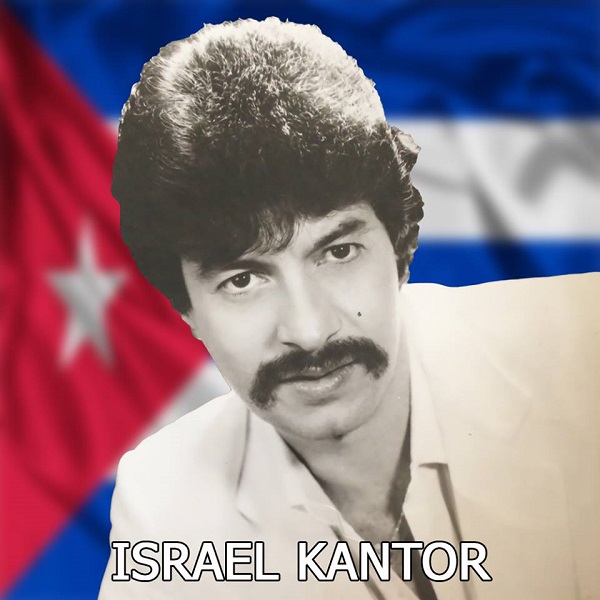
Israel Kantor was an excellent bassist, arranger and composer who achieved great popularity in Cuba for his vocal technique and original “Sonear” style.

His real name was Wilfredo Israel Sardiñas Domínguez. 

He was born on October 16, 1949 in Alturas de Canasí, a town in western Cuba between Havana and Matanzas, and his parents registered him a couple of years later in Bacuranao (birth date October 16, 1954).  A bassist, arranger and composer, he achieved great popularity in Cuba for his technique and original “sonear” style.

Although he was not very well publicized or acclaimed as a sonero, he managed to make a good name for himself in exile.

His mother played the tres and seven of his nine siblings formed a group with guitar, tres and lute; he played both sones and punto guajiro.

They used as bass a box called marímbula, which consisted of a box with four straps to produce the bass sound.  He began to sing with his brothers at the age of eight.

Later he went to Havana to study at the Conservatory of Guanabacoa, where he started playing trova sonera.

israel kantor
HE BECOMES A PROFESSIONAL

Israel Sardiñas improvised on the sonos with astonishing ease, and he is not exactly what you would call an interpreter “by ear”, or empirical. 

In fact, he played the bass before singing, and it was precisely his condition of bassist and arranger that made Meme Solis discover him in 1975 and took him and his group to work in the shows he was then directing in tourist centers on the beaches east of Havana.

“One night, at the dance show they were doing at the Hotel Atlántico, in Santa María del Mar, Israel took the microphone, I think because the group’s singer was not there,” Meme Solís recalls now.  “I saw him and told him: ‘But how well you sing!’ When I put on another show I gave him two numbers, and from then on people began to follow him”.

“I began to study Carlos Embale, Miguelito Cuní, Raúl Planas, Roberto Faz and Beny Moré,” he said, referring to the time when he stopped playing bass to devote himself to singing.  “There is everything that is Cuban music: guaracha, son, rumba. What I did was to listen to them and transfer them to the staff to understand how they moved their voices.

The one I liked the most was Raúl Planas; he was the one who rubateaba the most, the one who broke the syncopation the most.

Cuní had a good timbre, but always in time. Planas had a deeper timbre, and the sonero’s timbre must be metallic”.

That was the beginning of his professional career, which in Cuba would take him to the groups Ireson, Neoson, Los Yakos and Los Reyes 73. In 1979, he joined the Cuban group Los Van Van, founded and directed by bassist and composer Juan Formell (Juan Clímaco Formell Cortina was born on August 2, 1942 in Havana, Cuba).  As vocalist of the famous group, Israel became popular in Cuba for his vocal technique and his “sonear” style, which aroused great interest in the musical media, especially in popular music.  With the Los Van Van Orchestra he participated in the recording of the albums “Juan Formell y Los Van Van” in 1981 and “El Baile Del Buey Cansa’o” in 1982, both in the Egrem label of Cuba.  It was with this group that the artist became known, and left his stamp on the interpretation of the song “Seis Semanas”.

From that time on, he began to make musical arrangements.

After several international tours with Los Van Van he decided to leave them in Mexico in 1983, in search of greater freedom and possibilities for his career.

A month later he was already in Miami after crossing the border.  “I wanted to go to Grupo Afrocuba, but the bureaucracy wouldn’t let me,” he said on one occasion. “Van Van is very good, but Afrocuba came with a very strong force. I also wrote, I made arrangements, I had other ideas, and Afrocuba suited me better, because it was more jazzy”.  In an interview for a news agency years ago, he said: “I had a great school before being with Los Van Van. After traveling a lot with them, I was very anxious to see the world and the third time we were in Mexico, I decided not to return to Cuba”.

SUCCESS IN EXILE

When he arrived in New York in April 1984, he was still Israel Sardiñas, but when Johny Pacheco, the legendary director of the Fania All Stars, took him to an anniversary party of the group at the Cheetah two months later, the late “singer of singers”, Héctor Lavoe, heard him improvising and stopped the orchestra: “I want to baptize him right now as Israel Cantor”, said Lavoe.  The only thing left to do was to change the c for the k, spend two months with Lavoe’s band, and in October create his own, which he called La Verdad.

Thus, in 1984, he released the album “Israel La Verdad” with the production of Larry Harlow, on the Bacán Records, Inc. label. All the numbers were written and composed by Israel Kantor.

As its name indicates, La Verdad was a constellation of excellent musicians: Sonny Bravo on piano, Salvador “Sal” Cuevas on bass, Tony Barrero and Pedro “Pouchi” Boulong on trumpets, Barry Rogers on trombone, Mario Rivera on saxophone, Karen Joseph on flute, Frankie Malabé on congas and Nicolás “Nicky” Marrero on bongo among others.  Justo Betancourt and Adalberto Santiago collaborated on backing vocals, with Justo doing a duet track: “Rumberos De Nueva York”.  Other numbers on the album that deserve attention are: “La Verdad”, “Tu Lindo Pasado”, “María Antonia” and “A Mis Idolos”.

That same year he is invited to sing on the album by Ñico Rojas y su Orquesta entitled “Paso La Vida Pensando: ‘En Tí'”, on the Kanayón Records label, three songs: “Juan Ramón (El Chichón)”, which was popularized by José “Cheo” Feliciano when he was part of Joe Cuba’s group, “Por Encima Del Nivel”, which had the arrangements and piano of Luis Quevedo, in which he performs a superb piano solo, and in “Lo Voy A Matar”, composition by Tony Pabón and arrangements by maestro Kenny Gómez.

In 1986, he is the lead vocalist of the group Salsa Latina in the album “De Aquí . . Pa’ Lante!”, on the Coa Records label, which was produced by Isidro Infante and Israel Kantor himself and in which he composed half of the eight songs that make up the album.  The most outstanding numbers are: “En Honor A La Verdad”, “Se Acabó El Material”, “Saca Aserrín, Mete Madera”, “A La Mitad Del Camino” and “El Palo De China” (Composition by Raúl Marrero).

He temporarily left Miami to try his luck in Puerto Rico, Mexico and Italy until 1996, when he settled permanently in Miami.  He performed on various stages of the music scene: he inaugurated the Mamá Rumba Club in the Mexican capital, made arrangements for the orchestra of the Sábado Gigante program on Channel 23 in Miami, participated in a Cuban Jam Session at the Lincoln Center in New York, among others.

For more than two decades Kantor was the protagonist of important musical projects both in Latin America and Europe.  He recorded eight solo albums and six guest albums with orchestras such as those of Johnny Pacheco and Juan Pablo Torres.  Among his recordings are “Un Señor Kantor” for the BMG record label; a tribute album to Los Van Van for Sony Music and “Llegó La Música Cubana”, an album that took him on tour in Europe.

In 2003 he collaborated in the solo work of arranger and composer Jesús “El Niño” Pérez with Orquesta Sensación (not to be confused with the former group of Cuban Abelardo Barroso) entitled “Cuba y Puerto Rico Son De Un Pájaro Las Dos Alas”, in which Israel Kantor’s voice stands out over those of the other two singers: Danny Rojo and Rogelio Rente, as well as demonstrating his abilities to improvise on the soneo, in the number “Pa’ Puerto Rico” (which Jesus “El Niño” Perez composed for the album, “La Amistad” by Johnny Polanco).

His last great work, in 2003, was a tribute to Benny Moré his permanent artistic inspiration- entitled “To ‘El Bárbaro Del Ritmo'”, a live recording with the Tropicana All Stars orchestra, produced by Regu Records, owned by Recaredo Gutiérrez. 

The orchestra, made up of 22 musicians, mostly Cubans living in Miami, led by Israel Kantor, was nominated for a Latin Grammy Award in the traditional music category in 2004, and two other nominations for an Anglo-American Grammy.

The project, which consisted of a live show, recorded on DVD and seven albums, led them to share the stage with legendary figures such as Paquito D’Rivera, Marco Antonio Muñiz and Generoso “El Tojo” Jiménez, among other glories.

The Tropicana All Stars orchestra was made up of a large number of extraordinary musicians, all of them renowned and of the highest quality: Paquito Echevarría on piano, Cuban musician who has collaborated for a number of important singers such as Gloria Estefan, Rey Ruiz among others; Venezuelan Ramses Colón on bass, a virtuoso musician and desired in any band, Adalberto “Trompetica” Lara on first trumpet, possessor of a very Cuban technique when playing and improvising, he has been a musician of Irakere, Super Cuban All Stars, NG La Banda among others; Kiwzo Fumero on the second trumpet, comes from the conservatory “Alejandro García Caturla” of Cuba, since his beginnings he expressed his great interest in the instrument to which he has dedicated part of his life, he dominates the high notes with mastery for which he has been recognized by great masters of the genre; Lenny Timor on the third trumpet, participated with Los Sobrinos Del Juez for 14 years; Mario Del Monte on fourth trumpet, has been a member of prestigious orchestras such as Roberto Faz, Pacho Alonso, Tito Gómez among others; Alfredo Salvador on baritone sax, has been present in recordings for Celia Cruz, Paquito D’Rivera and Arturo Sandoval; José “Pepe” Vera on tenor sax, his resume includes recordings with the Tropicana Orchestra, Benny Moré, among others, Manuel Valera on alto sax; Juan Carlos Ledón on tenor sax, he has played with Orquestas Cubanas, Roberto Torres, Willy Chirino, Andy Montañéz, among others; Bayron Ramos on trombone, he has been a musician with Albita Rodríguez’s band and Fania All Stars; Braily Ramos on trombone, he has recorded with Gloria Estefan and Miami Sound Machine, Alejandro Sanz and others; Leonardo Timor Sr. on trombone; Leonardo García on timbales, has accompanied Luis Enrique, José Luis Rodríguez “El Puma”, Alexandre Pires, among others; Michael Gerald on percussion; Edwin Bonilla on congas, one of the best percussionists today who needs no further introduction; Juanito Márquez on arrangements, production and musical direction; Germán Piferrer is the musical director and arranger, and as very special guests Juan Pablo Torres, Roberto Torres, Generoso “Tojo” Jiménez, Carlos “Patato” Valdéz, Alfredo “Chocolate” Armenteros and Cándido Camero.

The vocal responsibility fell on Israel Kantor, who was emerging as one of the contemporary Cuban singers with the greatest international projection.  His voice can be heard in the twelve songs that made up the first musical volume: “Santa Isabel De Las Lajas”, “Oh! Vida”, “Maracaibo Oriental”, “Fiebre De Ti”, “Mata Siguaraya”, “Amor Fugaz”, “Bonito y Sabroso”, “Camarera Del Amor”, “Mucho Corazón”, “Yiri Yiri Bon”, “Perdón” and “Francisco Guayabal”, the cover was made by Cuban painter Andrés Puig.

Kantor’s love for his homeland turned his career into a constant homage to Cuban music.

“Over time, one assimilates growing up far from your homeland, not being able to return to stay connected to your roots, but time heals the wounds,” he said a short time ago.

“Inspiration is like a spring,” Kantor said, referring to the improvisations he made as a sonero singer.  “It’s born from the heart; ideas are constantly flowing to you. That’s why a sonero always sings the same song differently.

Cuban music is the continuity of what the singer generates: although the first thing is the vocal conditions, what you have to have is, above all, the clave; knowing how to play with the phrasing so as not to go against the clave”.

Kantor said, “You can train a vocalist to become a sonero, but if his relationship with the genre is not natural, from the heart, he will always end up giving clichés in his inspirations”.

He had no shortage of job offers, even though he was rarely heard on the radio in Miami.  When he was not performing with the Tropicana All Stars, he was performing with his group Havana Son -violin, flute, piano, bass, timbal and conga- in different stages both in the United States and internationally: at the Tropicana Hotel in Las Vegas; the Lincoln Center in New York (in 2003); at the Casa Cuba in Ponce, Puerto Rico, and on tours to the cities of Nicaragua, Lisbon, Oporto and Vigo, in Portugal and Spain, where he shared with other Cuban exiled stars like Willy Chirino and Albita Rodriguez.

Israel Kantor passed away on Saturday, July 1, 2006 at 11:00 p.m. at his residence in southwest Miami, victim of cancer, at the age of 57.  The artist, who had been suffering from liver problems for some time, had already undergone surgery in 2001 for colon cancer.  He is survived by his wife Rosalia Perez, aunts, uncles and cousins.  His body was laid to rest on Wednesday, July 5 at Caballero Rivero Funeral Home, 3344 SW 8th Street, in Miami, and buried the following day at Woodland Park Cemetery, located at 3260 SW 8th Street, in Miami.

“He always worked as if it was the first day,'” recounted his wife Rosalìa as she recalled the artist’s musical enthusiasm.  “He was never satisfied. He had a great hunger to play, to sing and to give people everything he had.”

REACCIONES POR SU MUERTE

 “Israel se hizo en Los Van Van. Tuvo una etapa muy brillante”, señaló Juan Formell, fundador de Los Van Van, ayer desde La Habana a El Nuevo Herald. “Está entre los cantantes más importantes con los que he trabajado. Para nosotros es una pena la pérdida de Israel”.

“Fue una de las voces más representativas de la música cubana de los últimos años”, dijo Adolfo Fernández, amigo personal y publicista de Kantor.  A su juicio, con la muerte del famoso sonero desaparece “una personalidad única y una manera de cantar irrepetible”. “El color de voz de Kantor era único”, destacó.

“Ha muerto uno de los mejores soneros que ha dado Cuba, y uno de los soneros auténticos, de los cuales no quedan muchos. Tenía una voz privilegiada, un ritmo y un sabor muy auténticos”, anotó la cantante Albita Rodríguez tras conocer la noticia de su deceso.

Fuente: herencialatina.com

  • « Go to Previous Page
  • Page 1
  • Interim pages omitted …
  • Page 25
  • Page 26
  • Page 27
  • Page 28
  • Page 29
  • Interim pages omitted …
  • Page 37
  • Go to Next Page »

International Salsa Magazine (ISM) is a monthly publication about Salsa activities around the world, that has been publishing since 2007. It is a world network of volunteers coordinated by ISM Magazine. We are working to strengthen all the events by working together.