• Skip to primary navigation
  • Skip to main content

International Salsa Magazine

  • HOME
  • Previous editions
    • 2026
      • ISM / May 2026
      • ISM / April 2026
      • ISM / March 2026
      • ISM / February 2026
      • ISM / January 2026
    • 2025
      • ISM / December 2025
      • ISM / November 2025
      • ISM / October 2025
      • ISM / September 2025
      • ISM / August 2025
      • ISM / July 2025
      • ISM / June 2025
      • ISM / May2025
      • ISM / April 2025
      • ISM / March 2025
      • ISM / February 2025
      • ISM / January 2025
    • 2024
      • ISM / December 2024
      • ISM / November 2024
      • ISM / October 2024
      • ISM / September 2024
      • ISM / August 2024
      • ISM / July 2024
      • ISM / June 2024
      • ISM / May 2024
      • ISM / April 2024
      • ISM / March 2024
      • ISM / February 2024
      • ISM / January 2024
    • 2023
      • ISM / December 2023
      • ISM / November 2023
      • ISM / October 2023
      • ISM – September 2023
      • ISM – August 2023
      • ISM July 2023
      • ISM Edition June 2023
      • ISM – May 2023
      • ISM April 2023
      • ISM March 2023
      • ISM February 2023
      • ISM January 2023
    • 2022
      • ISM December 2022
      • ISM November 2022
      • ISM October 2022
      • ISM September 2022
      • ISM August 2022
      • ISM July 2022
      • ISM June 2022
      • ISM May 2022
      • ISM February 2022
      • ISM January 2022
    • 2021
      • ISM December 2021
      • ISM November 2021
      • ISM October – 2021
      • ISM September 2021
      • ISM August 2021
      • ISM July 2021
      • ISM May 2021
      • ISM April 2021
      • ISM June 2021
      • ISM March 2021
      • ISM February 2021
      • ISM January 2021
    • 2020
      • ISM December 2020
      • ISM November 2020
      • ISM October 2020
      • ISM September 2020
      • ISM August 2020
      • ISM July 2020
      • ISM June 2020
      • ISM May 2020
      • ISM April 2020
      • ISM March 2020
      • ISM February 2020
      • ISM January 2020
    • 2019
      • ISM December 2019
      • ISM November 2019
      • ISM October 2019
      • ISM Septembre 2019
      • ISM August 2019
      • ISM July 2019
      • ISM June 2019
    • 2016
      • ISM December 2016
  • Spanish
  • Download Salsa App
    • Android
    • Apple

Search Results for: All Stars

Hector “Bomberito” Zarzuela Quality and Tuning in the Fania All-Star Machinery

Hector “Bomberito” Zarzuela, Instrumentalist, excellent sound, tuning and world-class reader.

 Héctor Zarzuela, known in the entertainment world as ‘Bomberito’, passed away last Thursday, January 7 at the age of 84 in New Jersey, USA.

Born June 3 in the city of Moca, Dominican Republic, where he began his musical studies, played with several local groups and then moved to the capital city in which he played with

different orchestras. Then in the early 60’s, he decided to emigrate to New York City.

Shortly after arriving in New York, he entered the world of salsa and began working with local orchestras, and later with those that made up the famous Fania All-Star in which he remained for many years.

Hector "Bomberito" Zarzuela Instrumentalist, excellent sound, tuning and world-class reader.
Hector “Bomberito” Zarzuela Quality and Tuning in the Fania All Stars Machine

The former member of the band Estrellas de la Fania, was one of the most important personalities of salsa thanks to his great talent and participation with renowned groups and artists of the salsa world, among them the Fania All-Stars (1971-1976 / 1979-1988 / 1994), Cheo Feliciano (1973 / 1977 / 1993), Ismael Rivera y sus Cachimbos (1975-1978), Héctor Lavoe (1975 / 1981) and Ray Barretto (1979 / 1987-1990).

He worked with fellow trumpeter Luis “Perico” Ortiz for many years, being an extraordinary quality and tuning session and responsible for innumerable hits of different singers.

The name Hector Zarzuela earned a lot of respect for his beautiful songs as an instrumentalist, excellent sound, tuning and world-class reader.

His list of artists with whom he recorded is enormous, here are some of them: Pete Conde, Johnny Pacheco, Héctor Lavoe, El Canario, Ismael Miranda, Ismael Rivera, Tony Vega, Celia Cruz, Grupo Niche, Victor Manuel, among others.

Traveling the world with all these artists, from Latin America to Africa, Japan, Australia, leaving legions of admirers in his wake and a great example to follow.
In 1980, he recorded with an orchestra formed by him, a production entitled “Merengues con Caché”. At that time, he was also with the group “Africando”.

In 1980, he recorded a production entitled “Merengues con Caché” with an orchestra which he has created. Around this time, he was also in the group “Africando“.

He traveled from Latin America to Africa, Japan, and Australia with all these artists, collected legions of fans, and set a great example to follow.

He also dabbled with some merengue groups, especially The New York Band, La Gran Manzana, etc. His career in merengue groups is not extensive, after all he has lived in New York City for many years, making him a living example of Constancy and Determination.

Lovingly called Bomberito, we know nothing about the reasons for this nickname, but he is highly known this way.

Zarzuela was a well-mannered, quiet temperament, respecful person when relating with others, and very responsible person in carrying out his work.

Man with a noteworthy trajectory in growing quality and respect by becoming one of the great figures abroad of our musicians.

Héctor Zarzuela deserves a predominant role in the pages of our history.

He was one of the greatest trumpeters of all time, always being the first trumpet in the ensembles.

He belongs to the highest elite group of musicians of the same instrument. The maestros Luis “Perico” Ortiz, Elias Lopes, Kito Velez, Orlando Pabellon, Rafael Labasta, Alfredo “Chocolate” Armenteros, Puchi Bulong and other great figures that make up the trumpet legends of the trumpet in salsa.

Trumpet

The trumpet is a wind instrument, which belongs to the family of brass instruments and is made of metal alloy.

The sound is produced by the vibration of lips on the part called mouthpiece from the air column (air flow).

Commonly, it is usually tuned in 9′ B ♭, that is to say, one tone below the tuning written on the staff, although there are also trumpets tuned in F, C, A and E, – flat-.

The musician who plays the trumpet is known as trumpet player or trumpeter.

Mechanism

The trumpet is made of brass tube doubled in a spiral of about 180 cm long, has several valves or pistons, and ends with a bellmouth weir, which receives the name of bell or pavilion.

The first two thirds of the tube are practically cylindrical, which gives it a loud and bright sound, whereas the cornet and the flugelhorn, which have a conical tube and produce a softer tone.

The remaining third is a conical tube, except in the last 30 cm, where the tube is widened to form the bellmouth weir.

The caliber is a complex series of turns that besome smaller in the mouthpiece receiver and larger just before the start of the bell. Careful design of these turns is critical to the intonation of the trumpet.

Hector "Bomberito" Zarzuela Instrumentalist, excellent sound, tuning and first class reader.
Hector “Bomberito” Zarzuela Quality and Tuning in the Fania All Stars Machine


Home

The Club de los Soneros Dorados The Orchestra of the Stars

The Club de los Soneros Dorados The Orchestra of the Stars, where great stars and legends of Cuban music meet

Two years ago, an orchestra made history. For the first time in Cuban music, the greatest legends, singers, and instrumentalists were united in a single project, their songs quickly transcended the world and occupied places in the charts.

The Cuban’s Golden Club

The Golden was born from the hand of the young composer Carlos Sanabia from Santiago de Cuba. The Golden Soneros club  (La Orquesta de las Estrellas) was one of the most awaited realities for all of Cuba.

The news of its 3rd record production is one of the best news in the musical world, its title will be MAESTROS DEL SABOR and it will count with the presence of several international guests, among them the living legend of Salsa Bobby Cruz, will consist of 21 themes in total divided into 3 volumes of 7 Songs Individually.

With a more modern and youthful style, the songs were specifically designed by Sanabia to capture the attention of the dancing public by inserting them in the popular taste.

The Cuban’s Golden Club

With elements of Rumba, Salsa, and Timba and Occurring and Sticky Phrases from the day to day life of the Cuban people.

With the presentation of new talents, singers, and musicians in the Orquesta de las Leyendas, Sanabia insists on the purpose of bringing the secrets of its music to the new generations and thus guarantee the new formation of future stars in the new talents that abound on the island.

They have not yet entered the studio to record and this third album by EL GOLDEN has already made the news. Thanks to Carlos Sanabia and his Soneros Dorados, “Salsa is in fashion again.

The Cuban’s Golden Club
USA Tour The Cuban’s Golden Club

Several established musicians played at the club during the 1930s and 1940s, including bassist Cachao López and bandleader Arsenio Rodríguez.

According to Ry Cooder, “Cuban and Caribbean society and even New Orleans society, as far as I know, was organized around these social clubs.

There were cigarette wrappers clubs, baseball players clubs, and they played cards and sports and had their pets, like dogs.

In the case of the Buena Vista Social Club, there were musicians there, like in the clubs in the United States.

Rodriguez’s pianist, Ruben Gonzalez, who played the piano on recordings in the 1990s, described the 1940s as “an age of true musical life in Cuba, where there wasn’t much money to be made, but they played because they really wanted to.

That era saw the birth of jazz-influenced mambo, charanga, and dance forms such as pachanga and cha-cha-cha, as well as the development of traditional Afro-Cuban musical styles such as rumba and son, which was later modified by Arsenio Rodríguez’s use of additional instruments to become son montuno.2 Son, described as “the foundation of Cuban music,” has transformed much of Latin American music in the 20th century.

Home

Find out all you want at the Love Sensual Festival

Europe / Croatia

Very seldom do we get places and festivities that have everything we like on one occasion.

As it turns out, they do exist, but we must make efforts to look for them, even in the locations we never expected.

One example of this is the spectacular Love Sensual Festival, which includes everything you can expect from an event of its stature. This great show will have as point of the beginning a series of celebrations that you will not believe. Not to mention that they will be held in the most spacious halls you can imagine and with the best artists and dancers of the time.

Love Sensual Festival in Croatia
A group dancing and singing at the Love Sensual Festival

If you thought that the foregoing was not enough, the event will also offer a set of concerts and dance classes that will awaken your taste in contemporary African music.

The Love Sensual Festival includes the newest African rhythms of today, among which we can find kizomba, urbankizz, semba, zouk, and many others.

Workshops:

1) URBANKIZZ / KIZOMBA / SEMBA / ZOUK

2) BACHATA: MODERN / SENSUAL / FUSION / DOMINICAN

3) SALSA ON1 / ON2 / CUBANA / RUEDA / MAMBO

Location: Valamar Diamant Hotel. Brulo bb, Porec

Porec, Istarska Zupanija, Croatia

Date: from April 30 to May 5 2021.

Home

Héctor “Tempo” Alomar: The Scorching Voice and the Rhythm Blessed by “El Cantante de los Cantantes”

The Invaluable Legacy of an Afro-Antillean Percussion and Vocal Giant

Héctor “Tempo” Alomar was born on December 28, 1950, in Parada 19 of Santurce, Puerto Rico. A singer, percussionist, and true pedigree sonero, he became an essential figure in salsa music thanks to his outstanding contributions to world-class bands.

His resume included Orquesta La Conspiración, La Diferente, Conjunto Libre, La Charanga Afrocubana, La Charanga América, Orquesta Broadway, Charanga la Tapa, Casanova y su Montuno, Batacumbele, El Combo de Siempre, Zaperoco, Nacho Sanabria’s Orchestra, Grupo ABC, and, in a career-defining run, Roberto Roena’s Apollo Sound. He also led his own musical ensemble under the name Sexteto La 51, his last recording with the legendary and living legend of Fania All Stars Eddie Montalvo.

Héctor Tempo Alomar la Voz Candente y el Ritmo

The remembered former member of Apollo Sound passed away at the age of 70 in his native Puerto Rico on May 9, 2021, leaving a profound void in the world of music collecting and salsa culture.

A Rhythm That Ran Through His Veins

The son of Doña Isabel Román and Don Luis Alomar, young Héctor showed an innate connection with the clave from a very early age. His mother used to recall that the boy would strike the rhythm with any kitchen utensil he could get his hands on, even breaking several glass cups while trying to draw sound from them with silverware.

He made his first professional recording as a minor, at just 15 years old. It happened when producer Joe Blanco invited him to record percussion with Chacón y sus Batirrítmicos, capturing his talent on tracks like “Ahorita va a llover” and “Mi guajira.”

In 1968, he moved to New York City, and by 1970, he reunited with his great childhood friend, maestro Ángel “Cachete” Maldonado. Maldonado introduced him to the city’s music circles, providing the decisive push for him to develop as a lead singer.

Héctor Tempo Alomar nació el 28 de

Blessed by “El Cantante de los Cantantes”

“Tempo” Alomar joined Orquesta La Conspiración as a timbalero, staying with the band for about three years. Later, thanks to a recommendation from trumpeter and arranger José Febres, bandleader Rafy Val recruited him for La Diferente. This gave him his first opportunity to formally record salsa on the album Fuerza Bruta, produced by Larry Harlow.

During his time with La Conspiración, a legendary anecdote took place at New York’s El Hipocampo club, right after a Fania All-Stars concert. Héctor Lavoe, who was scheduled to sing at the club that night, was running late, and the band couldn’t start. “Cachete” Maldonado assured José Mangual Jr. that “Tempo” knew the repertoire and recommended him to step up to the stage.

Out of deep respect for Lavoe, Alomar hesitated but ultimately took the stage to perform “Juana Peña,” winning the applause of the demanding crowd. Halfway through the second song, “No me llores más,” he spotted Héctor Lavoe walking into the venue, and out of sheer awe, he stopped singing. It was Lavoe himself who, from the audience, gestured for him to keep going.

When the performance ended, “El Cantante de los Cantantes” went up to the stage, congratulated him warmly, and encouraged him to keep pursuing his singing career.

Setting the Big Apple Ablaze

Around 1973, once again recommended by “Cachete” Maldonado, he auditioned for maestro Manny Oquendo, who was looking for a lead vocalist for Conjunto Libre. He was accepted immediately. After six months of intense daily rehearsals, the group chained together memorable hits driven by “Tempo’s” voice, such as “No critiques,” “Tú no me quieres,” “Bamboleate,” and “El Changó de María.”

Tempo Alomar El legado incalculable de un gigante de la percusión y el canto afroantillano

These were five golden years with El Libre, a period during which he also recorded an album with Néstor Torres’ La Charanga Afrocubana.

As the 1980s arrived, he joined Charanga América. His versatility and high demand in the New York scene led him to collaborate and record with stellar figures, including Alfredo de la Fe, Johnny Rodríguez, Víctor Paz, Jorge Dalto, and the Latin Percussion label. He also worked with Orquesta Broadway and Casanova y su Montuno, played congas for Pete “Conde” Rodríguez, and played timbales for maestro Eddie Palmieri.

In 1985, he decided to return to Puerto Rico. On the Isla del Encanto, he contributed his talent to flagship ensembles like Batacumbele, Zaperoco, and Héctor Santos’ El Combo de Siempre, sharing the stage in the latter with Ismael Rivera Jr. (Maelito). Additionally, alongside Felo Barrios, he completed a prestigious one-month US tour with the legendary double bassist Israel López “Cachao.”

The Golden Era with Roberto Roena and Apollo Sound

In 1993, while rehearsing with Grupo ABC (where he worked alongside Nacho Sanabria and Roberto Angleró), the legendary Aníbal Vázquez Roberto Roena’s uncle invited him to participate as a vocalist in a special local television recording with Apollo Sound.

Roberto Roena y Tempo Alomar

Roena was captivated by “Tempo’s” style and cadence, even though the vocalist hadn’t fully memorized the lyrics to some of the songs for that TV show. With his characteristic wit, Roena himself wrote the lyrics on large cue cards beneath the TV cameras and instructed the cameraman to avoid close-ups of Alomar, preventing the audience from noticing he was reading.

That chemistry sparked 16 uninterrupted years of back-to-back hits with Apollo Sound and a close, lifelong friendship between Roena and Alomar.

Together, they immortalized musical gems such as “Dale como es,” “El pueblo pide que toque,” “Atrévete conmigo,” “Sr. Bongó,” “Baila y goza,” “Mi mambo pide campana,” and the international smash hit “Cómo te hago entender”—a track that became a salsa anthem and took them to massive venues across Colombia, Panama, Peru, Venezuela, and all of Europe.

During his fruitful tenure with Apollo Sound, “Tempo” also took an active role in selecting session musicians and backing various artists. One of his most remembered cross-genre collaborations was with urban music icon Tego Calderón on his landmark album El Abayarde, where Alomar joined his voice to sing the classic “Planté bandera.”

Héctor “Tempo” Alomar lives on in the memory of music lovers worldwide as a bastion of syncopation, a street-corner sonero, and a true gentleman of rhythm.

Collaboration:

Historia Salsera

Augusto Felibertt

Also Read: It is indisputable that the most popular orchestra in Puerto Rico and South America during the 1970s was Roberto Roena’s Apollo Sound

Alfredo “Chocolate” Armenteros: The Golden Legacy of the Cuban Trumpet

The history of Latin music cannot be written without mentioning the metallic brilliance and elegant phrasing of Alfredo “Chocolate” Armenteros.

Regarded by musicologists and peers as the “Latin Louis Armstrong,” Armenteros was more than just a trumpet virtuoso; he was a sonic architect who bridged the gap between traditional Cuban son, New York jazz, and the high-energy explosion of salsa.

Chocolate Armenteros🇨🇺fue una leyenda excelsa de la música cubana

Born on April 4, 1928, in Las Villas, Cuba, Armenteros carried the soul of his homeland to the world’s most prestigious stages.

His nickname, which became a hallmark of artistic quality, originated from a curious anecdote the musician shared in 2013: a young woman had mistaken him for the famous boxer “Kid Chocolate.”

What began as a case of mistaken identity ultimately became the name of a legend who would deliver his “knockouts” not with fists, but with perfect notes.

The Forging of a Master: From Arsenio Rodríguez to the “Bárbaro del Ritmo”

The career of Chocolate Armenteros serves as a detailed roadmap of the Golden Age of Cuban music. In 1950, he joined the ensemble of the “Blind Marvel,” Arsenio Rodríguez.

Alfredo Chocolate Armenteros el Legado de Oro de la Trompeta Cubana

Under Rodríguez’s tutelage, he recorded essential pieces of the Caribbean songbook such as “Deuda,” “Tengo que olvidarte,” and the iconic “La vida es un sueño.”

This period was vital in defining his style: a fusion of technical discipline and a gift for organic improvisation.

His rise was meteoric. By 1953, he was already a member of Sonora Matancera, the island’s most influential musical institution. That same year, he participated in a historic milestone: the founding of the band led by his cousin, the great Benny Moré.

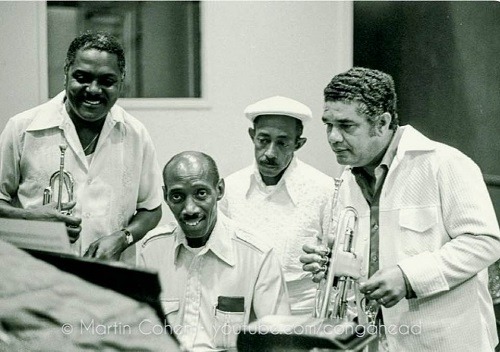
Alfredo Chocolate Armenteros, Lino Frias, Carlos Patato Valdez y el Negro Vivar 1973

The sound of Chocolate’s trumpet was a key gear in the machinery of Moré’s “Tribu,” cementing his status as the most sought-after instrumentalist of his generation.

Conquering New York and the Global Stage

In November 1958, Armenteros’ destiny changed forever. He traveled to New York with the Fajardo y sus Estrellas orchestra for a private performance at the Waldorf Astoria Hotel.

The event carried high-level political weight: it was a gala for the presidential campaign of then-candidate John F. Kennedy. Following this encounter with the Big Apple, the trumpeter decided to settle permanently in the city, becoming an ambassador for Caribbean rhythms at the epicenter of jazz.

In New York, his talent flowed through the most influential groups of the era:

  • The Machito Orchestra (1963): Where he fused Cubop with Afro-Cuban jazz.
  • Eddie Palmieri (70s): Contributing his power to the experimental sound of salsa brava.
  • Tico-Alegre All Stars (1975): Sharing the stage with giants like Celia Cruz, Tito Puente, Ismael Rivera, and Cachao.

An Endless and Eternal Style

In the late 70s and early 80s, Armenteros not only returned to collaborate with Sonora Matancera but also took the definitive step as a bandleader.

Under his own direction, he left behind memorable productions such as Chocolate Dice (1982) and Estrellas de Chocolate (1987), proving that his creative well never ran dry.The most admirable aspect of Armenteros was his artistic longevity. He remained active in festivals and concerts well into his 80s, preserving a privileged embouchure and a sense of timing that seemed to defy the laws of physics.

Alfredo Chocolate Armenteros y Eddie Moltalvo

Today, nearly a century after his birth, Alfredo “Chocolate” Armenteros remains the gold standard for trumpeters. His life was a testament to elegance, his music a bridge between nations, and his trumpet an eternal echo of Cuban identity that continues to resonate in every jazz descarga and every salsa step around the world.

Also Read: Larry Harlow and Ismael Miranda: The birth of “Arsenian Salsa,” a tribute to the music of Arsenio Rodríguez the creator of Son Montuno and the “King of Guaguancó.”

  • « Go to Previous Page
  • Page 1
  • Interim pages omitted …
  • Page 6
  • Page 7
  • Page 8
  • Page 9
  • Page 10
  • Interim pages omitted …
  • Page 59
  • Go to Next Page »

International Salsa Magazine (ISM) is a monthly publication about Salsa activities around the world, that has been publishing since 2007. It is a world network of volunteers coordinated by ISM Magazine. We are working to strengthen all the events by working together.