• Skip to primary navigation
  • Skip to main content

International Salsa Magazine

  • HOME
  • Previous editions
    • 2026
      • ISM / April 2026
      • ISM / March 2026
      • ISM / February 2026
      • ISM / January 2026
    • 2025
      • ISM / December 2025
      • ISM / November 2025
      • ISM / October 2025
      • ISM / September 2025
      • ISM / August 2025
      • ISM / July 2025
      • ISM / June 2025
      • ISM / May2025
      • ISM / April 2025
      • ISM / March 2025
      • ISM / February 2025
      • ISM / January 2025
    • 2024
      • ISM / December 2024
      • ISM / November 2024
      • ISM / October 2024
      • ISM / September 2024
      • ISM / August 2024
      • ISM / July 2024
      • ISM / June 2024
      • ISM / May 2024
      • ISM / April 2024
      • ISM / March 2024
      • ISM / February 2024
      • ISM / January 2024
    • 2023
      • ISM / December 2023
      • ISM / November 2023
      • ISM / October 2023
      • ISM – September 2023
      • ISM – August 2023
      • ISM July 2023
      • ISM Edition June 2023
      • ISM – May 2023
      • ISM April 2023
      • ISM March 2023
      • ISM February 2023
      • ISM January 2023
    • 2022
      • ISM December 2022
      • ISM November 2022
      • ISM October 2022
      • ISM September 2022
      • ISM August 2022
      • ISM July 2022
      • ISM June 2022
      • ISM May 2022
      • ISM February 2022
      • ISM January 2022
    • 2021
      • ISM December 2021
      • ISM November 2021
      • ISM October – 2021
      • ISM September 2021
      • ISM August 2021
      • ISM July 2021
      • ISM May 2021
      • ISM April 2021
      • ISM June 2021
      • ISM March 2021
      • ISM February 2021
      • ISM January 2021
    • 2020
      • ISM December 2020
      • ISM November 2020
      • ISM October 2020
      • ISM September 2020
      • ISM August 2020
      • ISM July 2020
      • ISM June 2020
      • ISM May 2020
      • ISM April 2020
      • ISM March 2020
      • ISM February 2020
      • ISM January 2020
    • 2019
      • ISM December 2019
      • ISM November 2019
      • ISM October 2019
      • ISM Septembre 2019
      • ISM August 2019
      • ISM July 2019
      • ISM June 2019
    • 2016
      • ISM December 2016
  • Spanish
  • Download Salsa App
    • Android
    • Apple

Search Results for: Congress

Know the connections of tropical dances

Latin America / Venezuela /Caracas

Tropical Dances:

Did you know that people have several ways of communicating?

Oral communication is what we normally use to communicate in such a way to establish and maintain personal relationships, and to show not only words and express emotions and/or feelings, body communication is used, which can be said in a few words that it is a form creatively expressing through gestures, eye contact, poses, and arm and leg movements; turning this form of communication into something more intimate and accurate without the need for the use of words.

Salsa dancers

In social activities, one of the most popular is dancing, where body communication is very important since the couple or group needs to know certain signs that indicate “when” or “how”, in order to perform the steps and how. As a result, the success of said interpretation will test the quality, maturity and growth of the dancers in the rhythms they dance.
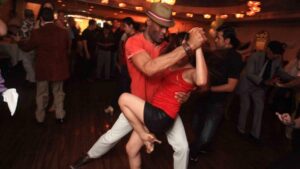
dancers dancing in a club tropical

Of course, it should be noted that each musical genre has its own rules, especially in the counting of steps in music, which gives grace, stability and rhythm to the dancers in the song played either in a musical event and is of vital importance not only for a casual event but for a competition. For this reason, it is important to know the steps and turns to perform and have excellent body communication (especially if it is as a couple) to know what they are going to do.
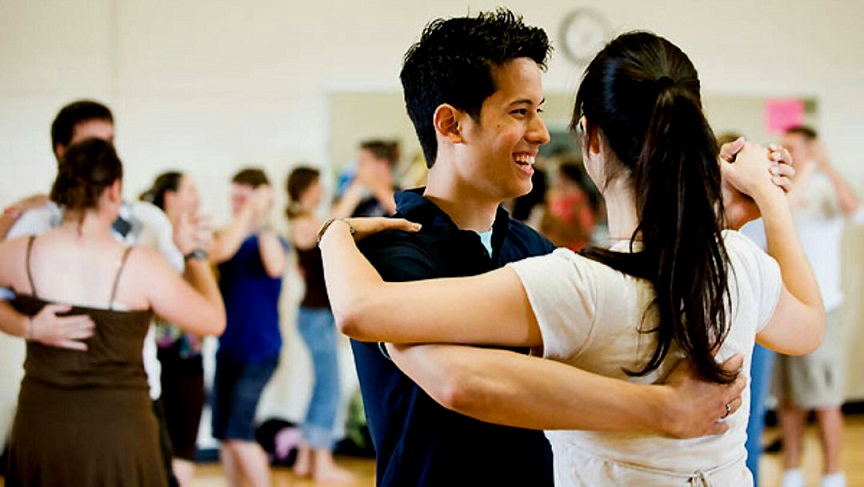
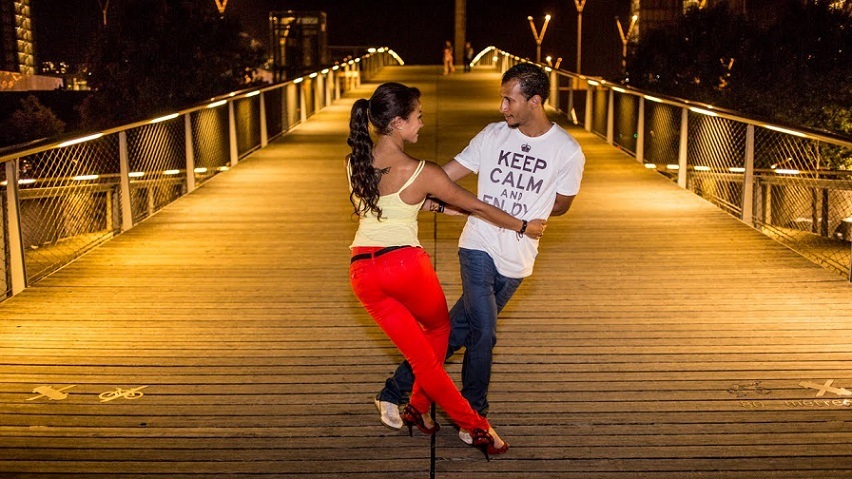
dancers dancing salsa, bachata and other tropical dances

In Latin rhythms, this type of communication is really important, otherwise the grace of the dance is lost. Among the most important Latin rhythms that are essential and/or significant are:

  • Salsa: a Latin tropical rhythm that, although it was born in Cuba due to the mixture of “Guaracha”, “Son”, “Mambo”, “Cha Cha Chá” with a unique style, through time several types emerged ( Salsa Cubana, Salsa en Linea, Salsa Casino, Salsa New York or Mambo style, Salsa Cali style, Salsa Puerto Rican and Venezuelan sauce). In this dance it is very important to pay attention to the look, the hands and arms (the latter in the case of the man since with him he dominates and/or controls the woman in the dance and she must interpret what the next movement is) to thus being able to perform either a simple step or a few laps, of which there is a great variety of them.
  • Bachata: is a danceable musical genre originating in the Dominican Republic, within what is called urban folklore. It is considered a derivative of the rhythmic bolero, with influences from other styles such as the Cuban son and merengue. This dance has great sensuality like the rest of the Caribbean rhythms, where it requires an unbeatable appearance on the part of the dancers when performing it, where that connection with the couple is important so that it can impress the public.
  • Merengue: is a dance music genre originated in the Dominican Republic at the end of the 19th century. It is very popular throughout the American continent, where it is considered, along with salsa, as one of the great dance musical genres that distinguish the Latin American genre.
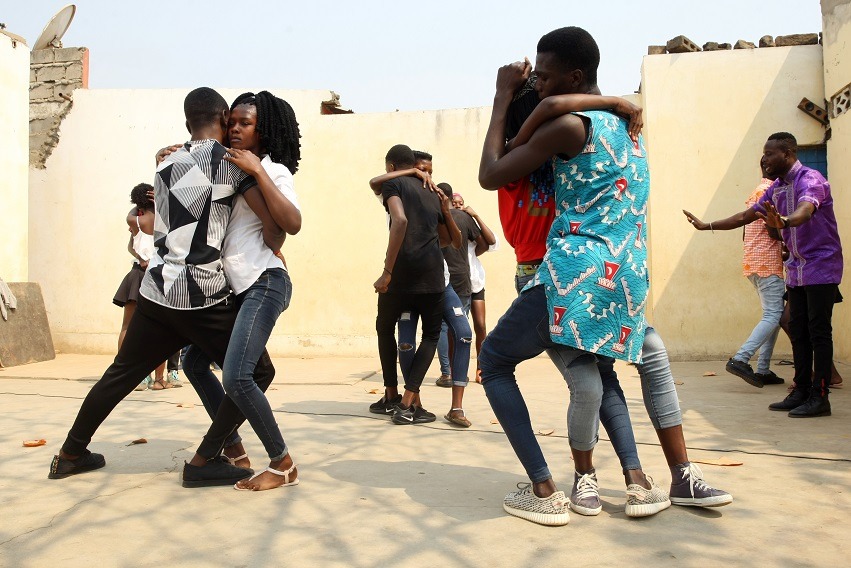
  • Kizomba: a very sensual rhythm that emerged in Angola, which resulted from the mixture of 3 cultures (Angolan colony, Portuguese colony and part of Cape Verde “Brazil” as well as the French Caribbean of Martinique and Guadeloupe.). In this rhythm, the connection of the couple, especially the woman, is of vital importance, since the movement of the hips is slow and sensual, as are their steps. Did you know that many people have the prejudice that it is a very sensual dance, however, it is as sensual as you want to project it, in the same way it happens with Bachata and Merengue, they can be as sensual as you want to project them or as normal how you want to do it.”

So, if you want to give life, grace, elegance and popularity to your dance, keep in mind, keep in mind these characteristics and how you manage to synchronize with your partner and show your spectators either in a personal party, competition, event and/or or congress, whether national or international, which is a true dance.
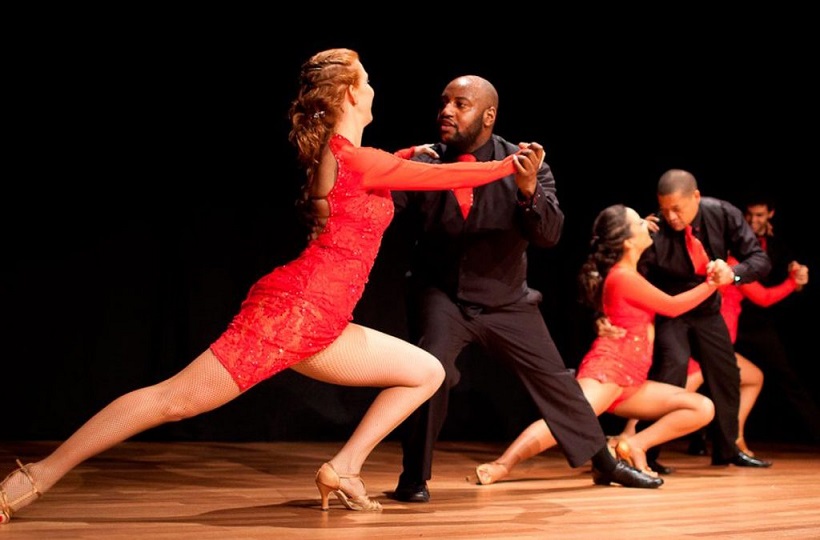
dancers pre-performing tropical dances

Festivals in June 2023, Europe, Asia, Australia and New Zealand

Spring in Europe


The next beginning of rest in summer, pleasant temperatures at night and heat during the day, the work of the year has its rewards in holidays and is traveling, knowing places and people, cultures and languages and all this leads us to have fun as a couple or alone and thus meet nice people with whom to share, and at this point we want to captivate you by enjoying tropical dances, commonly called Latin music, as it is Salsa, Bachata, Kizomba among other variables are sensual and exotic rhythms in many cases, that make us experience pleasant bodily and sensory, for this incredible experience we have festivals in the European continent and Asia with some ease of transport according to our budgets but if we want to go further let’s not forget the beautiful beaches and active life of New Zealand very few hours by plane

This month of June we have festivals in the following countries and do not forget that next month comes Tempo Latino, a festival like no other, about which I will be informing you.

Germany

Cologne Salsa Congress
Jun 02 2023 – Jun 04 2023
Hurth, Germany
http://colognesalsacongress.com/en/

Spain

Estilos Unidos Dance Festival
Jun 02 2023 – Jun 04 2023
La Zenia, Alicante, Spain
https://estilosunidos.com/

Latin Dance Festival & WTP European Meeting Summer Edition
Jun 02 2023 – Jun 04 2023
Lloret de Mar, Spain
https://www.facebook.com/LatinDanceFestivalWTP
CROACIA

Summer Sensual Days

Jun 05 2023 – Jun 12 2023

Rovinj, Croatia

https://www.summersensual.com/

Croatian Summer Salsa Festival 2023

Jun 12 2023 – Jun 19 2023

Rovinj, Croatia

https://www.crosalsafestival.com/

NEW ZEALAND

NZ Salsa Congress

Jun 02 2023 – Jun 04 2023

Wellington , New Zealand

https://www.nzsalsacongress.co.nz/

FRANCE

Kizomba Gala Challenge Festival

Jun 08 2023 – Jun 12 2023

Saint Herblain, France

https://www.facebook.com/events/555875292933107

PORTUGAL

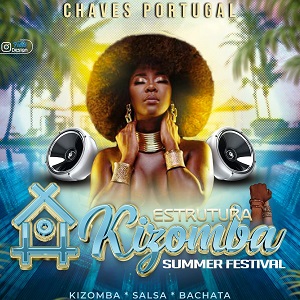
Estrutura Kizomba Summer Festival

Jun 15 2023 – Jun 18 2023

Chaves, Portugal

https://www.estruturakizomba.com/en

Aquae Flaviae International Congress

Jun 16 2023 – Jun 18 2023

Chaves, Portugal

https://www.facebook.com/events/452697403072900

KOREA

Jeju Latin Culture Festival

Jun 22 2023 – Jun 25 2023

Jeju-si, South Korea

http://www.jejulcf.com/

MALAYSIA

Afro Latin Fest Asia

Jun 23 2023 – Jun 25 2023

Kuala Lumpur, Malaysia

https://www.alfa-asia.net/


ROMANIA

Carpathian Latino Fest

Jun 24 2023 – Jun 26 2023

Ramnicu Valcea, Romania

https://www.facebook.com/events/661474741321475


Origins of Kizomba

Kizomba is a very catchy musical genre that has its origin in Angola, Africa. It can be said that its birth was in the 1980s; but if we want to understand its history, we must look further back to the 50s and 60s.

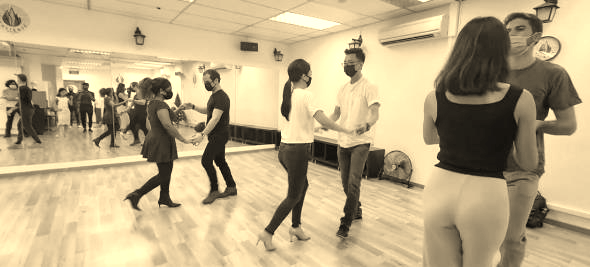
Kizomba class photo
Kizomba class photo

It was then that certain traditional dances of the African country and one of them was semba, began mixing with other rhythms both from its country of origin and other cultures after Africa was colonized by Europe in the 14th century. It is from there that a fusion of rhythms begins in which partner dancing takes center stage.

However, the old continent did not do all the work. Argentina and Cuba also played an essential role in the form in which semba must be danced.

In Portugal, the word Kizomba has its origin in all musical rhythms that derive from zouk, with which it is often constantly confused. It is a type of dancing laden with great sensuality and highly contagious that has become very popular with the passage of time, particularly in countries such as the United States, Canada, France, Spain, Poland, Belgium, Denmark, among others. Many Latin Americans consider that this is a breath of fresh air because it does not seem like anything they previously knew in terms of dance.

One of the reasons that it became so famous around the world is that this dance is very easy to learn due to its softness and simple dance steps. If you want to learn to dance, kizomba is a very good option to begin with.

Kizomba lets the couple play the music they dance. The more intimate the members of the couple, the more likely that the dance will be much more sensual and there will be much more complicity between men and women who enjoy this pleasure.

How kizomba originated

As we have said previously, kizomba has its origin in Angola, which was a colony of Portugal in the mid-1970s. With the arrival of Cuban military personnel, certain rhythms came from the Caribbean island that started to be used by various Angolan artists for their musical projects. The result was a fabulous mix of fast local rhythms with much slower, romantic and partially synthetic sounds.

The resulting genre was danced with semba and merenque, which made it known as kizombadas and, subsequently, kizomba.

By the 90’s, the word kizomba started to be used in Portugal to refer to all African rhythms danced in the nightspots of the most important cities in the European country. With the passage of time, the term would be used to refer to the musical genre and many other sub-genres with which it shares history.

Once this type of dance began to take hold in the rest of Europe, it was in France where all these rhythms that resemble one another started to be called kizomba, leading to the controversy over whether it and soft zouk are the same. Given that on certain islands belonging to France they were the cradle of zouk, it can be assumed that this has kindled heated debate even further still.

At the beginning, kizomba was only able to spread throughout the African continent, but migration allowed it to reach Europe and America respectively where a lot of passionate dance groups of this genre began to appear. The number of followers accumulated by this genre in countries such as Portugal, France or Spain was very huge.

Currently, there are a number of exponents of this kind of music that became famous worldwide such as Nelson Freitas, Djodje, Anselmo Ralph, Matias Damasio, among many others.

Kizomba dancer in Europe
Kizomba dancer in Europe – Origins

Kizomba in Europe

It is incredible the number of places where you can enjoy this spectacular dance. One of them is the world famous Eiffel Tower, where there are many options to learn or improve the dance steps. In France, the genre has been very popular, so much so that many places for dancing celebrate exclusive kizomba nights known as kizomba soirées by the locals. Considering the major African influence on this dance, those wishing to find out more will be able to enjoy a wonderful mix of dance styles and cultures that will leave no one indifferent.

In these places, you can share with a very impressive amount of tourists and foreigners from around the world. This contributes enormously to linkages and friendships between people of other cultures and other ways of seeing the world, which may be very rewarding from all points of view.

In the case of Lisbon, Portugal, it can be said that this is another place that every lover of kizomba in Europe should visit. Besides being a city that receives all its visitors with genuine hospitality, the dancing and music are ever-present. Among the many places you can go to enjoy the dance, it is important to mention the Estudio Sabor & Dança dance studio, the Academy World Dance and the Kizomba Power Dance School.

Kizomba class in Europe

Regarding Barcelona, Spain, what can be said is that this is one of the best European cities for dancing as there is a gigantic variety of musical styles that can be found there. There are always parties and events worth attending. One of those dances that can be found in the city’s nightlife is kizomba that has gained popularity in recent years.

Latin music events and festivals were based on salsa and bachata, but kizomba has completely changed that reality. Today, it is very common to find festivals and congresses dedicated exclusively to this dance and its most loyal lovers. If you want to learn to dance this genre, there are a number of schools and workshops that could be very useful such as Así se Baila, Seven Dance and Baila Barcelona.

Kizomba in Latin America

Many people who do not know the origin of the kizomba think that it originated in Latin America due to its type of dancing, but the fact is that this dance was not even known in most countries of the continent. In fact, its main boom started relatively recently in some places such as Colombia, where it began to be known not long ago. In that country, there are currently academies and teachers who are dedicated exclusively to this musical style, which has started to happen in other Latin nations.

In Venezuela, it is said that it has been danced for more than 10 years, but it began to be known a short while ago thanks to some videos on the major social networks after it became famous in Europe. The pioneers of this practice were a certain number of instructors born in the Caribbean country after being trained in Brazil. Following this, kizomba was the subject of a great deal of interest in many young Venezuelans who want to learn to dance it. There are not many records on places to dance where this genre may be found, but there is no doubt that soon it will be like this.

Kizomba dancer in Europe

Kizomba in Asia

There are many events and congresses linked to kizomba in Asia, which have a great influx of visitors, even when it is commonly believed that Asians are not fans of this type of rhythm. Experience with congresses of the last years has given the impression that this is not true. In fact, there are many fans of this rhythm from the continent who want to know all events and competitions details that are carried out in their countries for the coming months.

Japan is one of the nations where this type of event can be found the most. Such is the case of the Japan Kizomba Festival that has been going on in the country for many years due to the high level of attendance of visitors.

Video: https://www.youtube.com/watch?v=6WOVBNULkYc


Carlos David Suarez

North America - USA - Texas - Houston

Carlos David Suarez, Professional dancer, choreographer, instructor and musician

Art has been in his veins since he was born, and Carlos David Suarez has cultivated his artistic gift, going far and traveling the world teaching and learning

He was born in Caracas, Venezuela, and grew up in the west of the city in the 23 de Enero, a well-known area to give birth and raise artists, athletes and talented people.

Carlos knew from a very young age that he wanted to be a musician (timbalero) … At 7 or 8 years old, his parents took him to the house of one of the best percussionists in Venezuela and from that moment he began his career in the art world.

Later, his mother could not take him to music classes anymore and unfortunately had to leave them aside, and continue with his primary studies. Although in one way or another, he was always connected with the stage and the dance. At school, he was part of plays, acts, traditional dances and everything related to the arts.

Photo by Carlos David Suarez

Years later, he started playing soccer, and soon realized that he was in love with the sport, and began training hard to thrive within teams.

One of his main strengths is discipline, so he applied it to both: art and sport. He came to play on good teams and was seen himself playing professionally outside of his native country.

“Yes, I always saw myself outside Venezuela, not because of any specific situation, but because as a child I saw myself traveling the world with music, art, or sports.”

Years later, when he was 14, his older brother took him to Imagenes Latinas, an incredible artistic dance school where he trained, and the only one he attended for at least 8 years. There he studied ballet, contemporary dance, jazz, hip hop, funky, Latin genres and above all; Salsa.

“I had great teachers who gave me the opportunity, seeing that desire to be a better artist every day, especially Arelis Guevara, owner and choreographer of the company”

After many efforts, sacrifices, study and, above all, hours after hours of rehearsals, Carlos become the first dancer of the professional company for three consecutive years. He traveled with the company to many national and international events, conferences and TV shows … South America, USA, Europe and Asia.

After his stay in the company, he decided to take other roads, take his own path and do new things. It was part of a ballet where he made musicals and all kinds of varied shows. He learned a lot about other disciplines such as tap, flamenco, nationalist dance, tango; and even a little acting.

He was in the ranks of this ballet for two years and then took his path as a soloist. For the first time, he had the opportunity to travel outside his country; to Miami.

“I was working on famous nightclub shows; then I went to Los Angeles to work with another dance company that I was in for a short time and then I went to Panama. ”

He worked for a short time in Panama; he returned for a short time to Venezuela, and moved to Casablanca, Morocco, where he worked in Salsa and Bachata shows. After two years, and to continue evolving in his artistic career, he decided to go to Europe. He arrived to the city of Amsterdam, Holland, where he was doing shows and workshops at congresses as a soloist.

Soon, he moved to Germany to pursue his dance training … He lived in Germany for two years, worked at various dance schools, and began to expand his horizons, making himself known at Salsa conferences throughout Germany, Europe and Africa. Then after another job offer, and pursuing more dreams and learning, he moved to Milano, Italy, where he lived for a couple of years and the opportunities to go to conferences and festivals were multiplying, giving classes and workshops in Europe, Africa and the United States.

At the time of this interview, Carlos is based in the United States completing art projects with other companies.

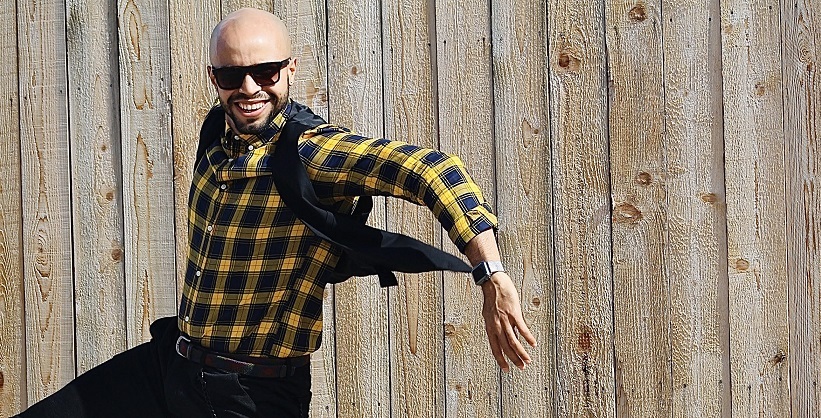
Carlos David Suarez pose

“I have had the joy of playing as a musician, and working with excellent companies, dancers, famous awards and great artists such as Juan Luis Guerra, Gilberto Santa Rosa, Pitbull, Chino & Nacho, El Gran Combo de PR, Los Adolescentes, among others. .. ”

Carlos Suárez continues to study, train and learn more and more from this career, which in his opinion is infinite to learn. He continues to work as an instructor, choreographer and dancer, doing shows at many festivals, giving his best at every step, respecting his work, image, integrity and ethics.

Get to know Carlos David Suarez more closely

International Salsa Magazine (ISM): Define in 5 lines, who is Carlos Suarez?

Carlos Suarez (CS):

A person who respects everyone, considering that we are equal, and each one has a different knowledge, talent and strength. A person who aspired, fought and achieved his dream of being an artist, despite all the experiences. Lover to be able to help and teach everyone. Someone who always gives all the support and love to his family and friends. Very disciplined with himself and with his students.

ISM: What do you enjoy most about your profession?

CS: Being able to get to know many countries, cultures, new people, and above all, being able to inspire others to believe in a discipline such as art.

ISM On what platforms and upcoming events (face-to-face and virtual we will see you)?

CS: To see me on platforms or social media, you can go to my Instagram: @casu__ or my Facebook page: CaSu – Dance & Beats. On these two platforms I always leave all my videos of classes, shows, workshops, musicals, etc. Right now due to the pandemic I do not have specific information on where I will be presenting myself, but if you follow me on the social media, you will know just when I know it.

ISM: How do you see yourself in 5 years?

CS: Good question …

I still see myself exercising my career as an artist and dedicating myself much more to music, which is one of the things that I’m most passionate about, and I haven’t had the opportunity to dedicate myself 100%. I see myself as an even more trained person and with much more knowledge, I also see myself dedicating love to a family and above all … I see myself being happy without hurting anyone.

Carlos David Suarez
Carlos David Suarez

ISM: What is your advice for those young people who, like you, are fighting for their dreams in the dance world?

CS: My advice is to never let anyone make fun of your dreams, nor do you make fun of the dreams of others … I believed, I bet on myself, and I won … I am the artist I wanted to be and I still have a long way to go, but all this does not come alone … It is a process that costs a lot, studying, preparing, always staying mentally and physically fit, learning languages ​​so that they can defend themselves in the world and, above all, be people who love and respect their work … Art.

Edwin “El Calvito” Reyes

Edwin El Calvito Reyes, Winner of the Paoli Prize 2019, as Tropical Revelation of the Year

Edwin El Calvito Reyes

Undoubtedly, today, considered by legends and colleagues of the salsa genre, as one of the fastest growing exponents, projecting and establishing its brand, at a firm pace and worldwide; Winner of the Paoli Prize 2019, as Tropical Revelation of the Year, he is Edwin “El Calvito Reyes”.

Born on April 19, 1974, he had his childhood in a humble 20-foot-square wooden house and graduated as an Electrician from the Higher Vocational School in his beloved Trujillo Alto in May 1992.

He then graduated with studies in Tele-Communication at the University of the Sacred Heart of P.R. This 2020, “El Calvito” is scheduled to finish his Master of Science, with a major in Entertainment Business, at Full Sail University in Orlando, FL. (Entertainment Business, Master of Science).

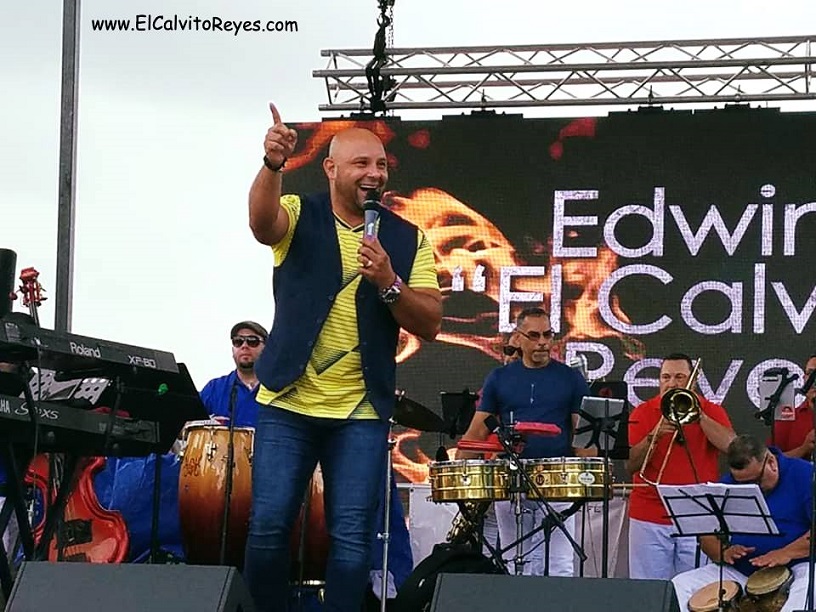
Edwin El Calvito Reyes on stage

Although in OCT 2018, it was his first appearance in the world, with his own musical proposal, “El Calvito” has a career and / or musical history, of more than 25 years, which began to the tune of Plena in his native Trujillo Alto.

Since childhood, music has been his passion. Edwin continued to show his leadership and passion for music, and already in 1993, Edwin began to make himself known in his hometown with PLENA, keeping the culture and tradition of a people alive. As early as 1996,

Edwin joined the US Army and, in his spare time, began singing salsa, thanks to Mr. Víctor París and Mr. Godreau “Papo Salsa” who offered him the first opportunity to share his talent with the community of Hinesville, Ga in 1996, singing salsa classics.

Since then, “El Calvito” has been performing all genres of Latin music in the United States; Never leaving behind its origin, nor its vision.

Edwin El Calvito Reyes with the award

“El Calvito” Reyes has several many LIVE SALSA performances in South Korea and the Middle East (Iraq, Afghanistan, Kuwait, Turkey), with more than 10 thousand soldiers (combined count) dancing to the rhythm of live music, relieving all types of stress in combat and highly raising their morale. A genuine leader, who brings that same leadership to the sauce in a very entertaining way.

Over time, thanks to Sergeant Alberto Sánchez and Sub-Officer Carlos Negrón, he joined the Official Salsa Orchestra in the U.S. Army (LATINO CONJUNTO DEL ARMY DE USA), to later become the officer in charge of it.

An Officer who, for 6 consecutive years, was personally tasked with selecting and forming the Only Latin Music Orchestra, ever assembled, in the US Army, whose purpose was to act for dignitaries and personalities (Michelle Obama, Hillary Clinton, Jennifer López, Olga Tañón, Vicente Fox, etc.), within the National Conventions of the League of United Latin American Citizens (LULAC) and Annual Presidential Galas. Clearly leaving an immense legacy in that difficult world. Also, El Trujillano is one of the few salseros in the world that has been able to perform live at the Seoul Olympic Stadium in South Korea.

Edwin El Calvito Reyes

Immediately after that performance, “El Calvito” performed in 2012, at the Asian Salsa Congress, where dancers from around the world gathered to compete along the rhythms of their music in the course of an extravaganza of 7 days.

He is an artist without equal. After 22 years of active military service, including more than 65 months accumulated in combat, “El Calvito” Reyes has established his own brand, appearing before a large number of people throughout the American country and Puerto Rico. “El Calvito” is a true warrior and avant-garde in this new era of salseros that will surely keep them dancing from start to finish.

Don’t wait for the magic call. He seeks his own, very professional, and has earned the respect of many employers, DJs and Promoters around the world, for his kindness, professionalism and above all his show.

In this past March 2020, “El Calvito” was one of the guests of honor for one of the Bailables prior to the National Day of Zalsa in Puerto Rico, sharing the stage with greats such as NG2, N’Klabe, Carlos Javier, and Abrante, as well as, Julio Badillo and the Salsa Stars, Julio López, Kayvan Vega and many more, making their music shine by its own light and gain the respect and admiration of several present, the international press and their colleagues.

Edwin El Calvito Reyes on stage

Also, Edwin is part of the first star cast to perform at the FIRST NATIONAL DAY OF LA ZALSA in ORLANDO, FL, alongside stars like Willie Rosario, Eddie Palmierie, India, Jerry Rivera, Grupo Niche and many more “El Calvito” does not stop here, as he has also been chosen to be a fundamental part of the 22nd Anniversary of the Salsa Cruise, along with stars such as Maelo Ruiz, Luisito Carrion, Andy Montañez, Grupo Gale, Grupo Niche and Chino Núñez.

Publicly blessed by Legends such as TITO NIEVES, TITO ROJAS, TITO ALLEN, BOBBY CRUZ, CHINO NÚÑEZ, LALO RODRIGUEZ, WILLIE ROSARIO, PAQUITO ACOSTA LUIS GONZALEZ “EL TSUNAMI”, among others, confirms Edwin “El Calvito” Reyes, as a S Today, at the level you deserve.

Since it came out live on OCT 2018, “el Calvito” has not stopped shining in its own light. Now, he celebrates the worldwide successes of his latest songs, “QUIERO BAILAR CON ELLA”, “TOCALE LA MOÑA”, “MI RITMO SE LLAMA” ZALSA “,” MI TIERRA QUERIDA ”SONEROS DE SANGRE NUEVA, and the most recent SO CALLED THE COUNT.

So what’s next for Edwin “El Calvito” Reyes? “Work hard, with honesty, respect and dignity, in favor of the genre of salsa, in general. Stay humble, loyal to my followers and, of course, continue with my faith in God.

Edwin “El Calvito” Reyes The music of our Hispanic brother and Boricua, Edwin “El Calvito” Reyes is found on all digital platforms (CD Baby, iTunes, Spotify, Amazon, Google Music, YouTube Music, etc.) His music continues to occupy prestigious positions on Global Radio.

Edwin “El Calvito” Reyes has a high reputation, as a truly dedicated human being, passionate about contributing to the salsa genre, who studies and respects the genre’s pioneers and their contemporaries.

With an energy on stage that will make you dance from start to finish. Also, as a person who provides a great environment with his leadership and professionalism, with Latin Music for his communities, but above all, as a family man; and of faith.

Edwin El Calvito Reyes

  • « Go to Previous Page
  • Page 1
  • Interim pages omitted …
  • Page 18
  • Page 19
  • Page 20
  • Page 21
  • Page 22
  • Interim pages omitted …
  • Page 29
  • Go to Next Page »

International Salsa Magazine (ISM) is a monthly publication about Salsa activities around the world, that has been publishing since 2007. It is a world network of volunteers coordinated by ISM Magazine. We are working to strengthen all the events by working together.