• Skip to primary navigation
  • Skip to main content

International Salsa Magazine

  • HOME
  • Previous editions
    • 2026
      • ISM / April 2026
      • ISM / March 2026
      • ISM / February 2026
      • ISM / January 2026
    • 2025
      • ISM / December 2025
      • ISM / November 2025
      • ISM / October 2025
      • ISM / September 2025
      • ISM / August 2025
      • ISM / July 2025
      • ISM / June 2025
      • ISM / May2025
      • ISM / April 2025
      • ISM / March 2025
      • ISM / February 2025
      • ISM / January 2025
    • 2024
      • ISM / December 2024
      • ISM / November 2024
      • ISM / October 2024
      • ISM / September 2024
      • ISM / August 2024
      • ISM / July 2024
      • ISM / June 2024
      • ISM / May 2024
      • ISM / April 2024
      • ISM / March 2024
      • ISM / February 2024
      • ISM / January 2024
    • 2023
      • ISM / December 2023
      • ISM / November 2023
      • ISM / October 2023
      • ISM – September 2023
      • ISM – August 2023
      • ISM July 2023
      • ISM Edition June 2023
      • ISM – May 2023
      • ISM April 2023
      • ISM March 2023
      • ISM February 2023
      • ISM January 2023
    • 2022
      • ISM December 2022
      • ISM November 2022
      • ISM October 2022
      • ISM September 2022
      • ISM August 2022
      • ISM July 2022
      • ISM June 2022
      • ISM May 2022
      • ISM February 2022
      • ISM January 2022
    • 2021
      • ISM December 2021
      • ISM November 2021
      • ISM October – 2021
      • ISM September 2021
      • ISM August 2021
      • ISM July 2021
      • ISM May 2021
      • ISM April 2021
      • ISM June 2021
      • ISM March 2021
      • ISM February 2021
      • ISM January 2021
    • 2020
      • ISM December 2020
      • ISM November 2020
      • ISM October 2020
      • ISM September 2020
      • ISM August 2020
      • ISM July 2020
      • ISM June 2020
      • ISM May 2020
      • ISM April 2020
      • ISM March 2020
      • ISM February 2020
      • ISM January 2020
    • 2019
      • ISM December 2019
      • ISM November 2019
      • ISM October 2019
      • ISM Septembre 2019
      • ISM August 2019
      • ISM July 2019
      • ISM June 2019
    • 2016
      • ISM December 2016
  • Spanish
  • Download Salsa App
    • Android
    • Apple

Search Results for: Cuban

Salsa, territory of joy.

Latin America / Venezuela / Caracas

Salsa, territory of joy, language of celebration, enjoyment of the towns and their people, was born from a confluence of facts, geniuses and rhythms. Confluence that happened in the faith of the same religion: Afro-Cuban music.

Salsa pal Bailador
Salsa pal Bailador

And that mixture, which Richie Ray and Bobby Cruz cleverly described as “similar to the tomato sauce that is put on hamburgers to give them flavor”, was summed up in the insightful sentence of the occasional witness, the journalist Phidias Escalona: “the music that you make is salsa. From now on we will call it sauce”.

The year was 1968 and although the new rhythm already existed, there had been no consensus on the name. And that consensus began to emerge -perhaps for the first time- on the album “Los Durisimos The Strong Ones, Salsa y Control”, by Richie Ray and Bobby Cruz. Later, Richie himself would add: “The word was born around us, (however,) if it weren’t for (Jerry) Masucci there would be no salsa, because he brought it to the world.”

In 1960s New York Harlem, black Americans had begun to like Latin music, despite not speaking Spanish.

Ama a tu musa como a ti mismo - Salsa
Ama a tu musa como a ti mismo – Salsa

The guajira dazzled them until they made them dance. Believing that the mixture of boogaloo, blues, mambo, guaguancó or son montuno, was a variant of the boogaloo invented by Chubby Checker, the new rhythm was founded, incorporating the concepts of the Latin spirit in their interpretations and that -technically- they would add to the baggage : percussion, piano, violins, trumpets, trombones and whatever instrument would serve to give it flavor and richness.

Cocola' Wears - Venezuela Salsa
Cocola’ Wears – Venezuela Salsa

Musically, for example, the so-called “blue notes” would be added (that is how the overtones of the acoustically weak E and B notes, last to be added to the scale, where they would be relocated between Lam and Lam) would be added to the new fusions. Then came the downloads and phrases that we know until now as characteristics of salsa.

Thus the sauce was born. And so it has been transformed, always within the circle that encloses joy, passion and enjoyment, history, experiences, fortune or misfortune, seen from different perspectives: urban, social, sensual or everyday.

Tocadisco - musica
Tocadisco – music

Federico Betancourt “Pioneer of Salsa in Venezuela”

Latin America / Venezuela / Carabobo

Jesús Federico Betancourt was born in the city of Valencia, Carabobo state, on March 22, 1940. He was always attracted to music from a very young age.

Photo of Federico Betancourt on stage

In his adolescence, he liked Cuban rhythms, being influenced by Sonora Matancera, Mon Rivera, Eddie Palmieri and Joe Cotto. Before entering the entertainment world, he works at the Bank of Venezuela.

He affirms that he has not carried out formal studies at the musical level, learning the necessary theory to be able to perform as an orchestra conductor, but without interest in interpreting any instrument, but with a well-tuned ear, which has allowed him to remain in the music business for decades. , in fact on certain occasions he is named as the King of the Güiro.

Photo by Federico Betancourt

His career began when he entered the Los Selectos Orchestra, where they played songs by the Billos Caracas Boy’s and the Los Melodicos Orchestra, which were at their peak in the 1960s, all this in a particular way, said Orchestra did not go beyond that.

In 1965, Federico Betancourt decides to satisfy his artistic restlessness and founds a band called Federico y su Combo Latino. The members that made up this band were chosen from among the founder and together with Roberto Monserrat.

But it was not until the middle of 1966, when the twenty-six (26) year old undertook the recording of the LP that would make him famous forever. This record production entitled LLEGO LA SALSA, would mark an important stage in Venezuelan Salsa, because it was the first LP that made use of the word SALSA in the country.

Federico Betancourt
Federico Betancourt

Federico Betancourt himself recounts that the Venezuelan announcer Phidias Danilo Escalona had a Radio Program called LA HORA DE LA SALSA, EL SABOR Y EL BEMBÉ, where all the Cuban and Puerto Rican Caribbean rhythms that were fashionable at the time were placed, among those who highlighted La Sonora Matancera with Celia Cruz, Tito Puente, Joe Cuba, Tito Rodríguez among others, and who was the one who supported them the most in terms of recording the album.

The production was recorded under the Palacio label, and the LP was titled LLEGÓ LA SALSA, he affirms that the title was chosen without taking into account the importance that it would revert in the future, he also affirms that it was not the name that gave him success , the album was a “bump” in sales, since all the songs were the most requested at the time, using his words: “The album sold like hot cakes”.

The music lovers of the time requested it on specialized sites such as the LA SALSA album. Federico says: “The father of the word SALSA was Phidias Danilo Escalona, ​​he used it for the first time in his radio program, and I, humbly, with the success of my LP, gave him the push for its mass use.”

Federico Betancourt - Photo
Federico Betancourt – Photo

In Venezuela, the word SALSA was welcomed by the public willingly, since it suggested a mixture of flavors, which was exactly what happened in the Phidias program, but at the level of rhythms. After the appearance of Federico’s album, all the shows that were performed at the level of Caribbean and Cuban rhythms, carried the name of SALSA.

It is important to name the musicians who took part in this historic production: The musicians are: Ali Rojas Bongo and Cencerro, Roberto Monserrat Music Director and Timbal, Pedro Medina Congas, Alfredo Arcas Trombone, César Pinto Trumpet, Enrique Iriarte Piano, Rafael Prado Bass, Carlín Rodríguez Singer and maracas, Dimas Pedroza Singer, Federico Betancourt Güiro and Director of the Orchestra. The musical arrangements were by the famous trumpeter Eduvigis Carrillo (RIP). Production themes:

Llego la Salsa CD - Federico su Combo Latino
Llego la Salsa CD – Federico su Combo Latino
1.- Cocolía

2.- Conmigo
3.- El Pachanguero

4.- Sancocho Caliente
5.- Guaguancó Manía

6.- Celosa

7.- Despierta Rumbero

8.- No Critiquen
9.- Saoco

10.- Baila Yemaya
11.- Café Y Pan

12.- Que Me Querías

After the success obtained with the record work, the time came for the first international outing, which was to Colombia, in 1969. It happened because the singer of Los Melodicos, Víctor Piñero, informed Betancourt that he was stuck in Cartagena and Barranquilla with the themes El Cobrador and Federico Boogaloo. After the information, the young musician went to the neighboring country and got a contract for the famous Reina del Mar parties, in Cartagena, on November 11, 1969.

The experience of the band was so good, that in 1970 they returned to visit the country. From then until our days Federico y su Combo continues to be an emblematic and legendary band in Venezuela, for this reason the WEB of the classy salsero SALSA BRAVA, offers its respects to such an important salsa figure.

Discography
1966 Llegó La Salsa Palacio (LPS-6171)
1966 Salsa y Sabor Palacio (LPS-6185)
1967 Más Salsa Palacio (LPS-6205)
1967 Durísimo – Vol. 4 Palacio (LPS-6216)
1968 Federico Boogaloo Palacio (LPS-6228)
1968 Psicodélico Con Salsa Gilmar (LPG-110)
1969 Mejor Que Nunca Gilmar (LPG-111)
1969 Vibración y Ritmo Sonus (102-17080)
1970 Dos Sets Velvet (LPV-1539)
1970 La Machaca Velvet (LPV-1539)
1973 Federico Si Te Pone A Bailar Palacio (LPS-6332)
1975 Derrape De Salsa BASF (10.068)
1976 Siguelo Ahí…. a Lo Cortico BASF (10.070)
1977 Ayer y Hoy BASF (10.076)
1977 Esto Es Lo Mejor Palacio (LPS-6372)
1978 Mis Exitos y Más BASF (10.079)
1978 Sabor Foca (LPF-10.037)
1979 Federico y Su Combo Foca (LPF-10.120)
1979 Federico y Su Orq. – El Maestro Discomoda (DCM-1128)
1980 Federico y Su Orq. con Memo Morales Discomoda (DCM-1148)
1982 No Le Digan Integra (PF-14.075)
1983 Nuevamente Palacio (LPS-66.541)
1984 SaaaBroooSo! Palacio (LPS-66.552)
Compilation
1996 Mis Exitos y Más…Vol.1 Sonograma
1996 Mis Exitos y Más…Vol.2 Sonograma
1996 Mis Exitos y Más…Vol.3 Sonograma
2005 El Pionero De La Salsa Palacio
2008 Salsa De Oro Gilmar


The Son Rumbero Academy: E-Learning in virtual classrooms reached the world of dance

Latin America / Venezuela / Caracas

The Son Rumbero Academy, in step with technological advances, now opens a virtual classroom that will allow you to access an interesting range of online courses open to all through distance education processes with invited international instructors.

The teaching and learning processes are led hand in hand by education professionals, people who handle various tools and techniques that allow reaching the objectives of generalized instruction, now, the means and the contexts that affect this process are in the same way. of great importance to meet the aforementioned goals, hence the institutions invest so much time in physical improvements for the setting of the spaces destined to unite these processes.

It is not new to speak that technological means have invaded all areas of knowledge, there is no longer an area or content that is not already in process or in the process of being taught through the internet, hence the term distance learning. It is not something that escapes from the normality of our day to day.
Professor José Manuel Pérez, director of the Son Rumbero Academy with a great career in the field of salsa and education professional in the area of ​​computer science, is carrying out a process of teaching dance through virtual means, in this case, using the so famous virtual classrooms, where it focuses on asynchronous and asynchronous communication processes by which, the didactic interaction with the students predominates as the elementary basis of teaching, the student becomes the main center of self-information managing their learning through tutors and classmates from the open classroom for the specific dance specialty, is learning to dance by learning, it is doing it between appropriate means and environments.

Aula Virtual - Son Rumbero Academy
Aula Virtual – Son Rumbero Academy

The ways and methods of how to educate in the world of dance have always been maintained, in fact many people look for different alternatives given the circumstances of their tasks, work, home, occupations, in itself, an endless number of causes motivate the desertion when it comes to complying with schedules and routines in dance halls or gyms…

How many do not avoid entering this face-to-face modality due to little free time or the long time it takes to travel to a location, hence new ideas arise that facilitate access to world of dance from any corner of the world and at the time you want, and who would not like to adjust their classes to the hours and days they prefer, even more so if they can change them weekly according to their availability.
The Son Rumbero Academy project is not an original project, E-Learning and virtual classrooms have been in the educational world for several years, only that for the context of dance it was present in tutorial videos, a positive element but more of the same circle for some:

With a virtual classroom, the teaching process is extended, it not only depends on what the student has seen and practiced, in this we obtain constant supervision of the process, teachers dedicated to nourishing theoretical information and practicing something extremely important when understanding music and shaping it in dance it is about taking evaluations, participating in forums or conversations with several students in the same classroom, surveys, tutorial videos, correction process by videos sent to the teacher, easy access to multimedia elements…

from songs to explanatory audios, a world full of of elements that support to a greater degree the fact of learning from any dance discipline, not to mention seminars or professional courses, certifications of improvements in methodological processes in teaching for teachers and instructors, going from evaluation processes for dance competitions to complete percussion courses, a whole world of knowledge and elements given to the me You work in dance and now in music.

Son Rumbero Academy
Son Rumbero Academy

For this month of April, the project will begin with 3 high-impact courses, one on Cuban folklore dictated by Mr. Damian Ballester, a certification for instructors based on planning, evaluation and methodological processes of teaching by Professor José Manuel Pérez , closing with a theoretical-practical seminar on the complex of the rumba soon dictated by a professional in this area, director of one of the largest Cuban groups and participate in endless documentaries oriented to the complex of the rumba, a surprise that They will give us soon.

In the same way, they are betting on a new teaching method for beginners, those who perhaps want more privacy when starting steps in the world of salsa or another genre, new media that can contribute to the development of the diffusion of salsa in the world.

The invitation is now open for you to follow the accounts of the son rumbero academy on Instagram and Facebook at @sonrumbero, by the numbers of its offices in Colombia +573022582306, Venezuela +584122110104, Chile and soon in Peru and Argentina.

Europe / January 2025

Calibrated maracasMartinez attorney

Directory of European nightclubs

Czech Republic circular flag
CZECHIA

La Macumba 2024
La Macumba
Štefánikova 230/7 150 00
Prague, Czech Republic

fRANCE FLAG
FRANCE

Canela
Canela Club Latino Paris
77 Rue du Faubourg du temple 75010
Paris, France

Cuba Compagnie
Cuba Compagnie Café
48 BD Beaumarchais 75011
Paris, France

Cubana
Cubana Café
47 rue Vavin 75006
Paris, France

La Pachanga
La Pachanga Officiel
8, rue vandamme 75014
Paris, France

La Peña
La Peña Saint Germain
3 passage de la Petite Boucherie 75006
Paris, France

Balajo
Le Balajo
9 rue de Lappe 75011
Paris, France

Pachamama
Pachamama PARIS
46 rue du Faubourg Saint Antoine 75012
Paris, France

Selsero
Salseroparis
9 Rue du Petit Pont, 75005
Paris, France

Germany circular Flag
GERMANY

Cascadas
Cascadas
Ferdinandstr. 12
20095 Hamburg-Mitte, Germany

Havanna
Havanna Berlin
Hauptstr. 30
10827 Berlin-Schöneberg, Germany
La Macumba - The Real Latin Club in Hamburgs
La Macumba – The Real Latin Club in Hamburgs
Adenauerallee 3 20097
Hamburg, Germany

Latin Palace Changó
Latin Palace Changó
Münchener Strasse 57
60329 Frankfurt, Germany

SODA
Soda Club Berlin
Schönhauser Allee 36
10435 Berlin, Germany

Malta Circle flag
MALTA

Bario Latino Malta venue
Barrio Latino Malta
Ghar il Lembi Street SLM1562 Sliema
Central Region, Malta

Poland flag
POLAND

Teatro Cubano
Teatro Cubano Warsaw
ul. Aleksandra Fredry 6 00-097 /> Warsaw, Poland

Spain Flag
SPAIN

ACM City
ACM CitY
Carrer Can Pallarès 2, Cerdanyola del Vallès
08290 Barcelona, Spain

Antilla
Antilla Barcelona
C/ d’Aragó, 141
08015 Barcelona, Spain

Azucar
Azúcar SalsaDisco
Calle de Atocha, 107
28012 Madrid, Spain

Disco Bar Cuba Live
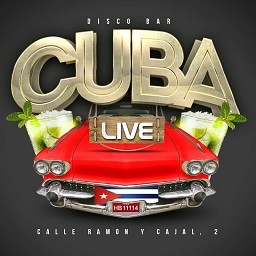
Cuba Live
Ramón y cajal número 2
07011 Palma de Mallorca, Spain

El Son
Discoteca El Son
C. de la Victoria, 6
28012 Madrid, Spain

Prisma Discoteca
Discoteca Prisma
C. de Alcalá, 192
28028 Madrid, Spain

Discoteca El Edén Boliviano
El Edén Boliviano
Carrer Gremi de Tintorers, 49A
07009 Palma, Illes Balears, Spain

Mojito
Mojito Club
Rosselló, 217
08008 Barcelona, Spain

Morena
Morena Barcelona
calle 11 num.29
08860 Castelldefels, Spain
Que Chimba
Qué Chimba
Av. del Vallès, 117
08223 Terrassa, Barcelona, Spain
Sala Olvido Madrid
Sala Olvido
C/ Olvido 15
28026 Madrid, Spain
Seven Dance
Seven Dance (Dio Club)
Carrer del Perill 10
08012 Barcelona, Spain

The Host Madrid
The Host
C/ Ferraz nº 38
28008 Madrid, Spain
+34 918 05 36 48

United Kingdom circular flag
UNITED KINGDOM

Salsa Soho
Bar Salsa Soho
96 Charing Cross Rd
WC2H 0JG London, UK

Salsa Temple
Bar Salsa Temple
Victoria Embankment, Temple
WC2R 2PH London, UK

Juju's
JUJU’s Bar & Stage
Ely’s Yard 15 Hanbury Street
E1 6QR London, UK

Revolucion de Cuba
Revolucion de Cuba Leeds
64-68 Call Lane
LS1 6DT Leeds, UK

LightHouse
The LightHouse Bar & Club
62 Rivington Street
EC2A 3AY London, UK
Karina Bernales present

JANUARY 2025

FESTIVALS

Belgium circular flag
BELGIUM
Latin Dreams Amsterdam Bachata

Latin Dreams

Jan 31 / Feb 02 2025

Van der Valk Hotel Charleroi Airport
Chaussée de Courcelles 115
Charleroi, Belgium 6041

From € 155.45

France circle flag
FRANCE
Suave Dance Festival 2025

Suave Dance Festival

Jan 24 / 27 2025

Novotel Paris Est
1 Republic St
Bagnolet, France 93177

From € 100

Dale Sensual 2025

Dale Sensual 7

Jan 24 / 26 2025

Pasino Grande Motte
335 Allée des Parcs
La Grande Motte, France 34280

From € 85

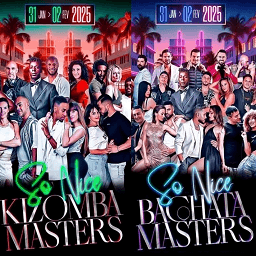
So’Nice Bachata Masters 2025

So’Nice Bachata Masters

Jan 31 / Feb 03 2025
LV Lagrange Apart’hôtel
180 Voie Marie Fischer
Antibes, France 06600
From € 90

Germany circular Flag
GERMANY
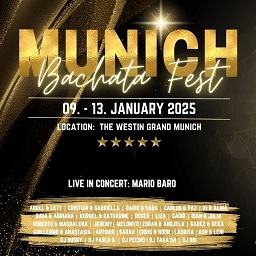
Munich Bachata Fest 2025

Munich Bachata Fest

Jan 09 2025 – Jan 13 2025

Hotel The Westin Grand Munich
Arabellastraße 6
Munich, Germany 81925

From € 130

Latin Festival Würzburg 2025

Latin Festival Würzburg

Jan 17 / 19 2025

B. Neumann Restaurant & Biergarten
Residenzplatz 1
Wurzburg, Germany 97070

From € 97.07

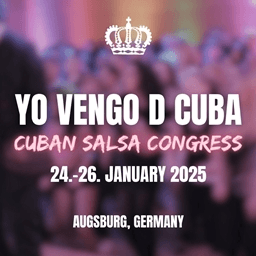
Yo Vengo De Cuba 2025

Yo Vengo De Cuba

Jan 24 / 26 2025

Kongress am Park
Gögginger Strase 10
Augsburg, Germany 86159

From € 110

Xplosion Hamburg Edition III 2025

Xplosion III

Jan 24 / 26 2025

Isabel Edvardsson – DIE Tanzschule
Banksstr 2b
Hamburg, Germany

From € 119

Hungary circular flag
HUNGARY
Live 2 Mambo Budapest 2025

Live 2 Mambo Budapest

Jan 30 / Feb 10 2025

Anantara New York Palace Budapest
Erzsébet krt. 9
Budapest, Hungary 1073

Italy circle flag
ITALY
Eventopeople Roma 2025

Eventopeople Roma

Jan 10 / 12 2025

Hotel Cristoforo Colombo
Via Cristoforo Colombo, 710
Rome, Italy 00144

From € 179

Le Kiz 8 Ed 2025

Le Kiz Eight Edition

Jan 17 / 19 2025

Best Western Plus Leone di Messapia Hotel & Conference
SP23
Lecce LE, Italy 73100

From € 70

Wild Divas Congress 2025

Wild Divas Congress

Jan 17 / 19 2025

Hotel Mercure Roma West
Via Eroi Di Cefalonia, 301
Rome, Italy 00128

From € 130

Firenze Kizomba Salsa & Bachata Festival 2025

Firenze Kizomba Salsa & Bachata

Jan 24 / 26 2025

Hotel Delta Florence
Via Vittorio Emanuele, 3
Florence, Italy 50041

From € 69

Salsanama Italia 2025

Salsanama Italia

Jan 30 / Feb 02 2025

Camana Club
Via Palermo, 12, Buccinasco
Lombardia, Italy 20090

Netherlands circular flag
NETHERLANDS
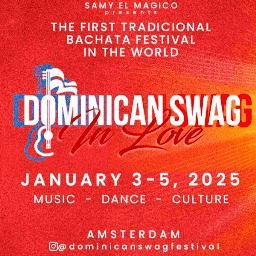
Dominican Swag 2025

Dominican Swag

Jan 03 / 05 2025

CanDance Studios
Isolatorweg 28, Amsterdam, Netherlands 1014 AS

From € 109

SADH International New Years Gala 2025

SADH
International New Years Gala

Jan 04 / 05 2025

De Doelen Convention Centre
Schouwburgplein 50
Rotterdam, Netherlands 3012

From € 25

Poland flag
POLAND
Kizzaffaire Warsaw 2025

Kizzaffaire Warsaw

Jan 09 / 13 2025

Sound Garden Hotel
Żwirki i Wigury 18
Warsaw, Poland 02-092

From € 67

Exodus Kizomba Congress 2025

Exodus Kizomba Congress

Jan 29 / Feb 03 2025

Novotel Warsaw Airport
1 Sierpnia 1
Warsaw, Poland 02-134

From € 85

Slovenia circular flag
SLOVENIA
Bachata Sensual World Congress 2025

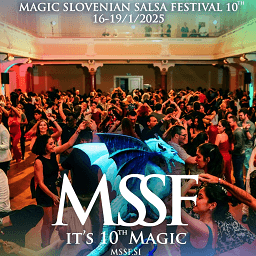
Magic Slovenian Salsa Festival

Jan 16 / 20 2025

Hotel Union
Miklosiceva 1
Ljubljana, Slovenia 1000

From € 140

Spain Flag
SPAIN
Bachata Sensual World Congress 2025

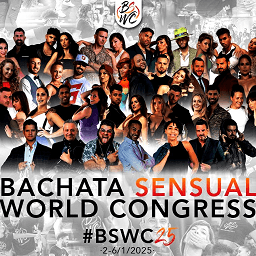
Bachata Sensual World Congress

Jan 03 / 06 2025

Hotel Evenia Olympic Palace
Av. del Rieral, 57
Lloret de Mar, Spain 17310

From € 100

Malaga Dance Congress 2025

Malaga Dance Congress

Jan 23 / 26 2025

Hotel Las Palmeras
Calle Martínez Catena, 9
Fuengirola, Spain 29640

From € 75

Cambre Dance Festival 2025

Cambre Dance Festival

Jan 24 / 26 2025

Hotel Urh Oriol’s Palace
27 Avenida Murrieta
Portugalete, Spain 48980

From € 80

TA BOM African Rhythms 2025

TA BOM
African Rhythms

Jan 31 / Feb 02 2025

Hotel Leon Camino
C. Obispo Vilaplana, 3-5
Leon, Spain 24008

From € 60

Turkey circle flag
TURKEY
I Love Kizomba Sensual Festival 2025

I Love Kizomba Sensual Festival

Jan 09 / 12 2025

The Green Park Pendik Hotel & Convention Center
Kaynarca, Erol Kaya Cd No:204
Istanbul, Turkey 34890

Full Pass: € 91

Antalya Sensual Dance 2025

Antalya Sensual Dance

Jan 31 / Feb 03 2025

Limak Limra Hotel & Resort
Kiriş Mh. Sahil Cd. No:11 Kiriş
Kemer, Turkey

From € 400

United Kingdom circular flag
UNITED KINGDOM
Newcastle Salsa Congress 2025

Newcastle Salsa Congress

Jan 03 / 06 2025

Holiday Inn Newcastle
Gosforth Park
Great North Rd, Seaton Burn
Newcastle Upon Tyne, United Kingdom NE13 6BP

Full pass from: £ 79

Bristol Salsa Congress 2025

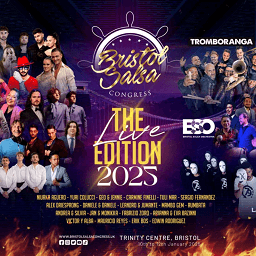
Bristol Salsa Congress

Jan 10 / 12 2025

The Trinity Centre
Trinity Rd.
Bristol, United Kingdom, BS2 0NW

From £ 90

Scottish Salsa Congress 2025

Scottish Salsa Congress

Jan 17 / 20 2025

Hotel Leonardo Edinburgh Murrayfield
187 Clermiston Rd
Edinburgh, United Kingdom EH12 6UG

Full Pass £ 120

ABCD 2025

ABCD Any Body Can Dance

Jan 31 / Feb 02 2025

Haverstock School
24 Haverstock Hill
London, United Kingdom NW3 2BQ

From £ 129


Larry Harlow and Ismael Miranda: beginning of the so-called “Salsa Arseniana” in honor of the music of Arsenio Rodriguez, the creator of Son Montuno and “King of Guaguanco”

Extracted from the book called: “El origen y la creación de la Salsa”; creator: Mon Rivera, promoter: Al Santiago.

For sale on Amazon kdp, by clicking on the following link:

With which is attached a complete summary of the musical work of Larry Harlow with Ismael Miranda from its creation in 1966 to 71.

At the end is the original song of Arsenio: “Oiga mi Guaguanco”, with the fabulous musical arrangement of Harlow himself in “Salsa Clasica”, with the exquisite singing of the “Niño Bonito de Puerto Rico” Ismael Miranda.

Larry Harlow and Ismael Miranda: 1966 – 1971 with trombones.

Julio Cesar Galindo Alarcón Diplomático de Peru Ministro (R), Historiador Musical. Autor de Libro sobre Creacion de la Salsa

Lawrence Ira Khan, better known in the music scene as Larry Harlow, affectionately known as “The Wonderful Jew”, was born in Brooklyn, New York, on March 20, 1939 and died in New York on August 20, 2021, American musician, orchestra conductor, pianist, composer, musical arranger, producer, creator of the so-called “Latin Opera”, in 73 he was one of the most important disseminators of Afro-Cuban Jazz, “Arseniana” Salsa and Classical Salsa, confirming at the highest level the use of the trombone and the USA instrumental technique, corroborated as the two most important characteristics that identify the new American Musical Movement.

The beginning of Larry’s musical work must be analyzed from his return from Cuba in 1959, after having traveled to the island in the mid 50’s, to know and study Cuban music in its different rhythms, but because of the Revolution he had to return to New York; finding the boom and enthusiasm produced by the Pachanga spread by Charlie Palmieri, Pacheco, Quijano, Orlando Marin, Mon, Eddie Palmieri, Ray Barretto, Richie, among others.

At the end of 65 he forms his orchestra with trombones and application of the instrumental technique of Jazz; he signs a contract with the “Fania” label and plans to record his first album.

In 1966 he recorded his first album called “Heavy Smokin” with Felo Brito’s vocals; L.P. little known, in which stand out: “Tu Tu Ratan”, “Maria la O”, “Rica Combinación”, “Mi Guaguancó”, “Orchestra Harlow” and “Adios Mamá”.

In the same year he recorded his second album called “Gettin’ Off” or “Bajándote”, sung by Ramón Quian: “Monguito” el Unico, an excellent full-length album that was a great success.

Some of the highlights are “Bajandote”, “Guarachita”, sung by Vickie; “Tu no lo creas”, “Meta y Guaguancó”, “Coco May May” and “Cienfuegos”.

In ’66, a young teenager appears singing in Andy Harlow y su Sexteto’s group.

Andy gave him to his friend Joey Pastrana at the beginning of 67 to record the album “Let’s Ball”, in which the young singer Ismael Miranda had his first hit with the song “Rumbón Melón”.

Larry Harlow who lacked a good singer, offered the job to Ismael, who without hesitation accepted it immediately; and debuted with Larry on his third album in 67 called “El Exigente” and thus began the WONDERFUL DUPLE OF LARRY HARLOW AND ISMAEL MIRANDA, who together formed a sensational duet, amazing and impressive, in the History of Classical Salsa.

In “El Exigente” with the debut of the “Niño Bonito de Puerto Rico”, the songs “El Exigente”, “Las luces”, “Rumba me llaman” and “El Mejor” stand out.  The following year, in 1968, he recorded the album, “Orchestra Harlow presenta a Ismael Miranda”.  With this unsurpassable combination, the Classic, Brava and Hard Niuyorquina Salsa begins in the unique style of the “Judío Maravilloso” with the singing of the fabulous Ismael Miranda, one of the most attractive, fine and sharp voices in the history of Salsa, in which stand out the songs: “La Contra- ria”, “Jaguey”, “Yo me voy”, “Lamento Cubano”, “Bobby’s Boo-galoo, ‘Rumba a la vida’ and ‘Mi Guajira si’.

In 1969 he recorded his fifth album and third with Ismael Miranda, called “Mi Mono y Yo”, in which he continues the teaching of Classical Salsa with Afro-Cuban Jazz fusion, in which almost all the songs stand out: “El Malecón”, “Voy para la luna”, “Amorcito Ven”, “Jovenes del Muelle”, “Ven Rumbero Ven”, “Para donde tu vas”, “Mi Madre” and “Traigo Guajira”.  With these last two albums, Larry with Ismael had achieved the expected success; and they had become the favorite orchestra in all the Salsa Concerts that had already become customary in the weekends of the Big Apple.   In ’69, the author witnessed for a month these Salsa Dance Concerts that were usually given in the halls of the Hotels of the New York districts.

DIPLOMATICO DE PERU, MINISTRO (R); HISTORIADOR MUSICAL; AUTOR DE LIBRO SOBRE CREACION DE LA SALSA.

In 1970, Larry introduces the electric piano in his orchestral format; this motivates him to title his album of the same year: “Electric Harlow”.  With the recording of this album really begins the so-called “Salsa Arseniana” of Larry, coinciding with the last year of life of the great Cuban musician Arsenio Rodriguez, the father of Son Montuno and “King of Guaguancó”, Legend and undisputed genius of the development of Cuban music; but, however, having been the most important Cuban musician of the twentieth century, for his contribution of having created the Son Montuno and the modernization of Guaguancó, has NOTHING TO DO WITH THE CREATION OF SALSA:  BUT YES; FOR HIS VALUABLE CONTRIBUTION, WITH THE DEVELOPMENT OF THE MOVEMENT CREATED BY MON.

In “Electric Harlow” stand out: “La Revolution”, the wonderful Salsa arrangement of “Oiga mi Guaguancó”, by Arsenio Rodríguez, “Guasasa”, “Con Dulzura”, “Donde va Chichi” and “Tu Cosita Mami”. In 71 he recorded his album “Abran Paso”, and here we have to refer to Ismael Miranda as a singer-songwriter; because if from his first album recorded with Larry: “El Exigente”; he had already shown his composer’s fiber, having composed some songs together with Harlow; in this 71 album:  “Abran Paso”, he confirms and ratifies his conditions as a singer-songwriter, composing five themes of his authorship, successfully distinguishing the theme of the same name of the album: ‘Abran Paso’, ‘Donde lle- vas el Son’, ‘Abandonada fue’, ‘Oigan bien mi Guaguancó’ and ‘Dolor y Amor’.  Other highlights include: “Se casa la Rumba” and ‘Vengo Virao’, by Tite Curet Alonso.

Orchestra Harlow Vocal Ismael Miranda – Electric Harlow

Having died the penultimate day of 70 Arsenio Rodriguez, Larry Harlow, a few months later had the idea of offering him a posthumous tribute, which materialized with the recording in 71 of an album “Homenaje Póstumo”, which was called “Tribute to Arsenio Rodriguez”, including four hit songs by Arsenio:  “Tumba y Bongo”, ‘No me llores’, ‘Sueltala’ and ‘El Terror’; ‘Arsenio’, Harlow’s theme with Ismael Miranda and ‘Saludos a todos los Barrios’, by Lázaro Prieto.  The Harlow Orchestra in the last two albums was integrated with:  Conductor and piano: Larry Harlow; Singer: Ismael Miranda; Trumpets: Larry Spencer and Ralph Castrello; Trombones:  Lewis Khan, Leopoldo Pineda and Sam Burtis; Bass: Lydio Fuentes; Congas: Frankie Rodríguez; Bongó: Manny Oquendo; Timbal: Phil Newsum; and Tres y Cuatro: Yomo Toro, in “Abran Paso”.

Finally, Larry Harlow participated as pianist in “Red Garter”; and also as pianist and producer in “Chee-tah”.  Ismael Miranda did it as a singer in the two concerts of the “Fania All Stars” in ’68 and ’71.

Julio Cesar Galindo Alarcón

Diplomat of Peru Minister (R), Musical Historian. Author of a book on the Creation of Salsa.

Also Read: Larry Harlow ”El Judío de la Salsa”: innovative and irreverent

  • « Go to Previous Page
  • Page 1
  • Interim pages omitted …
  • Page 33
  • Page 34
  • Page 35
  • Page 36
  • Page 37
  • Interim pages omitted …
  • Page 116
  • Go to Next Page »

International Salsa Magazine (ISM) is a monthly publication about Salsa activities around the world, that has been publishing since 2007. It is a world network of volunteers coordinated by ISM Magazine. We are working to strengthen all the events by working together.