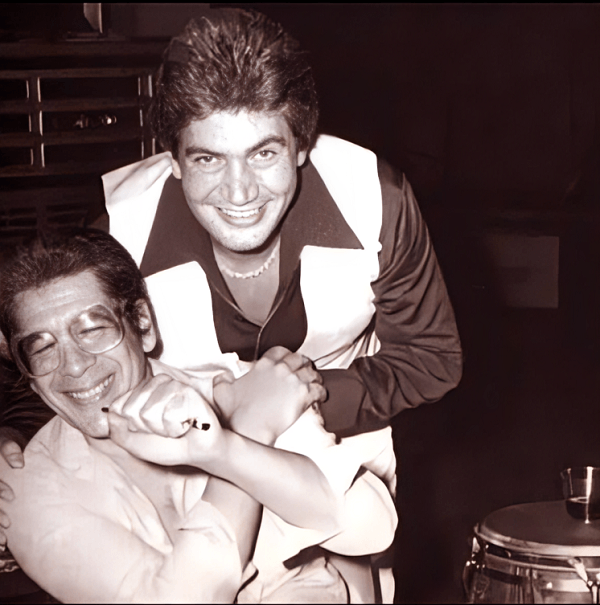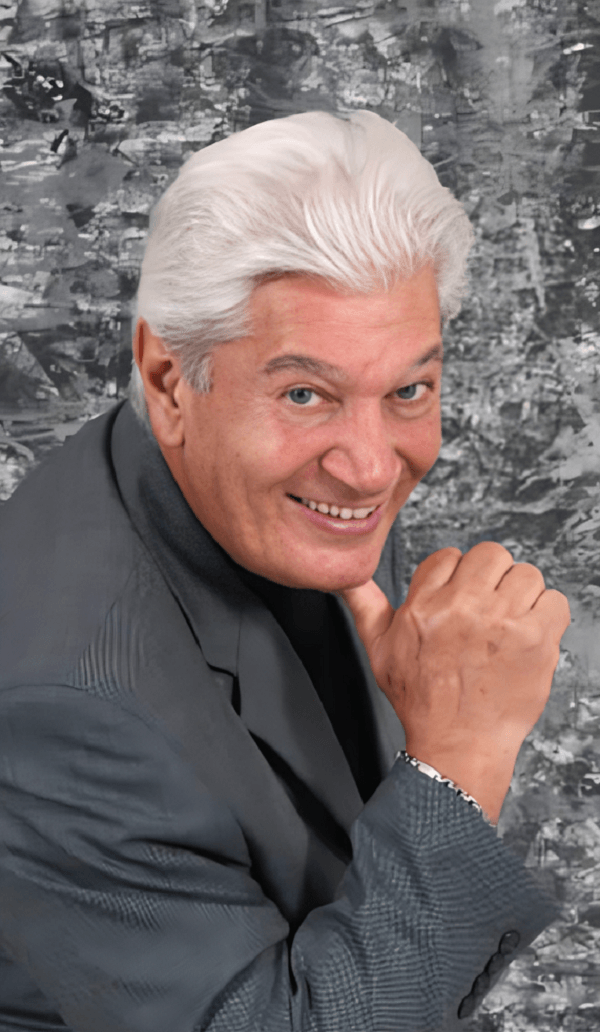

Janett Guevara García, artistically known as Mariana “La Sonera de Venezuela”, was born in La Pastora, Caracas on January 19, daughter of Reina García and Vicente Guevara.

She is the oldest of six siblings and from a very young age she showed her taste for music; an activity that has been her eternal passion and has led her to make six record productions.
Educated in a convent school, she always participated and stood out in cultural events, until on one occasion she was suspended for telling the mother superior that there was a song called “La Cárcel” by Septeto Juventud that she wanted to sing at a cultural event.
At the age of 14, during her high school education, she learned to play drums and participated in the choir of the Caricuao Parish church where she lived.
As the years went by, Mariana was invited by Mr. Naty Martinez to a rehearsal, who was impressed when he heard her and decided to make a musical production.
That is when Mariana’s true pilgrimage began, going through stages earning the admiration of salsa greats.

Mariana has been worthy of awards such as “El Congo de Oro” at the Barranquilla salsa festival.
She has been praised by personalities such as Don Tite Curet Alonzo. Mariana alternates her exciting career with the media, where she has a radio program dedicated to our Latin music “Sonsoneando con Mariana” winner of the 2010 Excellence Award, as a popular radio space in the Vargas State Venezuela.
She recently participated in the heartfelt tribute to the 50 years of artistic career of maestro Elio Pacheco, founder of the Latin Dimension, where she recorded an excellent song called “Al Olvido”.
She received praise from the Cuban queen Celia Cruz, and has the support of singers such as the Fania Stars, José Alberto “El Canario”, the Gran Combo de Puerto Rico and even her friend and confidant Oscar D’ León.

She has managed to release 12 musical productions. Among her best-known songs are “Frases hecha” in 1996, recorded in Peru and “Eres más fuerte que yo” by the composer Enrique Hidalgo.
Awards obtained
She has also received plaques as Female New Artist of the Year and Best Sonera in Caribbean Representation.
“I will never forget when they gave me the Catatumbo de Oro in Maracaibo, in the year 2000. It is one of my greatest achievements.”

My family is my life
She is currently a speaker, producer, and host of her own radio show “SONSONEANDO CON MARIANA,” broadcast Monday through Friday from 12:00 AM to 2:00 PM on Dial Azul 95.9 FM. At the same time, she directs her own group and is part of Jeque y su Banda, the Rumberos Callejón orchestra, directed by the experienced timbalero Carlitos Padrón, where she shares the stage with Rodrigo Mendoza, Wilmer Lozano, among others.

Research Sources:
Luisana Brito, [email protected]
Also Read: “Canelita Medina” Caribbean popular music loses one of its best exponents
In this space, we have always worked to pay tribute to the greatest salsa legends and we consider it important that these luminaries feel the love of the public in life. That is why we want to pay homage to the man who has been a great pillar of Puerto Rican salsa as we know today. We are talking about the great singer from Ciales, Adalberto Santiago, who is celebrating the 70th anniversary of his artistic career. Here is a summary of his brilliant career.

The sonero began his career by participating in trios, which he accompanied with his voice, guitar, bass and even his dance moves. This was something very few artists did at the time, which is why this young man drew a lot of attention at that time.
He got to play with Chuíto Vélez and Willie Rosario, but his career really took off when he was given a chance to join the orchestra of Ray Barreto, which is when he managed to internationalize thanks to several albums that continue to be chanted by salsa fans until today such as ‘’Acid’’ or ‘’Rican Struction’’. Then, together with several members of this orchestra, he founded La Tipica 73, which revived Cuban son.
In the 1980s, he became part of the orchestra of Roberto Roena and got to perform famous songs such as ‘’Yo tenía una mujer’’. He is also known for co-producing the album ‘’Calidad’’ with his compatriot Papo Lucca, who arranged one of the tracks and was responsible for all the musical direction.
Some time later, he made a new version of the famous album ‘’Sex Symbol’’, becoming successful in countries such as Colombia, Peru and Venezuela. For this recording, the artist had the support of Isidro Infante in the area of production and arrangements. This is considered one of the most legendary musical works of the singer’s extensive career, to the point that many salseros around the world remember it fondly.

During all these years, Adalberto has been the author of a great number of songs for many world-famous albums in which he has participated, either as a bandleader or lead singer. Despite the worldwide fame he has achieved, he always maintains loyalty for his Latin roots and, in his own words, the structure of Latin music is the most appropriate for his voice and singing style.
In addition to that, the artist has always had the capability and experience to move through many Latin genres such as salsa, merengue, pachanga, cumbia, bomba, plena, boogaloo, guaracha, pachanga, among many others.
He has always tried to maintain his physical and vocal discipline to continue giving the best of himself to his audience despite the years.
As we said at the beginning, the great Adalberto Santiago is about to celebrate his 70th anniversary as an artist, an event that of course is to be celebrated big.
As a way of celebrating and thanking his public for all the support he has received, the singer has decided to hold a concert at the Lehman University of Performing Arts in New York City, more specifically in the Bronx, on Saturday, March 22 at 8PM.
His fans have remained loyal all this time, so we have no doubt that he and his special guests will make everyone dance, making this event an unforgettable evening.
There have been many American musicians who have fallen to the charms of Latin music, which is a practically inexhaustible source of genres allowing them to experiment with in many ways. One of them is Bronson Tennis, with whom we have been fortunate to talk about his interesting career and current musical group, De Tierra Caliente.

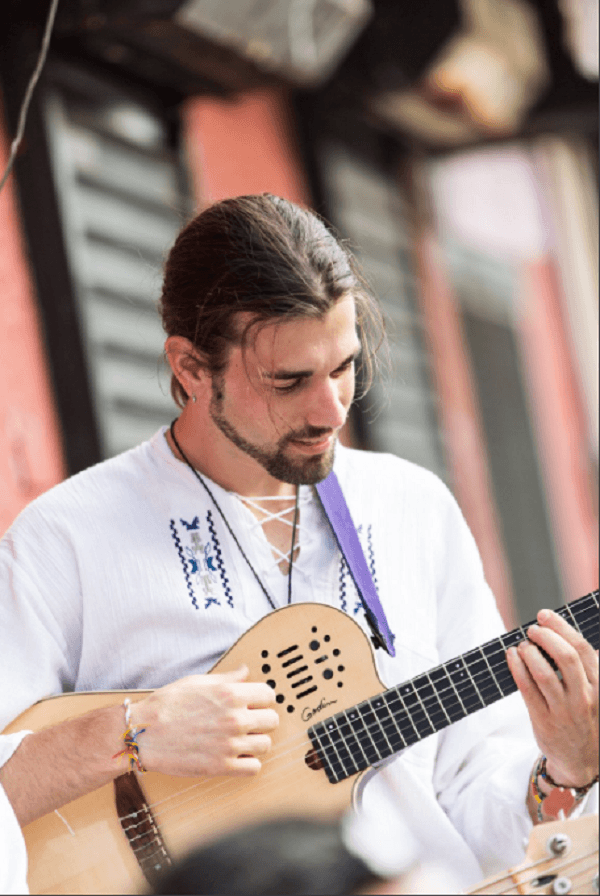
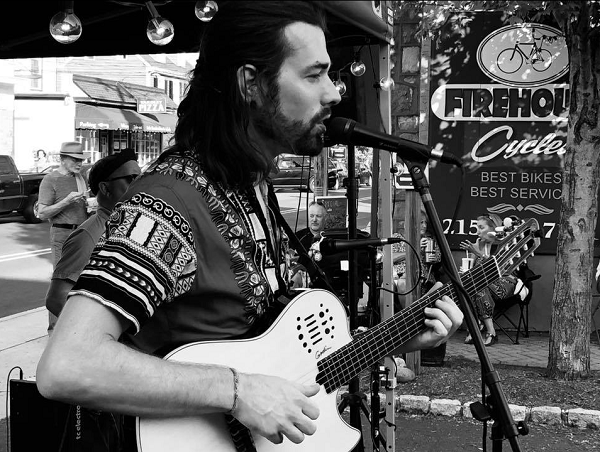
Bronson Tennis began to put his eyes on music when he was just a child, when he was very attracted to the 1990s alternative rock movement in the United States. When he was only 11 years old, his parents bought him his first bass guitar and later he also wanted to learn to play the guitar and sing.
In family matters, Bronson and his three brothers are musicians and several of his cousins and uncles have also been musicians. In addition, his mother was a fine artist and his grandmother was an art teacher.
Both in school and church, the boy always chased opportunities to sing and show his vocal skills to anyone who wanted to hear. He also took advantage of all these spaces to learn as much as he could about music until he was old enough to exercise it professionally.
Today, his main instrument is the guitar, although he also plays the cavaquinho (an instrument of Portuguese origin which is widely used in samba) and the roncoco, which is an adaptation of the Andean charango that he uses to play salsa and Cuban son.

Bronson also told us that he began his career path as a bassist and chorister in several musical groups in the city of San Diego between 2006 and 2009. He then spent some time in Philadelphia, where he also played with other bands from a variety of genres.
It is interesting that he lived in Buenos Aires, Argentina, where he also worked as a bassist and singer in some bands. In fact, in that same country, he helped form a Caribbean funk band in which he learned a lot about these genres so foreign to what he played in his childhood and youth. He stayed about four years in Argentina, specifically between 2009 and 2012, until he moved to Brazil for about six months to continue learning more and more about Latin music, but it was not his last stop in South America, as he was also in Colombia for a while more.
Following this, he returned to Philadelphia and decided to form his own orchestra which he named De Tierra Caliente.
When Bronson returned to Philadelphia, he had the chance to meet some musicians from the Puerto Rican music scene in that city and saw that they had similar outlooks on music, so they got back in the saddle to prepare a formal project amongst themselves.
The artist assures that it was in Argentina where he learned what it takes to move forward with his band. ”Argentines are people who do everything with strength and confidence, whether in music or in soccer. No matter who or what they have to face, as they take on all the challenges with confidence and that is something we could all learn from Argentina.” Bronson said of his stay in that country.

In Brazil, he studied percussion and learned Portuguese, while Colombia taught him to play salsa, champeta, vallenato and many other genres. In short, each country he has visited gave him tools to facilitate his learning in everything about Latin music in various areas.
Precisely thanks to all this acquired knowledge is that Bronson finally felt able to form his own band in 2014 in union with fellow musicians who understood what he wanted to carry out.
Upon his return to the United States, Bronson was very clear that he wanted to incorporate all those elements learned in South America and the Caribbean, but giving them his own touch. It was then that he met conguero Papo Buda, with whom he agreed on much and began the recruiting process for the rest of the musicians.
After that, Bronson and Papo could add more artists to the group, resulting in a fairly consistent group over time. Since its founding, very few musicians have left the band and Bronson and those who remain have an excellent relationship with all of them despite no longer being band mates.
Among his greatest inspirations, Bronson mentioned many artists and groups of various nationalities and genres such as El Gran Combo de Puerto Rico, the Brazilian composer and singer Paulinho da Viola, the group Caribe Funk and many others.

Read also: Latin jazz and mambo trumpeter Jonathan Powell and his great collaborations