• Skip to primary navigation
  • Skip to main content

International Salsa Magazine

  • HOME
  • Previous editions
    • 2026
      • ISM / March 2026
      • ISM / February 2026
      • ISM / January 2026
    • 2025
      • ISM / December 2025
      • ISM / November 2025
      • ISM / October 2025
      • ISM / September 2025
      • ISM / August 2025
      • ISM / July 2025
      • ISM / June 2025
      • ISM / May2025
      • ISM / April 2025
      • ISM / March 2025
      • ISM / February 2025
      • ISM / January 2025
    • 2024
      • ISM / December 2024
      • ISM / November 2024
      • ISM / October 2024
      • ISM / September 2024
      • ISM / August 2024
      • ISM / July 2024
      • ISM / June 2024
      • ISM / May 2024
      • ISM / April 2024
      • ISM / March 2024
      • ISM / February 2024
      • ISM / January 2024
    • 2023
      • ISM / December 2023
      • ISM / November 2023
      • ISM / October 2023
      • ISM – September 2023
      • ISM – August 2023
      • ISM July 2023
      • ISM Edition June 2023
      • ISM – May 2023
      • ISM April 2023
      • ISM March 2023
      • ISM February 2023
      • ISM January 2023
    • 2022
      • ISM December 2022
      • ISM November 2022
      • ISM October 2022
      • ISM September 2022
      • ISM August 2022
      • ISM July 2022
      • ISM June 2022
      • ISM May 2022
      • ISM February 2022
      • ISM January 2022
    • 2021
      • ISM December 2021
      • ISM November 2021
      • ISM October – 2021
      • ISM September 2021
      • ISM August 2021
      • ISM July 2021
      • ISM May 2021
      • ISM April 2021
      • ISM June 2021
      • ISM March 2021
      • ISM February 2021
      • ISM January 2021
    • 2020
      • ISM December 2020
      • ISM November 2020
      • ISM October 2020
      • ISM September 2020
      • ISM August 2020
      • ISM July 2020
      • ISM June 2020
      • ISM May 2020
      • ISM April 2020
      • ISM March 2020
      • ISM February 2020
      • ISM January 2020
    • 2019
      • ISM December 2019
      • ISM November 2019
      • ISM October 2019
      • ISM Septembre 2019
      • ISM August 2019
      • ISM July 2019
      • ISM June 2019
  • Download Salsa App
    • Android
    • Apple
  • Spanish

Search Results for: Dancing

The beautiful story of dancer, actor and singer Pancho Martinez Pey

Dance has been always important for Pancho

Pancho Martinez Pey is an Argentine dance teacher, choreographer, actor, singer and dancer who has had a large participation in various shows and theatre plays in which he has demonstrated his skills in those disciplines where he has become an expert in recent years, among which we can mention ”Casa Blanca”, ”Café Tortoni”, ”Michelangelo”, ”Esquina Carlos Gardel”, ”Sabor a Tango” and many more.

Pancho Martinez Pey
Dance teacher, choreographer, actor, singer Pancho Martínez Pey posing for the camera

His father was a musician and second guitar player for Oscar Alemán in the 1970s, so he was always involved in the world of dance since he was eight years old and started learning to dance in a more professional way at the age of 12. However, the first time he had contact with tango was at 16, when he began to take his first steps in this particular genre. Three years later, he moved to Spain for a while to work as a drummer and singer in a musical group, with which he would tour the entire European country to offer his talent to the local public.

When they were not playing, they danced tango and Argentine folklore, which inspired him enough to devote himself entirely to tango in his country of origin, something that happened when a very young Pancho was just 22 years old. Once he was in his homeland, he worked as a ticket-taker at a train station for a few years while taking dancing lessons in the evenings, which trained and prepared him for his big break.

His big moment came when he was offered to participate in the piece ”Miguelangelo” together with Gloria and Eduardo Arquimbau, who formed one of the most emblematic couples of Argentine tango. He did not think twice about it and quit his job at the train station to go to dance professionally just as he does to the date.

In view of the fact that he was always used to listening to all kinds of music from a very young age, he had no trouble adapting to all the rhythms that he found in the way, such as folklore, tango, forró, swing, Argentine rock, among others.

He also enjoys singing very much and ensures he can sing all kinds of genres ”from K-Pop to tango”.

Pancho Martínez Pey dancing tango with María Nieves. Photo courtesy of Yumba Rojas

Combining dancing and singing with acting

When asked how he mixes dancing and singing with acting and all that histrionic part that makes his performances so particular, he says that his taste for this branch of the arts was also born in his childhood, since he always watched Argentine films in which dancing was very present and it goes without saying that they were always his favorites. Then, little by little, destiny led him to combine all these elements until he starred in his first important musical called ”Tanguera”. In this piece, participants did not talk or act too much, but they had to focus on putting on a good show at the level of dancing.

Another important musical in his career was ”Tita: Una Vida en Tiempo de Tango” with Nacha Guevara, which focused on the life and career of tango dancer and actress Tita Merello. This piece did require vocal talents between dialogues, so Pancho was finally able to show what he was made of as a singer.

All these facets have their degree of complexity, but the Argentinean performer thinks that the hardest part of his work is trying to combine all these areas, something a friend and colleague of his acted as a coach and helped him to train in the linking between singing, dancing and acting. He pointed out that this is a very strong training in which you have to control certain elements such as breathing, the air when dancing, concentration, among other details.

Role of man and woman in tango

According to Pancho, given that it is a dance of two, it is very important that both understand each other’s role in the dance. ”The leader leads and the other follows. In most cases, the leader is the man of the couple, who at the same time is the one who provides support and leads at the same time, while the follower has to follow the leader, but must also be an active member of the situation. Let’s remember that we are two people dancing and not one, so we are both active subjects in the dance. The woman expresses all her own beauty and sensuality, while the gentleman has that strength and guidance that, at the same time, seduces and makes his partner feel safe” said the artist.

Pancho with his father Oscar Cacho Martinez, and his uncle Raúl Martinez

How history and social changes have affected tango

Martínez explains that the World Tango championship gave a huge boost to this musical genre. It was always very popular in Argentina, but it did not have the importance it now has in most of the world. Tango came from a mixture of cultures in Buenos Aires, where the first lyrics of its social protest songs began to emerge. Tango has that popular and rebellious element coming from the people” explains the performer.

The golden age of tango was in the 1940s, when musicians and poets at the highest level began to emerge until foreign musical groups such as The Beatles or Elvis Presley appeared, who won over audiences of the time, which caused a temporary decline of tango. That is how matters stood until the early 1990s when the film Tango Argentino was released, which contributed significantly to the worldwide explosion of tango in those years and to improvement of techniques used for that dance”, he continued.

Finally, the dancer expressed his joy for the moment that tango is living nowadays, since he had never seen so many people interested in learning to dance it, both as entertainment and profession. He thinks that this current popularity is due to the need of people to connect with others after the pandemic and the multiple benefits that it brings at a mental level.

Read also: Major Latin radio stations in New York

La Dimensión Latina is a Venezuelan salsa group founded in 1972 and still going strong today

The original members Oscar D’ León, César Monges “Albóndiga”, José Antonio Rojas “Rojitas” , José Rodríguez “Joseíto”, Elio Pacheco Jesús “Chuito” Narváez (R.I.P). And later Carlos Guerra.

César Monge, trombone player, after graduating from the Escuela de Bandas Militares, was part of the orchestras “La Tropicana de Eldy Tor” and “Los Mundiales” and “Swing Latino”.

Victor Cuica, a saxophone player, knew him from those musical steps.

Oscar León had just bought a car with which he used to be a cab driver, but with a great love for music.

León wanted to create a musical group and gave Cuica the task of recruiting musicians from the Escuela Superior de Música, where Cuica was studying.

La Dimensión Latina es una agrupación de salsa venezolana fundada en 1972 y sigue vigente

That orchestra was called “Oscar y sus estrellas”. César Monge played in that orchestra for a while, until musician Federico Betancourt, director of his group “Federico y su Combo”, hired him.

From there, Monges moved on to the orchestra “Los Dementes” of musician Ray Pérez and later to “Los Satélites” of “Cheché” Mendoza.

While playing with this orchestra, in the Caracas night club La Distinción in the urbanization El Rosal, a disagreement arose between the owner of the orchestra and the owner of the club.

León took advantage of the incident and decided, together with Cuica and Monge, to reestablish his group. Cuica, inspired by the name of the successful American group The 5th Dimension, suggested calling it Dimensión Latina.

La Dimensión Latina es una agrupación de salsa venezolana

Then León took a square and drew the logo with which the group was launched.

It was formally created on March 15, 1972 in a first rehearsal in La Guaira, at the home of the pianist Enrique (Culebra) Iriarte. It was formed by Iriarte on piano, César Monge (Albóndiga) and José Antonio Rojas (Rojitas) on trombones, José (Joseíto) Rodríguez on timbales and bongo, Elio Pacheco on tumbadoras and Oscar León, renamed Oscar D’León on bass and in the role of singer.

They made their debut as Dimensión Latina at the same venue La Distinción. The repertoire was based on songs by Mon Rivera, Eddie Palmieri and Willie Colón.

Several nights the establishment was frequented by Victor Mendoza, singer and musician founder of Trio Venezuela and by then hired as music producer by the Top Hits record label, who had a band called “El Clan de Victor”, which had to produce an album per year. Mendoza motivated the musicians and they did two musical auditions.

José Rodríguez, who had some money saved due to his work as a musician and motorcyclist, arranged for the recording at Estudios Fidelis with a song by Elio Pacheco and another by Oscar León. These tests were not to the liking of the label owner.

This discouraged Enrique Iriarte, who promptly left the group. His place was taken by pianist Jesús “Chuíto” Narváez. Despite the label’s refusals, Víctor Mendoza wanted to record them and decided to include them in his production of “El Clan de Víctor” in 1972.

Dimensión Latina Patrimonio Nacional

The sextet’s first hit was “Pensando en ti”. Mendoza then suggested Oscar León the artistic name of Oscar D’León.

During 1973 they recorded their second album, called “Dimensión Latina” where he gained recognition and participated in important events, such as tours of Curacao and the carnival of Maracaibo, launching their third album “Triunfadores” from which the second hit of the orchestra “Qué Bailen Tós” was released.

In 1974 the bolerista from Caracas Wladimir Lozano joined the orchestra, who had been working in night clubs in Caracas along with the harpist Ramón Hernández.

Wladimir gave the group more interpretative depth, achieving the duo Oscar and Wladimir, which gave birth to important interpretations and commercial successes that earned the band international recognition.

The highlight of Lozano’s entrance was “La Piragua”, a song that reached the top of the radio charts.

By 1975, La Dimensión Latina enjoyed the support of the public, who enjoyed their performances on television and being the image of commercial products.

A new album arrived, “Dimensión Latina ’75”, and with it came their consecration, for some critics the most successful and iconic. It included songs of extraordinary commercial success such as “Taboga”, “Parampampam”, “Mi Adorada”, “Cañonazo”, and a song by Oscar that was included as filler but would become the best-selling single in their history, “Llorarás”.

This album catapulted the orchestra’s career and gave it a place of recognition in the salsa world that, at that time, was almost reserved for the orchestras of the New York salsa boom.

Musician Carlos Guerra joined the orchestra on trombone, increasing the number of trombonists to three.

Subsequent productions included new commercial and interpretative achievements such as “Dolor cobarde”, “El frutero” and “Dormir contigo”. After their presentation in the United States, La Dimensión produced the album “La Dimensión Latina en Nueva York” (1976), which would be the seventh and last album of the orchestra with Oscar D’León, who would leave the group to start a successful solo career.

In the absence of Oscar, La Dimensión Latina calls, at the suggestion of Joseíto Rodríguez, the well-known guarachero and gaitero from Zulia Argenis Carruyo, who had been a member of Super Combo Los Tropicales and Guaco, for the recording of the album “La Dimensión Latina ’77 Internacional” and bassist Gustavo Carmona.

That same year, thinking of continuing to blaze trails abroad, they thought of a voice of international stature, and it was the Puerto Rican musician Roberto Roena who suggested the famous Puerto Rican singer Andy Montañez, lead singer of the Gran Combo de Puerto Rico.

Montañez was tempted by an extraordinary contract. Along with Montañez, the Zulian singer and sonero Rodrigo Mendoza joins the band and for the first time La Dimensión has three voices in its cast.

On November 11, 1977, La Dimensión Latina headlines the “Salsa International” festival at Madison Square Garden in New York, organized by Ralph Mercado and with the presence, among others, of Wilfrido Vargas and Cheo Feliciano.

Andy Montañez remained with the orchestra until 1980, recording eight albums, including hits such as “El Eco de un Tambor” by maestro Tite Curet Alonso, “Linda Minerva” sung as a duet with Argenis Carruyo, “Ave María Lola”, “Por el Camino”, “Mi Bombolaye”, and Puerto Rican contributions such as “Cantante Errante” by composer Johnny Ortiz and “Quisiera Saber”.

Rodrigo Mendoza managed to create hits such as “Fanfarrón”, “Córreme guardia” and “Suena el cuero”.

The orchestra also included Colombian pianist Samuel del Real, percussionists Carlos (Pacusso) Guillén and Luís Machado and the voices of Cheo Valenzuela, Alexis Martínez, Luis Arturo Guaramato and Alex “Mostaza” Vargas.

Cuatro décadas después y unidos por la salsa el Reencuentro del año Oscar D’ León y La Dimensión Latina

Four decades later and united by salsa, the reunion of the year Oscar D’ León and La Dimensión Latina.

Poliedro de Caracas

Only Invershow makes it possible

Venezuela this May 12, 2023 we will live something “HISTORIC”, and you can be present at this iconic reunion.

From seeing them together again to dancing and singing to the rhythm that only they can achieve.

It will be an unprecedented concert, don’t let them tell you about it and buy a ticket to live it YOU.

Será Un concierto sin precedentes, no dejes que te lo cuenten y compra una entrada para vivirlo TÚ

“The important thing is to maintain the style of the orchestra. The singer here has to adapt to the orchestra, not the orchestra to the singer. Whoever comes to sing has to adapt to the repertoire and to our way of doing salsa, which is very peculiar. We have a unique sonority”. 

César Monge, Albóndiga.

Visit: La Dimensión Latina S.R.L

Read also: Freddy de Jesús Ortega Ruiz “Coco & su Sabor Matancero”

Eva Gordillo, psychologist by profession and director Salseros Academy

Eva Gordillo: The so-called Cuban style is the original way of dancing “casino” or “rueda de casino”.

The first steps of this dance were developed in the sports casino in Havana and other dance halls in the Cuban capital at the end of the 1950s, hence its name in Cuba: “–“, as it was originally called “El baile del casino”.

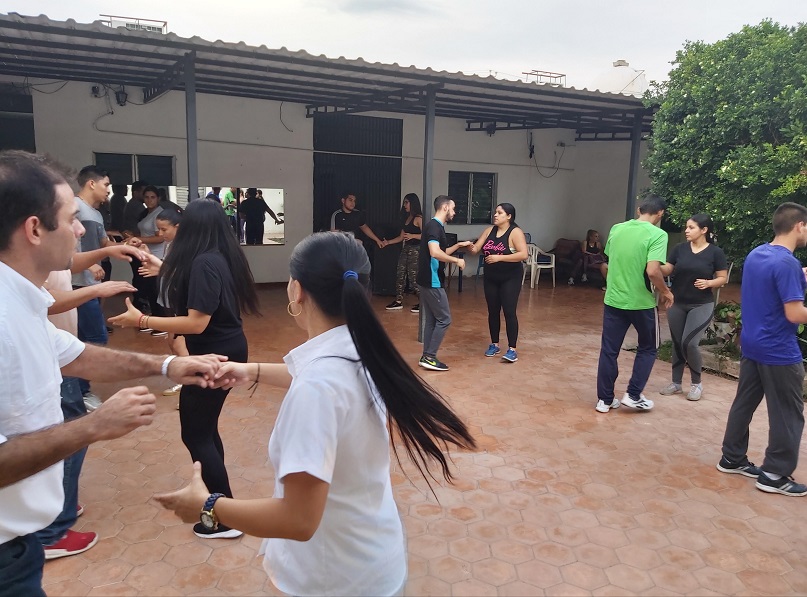
Photo of Salseros Academy Dance Academy

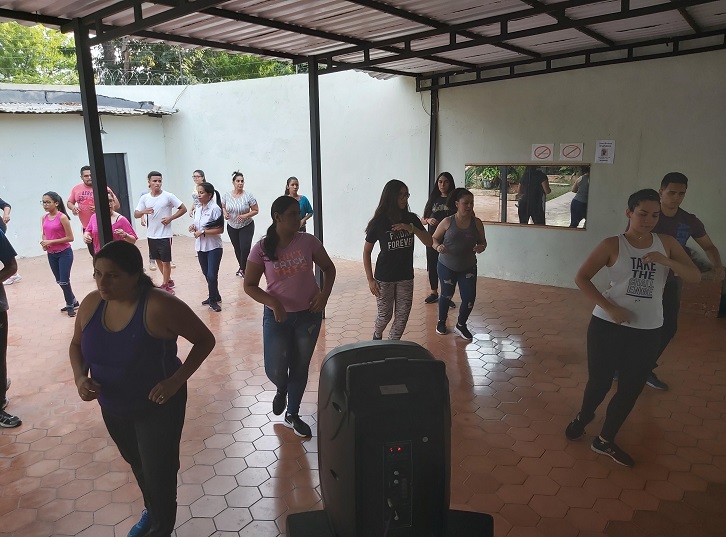
In Barquisimeto, the musical capital of Venezuela, the dancers of Afro-Caribbean rhythms have a place to develop, improve and learn skills with the help of professionals, who achieve the integration of its participants, creating an atmosphere of great joy for all ages.

In this sense, our special guest in Salsa Escrita “La Columna Salsera de Barquisimeto”, through International Salsa Magazine, www.salsamundi.com, is Eva Gordillo, psychologist by profession and director of the dance academy “Salseros Academy”.

Dancers of Salseros Academy Dance Academy

Eva has been a passionate dancer since the age of 13 and today, with only 22 years old, she has toured most of the dance schools in the twilight city and some outside the state of Lara, projecting and developing herself as an instructor of proven hierarchy and reliability.

Welcome Eva to the only salsa magazine in the world, International Salsa Magazine and Salsa Escrita. Thank you, Professor Carlos, for giving me the opportunity to be present in your prestigious salsa column, which is already recognized in my country, the Caribbean, the United States and Europe, thus supporting the entire existing salsa movement in Venezuela.

Eva Gordillo and Members of the Salseros Academy dance academy

Eva, how and when did the idea of having your own dance academy come up? Friend Carlos, on November 26, 2018, I started and materialized my great dream, my own academy and together with my colleagues and friends, Eleazar Hernandez and Manuel Gamez, we started this adventure, from which today, we are harvesting many fruits and we feel extremely happy with this project and grateful, mainly with God, because everything is thanks to Him.

Excellent, very good friend, by the way, what kind of dances do you develop and teach in “Salseros Academy”? In our academy we give group and personalized classes, for all ages, conditions and levels. Our strength is Latin rhythms, especially Salsa, as our name indicates.

We focus on their different dance ramifications, such as New York style mambo, Salsa en Linea or Los Angeles style, Cuban Timba en Linea and En Rueda or “Salsa Casino”. Amiga Eva, in addition to salsa, do you teach other dance rhythms? Indeed Carlos, in addition we teach some Cuban music derivatives such as the chachachá, pachanga and boogaloo.

We are also projecting ourselves strongly with the bachata and its variants, as well as other Latin genres, such as merengue, among others.

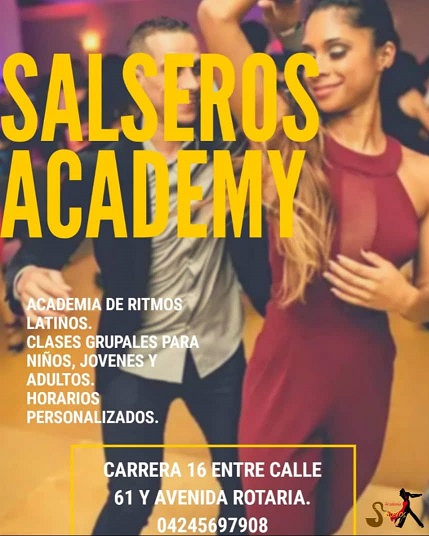
During a visit to the headquarters of “Salseros Academy” in the city of Barquisimeto, by the Latin American correspondent team of International Salsa Magazine, we were able to see the excellent, comfortable and spacious facilities, located on Carrera 16 between Calle 61 and Avenida Rotaria, where Eva is accompanied by four experienced instructors specialized in different dance styles. The attendance and registration of participants is massive, given the proven quality and recognized throughout the city of Barquisimeto.

Dance Academy Salseros Academy

Friend Eva Gordillo, do you also have other projects at a musical and danceable level? That’s right teacher, at present we are heading to be producers of salsa events, thus promoting the Latin dance movement in our state Lara.

By the way, last year we had the pleasure of carrying out an event called “La Gran Gala de la Salsa” (The Great Salsa Gala), on the occasion of the celebration of the 1st anniversary of our academy, in which the dancers were able to enjoy the “Kadencia Latina” and “Jossy y su Banda” orchestras. Digital platforms and contacts for those interested in dancing at Salseros Academy? Friend Carlos, they are: Instagram: @salserosacademy, @evacarolgz, Whatsapp: 0424-5697908, Facebook: Grupo Salseros.

On behalf of the academy, my team and students, we would like to thank you for your support and projection of our work through your column “Salsa Escrita” in International Salsa Magazine. We wish you success and blessings to continue driving the Venezuelan salsa movement.

ISM Salseros Academy Dance Academy Fund

By Carlos Colmenares, ISM Journalist Correspondents, Barquisimeto, Venezuela

Five Latin – Caribbean artists who triumph in Canada

Canada is another of the countries that has been influenced by the arrival of Latin music. Its beginnings are attributed to the immigration of Latin Americans to their lands.

Canada's map
Canada’s map

By sharing borders, the United States and Canada tend to have similarities in the musical field. In the 90s, Latin music was present in Canada. However, Spanish pop singers such as Julio Iglesias and Gloria Estefan, as well as Lydia Mendoza, an interpreter of Tejano music, were already known.

Having Latin Americans started a kind of Latino roots, allowing Latin music to gain more ground on Canadian soil. Singers like Celia Cruz, Willie Colón and Rubén González made their songs sound in Canada. However, the beginnings of Latin music in the country are attributed to Ferdinand Morton, known in the artistic field as Jelly Roll Morton, an American jazz pianist.

Starting in 1999, Latin music had a greater growth, beginning to be heard on radio stations, events, festivals and national television stations. By that time singers like Ricky Martin were already being heard in other parts of the world.

Selena, Buena Vista Social Club and Jennifer López. Arriving in Canadian lands was no exception. In fact, Buena Vista Social Club’s album broke a record by becoming the highest-selling Latin album in Canada.

Surprisingly, Canadian artists were also captivated by the benefits of Hispanic countries, by the Caribbean flavor and the warmth of its people. Nelly Furtado, singer, songwriter and producer born in Canada was inspired by the island of Cuba for her album “Mi Plan”. Furtado recorded what would be his fourth album entirely in Spanish. It featured the participation of renowned Latin artists such as Juan Luis Guerra, Alejandro Fernández and the Latin American Julieta Venegas.

“I think this album has several of my first true love songs. They are not complicated. They were not over-thought and I discovered that it is liberating to be able to sing in a Latin language and express my Latin soul,” he said.

Mi Plan obtained great merits and was positioned as the album in Spanish with the highest sales numbers recorded by a Canadian singer. Undoubtedly, a suitable place for many Latino musicians of birth or descent who have wanted to try their luck outside their borders. Some have succeeded and today are among the most loved in Canada.

Some representatives of Latin music in Canada

Hilario Durán, Cuba

Photo by Hilario Duran

Hilario Durán

Hilario was born in Havana in 1953. He moved to Canada in the late 90’s, after touring the world with his band “Perspectiva”. He is a famous jazz pianist who fell in love with Canada and decided to live on its streets. He joined the Afro-Cuban jazz band “Spirit of Havana” belonging to Jane Bunnet, a Canadian lover of Cuban culture. In fact, Bunnet regularly travels to Havana to perform with Cuban musicians.

Hilario Durán has become known in Canada and other parts of the world thanks to his orchestra (Big Band), where together with his friend Roberto Occhipinti, a Canadian musician, they bring together Cuban and Canadian musicians. Leaving Latin jazz high. In 2007 he was nominated for a Grammy for his album “From the Heart”, along with Roberto D’Rivera. In addition, it obtained three Juno Awards and different awards in Canada.

Amanda Martínez, Mexico

Photo - Amanda Martínez in concert

Amanda Martinez in concert

Amanda Martínez was born in Toronto, Canada with Latino blood. His father is Mexican. Martínez studied biology and business administration but decided to take a course in his life and dedicate himself to what he really loved: music. The artist was not wrong in her decision. He has left his roots high by venturing into Latin jazz.

In 2007 and then in 2009 she was nominated for the Latin Jazz Artist of the Year Award at the National Jazz Awards in Canada. He has three albums to his credit and his first album “Sola” won the Best World Music award, selling around 6,000 copies.

Martínez has performed on famous stages and renowned events; she sang at the Winter Garden Theater, at the Koerner Hall in Toronto, the Festival Centro Histórico de México, at the Montreal Jazz Festival

Ogguere, Cuba

Ogguere's photo

Ogguere

Aka Edrei Riveri, is a Cuban singer and songwriter who resides in Canada. It has become famous for its musical fusions. He walks through rap, hip hop, jazz and la chacuba. A mix of cha-cha and rap. It is registered as the first mix between both styles.

Ogguere has two solo albums, “Solar” released in 2011 which earned two nominations for a Cubadisco award and “Raíces”. He moved to Toronto in 2010 and has since become an immediate reference in jazz and hip hop.

Natasha Roldán, Colombia

Photo by Natasha Roldan
Natasha Roldán

Born in Colombia and based in Toronto, Canada, Natasha Roldán breaks stereotypes in the musical field. She walks between jazz and bossa.

The artist has a fair complexion and very light eyes. From what anyone would believe, she is a native Canadian singer. However, her Colombian roots run deep in her career.

For Natasha it is important that the musical boundaries collapse. It promotes pattern-free Latin music.

“I think that above all I break many stereotypes because people in Canada whenever they think of Latin music, identify it directly with salsa or bachata. Well, and now reggaeton (laughs). And everything is linked to a super sexy image of the Latin woman, who dresses spectacularly and clearly I am not like that.

Therefore, it is very gratifying to share another type of music that people do not know such as bambuco, cumbia, Argentine zamba, Brazilian music aside from bossa nova … and whenever I talk to someone and they discover that I am always Colombian They ask me why I don’t play such music or dance this.

Suddenly I break with the stereotype but not because it is a bad stereotype but because other things have to be shown as well ”, she expressed in an interview for the Hispano Phone portal.

Her music has allowed many Canadians to have access to the Latin culture and to experience sounds with different influences.

Henry Vivel, Colombia

Photo by Henry Vivel

Henry Vivel

Henry was born in Colombia but moved to New York and later to Toronto. In New York he had the opportunity to study music with Enrique Gil, musician and composer. After his arrival in Toronto, he worked in Sky’s Banda, a group that performed at weddings and different events. He sang Latin music.

In 2009 he became the leader of the Tropicanada Orquesta. Pioneer Latin Orchestra in Toronto. They have participated in different salsa festivals and radio stations. Henry and the band have also been a part of different charities in Canada and other countries. In the same way, Henry has joined social causes for the inclusion of immigrants, he has taught them English and part of Canadian culture.

In 2013 he was nominated for the Oye Awards and 10 Most Influential Latinos in Canada. The singer is very pleased with the affection of the Canadian public.

“The chemistry is so great, especially with those who don’t understand my songs in Spanish, which makes the language barriers dissolve into enjoying themselves, dancing and having a good time. With the orchestra I have been able to witness how people enjoy the beauty of Latin music and it makes me very happy to be a Colombian who sings to Canadians and who puts up our musical roots ”, he commented

Toronto has been a city with great Latin influence. Canada has received mixtures of different cultures and they have formed a variety of styles that locals and visitors enjoy. It has been one of the countries that receive the foreign musicians as part of a great family and give them the opportunity to present their work. They have a great affection for Caribbean music.

Historical events that gave birth to kizomba

History of kizomba

There are many musical genres and rhythms that we love and make us want to dance just by listening to them, but in most cases, we do not know their origin or how they became what they are today. Such is the case of kizomba, whose origins are both particular and fascinating, so we want to explore a bit about this interesting story for the knowledge of all those readers who still do not know it.

This dance modality that has become well known in Latin America and the United States in recent years has its origins in Angola in the 1960s as a fusion of ”semba” and other African rhythms, but it was not as simple as it sounds. In fact, many things happened before kizomba became what we know, some of which have to do with historical events that led to the creation of this musical genre indirectly.

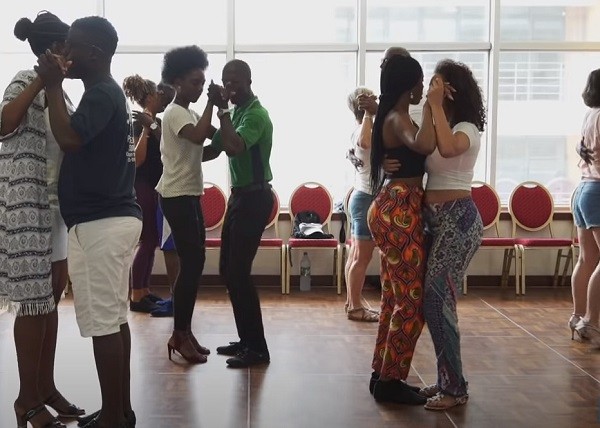
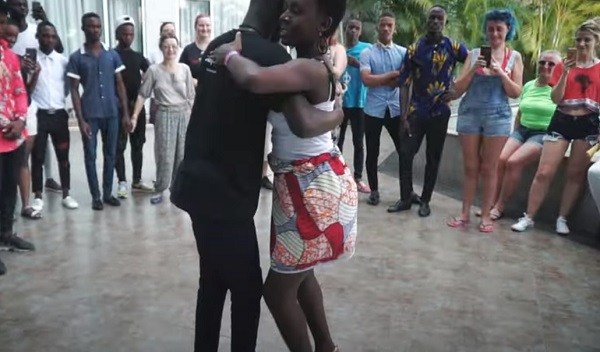
People dancing kizomba
People dancing kizomba in a dance studio in Angola

Historical context

Angola was colonized by Portugal in the 16th century, fact from which the European country began to impose its culture, language, religion and political system in the occupied territory. In the same way, the colonizers took advantage of the Angolans in every possible way, but the best known was the labor exploitation to which they were subjected to obtain resources and the suppression of their national identity.

The situation became so unbearable that there has been an emergence of numerous anti-colonialist movements throughout the country such as the National Front for the Liberation of Angola, the People’s Movement for the Liberation of Angola and the National Union for the Total Independence of Angola. This resulted in the Angolan population demanding the rights they had as inhabitants from their own country and which had been forcefully taken away from them. The following years were marked by intense armed conflict, a lot of political instability and international intervention.

Finally in 1975, Angola gained independence from Portugal to become a country free from the yoke which settled down on it for decades. However, the legacy of colonization in every area of national life was so profound that it could not be swept way from one moment to another, including traditional music and dances. Both Angolan music and dance ended up mixing with European and Portuguese rhythms in general, resulting in a colorful range of sounds that have been conquering the whole world.

Angolan women dancing
Angolan women dancing tradicional rhythms

Origin of kizomba and its name

Returning to semba that was mentioned at the beginning, it was its union with other African rhythms such as zouk that gave origin to kizomba as such. The word ”kizomba” comes from ”kimbundú” or ”quimbundú” which means ”party”. Kimbundú is a language spoken in some Angolan provinces and the Portuguese language incorporated some of its terms such as ”xinga” which means ”curse”.

On this subject there is much controversy, since lots of hypotheses are floated to explain the origin of kizomba and one of them states that this genre does not exist as such, but it is a version of the already existing zouk, but sung in Portuguese. There are also some studies indicating that kizomba comes from ”bèlè”, which is a dance inherited from African ancestors who came to the Island of Martinique as slaves to work in the sugarcane plantations.

By mixing bèlè and the European polka, Martinican musicians created something called ”beguine”, which was spreading in Parisian popular dances. When these rhythms were mixed with more commercial music in the 1970s, zouk originated and this term makes direct reference to the spontaneous parties in Martinique. ”Zouk” means ”party” in Creole, which is a language spoken by West Indians that emerged from the mix of French with other African languages. Coincidentally, it has the same meaning as ”kizomba” in Kimbundu.

Luanda Semba Festival
Some contestants at the Luanda Semba Festival 2019

After zouk spread to French Guiana and Brazil, it returned to Africa, especially to Angola and Cape Verde, where it merged with semba and finally gave birth to kizomba.

What how is kizomba is today

Kizomba tended to be slow-paced and static and not required many turns, but that changed with the passage of time. Today, it includes legs tangled and recreates much more visual moves than before.

Something that characterizes the genre is the circle dance with forward and back steps, which has been very appealing to dancers from all over the world despite their origin. Besides, it is very easy, sensual, different and exotic.

Read also: No man is a prophet in his own land

  • « Go to Previous Page
  • Page 1
  • Interim pages omitted …
  • Page 33
  • Page 34
  • Page 35
  • Page 36
  • Page 37
  • Interim pages omitted …
  • Page 65
  • Go to Next Page »

International Salsa Magazine (ISM) is a monthly publication about Salsa activities around the world, that has been publishing since 2007. It is a world network of volunteers coordinated by ISM Magazine. We are working to strengthen all the events by working together.