• Skip to primary navigation
  • Skip to main content

International Salsa Magazine

  • HOME
  • Previous editions
    • 2026
      • ISM / April 2026
      • ISM / March 2026
      • ISM / February 2026
      • ISM / January 2026
    • 2025
      • ISM / December 2025
      • ISM / November 2025
      • ISM / October 2025
      • ISM / September 2025
      • ISM / August 2025
      • ISM / July 2025
      • ISM / June 2025
      • ISM / May2025
      • ISM / April 2025
      • ISM / March 2025
      • ISM / February 2025
      • ISM / January 2025
    • 2024
      • ISM / December 2024
      • ISM / November 2024
      • ISM / October 2024
      • ISM / September 2024
      • ISM / August 2024
      • ISM / July 2024
      • ISM / June 2024
      • ISM / May 2024
      • ISM / April 2024
      • ISM / March 2024
      • ISM / February 2024
      • ISM / January 2024
    • 2023
      • ISM / December 2023
      • ISM / November 2023
      • ISM / October 2023
      • ISM – September 2023
      • ISM – August 2023
      • ISM July 2023
      • ISM Edition June 2023
      • ISM – May 2023
      • ISM April 2023
      • ISM March 2023
      • ISM February 2023
      • ISM January 2023
    • 2022
      • ISM December 2022
      • ISM November 2022
      • ISM October 2022
      • ISM September 2022
      • ISM August 2022
      • ISM July 2022
      • ISM June 2022
      • ISM May 2022
      • ISM February 2022
      • ISM January 2022
    • 2021
      • ISM December 2021
      • ISM November 2021
      • ISM October – 2021
      • ISM September 2021
      • ISM August 2021
      • ISM July 2021
      • ISM May 2021
      • ISM April 2021
      • ISM June 2021
      • ISM March 2021
      • ISM February 2021
      • ISM January 2021
    • 2020
      • ISM December 2020
      • ISM November 2020
      • ISM October 2020
      • ISM September 2020
      • ISM August 2020
      • ISM July 2020
      • ISM June 2020
      • ISM May 2020
      • ISM April 2020
      • ISM March 2020
      • ISM February 2020
      • ISM January 2020
    • 2019
      • ISM December 2019
      • ISM November 2019
      • ISM October 2019
      • ISM Septembre 2019
      • ISM August 2019
      • ISM July 2019
      • ISM June 2019
    • 2016
      • ISM December 2016
  • Spanish
  • Download Salsa App
    • Android
    • Apple

Search Results for: Dancing

Influence of Latin Music in Europe and Vice Versa


European union 


When we refer to any Latin element that has been influential at the European continent or vice versa, it is almost inevitable that we think back to the Discovery of the Americas on the part of Christopher Columbus.

It was about this time when various instruments present in cumbia and salsa started to be used. No wonder we attach so much importance to this event, as this is how Spanish and the Portuguese arrived in the so-called New World. It is no coincidence that these languages are the protagonists of these rhythms at this time.

While it is true that Europe gave its languages to Latin music, we cannot fail to mention that the African slave trade played a major role in this context. Its beats and drums closely tied to religious ceremonies were inspirational for salsa, bachata and samba and African-American music, in which the famous Jazz may be included.

Neither can we leave out the fact that many pre-Colombian civilizations created many types of percussion music instruments, which are very present in Andean music and its very traditional flute-like sounds.

 What has led Latin American music to become so popular in recent times?

There is no denying that Latin music has achieved a tremendous global reach in recent years, but things were not always like this. In the past, it was ballads of love with heartbreaking lyrics that dominated this market and its primary target audience was female.

With the passing of years, this reality radically changed. We can see it in the emergence of an encouraging number of commercial songs and very simple to dance like La Macarena by Los Del Rio, Livin La Vida Loca by Ricky Martin, A Dios Le Pido by Juanes, among others. These pieces of theme music were the ones that broke the barrier of traditional radio in due course.

Later, hip hop and R&B gave origin to other urban rhythms that took hold of everyone’s attention
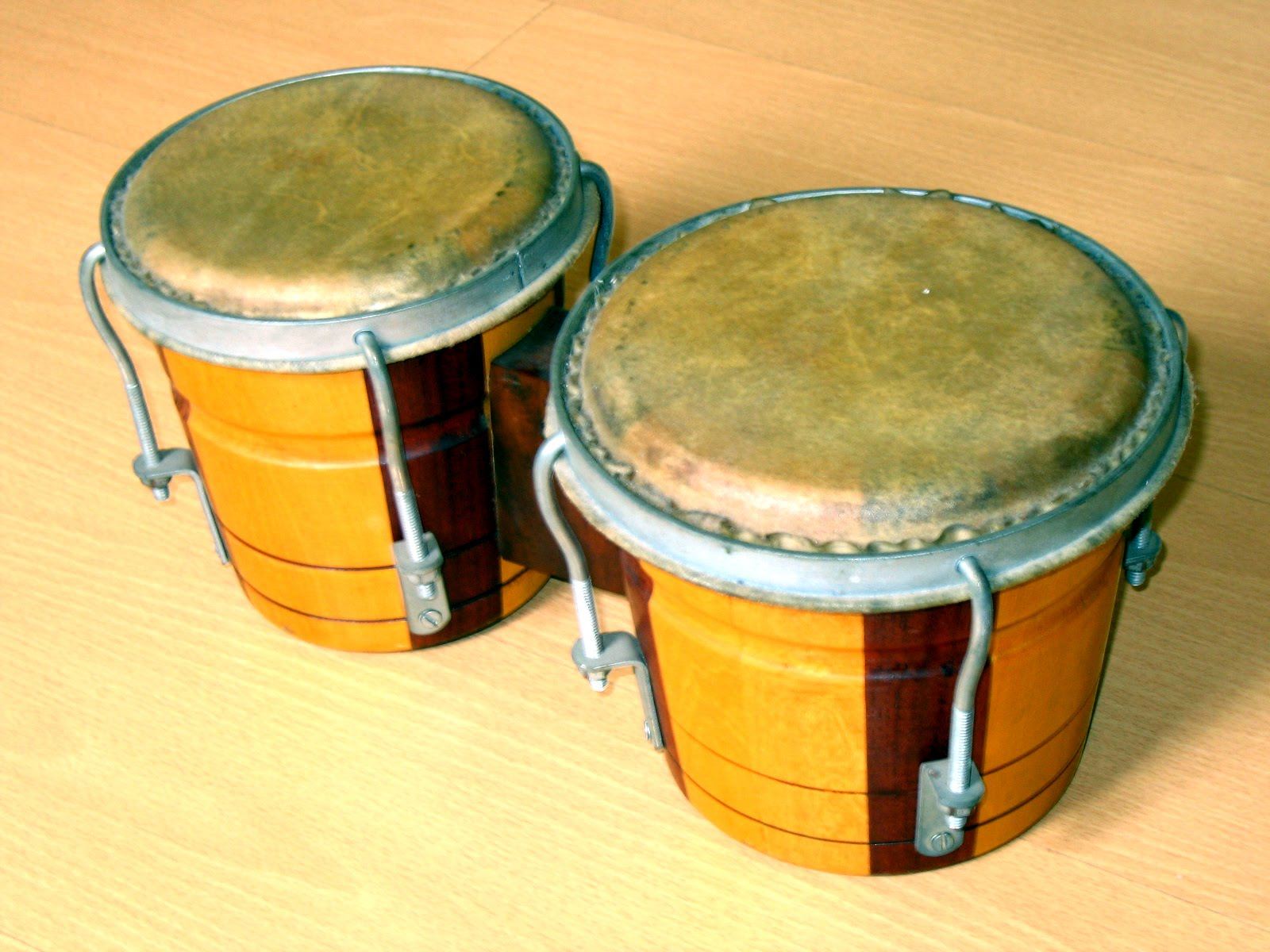
Bongos
Bongos


Latin music for some time now

That mode of nightclubs of Latin origin that have been inaugurated  the length and breadth of the old continent is nothing new. What is new though is the type of attendees received in these places in recent years. There’s a very large audience of all ages who show real interest in rhythms whose language they don’t even know, but they do not seem to care at all. In fact, this peculiarity seems to give an extra touch of excitement to the point. They see Latin music as an array of sounds and rhythms that may not understand, but that simply cannot stop dancing them.

When making a comparison of the monotonous pop style with this recent wave of Latino artists that have been conquering hearts throughout the world, it is evident that things are different now and did not seem to go back to the way they were. What is true is that traditional styles have been overthrown surprisingly.

It is not a secret that singers such as Shakira or Ricky Martin became immensely popular in the late nineties and the early 200All Posts0s, but now things go much further. We are saying that there is a very important number of musicians in these genres that have drawn the attention of all audiences of all ages and countries.

Further, there is a lot of Americans who have appropriated these styles and the Spanish language to give a lot of freshness to their musical projects. A telling example is the Canadian Justin Bieber who has worked with Luis Fonsi and other artists from Latin America, giving as a result a fan base that became interested in these genres and the Spanish language.

It looks like musical lyrics no longer need to be in English to reach all corners of the globe and make everyone dance. In fact, many people look for this type of music to enjoy it, even if they understand little to nothing about it.
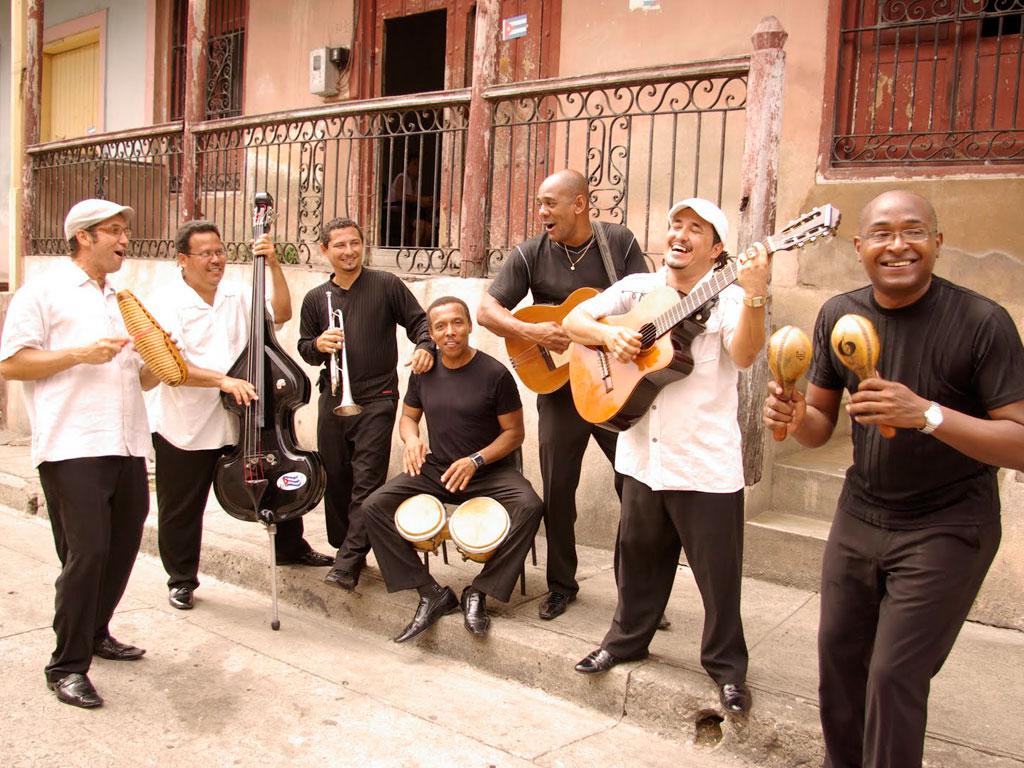
Orchestra Latin music playing in the roads

What can we deduce from all this?

After having analysed all these data, we can say that Latin music is a very rich and intense mix of a cluster of cultures that were linked up between them until we find the heterogeneity that we see today. Undeniably, this whole process of miscegenation between so many rhythms would not have been possible under the influence of pre-Columbian, African and European culture. However, the same can be said in the opposite case.

Yes, this also occurs in the contrary case. Europeans’s musical tastes are no longer those of a few decades ago. Nowadays, there are many adults and young people who cannot stop dancing when they listen to certain salsa or merengue songs that have gone across all possible borders.

In short, we are talking about a continuous feedback loop between both cultures that keeps going until now. No musical rhythm is completely pure and Latin rhythms are the perfect example.

Image source 1: http://nuevacaravana.blogspot.com/2010/08/bongo.html

Image source 2: https://presencia.unah.edu.hn/noticias/los-origenes-de-la-musica-y-la-identidad-en-america-latina-4-de-4/

Image source 3: https://www.correo.ca/2015/07/willie-colon-la-clave-es-la-experimentacion/

Image source 4: https://www.youtube.com/watch?v=QH_3h43nGf4


Anya Katsevman: “You have the dream, I have the tools”

USA - New York - New York

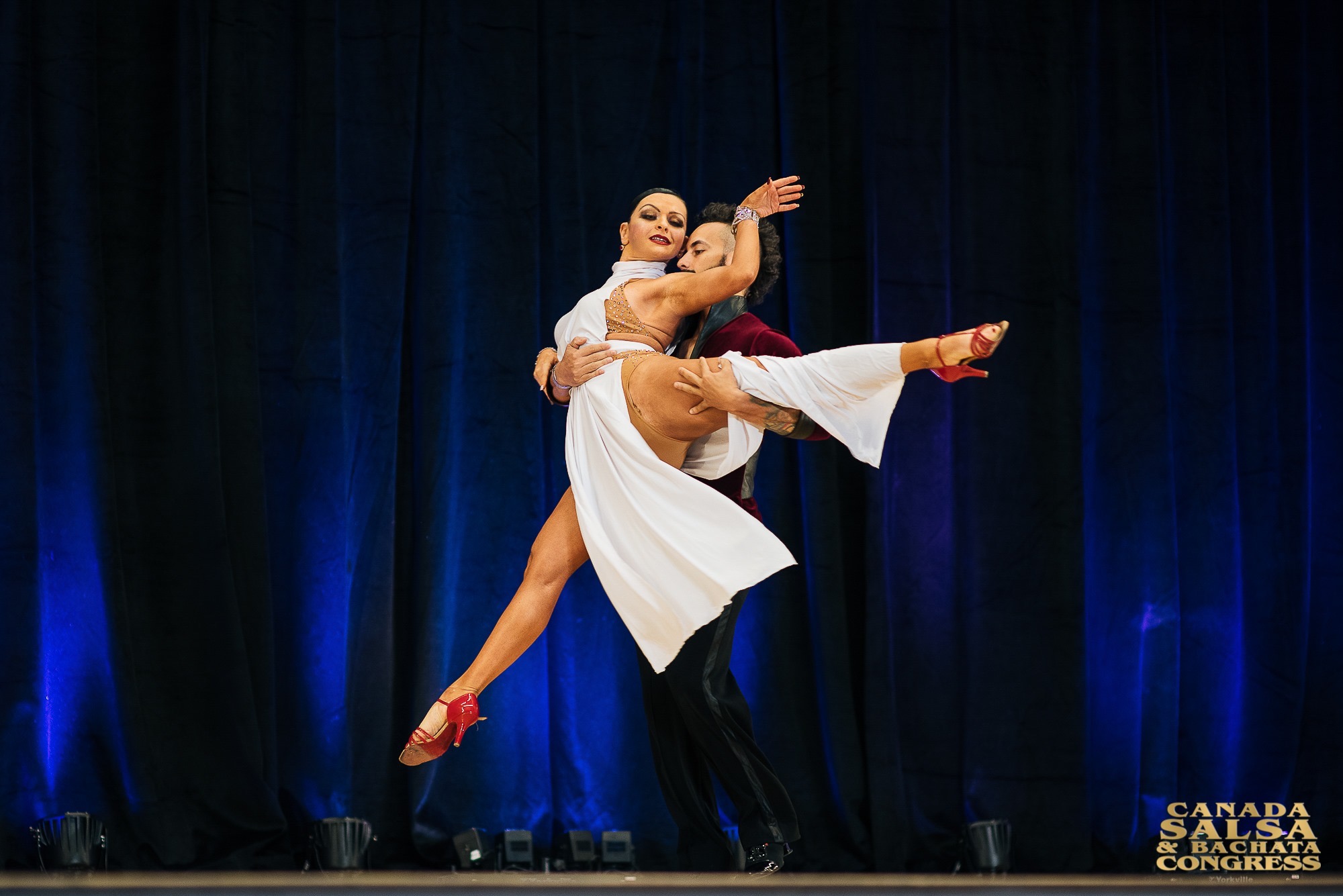
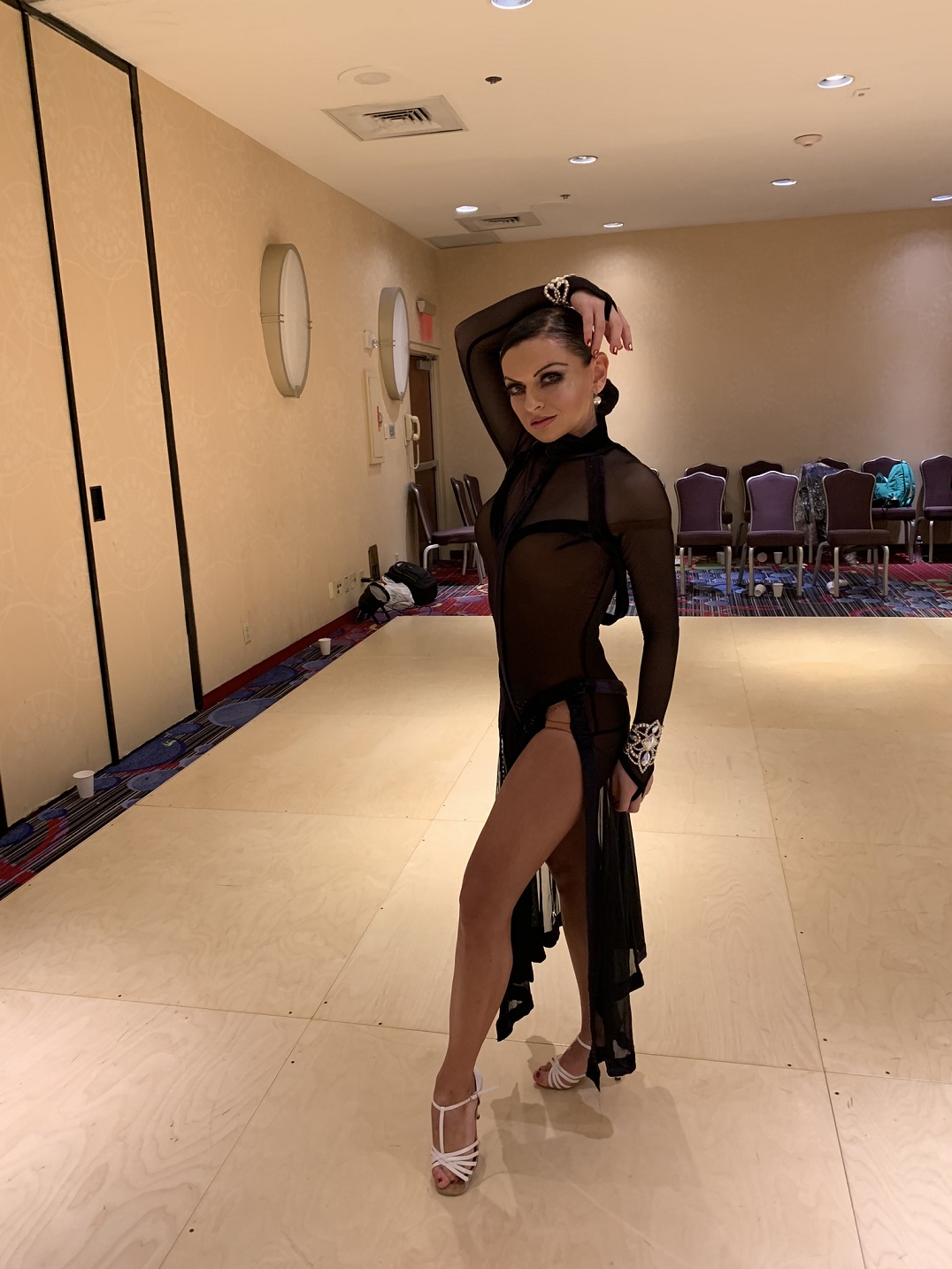
When we refer to Anya Katsevman, the first word that comes to mind is: passion! And that is the only way we could explain that a woman has so much strength, dedication and dedication in different facets of her life.

Anya Katsevman is not only a dancer and choreographer, but also a motivational coach and dream builder. In addition, it has its own line of dance dresses and costumes. An unstoppable woman!

Anya Katsevman by Franklin Liranzo
Anya Katsevman Courtesy of Franklin Liranzo

A native of Kiev, Ukraine, Anya and her family immigrated to the United States when she was 8 years old. She is the younger sister of award-winning Latin dancer Eugene Katsevman. She lives in New York.

She also holds numerous titles in salsa. Among them, she is a two-time World Champion as well as the San Francisco International Salsa Congress and New York Salsa Congress Champion.

Anya Katsevman dancing

Anya Katsevman is a maker of champions

This is precisely the distinctive mark of Anya Katsevman , that ability to make each dancer, each artist, each dreamer discover in himself his potential to succeed, his style and make the most of his abilities.

She believes that “the art of dance requires much physical ability, exposure and practice. The art of dance is also developing your own voice and getting to know the artist behind the athlete that makes the dancer”

A wonderful career

“Queen of Salsa” Anya Katsevman is a two-time World Salsa Champion, coach and choreographer to more than a dozen world champions, noted costume designer, respected salsa congress circuit judge and advocate for international Latin dance who has transformed the sport during her more than 25-year career.

Anya Katsevman
Anya Katsevman

Renowned for her unique coaching methods, Anya’s style blends multiple cultures and dance forms: her eastern European upbringing and the appreciation for Latin dance culture that she developed in the United States; and her ballroom and salsa backgrounds. She demands rigor, discipline and excellence, and uses her understanding of anatomy, physiology and movement while encouraging freedom of expression to turn her students into the top dancers in the world.

Anya trains and choreographs for “Dancing with the Stars Costa Rica” principal dancer Lucia Jimenez (2020 World Bachata, Chacha and Salsa Champion), “America’s Got Talent” stars Harold Rancano and Regan Hirose (9-time World Bachata Champions), the Huracan Dance Company (2019 World Team Salsa Champions), the stars of Quebec’s 
Revolucion Adriano Leropoli and Samantha Scali (2017 World Salsa Champions), principal dancers in Carmen to Havana and Back Isabelle Freiberger and Hunter Houde and the USA World Games Olympic salsa team.

Always successful and sharing her knowledge

As a competitor and performer, Anya has won more than 20 world titles including the 2009 and 2010 Salsa World Championships. She is also the 2008 North American Salsa Champion, a two-time San Francisco Open Salsa Champion, two-time New York Congress Salsa Champion, Puerto Rico Open Salsa Champion and La Classique Du Quebec Champion. Anya has starred in touring shows “Burn the Floor ” on Broadway and ABC’s “Dancing with the Stars, in addition to numerous other television productions, stage shows, movies, and showcases in the U.S. She has performed with El Gran Combo, Gilberto Santa Rosa and “The Mambo King” Eddie Torres, and for President Barack Obama.

Anya Katsevman - dancers
Anya Katsevman – dancers

Anya is an ambassador for salsa, helping to expand its popularity worldwide. She believes connection is one of the most important aspects of the human experience, and dance is the best medium to explore how we connect with each other and ourselves. Anya has expanded her dance instruction to include GoDeeper, which she co-founded in 2019 to provide monthly movement classes, individual coaching sessions, and group workshops to promote professional growth and self discovery.

Meet this talented woman

International Salsa Magazine had the pleasure of interviewing Anya recently and invites you to learn a little more about this magnificent artist.

International Salsa Magazine (ISM): How did you discover your passion for Latin Dance?

Anya Katsevman (AK): My brother is a professional ballroom dancer

I started to dance ballroom in 1995 following his footsteps  I competed in the international Latin category world wide  in 2007 I was teaching in a dance studio in Manhattan and they did a lot of salsa  that’s where I was introduced to social dancing  I fell in love with the idea that dance is accessible to all people and doesn’t have to be competitive  from there my love for salsa turned in to a career choice  I decided to study Latin social dance and became a two time world salsa champion  for me it was a passion to spread the beauty of dance through teaching as much as performing that did the trick.

ISM: Have you had any obstacle in your professional life? How could you overcome them?

AK: I think when your career is long enough you will probably have many obstacles to overcome  and your passion for your craft and the reason you do it is usually stronger than the obstacle in front of you that gives you the drive to overcome it  it is hard to narrow specifics down because I’ve had so many  my competitive dance partner lived 3000 miles away from me when we won the worlds in 2010 and I just made the commitment to work hard and travel pick up the slack where needed and get the job done regardless I think that was the formula in every struggle.

ISM: What is the achievement that has made you most proud?

AK: I am most proud of all of my students accomplishments  I am of course extremely proud and honored to be a world champion but for me the pleasure of having developed other world champion’s especially those who started learning from me from scratch makes me extremely proud beyond all measures I am also very proud of how individual and independent all of my students are  the variety and diversity of their dancing makes me really happy.

ISM: In the path of entrepreneurship, how did you manage to find the strategy to grow your business? What are the skills you consider an entrepreneur must have to achieve success?

AK: Honestly I believe success comes from genuine passion and desire  it is easy for us to study a successful person after the fact and say which moves appeared strategic but I believe who ever is on their way working toward that goal should do it because they are passionate about each step not because of the end result  my business grows because I am committed to my craft and doing it at my best capacity.

I am genuinely passionate about my dance quality  my students growth and the subjects I am teaching  I study the Industry I watch for what’s missing I ask what contribution would be of most value this doesn’t feel like hard work to me  it is my passion my genuine interest and the rest flows  when I feel I am doing something strategic or because it’s good for my brand or etc it doesn’t flow the same way feels forced and isn’t as successful so I try to only go with my own flow current interest and most passionate desires.

ISM: Could you give us some advice to maintain discipline, even in complex situations?

AK: Absolutely  discipline is hard for anyone when it feels needed and forced so I always try to flip the mindset  if I have to do something I’m bored of or am avoiding because it’s hard or tedious I always find something to be excited about instead whether it is dreaming of what the task will do for me  or adding something Sensory I enjoy to the task like my favorite sounds smells or visuals or including a friend in the process.

If you focus on what you do like about it it’s much easier to do it. Also discipline is really only hard at first pretty quickly it becomes a habit so if you put more disciplined things in to practice it will all feel like a habitual part of your day and you’ll start to enjoy it and feeling accomplished.

ISM: What would you say to all those young dancers who want to achieve a dream?

AK: They do come true!!!!!

Dream more!!!! Everything is possible  want it bad enough to work for it but don’t be afraid to dream those wild dreams if it wasn’t possible you wouldn’t have had the dream in the first place.

The beautiful story of dancer, actor and singer Pancho Martinez Pey

Dance has been always important for Pancho

Pancho Martinez Pey is an Argentine dance teacher, choreographer, actor, singer and dancer who has had a large participation in various shows and theatre plays in which he has demonstrated his skills in those disciplines where he has become an expert in recent years, among which we can mention ”Casa Blanca”, ”Café Tortoni”, ”Michelangelo”, ”Esquina Carlos Gardel”, ”Sabor a Tango” and many more.

Pancho Martinez Pey
Dance teacher, choreographer, actor, singer Pancho Martínez Pey posing for the camera

His father was a musician and second guitar player for Oscar Alemán in the 1970s, so he was always involved in the world of dance since he was eight years old and started learning to dance in a more professional way at the age of 12. However, the first time he had contact with tango was at 16, when he began to take his first steps in this particular genre. Three years later, he moved to Spain for a while to work as a drummer and singer in a musical group, with which he would tour the entire European country to offer his talent to the local public.

When they were not playing, they danced tango and Argentine folklore, which inspired him enough to devote himself entirely to tango in his country of origin, something that happened when a very young Pancho was just 22 years old. Once he was in his homeland, he worked as a ticket-taker at a train station for a few years while taking dancing lessons in the evenings, which trained and prepared him for his big break.

His big moment came when he was offered to participate in the piece ”Miguelangelo” together with Gloria and Eduardo Arquimbau, who formed one of the most emblematic couples of Argentine tango. He did not think twice about it and quit his job at the train station to go to dance professionally just as he does to the date.

In view of the fact that he was always used to listening to all kinds of music from a very young age, he had no trouble adapting to all the rhythms that he found in the way, such as folklore, tango, forró, swing, Argentine rock, among others.

He also enjoys singing very much and ensures he can sing all kinds of genres ”from K-Pop to tango”.

Pancho Martínez Pey dancing tango with María Nieves. Photo courtesy of Yumba Rojas

Combining dancing and singing with acting

When asked how he mixes dancing and singing with acting and all that histrionic part that makes his performances so particular, he says that his taste for this branch of the arts was also born in his childhood, since he always watched Argentine films in which dancing was very present and it goes without saying that they were always his favorites. Then, little by little, destiny led him to combine all these elements until he starred in his first important musical called ”Tanguera”. In this piece, participants did not talk or act too much, but they had to focus on putting on a good show at the level of dancing.

Another important musical in his career was ”Tita: Una Vida en Tiempo de Tango” with Nacha Guevara, which focused on the life and career of tango dancer and actress Tita Merello. This piece did require vocal talents between dialogues, so Pancho was finally able to show what he was made of as a singer.

All these facets have their degree of complexity, but the Argentinean performer thinks that the hardest part of his work is trying to combine all these areas, something a friend and colleague of his acted as a coach and helped him to train in the linking between singing, dancing and acting. He pointed out that this is a very strong training in which you have to control certain elements such as breathing, the air when dancing, concentration, among other details.

Role of man and woman in tango

According to Pancho, given that it is a dance of two, it is very important that both understand each other’s role in the dance. ”The leader leads and the other follows. In most cases, the leader is the man of the couple, who at the same time is the one who provides support and leads at the same time, while the follower has to follow the leader, but must also be an active member of the situation. Let’s remember that we are two people dancing and not one, so we are both active subjects in the dance. The woman expresses all her own beauty and sensuality, while the gentleman has that strength and guidance that, at the same time, seduces and makes his partner feel safe” said the artist.

Pancho with his father Oscar Cacho Martinez, and his uncle Raúl Martinez

How history and social changes have affected tango

Martínez explains that the World Tango championship gave a huge boost to this musical genre. It was always very popular in Argentina, but it did not have the importance it now has in most of the world. Tango came from a mixture of cultures in Buenos Aires, where the first lyrics of its social protest songs began to emerge. Tango has that popular and rebellious element coming from the people” explains the performer.

The golden age of tango was in the 1940s, when musicians and poets at the highest level began to emerge until foreign musical groups such as The Beatles or Elvis Presley appeared, who won over audiences of the time, which caused a temporary decline of tango. That is how matters stood until the early 1990s when the film Tango Argentino was released, which contributed significantly to the worldwide explosion of tango in those years and to improvement of techniques used for that dance”, he continued.

Finally, the dancer expressed his joy for the moment that tango is living nowadays, since he had never seen so many people interested in learning to dance it, both as entertainment and profession. He thinks that this current popularity is due to the need of people to connect with others after the pandemic and the multiple benefits that it brings at a mental level.

Read also: Major Latin radio stations in New York

La Dimensión Latina is a Venezuelan salsa group founded in 1972 and still going strong today

The original members Oscar D’ León, César Monges “Albóndiga”, José Antonio Rojas “Rojitas” , José Rodríguez “Joseíto”, Elio Pacheco Jesús “Chuito” Narváez (R.I.P). And later Carlos Guerra.

César Monge, trombone player, after graduating from the Escuela de Bandas Militares, was part of the orchestras “La Tropicana de Eldy Tor” and “Los Mundiales” and “Swing Latino”.

Victor Cuica, a saxophone player, knew him from those musical steps.

Oscar León had just bought a car with which he used to be a cab driver, but with a great love for music.

León wanted to create a musical group and gave Cuica the task of recruiting musicians from the Escuela Superior de Música, where Cuica was studying.

La Dimensión Latina es una agrupación de salsa venezolana fundada en 1972 y sigue vigente

That orchestra was called “Oscar y sus estrellas”. César Monge played in that orchestra for a while, until musician Federico Betancourt, director of his group “Federico y su Combo”, hired him.

From there, Monges moved on to the orchestra “Los Dementes” of musician Ray Pérez and later to “Los Satélites” of “Cheché” Mendoza.

While playing with this orchestra, in the Caracas night club La Distinción in the urbanization El Rosal, a disagreement arose between the owner of the orchestra and the owner of the club.

León took advantage of the incident and decided, together with Cuica and Monge, to reestablish his group. Cuica, inspired by the name of the successful American group The 5th Dimension, suggested calling it Dimensión Latina.

La Dimensión Latina es una agrupación de salsa venezolana

Then León took a square and drew the logo with which the group was launched.

It was formally created on March 15, 1972 in a first rehearsal in La Guaira, at the home of the pianist Enrique (Culebra) Iriarte. It was formed by Iriarte on piano, César Monge (Albóndiga) and José Antonio Rojas (Rojitas) on trombones, José (Joseíto) Rodríguez on timbales and bongo, Elio Pacheco on tumbadoras and Oscar León, renamed Oscar D’León on bass and in the role of singer.

They made their debut as Dimensión Latina at the same venue La Distinción. The repertoire was based on songs by Mon Rivera, Eddie Palmieri and Willie Colón.

Several nights the establishment was frequented by Victor Mendoza, singer and musician founder of Trio Venezuela and by then hired as music producer by the Top Hits record label, who had a band called “El Clan de Victor”, which had to produce an album per year. Mendoza motivated the musicians and they did two musical auditions.

José Rodríguez, who had some money saved due to his work as a musician and motorcyclist, arranged for the recording at Estudios Fidelis with a song by Elio Pacheco and another by Oscar León. These tests were not to the liking of the label owner.

This discouraged Enrique Iriarte, who promptly left the group. His place was taken by pianist Jesús “Chuíto” Narváez. Despite the label’s refusals, Víctor Mendoza wanted to record them and decided to include them in his production of “El Clan de Víctor” in 1972.

Dimensión Latina Patrimonio Nacional

The sextet’s first hit was “Pensando en ti”. Mendoza then suggested Oscar León the artistic name of Oscar D’León.

During 1973 they recorded their second album, called “Dimensión Latina” where he gained recognition and participated in important events, such as tours of Curacao and the carnival of Maracaibo, launching their third album “Triunfadores” from which the second hit of the orchestra “Qué Bailen Tós” was released.

In 1974 the bolerista from Caracas Wladimir Lozano joined the orchestra, who had been working in night clubs in Caracas along with the harpist Ramón Hernández.

Wladimir gave the group more interpretative depth, achieving the duo Oscar and Wladimir, which gave birth to important interpretations and commercial successes that earned the band international recognition.

The highlight of Lozano’s entrance was “La Piragua”, a song that reached the top of the radio charts.

By 1975, La Dimensión Latina enjoyed the support of the public, who enjoyed their performances on television and being the image of commercial products.

A new album arrived, “Dimensión Latina ’75”, and with it came their consecration, for some critics the most successful and iconic. It included songs of extraordinary commercial success such as “Taboga”, “Parampampam”, “Mi Adorada”, “Cañonazo”, and a song by Oscar that was included as filler but would become the best-selling single in their history, “Llorarás”.

This album catapulted the orchestra’s career and gave it a place of recognition in the salsa world that, at that time, was almost reserved for the orchestras of the New York salsa boom.

Musician Carlos Guerra joined the orchestra on trombone, increasing the number of trombonists to three.

Subsequent productions included new commercial and interpretative achievements such as “Dolor cobarde”, “El frutero” and “Dormir contigo”. After their presentation in the United States, La Dimensión produced the album “La Dimensión Latina en Nueva York” (1976), which would be the seventh and last album of the orchestra with Oscar D’León, who would leave the group to start a successful solo career.

In the absence of Oscar, La Dimensión Latina calls, at the suggestion of Joseíto Rodríguez, the well-known guarachero and gaitero from Zulia Argenis Carruyo, who had been a member of Super Combo Los Tropicales and Guaco, for the recording of the album “La Dimensión Latina ’77 Internacional” and bassist Gustavo Carmona.

That same year, thinking of continuing to blaze trails abroad, they thought of a voice of international stature, and it was the Puerto Rican musician Roberto Roena who suggested the famous Puerto Rican singer Andy Montañez, lead singer of the Gran Combo de Puerto Rico.

Montañez was tempted by an extraordinary contract. Along with Montañez, the Zulian singer and sonero Rodrigo Mendoza joins the band and for the first time La Dimensión has three voices in its cast.

On November 11, 1977, La Dimensión Latina headlines the “Salsa International” festival at Madison Square Garden in New York, organized by Ralph Mercado and with the presence, among others, of Wilfrido Vargas and Cheo Feliciano.

Andy Montañez remained with the orchestra until 1980, recording eight albums, including hits such as “El Eco de un Tambor” by maestro Tite Curet Alonso, “Linda Minerva” sung as a duet with Argenis Carruyo, “Ave María Lola”, “Por el Camino”, “Mi Bombolaye”, and Puerto Rican contributions such as “Cantante Errante” by composer Johnny Ortiz and “Quisiera Saber”.

Rodrigo Mendoza managed to create hits such as “Fanfarrón”, “Córreme guardia” and “Suena el cuero”.

The orchestra also included Colombian pianist Samuel del Real, percussionists Carlos (Pacusso) Guillén and Luís Machado and the voices of Cheo Valenzuela, Alexis Martínez, Luis Arturo Guaramato and Alex “Mostaza” Vargas.

Cuatro décadas después y unidos por la salsa el Reencuentro del año Oscar D’ León y La Dimensión Latina

Four decades later and united by salsa, the reunion of the year Oscar D’ León and La Dimensión Latina.

Poliedro de Caracas

Only Invershow makes it possible

Venezuela this May 12, 2023 we will live something “HISTORIC”, and you can be present at this iconic reunion.

From seeing them together again to dancing and singing to the rhythm that only they can achieve.

It will be an unprecedented concert, don’t let them tell you about it and buy a ticket to live it YOU.

Será Un concierto sin precedentes, no dejes que te lo cuenten y compra una entrada para vivirlo TÚ

“The important thing is to maintain the style of the orchestra. The singer here has to adapt to the orchestra, not the orchestra to the singer. Whoever comes to sing has to adapt to the repertoire and to our way of doing salsa, which is very peculiar. We have a unique sonority”. 

César Monge, Albóndiga.

Visit: La Dimensión Latina S.R.L

Read also: Freddy de Jesús Ortega Ruiz “Coco & su Sabor Matancero”

Eva Gordillo, psychologist by profession and director Salseros Academy

Eva Gordillo: The so-called Cuban style is the original way of dancing “casino” or “rueda de casino”.

The first steps of this dance were developed in the sports casino in Havana and other dance halls in the Cuban capital at the end of the 1950s, hence its name in Cuba: “–“, as it was originally called “El baile del casino”.

Photo of Salseros Academy Dance Academy

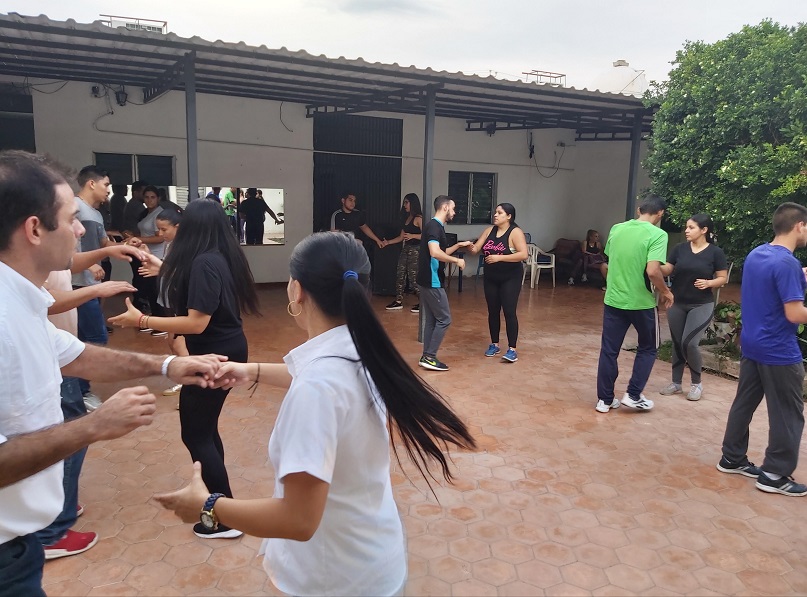
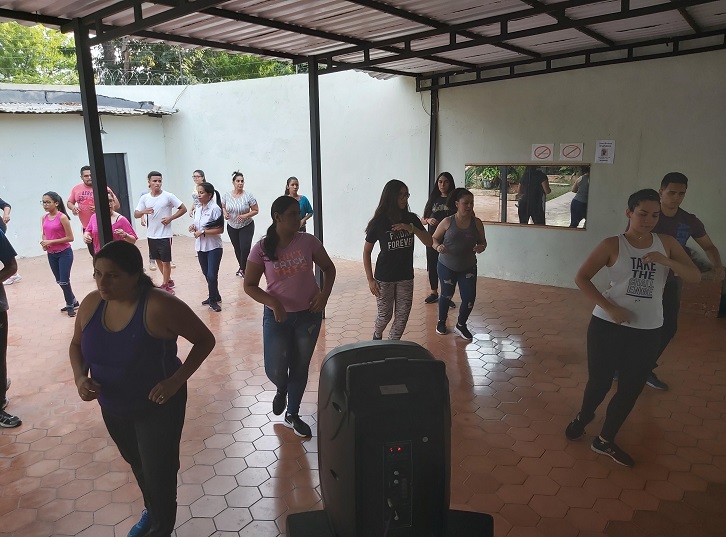
In Barquisimeto, the musical capital of Venezuela, the dancers of Afro-Caribbean rhythms have a place to develop, improve and learn skills with the help of professionals, who achieve the integration of its participants, creating an atmosphere of great joy for all ages.

In this sense, our special guest in Salsa Escrita “La Columna Salsera de Barquisimeto”, through International Salsa Magazine, www.salsamundi.com, is Eva Gordillo, psychologist by profession and director of the dance academy “Salseros Academy”.

Dancers of Salseros Academy Dance Academy

Eva has been a passionate dancer since the age of 13 and today, with only 22 years old, she has toured most of the dance schools in the twilight city and some outside the state of Lara, projecting and developing herself as an instructor of proven hierarchy and reliability.

Welcome Eva to the only salsa magazine in the world, International Salsa Magazine and Salsa Escrita. Thank you, Professor Carlos, for giving me the opportunity to be present in your prestigious salsa column, which is already recognized in my country, the Caribbean, the United States and Europe, thus supporting the entire existing salsa movement in Venezuela.

Eva Gordillo and Members of the Salseros Academy dance academy

Eva, how and when did the idea of having your own dance academy come up? Friend Carlos, on November 26, 2018, I started and materialized my great dream, my own academy and together with my colleagues and friends, Eleazar Hernandez and Manuel Gamez, we started this adventure, from which today, we are harvesting many fruits and we feel extremely happy with this project and grateful, mainly with God, because everything is thanks to Him.

Excellent, very good friend, by the way, what kind of dances do you develop and teach in “Salseros Academy”? In our academy we give group and personalized classes, for all ages, conditions and levels. Our strength is Latin rhythms, especially Salsa, as our name indicates.

We focus on their different dance ramifications, such as New York style mambo, Salsa en Linea or Los Angeles style, Cuban Timba en Linea and En Rueda or “Salsa Casino”. Amiga Eva, in addition to salsa, do you teach other dance rhythms? Indeed Carlos, in addition we teach some Cuban music derivatives such as the chachachá, pachanga and boogaloo.

We are also projecting ourselves strongly with the bachata and its variants, as well as other Latin genres, such as merengue, among others.

During a visit to the headquarters of “Salseros Academy” in the city of Barquisimeto, by the Latin American correspondent team of International Salsa Magazine, we were able to see the excellent, comfortable and spacious facilities, located on Carrera 16 between Calle 61 and Avenida Rotaria, where Eva is accompanied by four experienced instructors specialized in different dance styles. The attendance and registration of participants is massive, given the proven quality and recognized throughout the city of Barquisimeto.

Dance Academy Salseros Academy

Friend Eva Gordillo, do you also have other projects at a musical and danceable level? That’s right teacher, at present we are heading to be producers of salsa events, thus promoting the Latin dance movement in our state Lara.

By the way, last year we had the pleasure of carrying out an event called “La Gran Gala de la Salsa” (The Great Salsa Gala), on the occasion of the celebration of the 1st anniversary of our academy, in which the dancers were able to enjoy the “Kadencia Latina” and “Jossy y su Banda” orchestras. Digital platforms and contacts for those interested in dancing at Salseros Academy? Friend Carlos, they are: Instagram: @salserosacademy, @evacarolgz, Whatsapp: 0424-5697908, Facebook: Grupo Salseros.

On behalf of the academy, my team and students, we would like to thank you for your support and projection of our work through your column “Salsa Escrita” in International Salsa Magazine. We wish you success and blessings to continue driving the Venezuelan salsa movement.

ISM Salseros Academy Dance Academy Fund

By Carlos Colmenares, ISM Journalist Correspondents, Barquisimeto, Venezuela

  • « Go to Previous Page
  • Page 1
  • Interim pages omitted …
  • Page 34
  • Page 35
  • Page 36
  • Page 37
  • Page 38
  • Interim pages omitted …
  • Page 66
  • Go to Next Page »

International Salsa Magazine (ISM) is a monthly publication about Salsa activities around the world, that has been publishing since 2007. It is a world network of volunteers coordinated by ISM Magazine. We are working to strengthen all the events by working together.