• Skip to primary navigation
  • Skip to main content

International Salsa Magazine

  • HOME
  • Previous editions
    • 2026
      • ISM / April 2026
      • ISM / March 2026
      • ISM / February 2026
      • ISM / January 2026
    • 2025
      • ISM / December 2025
      • ISM / November 2025
      • ISM / October 2025
      • ISM / September 2025
      • ISM / August 2025
      • ISM / July 2025
      • ISM / June 2025
      • ISM / May2025
      • ISM / April 2025
      • ISM / March 2025
      • ISM / February 2025
      • ISM / January 2025
    • 2024
      • ISM / December 2024
      • ISM / November 2024
      • ISM / October 2024
      • ISM / September 2024
      • ISM / August 2024
      • ISM / July 2024
      • ISM / June 2024
      • ISM / May 2024
      • ISM / April 2024
      • ISM / March 2024
      • ISM / February 2024
      • ISM / January 2024
    • 2023
      • ISM / December 2023
      • ISM / November 2023
      • ISM / October 2023
      • ISM – September 2023
      • ISM – August 2023
      • ISM July 2023
      • ISM Edition June 2023
      • ISM – May 2023
      • ISM April 2023
      • ISM March 2023
      • ISM February 2023
      • ISM January 2023
    • 2022
      • ISM December 2022
      • ISM November 2022
      • ISM October 2022
      • ISM September 2022
      • ISM August 2022
      • ISM July 2022
      • ISM June 2022
      • ISM May 2022
      • ISM February 2022
      • ISM January 2022
    • 2021
      • ISM December 2021
      • ISM November 2021
      • ISM October – 2021
      • ISM September 2021
      • ISM August 2021
      • ISM July 2021
      • ISM May 2021
      • ISM April 2021
      • ISM June 2021
      • ISM March 2021
      • ISM February 2021
      • ISM January 2021
    • 2020
      • ISM December 2020
      • ISM November 2020
      • ISM October 2020
      • ISM September 2020
      • ISM August 2020
      • ISM July 2020
      • ISM June 2020
      • ISM May 2020
      • ISM April 2020
      • ISM March 2020
      • ISM February 2020
      • ISM January 2020
    • 2019
      • ISM December 2019
      • ISM November 2019
      • ISM October 2019
      • ISM Septembre 2019
      • ISM August 2019
      • ISM July 2019
      • ISM June 2019
    • 2016
      • ISM December 2016
  • Spanish
  • Download Salsa App
    • Android
    • Apple

Search Results for: Dancing

The story of how Oscar D’León’s “La Salsa Mayor” came about

How Oscar D’ León’s “La Salsa Mayor” came about, is a story that has already been commented on, including the subsequent separation of musicians that the aforementioned orchestra had, which gave way to the formation of another well-known group (Nuestra Orquesta la Salsa Mayor), is also a well-known story, but one as a good music lover always wants to continue to investigate and whenever the opportunity arises to make a healthy discussion about the subject in question, one does so without any qualms.

That is why it is never too much to remember some interesting facts that adorn this story, such as the headline that appeared on the front page of Swing Latino magazine in November 1977, which read: “KO a la Dimensión? OSCAR D’LEÓN after signing WLADIMIR.

In summary, the article said that Wladimir had intentions of leaving Dimension because of an alleged refusal of a loan request, a situation that induced the vocalist to want to sign with another orchestra. Another excerpt of the article says that Oscar D’León in his eagerness to have Wladimir in his orchestra, would have given him the money to satisfy his economic needs, but in exchange he would have signed a contract with the orchestra.
“La Salsa Mayor“de Oscar D’León

In short, by that time in November 1977, these were only speculations, of course, as it is also mentioned in the article in a jocular way “When the river sounds it is because it brings stones”.

The truth is that the year 1978 arrived and in the Swing Latino of March another headline appeared on the front page “¡LA DIMENSIÓN LATINA SE VA DE VENEZUELA! pero Wladimir se queda con Oscar”, which clearly shows that those speculations or rumors that were made in the salsa milieu at that time were a reality that quickly materialized.

“Last February 20, the bolerista presented his resignation to Dimensión Latina and began to work his notice period. In the meantime, he has already begun his rehearsals with Salsa Mayor and will soon be fully incorporated into this group that already threatens to become a real monster not only nationally but also beyond our borders, which we have no doubt he will now achieve with this valuable acquisition” (Swing Latino. March 1978).

Now, only a month had passed when another news about the orchestra of the dancing bass shakes the salsa milieu, “¡SE DISOLVIO LA SALSA MAYOR!”, headline that appeared in Swing Latino for May 1978 and stating: “Seven of the ten musicians that made up the prestigious group of Oscar D’León, left the orchestra for economic reasons”.

The rest is already known history, the negrito from Antimano reassembled his orchestra with some musicians from “La Critica” and others who came from the orchestra “La Renovación”, which at the same time also dissolved and the rumba continued.
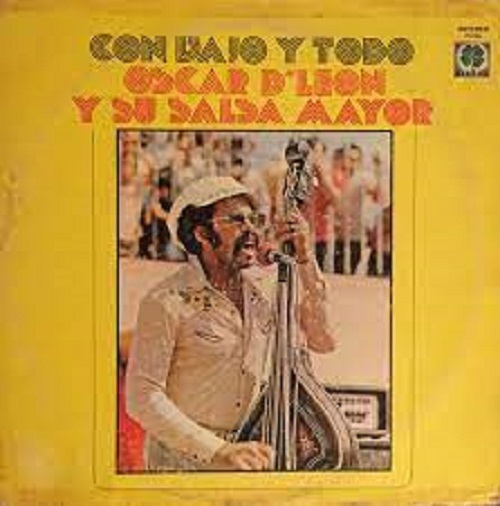
Con Bajo y Todo  Oscar D' León's "La Salsa Mayor"
Con Bajo y Todo  Oscar D’ León’s “La Salsa Mayor”

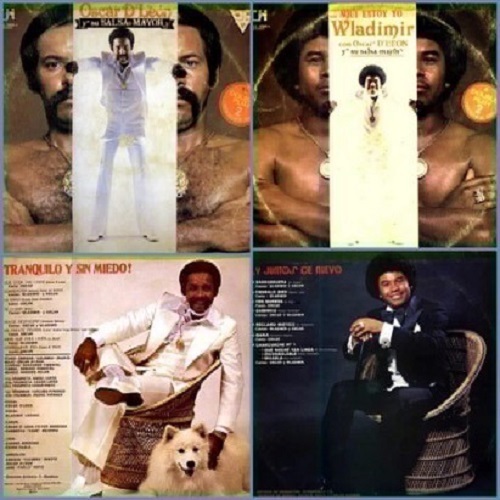
In August of that year 1978, Oscar D’León’s last album was announced under the name of “LA SALSA MAYOR”, a fabulous double LP, that just by looking at its cover you could already feel the strength with which the sonero from Caracas was coming along with the diminutive in stature but great with his voice, Wladimir Lozano.

The internal title of the album spoke for itself, “TRANQUILO Y SIN MIEDO”, this makes us think that the phrase had a double meaning, remember that the musicians who defected to form the other Salsa Mayor, recorded that famous song: “Fuimos Amigos”, where they throw a few puns at Oscar and this “calm and fearless”, returns them in the song: “La Mano”… “Why did not you follow me when I gave you my hand?”Now it weighs on you, you fell in the mud”… Chorus: “Que te vaaaya bien”.

The album is excellent as almost all the ones published by D’León in those past decades, all the songs are good, but I can’t help but comment and recognize that the song that I liked and still like the most from this double album is “MARIA”, maybe because in every man’s life there has always been a Maria…My respects and salsalutation to all of you.

Enrrique “Culebra” Irierte y Dj. Augusto Felibertt

Oscar D’León y su Salsa Mayor (double play) (1978) ths-1225

Disc 1 – Side A

  1. Que cosa tan linda (Oscar D’León) Singer: Oscar D’León
  2. Consentida (Alfredo Nuñez de Borbón) Singers: Wladimir and Oscar
  3. La mano (Sandy Omar González) Sung by: Oscar
  4. Te llamo (D.D.) Sing: Wladimir and Oscar

Disc 1 – Side B

  1. Dulce desengaño (Armando Beltrán) Sung by: Oscar and Wladimir
  2. De frente Panamá (L: Andrés Vega, M: José Zamora) Sung: Oscar D’León
  3. Mira que eres linda (J. Brito) Sung by: Wladimir Lozano
  4. Consígueme eso (Pedro N. Perez) Sings: Oscar D’León

Disc 2 – Side A

  1. Sandunguera (M. Guerra) Sung by: Wladimir and Oscar.
  2. Piénsalo bien (Agustín Lara) Sings: Wladimir Lozano
  3. Ven morena (R. Paz) Sing: Oscar D’Leó
  4. Ausencia (Rafael Hernández) Sing: Oscar and Wladimir

Disc 2 – Side B

  1. Reclamo místico (M. Matamoros) Sing: Wladimir y Oscar

María (Florentino Padrón) Sing: Oscar D’León

  1. Chancunche No. 1: Sing: Wladimir and Oscar

*Que noche tan linda (B. Diez, A. M. Romeu)

*Inconsolable (Rafael Hernández)

*Micaela (Raúl Guillaume)]

Musicians:

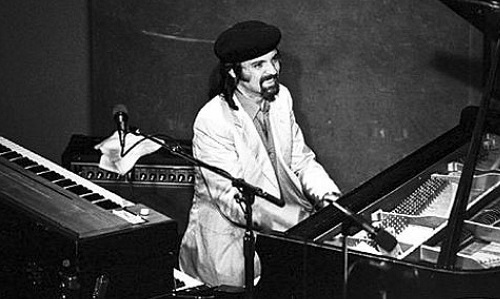
Enrique “Culebra” Iriarte (Piano).

Oscar D’León (Bass)

Rhadames Pimentel (Congas)

Edward Pimentel (Timbal)

Hungary Rojas (Bongo)

Ángel López (1st Trumpet)

César López (2nd Trumpet)

César Pinto (3rd Trumpet)

Tarcisio Piñango (1st Trombone)

Pedro Piñando (2nd Trombone)

Andrés Mendoza / Pedro Vilela (Tres)

Oscar D’León (Vocal)

Wladimir Lozano (Vocal)

Oscar D’León / Víctor Mendoza / Humberto “Tigre” Becerra (Backing Vocals)

Enrique Iriarte / Oscar D’León / José “Cholo” Ortiz (Arrangements)

Other Credits:

Intersonido C.A. Recording Studios.

Sound Technicians: Agustín Verde and Carlos Guzmán

Mixing: Rafael Hernandez

Art Direction: Víctor Mendoza

Idea, Design and Album Art: Drago Fernández

Photos: All Freddy.

Source:

José “Cheo” Guevara

Enrrique “Culebra” Iriarte

Enrrique “Culebra” Iriarte

You can read: Víctor Porfirio Baloa Díaz, more commonly known as Porfi Baloa
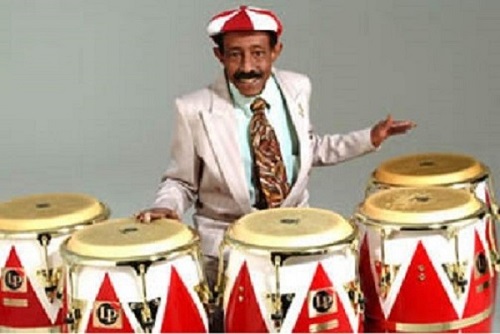
Carlos “Patato” Valdés one of the best percussionists in the history of Latin Jazz.

On November 4, 1926 in the Los Sitios neighborhood of Havana, Cuba, Carlos “Patato” Valdés was born. Known as Patato, he is, quite simply, one of the best percussionists in the history of music.

Patato was born into a very santera and very musical family, his father was a tres player of Los Apaches, the port germ of two illustrious sonera groups: the Sexteto Habanero and the Sexteto Nacional.

He learned to play the tres and the botijuela before turning to percussion, first on the cajones and finally on the congas.

He was an extraordinary percussionist of outstanding participation with the “Conjunto Kubavana”, “La Sonora Matancera”, “Conjunto Casino” and the “Orquesta de Tito Puente”, among other groups, both Son and Latin Jazz.

Formed in rumbero gatherings and carnival groups, Valdés became a professional in the early forties, after trying his luck as a boxer and dancer.

Carlos “Patato” Valdés uno de los mejores percusionistas en la historia del Jazz Latino

He played with Conjunto Kubavana, La Sonora Matancera and El Conjunto Casino. He accumulated nicknames: Zumbito (for his performances at the Zombie Club), Pingüino (for a dance he did on television) and Patato (for his small size), and in those days, dedicating oneself to music in Cuba guaranteed hardship. Besides, Patato wanted to experiment and that was not possible playing for dancers or tourists.

In 1954, he emigrated to New York, like his leather friends: Cándido Camero, Armando Peraza, Mongo Santamaría and the pioneer Chano Pozo (murdered there in 1948).

He immediately began working with Tito Puente. His first recording in the United States was the album Afro-cuban, by trumpeter Kenny Dorham, which opened with the intoxicating Afrodisia. Those were good times for tropical music.

He was the first percussionist to improvise “Solos” with 3 or more Congas at the same time. In addition, he was the creator of the “Congas Afinables”, instruments on which he would ride to dance making them sound rhythmically.

Patato Valdes was an excellent musician, an unforgettable person. Nervous and diminutive, he spoke with an impenetrable Cuban accent; he dressed elegantly, hiding the necklaces and bracelets of Changó and other “orishas”. He looked like a living caricature, but when he hit the percussions he became a divine creature: he had power, spectacularity, sense of melody.

Those skills made him an ambassador of Afro-Cuban rhythms in the jazz world, although he will also go down in history for his extraordinary rumba recordings.

In 1956, Patato appeared in the film Y Dios creó a la mujer, teaching the dances of his homeland to Brigitte Bardot. A great moment, although an implacable Guillermo Cabrera Infante criticized the actress’s movements: “she seems to commit suicide by dancing a cross between mambo and chachachá, a really toxic cross between mambo and chachachá”.

A flexible musician, Valdés sounded as comfortable playing with Machito’s big band as with Herbie Mann’s group. However, he felt indebted to the “rumba de solar” and in 1968 he recorded a revolutionary album with his friend Eugenio Arango, alias Totico.

The exuberant Patato & Totico had genuine Havana flavor, but enriched the basic percussion instrumentation with Cachao’s contrabass and Arsenio Rodriguez’s tres.Patato expanded the creative possibilities for percussionists by playing with three or more congas.

He also made their lives easier by developing a tunable conga: fed up with the traditional method (heating the leather over fire), he installed a metal hoop and keys for tensioning.

Carlos "Patato" Valdés
Carlos “Patato” Valdés

The LP company mass-produced his model, which was to become the standard for conga players. To promote it, he formed the Latin Percussion Jazz Ensemble with Tito Puente, Jorge Dalto and Alfredo de la Fé, among others, an orchestra that would end up becoming Puente’s big band in the early 80s.

It was during this period with Dalto that the album we have chosen for today began to take shape. It was titled “Patato, Master Piece” and it synthesizes all of Patato’s genius.

“Masterpiece” is an album that travels first class through tango, jazz, descarga, guaguancó and bolero, always in a masterful way and with a luxury crew made up of names like Jorge Dalto, Artie Webb, Michel Camilo, Jerry and Andy González, Nicky Marrero, Ignacio Berroa, Joe Santiago, Néstor Sánchez, Vicentino Valdés, and Sabú Martínez, among others.

The Art of Flavor.

Unfortunately Dalto had already passed away when in 1993 the project was released by the venerable German label Messidor, the same label that had already financed some impressive sessions of Patato with Mario Bauzá or Bebo Valdés, with whom he would later record the famous El Arte del Sabor.

Jorge Dalton
Jorge Dalton

In fact, the great Argentine pianist had to be replaced for the last recording sessions that were made 6 years ago since his illness was too advanced, but he left us some incredible arrangements that were kept in the great majority of the themes.

Dalto left us in 1987 when he was only 39 years old. His replacement was nothing more and nothing less than a very young Michel Camilo.formed by 9 cuts among which we especially want to highlight the huge versions of Cute and Nica’s Dream, Masterpiece is an essential album for all lovers of Latin-jazz with capital letters and that is why we wanted to share it on a day as special as today.

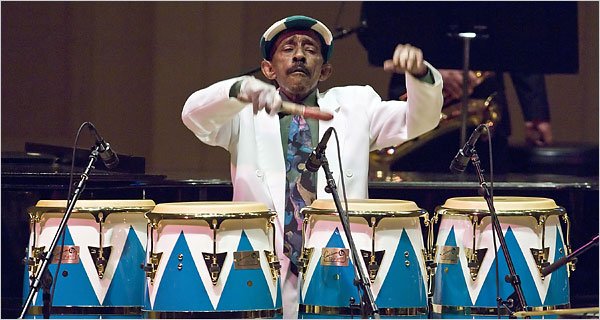
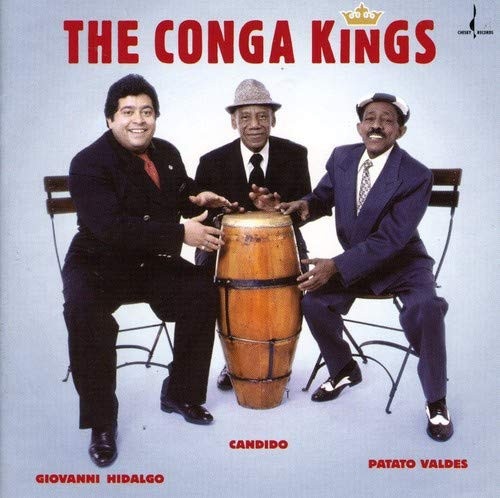
Already recognized as a legend, Patato became more visible in the last 25 years: he had his own band, Afrojazzia, although The Conga Kings, with Cándido and Giovanni Hidalgo, turned out to be more popular.

The Conga Kings Giovanni Hidalgo, Cándido Camero y Patato Valdez

He even made his way onto the modern dance floors, with a remix of San Francisco tiene su propio son. Just as he was returning from playing in California with the Conga Kings, his breathing began to fail.

The plane he was on had to make an emergency landing in Ohio to admit him to a hospital. The 81-year-old percussionist, a heavy smoker, was on his way to his beloved New York, but he would never get there. According to his relatives, he held out until December 4, the day of Santa Barbara, the Afro-Cuban equivalent of Changó, when the cables and tubes that kept him alive were removed.

Valdés died in Cleveland, USA, on December 4, 2007.

Fuentes: http://www.herencialatina.com/Patato/Patato_Valdes.htm

Imágenes: Martin Cohen de Congahead.com

Carlos “Patato” Valdés

You can read: Irakere was a Cuban group that developed an important work in Cuban popular music and Latin Jazz under the direction of Chucho Valdés

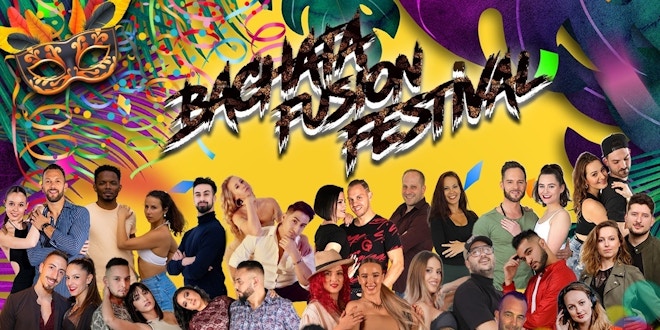
Winterthur receives the Bachata Fusion Festival

Latin rhythms reach corners of Europe every day where it would never have been thought that these genres could be heard, much less danced. In this case, we have that Bachata is reaching unthinkable borders such as Switzerland, which is why the next Bachata Fusion Festival 2023 Carnival Edition will take place in the city of Winterthur in the Zurich region, during February. Know the details in the following lines.

Bachata Fusion Festival 2023 Carnival Edition in February

Young love couple dancing social danse kizomba or bachata

This festival is a continuation of the one that took place in November, a way to close Winter and begin Spring. It was the first festival dedicated exclusively to bachata, which was organized in Switzerland in the entire dance history of this country. And after that mega success it had, there was no reason not to organize another soon.

This edition will be dedicated to Carnival, a festival that is traditionally celebrated during the month of February in the Caribbean and South American countries. And when it comes to Latin rhythms, Carnival is a perfect concept to show them. That is why the organizers decided to carry out the Fusion with this premise but as always with the central axis of bachata.

As in the previous edition, the Carnival one will feature the best international artists, who in turn will attract the best dancers from all over Europe and other borders. But there is no need to be a professional dancer to enjoy the complete package that this festival offers. If you like Latin rhythms and even want to learn to dance next to the best dancers, this is your cue.

Confirmed artists include:

  • Mark & Sarah
  • Carlos & Idaira
  • Magda & Valerie
  • Gaby & Stefi
  • Dario & Sarah
  • Anthony & Ivana
  • Marco & Paola
  • Sorush – Let’s play bachata
  • Tony & Ana
  • DJ York
  • DJ Husky
  • DJ Paul G

The organizers at GO&Dance have left the prices of the packages and everything they offer. Prices range from €65 to €240, with various discounts depending on the package, and the days of reservation, remember that the closer the date is, there will be fewer opportunities for discounts or promotions. But from this moment Winterthur awaits you with open arms.

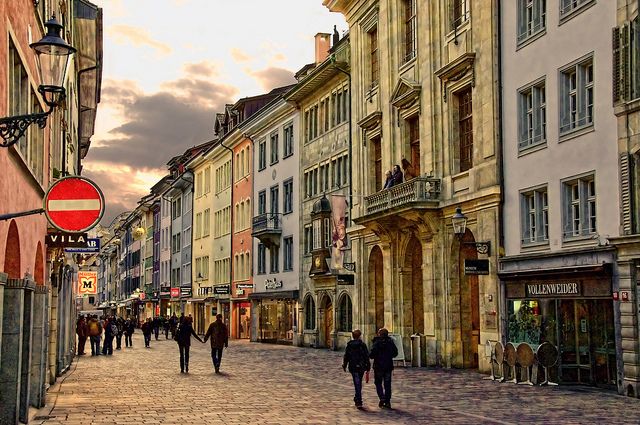
Winterthur, a historic city in the heart of Europe

Switzerland is a country located in the heart of Europe. It is very marked by its magnificent natural landscapes where the star is the central mountain range of the Alps. Its cities are must-see places on the continent, from Zurich, one of the most dynamic, to Winterthur, where culture takes center stage.

But there’s a lot to do in Winterthur while visiting for the festival. Just 30 minutes from Zurich, it has the largest continuous pedestrian zone in Europe, museums that house masterpieces of European art between the 14th and 20th centuries. Even presentations in the middle of the street, and a wide range of festivals since culture is the main thing in this city.

Despite not having the cosmopolitan air of many European cities, Winterthur has its own identity which makes it unique in the eyes of the visitor. And an excellent place to carry out the Bachata Fusion Festival 2023 Carnival Edition, this February will be a month highly anticipated by all.

The rise of Latin rhythms in Madrid

Latin music has been gaining popularity for the last decade so you can notice many Latin rhythms in Madrid, and it seems that it will never stop. The reason behind this success is simple: the dance steps seem to be very easy, although they aren’t but everyone can stand up to dance. Throughout the city you can see people dancing salsa, bachata and rumba on street corners, in restaurants or at various events that take place throughout the city.

Some of the most popular styles of Latin American music include salsa, bachata, cumbia, and cha-cha-cha. But there are many more that are enjoyed by the inhabitants of the city. There are two great aspects that have achieved this love that the people of Madrid have for Latin rhythms, the great Latin parties in the best nightclubs, and learning to dance in the best academies in the city. Learn a little about both in this article.

Best Latin parties in clubs

For all the inhabitants of Madrid, there are several venues dedicated exclusively to Latin music, so it cannot be denied that the best Latin parties in Spain exist in the capital nights. Check the following list:

New One Madrid

This place located in Pueblo Nuevo offers all kinds of Latin parties full of good rhythms. Bachata, salsa or rumba One Madrid manages to please everyone in the audience, and not only with the music, the setting and even the drinks with food have their Latin touch.

Parche Disco Bar

Despite the fact that its space is not that big, it is one of the best places in the city to enjoy a Latin party, have an intimate place for friends and meet new people, as well as taste liquors brought directly from Latin America, at reasonable prices.

Azúcar Salsa Disco

Azúcar is one of the most danceable clubs in Madrid, located right in the center of the city. His forte is dancing but you can also enjoy excellent drinks to the rhythm of live music. It is more than certain that you will return to this club.

Faces Latina

With an excellent location near the Castellana and the Santiago Bernabéu, Faces Latina offers the best Latin rhythms so that Madrid continues to discover these danceable rhythms. With a pleasant atmosphere and quality service, Faces is what you need.

Latin Dance Schools in Madrid

Latin parties are very cool, but the rise of Latin rhythms in Madrid has been so great that people no longer just want to spend a night full of music, but this passion now translates to learning the dances professionally. It is not about wanting to be a professional dancer but about learning the best moves to be the king of the dance floor. Get to know in this list the best Latin Dance schools.

Salsabachata

The most unique dance school in Madrid, since its method is extremely interesting. First of all, it must be said that they play a lot of Latin rhythms and in different groups: for soon-to-be-married couples, for girls or boys, as a couple, zumba and even pole dance. But its catch is that you only pay for each class taken, plus the schedule is set by the student. It is very flexible in that aspect, and even the first class each student seeks is free.

They also offer bonus-style plans, with a number of specific classes where Salsabachata is in charge of reminding you of the classes you have pending. Another of its great characteristics is that you can go completely alone, and there they look for a partner for you, added to the fact that the group does not stop you, you level up without waiting for the others with whom you take the classes. Find more information on their website.

Studio11

For its part, Studio11 is the opposite, with classes for couples of any Latin rhythm where they are proud to say that they have the best dance professionals, for all classes. This school offers an exclusive environment with well-planned schedules.

They do not believe in “bonuses” but to achieve quality it is necessary to do our part and comply with what has been agreed. There is individualized monitoring but the classes are in pairs. They assure that in 8 weeks you can learn from 0 any Latin rhythm. At the same time, they specify that their classes last an hour and a half in order to offer the best attention. Find more about their classes on their website.

The rise of Latin rhythms in Madrid is becoming more and more established, but there is still much more to offer in this incredible city in Spain. Do not miss the other notes of International Salsa Magazine so that you know the best events in Europe.

From Repression to Liberation through Salsa

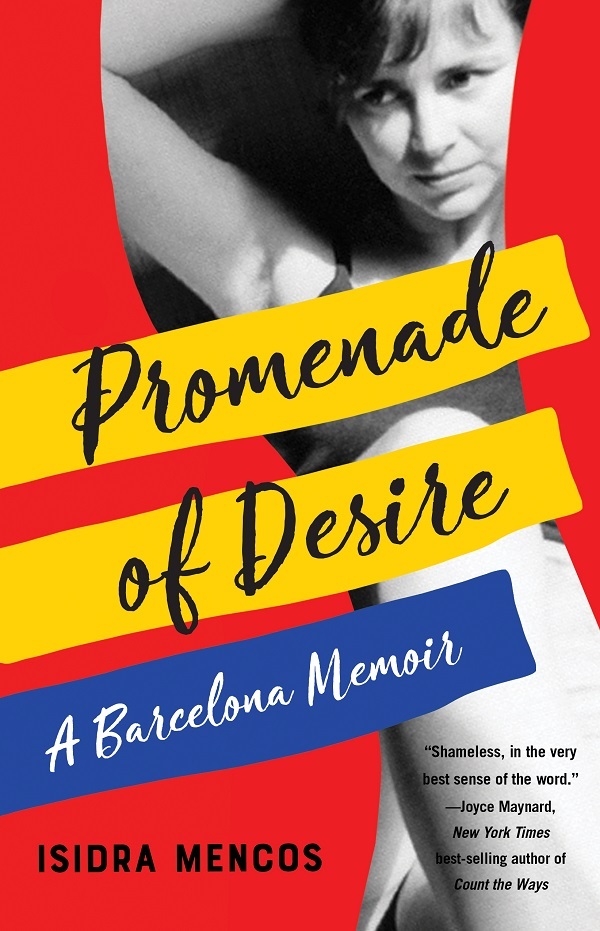
Interview with Isidra Mencos, Author of Promenade of Desire, A Barcelona Memoir

By Luis Medina

Isidra Mencos is the author of the engrossing, page-turning book, Promenade of Desire, A Barcelona Memoir. This book is a frank, honest and revealing coming of age story as a young woman in the transitional period marking the end of the Franco dictatorship to political freedom in Spain. It chronicles her formative experiences growing up with her family, embracing her sexuality, her relationships with men, discovering her liberation through Salsa music and finding herself.

Isidra Mencos, Author of Promenade of Desire, A Barcelona Memoir

LM: In your memoir Promenade of Desire, you describe your fascination with Salsa music as a liberating force during your coming of age as a young woman. Why Salsa music?

IM: I grew up in Spain under a dictatorship closely allied to the Catholic church. It was a very repressive atmosphere, not only politically but also culturally and sexually. From a very young age I learned to associate sensuality and pleasure with shame and guilt, so I felt disconnected with my body.

When the dictator died in 1975, I was 17 years old and in college. Spain transitioned to democracy and the culture went from repression to liberation and hedonism. That’s when I discovered Salsa music and dancing. From the moment I heard Salsa for the first time, I knew it was the music I had waited for my whole life. Although I didn’t know the steps, I was instinctively in sync with the beat.

Salsa allowed me to reconnect with my body and my sensuality in a guilt and shame-free way. It opened the door to a new me, a young woman aware and accepting of her body’s needs and desires. I fell in love with the great Salsa icons of the 70s, from the Fania All Stars to Rubén Blades, and Los Van Van. I went dancing three or four nights a week, until 5 a.m. I couldn’t get enough.

Salsa scene in the eighties

LM: What was the nascent Salsa scene like in Barcelona in the eighties?

IM: Salsa was not yet popular in Barcelona, where I grew up. Spain had been very isolated from other countries during the dictatorship and did not have significant immigration until the mid-70s so the exposure to this music had been limited. When I started dancing in 1977, there was only one dump of a club in the red light district, appropriately named Tabú, full of seedy characters. I was there all the time.

In the 80s Salsa started to gain traction and a few other places popped up. A very famous one at the time was Bikini, which was in a more bourgeois, safer area, and had two rooms, one for Salsa and one for Rock. Every single night the DJ would end the gig with “Todo tiene su final” with Hector Lavoe and Willie Colón. I loved it.

Promenade of Desire cover

By the time I left Spain in 1992 there were four or five clubs dedicated to Salsa, and live concerts with iconic figures had started to come to the city. There were also Catalan bands that played salsa standards, like Orquesta Platería and others.

LM: What was the popular music in Spain at that time?

IM: Rock and punk were the most popular. Punk represented the rebellious spirit of the youth, who had grown oppressed and now had the freedom, in the new democracy, to be outrageous and excessive without consequences. A very famous punk group was Alaska y the Pegamoides.

LM: Your ex-boyfriend Abili was a prominent pioneer in promoting Salsa Music in Barcelona during that era. Can you describe the triumphs and challenges that he had promoting Salsa music?

IM: Abili had fallen in love with Salsa before me. He was a journalist by profession and had come into some money due to a labor dispute. He decided that he would invest that money into making Salsa as popular as any other type of music in Barcelona. He produced concerts with Salsa greats like Rubén Blades, Eddie Palmieri, Ray Barreto, Luis Perico Ortiz and others, who came to Spain for the first time. Unfortunately, he was a bit ahead of his times. There wasn’t still a big enough audience to fill in the venues, and he lost a lot of money. That said, he was a major contributor to popularizing Salsa in Barcelona. For example, he ran a weekly Thursday salsa night for a few years at a club, with a live band (Catalan players) and a DJ, and you could see the club filling up more and more every week.

He later got involved with one of the major Salsa spaces in Barcelona, El Antilla, programming the live bands and promoting the scene.

Isidra Mencos during her book reading

LM: You have visited Barcelona throughout the years since you immigrated to the United States. What are the differences that you have seen in the Barcelona salsa scene?

IM: Salsa is now very well established in the city, in part due to the increasing numbers of Latin American immigrants who started coming in the 80s and the 90s. There was a big wave of Cuban immigration starting in the 90s which changed the direction of Salsa in the city, making timba and rueda very popular, for example.

Salsa was also taken on by several bands which mixed Catalans with Latina American immigrants, and produced great music, such as Lucrecia or, nowadays, Tromboranga.

That said, when I go back now I notice that there are less venues that offer live bands on a regular basis. It’s more of a DJ scene with dance instructors.

LM: In the book, you described Salsa music as a passionate force in your life as you dealt with your family, relationships with different men, sexuality, and the transition in Spain from Franco’s era of dictatorship and repression to freedom and democracy. What do you want the reader to take from reading your book?

IM: I think we all have repressed one or more parts of ourselves from childhood on, in order to be accepted by our parents, our teachers, our friends, our bosses…. My memoir is an inspirational tale about finding a way to reclaim the parts of yourself that have been hidden and becoming a whole person again.

Read also: The multifaceted artist Yamila Guerra and all her projects

  • « Go to Previous Page
  • Page 1
  • Interim pages omitted …
  • Page 36
  • Page 37
  • Page 38
  • Page 39
  • Page 40
  • Interim pages omitted …
  • Page 66
  • Go to Next Page »

International Salsa Magazine (ISM) is a monthly publication about Salsa activities around the world, that has been publishing since 2007. It is a world network of volunteers coordinated by ISM Magazine. We are working to strengthen all the events by working together.