• Skip to primary navigation
  • Skip to main content

International Salsa Magazine

  • HOME
  • Previous editions
    • 2026
      • ISM / March 2026
      • ISM / February 2026
      • ISM / January 2026
    • 2025
      • ISM / December 2025
      • ISM / November 2025
      • ISM / October 2025
      • ISM / September 2025
      • ISM / August 2025
      • ISM / July 2025
      • ISM / June 2025
      • ISM / May2025
      • ISM / April 2025
      • ISM / March 2025
      • ISM / February 2025
      • ISM / January 2025
    • 2024
      • ISM / December 2024
      • ISM / November 2024
      • ISM / October 2024
      • ISM / September 2024
      • ISM / August 2024
      • ISM / July 2024
      • ISM / June 2024
      • ISM / May 2024
      • ISM / April 2024
      • ISM / March 2024
      • ISM / February 2024
      • ISM / January 2024
    • 2023
      • ISM / December 2023
      • ISM / November 2023
      • ISM / October 2023
      • ISM – September 2023
      • ISM – August 2023
      • ISM July 2023
      • ISM Edition June 2023
      • ISM – May 2023
      • ISM April 2023
      • ISM March 2023
      • ISM February 2023
      • ISM January 2023
    • 2022
      • ISM December 2022
      • ISM November 2022
      • ISM October 2022
      • ISM September 2022
      • ISM August 2022
      • ISM July 2022
      • ISM June 2022
      • ISM May 2022
      • ISM February 2022
      • ISM January 2022
    • 2021
      • ISM December 2021
      • ISM November 2021
      • ISM October – 2021
      • ISM September 2021
      • ISM August 2021
      • ISM July 2021
      • ISM May 2021
      • ISM April 2021
      • ISM June 2021
      • ISM March 2021
      • ISM February 2021
      • ISM January 2021
    • 2020
      • ISM December 2020
      • ISM November 2020
      • ISM October 2020
      • ISM September 2020
      • ISM August 2020
      • ISM July 2020
      • ISM June 2020
      • ISM May 2020
      • ISM April 2020
      • ISM March 2020
      • ISM February 2020
      • ISM January 2020
    • 2019
      • ISM December 2019
      • ISM November 2019
      • ISM October 2019
      • ISM Septembre 2019
      • ISM August 2019
      • ISM July 2019
      • ISM June 2019
  • Download Salsa App
    • Android
    • Apple
  • Spanish

Search Results for: Dancing

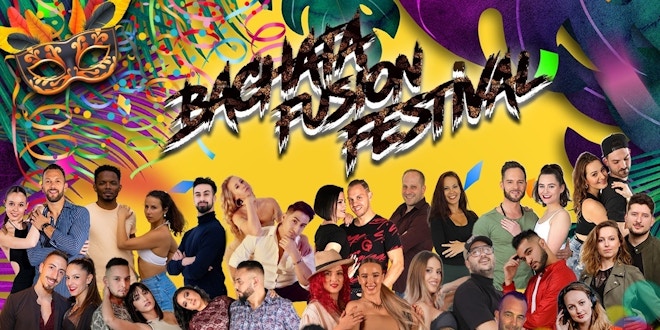
Winterthur receives the Bachata Fusion Festival

Latin rhythms reach corners of Europe every day where it would never have been thought that these genres could be heard, much less danced. In this case, we have that Bachata is reaching unthinkable borders such as Switzerland, which is why the next Bachata Fusion Festival 2023 Carnival Edition will take place in the city of Winterthur in the Zurich region, during February. Know the details in the following lines.

Bachata Fusion Festival 2023 Carnival Edition in February

Young love couple dancing social danse kizomba or bachata

This festival is a continuation of the one that took place in November, a way to close Winter and begin Spring. It was the first festival dedicated exclusively to bachata, which was organized in Switzerland in the entire dance history of this country. And after that mega success it had, there was no reason not to organize another soon.

This edition will be dedicated to Carnival, a festival that is traditionally celebrated during the month of February in the Caribbean and South American countries. And when it comes to Latin rhythms, Carnival is a perfect concept to show them. That is why the organizers decided to carry out the Fusion with this premise but as always with the central axis of bachata.

As in the previous edition, the Carnival one will feature the best international artists, who in turn will attract the best dancers from all over Europe and other borders. But there is no need to be a professional dancer to enjoy the complete package that this festival offers. If you like Latin rhythms and even want to learn to dance next to the best dancers, this is your cue.

Confirmed artists include:

  • Mark & Sarah
  • Carlos & Idaira
  • Magda & Valerie
  • Gaby & Stefi
  • Dario & Sarah
  • Anthony & Ivana
  • Marco & Paola
  • Sorush – Let’s play bachata
  • Tony & Ana
  • DJ York
  • DJ Husky
  • DJ Paul G

The organizers at GO&Dance have left the prices of the packages and everything they offer. Prices range from €65 to €240, with various discounts depending on the package, and the days of reservation, remember that the closer the date is, there will be fewer opportunities for discounts or promotions. But from this moment Winterthur awaits you with open arms.

Winterthur, a historic city in the heart of Europe
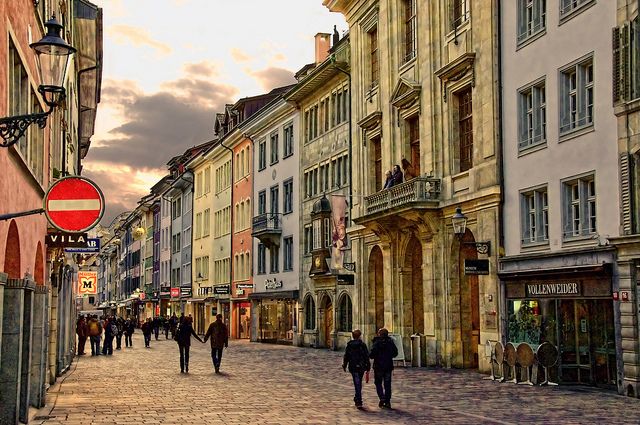
Switzerland is a country located in the heart of Europe. It is very marked by its magnificent natural landscapes where the star is the central mountain range of the Alps. Its cities are must-see places on the continent, from Zurich, one of the most dynamic, to Winterthur, where culture takes center stage.

But there’s a lot to do in Winterthur while visiting for the festival. Just 30 minutes from Zurich, it has the largest continuous pedestrian zone in Europe, museums that house masterpieces of European art between the 14th and 20th centuries. Even presentations in the middle of the street, and a wide range of festivals since culture is the main thing in this city.

Despite not having the cosmopolitan air of many European cities, Winterthur has its own identity which makes it unique in the eyes of the visitor. And an excellent place to carry out the Bachata Fusion Festival 2023 Carnival Edition, this February will be a month highly anticipated by all.

The rise of Latin rhythms in Madrid

Latin music has been gaining popularity for the last decade so you can notice many Latin rhythms in Madrid, and it seems that it will never stop. The reason behind this success is simple: the dance steps seem to be very easy, although they aren’t but everyone can stand up to dance. Throughout the city you can see people dancing salsa, bachata and rumba on street corners, in restaurants or at various events that take place throughout the city.

Some of the most popular styles of Latin American music include salsa, bachata, cumbia, and cha-cha-cha. But there are many more that are enjoyed by the inhabitants of the city. There are two great aspects that have achieved this love that the people of Madrid have for Latin rhythms, the great Latin parties in the best nightclubs, and learning to dance in the best academies in the city. Learn a little about both in this article.

Best Latin parties in clubs

For all the inhabitants of Madrid, there are several venues dedicated exclusively to Latin music, so it cannot be denied that the best Latin parties in Spain exist in the capital nights. Check the following list:

New One Madrid

This place located in Pueblo Nuevo offers all kinds of Latin parties full of good rhythms. Bachata, salsa or rumba One Madrid manages to please everyone in the audience, and not only with the music, the setting and even the drinks with food have their Latin touch.

Parche Disco Bar

Despite the fact that its space is not that big, it is one of the best places in the city to enjoy a Latin party, have an intimate place for friends and meet new people, as well as taste liquors brought directly from Latin America, at reasonable prices.

Azúcar Salsa Disco

Azúcar is one of the most danceable clubs in Madrid, located right in the center of the city. His forte is dancing but you can also enjoy excellent drinks to the rhythm of live music. It is more than certain that you will return to this club.

Faces Latina

With an excellent location near the Castellana and the Santiago Bernabéu, Faces Latina offers the best Latin rhythms so that Madrid continues to discover these danceable rhythms. With a pleasant atmosphere and quality service, Faces is what you need.

Latin Dance Schools in Madrid

Latin parties are very cool, but the rise of Latin rhythms in Madrid has been so great that people no longer just want to spend a night full of music, but this passion now translates to learning the dances professionally. It is not about wanting to be a professional dancer but about learning the best moves to be the king of the dance floor. Get to know in this list the best Latin Dance schools.

Salsabachata

The most unique dance school in Madrid, since its method is extremely interesting. First of all, it must be said that they play a lot of Latin rhythms and in different groups: for soon-to-be-married couples, for girls or boys, as a couple, zumba and even pole dance. But its catch is that you only pay for each class taken, plus the schedule is set by the student. It is very flexible in that aspect, and even the first class each student seeks is free.

They also offer bonus-style plans, with a number of specific classes where Salsabachata is in charge of reminding you of the classes you have pending. Another of its great characteristics is that you can go completely alone, and there they look for a partner for you, added to the fact that the group does not stop you, you level up without waiting for the others with whom you take the classes. Find more information on their website.

Studio11

For its part, Studio11 is the opposite, with classes for couples of any Latin rhythm where they are proud to say that they have the best dance professionals, for all classes. This school offers an exclusive environment with well-planned schedules.

They do not believe in “bonuses” but to achieve quality it is necessary to do our part and comply with what has been agreed. There is individualized monitoring but the classes are in pairs. They assure that in 8 weeks you can learn from 0 any Latin rhythm. At the same time, they specify that their classes last an hour and a half in order to offer the best attention. Find more about their classes on their website.

The rise of Latin rhythms in Madrid is becoming more and more established, but there is still much more to offer in this incredible city in Spain. Do not miss the other notes of International Salsa Magazine so that you know the best events in Europe.

From Repression to Liberation through Salsa

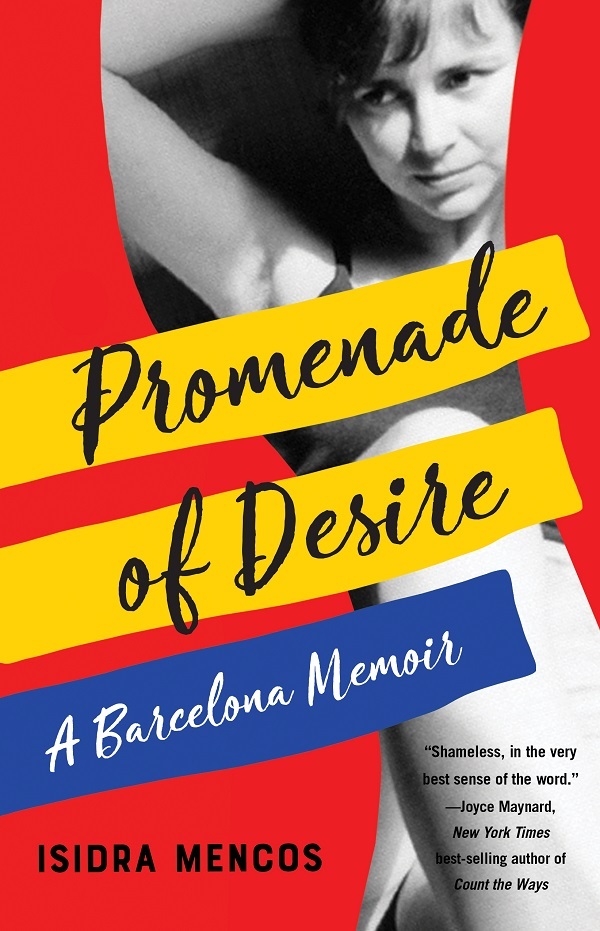
Interview with Isidra Mencos, Author of Promenade of Desire, A Barcelona Memoir

By Luis Medina

Isidra Mencos is the author of the engrossing, page-turning book, Promenade of Desire, A Barcelona Memoir. This book is a frank, honest and revealing coming of age story as a young woman in the transitional period marking the end of the Franco dictatorship to political freedom in Spain. It chronicles her formative experiences growing up with her family, embracing her sexuality, her relationships with men, discovering her liberation through Salsa music and finding herself.

Isidra Mencos, Author of Promenade of Desire, A Barcelona Memoir

LM: In your memoir Promenade of Desire, you describe your fascination with Salsa music as a liberating force during your coming of age as a young woman. Why Salsa music?

IM: I grew up in Spain under a dictatorship closely allied to the Catholic church. It was a very repressive atmosphere, not only politically but also culturally and sexually. From a very young age I learned to associate sensuality and pleasure with shame and guilt, so I felt disconnected with my body.

When the dictator died in 1975, I was 17 years old and in college. Spain transitioned to democracy and the culture went from repression to liberation and hedonism. That’s when I discovered Salsa music and dancing. From the moment I heard Salsa for the first time, I knew it was the music I had waited for my whole life. Although I didn’t know the steps, I was instinctively in sync with the beat.

Salsa allowed me to reconnect with my body and my sensuality in a guilt and shame-free way. It opened the door to a new me, a young woman aware and accepting of her body’s needs and desires. I fell in love with the great Salsa icons of the 70s, from the Fania All Stars to Rubén Blades, and Los Van Van. I went dancing three or four nights a week, until 5 a.m. I couldn’t get enough.

Salsa scene in the eighties

LM: What was the nascent Salsa scene like in Barcelona in the eighties?

IM: Salsa was not yet popular in Barcelona, where I grew up. Spain had been very isolated from other countries during the dictatorship and did not have significant immigration until the mid-70s so the exposure to this music had been limited. When I started dancing in 1977, there was only one dump of a club in the red light district, appropriately named Tabú, full of seedy characters. I was there all the time.

In the 80s Salsa started to gain traction and a few other places popped up. A very famous one at the time was Bikini, which was in a more bourgeois, safer area, and had two rooms, one for Salsa and one for Rock. Every single night the DJ would end the gig with “Todo tiene su final” with Hector Lavoe and Willie Colón. I loved it.

Promenade of Desire cover

By the time I left Spain in 1992 there were four or five clubs dedicated to Salsa, and live concerts with iconic figures had started to come to the city. There were also Catalan bands that played salsa standards, like Orquesta Platería and others.

LM: What was the popular music in Spain at that time?

IM: Rock and punk were the most popular. Punk represented the rebellious spirit of the youth, who had grown oppressed and now had the freedom, in the new democracy, to be outrageous and excessive without consequences. A very famous punk group was Alaska y the Pegamoides.

LM: Your ex-boyfriend Abili was a prominent pioneer in promoting Salsa Music in Barcelona during that era. Can you describe the triumphs and challenges that he had promoting Salsa music?

IM: Abili had fallen in love with Salsa before me. He was a journalist by profession and had come into some money due to a labor dispute. He decided that he would invest that money into making Salsa as popular as any other type of music in Barcelona. He produced concerts with Salsa greats like Rubén Blades, Eddie Palmieri, Ray Barreto, Luis Perico Ortiz and others, who came to Spain for the first time. Unfortunately, he was a bit ahead of his times. There wasn’t still a big enough audience to fill in the venues, and he lost a lot of money. That said, he was a major contributor to popularizing Salsa in Barcelona. For example, he ran a weekly Thursday salsa night for a few years at a club, with a live band (Catalan players) and a DJ, and you could see the club filling up more and more every week.

He later got involved with one of the major Salsa spaces in Barcelona, El Antilla, programming the live bands and promoting the scene.

Isidra Mencos during her book reading

LM: You have visited Barcelona throughout the years since you immigrated to the United States. What are the differences that you have seen in the Barcelona salsa scene?

IM: Salsa is now very well established in the city, in part due to the increasing numbers of Latin American immigrants who started coming in the 80s and the 90s. There was a big wave of Cuban immigration starting in the 90s which changed the direction of Salsa in the city, making timba and rueda very popular, for example.

Salsa was also taken on by several bands which mixed Catalans with Latina American immigrants, and produced great music, such as Lucrecia or, nowadays, Tromboranga.

That said, when I go back now I notice that there are less venues that offer live bands on a regular basis. It’s more of a DJ scene with dance instructors.

LM: In the book, you described Salsa music as a passionate force in your life as you dealt with your family, relationships with different men, sexuality, and the transition in Spain from Franco’s era of dictatorship and repression to freedom and democracy. What do you want the reader to take from reading your book?

IM: I think we all have repressed one or more parts of ourselves from childhood on, in order to be accepted by our parents, our teachers, our friends, our bosses…. My memoir is an inspirational tale about finding a way to reclaim the parts of yourself that have been hidden and becoming a whole person again.

Read also: The multifaceted artist Yamila Guerra and all her projects

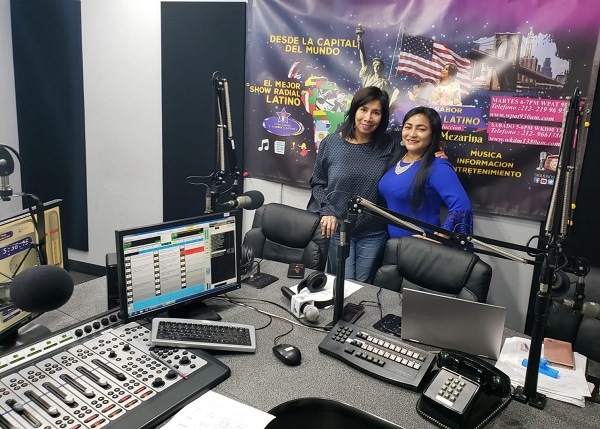
Broadcaster and host of Con Sabor Y Amor Latino Tatiana Mezarina

We talked with announcer Tatiena Mezarina

The world of broadcasting is of utmost importance to the promotion of Latin music and today we are talking to one of its greatest exponents. We are talking about Peruvian broadcaster and host of the show ”Con Sabor Y Amor Latino” Tatiana Mezarina, who very kindly agreed to talk to us about her career and current projects.

Tatiana Mezarina next to Willie Colón

Tatiana began by thanking us for inviting her and telling us how she became interested in the world of radio. All this enthusiasm for this interesting world of communication began since she was very little in her native Peru, at which time she worked as a school correspondent for one of the most famous newspapers in Latin America, ‘‘El Comercio”. On the radio, she began on the radio station Radio Libertad, specifically in a program show ”Viva Juventud”.

Since a very early age, Mezarina was very involved on all types of media, both print and audiovisual. Then, she had the opportunity to work in television with a show dedicated to music called ”El Mañanero”, which was in charge of broadcasting all kinds of artists and rhythms in her country.

When he started working for ”Canal Global”, he received a scholarship to study Communication Sciences in Germany and worked in German media such as Deutsche Welle and Berlin Channel. Both there and in the United States, she has had many shows linked to social causes and dedicated to informing her listeners about important issues.

Tatiana Mezarina talking to Luis Enrique

How ”Con Sabor Y Amor Latino” started

In the case of her most recent project ”Con Sabor Y Amor Latino”, Tatiana wanted to work on all these issues and give a friendly voice to help Latinos living in the United States so that they know that we are the largest ethnic minority in this country, so we should not be harassed by anyone. At the beginning, this show sought to keep the Latino community informed, but as time went by, it also wanted to offer good music. This is how Tatiana began inviting Latin artists from all over the world and of all musical genres, but she always had a special tendency to salsa because it is her favorite type of music.

In September 2019, the announcer decided to create ”Con Sabor Y Amor Latino”, a name inspired by how delicious Latin food is and how loving much of us Latinos are. This was her first project of this type since arriving in New York and arose from the need for Latinos to have a window through which they could communicate in their native language and feel comfortable to express themselves.

Music has been very important as dancing and joy are part of our identity. Music is part of our DNA and salsa has always identified with the Latino.

Is academic training important for communication?

Mezarina states that she has no problem with communicators without any training long as they do this job responsibly. However, she also argues that a person with training tends to offer a higher quality work, but this is not always the norm.

The communicator confesses that she herself took a radio and television course there in New York, which was aimed at people who had never done radio before, but wanted to learn about this profession. This is how she became interested in this branch of communication and is the one she currently works in.

”There can be all kinds of communicators, but it’s up to to everyone to decide who to follow and what to listen to,” says the announcer.

Tatiana Mezarina with Grammy-nominated Colombian percussionist Samuel Torres

Non-recommendable behaviors in communicators

When asked what behaviors which no communicator should have, Tatiana says that ”unverified information should never be disseminated. When we stand at a microphone, we have the responsibility to be careful with what we say because we reach thousands of people in a matter of seconds. If things are not done right, we confuse people and do not honor the truth.”

Future projects

As for her future projects, the communicator has said that she would never want Con Sabor Y Amor Latino to be cancelled, as she considers that much remains to be done from that platform. Unfortunately, she has been unable to dedicate 100% of her time to the radio show, but she hopes to be able to do so in the future. Similarly, he also hopes his content will be broadcast on one of the major television networks in the United States.

Meanwhile, the goal of Mezarina and her team is to keep the community informed on everything a Latino in the United States need to know to avoid inconveniences and to give publicity to artists from all genres who are unable to make their talent public through traditional radio stations and channels.

Tatiana Mezarina with commissioner of the NYC Department of Consumer and Worker Protection Lorelei Salas

Read also: The multifaceted artist Yamila Guerra and all her projects

3 Reasons To Stay In Paris This Season

We show you the different places to visit with authentic Salsera fun

Paris (France) has always been a popular tourist destination with musical tradition, and the rhythm of Salsa is no exception. There are plenty of places to dance if you like this Afro-Caribbean tune, but what makes it especially appealing this season? We show you three reasons why you will want to spend more time in the capital of this beautiful Western European country during December 2022.

Latin New Year’s At Cabaret Sauvage

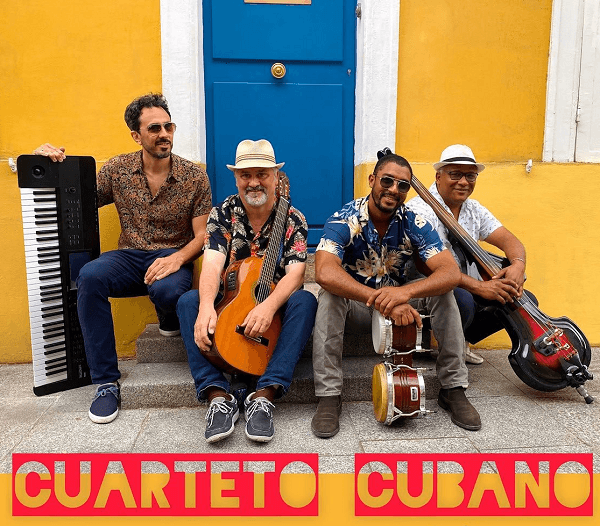
Cuarteto Cubano has toured France’s stages for four years

The biggest Latin New Year’s Eve in Paris will be at Cabaret Sauvage with the live presentation of Cuarteto Cubano playing the great classics of Cuban and French music that will make you travel through old Havana and give French hits an air of partying and joy. The Cuban Quartet www.cuartetocubano.com has toured the stages of France since 2018, always with the same goal of “making people dance and smile”.

Then, the wild mixes by DJ El Dany, DJ Hot Rod, and DJ El Cuco will begin with the best of Salsa, Merengue, Bachata, Guaracha, Reggaeton, Dembow, Funk, and Cumbia together with the magical voice of Cuban singer Denis Mora.

All of this is accompanied by the show of the Latin Cabaret and intelligent Pitshow that will take you into the idyllic atmospheres of the Latin American carnivals with the performances of the divine Cuban dancers Roima and Diane Alcalá who form the duo “Las Mulatas del Sabor” that will transport you to a paradise of the burning party of Havana, Cuba.

Cabaret Sauvage will open its magical doors on Saturday, December 31st, 2022, from 10 PM to 5:30 AM on Sunday, January 1st, 2023. Tickets are already available for reservation, but if you want to purchase them at the box office, they will have a value of €50 all night. Cabaret Sauvage is located at 59, bd MacDonald – Parc de La Villette – Paris 19 M° Porte de La Villette.

¡Vamos Pa’ La Rumba!

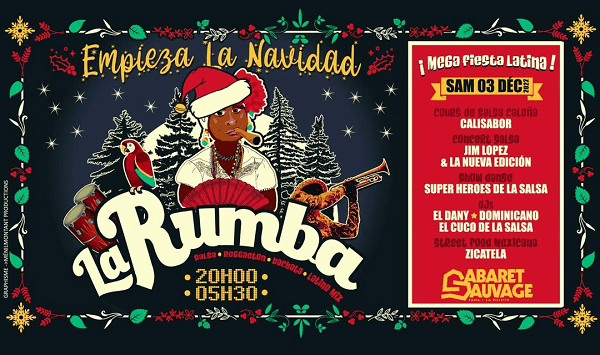
Cabaret Sauvage starts Christmas on December 3rd

If you like to dance Salsa, then you can go to Cabaret Sauvage https://www.cabaretsauvage.com/agenda throughout this season. Yes, we continue with the Latin party in this magnificent place.

The ingredients are assembled on the table to make La Rumba an unmissable event for all lovers of Latin music and Latin American culture in a unique party experience in Paris.

The Salsa Concerts will present the best current and classic pieces from the orchestras that make life in the capital of this country, renowned for its wines and haute couture brands.

On the stage of Cabaret Sauvage on Saturday, December 3rd, you will satisfy your Salsa cravings with Salsa Caleña classes with Calisabor instructors, a performance by the Jim López & La Nueva Edición orchestra, and tonight will be enlivened by the Show Super Heroes of Salsa and the mixes of DJ El Dany, DJ Dominicano, and DJ El Cuco de la Salsa.

On the second Saturday of the month (December 10th), the Rumba continues with the second edition of El Perreo de Navidad: Mega Reggaeton Party with the opening of its doors at midnight. Here, you will find until 6 AM the best selection of this urban rhythm that has guaranteed its permanence at the top of popularity among the youngest in France and the world. The DJs present will be DJ El Dany, DJ Ortega Dogo, DJ Lina, and DJ Driver MC. The ticket price at the box office is €20.

France’s  Clubs

Le Balajo nightclub
Le Balajo nightclub

This season you can have fun in Paris with its landscapes, winter climate, cultural offer, sophisticated gastronomy, and above all in the various clubs that offer a palette of Afro-Caribbean colors and Salsa enjoyment, among which the Le Balajo nightclub stands out https://www.balajo.fr/ open since 1936. Every Tuesday there are Salsa and Bachata classes for beginners and intermediate level dancers followed by a Latin party hosted by DJ Karim until 2 AM.

The Parisian Restaurant/ Bar/ Nightclub Pachamama https://www.pachamama-paris.com/index.php/en/home-alt-2/ is located at 46-48 rue du Faubourg Saint Antoine, 75012, in a historic building from the 19th century designed by Gustave Eiffel in the neo-vintage colonial style. It has three levels and is open from Thursday to Saturday from 8 PM to 5 AM with resident DJs lighting up the dance floor (Ground Floor) with harmonious mixes between Latin Music, Soul, Pop, and Deep House.

Finally we bring you the Bar/ Restaurant/ Club La Pachanga https://www.lapachanga.fr/, a place of reference for lovers of Salsa, it is located near the Eiffel Tower at 8, rue vandamme 75014.

At La Pachanga you can attend two-hour Cuban Salsa and Puerto Rican Salsa dance classes from Tuesday to Thursday from 7:30 PM to 9:30 PM, continuing with social dancing and a DJ set until 2 AM. On Saturdays La Pachanga closes its doors at 5 AM.

You Can Also Read: Where To Go Dancing Salsa In Paris?

  • « Go to Previous Page
  • Page 1
  • Interim pages omitted …
  • Page 35
  • Page 36
  • Page 37
  • Page 38
  • Page 39
  • Interim pages omitted …
  • Page 65
  • Go to Next Page »

International Salsa Magazine (ISM) is a monthly publication about Salsa activities around the world, that has been publishing since 2007. It is a world network of volunteers coordinated by ISM Magazine. We are working to strengthen all the events by working together.