• Skip to primary navigation
  • Skip to main content

International Salsa Magazine

  • HOME
  • Previous editions
    • 2026
      • ISM / April 2026
      • ISM / March 2026
      • ISM / February 2026
      • ISM / January 2026
    • 2025
      • ISM / December 2025
      • ISM / November 2025
      • ISM / October 2025
      • ISM / September 2025
      • ISM / August 2025
      • ISM / July 2025
      • ISM / June 2025
      • ISM / May2025
      • ISM / April 2025
      • ISM / March 2025
      • ISM / February 2025
      • ISM / January 2025
    • 2024
      • ISM / December 2024
      • ISM / November 2024
      • ISM / October 2024
      • ISM / September 2024
      • ISM / August 2024
      • ISM / July 2024
      • ISM / June 2024
      • ISM / May 2024
      • ISM / April 2024
      • ISM / March 2024
      • ISM / February 2024
      • ISM / January 2024
    • 2023
      • ISM / December 2023
      • ISM / November 2023
      • ISM / October 2023
      • ISM – September 2023
      • ISM – August 2023
      • ISM July 2023
      • ISM Edition June 2023
      • ISM – May 2023
      • ISM April 2023
      • ISM March 2023
      • ISM February 2023
      • ISM January 2023
    • 2022
      • ISM December 2022
      • ISM November 2022
      • ISM October 2022
      • ISM September 2022
      • ISM August 2022
      • ISM July 2022
      • ISM June 2022
      • ISM May 2022
      • ISM February 2022
      • ISM January 2022
    • 2021
      • ISM December 2021
      • ISM November 2021
      • ISM October – 2021
      • ISM September 2021
      • ISM August 2021
      • ISM July 2021
      • ISM May 2021
      • ISM April 2021
      • ISM June 2021
      • ISM March 2021
      • ISM February 2021
      • ISM January 2021
    • 2020
      • ISM December 2020
      • ISM November 2020
      • ISM October 2020
      • ISM September 2020
      • ISM August 2020
      • ISM July 2020
      • ISM June 2020
      • ISM May 2020
      • ISM April 2020
      • ISM March 2020
      • ISM February 2020
      • ISM January 2020
    • 2019
      • ISM December 2019
      • ISM November 2019
      • ISM October 2019
      • ISM Septembre 2019
      • ISM August 2019
      • ISM July 2019
      • ISM June 2019
    • 2016
      • ISM December 2016
  • Spanish
  • Download Salsa App
    • Android
    • Apple

Search Results for: Dancing

Good music and fine dining at Café Salsera

Feel at home at Café Salsera

North America is packed full of places where Latinos can feel at home and native people can learn more about a culture that is apparently distinct from theirs. One of these places is the wonderful Café Salsera, which has much to offer every one of its visitors. 

We are talking about a spectacular place that has a very peculiar characteristic. It turns out that, at any time of the day, it serves as a restaurant and café, while at night it becomes a fabulous nightclub where you can enjoy the best hits of today. The menu is entirely based on Mexican food and the main objective of this place is to offer the best Latin flavor to all those who want to taste it. 

While it is true that the menu is based on Mexican dishes, the ambiance of the restaurant has a Spanish colonial style which contrasts starkly with what is offered to diners. Among the main dishes to be served at Café Salsera, we can mention tacos, nachos, empanadas, pasties, chicharrones, street-style elotes, among many others. On top of this, there are also incredible cocktails, including the mangonadas, caipirinhas, margaritas, mojitos, and much more. 

Recipes made by the kitchen staff are always varied and very original. The menu always surprises regular visitors no matter the amount of times they have attended the place. 

Image of the facade of Café Salsera
Facade of Café Salsera

Fine dining and good music

When the night comes, you can enjoy an alfresco dining with live music, but this does not have to end this way. On Fridays, the place has the powerful presence of DJ Turo, who is in charge of livening up the atmosphere with the latest salsa, bachata, merengue and other rhythms. On Saturdays, attendees will be lucky enough to dance to the rhythm of Erick Jaimez, who will play the latest music and some not-so-recent hits for the nostalgic. On Tuesdays, salsa lessons are planned to be given by a group of instructors who are highly trained to reach this genre. 

According to the opinions issued through social media, those who have had the opportunity to go to Café Salsera assure that it is a fantastic place to visit at all times, since it has the particularity of being a restaurant, cafe and nightclub on the same day. They also assure that the treatment by the staff is the best and warmest to make customers feel at home. 

Considering open hours, on Mondays, they are open from 5:00 pm to 10:00 pm. On Fridays, Saturdays and Sundays, it is open from 5 pm to 2 a.m. Attendees can go for dinner, dancing or both without any problems. 

Here you can see some tables at Café Salsera
Some tables at Café Salsera

There is also the possibility of renting one or more VIP rooms in which an approximate of 10 people can spend a good time in glad company and the best Latin music in the background. Of course, the cost will depend on whether visitors wish to dine or simply have a nice time between drinks.   

If attendees want a table for only 4 or 5 people, they can book a VIP table, which will include a bottle for all members of the group. On Saturdays, the cost of booking a table will be $155. In case you want to book a VIP section for 10 people, you must cancel an amount of $ 285.   

Without a doubt, a fabulous place to eat, drink, dance, and listen to good music after all these months of confinement due to the pandemic.   

Ourdor tables at Café Salsera
Outdoor seating at Safé Salsera

Link to its official website: https://www.cafesalsera.com/


Home

The Gran Combo of Puerto Rico “Los Mulatos del Sabor”

Celebrating our 59 years of existence

Few musical groups have lasted half a century, maintaining their rhythmic identity unchanged, overcoming the push and pull of the recording industry, and resisting the vicissitudes of consumer culture as El Gran Combo de Puerto Rico has done.

Unlike other salsa orchestras, particularly those that have emerged in New York since the late 1960s, our so-called “Mulatos del Sabor” have always protected their musical timbre from innovations and complex experiments, safeguarding their own simple and rhythmic sound that has characterized them since their founding on May 26, 1962.

This does not mean that throughout 54 years of history they have avoided the significance of the new techniques and harmonic tendencies arrived by new times and new generations. On the contrary, the study and enjoy them, but in general, they keep them at a cautious distance to avoid infecting the identity traits of their sonority.

The “University of Salsa”, led by the ingenuity of Rafael Ithier.

Thanks to this creative circumspection, the group, led by Rafael Ithier Nadal, has succeeded in establishing a rubric like very few other Afro-Antillean groups. The proof is in their musical catalog, so it is enough to listen, for example, to the harmonization of “Acángana”, a song produced in their third album, at the end of 1963, and to continue a journey through their history through melodies such as “Ojos chinos”, “A ti te pasa algo”, “Las hojas blancas” or “Sin salsa no hay paraíso” to confirm the thesis.

Its validity also responds to the synchrony between artistic creation, which adds music and talent, and collective fraternity, darned in a singular work ethic that is sustained in the philosophy of cooperativism. But beyond the sound and rhythm of their songs, if we consider other creative and sociological elements, we conclude that El Gran Combo de Puerto Rico is the group that best defines what we call salsa and, without fear of being mistaken, no one in the Latin American and Caribbean environment, inside or outside the United States, has been able to match their distinction and historical preeminence.

Part of the recipe for the success of this famous group lies in making everyday songs with simple, lilting and intelligible arrangements; a good rhythm section and a lot of clave, always thinking of the public’s taste without departing -and this is important- from the roots of Puerto Rican popular music. Rafael Ithier himself explains it candidly in an interview that is part of the draft of his memoirs:

“Not having a formal education in music, I cannot think of the works of Beethoven or Bach, but I can think of Chuíto (Jesús Sánchez Eraso) and Ramito (Flor Morales Ramos) when composing my arrangements.”

Sound of modernity.

The Gran Combo of Puerto Rico "Los Mulatos del Sabor" (The Mulatos of Flavor) Celebrating our 59 years of existence
The Gran Combo of Puerto Rico “Los Mulatos del Sabor”

Since its foundation, El Gran Combo de Puerto Rico cultivates an important space in our Puerto Rican and Antillean songbook, standing out as one of the few musical institutions that assume the social and historical representation of the development of our melodic modernity, moving vigorously through the interpretation of rhythms such as bomba, guaracha, merengue, boogaloo, jala-jala, bolero, tango and, of course, salsa.

It is, undoubtedly, a sign of national and Afro-Caribbean identity, nourished by the rich cultural tradition that emerged and consolidated in the last half of the 20th century and remains strengthened to the present. Their artistic proposal shades a new era. Tanned in the shadow of veteran percussionist Rafael Cortijo Verdejo, the musicians who originated El Gran Combo in 1962 managed to impose a lilting sound that immediately captivated the national audience and, in a short time, during its first decade, began to take strong roots in stages around the United States, Colombia, Venezuela and Panama. The breadth of its repertoire, the sparkling choreography, the charisma of its members and the ability to incorporate humorous melodies and everyday narrations into its songbook were the key to its success.

Thus, the group founded by Rafael Ithier, Quito Vélez, Martín Quiñones, Miguel Cruz, Héctor Santos and Eddie Pérez together with Milton Correa, Daniel “Maninín” Vázquez, Micky Duchesne, Chiqui Rivera and Pellín Rodríguez stood out for their ability to entertain and provoke dancing among lovers of good music. Shortly after its creation, and after Roberto Roena and Andrés “Andy” Montañez joined the group, the work of El Gran Combo shone on television, becoming the first musical group in the country to fully dominate this mass media.

Their public presence was imposing: for seven consecutive years they maintained a daily participation on the radio waves and twelve television programs a week, becoming the great musical sensation of the country. They also determined the guidelines for the development of national popular music at the very moment when the great socioeconomic transformation of Puerto Rican society was taking place.

During its first seven years, the art of El Gran Combo de Puerto Rico was recorded in the productions “Menéame los mangos” (1962), “El Gran de siempre” (1963), Acangana (1963), “Ojos chinos-Jala jala” (1964), “El caballo pelotero” (1964), “El swing del Gran Combo” (1965), “En Navidad” (1966), “Maldito callo” (1967), “Esos ojitos negros” (1967), “Boleros románticos” (1967), “Fiesta con El Gran Combo” (1967), “Fiesta con El Gran Combo” (1967), “Fiesta con El Gran Combo” (1967), “Ojos chinos-Jala jala” (1964), “El caballo pelotero” (1964) and “El swing del Gran Combo” (1965), “Fiesta con El Gran Combo” (1967), “Boogaloo con El Gran Combo” (1967), “Tú querías boogaloo” (1967), “Pata pata, jala jala Boogaloo” (1967), “Tangos por El Gran Combo” (1968), “Merengues” (1968), “Los nenes sicodélicos” (1968), “Bombas” (1968), “Guarachas” (1968), “Latin power” (1968), “Smile” (1968) and “Este sí que es” (1969).

At the same time, the group’s power was felt on the main musical stages of New York City, where a powerful colony of Puerto Ricans had settled.

However, the glory achieved by El Gran Combo in its early years began to fade in 1969. That year all their appearances on radio and television were cancelled, their record production house, Gemma Records, cancelled their contract, their public engagements were undermined and the first important resignations of the collective took place with the departure of Roberto Roena and Elías Lopés, who immediately formed the Apollo Sound group. At the same time, the music market became more competitive. The emergence of new Afro-Antillean orchestras from New York determined a new course for popular dance music. The new salsa movement, articulated under the Fania company, imposed new challenges for the orchestras that, like El Gran Combo, had already established their dominance.

The entrepreneurialism of the Combo

The “Universidad de la Salsa”, led by the ingenuity of Rafael Ithier, survived the inclemencies of this new era. Roberto Roena’s vacancy was filled with the famous dancer Mike Ramos, who will bring new choreographies to the collective. As a palliative to the crisis, they also ventured to create their own record label, EGC Records, to produce their musical works and not disappear from the artistic scene. Under this label appeared the album “Estamos primero” (1970), followed by “De punta a punta” (1971), a work which explored, for the first time, the sound of the trombone in the orchestra, and “Boleros románticos” (1972). Despite their quality, these productions did not penetrate the market as strongly as expected, although they contributed to the survival of the group. But it was the release of the album “Por el libro” (1972), followed by “En acción” (1973) and “Número 5” (1973) that returned El Gran Combo to its peak, thanks to the popularity achieved by the songs “Hojas blancas”, “El barbero loco”, “Guaguancó de El Gran Combo”, “Julia” and, especially, “Los zapatos de Manacho”.

The success that the group began to enjoy in that period suffered a bitter blow with the departure of singer Pellín Rodríguez, who in 1973 opted to pursue his career as a soloist. The veteran singer, creator of the hit “Amor por ti”, was initially replaced by Marcos Montañez, Andy’s younger brother, although his formal substitution was completed with the recruitment of vocalist and sonero Charlie Aponte, a young man with a splendid voice, enthusiastic and disciplined, who represented a great success for the group.

With new energy, El Gran Combo began to shine as one of the most important salsa institutions in and out of Puerto Rico, with the albums “Disfrútelo hasta el cabo” (1974), “Número 7” (1975), “Los sorullos” (1975) and “Mejor que nunca” (1976). It was, then, when the group, just when it recovered its place, suffered the departure of singer Andy Montañez, in 1977. The well-remembered “Niño de Trastalleres” accepted a seductive artistic offer to record as a soloist and, at the same time, to join the Venezuelan orchestra Dimensión Latina.

Andy Montañez’s decision affected the spirits of most of the members of the group because, for a moment, his absence was inconceivable, especially when he was considered the “eldest son” of Rafael Ithier. The discomfort caused by his departure was transformed into encouragement, perseverance and will to continue a musical project that has always been above any of its members.

Andy Montañez’s void was filled by singer Jerry Rivas, who took on a great challenge. However, the melodic strength that characterized this young vocalist, who started in the orchestra on April 19, 1977, began to seduce the group’s fans, who were persuaded with the interpretations “Buscando ambiente”, appeared in the album “Internacional” (1977), and “La clave y el bongó”, included in the production “En Las Vegas” (1978), the last album made for the EGC label.

The 1980s marked several important routes in the history of El Gran Combo. This period began with the release, in 1979, of the album “Aquí no se sienta nadie”, the most brilliant production in the group’s musical career and the one that sealed the closing of operations of the EGC production company, owned by the collective, to begin a new commercial relationship with the Combo Records company.

The value of “Aquí no se sienta nadie” is inscribed in the strength that this production generated in the market, to the extent of overthrowing the New York salsa invasion, imported from the family, which until then had dominated the radio airwaves and the record trade in the country.

As a historical fact, this is the first work of El Gran Combo in which all its songs were overwhelming hits: “Más feo que yo”, “Así son”, “Celos de mi Compay”, “Adela”, “Nido de amor”, “Brujería”, “Oprobio” and “Mujer boricua”.

Thus, the impact derived from this production reverted in an intense schedule of presentations inside and outside Puerto Rico that elevated the insignia of “Los Mulatos del Sabor” to a new place. The 80’s continued with the release of the productions “Unity” (1980) and “Happy Days” (1981), setting the pace with hits such as “Compañera mía”, “Te regalo el corazón”, “Pico pico”, “A la reina”, “El menú” and “Timbalero”.

Until then, the history of glory traced by the group landed in the celebration of its first 25 years of musical career, for which the compilation album “Nuestro aniversario” (1981) was produced, which included the most relevant themes cultivated by the group in that period, revamped with fresh and rejuvenated arrangements in the voices of Charlie Aponte and Jerry Rivas. The 1980s continued with the release of “La universidad de la salsa” (1983), remembered, among others, for the melodies “Mujer celosa”, “Pordiosero”, “Y no hago más na'”, “Las hojas blancas” and “Bomba de Puerto Rico”. With the same strength and impetus, in 1984 they released the production “Breaking the Ice” which is well remembered for the hit “Carbonerito”, interpreted by the chorus singer and dancer Luis “Papo” Rosario, who joined the group in the early 1980’s replacing the dancer Mike Ramos. In mid-1980, the album “Innovations” (1985) was released, which produced, among others, the hits “Juan Cabeza Dura”, “Camino de amapolas” and “La loma del tamarindo”.

Before the end of that year, El Gran Combo surprised its followers with the release of the album “Nuestra música” (1985), a project that rescued the Christmas spirit of the group by recording in one production melodies with festive airs that became the musical songbook of that celebration. “La fiesta de Pilito”, “No hay cama pa’ tanta gente”, “El arbolito”, “Desenfunda”, “El jíbaro listo”, “El alma de la fiesta”, “Asalto navideño” and “Cosas del campo” were the melodies of this spectacular musical work.

In 1986 came to the market the production “El Gran Combo y su pueblo” (1986), remembered for the songs “Lírica Borinqueña”, “Garantía” and “Le dicen papa”. This was followed by an album celebrating the group’s 25th anniversary, “25th Anniversary” (1987).

At that time, the salsa recording industry began to suffer alterations. Modifications in the scales of production, new technological advances and, most importantly, the dominance of female consumption and the “new” rhythmic preferences that were imposed on the market inevitably altered the harmonic conceptions of salsa.

Those were the years of the arrival of the romantic and erotic salsa movement which, for a moment, dominated the genre and displaced the “old” salsa exponents. Faced with this new scene, El Gran Combo opted to reinvent and “evolve” its sound, as can be seen in the album “Romántico y sabroso” (1988).

That album, which included songs such as “Quince años”, “Potro amarra’o” and “Cupido”, was measured against more stylized salsa formulas filled with softer arrangements and young performers who brought to the genre the image of a “refined rhythmic balladeer”.

New market challenges

Ithier thought that the "young blood" that was shining brightly in the salsa scene could contribute to resize the sound of El Gran Combo without altering its original formula.
“Los Mulatos del Sabor” Celebrando nuestros 59 años de existencia

The new route marked by salsa awakened a certain concern in the leader of the group, Rafael Ithier, who to face the new challenges imposed by the market opted to season the sound of his group with the technical skills of young arrangers such as Ernesto Sánchez, Louis García, and Tommy Villariny.

Then, Ithier thought that the “young blood” that was shining brightly in the salsa scene could contribute to resize the sound of El Gran Combo without altering its original formula. A first experiment in this direction produced the album “¡Ámame! (1989), which caught on with the “new” salsa taste thanks to the songs “Ámame” and “Aguacero”. However, the maintenance of a new melodic line, less lilting than the group’s original formula, collided with the production of “Latin-up” (1990), an album that went down in history as the group’s greatest blunder.

From then on, the veteran musician decided never again to abandon the direction of the orchestra’s musical arrangements. Thus, and without departing from the market trends and the taste of the new collective of salsa consumers, he produced “Erupción” (1991), an album that rescued the power and rhythmic essence of El Gran Combo.

“Agua pasada”, “Gotitas” and “Trinchera”, the latter dealing with the theme of the Puerto Rican soldiers who were taken to fight in the U.S. war against Iraq, were the group’s success in the 1990s.

Shortly after, the album “First Class International” (1993) was released, which was preceded by “Gracias, 30 años de sabor”, a compilation album celebrating the group’s three decades, a project that was complemented with the release of three volumes of old hits in original format.

Consecutively, El Gran Combo released the albums “La ruta del sabor” (1994), “Para todos los gustos” (1995), “Juntos de nuevo con… Andy Montañez” (1995), “Por todo lo alto” (1996) and “Pasaporte musical” (1998).

Although the rhythmic strength of the group was maintained, and the acceptance of the salseros never waned, the group’s presence on the radio waves and in public appearances of a festive nature began to diminish. The reason is attributed to market patterns, rather than to the group’s standard.

By way of example, in the four years between 1994 and 1998, four albums were produced – in addition to the commemorative production “35th Anniversary: 35 Years Around The World” (1997) – but the most memorable song in the Puerto Rican songbook during that period is “Que me lo den en vida”.

Those years served, meanwhile, for the group to consolidate other markets in Europe, Central and South America and the United States. In fact, it is the period of most international emergence, even though “La Universidad de la Salsa” always developed an intense work agenda outside the island.

The members of the group arrived in the 2000s with the work “Nuevo milenio, mismo sabor” (2001), which preceded the special production “40 años en vivo” (2002), which included the events of the great celebration to commemorate the four decades of the group’s history in a great concert held at the Rubén Rodríguez Coliseum in Bayamón.

After the 40th anniversary celebration, which resulted in the album “Los 40 de El Gran Combo” (2003), the group took a leap in its musical history by ending its partnership with Combo Records and joining the Fonovisa label, with which they recorded the albums “Para todos los gustos” and “Por todo lo alto” in 2003.

Then came the signing with Sony Discos, the first time the group sealed a commercial agreement with a large multinational company. In this new stage, the most important salsa group in the world produced the album “Aquí estamos y de verdad” (2004), remembered only for the hits “El matrimonio” and “Mi gorda bonita”.

It was in 2006 that Maestro Rafael Ithier decided to leave his instrument (the piano), which he played since the beginning of the group, to devote himself to directing the group from the front of the orchestra. This is when they recruited pianist Willie Sotelo, who was musical director and arranger of several orchestras such as Frankie Ruiz, Luis Enrique, Roberto Roena and others. Sotelo came to replace Maestro Ithier on a trip to Canada and New York on April 26, 2006 to which Don Rafael Ithier could not go for health reasons. Ithier was very pleased with Sotelo’s performance, so much so that since that date Maestro Ithier has been conducting the group from the front of the orchestra, although from time to time he sits down and plays the piano.

It was not until the release of “Arroz con habichuelas” (2006) that El Gran Combo, having completed 45 years of career, marked a new milestone in the history of salsa by becoming the most revered group in the genre, above all orchestras of all time, achieving the feat of turning all the songs of that production into major commercial hits. The songs “Si la ves por ahí”, “Te veo, nena”, “No hay manera”, “Arroz con habichuela”, “Esa mujer”, “Como tiembla el alma”, “Yo no mendigo amor”, “Piénsalo”, “No te detengas a pensar” and “No sé qué”. The result of this work derived, among other things, in several important distinctions, including two statuettes of the “Grammy” awards and an award of the “Premio Lo Nuestro”.

With “Arroz con habichuelas”, maestro Rafael Ithier endorsed that salsa marks its success in the flavor of the harmonic essence that is distilled in the clave. Therein lies the winning formula of this sonorous expression, the rhythmic message that distinguishes it and, of course, the indisputable personality of El Gran Combo. The success of “Arroz con habichuelas” was followed by the production “Sin salsa no hay paraíso” (2010), a rhythmic work, with simple and danceable arrangements that reaffirms the traditional sound of the group with songs like “Sin salsa no hay paraíso”, “El problema está en el coco”, “Es la mujer”, “Achilipú”, “Colombia tierra querida”, “A mí me gusta mi pueblo”, “La espuma y la ola”, “El comején”, “La receta de amor” and “Alguien que me quitar tu amor”.

 All of these songs are set to a variety of melodies with hints of jocularity, social reflection and others inscribed in the sweet dilemma of love.

El Gran Combo de Puerto Rico
Long live El Gran Combo de Puerto Rico!

A well-deserved tribute produced by Banco Popular de Puerto Rico, the special “Salsa” launched in December 2010, closed with a flourish the first decade of the new millennium. That project was a resounding success in the market and earned the group several important awards in the music industry.

Today, with more than half a century of history, El Gran Combo is still going strong and vigorous, setting the rhythmic tempo of salsa with a distinctive melodic line and a unique flavor that highlights the best of our Antillean heritage. It is in 2012 that they celebrated their 50th anniversary with a world tour that toured 5 continents. Countries as far away as Russia, China, Australia, Japan, Africa, all of North, Central and South America, Europe, Canada, celebrated their music and packed the presentations of this musical institution.

A double album collector’s version titled “El Gran Combo de Puerto Rico 50th Anniversary Vol I” was released and broke records in all venues and record stores. This album was released in CD and vinyl format with gold-colored cover and double cover. It sold out in less than a month.

The year 2014 marked the end of Charlie Aponte’s participation as vocalist of the group and the young Anthony García joined the Gran Combo. His acceptance was impressive and the young man adapted to the group quickly. “Anthony has brought to the group an injection of energy and youth that we needed” says Jerry Rivas.

In 2016 they released their production “Alunizando” where “Yo soy tu amigo”, “Tiene que haber de tó”, “Sácame el zapato”, “Mi Isla”, “Arepa con bacalao”, “Seguirá” were heard insistently on the radio. Alunizando has been catalogued as an emblematic album for 2016 and reached the Billboard chart with the song “Mi Isla” composed by Willie Sotelo, pianist of the group.

Already in 2017, it was the year of the celebration of their 55 years of trajectory with a very special concert, “THIS IS IT” at the Coliseo José M Agrelót in PR. In that concert its founder celebrated his 91 years of life. We asked him what is the secret for a group to last so many years and he answered: “We survive because we represent the music of a nation that is rich for its cultural heritage. That is why salsa is and will always be Afro-Antillean music, because it is derived from Africa, that’s where it all began, that’s where our roots are. We inherited this because it comes from there, we cannot take away the merit that a German or Swiss orchestra may have, but they cannot produce more than us because they do not have our cultural richness”. Rafael Ithier’s words with light.

At the end of 2017, after the scourge of Hurricane Maria, the Gran Combo continued its tour of activities outside Puerto Rico, in 2018 they performed at the prestigious Radio City Music Hall before a full house which they repeated in 2019 and only in February 2020.

At the moment they are recording a new album that is expected to be released in the summer of 2020, if it is not delayed due to the pandemic that is affecting the entire world.

El Gran Combo de Puerto Rico
Come with us to inaugurate the Coca Cola Music Hall. We will be the first salsa orchestra to perform in this new and modern hall.

 Long live El Gran Combo de Puerto Rico!

Source: https://www.elgrancombodepuertorico.com/

Article of Interest: Understanding the music business

International Salsa Magazine

Home

Meet the director of the Academia Salsa Tepic – Mexico.

The history of Salsa Tepic :

Rafael Reyes is a Cuban who was dedicated to being a coach of Greco-Roman wrestling and Olympic Wrestling in Cuba and had the opportunity to work in Mexico in this profession during the time that his contract imposed, during this time he made the decision to live there , being his current stay in Nayarit, Mexico.

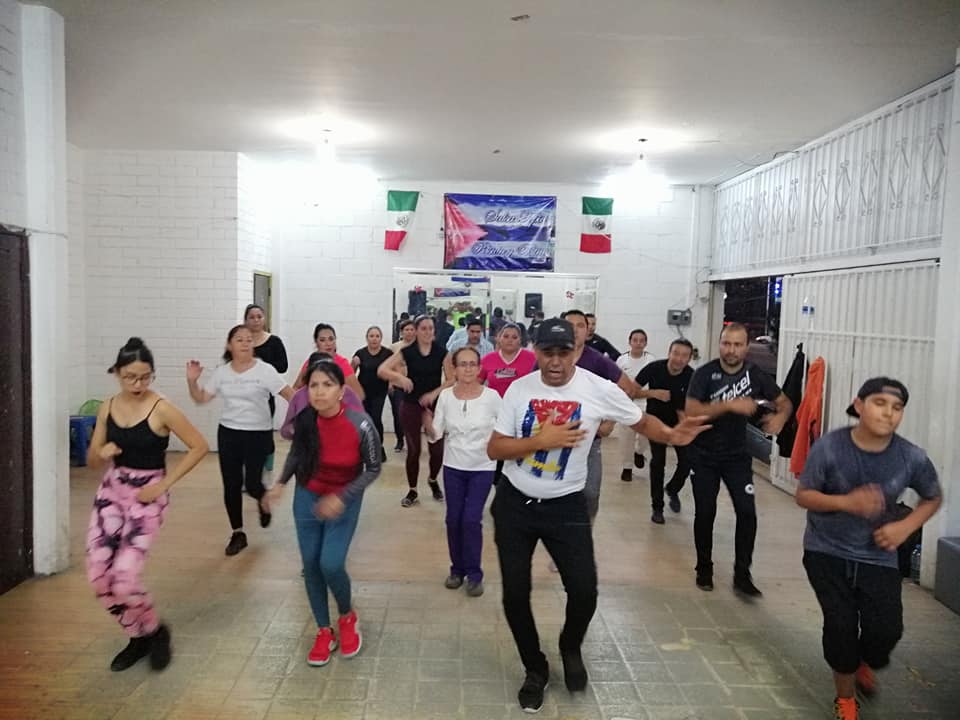
Thanks to personal motivation and the support of his students, he created and founded the Salsa Tepic Academy 6 years ago, he tells us that before founding his academy he gave dance classes at the Bar Juanes located at Rafael Buelna 86, Fray Junípero Serra, 63169 Tepic, Nayarit, Mexico; For him this was a hobby that he enjoyed very much and when he stopped working there, many of his students advised him to open a dance academy and that is how it came about.

Salsa Tepic Academy - Logo
Salsa Tepic Logo – Dance Academy


Practica de Salsa - Salsa Tepic
Estudiantes practicando pasos de baile en Salsa Tepic

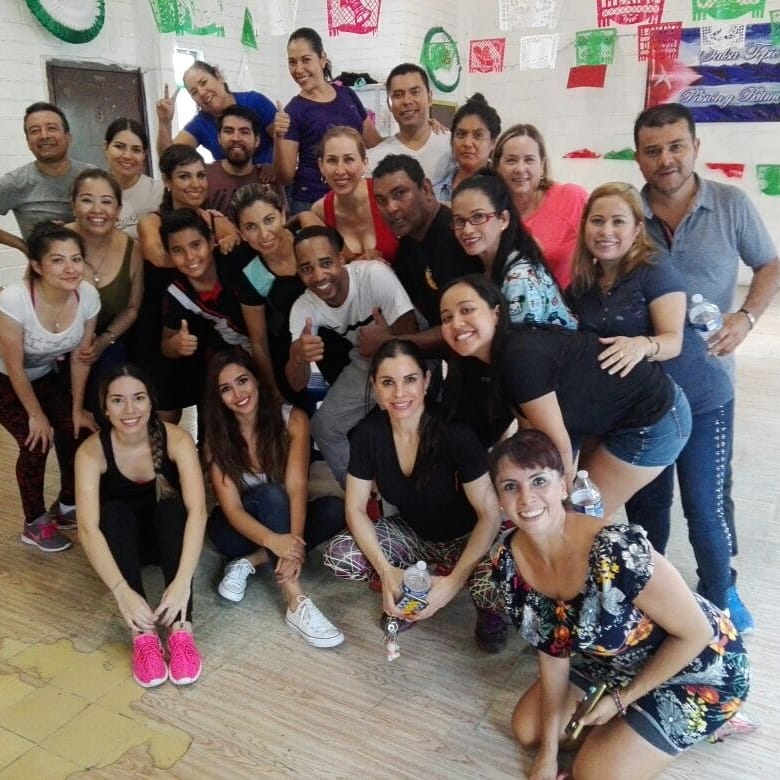
Estudiantes de la Academia Salsa Tepic
Photo of the Salsa Tepic Academy students

Son Cubano and Salsa Cubana are the genres that he likes the most, he mentions that each genre has an identification in each country and in Cuba he tells us that it is very lively and dynamic which can make different fusions such as Timba ( is the fusion of several Afro-Cuban rhythms)… giving this musical genre a lot of motivation, differentiating it from linear salsa, Salsa Neoyorquina and Salsa en Dos, but be careful, you have to know the differences between traditional Timba and Cuban Timba. and very broad cultural.Being Cuban, he tells us that music is in the blood of most Cubans, especially Afro-Caribbean music, and to top it off his parents enjoyed dancing so he spontaneously inherited this passion for dance from a very young age, and He perfected his native dance techniques in workshops with various teachers.

Rafael Reyes is also in charge of organizing the Salsa talent festivals in Nayarit, they have invited Guadalajara, Guaraguato, Puerto Bayarta, among others with new talents so that they have something more than just academic learning but a new experience through participation. and competition between the different students of each city, showing all their abilities on stage; In total, it has had 5 Salsa talent festivals, which one can find out when the next one will take place through the Salsa Tepic Facebook page.

Also the students of the Salsa Tepic academy have participated in other events such as the one that happened a few weeks ago at the Bar Tango Milonga, another event they participated was the Puerto Bayarta festival, and in other places.

The dance classes at the Salsa Tepic Academy are currently active, of course with the protection measures for the covid-19, they began to work from 7 – 10 am and from 5 to 10 pm Mexico time; There they teach Cuban Salsa, Bachata, Son Cubano, Rumba, Merengue, Cumbia, Cha Cha Cha, among other rhythms, so if you are interested in learning to dance from scratch or continue with the experience you have in order to be able to defend yourself during a social, competitions, parties and / or meetings, and at the same time that the students learn to identify the type of music that they dance respecting their respective times.

https://fb.watch/6q7Gdt89if/

And he leaves us the following message for all his readers, current and future students “Whatever happens, they dance, never stop, dance is very healthy, it takes away stress, it is motivational, it makes you more sociable and above all it is something that everyone likes when one learns … that they take off the taboo or the fear of saying I don’t like dancing because of any circumstance ”

For more information and the schedule of activities:

Andreyna Hernandez – The disabled Venezuelan Dancer.

Life is a succession of choices that one must live to understand certain meanings, many are easier, others more complex and others very difficult, and this time we have a Venezuelan dancer who can show us that everything is possible with having a strong fighting spirit and perseverance, her name is Andreyna Hernandez.


Andreyna was born on September 17, 1991 in Venezuela, studies accounting, practices swimming and is the mother of two little girls; She tells us that during her childhood she felt great enthusiasm for dance and physical activities, for this reason she became a dancer and managed to be a dance instructor at an academy, together with her boyfriend Robert Terán.

Robert Terán tells us that he and Andreyna were trained for 10 years at the Salsa & Ashé Academy and decided 6 years ago together with Andreyna to found their own academy called Fback Latino, where both are the directors and / or teachers, which is located in the vicinity of the Agua Salud station in La Cañada in Caracas, Venezuela, in June 2015, with the purpose of creating a new dance space where they can teach, “there is nothing more satisfactory than the person who learns to dance deposits all your confidence in you and achieve that goal by overcoming the penalty ”; There they teach Bachata, Salsa Casino, Kizomba and they also give a comprehensive course for children where they will have a teaching of various types of dances including ballet and contemporary dance, regardless of whether or not you have any knowledge of some of these types of dances; They mention that both they and their students have participated in competitions, although in Andreyna’s case it was mostly when she was at the Salsa & Ashé Academy on a national and international level, such as the competition in Cancun and Cuba.

FeedBack Latino
FeedBack Academy Logo

Photo of Andreyna Hernandez before 2016

Andreyna Hernandez and her boyfriend

Feedback Academy - Photo from a social

Photo of a Salsa Casino social at the Feedback Academy

During the course of time, Andreyna Hernández faced something that no one should face … on June 26, 2016 he had a terrible accident near his academy, where a tree fell on him, specifically on his legs giving a 360 ° turn to his life, affecting his profession and his day, he tells us… “That day that changed my life was because a tree fell on me, precisely where a few people and I were located. The tree falls right where I was sitting (on a ping pong table), and since everything happened very quickly I could not get my whole body off the table, my legs were trapped, being conscious, I thought I was going to lose both legs because of the strong impact I received … after this, many people tell me that God does not send tests to those who cannot overcome them ”

“This transition was not easy, since an accident that many think and wonder why it happened to me? … that even I ask myself at some point … be like that in the first photo, and that of the night in the morning life changes you is strong ”

“I would never say that this situation would be easy, because of course losing some part of the body is a bit difficult to assimilate. Adapt to doing things in a different way, to looking in the mirror and looking different. To the different looks of the people on the street …. ”

“But as my beautiful Super Coach @athletics_swim says to get toxic people out of the way, live life regardless of others. So … to live life, which is one. The disability is mental. There is no excuse. Because wanting is power. ”

https://www.salsagoogle.com/wp-content/uploads/2021/07/6968859114139176198.mp4

Despite all this tragic event, he thanks God for having a second chance, thanks to the support he received from various academies that contributed to his recovery and to be able to enjoy his life of course, with a new physical condition that is not an impediment to carry out her activities, although she admits that she does more things on a larger scale than before the accident, surprising all those around her both within her social and / or family circle and her followers in the different social networks she owns, as we could observe in her different TikTok videos that went viral, such as: a dance event dancing salsa casino and dancing during her pregnancy… something new and incredible for all who see it.

https://www.salsagoogle.com/wp-content/uploads/2021/07/6823538453590904070.mp4

Currently Andreyna Hernandez is not only the mother of a little girl who is her greatest motivation, but she is also a swimming athlete and who continues with her passion which is dance, the only thing that a person needs to have faith, love, perseverance, strength , positive mind.

He points out that “We all have our casualties from time to time, including myself. But the important thing about everything is not to stay down, the key is to get up and continue the path with your head held high with energy that life continues. Regardless of what they will say. Feeling comfortable with yourself as we are and with what we do is enough ”

Andreyna Hernandez
Andreyna Hernandez and her boyfriend

Right now in 2021, both are giving their dance classes complying with the security measures during the covid-19 pandemic with the use of face masks and other measures, which is a mutual benefit for both the instructors and the students to clear up of the confinement and to be able to release both the tension and the style that one has inside with the practice of the dance steps.

For more information:

  • Instagram: @andreynahf y @fbacklatino
  • TikTok: @andreynahf

Home

7 Signs That You Should Attend A Festival

Are You Overwhelmed By Monotony?

Do you need to get out of the routine but without spending a lot? Do you want to expand your circle of friends? Do you want to have a new love? If the answer to most of the questions has been “Yes”, you most likely have a high need for social life that you can get at a Festival.

Half-length couple dancing
Adaptability, sociability, happy thinking, and remembrance are some of the skills you get at a festival

In a festival, you elude reality for a long time, and you will perceive unequaled sensations. One of the highest Latino events held in Europe is the Tempo Latino Festival in France, which hosts 7 000 people a day for a weekend.

Now that you already know the number of people with whom you can interact at a festival, I present you the seven signs to be conscious of how to recognize if you should attend one:

  1. You find it difficult to establish social relationships, or you don’t have time to share with your friends.
  2. You need to save as much as you can. It is due to the uncertainty that prevails in these times of the fluctuating economy. (Some scientific studies certify that it is better to invest money in experiences than in material objects).
  3. If your memories are about your family and student trips.
  4. You want to have a different weekend outside the daily routine or new love.
  5. You are interested in shows and attractions that make you live an experience to the fullest and have a feeling of exceptional freedom.
  6. You long to meet people with the same musical style.
  7. You want to show your best, most comfortable, or crazy outfits.

BRIEF HISTORY

The first festivals have provenance in Egypt (4500 B.C), followed by Greece and Rome. Subsequently, the first festival as we know them today took place in Dublin (Ireland) in 1897 after the middle ages. In the twentieth century began its greatest apogee with the most famous and long-lived events of this kind: Isle of Wight in England (1968), Woodstock in the United States (1969), and Viña del Mar in Chile since 1960.

Since then, the number of followers has increased in these festivities of several days that favor social life and that gives them skills such as adaptability, sociability, generous and joyful thinking, in addition to the remembrance that happens to occupy a fundamental place in this list.

If you are interested in experiencing this lifestyle and exercising a new way of empathizing with people with the same musical style and interests, here are two recommendations for upcoming Latin festivals to be held in Spain this fall 2021.

FESTIVALS IN SPAIN

Guaguancó Festival World-Madrid

Crowd of people with hands up
The festival will take place in the Sierra de Madrid, just 40 minutes from the city center

Ten years have marked the Guaguancó festival, which for the first time makes its stop in Madrid. This year it will have a lineup of high-level artists, workshops, events, Cuban music concerts, and activities.

The El Escorial resort campsite will be the place to celebrate this Afro-Caribbean weekend party.

El Escorial is a complex with large outdoor spaces for holding shows, concerts, and some workshops. Its covered spaces have more than 400 square meters, and all this under strict cleaning and disinfection protocols.

Date: Thursday, September 9th – Sunday, September 12th

Venue: Escorial Resort Natura. Carretera M-600, Km 3,5, 28280 El Escorial, Madrid, Spain

Barcelona Temptation Festival 2021

Woman dressed in red dancing with her partner
This festival has been successful with people from the USA, Canada, Russia, China, and Japan

This festival in the fourth edition will immerse you in the Latin rhythms of Bachata, Kizomba, and Urbankiz for a week. More than 11 artists on stage, workshops, social dances in the pool area and gardens with excellent DJs as well as grandiose masterclasses will be the programming of the Barcelona Temptation Festival 2021 from September 14th to Monday 20th at the Evenia Olympic Park hotel located in Gerona (Spain).

Venue: Evenia Olympic Park hotel. Building Park Carrer Sra. Del Rossell, S / N, 17310 Lloret de Mar, Gerona, Spain

SalsaGoogle.com is International Salsa Magazine


Home

  • « Go to Previous Page
  • Page 1
  • Interim pages omitted …
  • Page 54
  • Page 55
  • Page 56
  • Page 57
  • Page 58
  • Interim pages omitted …
  • Page 66
  • Go to Next Page »

International Salsa Magazine (ISM) is a monthly publication about Salsa activities around the world, that has been publishing since 2007. It is a world network of volunteers coordinated by ISM Magazine. We are working to strengthen all the events by working together.