• Skip to primary navigation
  • Skip to main content

International Salsa Magazine

  • HOME
  • Previous editions
    • 2026
      • ISM / May 2026
      • ISM / April 2026
      • ISM / March 2026
      • ISM / February 2026
      • ISM / January 2026
    • 2025
      • ISM / December 2025
      • ISM / November 2025
      • ISM / October 2025
      • ISM / September 2025
      • ISM / August 2025
      • ISM / July 2025
      • ISM / June 2025
      • ISM / May2025
      • ISM / April 2025
      • ISM / March 2025
      • ISM / February 2025
      • ISM / January 2025
    • 2024
      • ISM / December 2024
      • ISM / November 2024
      • ISM / October 2024
      • ISM / September 2024
      • ISM / August 2024
      • ISM / July 2024
      • ISM / June 2024
      • ISM / May 2024
      • ISM / April 2024
      • ISM / March 2024
      • ISM / February 2024
      • ISM / January 2024
    • 2023
      • ISM / December 2023
      • ISM / November 2023
      • ISM / October 2023
      • ISM – September 2023
      • ISM – August 2023
      • ISM July 2023
      • ISM Edition June 2023
      • ISM – May 2023
      • ISM April 2023
      • ISM March 2023
      • ISM February 2023
      • ISM January 2023
    • 2022
      • ISM December 2022
      • ISM November 2022
      • ISM October 2022
      • ISM September 2022
      • ISM August 2022
      • ISM July 2022
      • ISM June 2022
      • ISM May 2022
      • ISM February 2022
      • ISM January 2022
    • 2021
      • ISM December 2021
      • ISM November 2021
      • ISM October – 2021
      • ISM September 2021
      • ISM August 2021
      • ISM July 2021
      • ISM May 2021
      • ISM April 2021
      • ISM June 2021
      • ISM March 2021
      • ISM February 2021
      • ISM January 2021
    • 2020
      • ISM December 2020
      • ISM November 2020
      • ISM October 2020
      • ISM September 2020
      • ISM August 2020
      • ISM July 2020
      • ISM June 2020
      • ISM May 2020
      • ISM April 2020
      • ISM March 2020
      • ISM February 2020
      • ISM January 2020
    • 2019
      • ISM December 2019
      • ISM November 2019
      • ISM October 2019
      • ISM Septembre 2019
      • ISM August 2019
      • ISM July 2019
      • ISM June 2019
    • 2016
      • ISM December 2016
  • Spanish
  • Download Salsa App
    • Android
    • Apple

Search Results for: Dj

Oscar Dudamel continues to achieve dreams and presents “La Rumba Me Llama”

Legendary Venezuelan trombonist Oscar Dudamel expands his musical vision with a new single that fuses the essence of classic salsa with his unmistakable style, which is why he does not hesitate to express “La Rumba Me Llama”.

This song is part of his upcoming album “Sueño Alcanzado”, a production that will be released on May 30 and represents the culmination of years of musical research, fusing the classic salsa sound with jazz influences and the romantic tradition of boleros.
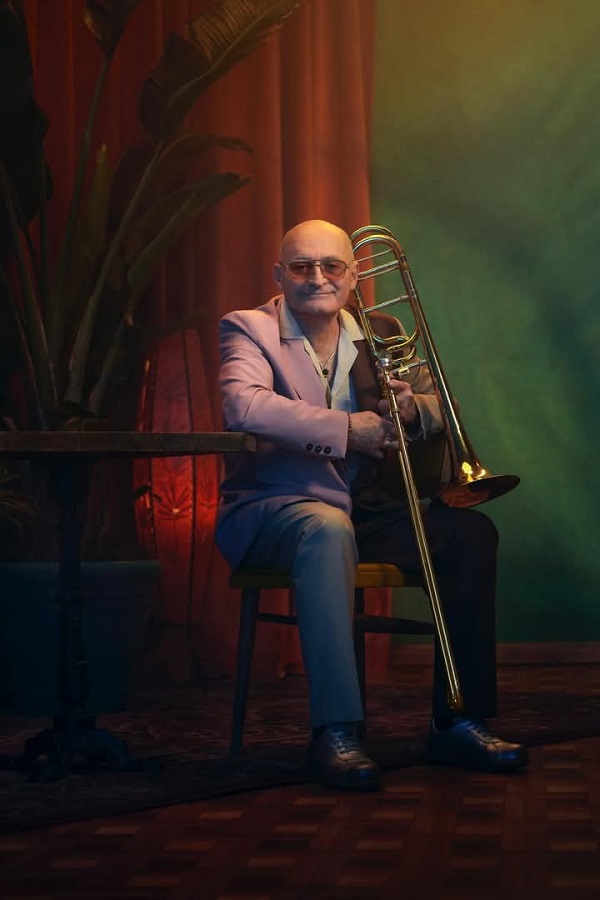
El legendario trombonista venezolano Oscar Dudamel

In “La Rumba Me Llama”, Dudamel brings his trombone to the forefront of a vibrant composition that captures the essence of the rumba as an inescapable call. With a musical structure that evokes the great salsa orchestras and an impeccable instrumentation.

The piece stands out for its meticulous arrangements, powerful brass and an irresistible cadence, faithful to the spirit with which Dudamel has approached his music. The track is an invitation to the dance floor and a testament to the rhythmic power that has defined his career.

The album Sueño Alcanzado not only takes its name from a personal concept of triumph, but also from one of his most significant pieces.

The title track was born in an intimate creative encounter in Caracas, Venezuela, with Maestro Alberto Crespo, composer Eliel Rivero and Solange Ramírez, mother of his son Gustavo Dudamel.

Oscar y Gustavo Dudamel

Dedicated to her son and with her special participation on violin, this piece encapsulates the spirit of a project that transcends the musical to become a testimony of life.

More than a nostalgic production, “Sueño Alcanzado”, of which the song “La Rumba Me Llama” is part, is the reflection of an evolution. The music that accompanied him since his childhood now takes a new form under his direction, in a creative process that has brought together talented musicians with whom he shares the same vision.

His orchestra, based in Madrid, has become the vehicle to continue taking his proposal to international stages, demonstrating that salsa is still alive in every note and every drum beat.

“La Rumba Me Llama” is now available on all digital platforms and is just a preview of ‘Sueño Alcanzado’, Oscar Dudamel’s new album, consolidating his legacy with authenticity and mastery.

Oscar Dudamel Virtuoso Musician, Trombonist and Orchestra Conductor.

Oscar Dudamel, a Venezuelan trombonist, discovered his passion for salsa as a child when he first heard “La Murga” by Willie Colón. Although his formal musical training began with Maestro Pablo Canela and later continued within El Sistema as a classical musician, that early experience left a profound mark on him, inspiring his dream of playing the trombone and solidifying his love for salsa as his ultimate passion.

Dudamel was born on January 14, 1961, in Barquisimeto, Venezuela. He grew up in a musical family where every gathering was celebrated with music, fostering his passion for the art from a young age. His parents purchased him a trombone, and he began his studies at the Yamaha Music Academy.
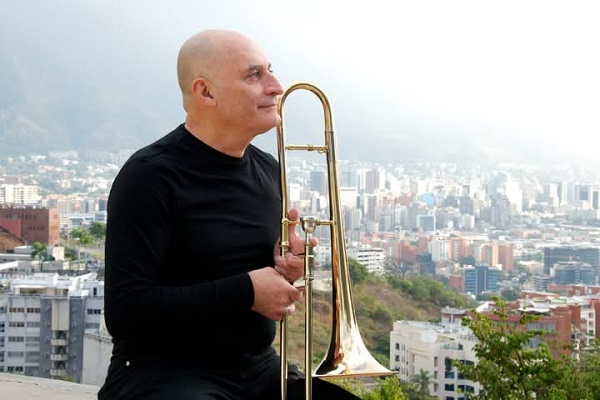
Oscar Dudamel sigue alcanzando sueños

At the age of 7, he was enrolled in a music academy under the guidance of Maestro Pablo Canela, a composer and prominent figure in the music of the Lara State region of Venezuela.It was there that he started his training with the Cuatro, the traditional Venezuelan instrument, and the guitar, which became his first instruments.

In addition to his Cuatro training, Dudamel began studying and playing various percussion instruments, further broadening his musical repertoire.

His academic training took place at the Lara State Conservatory in Barquisimeto, and at the National System of Youth and Children’s Orchestras and Choirs of Venezuela, also known as El Sistema.

During his teenage years, he became a member of the Youth Orchestra of Lara State (El Sistema Lara) and the Liceo Mario Briceño Iragorry Band, where he had the opportunity to expand his musical knowledge and explore various genres.

Dudamel entered a new phase of his life when he enrolled at the Vicente Emilio Sojo Music Conservatory to study theory and solfège, continuing his trombone studies under the guidance of his maestro, Óscar Vivenes.

Over the years, he became a member of the Lara Youth Symphony Orchestra of Lara, part of the national network of Venezuela’s El Sistema orchestras, actively participating in classical music.

However, his fascination with the Caribbean rhythms of salsa never disappeared. Thus, he combined his classical training with his passion for salsa, performing with renowned artist and sharing the stage with legends of the genre, such as Héctor Lavoe, Ismael Rivera, Ismael Miranda, Celia Cruz, Justo Betancourt, Marvin Santiago, and other great artists.

In Caracas, Venezuela, he founded his own orchestra, with which he had the opportunity to share the stage with notable figures such as Rubén Blades, Gilbert Santa Rosa, Luis Enrique, Guaco, Oscar D’ León, and many others.

Dudamel’s surname is synonymous with music. He is the father of Gustavo Dudamel, one of the most acclaimed classical music conductors in the world. Gustavo’s well-known fondness for salsa stems from his father, who recently fulfilled his lifelong dream of releasing a solo album titled Sueño Alcanzado, dedicated to his son.

Dudamel currently resides in Madrid, Spain, where he leads his ensemble, Oscar Dudamel y su Orquesta, performing salsa alongside his Venezuelan musician friends and colleagues at Café Berlín Madrid.

Oscar Dudamel y Dj, Augusto Felibertt

‍Research Sources:

Contact: Katie Baloian of Radio Notas (Compartiendo Ideas)

Alberto Crespo (Pianist and Arranger)

Dj. Augusto Felibertt

Café Berlin in Madrid

Also Read: Mariana “The Sonera of Venezuela and for the world”

The multifaceted Aymée Nuviola delivers her ‘Corazón Sonero’ to Puerto Rico, at the historic Tapia Theater in Old San Juan

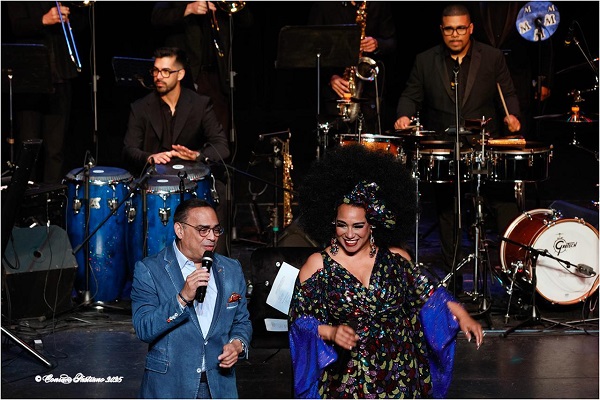
Pete Perignon’s orchestra kicked off Aymée Nuviola’s concert, entitled Corazón Sonero, with a powerful Latin jazz introduction. During the first minute, the instrumental melody settled into a salsa key, giving way to the voices of Lorna Marcano and Ricely Colón, who chanted: “Yo te invito a bailar y a gozar con Aymée, la sonera del mundo” (I invite you to dance and enjoy with Aymée, the sonera of the world). The chorus duo of Marcano and Colón prepared the theater for the triumphant entrance of the voice of La Sonera del Mundo.

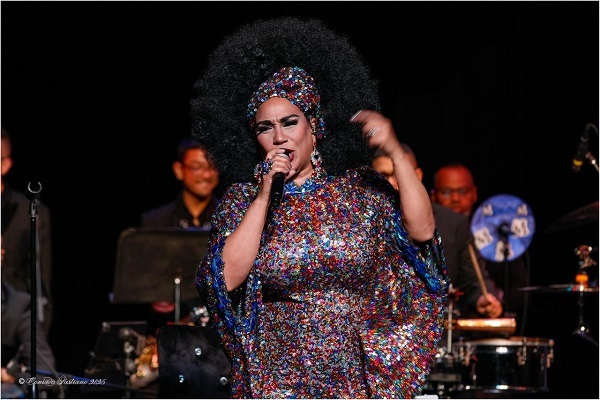
La multifacética Aymée Nuviola Imágenes Conrado Pastrano

As the curtain rose at the historic Alejandro Tapia y Rivera Theater in Old San Juan, the stage design by José “Quenepo” Ramos Vega, which revealed two transparent fabric borders held in the middle by an imposing white star, caught the attention of the audience. The red of the triangle of the Cuban flag was represented by the pendant unfurled to the left of the star, while the cloth representing the Puerto Rican flag was held on the right hand side of the same star. The inspiration of the design demonstrates that the Cuban and Puerto Rican flags are fraternal twins.

The opening lyric that resounded in the theater, which was filled to capacity, with the vocal power of Aymée Nuviola read: “A little bit of good salsa, a little bit of pure salsa, so that new people, get to know our culture”. From then on, the music obeyed Nuviola’s command, singing: “Let the clave get into your body, let the conga and the bongo move the floor”. Sure enough, three hours later we were still letting the stage delivery of the musical team continue to move the floor. Pete masterfully directed: Jean Carlos Camuñas on tumbadoras, Carlos Pagán on bongó, campana, güiro and maracas, Miguel Camilo on piano, Jorge Rivera on bass, Pedro Marcano and Víctor Ambert on trumpets, César Ayala and Léster Pérez on trombones and Saviel Cartagena on tenor and soprano saxophones.

Ten minutes into the music under the direction of the leader of the generation of the present, as timbalero Pete Perignon is known on Puerto Rican soil, Aymée greeted the audience with a heartfelt, “¡Buenas noches, Puerto Rico!” She thanked the attendees in a candid manner for joining her, while making jokes about how heavy her dress was as she elegantly adjusted the flounce and wings of her sleeves. She also commented on the design of the theater, inaugurated in 1832.

Gilberto SantaRosa y Aymée Nuviola Imágenes Conrado Pastrano

That first conversation with the audience served to connect with a: “we are survivors”, in clear reference to the COVID-19 pandemic, shortly before quoting Celia Cruz saying: “As Celia said so well: ‘Thank you Puerto Rico, for lending me your flag’. She also recognized actor Willy Denton, who played Pedro Knight when Aymée impersonated Celia Cruz in the soap opera Celia and who was among those present.

Nuviola boasted of having reached the fifth floor, as she recounted that she was going to record her version of ‘El ratón’ with Cheo Feliciano, whose unexpected death thwarted the long-awaited collaboration. However, Aymée decided to record it anyway, in order to pay tribute to Señor Sentimiento. The evening’s repertoire included: ‘Un poco de salsa’, ‘Salsa con timba’, ‘Yo sé que es mentira’, ‘El ratón’, ‘La tierra del olvido’ and ‘La gota fría’.

Many remember Aymée for her character of Celia Cruz in an acting performance that marked “a before and after” in the singer’s career. This was acknowledged by the actress, shortly before paying tribute to Celia, with her versions of ‘Cúcala’ and ‘Quimbara’, in addition to performing a medley of some of the songs with which Celia was crowned the Queen of Salsa. The medley included ‘Toro mata’ and ‘Bemba colorá’, among others.

The concert included a bohemian part during which Aymée accompanied herself on the classical piano to share with us her passion for the filin. The selected repertoire was: ‘Obsesión’, ‘Bésame mucho’, ‘Me faltabas tú’, ‘Perfidia’ and ‘Lágrimas negras’.

Before performing ‘El espacio’, of her own composition, and accompanied by Miguel Camilo on piano, Aymée said that the song was inspired by “someone else’s skeleton”, as the composer described it. Aymée emphasized that ‘El espacio’ is not dedicated to her husband. Between jokes and laughter, the sonera shared with those present her love story with Paulo Simeón, while acknowledging the presence of Fabio Díaz Vilela, who was the owner of the place where the couple met more than 14 years ago. Aymée expressed her gratitude to Fabio, for also having been a great support for the career of the producer, “from day one”.

Aymée Nuviola Imágenes Conrado Pastrano

The climax of the concert came as the sonera took off ‘El cuarto de Tula’, Gilberto Santa Rosa -who was among the attendees- went up on stage to duet with Aymée, between each soneo to describe the scope of the talent of the Cuban who gave her sonero heart to Puerto Rico. El Caballero de la Salsa was also able to tell La Sonera del Mundo the fascination that the Puerto Rican public has for her. For their part, Aymée’s soneos expressed to Gilberto the admiration she has for him for being “a great maestro”.

The repertoire of this last section included the songs ‘Fiesta’ and ‘El manisero’, which incorporated correspondences between the singer and the pianist. The coda of ‘El manisero’ coincided with the closing of the curtain, while the audience shouted “another, another, another”. The ñapa corresponded to ‘Chan chan’, a song included in the album that won Nuviola a Grammy for his production A Journey through Cuban Music. The interpretation was sprinkled with the strength brought by the trumpets of Pedro Marcano and Víctor Ambert, along with the trombones of César Javier Ayala and Léster Pérez. Chan Chan’ announced the farewell with which Aymée Nuviola’s energetic “God bless Puerto Rico” resounded as the curtain came down on her first solo concert on Puerto Rican soil. For my part, I reciprocate: “God bless Aymée Nuviola and her team (including Paulo Simeón and Luis Solís)”.

Here in the Island of Enchantment we are pleased to know that Corazón Sonero has consolidated this high-end artist, whom we already consider our own.

Bella Martinez Puerto Rico

Images: Conrado Pastrano

Also Read: Mel Martinez I come from Puerto Rico and Puerto Rico is Salsero

Dancing in Riverside

North America / USA / Chicago

Dancing in Riverside, an incredible dance academy that provides PRIVATE DANCE LESSONS as the quickest and most effective way of learning how to dance This type of learning is based in dance science and it maximizes the mind/body connection with an emphasis on the student’s personal experiences.

GROUP DANCE CLASSES consisting of a group of students that can range in numbers, from 6 students to 20 or more, and one dance instructor. In a typical group class at Dancing in Riverside, they will teach 2 to 4 patterns in whichever style that the class is learning. In addition to learning those individual patterns, also will teach you how to be able to instantly use the patterns in any social setting. We teach a variety of classes such as Ballroom, Latin, Swing, Salsa and much more.

Dancing in Riverside

The benefits of dancing

In Dancing in Riverside, you will learn all the benefits of dancing, such as:


  1. Physical Benefits

Lose Weight: A recent study that was published in Volume 8 issue #3 of the Journal of Applied Research, suggests that the combination of a proper diet and a regular dance program could be the key to shedding those extra unwanted pounds. The study was conducted by the Department of Physical Therapy at Loma Linda University in the city of Loma Linda California. The researchers combined a sensible diet with a 1 hour a day dance program, and this is what they found: 7.5 pounds lost, 3.2 inches lost from the hips and 28.6% increase in the core muscle strength.

Healthier Bones

Circular System / Stronger Muscles Brain Function


  1. Mental Benefits

According to the New England Journal of Medicine, studies have found that dancing increases cognitive activity, and subsequently decreases the risk of developing dementia. And based on a reading of these results by Stanford University, dancing frequently reduces the risk of dementia by 76% – considerably more than any other activity studied, including reading. The reason for this is that dancing requires you to make split-second, rapid-fire decisions, basically with every step you take. These kind of exercises have been shown to increase and maintain brain function in people of all ages. According to Stanford, In freestyle social dancing, both men and women are spontaneously open to the infinite possibilities of the moment, responding to one’s partner and to the music.


  1. Social Benefits

Improved social skills Connecting with community and meeting new people Providing a forum of self-expression


Dancing Benefit
Dancing Benefit

You can learn all of this and much more in Dancing in Riverside

http://www.dancinginriverside.com

Location: 1760 Chicago Ave J11/13, Riverside, CA 92507, EE. UU.


Types of Dancing

Beside you will learn different dances and type of application such as:


  • Social Dancing: Social dancing is designed to develop poise and confidence on the dance floor. Its primary objective is to strengthen the individual’s leading or following ability to the point that no matter who your partner is, you will feel physically and mentally confident. The patterns used are generally suitable for smaller floors and so is the arm styling. Advanced styling is not the primary objective of social dancing.


  • Showcase Dancing: Showcase dancing is a means of developing one’s ability by spending concentrated time on one or more dances. Preparing a showcase routine is very beneficial for developing confidence, style, pattern knowledge and smoothness. This type of dancing is very stylized and much of the time is spent on footwork, technique and the character of the dance as well as the personality of the dancer. Once the routine is complete, one feels they have gained a tremendous amount of knowledge and confidence in a relatively short period of time.


  • Competitive Dancing: Competitive dancing combines the skills of both the social dancer and the showcase performer. Like the social dancer, competitors must maneuver, maintain poise and adjust to the various conditions surrounding them while having all of the flare, style, technique and precision of an exhibition dancer.


Pete and Michelle Lakin

“Orquesta Zodiac” Its name came about due to the fact that in the early 70’s the ‘Walter Mercado’ program and the Zodiacal Signs were all the rage

In June 1971 what we know today as the Zodiac Orchestra was organized in the town of Loíza. Its name came about due to the fact that in the early 1970’s the Walter Mercado and the Zodiacal Signs program, which was broadcast on Channel 2 in Puerto Rico, was in vogue.

Tony Escobar’s uncle (the orchestra’s declamationist) suggested the name because it was an eye-catching and “new” name.

The Zodiac Orchestra was organized with members of a group called Loíza Power directed at that time by Paquito Pérez, who was 14 years old. In addition, it was nurtured with the best musicians of Loíza Sound of Javier Calcaño.

“Orquesta Zodíac” Su nombre surgió debido a que para principios de la década del '70 estaba de moda el programa de “Walter Mercado” y los Signos Zodiacales
“Orquesta Zodíac” Su nombre surgió debido a que para principios de la década del ’70 estaba de moda el programa de “Walter Mercado” y los Signos Zodiacales

The idea of recruiting these musicians was Paquito’s, since he grew up with José Luis Vizcarrondo and Tony Escobar.

Through Loiceño composers Carlos José Cirino (Tata) and Floren Ayala, the recording was achieved, as they approached Dario Gonzalez of Borinquen Record who contributed to make possible the release of the first 45 and LP. Tata’s “El Adiós” and José Feliciano’s “Las Costumbres” (1971) were part of this musical proposal that was very well received by the public.

This album became one of the best selling LPs. Other musical proposals of the group that would become hits were: “Panteón de Amor”  by Angel Laureano (1973), “Sinceridad” by Samuel Cirino, “Mi Guitarra” by Angel Laureano, among others. These great hits are frequently requested today on the Salsa Z-93 radio station.

After the initial success, many of the musicians dedicated themselves to work and to finish their studies, since they were married and were looking for security and economic stability for their respective families.

The Zodiac had the opportunity to travel to different cities in the United States such as: Boston, Connecticut, Philadelphia, New York, among others. They also traveled to other countries such as Colombia and others.

Orquesta Zodiac
Orquesta Zodiac

During these years, several orchestras were at their peak, such as: La Fania, La Selecta, Lebron Brother, La Corporación Latina, El Gran Combo, La Lupe, Chivirico Davila, Bobby Valentín, Tomy Olivencia, Ismael Miranda, Ricardo Rey, Roberto Rohena, Roberto Anglero, Justo Betancourt, among others.

In 1997 Paquito decided to retake and regroup the orchestra, and for some years he dedicated himself to reunite with the musicians and organize them again.

In 1999 he managed to restart La Orquesta Zodiac at the Z-95 festival in Mayagüez. Later they performed at the National Salsa Day dedicated to Cheo Feliciano in 1998.

These two presentations were made at the invitation of Pedro Arroyo (director of Z-93) to Paquito, and were a great success. El Gran Combo, Rubén Blades, Jimmy Zabater, La Solución, among others, also played in the tribute to Cheo.

The members of the current orchestra are young, and most of them were music students of Paquito Pérez, who worked as a music teacher for 30 years in the town of Loíza (before retiring).

José Luis Vizcarrondo, Tony Escobar and Paquito Pérez were schoolmates for years. The director of the orchestra in the beginning was José Luis, also collaborating with him were Tony Escobar (saxophonist and declamation player), Freddy Ayala (conguero) and Paquito Pérez (singer). All of them contributed ideas for the arrangements. Currently Víctor Pérez (Paquito’s brother) is the director of the wind section.

Orquesta Zodiac en el pueblo de Loíza

In 2010 the orchestra played in the National Salsa Day and in 2012 the orchestra played again in the same activity, but this time the activity was dedicated to La Orquesta Zodiac and La Corporación Latina. In which Z-93 gave them a well-deserved recognition and Paquito, José L, Tony, Tata, Laureano, and the rest of the new members of the orchestra were present.

Currently the orchestra meets periodically to practice, and are available for all kinds of activities.

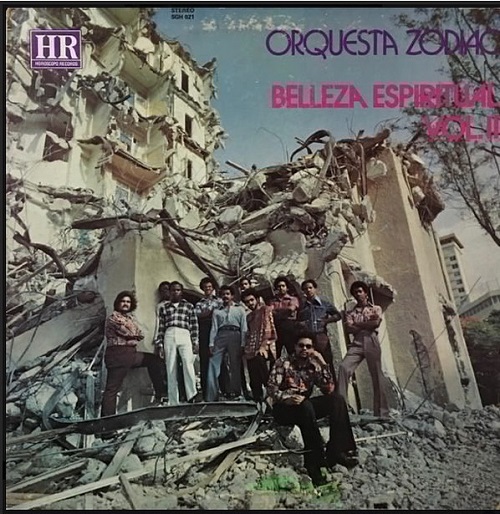
Did you know that…! In June 1971 what we know today as the “Zodiac Orchestra” was organized in the town of Loíza in Puerto Rico. Its name came about due to the fact that in the early 70’s the program “Walter Mercado” and the Zodiacal Signs, which was broadcasted on channel 2 in Puerto Rico, was in fashion. Tony Escobar’s uncle (declamationist of the orchestra) suggested the name because it was a striking and “new” name …Referring to the image of the post belongs to the second production of this Puerto Rican group entitled “Spiritual Beauty Vol. II” published in 1973 under the label “Horóscopo Récord” and directed by the founder, arranger, pianist and saxophonist Mr. José Luis Vizcarrondo. It is worth mentioning that this production includes the classics: Montuno de Oriente, Vicio de Amor and Belleza Espiritual”. Another important fact about the group is that it is still in force with musicians of the new generation, but with the same Swing and musical concept.

Segunda producción de dicha agrupación boricua titulada “Belleza Espiritual Vol. II” publicada para el año 1973

It is worth mentioning that the main responsible for making Orquesta Zodiac publicly known in Venezuela, Latin America and the Caribbean was Mr. Ali Delgado. Mr. Ali Delgado, for the year 1985 under the record label Performance Records, Delgado comments in detail that for the date of publication of this production the only popular sector (neighborhood) of Caracas where the Zodiac Orchestra was known was in Pinto Salinas.

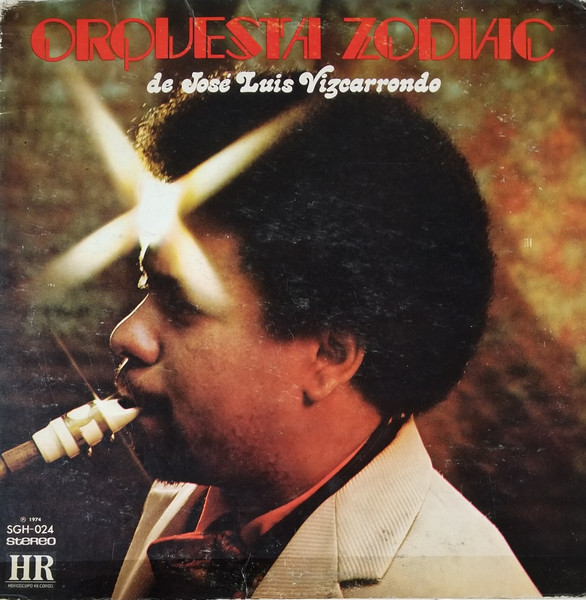
Orquesta Zodiac De José Luis Vizcarrondo

Delgado is a music producer, music lover, collector, director and founder of the projects Salsa de La Mata and Jazz con Clave in Caracas.

Dj. Augusto Felibertt y Ali Delgado

Also Read: Sessions from La Loma brings together salsa fans from all over the world in Puerto Rico

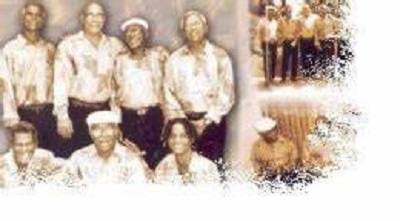
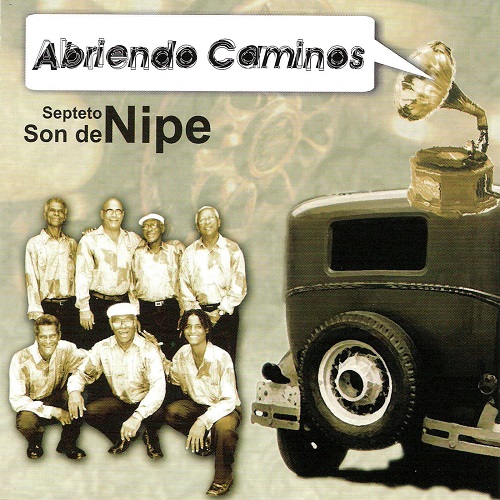
From Cuba El Septeto Son de Nipe come Abriendo Caminos (Opening Paths)

Son de Nipe. A musical septet born in the municipality of Antilla, it burst into the cultural world with an album of the In Situ label of the Colibri Record Production Company.

Antilla is the smallest municipality of the province of Holguin in Cuba and one of the smallest of Cuba, it was founded on January 21, 1925, it is famous from distant times for its beauty, legends and original aspect.

De Cuba El Septeto Son de Nipe vienen Abriendo Caminos

The group is formed by former musicians of the orchestra Brisas de Nipe of this municipality.

This project was born from the hands of Porfirio Núñez Cruz (Firo) who as Art Instructor at the Casa de Cultura Adelaida del Mármol of Antilla had experimented with other amateur groups, but not with the same results, because the members did not have the necessary musical training.

The album Abriendo Caminos includes 14 songs, 10 of which belong to Antillean authors.

“The value of Abriendo Caminos also lies in the fact that it helps Antillean composers and arrangers to open up to the recognition of their work and ways of doing things”.

From the singer and percussionist of the septet Son de Nipe, Alejandro Arencibia appears the guaracha Esa muchacha quiere bailar and the son, Honor al Guayabero; from Edalio Espinosa Alayo (Pupi), former member of the Brisas de Nipe orchestra, the son, Es caliente como el sol (It’s hot like the sun).

The songs A mi Antilla (bolero-son) and, Y no me niegues el beso (son) by José James Pinder, singer of the septet. By Oscar Fernández, former singer of the Brisas de Nipe Orchestra, the disc offers the themes Rebozo de amor (guaracha) and the son Que lástima.

Septeto Son de Nipe
Septeto Son de Nipe

From the director of the septet Son de Nipe Porfirio Núñez Cruz, Mi son tradicional.

And the guaracha Olvídate de esa nena by the Antillean composer Nemesio Palacio.

The remaining four musical numbers are; De que callada manera by Nicolás Guillén and Pablo Milanes, Culpable by Pepe Delgado, Rabo de nube by Silvio Rodríguez and Una alborada de amor by Ariel Dotres Zaldivar, these songs were arranged by Porfirio Núñez Cruz.

In the septet’s album Son de Nipe Abriendo Caminos “the guaracha, the bolero, the bolero-son and the genuine son are retaken with originality and revalued”.

The latter is due to the fact that the musical criteria followed by its director was the respect for traditional music, its deep knowledge, but imbuing it with very contemporary nuances, which results in a seal that distinguishes the septet Son de Nipe.

“We use the son, but more updated because we make innovations, harmonizing it in a more modern way, without losing its roots”.

The selection of the songs that made up the album Abriendo Caminos was in charge of the septet’s management, since the Casa Discográfica Colibrí wanted originality and the authentic exhibition of the work that has been developed with traditional music in the eastern part of the country.

Son Cubano de Nipe en Holguin

The graphic image of the disc, worked in sepia and black colors fundamentally manage to set the atmosphere that is offered to us with a vintage flavor and invites us to listen to these 14 songs full of tradition and contemporaneity.

“It will be a delight for the listener and the dancer, the good function of the tres in its solos and “entregas”, the beautiful and ingenious introductions, the exquisite mixture between text and music of the boleros, the harmonic patterns of the soneros that not for conventional reasons give up a significant finish, without neglecting, on occasions, the voices replacing wind instruments”.

The selection of the members was meticulous. Porfirio had in his favor the prestige he possessed and the convening power among his former colleagues of the Orquesta Brisas de Nipe, so much so that in the list of his group he planned to include Reyes Cástulo Urgellés Fáez, better known as Lulú as bassist and José James Pinder (Joseíto) as singer, both retired from the Orquesta Brisas de Nipe and linked to the Casa de Cultura in occasional activities.

The septet still needed to be completed with a key piece, the tres, for which the prestigious Mario Arencibia Rodríguez, one of the best tres players in Antilla, was summoned.

In the Arencibia family, musicians abound, that is why the group was completed with them: Alejandro, singer and Rafael on the tumbadora.

Alejandro and Mario had been part of an amateur group called Renovación Antillana for more than 20 years, which was very famous in its time and where a great number of aficionados were formed.

Alejandro sometimes played the tres in other groups, but in Son de Nipe he remained as a singer, he also had a work relationship that did not allow him to devote himself entirely to music; His nephew, trained at the Casa de Cultura and under the musical influence of the family, had taken over the tumbadoras, so Rafael Arencibia was the youngest of the group, he was barely 25 years old and at this young age he had already played in several amateur groups and got the Brisa de Nipe orchestra out of trouble, due to the unexpected absence of its percussionist.

Rafael Arencibia Rodríguez joined the project with enthusiasm despite the fact that the genre and style of the repertoire were not those used by the amateur groups of his contemporaries.

Iro had obtained the desired musicians, but he still had a big step to climb, his musicians were not professionals, they all had work commitments and he needed to prepare the project for the right day…(ecured).


Septeto Son De Nipe – Abriendo Caminos (2006)

Temas:

  1. Esa Muchacha Quiere Bailar (Alejandro Arencibia)
  2. Es Caliente Como El Sol (Edalio Espinosa Adayo)
  3. A Mi Antilla (José James Pinder)
  4. Rebozo De Amor (Oscar Fernández Paz)
  5. De Qué Callada Manera (N. Gillén / Pablo Milanés)
  6. Honor Al Guayabero (Alejandro Arencibia)
  7. Culpable (Pepe Delgado)
  8. Mi Son Tradicional (Porfirio Núñez Cruz)
  9. Y No Me Niegues el Beso (José James Pinder)
  10. Clodomiro (Oscar Fernández Paz)
  11. Rabo De Nube (Silvio Rodríguez)
  12. Qué Lástima (Oscar Fernández Paz)
  13. Una Alborada De Amor (Ariel Dotres Zaldívar)
  14. Olvídate De Esa Nena (Nemecio Palacio)
Septeto Son De Nipe - Abriendo Caminos (2006)
Septeto Son De Nipe – Abriendo Caminos (2006)


Research Sources:

L’Òstia Latin Jazz

Dj. Augusto Felibertt

Also Read: Virgilio Martí was an excellent rumbero and composer of the classic “Cuba Linda” where he was vocalist and percussionist in Grupo Folklorico Experimental Newyorkino

  • « Go to Previous Page
  • Page 1
  • Interim pages omitted …
  • Page 19
  • Page 20
  • Page 21
  • Page 22
  • Page 23
  • Interim pages omitted …
  • Page 74
  • Go to Next Page »

International Salsa Magazine (ISM) is a monthly publication about Salsa activities around the world, that has been publishing since 2007. It is a world network of volunteers coordinated by ISM Magazine. We are working to strengthen all the events by working together.