• Skip to primary navigation
  • Skip to main content

International Salsa Magazine

  • HOME
  • Previous editions
    • 2026
      • ISM / May 2026
      • ISM / April 2026
      • ISM / March 2026
      • ISM / February 2026
      • ISM / January 2026
    • 2025
      • ISM / December 2025
      • ISM / November 2025
      • ISM / October 2025
      • ISM / September 2025
      • ISM / August 2025
      • ISM / July 2025
      • ISM / June 2025
      • ISM / May2025
      • ISM / April 2025
      • ISM / March 2025
      • ISM / February 2025
      • ISM / January 2025
    • 2024
      • ISM / December 2024
      • ISM / November 2024
      • ISM / October 2024
      • ISM / September 2024
      • ISM / August 2024
      • ISM / July 2024
      • ISM / June 2024
      • ISM / May 2024
      • ISM / April 2024
      • ISM / March 2024
      • ISM / February 2024
      • ISM / January 2024
    • 2023
      • ISM / December 2023
      • ISM / November 2023
      • ISM / October 2023
      • ISM – September 2023
      • ISM – August 2023
      • ISM July 2023
      • ISM Edition June 2023
      • ISM – May 2023
      • ISM April 2023
      • ISM March 2023
      • ISM February 2023
      • ISM January 2023
    • 2022
      • ISM December 2022
      • ISM November 2022
      • ISM October 2022
      • ISM September 2022
      • ISM August 2022
      • ISM July 2022
      • ISM June 2022
      • ISM May 2022
      • ISM February 2022
      • ISM January 2022
    • 2021
      • ISM December 2021
      • ISM November 2021
      • ISM October – 2021
      • ISM September 2021
      • ISM August 2021
      • ISM July 2021
      • ISM May 2021
      • ISM April 2021
      • ISM June 2021
      • ISM March 2021
      • ISM February 2021
      • ISM January 2021
    • 2020
      • ISM December 2020
      • ISM November 2020
      • ISM October 2020
      • ISM September 2020
      • ISM August 2020
      • ISM July 2020
      • ISM June 2020
      • ISM May 2020
      • ISM April 2020
      • ISM March 2020
      • ISM February 2020
      • ISM January 2020
    • 2019
      • ISM December 2019
      • ISM November 2019
      • ISM October 2019
      • ISM Septembre 2019
      • ISM August 2019
      • ISM July 2019
      • ISM June 2019
    • 2016
      • ISM December 2016
  • Spanish
  • Download Salsa App
    • Android
    • Apple

Search Results for: Dj

Los Surik is a musical group formed in Victoria, Las Tunas, in eastern Cuba

Los Surik, a musical group from Las Tunas a province known for orchestras recognized both nationally and internationally has distinguished itself in the Cuban music scene for its excellence.

Los Surik is a group that was created in Victoria Las Tunas, in eastern Cuba.

This group of fifteen musicians (four of whom are vocalists) was established in Victoria, Las Tunas, in eastern Cuba.

They began their professional careers in 1982, focusing on harmonious arrangements through the use of complex structures, all in service of preserving the authenticity of the genres they perform, such as son, guaracha, merengue, song, and bolero, among others.

Los Surik used to rehearse at the home of José Luis Borrel, across from the old La Gran Señora store (at the intersection of Lucas Ortiz and Julián Santana streets). Later, they moved their instruments to Benny Revuelta’s house, on Gonzalo de Quesada street, at the corner of Lucas Ortiz.

This orchestra has stood out in the world of music in Cuba for its excellence.

Los Surik’s repertoire included, among other pieces, classic Spanish and American pop songs, and instrumentals that Benny would recreate with his saxophone. Pablín (now deceased) was an excellent singer, later a finalist on the TV show Todo el mundo canta. Paco Mesa also shone as a vocalist. Catalá was comfortable on the drums, as was Omarito on the bass. The speakers in the photo were designed by José Luis Borrell, who, in addition to being a musician, was a great electronics enthusiast.

In 1994, the group released an album titled Alma Musical (CD (Magic Music 0003-3)). Some of the songs from this album were number one in Cuba at that time.

Los Surik holds an interesting first in their career: its members ushered in the era of discography in Las Tunas, by recording the first long-play record in the territory in 1985. The album features 12 tracks, most of which were authored by group members, and it was recorded at Siboney studios in Santiago de Cuba. Due to its foundational nature, the album is an invaluable piece for the cultural heritage of Las Tunas.

Group Photo and Member

This photo was taken in the 1980s at the home of actress and promoter Blanquita Becerra (center), during the time when this once very popular and distinguished lady of Cuban lyrical theater resided in Las Tunas.

Among other members of the musical collective pictured are Arturo Gooden, Alberto Bada, Benny Revuelta, Gerardo Leyva, Raúl Cáceres, Héctor Aguilar, and Rafael Diez.

At that time, Los Surik was composed of the following musicians:

  • Julián Galbán Cruz – Bass
  • Fernando E. Quintana – Saxophone
  • Herminio García Rodríguez – Trombone
  • Gastón H. Allen Binhan – Trumpet
  • Rolando Portillo Cedeño – Trumpet
  • Arnaldo García Estrada – Keyboards
  • Eldo A. González Mantilla – Piano
  • Pablo S. Machado Palmero – Congas
  • Edilberto Machado Alba – Timbales
  • Luis Alfonso Guerra Ramírez – Bongos
  • José Eugenio Marín Tejeda – Vocals
  • Virginia Iznaga Cantero – Vocals
  • José Manuel Arnedo Rodríguez – Vocals
  • Francisco G. Mesa Marrero – Vocals

Lost Treasures and Alma Musical

Los Surik - Alma Musical (1994)
Los Surik – Alma Musical (1994)

Almost all the orchestra members were composers of the songs they performed. Sadly, many of these songs were never recorded on any album, so we cannot enjoy the high quality of the tracks they created. Only a lucky few had the chance to enjoy them live in concerts they gave outside of Cuba.

Los Surik – Alma Musical (1994)

Tracks:

  1. Dame Un Traguito (Son)
  2. Estoy Romántica (Ballad son)
  3. Amor De Película (Son montuno)
  4. El Cantante Enamorado (Son)
  5. Lo Que Cae Es Candela (Son)
  6. A Ese Le Llaman Parejero (Son montuno)
  7. La Fuerza Del Amor (Merengue)
  8. Juanita Morey (Merengue)
  9. La Luna Compartir (Ballad son)
  10. Voz Universal (Son)
  11. La Noche Junto A Ti (Bolero)

Musicians:

  • Julián Galbán Cruz (Bass)
  • Fernando E. Quintana (Saxophone)
  • Herminio García Rodríguez (Trombone)
  • Gastón H. Allen Binhan (Trumpet)
  • Rolando Portillo Cedeño (Trumpet)
  • Arnaldo García Estrada (Keyboards)
  • Eldo A. González Mantilla (Piano)
  • Pablo S. Machado Palmero (Congas)
  • Edilberto Machado Alba (Timbales)
  • Luis Alfonso Guerra Ramírez (Bongos)
  • José Eugenio Marín Tejeda (Vocals)
  • Virginia Iznaga Cantero (Vocals)
  • José Manuel Arnedo Rodríguez (Vocals)
  • Francisco G. Mesa Marrero (Vocals)

By:
L’Òstia Latin Jazz

Dj. Augusto Felibertt

EcuRed

Also Read: Septeto Nacional de Ignacio Piñero has played an important role in Cuban music for over seven decades.

Steps Dance Studio Inc.

North America / Canada /  Toronto

Steps Dance Studio

Steps offers a complete curriculum of Salsa, Bachata, Hustle and Latin Dance for all skill levels. Working from a comprehensive dance syllabus designed by Jennifer Aucoin and refined by 20 years of Salsa teaching experience, their professionally trained instructors are patient, dedicated and passionate about their craft. Want you to leave your class and the dancefloor feeling great. The program is designed to allow students to begin anytime! Start any week, even absolute beginners. And come as often as your schedule allows. Steps Dance Studio has classes every night and on weekends, and most levels are offered twice a week or more.

Dancers teachers - Steps Dance Studio Inc.
Dancers teachers – Steps Dance Studio Inc.

Located just a few minutes walk from Bloor & Wellesley subway stations. 819 Yonge St. 3rd floor. Toronto, ON M4W 2G9 SE corner of Yonge St. & Davenport, north of Bloor St.

Meet Jennifer Aucoin, Founder, Executive Director and Instructor.

A full-time salsa instructor, choreographer and event organizer. She is co-artistic director for Steps Dance Company & co-founder of the Women’s Salsa Retreat. As a trained adjudicator, Jennifer has judged competitions in Puerto Rico, Ecuador, New York, Las Vegas, Orlando, Miami, Detroit, Ottawa, Montreal and Toronto. She has also represented Canada on the judging panel for the World Salsa Championships televised on ESPN.

Jennifer Aucoin
Jennifer Aucoin

She is on the judging panel for the prestigious Global Salsa Championships at the World Salsa Summit. Jennifer was also the first instructor in Canada to be certified to teach Latin Hustle by the IHDA. Jennifer is the founder and organizer of the annual Canada Salsa & Bachata Congress, an international salsa festival that takes place in Toronto every October.

This 4-day extravaganza, now in its thirteenth year, is the largest salsa event in Canada and features nightly performances by over 60 dance companies from all over the world and daily salsa workshops given by worldrenowned instructors. The Canadian Salsa Championships, part of the Canada Salsa & Bachata Congress weekend, is the largest and most widely recognized Salsa & Bachata competition in Canada.

Classes offered in Steps Dance Studio

Salsa

  • Salsa Level 1: No previous dance (or salsa) experience required. Start this class at any time. Each class starts with an explanation and review of the basic Salsa step and the timing and rhythm of Salsa music, followed by a new beginner level turn.
  • Salsa Level 2: Geared to those who are comfortable with the basic Salsa step, basic right and left turns and Cross Body Lead. Build on Level 1 material and learn new turns and combinations, add footwork (i.e. Salsa shines) and reinforce your timing and partnering skills. Learn proper posture, frame, weight transfer and connection.
  • Salsa Level 3: Cross body lead patterns, traveling turns, back breaks, checks and different hand hold variations will be linked into fun turn pattern combinations. Start developing a flow of motion between the moves that will make you feel good and look good on the dancefloor.
  • Salsa Level 4: This course will focus on high intermediate level turns and turn pattern combinations, how to maintain balance and connection with your partner while incorporating directional changes & intricate moves, improving musicality, how to remember shines and turn patterns and use them in different combinations, tips on how to be a better leader and follower, adding styling to your dancing – in short, how to be a more complete dancer!
  • Salsa Level 5: This course focuses on taking your dancing to the next level. Advanced level turn patterns, technique and skill development. Execute double spins, multiple turns and variations, intricate choreography, advanced level syncopations and sexy styling. Adapt and combine your moves to suit the level of your partner.

Bachata

  • Bachata Level 1: Bachata is a seductive and flirtatious dance that originated in the Dominican Republic and is played in all Salsa nightclubs. Learn the basic Bachata footwork and how to lead and follow some fun and simple Bachata turns and turn pattern combinations.
  • Bachata Level 2: Learn new turns and turn pattern combinations while focusing on the correct connection, tension and movement of Bachata dancing. Learn body isolation exercises and drills to help make this dance look smooth and sexy.
  • Bachata Level 3: Learn more intricate and complex Bachata turn pattern combinations. Learn how to execute syncopated Dominican style footwork. Learn body isolation exercises and drills to help you to incorporate the sensuous Bachata body movement needed to make this dance look effortless.
  • Bachata Level 4: Learn more intricate and sexy Bachata turn patterns. Add syncopated Dominican style footwork into your partner dancing. Learn how to incorporate the sensuous Bachata body movement needed to make this dance look effortless. Refine your leading & following technique in order to build a connection with each dance partner. And much more… For more information about schedules, classes, lessons, workshops and contacts, visit
Flyer Hustle Foundations

https://www.stepsdance studio.com/

John Erban

Europe/ Suiza / Ginebra

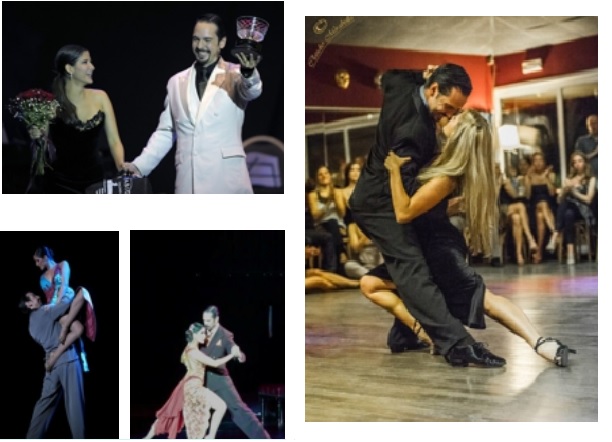
John Erban. The International sensation of the Tango Scene

At International Salsa Magazine, we believe that what makes someone special is their passion and love for what they do and bring to others. This is the case with John Erban, the Venezuelan tango dancer and instructor that we had the pleasure to meet this month.

Photo 1: John Erban - Tango
Photo 1: John Erban – Tango

John Erban is based in Geneva, Switzerland. He is preparing his next European tour in order to give Tango classes, shows, festivals and more. With an interesting beginning, this Venezuelan left an engineering career to follow a passion that was growing inside of him:

Dance. The Colombian influence in his family was very important to him to take that step into dance. His beginning was centered in a more Latin/Caribbean style, starting with salsa and Venezuelan folklore.

Photo 2: John Erban - Tango
Photo 2: John Erban – Tango

After many years of mastering these styles, giving shows and performances, John met the style that changed his life, Tango. Thanks to the Tango Caracas Company, this dancer started a career in the Tango scene and in 2006, after only three months of practicing with his partner in that moment, John went to the worldwide Tango Championship in Argentina and the couple could passed to the semi- final, something remarkable for a Venezuelan contestants couple.

Later, in 2007, they made it to the finals and in 2008 the couple took part again of the contest and won the 3rd place.

Photo 3: John Erban - Tango
Photo 3: John Erban – Tango

After that, many doors opened for John in the Tango scene around the world, making a dance tour in TokyoJapan, and different countries of Asia. This was a learning process for John in so many ways, because he had the opportunity to meet so many different cultures, languages, perspectives and, overall, dances.

He returned to Argentina in 2009, this time with the amazing dancer Clarissa Sanchez as his new dancing partner, but it was just until 2011, the year of victory, where they were tied in the first place with a Colombian couple After this, John’s career just got off the ground, working and dancing a lot in Argentina, having tours in United States and Europe.

Photo 4: John Erban - Tango
Photo 4: John Erban – Tango

Currently, John is working by himself in Switzerland, organizing a big Milonga once a month in Geneva, and being invited to jury, perform, Dj and teach in Festivals and other cultural events around the world. In November begins his next European tour, with confirmed countries as France, Spain, Italy, Switzerland and the U.K.

Some of his awards

  • Representative of Venezuela in the 8th. World Tango Summit in Bariloche, Argentina 2009.
  • Finalist of the 7th World Tango Championship held in Buenos Aires in 2009 in the category of Salon Tango.
  • 3rd place of the 1st World Tango Championship held in Medellín, Colombia in 2011 in the Tango Salon category.
  • 7th place of the 1st World Tango Championship held in Medellín, Colombia in 2011 in the category of Stage Tango.
  • 2nd place of the IX World Tango Championship held in Buenos Aires, Argentina in 2011 in the Tango Salon category.
  • 5th place of the IX World Tango Championship held in Buenos Aires, Argentina in 2011 in the Stage Tango category.
  • BEST FOREIGN COUPLE OF 2011, in the IX World Tango Championship held in Buenos Aires, Argentina in 2011

But having a lifestyle where you have to travel worldwide makes difficult being near to your family and the ones you love and that is a lesson that John has learned after many years of working hard. “When you travel like this, you have to internalize a state of separation, and it has been very hard for me, but I’m still working on that”.

Nevertheless, John is making all to have his son with him, and being close with his family as much as he can. Future goals for John are continue traveling, working and dancing. He is also working for next year in developing his own clothing line, videoclip production and online tango lessons through his new website.

Photo 5: John Erban - Tango
Photo 5: John Erban – Tango
Photo 5: John Erban - Tango
Photo 5: John Erban – Tango

Travel gives him a great opportunity to learn and see all types of languages and cultures. He also wants to create a dance academy and dance company, in order to make festivals, workshops and more.

John talks about Venezuela, its current situation, Europe, the people he’s helping and more, but the most remarkable and beautiful thing is how passionate he is talking about Tango and dance in general. When you talk with him, the desire of learn to dance starts growing, he’s just inspiring.

When we asked him what is the thing that he loves the most about Tango, he says that is the energy that you want to give and show to others, the energy that you want your partner feel, the sensations, the moves…

He knows that Tango is a very strict style with specific rules and it requires a lot of discipline, but he is innovating the style, giving it his signature and personality, and that is what he wants to develop, a new way of Tango style that could captivate anyone.

Finally he gives us tips for beginners in Tango and in dance in general. “Stay humble, always. Ego is an obstacle that every dancer has to defeat. Also you need to have discipline, learning Tango and every dance is like to learn a new language, you have to practice a lot and put all you effort to achieve your goal”. The best advice from a professional.

Photo 6: John Erban - Tango
Photo 6: John Erban – Tango

John Erban is such and unique person, with so much talent and vibrant personality. To know more about him and his work, check his page https://www.facebook.com/Johnerbantango/    www.johnerbantango.com Instagram y Twitter: @johnerbantango Email: [email protected]

Sizzling Summer Nights dancer April Connella breaks silence on Orlando Delgado and her career

A while ago, we wrote a story about Sizzling Summer Nights, which is a series of outdoor performances by long-established and emerging orchestras at the Autry Museum of the American West, Los Angeles. However, we never had the opportunity to talk to any of those involved in the event, but that has changed in the last few days, as we have had the joy of speaking with professional dancer, dance teacher and choreographer April Connella, who will give us details on her career and professional life. 

April at an event
April Connella at one of her dance events

How April became interested in dancing

April started to become interested in everything related to dancing from a young age, but the one who really introduced her in this world is Orlando Delgado, who was a salsa instructor and dancer in Los Angeles. It turns out that in this same city, someone close to Orlando saw April dancing in events by chance and told her to go to Orlando’s studio, meet him and take classes with him to reach her full potential. So she did and the connection between the two was instantaneous and, over time, they became friends and Orlando came to be someone very special in her life.

They became a dance couple, taught classes and did many events together until the untimely passing of Orlando in September 2023 due to a long battle with cancer

Sizzling Summer Nights

April was telling us that it was Orlando they really contacted to participate in Sizzling Summer Nights. One of his students in one of his dance classes, who turned out to be one of the organizers, suggested that both he and April attend these events, since the previous instructors had left, so he was looking for new ones.

Since then about eight years have passed and Sizzling Summer Nights has become one of the biggest salsa and Latin music events of the summer, largely due to the effort made by the talented duo.

Orlando and April in Sizzling Summer Nights
Orlando Delgado and April Connella at the Autry’s Sizzling Summer Nights some years ago

How Orlando’s death affected April

The dancer also confessed to us that Orlando’s loss has affected her personally and professionally, to the degree of saying that, together with him, she has lost a part of herself that feels that she will never be able to recover. Many have asked her why she does not get a new dance partner, but she finds it difficult to do that. She recognizes that there are many good dancers who could fill that spot, but finding someone she has the relationship and emotional connection she had with her previous partner is impossible. You do not get that anywhere else.

However, despite this painful loss, April knows she has to move forward in spite of everything and carry out her projects as hard as it is. In fact, one of those challenges is that April herself also happened to be sick with cancer and is in remission.

To this we must add that one of the things keeps her going is the great passion she feels for what she does and she believes that her profession is a part of her soul she cannot let die too. Not to mention that she has felt the support of the entire salsa community that knew Orlando in life and helped her to continue her work.

April and Chino Espinoza
Chino Espinoza from the group Chino Espinoza Y Los Dueños del Son and April Connella

April’s Feel Da Beat

The dance instructor explained that April’s Feel Da Beat is actually a new version of the previous dance company that was only called Feel Da Beat and was directed by Orlando. After the two meet, they not only become dance partners and best friends, but also business partners. 

Then, Orlando was planning to retire at some point due to age, so he wanted his project to be in the hands of someone he could trust and that was April, whom he taught everything he knew so he could delegate what he had built so far to her. When Delgado’s health was already very frail, both he and April discussed the matter of the company and concluded that the best thing to do was to transfer it to her and change its name to April’s Feel Da Beat. After that, it was up to her to handle the project alone and adjust to this new stage without Orlando by her side.

She does not have a big team working for her right now, but she does work with many artists and dancers for the various events in which she performs.

Orlando and his friendship with April
Orlando and April had a strong friendship until the day of his death

Read also: Los Boleros Latin Band Bandleader Rudy Furlan kindly talked to us

Eddie Montalvo Iron Hands: “I’m in love with Venezuela”

We felt an unforgivable duty to publish this interview with Eddie Montalvo “Iron Hands,” as it is Swing Latino update on the biography of a musician who is more than just a friend, a godfather; he’s family, the kind that gives you friendship, that fills you with conflicting feelings and leads you to relive wonderful and unforgettable moments.

Giogerling Mendez y Eddie Montalvo

He is a living legend of our Afro-Caribbean music.

We hadn’t seen each other for many years, so I wanted to share the time with him before he left Venezuela (he was playing on Saturday, so we met on Friday and shared some time with longtime friends starting at noon), before the show. The next day he would say goodbye to Venezuelan soil. This interview will be published in two installments, and here is the first one.

– How long has it been since Eddie Montalvo last came to Venezuela?

– Let me put it this way. The last time I came to Venezuela was with Rubén Blades and Son del Solar. I’ll call it Seis, because Son was with another keyboardist, Arturo Ortiz, Robby Ameen on drums, and two trombones, Reinaldo (Jorge) and Jimmy Bosch. That was the last time, many years ago.

I’ve always loved Venezuela, it’s the honest truth. I’m in love with Venezuela, no matter what happens. I’m always grateful for it. I’ve always had many friends here.

The School of the Street

– What was your first experience in music? Why conga?

– Well, when I was very young, my parents and I would go every weekend to a party at an aunt’s house. At that time, my goddaughter, I’m not going to lie to you. The gentlemen were always well-dressed, with ties, the ladies with their eyebrows done, their hair combed, a real formality despite their humility.

Everyone was dancing at that party, and Eddie Montalvo was banging on the tables until he could say no more. That’s how they got me two metal cookie tins, and it became my first instrument.

When I was five, I asked my parents if it was possible for Santa Claus to bring me a bongo. My parents were poor, and yet, on December 25th, a bongo appeared under the Christmas tree.

A bongo that didn’t have a key, a bongo that you had to put a fire under to get the sound out.

At ten, without lying to you, I asked them if it was possible for them to buy me a conga, and my parents bought me a conga that cost 50 US dollars.

As I grew older, I started crossing the street where there was always a party of rumba players. I went down with the conga, and they asked me, “Do you know how to play?” And I said, “No,” then they said, “Well, if you don’t know how to play, you can’t sit here with us and rumba.”

I went home frustrated with the conga line because they wouldn’t let me sit in and play at the party.

Héctor «Bucky» Andrade

It just so happened that there was a conga player who played with Héctor Lavoe, with Willie Colón, on an album called The Hustler.

His name was Héctor Andrade and he had a nickname: Bucky. He saw me every day when I came down with the conga line, and it seems he felt sorry for me and said, “Come here.” I said, “Are you talking to me?” He said, “Yes, yourself, come here!” Bucky said, “I see you here every day, and I feel sorry for you because I know you love the conga line, because you spend hours sitting on the bench watching us; I’m going to teach you the first tumbao like it’s played in rumba, street rumba.”

Because remember, my first music school was the street. My parents didn’t have the money. After Bucky taught me, he said, “Go home and practice.

When you think you’re ready, come, but I warn you, there will be about five rumberos playing the quinto. If you get tired, you’ll never play here again.”

I went to my room and practiced. When I felt God tell me to come down, that you’re ready, I went down.

Bucky looked at me and said, “How are you feeling?” And I sat down to play the tumba’o. About seven or eight rumberos played by, and I was still playing the tumba’o, tired, but I couldn’t stop playing, and that was my first experience. I learned a lot by watching the rumberos on the street. That way, I prepared myself and was able to sit with all of them, play the first part, play the second part, play the third part, and then quintate. That way, I played the grade they wanted and went down every day to sit with them.

Formal Studies

As I grew older, in my last year of school, I saw they had a Latin orchestra at a music school, but honestly, all they played was a Latin segment, but it was all American music.

The teacher was Italian. I knocked on the door of that school, and the teacher in charge looked at me and said, “Can I help you?” And I said, “I’m here because I’d like to know if it’s possible for you to let me play conga here with the Latin group.” He said, “Oh, no, no, no, look, son, I have tons of conga players here. Everyone comes here because they want to play conga. Excuse me, come see me next year.” And so I wasted all that time frustrated because I wanted to play.

Time came and school started in September. I tried again, and the teacher refused again. So I said, “No, no, no, no, wait, you promised me I could play conga here.” And seeing my insistence, the teacher asked me, “Do you really play conga?” “I think so.” Then he said, “Bring me a conga that’s in that room. I want it to play me a merengue, a cha-cha-cha, and a mambo.” I played it for him, and he said, “Wow, you have good hands, you’re starting with the Latin orchestra here,” and that’s how I graduated from hig  h school at 17.

From School to Work

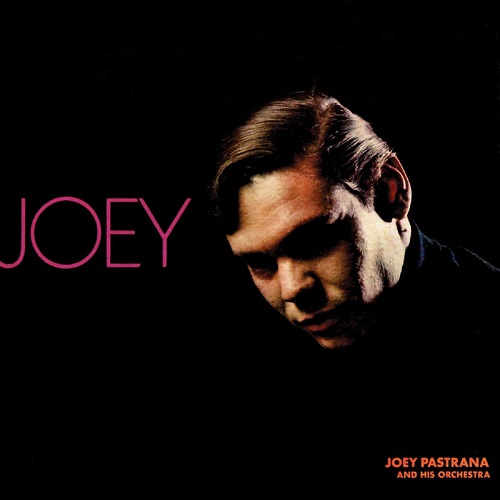
At that time, I went to work at the stock exchange in New York, and I didn’t like it, so I left. One day, I went into a New York club, and Joey Pastrana’s orchestra was playing.

It just so happened that someone said to Joey Pastrana, “Look, you see that skinny kid over there on the corner, that kid plays conga,” and he said to the kid, “Tell him to come over here.”

The kid came up to me and said, “Look, Joey wants you to go over there on stage.” I replied, “I don’t know Joey. And you’re telling me Joey wants me to go over there when I don’t even know him?” “Well, look, go, he’s calling you.”

Joe Psatrana
Joe Psatrana

I went over there, and he said, “Look, and Joey said, “Do you want to play a number with me?” And I said, “I don’t know who told you I play conga. I don’t play conga.” And he answers, “But the kids here are saying you play conga.”

And because of his insistence, I played a number. When I played the number, he said, “Do you want to play here? Because my brother, Willie Pastrana, is leaving the group.”

And when I came to see you, at 17, I was playing with Joey Pastrana. So, from then on, I went with Tony Pabón in the protest. I was with Ernie Agosto and La Conspiración, with Adalberto Santiago, Los Kimbos, even with La Diferente for a little while, just for a while; with the great Héctor Lavoe, with Pacheco, with Pete el Conde, very quickly. Then with the Estrellas Fania, and those from Puerto Rico.

– You replaced Ray Barreto in Fania, hence the nickname Manos de Hierro? Tell us a little about your experience with Fania.

– Oh, because I always had heavy hands when I played. And they called me that name: Ray Barretto, “Hard Hands,” and I, “Iron Hands.” They were the musicians, and your dad (Ángel Méndez) gave me that nickname. I’ll never forget this. I forgot to mention someone, Willie Colón, who I also played with and recorded the album “Siembra.”

Ray Barretto’s Replacement

I can’t explain how I was able to make my career in music, because, blissfully, I was in the audience at Madison Square Garden watching Fania, and I never in my life thought I’d play with the Fania Stars!

Regarding the question about whether I reviewed Barretto: before joining the Fania stars, there was Johnny Rodriguez, El Dandy.

He left, and I joined. So when I saw Barreto wanting to return, I said these words to Ray Barreto: “With all due respect to you, because you’re an icon I’ve always respected, this chair, I was just warming it up, this chair is yours.” And he said to me in English: “Eddie, we’re going to split the show. You play half the show, and I’ll play half.” And I said to him, “Ray, this seat is yours. I respect it,” and he said, “No, half and half.”

Ray Barretto
Ray Barretto

We always had a tremendous relationship. I remember when my father passed away, and Ray came and stayed with me at the funeral home for two hours. I’ll never forget it.

And I’m telling you from the bottom of my heart, one of the things I hold dear is that when Ray got sick, honestly, I wanted to go see him, and they always told me, Eddie, you can’t go because they have him in intensive care and they won’t let you in.

I was always calling mutual friends who knew if he was coming out of intensive care or not. They would tell me, “Eddie, no, hey man, don’t come because you’ll waste your time.” That’s how I couldn’t see him in his final days. It was only when he passed away that I went to the funeral home.

The same thing with your father, you know, your father for me is the friendship, and I’m not saying this because you’re interviewing me, but the relationship, the respect I have for your father, and you know, I thank your father because he was the one who made us, and I say this, of course, God made us, and with all due respect, but when it comes to the entertainment side of things, your father was the magazine that everyone bought.

When I started out in 1977, coming to Venezuela, I met your father, Ángel Méndez, Swing Latino, with Fernando, the photographer, and the truth is that the friendship was never lost.

Eddie Montalvo y Ángel Méndez

We’ll be releasing the second part of this interview soon.

Pónle Saborrrr!

By:

cafeatlantico

Swing Latino

Giogerling Mendez

Dj. Augusto Felibertt

Also Read: The legacy of Leopoldo Pineda, the ambassador of the trombone in La Maquinaria Fania All Stars

  • « Go to Previous Page
  • Page 1
  • Interim pages omitted …
  • Page 17
  • Page 18
  • Page 19
  • Page 20
  • Page 21
  • Interim pages omitted …
  • Page 74
  • Go to Next Page »

International Salsa Magazine (ISM) is a monthly publication about Salsa activities around the world, that has been publishing since 2007. It is a world network of volunteers coordinated by ISM Magazine. We are working to strengthen all the events by working together.