• Skip to primary navigation
  • Skip to main content

International Salsa Magazine

  • HOME
  • Previous editions
    • 2026
      • ISM / May 2026
      • ISM / April 2026
      • ISM / March 2026
      • ISM / February 2026
      • ISM / January 2026
    • 2025
      • ISM / December 2025
      • ISM / November 2025
      • ISM / October 2025
      • ISM / September 2025
      • ISM / August 2025
      • ISM / July 2025
      • ISM / June 2025
      • ISM / May2025
      • ISM / April 2025
      • ISM / March 2025
      • ISM / February 2025
      • ISM / January 2025
    • 2024
      • ISM / December 2024
      • ISM / November 2024
      • ISM / October 2024
      • ISM / September 2024
      • ISM / August 2024
      • ISM / July 2024
      • ISM / June 2024
      • ISM / May 2024
      • ISM / April 2024
      • ISM / March 2024
      • ISM / February 2024
      • ISM / January 2024
    • 2023
      • ISM / December 2023
      • ISM / November 2023
      • ISM / October 2023
      • ISM – September 2023
      • ISM – August 2023
      • ISM July 2023
      • ISM Edition June 2023
      • ISM – May 2023
      • ISM April 2023
      • ISM March 2023
      • ISM February 2023
      • ISM January 2023
    • 2022
      • ISM December 2022
      • ISM November 2022
      • ISM October 2022
      • ISM September 2022
      • ISM August 2022
      • ISM July 2022
      • ISM June 2022
      • ISM May 2022
      • ISM February 2022
      • ISM January 2022
    • 2021
      • ISM December 2021
      • ISM November 2021
      • ISM October – 2021
      • ISM September 2021
      • ISM August 2021
      • ISM July 2021
      • ISM May 2021
      • ISM April 2021
      • ISM June 2021
      • ISM March 2021
      • ISM February 2021
      • ISM January 2021
    • 2020
      • ISM December 2020
      • ISM November 2020
      • ISM October 2020
      • ISM September 2020
      • ISM August 2020
      • ISM July 2020
      • ISM June 2020
      • ISM May 2020
      • ISM April 2020
      • ISM March 2020
      • ISM February 2020
      • ISM January 2020
    • 2019
      • ISM December 2019
      • ISM November 2019
      • ISM October 2019
      • ISM Septembre 2019
      • ISM August 2019
      • ISM July 2019
      • ISM June 2019
    • 2016
      • ISM December 2016
  • Spanish
  • Download Salsa App
    • Android
    • Apple

Search Results for: El+Gran+Combo+de+Puerto+Rico

“Orquesta Zodiac” Its name came about due to the fact that in the early 70’s the ‘Walter Mercado’ program and the Zodiacal Signs were all the rage

In June 1971 what we know today as the Zodiac Orchestra was organized in the town of Loíza. Its name came about due to the fact that in the early 1970’s the Walter Mercado and the Zodiacal Signs program, which was broadcast on Channel 2 in Puerto Rico, was in vogue.

Tony Escobar’s uncle (the orchestra’s declamationist) suggested the name because it was an eye-catching and “new” name.

The Zodiac Orchestra was organized with members of a group called Loíza Power directed at that time by Paquito Pérez, who was 14 years old. In addition, it was nurtured with the best musicians of Loíza Sound of Javier Calcaño.

“Orquesta Zodíac” Su nombre surgió debido a que para principios de la década del '70 estaba de moda el programa de “Walter Mercado” y los Signos Zodiacales
“Orquesta Zodíac” Su nombre surgió debido a que para principios de la década del ’70 estaba de moda el programa de “Walter Mercado” y los Signos Zodiacales

The idea of recruiting these musicians was Paquito’s, since he grew up with José Luis Vizcarrondo and Tony Escobar.

Through Loiceño composers Carlos José Cirino (Tata) and Floren Ayala, the recording was achieved, as they approached Dario Gonzalez of Borinquen Record who contributed to make possible the release of the first 45 and LP. Tata’s “El Adiós” and José Feliciano’s “Las Costumbres” (1971) were part of this musical proposal that was very well received by the public.

This album became one of the best selling LPs. Other musical proposals of the group that would become hits were: “Panteón de Amor”  by Angel Laureano (1973), “Sinceridad” by Samuel Cirino, “Mi Guitarra” by Angel Laureano, among others. These great hits are frequently requested today on the Salsa Z-93 radio station.

After the initial success, many of the musicians dedicated themselves to work and to finish their studies, since they were married and were looking for security and economic stability for their respective families.

The Zodiac had the opportunity to travel to different cities in the United States such as: Boston, Connecticut, Philadelphia, New York, among others. They also traveled to other countries such as Colombia and others.

Orquesta Zodiac
Orquesta Zodiac

During these years, several orchestras were at their peak, such as: La Fania, La Selecta, Lebron Brother, La Corporación Latina, El Gran Combo, La Lupe, Chivirico Davila, Bobby Valentín, Tomy Olivencia, Ismael Miranda, Ricardo Rey, Roberto Rohena, Roberto Anglero, Justo Betancourt, among others.

In 1997 Paquito decided to retake and regroup the orchestra, and for some years he dedicated himself to reunite with the musicians and organize them again.

In 1999 he managed to restart La Orquesta Zodiac at the Z-95 festival in Mayagüez. Later they performed at the National Salsa Day dedicated to Cheo Feliciano in 1998.

These two presentations were made at the invitation of Pedro Arroyo (director of Z-93) to Paquito, and were a great success. El Gran Combo, Rubén Blades, Jimmy Zabater, La Solución, among others, also played in the tribute to Cheo.

The members of the current orchestra are young, and most of them were music students of Paquito Pérez, who worked as a music teacher for 30 years in the town of Loíza (before retiring).

José Luis Vizcarrondo, Tony Escobar and Paquito Pérez were schoolmates for years. The director of the orchestra in the beginning was José Luis, also collaborating with him were Tony Escobar (saxophonist and declamation player), Freddy Ayala (conguero) and Paquito Pérez (singer). All of them contributed ideas for the arrangements. Currently Víctor Pérez (Paquito’s brother) is the director of the wind section.

Orquesta Zodiac en el pueblo de Loíza

In 2010 the orchestra played in the National Salsa Day and in 2012 the orchestra played again in the same activity, but this time the activity was dedicated to La Orquesta Zodiac and La Corporación Latina. In which Z-93 gave them a well-deserved recognition and Paquito, José L, Tony, Tata, Laureano, and the rest of the new members of the orchestra were present.

Currently the orchestra meets periodically to practice, and are available for all kinds of activities.

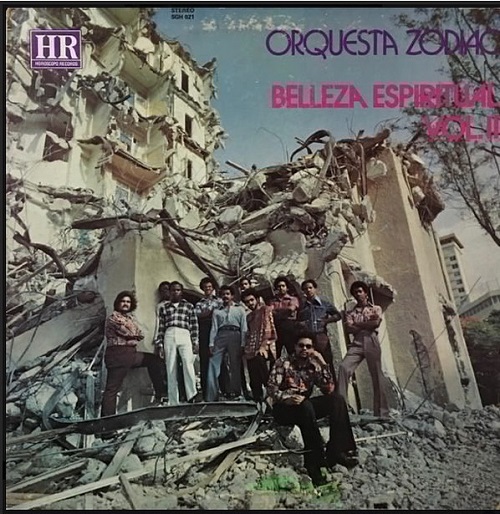
Did you know that…! In June 1971 what we know today as the “Zodiac Orchestra” was organized in the town of Loíza in Puerto Rico. Its name came about due to the fact that in the early 70’s the program “Walter Mercado” and the Zodiacal Signs, which was broadcasted on channel 2 in Puerto Rico, was in fashion. Tony Escobar’s uncle (declamationist of the orchestra) suggested the name because it was a striking and “new” name …Referring to the image of the post belongs to the second production of this Puerto Rican group entitled “Spiritual Beauty Vol. II” published in 1973 under the label “Horóscopo Récord” and directed by the founder, arranger, pianist and saxophonist Mr. José Luis Vizcarrondo. It is worth mentioning that this production includes the classics: Montuno de Oriente, Vicio de Amor and Belleza Espiritual”. Another important fact about the group is that it is still in force with musicians of the new generation, but with the same Swing and musical concept.

Segunda producción de dicha agrupación boricua titulada “Belleza Espiritual Vol. II” publicada para el año 1973

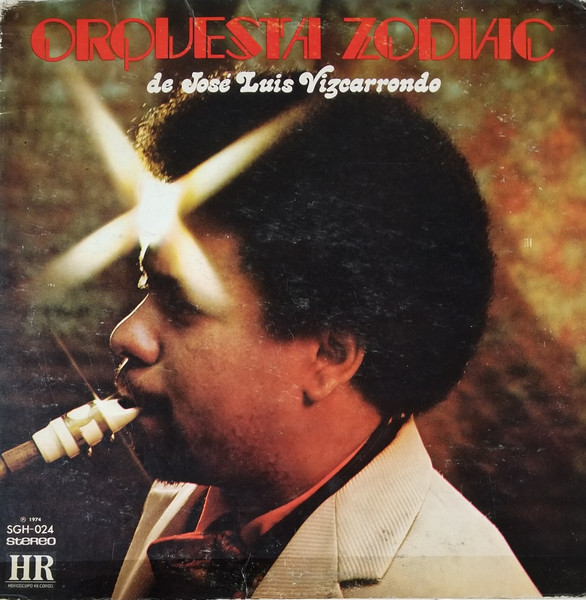
It is worth mentioning that the main responsible for making Orquesta Zodiac publicly known in Venezuela, Latin America and the Caribbean was Mr. Ali Delgado. Mr. Ali Delgado, for the year 1985 under the record label Performance Records, Delgado comments in detail that for the date of publication of this production the only popular sector (neighborhood) of Caracas where the Zodiac Orchestra was known was in Pinto Salinas.

Orquesta Zodiac De José Luis Vizcarrondo

Delgado is a music producer, music lover, collector, director and founder of the projects Salsa de La Mata and Jazz con Clave in Caracas.

Dj. Augusto Felibertt y Ali Delgado

Also Read: Sessions from La Loma brings together salsa fans from all over the world in Puerto Rico

Saxophonist and flutist Dave Victorino talks to International Salsa Magazine

Dave Victorino is a saxophonist and flutist who plays various Latin genres such as salsa, Latin jazz and swing in the city of Los Angeles, California. The American musician has been kind enough to talk exclusively with International Salsa Magazine about various topics, including his beginnings, current career and existing projects. We hope that our esteemed readers will like the details of this conversation. 

Saxophonist Dave
This is saxophonist and flutist Dave Victorino

Young Dave’s beginnings in music

Dave recalls that his taste in music led one of his cousins to give him a flute so that he could start playing an instrument and see what happened. However, over time, the young man preferred the saxophone, which he found he liked much more at the time. He reckons that his interest in music began when he was just a 12 or 13-yeard-old.

His interest in the saxophone began with a friend of his mother’s who was a teacher of that instrument, so he was the first to teach him how to play it properly and, even after so many years gone by, he continues to remember everything he learned with him. 

Education

Dave graduated with a degree in music education from Cal State Los Angeles and assured us that one of his greatest mentors there was saxophonist Barney Martinez, a very important figure in Latin jazz at the time. This was a time of great learning for what was to come professionally, and that knowledge continues to help him a lot. 

He also studied with other important music teachers and professors who complemented his musical training almost perfectly. 

What has Dave learned from his greatest collaborations?

Throughout his career, Dave has collaborated with groups such as The Henry Mora Big Band, Temptations, Al Viola, Fred Ramirez, Little Anthony and The Imperials and many others. Obviously, all these personalities have had something important to teach the musician when sharing the stage with him.

Dave refers to Henry Mora as one of his greatest mentors in this whole process, as he had much more experience than the artist, so he had a lot to learn and imitate from him. 

Each professional experience is one more step on the road to excellence that Dave and any artist looks for in his work, which is achieved through practice and spending time with more experienced teachers.

Dave playing
Dave Victorino playing the saxophone live

Great inspirations

When we wanted to know Dave’s greatest inspirations, he could not help but first mention the group El Chicano, with which he played in the early 1980s. One of its founding members and singer Bobby Espinosa, who showed him some recordings of the Fania All Stars and Johnny Pacheco while playing one of the best solos Dave had ever seen. In fact, the artist considers Pacheco his favorite flutist from the very moment he first heard him. 

He also commented that he really likes the way Stan Getz, a Californian saxophonist whose main genres were jazz and pop, played.

How his love for Latin music was born

Dave’s first contact with Latin music was with the group El Chicano, but then came other groups that playing genres that caught his attention.

For several years in the 1980’s and 1990’s, he played in a park three times a week and, on those same days, a DJ would play music by Johnny Pacheco himself, El Gran Combo de Puerto Rico and other salsa groups. He became so fascinated with everything he heard that, little by little, he began to transform his repertoire into one that also included salsa and Latin jazz.

Initially, he only cared about playing this music without understanding the lyrics, but then he began studying and learning a little Spanish to get a better performance in his work. However, he assures that this detail has never posed a problem or a limitation to get good performances in Latin music.

Dave and Barbara
Dave Victorino playing with singer Barbara Reed

Music Classes

Another interesting thing about Dave is teaching. He currently teaches saxophone, flute, clarinet and piano to a good number of students, who have taught him the virtue of patience and determination to always learn something new.

His students are of different ages and he teaches various levels.

Dave and Anthony
Dave Victorino playing with saxophonist Anthony Gil

También lee: Eddie Muñíz continues to head Swing Sabroso

Great Christmas salsa songs and their stories

Christmas is a time of joy where one of the most important elements is music, so we believe this is the best opportunity to feature some of the best Christmas salsa songs that we can remember. Here are the most cheerful songs in Latin music to listen to during the most beautiful time of the year.

Aires de Navidad by Héctor Lavoe and Willie Colón

”Aires de Navidad” is a great song which is part of the Christmas album ”Asalto Navideño Vol. I” from 1971. In the same year, Lavoe and Colón were already making preparations to record an album entirely dedicated to the festivities, indeed, they already had some songs recorded, but they knew that there were still details to finish. 

Then, Héctor asked musician Roberto García to join the project that was underway, as they needed a guitarist to accompany them. Garcia accepted the proposal almost immediately and got excited about the project that he even proposed Yomo Toro to join them, to which Hector and Willie agreed with no problems.

The day they agreed to record the material, Toro came in first and began playing a Puerto Rican cuatro when he was scheduled to play the electric guitar. However, Johnny Pacheco, upon hearing the sounds, liked the arrangement and approved it without question. 

That is how the four artists set out and recorded what would soon become one of the greatest Christmas hymns in recent times, and it will surely be in thousands of homes around the world this month.

Aires de Navidad
One of the photos taken during the recording of ”Aires de Navidad”

La Fiesta de Pilito by El Gran Combo de Puerto Rico

”La Fiesta de Pilito” is included in the album ”Nuestra Música” by El Gran Combo de Puerto Rico, which was recorded in 1985 as a tribute to the most beautiful and endearing of the Island of Enchantment during the Christmas holidays. Back then, any musical work created by El Gran Combo always became a resounding success once it was released and its members were sure that this would be no exception.  

It is then when the composer of one of the main songs of ”Nuestra Música” came on the scene, and we are talking about Luis ”Pilito” Cruz, who would become part of the internationally acclaimed salsa group that same year.

What is known in the first instance about the song is that it did not have a specific name, so it was baptized as ”La Fiesta de Pilito” honoring the composer of its first two verses. Subsequently, the piece was completed with pregones and soneos created by the rest of the orchestra members.

Additionally, they received the support and collaboration from ‘‘El Caballero de La Salsa” Gilberto Santa Rosa, who served as a guest artist for the legendary recording.

Nuestra música at Christmas
Cover of the Christmas album ”Nuestra Música”

Bembé en Casa de Pinki by Richie Ray and Bobby Cruz

”Bembé En Casa de Pinki” is a Christmas song written by the famous duo Richie Ray and Bobby Cruz, which was released in 1971 and is the first single from the Christmas album ”Felices Pascuas”.

The song’s title comes from someone who would be very important in the career of the two aforementioned artists and that was the Panamanian-born diplomat named José Rogelio ”Pinki” Arias. The gentleman was a close friend of Richie and Bobby and, at the same time, director of the Panamanian Institute of Tourism. He used his friendship with the vocalists to invite them to various events in his country, knowing that they would be a complete success with the presence of the duo.

Such was the affection both exponents had for ”Pinki” that they dedicated to him two songs from their extensive repertoire, which were ”Bembé en Casa de Pinki” and one belonging to the album ”El Diferente”. 

Among other songs, ”Felices Pascuas” also includes tracks such as ”Bomba en Navidad”, ”Mi Niñez”, ”San José”, and ”Aguinaldo Navideño”.

Felices fiestas at Christmas
Cover of the Christmas album ”Felices Fiestas”

Estelita by La Sonora Ponceña

Another group that never misses a chance to offer their talent to please their fans and make them enter the Christmas atmosphere during the holiday season, leaving great classics that can not be missing every year in our homes and one of them is ”Estelita”.

Something that can never be missed in a Christmas album is that colorful character who always brings playfulness and good humor to the atmosphere. In this case, it is Estelita, who is a party neighbor who always sneaks into the Christmas parrandas in her neighborhood, something that many people will surely feel identified with in various parts of Latin America.

The song was written by the late maestro Joe Torres and was part of the album ”Otra Navidad Criolla!” along with ”Opera Gandinga”, ”Vamonos Pa’l Campo”, ”La Vengo Siguiendo”. 

Read also: Luis Guillermo Rangel the great friend of everyone

José Ernesto Parra is ready to embark on his solo journey in Salsa

Throughout his career, José Ernesto Parra has consolidated his place in the history of salsa. Each project in which he has participated reflects his great talent.

José Ernesto Parra was born in Santurce and grew up in Bayamón, Puerto Rico. From a very early age, he was an admirer of the music of La Sonora Ponceña and El Gran Combo de Puerto Rico. Later, Héctor Lavoe, Frankie Ruiz and Luisito Carrión became his references.

José Ernesto Parra to embark on his solo journey in salsa Photos Miguel Mitchel..

Before deciding on singing, he was captivated by percussion, focusing on the conga and drums.

Eventually, he began to explore his vocal ability, with the help of composer and music teacher Rafy Monclova. This training led him to become a singer, while helping him develop his distinctive interpretive style.

In 1989, José Ernesto Parra joined the orchestra of singer Viti Ruiz, just at the time when the latter was beginning to enjoy success with the hit ‘Caricias Prohibidas’. For two years, José Ernesto was part of Viti’s orchestra, which allowed him to perform his first shows outside of Puerto Rico, marking the beginning of his career in the international music scene.

Having been part of Viti Ruiz’s orchestra, later opened doors for him with Pupy Santiago’s orchestra and with Anthony Cruz’s orchestra, where he remained for four years. José Ernesto considers his time in Anthony Cruz’s orchestra as a key phase in which he consolidated his artistic training.

José Ernesto Parra Fotos Miguel Mitchel

Later, the renowned musician and producer Julio “Gunda” Merced identified José Ernesto Parra’s talent, selecting him as a backing vocalist for a series of recordings of artists belonging to the Musical Production M.P. label. During that period, José Ernesto’s voice was recorded in important projects for artists such as Anthony Cruz, Giro, Los Hijos de los Célebres, Luisito Carrión, Pedro Conga, Tito Gómez and Tito Rojas, among others. Thus, he was able to hone his skills as a vocalist while collaborating with the production team in the creative process behind some of the greatest salsa hits.

In addition, José Ernesto Parra stood out as the lead singer in the short-lived but innovative group Salsa 2000, expanding his experience in the salsa field, demonstrating his versatility and interpretive abilities. He also played an important part in the album Con el golpe de siempre, with which Pedro Conga’s La Internacional orchestra celebrated its 35th anniversary. For the latter, José Ernesto sang the songs ‘Contigo estaré’, ‘Si me vuelvo loco’, ‘No quiero, no puedo’, ‘El ritmo que pica’ and ‘Parece’.

In 2001, José Ernesto Parra joined Luisito Carrión’s orchestra as a chorister. In 2002, he participated in the First Soneros Festival in Orlando, Florida, USA, sharing the stage with veteran vocalists such as Chamaco Rivera, Héctor Tricoche, Junior González, Luigi Texidor, Yolanda Rivera and Tito Allen, among others.

That stage laid the groundwork for the creation of his record production Así es la vida, published under the M.P. label. The album included songs by renowned composers such as Harry Suárez, Mimi Ibarra, Pedro Jesús and Rando Tamasta. In addition, it featured arrangements by the talented Julio “Gunda” Merced, Ramón Sánchez and Rafael “Bodo” Torres. Among the songs on the album are ‘Morir por amar’, ‘Solo por ti’, ‘Un amor así’ and ‘Cosas bonitas’.

Throughout his career, José Ernesto Parra has consolidated his place in the history of salsa. Each project he has participated in reflects his great talent. Photos Miguel Mitchel.

Later, and for a brief but significant period, José Ernesto further expanded his professional horizon by collaborating with the Don Perignon orchestra and with Tommy Olivencia’s La Primerísima. These interventions offered him the possibility of interacting with different musical styles and approaches, strengthening his versatility within salsa.

Since 2011 and for twelve years, José Ernesto Parra stood out as a singer in the orchestra of “Míster Afinque”, Willie Rosario. His presence in the music industry was reinforced through the recording of his voice in the song ‘Ya no eres nada’, which is part of the production Evidencia (2016).

Social Networks

José Ernesto Parra (Singer)

jose.ernesto.parra

To book José Ernesto Parra you can contact him at (787) 309-2958 or write to the email: [email protected]

Bella Martinez Puerto Rico

Also Read: Robert Tellez is undoubtedly “El más que sabe de salsa” (The one who knows the most about Salsa)

Isidro Infante is one of the most successful producers and arrangers in the history of Salsa

Born August 12, 1952, San Juan, Puerto Rico) is a professional pianist, arranger, composer and music producer, working in genres such as Classical Music, Rock, Pop Rock, Latin Ballad, Rock in Spanish, Salsa, Latin Jazz etc.

Isidro Infante is one of the most successful producers and arrangers in the history of Salsa

In addition, he has 5 awards and 47 Grammy nominations and several Billboard projects, Lo Nuestro Awards and Ace & Paoli Awards.

His parents were Dr. Isidoro Infante and Carmen Santiago.

From a young age Isidro was influenced by listening to his father play the violin, getting involved with music at age 14 when he participated in a band that played songs by Santana and Chicago.

At the age of 15 he formed his band “Carpe Diem” (Live Life), a Rock/Salsa group that played Rock’n’Roll, Pop, Salsa and included Tommy Villarini on trumpet, Cuto Soto on trombone and guitarist Manolo Sastre.

With this band Isidro wrote his first arrangement “Tiempo De Ti”.

Two years later, Infante was in charge of the background music for Myrta Silva’s television show.

After taking private piano lessons with the famous pianist Carmen Socorro Duclerc, he studied at the Conservatory of Music of Puerto Rico and at the University of Puerto Rico, obtaining bachelor’s degrees in music and chemistry.

Although he was inclined towards medicine because it was his father’s profession, he decided to delve into music and graduated in composition and arrangements at Temple University in Philadelphia in the late 1970s.

In 1995, Isidro Infante and ‘La Élite’ signed a contract with RMM Records as an exclusive artist. Isidro also signed as A&R director for RMM records.

With him he gained experience, quality and evident success in his productions for the label. His work with La India earned him double platinum sales and a Grammy nomination for their album “Sobre El Fuego.”

Within just four years of its founding, La Élite became a dominant force in the Salsa music industry. The band’s first release earned a gold record as well as awards from AS, Paoli and Diplo.

Isidro Infante He also has 5 Grammy awards and 47 nominations and several Billboard projects, Lo Nuestro Awards and Ace & Paoli Awards.

The hit songs “Que Tengo de Ti,” “Nave de Papel,” “Ganas” and “Has Quedado Retratada” all topped the Tropical Salsa charts.

On Isidro Infante y La Élite II, the group’s second production, Isidro added vocalist Maggie Ramos. This helped him create an album with an exceptional variety of music.

Songs like “Quítame ese Hombre” and “Santo Militar y Montuno” made Isidro Infante a favorite of many.

Along with Louie Ramírez, Infante was credited as one of the creators and pioneers in the Salsa movement. Romantic Salsa.

In 1998, his production “Licencia Para Engañar” was released, which was the result of his creativity and flexibility as a musician. In his orchestra, Isidro Infante y La Élite, Jennifer Jiménez and Guillermo Duval participate as vocalists.

In his first album “Secretos”, Kevin Ceballo made his debut as a soloist in “Licencia Para Engañar”, produced by Isidro Infante.

His work as a producer earned his album “India’s Sola” a Grammy nomination. Venezuelan Oscar D’León also received a nomination for “La Fórmula Original” which Isidro also produced.

Isidro’s commitment to everything related to the Latin community prompted him to produce the event “Canto Para La Guaira”.

The concert was held with the purpose of raising funds for the victims of the disaster that affected thousands in Venezuela and thus “Poliedro de Caracas” has been filled to full capacity.

Among the RMM artists who performed were Kevin Ceballo, Ray Sepúlveda, Cheo Feliciano, Tito Nieves, Roberto Avellanet, Michael Stuart and Tony Vega.

In 1981, Ramírez and Infante were approached with the idea of ​​producing an album of famous ballads with Salsa arrangements.

Both found the project interesting and ambitious, so they accepted the challenge. Isidro added his experience in the field of ballads, acquired through his work with José Luis Rodríguez, Camilo Sesto and Yolandita Monge, to Ramírez’s knowledge of Latin jazz.

The result was “Noche Caliente”, the first album in the genre to sell over a million copies.

Memories at El Corso Night Club in New York City with my friend and mentor, Master Louie Ramirez, producer, arranger, vibraphonist, timpanist, marimba player

Isidro Infante is one of the most sought-after arrangers in Salsa.

Venturing into a genre other than salsa, he also participated in Willennium, Will Smith’s most recent recording where Isidro played piano and keyboards.

Isidro Infante was working with artists such as Stevie Wonder, Herb Alpert, Gloria Estefan, Dizzy Gillespie, Dionne Warwick, Patty La Belle, Will Smith, Wyclef Jean, Clark Terry, Jon Anderson & Yes, Vangellis, Sheila E., Tito Puente, Celia Cruz, Machito, Marc Anthony, La India, Fania All-Stars, Oscar D’Leon, Hector Lavoe, Willie Colon, Larry Harlow, Roberto Roena, Johnny Pacheco, Pete El Conde Rodriguez, Louie Ramirez, Ray De La Paz, Jose Alberto “El Canario”, Adalberto Santiago, Eddie Santiago, Lalo Rodriguez, Paquito Guzman, Marvin Santiago, Domingo Quinones, Camilo Azuquita, Kako, Rafael Cortijo, Ismael Rivera, Manny Manuel, Raul Marrero, Vitin Aviles, Papaito, Tony Vega, Puerto Rico All Stars, Ralphy Leavitt & La Selecta, The Latin Corporation, Jose Mangual Jr,Jr. Gonzalez, Ramon Rodriguez,Orquesta La Terrifica, German Olivera, Wichy Camacho, Johnny Ventura, Sergio Vargas, Cuco Valoy, Ramon Orlando, Los Hermanos Rosario, Los Niches, Los Fabulosos Cadillacs, Little Louie Vega, Robert Avellanet, Michael Stuart, Yanko, Kevin Ceballo Danny Rivera, Sophy, Mirta Silva, Ivy Queen, Tego Calderon, Mickey Perfecto, TNT and many more.

Among his compositions are “Viejo Pachanguero”, “Vicio de Quererte”, “Esa Niña” etc.

With more than 2,500 arrangements in his resume, Isidro is one of the most successful producers and arrangers in the history of Salsa.

Isidro Infante has been working for major record labels such as Sony BMG (Epic, Sony Discos, Sony International, etc.), Universal EMI Capitol TH Records Salsa International Velvet (Venezuela), Co Discos (Colombia), J&N Records, Univision Poligram, Luna Records Fonovisa, Sono Tone, Caiman Records, Faisán Records, GB Records, Ibero- Records, Salsoul Records and many more.

Isidro Infante produced the Special for Banco Popular 2010: Truibuto Al Gran Combo on CD & DVD which achieved platinum sales.

The project included the participation of El Gran Combo, Ismael Miranda, La India, José Alberto, Isaac Delgado, Michael Stuart, Domingo Quiñones, NG2, Luisito Carrión, Sammy García and El Sabor de Puerto Rico.

He was sharing the Fania All-Stars as musical director with maestro Johnny Pacheco in several concerts throughout Latin America and was involved in musical projects with the Mexican singer-songwriter Juan Gabriel.

In 2010, Isidro Infante and Iván Joy established the new company Artist System Inc. which is in collaboration with Diamond Music and has gained important positions in the market of digital production and promotion and also has a lot of experience in the creation and management of digital content.

Con India y La Cantante cubana, Laritza Bacallao

The company is working with such artists as Isidro Infante, Lucecita Benítez “La Voz Nacional De Puerto Rico”, Lunna, Lourdes Robles, Conjunto Canayón, Сorporación Latina, Manolo Lezcano, Lou Briel, Jowell & Randy, Arcángel, Tego Calderón, Jadiel, Endo, Guelo Star, Kastrofobia, Los Metalicoz and many more.

Awards

5-time Grammy winner

47 Grammy nominations and several Billboard projects

Premios Lo Nuestro and Ace & Paoli Awards.

Also Read: Ezequiel Lino Frías Gómez was an excellent musician, pianist, arranger and composer.

Source and Collaboration: Marino de Jesus (1588) from Salsa History of the Dominican Republic

  • « Go to Previous Page
  • Page 1
  • Interim pages omitted …
  • Page 12
  • Page 13
  • Page 14
  • Page 15
  • Page 16
  • Interim pages omitted …
  • Page 24
  • Go to Next Page »

International Salsa Magazine (ISM) is a monthly publication about Salsa activities around the world, that has been publishing since 2007. It is a world network of volunteers coordinated by ISM Magazine. We are working to strengthen all the events by working together.