• Skip to primary navigation
  • Skip to main content

International Salsa Magazine

  • HOME
  • Previous editions
    • 2026
      • ISM / May 2026
      • ISM / April 2026
      • ISM / March 2026
      • ISM / February 2026
      • ISM / January 2026
    • 2025
      • ISM / December 2025
      • ISM / November 2025
      • ISM / October 2025
      • ISM / September 2025
      • ISM / August 2025
      • ISM / July 2025
      • ISM / June 2025
      • ISM / May2025
      • ISM / April 2025
      • ISM / March 2025
      • ISM / February 2025
      • ISM / January 2025
    • 2024
      • ISM / December 2024
      • ISM / November 2024
      • ISM / October 2024
      • ISM / September 2024
      • ISM / August 2024
      • ISM / July 2024
      • ISM / June 2024
      • ISM / May 2024
      • ISM / April 2024
      • ISM / March 2024
      • ISM / February 2024
      • ISM / January 2024
    • 2023
      • ISM / December 2023
      • ISM / November 2023
      • ISM / October 2023
      • ISM – September 2023
      • ISM – August 2023
      • ISM July 2023
      • ISM Edition June 2023
      • ISM – May 2023
      • ISM April 2023
      • ISM March 2023
      • ISM February 2023
      • ISM January 2023
    • 2022
      • ISM December 2022
      • ISM November 2022
      • ISM October 2022
      • ISM September 2022
      • ISM August 2022
      • ISM July 2022
      • ISM June 2022
      • ISM May 2022
      • ISM February 2022
      • ISM January 2022
    • 2021
      • ISM December 2021
      • ISM November 2021
      • ISM October – 2021
      • ISM September 2021
      • ISM August 2021
      • ISM July 2021
      • ISM May 2021
      • ISM April 2021
      • ISM June 2021
      • ISM March 2021
      • ISM February 2021
      • ISM January 2021
    • 2020
      • ISM December 2020
      • ISM November 2020
      • ISM October 2020
      • ISM September 2020
      • ISM August 2020
      • ISM July 2020
      • ISM June 2020
      • ISM May 2020
      • ISM April 2020
      • ISM March 2020
      • ISM February 2020
      • ISM January 2020
    • 2019
      • ISM December 2019
      • ISM November 2019
      • ISM October 2019
      • ISM Septembre 2019
      • ISM August 2019
      • ISM July 2019
      • ISM June 2019
    • 2016
      • ISM December 2016
  • Spanish
  • Download Salsa App
    • Android
    • Apple

Search Results for: El+Gran+Combo+de+Puerto+Rico

Eddie Ortiz & Son Caribe here in ISM

Eddie and his story 

Latin talent has expanded all over the world to the point that there is a significant presence of these groups in Hawaii. Today we have talked to Eddie Ortiz, one of its leaders, who tells us his interesting story. 

Eddie Ortiz, a New Yorker of Puerto Rican descent, began his journey through music when still a child, which led him to become the musical director of one of the main Latin orchestras in Honolulu.  

The following are the most salient aspects of his life and musical career.   

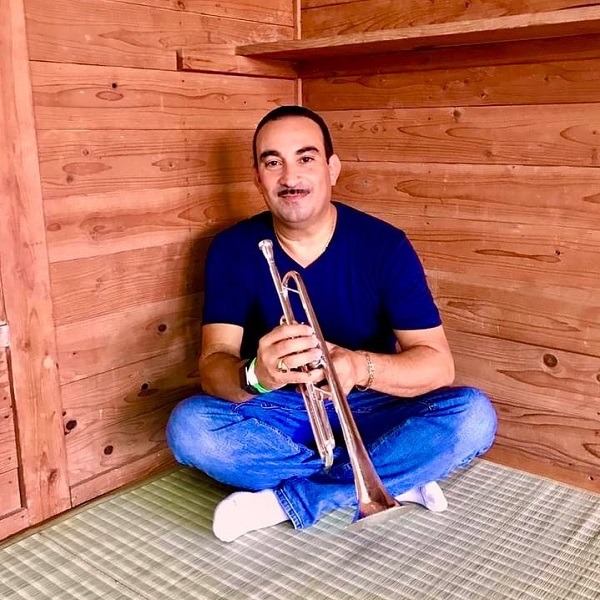
Eddie and his trumpet
Eddie Ortiz with his trumpet

The Armed Forces and moving to Hawaii   

Eddie’s first contact with music was in school, when he began taking trumpet lessons for a few years until he moved with his family to Tampa, Florida, where his life would change radically.   

While there, he joined the Navy and served for more than 20 years, time in which the artist took the opportunity to join the Marine band and hone his skills as a musician. 

It was in those years he served as a trumpet player and played for several military bands being in the armed forces.   

During his military career, he was forced to visit many countries and Hawaii was his last stop. About three years before retiring, he decided to create Eddie Ortiz & Son Caribe, a group he still plays with today.    

As for Hawaii, he liked the place, the weather and the people so much that he did not want to return to the United States. That was over 27 years in total. He still thinks it was the best decision he could have made personally and professionally.    

Eddie Ortiz & Son Caribe 

Something very interesting about Eddie Ortiz & Son Caribe is that they play Latin music, but most of the members are not Latino. The group has people from Japan, China, Portugal and Hawaii. In fact, some of them were with Eddie in the navy and, today, support him in this great project.   

A very particular case is that of Cynthia Romero, the band’s vocalist, who was born in Manila, Philippines, and speaks six languages, but Spanish is not one of them. However, she is perfectly capable of singing in that language without any problem, since she practices a lot the songs at the phonic level to avoid mistakes.   

Whenever there are original songs, Cynthia usually asks Eddie what a song is about and he explains it to her in detail so she can perform it and live out it properly. She also takes the trouble to translate all the content and learn it to avoid any failure in the studio or on stage.    

In the case of the genres, a different level of preparation for each one is always required, so Eddie and Cynthia always rehearse alone at first, while the musicians prepare themselves separately. It is then that they all join together to see how the band sounds as a whole.    

Eddie in a studio
Eddie Ortiz playing his trumpet in a studio

Learning from other artists on stage 

The members of Eddie Ortiz & Son Caribe have had the opportunity to share the stage with Ismael Miranda, Celia Cruz, Johnny Polanco, Tito Puente Jr, Luisito Rosario, and many more. When asked what he and his musicians have learned from these great artists, Eddie replied that the opportunity to accompany these personalities and open their shows have been a blessing and an immense honor.   

”Each one of these artists has a very unique style and, whenever we accompany one of them, there are always new things to learn in order to be able to interpret those styles in the future. All of these things that we see in others are incorporated into our own music as we see fit” said Eddie.   

The media’s role in his career   

With respect to the media, Eddie Ortiz & Son Caribe has had a presence in various magazines and channels such as Honolulu Magazine, KS TV, 88 Tee, University of Hawaii Sports Television, among others.    

Eddie said they did not expect this media exposure, but it has been very well received. They have been asked to make music for one or two radio stations or channels, which has given them the opportunity to demonstrate their talent and be known among a wider audience.   

The best thing is that this gave them the opportunity to explore other genres, as the aforementioned media have asked for pop, traditional Hawaiian music and other genres requested at that time.    

Original music and covers 

Eddie also told us that his band usually performs live on various entertainment places about four times a week, so they should try to have a repertoire as different as possible every night so as not to bore the audience. 

Regarding covers, there are always certain songs that people usually ask for, so the band always takes them into account to satisfy those attending. 

They also try to make a balance of all the genres they play such as salsa, bachata, merengue, cha cha chá, cumbia, Latin pop and many more.   

Eddie and his band
This is Eddie Ortiz & Son Caribe, the whole band

Tours 

Although the band’s strength is in Hawaii, their audience is not centred on the island and they have also managed to tour Asian countries such as Japan, Korea and the Philippines. In those places, the reception of the public towards Eddie Ortiz & Son Caribe has been phenomenal because there are many lovers of Latin music and culture in general there.   

Because of this, these countries usually have relatively large salsa events and festivals where they always take this band and other groups of this kind into account. Of course, they are also supported by dancers and DJs in order to liven up the atmosphere even more.   

Eddie remembers attending an event called ”Isla De Salsa”, which featured El Gran Combo De Puerto Rico, Juan Luis Guerra, Havana De Cuba and many others. This shows how much Latin music is valued in those places and the large number of followers it gathered. 

To end the conversation, Eddie pointed out that they have a large audience in Colombia, Ecuador and Mexico, so they also have plans and are making the appropriate arrangements to go there soon and meet their fans. They will also perform an anniversary concert to celebrate the 25th anniversary of the foundation of the orchestra and will have Luisito Rosario as a guest. 

Read also: Jimmy Rodríguez ”El Salsero Mexicano” talked to ISM about his career 

1 New artist Wito Rodriguez “I am distinct and different”

Norte America / Estados Unidos / Florida

Wito Rodriguez. “I am distinct and different”

Irwin “Wito” Rodríguez was born in Chicago to Puerto Rican parents and got his start in the musical field as a singer and musician. During his teenage years, he performed with a Rock and Roll band as a guitarist.

In 1968 Wito Rodriguez decided to move to “La Isla Del Encanto”, Puerto Rico, in order to search for his musical roots and experience the spicy sounds of his beloved Latin Ritmo.

His first encounter in the Salsa genre was with a Puerto Rican percussionist from the 60’s called “Chacón y su Orquesta”, where Wito learned all the Latin rhythms such as Guaguancó, Boogaloo, Mozambique, etc.

Chacón was his coach in Latin percussion instruments and Wito also fell in love with maracas.

Wito Rodriguez returned to Chicago in 1971 to join “Orquesta La Justicia” a local band that opened shows for artists such as: Ismael Rivera, Ray Barreto, Willie Colón, El Gran Combo and the legendary “Fania All Stars”.

Like many young men of that time, in 1973 Wito Rodriguez decided to join the United States Army and was sent to Europe.

During his stay in Germany, Wito Rodriguez took singing lessons with the Opera singer Barbra Sutton, and at the same time he created two bands with the names of “El Conjunto Sabor” and “La Sonora Antillana”.

These orchestras accompanied artists of the Salsa genre such as: Adalberto Santiago, Ismael Miranda, Tito Allen, Santitos Colón, Pete “El Conde” Rodríguez and the queen of Salsa, Celia Cruz.

After his retirement from the army, Wito joined forces with German band leader Rudi Fuesers and created the European Salsa Orchestra “Conexion Latina”.

With Conexion Latina, Wito Rodriguez recorded two albums; “Calorcito” and “Un Poco Loco”.

He also had the great experience of recording two songs with the band of Director and Arranger Peter Herbolzheimer.

During the 80’s, Wito wanted to broaden his horizons by forming his own groups called “Wito Rodriguez y Orchestra” and “Wito Con Cache”.

Missing his family and friends, Wito “crossed the pond” to return to the United States to finish his Army career.

He never gave up his passion for music, a new big band sound was on his mind, and he returns to the spotlight with the Wito Rodriguez Salsa Jazz Orchestra under the musical direction of trumpeter and arranger, Gino Picart.

“What a wonderful world” or “What a Wonderful World” is his third album released in January 2015.

Although busy in 2016 with live performances, a new album had also been produced and recorded between South America Venezuela and Orlando, Florida.

The most recent production called “Como el Viento” will be released in 2017. This album contains a compilation of songs recorded over the years in Europe than ever for the Western Hemisphere. I hope you enjoy your first solo release… What a wonderful world!

In 2018 Wito released another CD called “The Best of Wito” which has a mix of all the songs that fans thought were the best and respected their preferences.

Wito also has four new singles that he has released from his new album, which will be available from February 2019.

Through the internet platforms you can find these releases.

Always and Forever, Soy Caribe, Yo No Te Echo La Culpa and Now and Forever are the ones that have been released so far.

“As a bilingual singer, I am blessed to contribute to the music industry in my songs, singing them in English and Spanish, unity through my music in a mix of salsa and R&B, etc.” Wito Rodriguez

In the year of 2018. Wito Rodriguez was blessed to be nominated at the Hollywood Music Media Awards (HMMA) in Los Angeles, CA in November 2018.

You can also see his certificate as an honoree at the Fox Music Awards USA, Miami in November 2018, who was nominated and honored for being the Army Veteran Salsero Singer.

The Chicago Salsa Congress was one of its great events in 2018.

In March 2019 his new bilingual production Soy Distinto Y Diferente came out with the song Soy Caribe already nominated at the Hollywood Media Music Awards on November 20, 2019 in Hollywood California.

NMJ Animal Music Records LLC. [email protected]

PQ Promotions/Management Jenny Morales [email protected]

(682-554-4851 or (813-785-3086))

We spoke with Andrea Chaparro from Lulada Club

Lulada Club is a group composed entirely of women that plays a good number of Latin music genres such as salsa, bolero, cha cha chá, boogaloo, among others. These girls have a very interesting concept that caught our attention as soon as we checked their social networks, so we decided to get in touch with their director, Andrea Chaparro, who kindly agreed to talk to us and give us more details about the group she leads.   

Andrea Chaparro from Lulada Club
Andrea Chaparro, bandleader of Lulada Club

Name of the orchestra ”Lulada” and how it emerged   

We found the name they chose for the group very curious, so Andrea went on to explain that Lulada is a Colombian drink, specifically Cali (the capital of salsa) that comes from the lulo fruit. She and her partner, who is also part of the orchestra, wanted to pay tribute to this city so important for their careers and for salsa in general.    

The idea came from several sessions and rehearsals in which they were deciding what name to use, but they always knew that they wanted it having to do with Cali. In the end, they thought that ”lulada” sounded very good and mixed the term with ”club”, which originated a result that they all liked.   

Why only girls? 

Andrea recognizes that having a Latin female orchestra is not a novel idea, far from it. In fact, she saw this concept in Cali in several all-female orchestras that have been around for decades, so she wanted to replicate that idea.    

About six or seven years ago, it was when she wanted to create an all-girl group and the opportunity was given to her in the framework of the pandemic. In Colombia, the artist had been playing with other all-male groups, but she began meeting other female musicians and instrumentalists and had the opportunity to organize a group for an event to which she and her saxophonist partner were invited. 

When we wanted to know more about the selection process of the members, Andrea noted that she did a sort of search on Instagram to see their work directly, but several of the girls were brought in and recommended by other members.   

Some of these girls had not had the opportunity to develop their skills because they were always underestimated in the Latin salsa scene for being female or very young, so Lulada Club has been a great opportunity for them to grow and evolve in music.   

Lulada Club and Andrea Chaparro
This is the whole group, Lulada Club

She considers that they have all fit together very well with the group and understand each other perfectly most of the time, which is why she considers that they have been very fortunate to find each other and join their professional lives.    

Andrea and Lulada Club in New York 

At the moment, all of the members of Lulada Club live in New York and have no plans to move to any other place, since their greatest opportunities have been given to them in this city. 

She does say that they are completely open to the possibility of touring both nationally and internationally whenever they find it possible. Indeed, at present, they already have many invitations to attend concerts and festivals in many other cities in the United States, but they will not base the orchestra anywhere else.   

Both Andrea and the rest of the girls feel that their biggest audience is there and many people in positions of power are seeing what they are doing and taking them into account. People, club owners and event organizers have received them with open arms and have taken them into account for events of all kinds.   

One such event is SummerStage on August 2, whose main attraction will be the maestro Eddie Palmieri, who will be offering one of the last concerts of his career after announcing his retirement. It is a great honor for the girls to be able to open for this world-renowned artist who has contributed so much to salsa and Latin music since his beginnings.    

The news about their participation in the event made them very happy and feel that all their hard work has paid off.    

Andrea Chaparro on stage with Lulada
Andrea Chaparro singing on stage

Genres played by Andrea and Lulada Club   

As we have mentioned at the beginning of this edition, there are several Latin genres played by Lulada Club such as salsa, cha cha chá or boogalo, but each one has its own audience. 

In that sense, Andrea said that they play a lot of hard salsa for dancers and classical music coming from the clubs in Cali. There are certain songs that can never be out of their repertoire such as ”Llorarás” by Oscar D’ León, ”La rebelión” by Joe Arroyo, ”Brujería” by El Gran Combo de Puerto Rico, among others.   

In cases where we get a quieter audience, we can play a bolero or cha cha chá, but everything will depend on the reaction of those present to our performance,” said Andrea on this subject. 

In terms of their original songs, they have two recorded and their names are ”La Palma” ”Lulada ya llegó”, which has been very well received by those who have heard it.    

Undoubtedly, Lulada Club has a lot to offer to the audience and fortunately festival organizers and club owners are realizing the great potential of this group, and every day that passes they are taking more into account in their lineups.    

Read also: Allyson Briggs ”La Rubia de La Salsa” 

Jerry Rivas, career, and support for the Spaha Salsa Gallery Museum

The Spaha Salsa Gallery Museum has been the recipient of a good number of objects donated by artists and their families after they had died. This time, it is the turn of Jerry Louis Díaz Rivas, better known as Jerry Rivas in the music scene, who is one of the main singers of El Gran Combo de Puerto Rico.   

We want to use his pleasant visit to our museum and his forty-sixth anniversary with El Gran Combo to talk a little about his great career and everything achieved in his long musical career over the past decades.   

Jerry with Johnny
El Gran Combo De Puerto Rico singer Jerry Rivas and Johnny Cruz

Life and career of Jerry Rivas   

Jerry Diaz was born in the city of Tampa, United States, on August 25, 1955 and his parents were of Puerto Rican origin, so it is undeniable that Puerto Rican heritage greatly influenced the path he would take later on.   

About five years later, Jerry and his family moved to the city of Bayamón, Puerto Rico, where he began to take his first steps in the world of music with the guitar, the Puerto Rican cuatro and the Cuban tres, counting on the support of professor Carlos Seguí to learn to play the latter. However, shortly after, he would decide that singing was his thing. 

While still a young teenager, he was part of various groups such as Grupo Complicación, Conjunto Cojoba and Grupo Chaney, being in all cases a very important part of the body of musicians who were in these bands.   

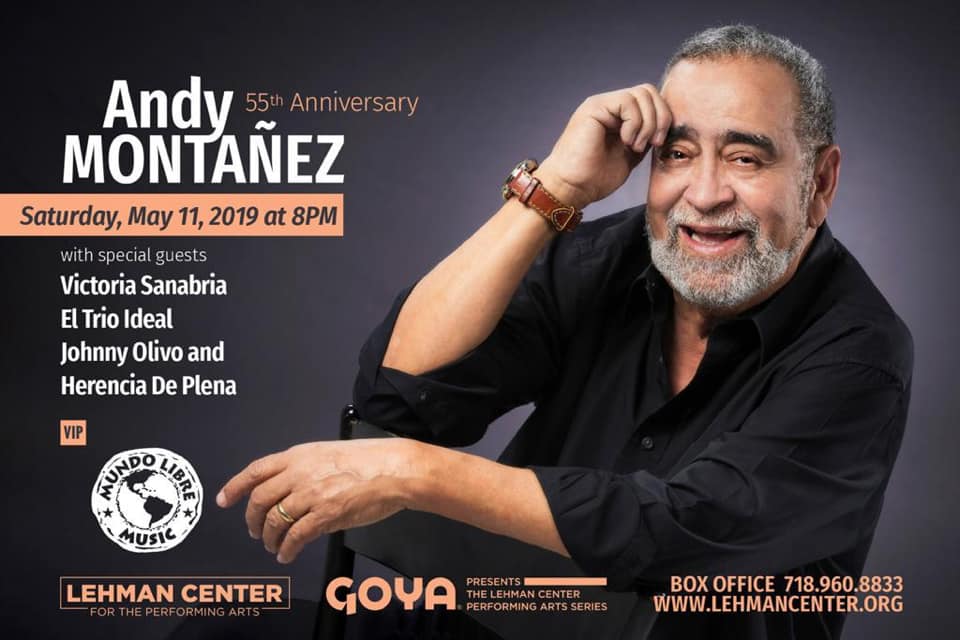
His big great came in 1976 when Don Rafael Ithier, who was interested in the artist to be part of El Gran Combo De Puerto Rico, after he was recommended by Don Quique Lucca, who thought of this boy as replacement of the legendary Andy Montañez, singer of the group for more than 14 years.   

Jerry signing a tres
Jerry Rivas signing the Cuban tres he donated

Although it was not believed that Jerry could fill the shoes of his predecessor, his talent, effort and support from the music director of the orchestra, made him consolidate in the institution along with the rest of his colleagues and become one of the longest-serving members of El Gran Combo. 

International fame came with the album ”El Gran Combo En Las Vegas” thanks to the song ”La Clave”, in which he proved his vocal abilities to new levels. After that, he achieved his consecration as an international star with the album ”Happy Days” thanks to the song ”El Menú”.   

After that, everything that followed for Jerry was success with the orchestra, which resulted in approximately 30 recordings in a span of 45 years with El Gran Combo de Puerto Rico, his musicians and the extraordinary team behind the group.    

Other details of his life and support to the Salsa Museum  

In addition to being a vocalist for El Gran Combo de Puerto Rico, Jerry also participated in backing vocals with other great musicians for their respective musical works such as Willie Rosario, Bobby Valentín, Yuri Buenaventura, Gilberto Santa Rosa, La Sonora Ponceña, Adalberto Santiago and many others.   

Jerry with Johnny and the tres
Jerry and Johnny with the tres and the jacket Jerry donated to the museum

In each of these projects, the Puerto Rican artist has always given his personal touch and his unmistakable vocal chords, so it is normal that he is considered a legendary voice within the salsa movement not only in his country, but also worldwide.   

Due to all of the above, it is a true honor for the Spaha Salsa Gallery Museum to receive this great musical luminary in its facilities, where he was welcomed by its president and founder, Mr. Johnny Cruz. 

Some photos on the Cruz’s official Facebook page, it is evident that both shared a very pleasant time remembering things from the past and talking about music. In addition, Jerry donated one of his shirts and a Cuban tres to the museum so that they can be exhibited to the public along with the rest of the objects in its collection.   

We thank Jerry for his kindness, generosity and great talent, which we hope will continue to accompany us in the years to come. 

Read also: Tommy Olivencia Jr’s career and support for the salsa museum 

Tempo Latino 2023

Tempo Latino 2023
Tempo Latino 2023

Tempo Latino is a music festival held in Vic-Fezensac, France, in the region of Gers in Gascony it is the first and the greatest Latin American and Afro-Cuban music festival of the summer in Europe. The festival was founded in 1994 and has been held annually since then.

“In 2020 and 2021, the festival was only interrupted for two consecutive years due to the containment of the new crown pneumonia (COVID-19) epidemic.”

With around 600 volunteers from all over the city for four days of intense activities and an audience of around 60,000 people from all over the world.

Tempo Latino offers a variety of Latin American and Afro-Cuban music, including Salsa, Bachata, Kizomba, Cumbia, Merengue, Rumba, Latin-jazz, Reggaeton and more. The festival also features dance workshops, food stalls and other cultural events.

International performers and instructors from Cuba, Puerto Rico, Colombia, Venezuela, Panama, Africa, the United States (primarily New York, Miami, and California), and Europe have participated in a number of concerts and workshops

Tempo Latino has grown from a small festival to one of the most important Latin American music festivals in Europe. The festival hosts some of the biggest names in Latin music, including Celia Cruz, Ruben Blades,  Eddie Palmieri, Oscar D’ León, Johnny Pacheco, Adalberto Álvarez, El Gran Combo de Puerto Rico, Kassav, Totó la Momposina,  and Los Van Van. Tempo Latino has also helped advance the careers of many new artists.

Here’s more information on Tempo Latino:

  • The festival takes place in a beautiful setting in the heart of the French countryside.
  • The festival is family friendly and has activities for all ages.
  • The festival is a great opportunity to experience a different culture and learn about Latin American and Afro-Cuban music.

A festival of concerts takes place in the square and, at the same time, many free outdoor events for those who want to discover music in the city’s dance halls in the afternoon and evening. In the second edition, they have integrated dance, music, and percussion lessons.

The 28th edition of Tempo Latino will take place from July 27-30, 2023.

The lineup includes:

La Conga

27 July – Ana Tijoux (France)

Les Arenes

28 July 2023

21:00 – Orchestra Baobab (Senegal)

23:00 – Grupo Compay Segundo (Cuba)

29 July 2023

21:00 – Lila Downs (Mexico)

23:00 – Cimafunk (Cuba)

30 July 2023

21:00 – Bernard Lavilliers (France)

23:00 – La Excelencia (USA)

and many more!

Pass Concert: 

On the official website, tickets for four days are available for 120 € (during the festival, they cost 150 €).

Eric Duffau

The current director of Tempo Latino is Eric Duffau from Toulouse, France. He is also the founder of the music festival which he started in 1994. A passionate lover of Latin American and Afro-Cuban music, Dufour devoted his life to promoting this music to a wider audience and serves on the board of the French Association for the Promotion of Latin Music (AFMPL).

Director of Tempo Latino is Eric Duffau from Toulouse

Dufoe was a tireless promoter of Latin American and Afro-Cuban music. He travels the world in search of new talent and works hard to make Tempo Latino a major cultural event. He is a passionate advocate of Latin music and works to bring this music to a wider audience.

Dufour graduated from the National School of Arts and Crafts (ENSAM) in Paris. In the early 1980s he worked as a DJ, during which time he became interested in Latin American and Afro-Cuban music. In 1989, he decided to create a festival to showcase this music and Tempo Latino was born.

https://www.tempo-latino.com/

https://www.youtube.com/user/TempoLatinoFestival

The Tempo Latino Festival is Back

  • « Go to Previous Page
  • Page 1
  • Interim pages omitted …
  • Page 14
  • Page 15
  • Page 16
  • Page 17
  • Page 18
  • Interim pages omitted …
  • Page 24
  • Go to Next Page »

International Salsa Magazine (ISM) is a monthly publication about Salsa activities around the world, that has been publishing since 2007. It is a world network of volunteers coordinated by ISM Magazine. We are working to strengthen all the events by working together.