• Skip to primary navigation
  • Skip to main content

International Salsa Magazine

  • HOME
  • Previous editions
    • 2026
      • ISM / June 2026
      • ISM / May 2026
      • ISM / April 2026
      • ISM / March 2026
      • ISM / February 2026
      • ISM / January 2026
    • 2025
      • ISM / December 2025
      • ISM / November 2025
      • ISM / October 2025
      • ISM / September 2025
      • ISM / August 2025
      • ISM / July 2025
      • ISM / June 2025
      • ISM / May2025
      • ISM / April 2025
      • ISM / March 2025
      • ISM / February 2025
      • ISM / January 2025
    • 2024
      • ISM / December 2024
      • ISM / November 2024
      • ISM / October 2024
      • ISM / September 2024
      • ISM / August 2024
      • ISM / July 2024
      • ISM / June 2024
      • ISM / May 2024
      • ISM / April 2024
      • ISM / March 2024
      • ISM / February 2024
      • ISM / January 2024
    • 2023
      • ISM / December 2023
      • ISM / November 2023
      • ISM / October 2023
      • ISM – September 2023
      • ISM – August 2023
      • ISM July 2023
      • ISM Edition June 2023
      • ISM – May 2023
      • ISM April 2023
      • ISM March 2023
      • ISM February 2023
      • ISM January 2023
    • 2022
      • ISM December 2022
      • ISM November 2022
      • ISM October 2022
      • ISM September 2022
      • ISM August 2022
      • ISM July 2022
      • ISM June 2022
      • ISM May 2022
      • ISM February 2022
      • ISM January 2022
    • 2021
      • ISM December 2021
      • ISM November 2021
      • ISM October – 2021
      • ISM September 2021
      • ISM August 2021
      • ISM July 2021
      • ISM May 2021
      • ISM April 2021
      • ISM June 2021
      • ISM March 2021
      • ISM February 2021
      • ISM January 2021
    • 2020
      • ISM December 2020
      • ISM November 2020
      • ISM October 2020
      • ISM September 2020
      • ISM August 2020
      • ISM July 2020
      • ISM June 2020
      • ISM May 2020
      • ISM April 2020
      • ISM March 2020
      • ISM February 2020
      • ISM January 2020
    • 2019
      • ISM December 2019
      • ISM November 2019
      • ISM October 2019
      • ISM Septembre 2019
      • ISM August 2019
      • ISM July 2019
      • ISM June 2019
    • 2016
      • ISM December 2016
      • ISM November 2016
      • ISM October 2016
  • Spanish
  • Download Salsa App
    • Android
    • Apple

Search Results for: Flamenco

Buika. The Multicultural Sensation

European Union
Buika
Buika

“It takes a lot of guts to expose your true self to others, and acclaimed singer, songwriter, poet, composer and music producer, Buika (pronounced BWEE-ka), does that every night she goes on stage. As plain as the tattoos on her skin, Buika bears her soul to her fans across the world, which she affectionately calls her “tribe.””

This summer, Buika continues her journey of storytelling across Europe and South America in support of her latest album, fittingly named Vivir Sin Miedo (To Live Without Fear). Her eighth album and one with the most English lyrics, Vivir Sin Miedo, co-produced by Grammy Award-winning Swedish producer, Martin Terefe (Mary J. Blige, Mutya Buena, Coldplay) features Grammy-winning singer-songwriter Jason Mraz, German neo-soul artist Meshell Ndegeocello, and Spanish underground flamenco legend Potito.

2- Buika
2- Buika

Born María Concepción Balboa Buika in Palma de Mallorca, Spain, Buika grew up immersed in Spanish culture with her African-born parents. Surrounded by multiple cultures throughout her life, Buika had a variety of musical influences, from jazz and flamenco to pop, soul and African polyrhythm. This eclectic upbringing shaped Buika’s ability to make music without limitations. During her 15-year recording career, her albums flow seamlessly between pop, jazz, soul, reggae, afro beat, R&B and flamenco. Equally diverse are her collaborators, which include Pat Metheny, Anoushka Shankar, Chick Corea, Niño Josele, Bebo and Chucho Valdés, Seal and Nelly Furtado.

Photo 2 - Buika
Photo 2 – Buika

“Filmmaker and longtime fan, Pedro Almodóvar, remarked about Buika, ‘Seeing her draw from such different genres…mix them all together with such grace and spontaneity, one cannot help but think that there is a brighter future as long as one can witness the boundless evolution of this infinite performer.'”

A brighter future did arrive for Buika with each new album. Her 2006 album, Mi Niña Lola (My Little Girl Lola), won Buika high praise from the US media, including The New York Times, The New Yorker, Miami Herald and NPR. She received two Latin Grammys, one for her 2009 album, El Ultimo Trago (The Last Drink) and for her 2013 album, La Noche Más Larga (The Longest Night), which also won a Grammy nomination for Best Latin Jazz album.

Photo 3: Buika
Photo 3: Buika

Other Latin Grammy nominations included Best Album and Best Production for Niña de Fuego (Girl of Fire, special 2-CD Edition, which included her first collection of poems – 2008), Record of the Year for her albums, Se Me Hizo Facil (2010) and La Nave del Olvido (2013) as well as the new Record of the Year nomination for Vivir sin Miedo for the song “Si volveré” (2016)

Buika knows no boundaries when it comes to language or geography. She has collaborated with musicians and singers in Spanish, Catalan, English, French, Portuguese, Iranian and Armenian. Her touring has spanned the globe, covering Europe, Latin America, the Caribbean Islands, Asia, Africa and the US.

A great music ambassador, she reaches any small or large crowd..i.e performed at the US Embassy in Madrid, Spain, on a great 4th of July or a year ago at the Spanish Embassy in DC, for a larger audiences at different music festivals, such as “La Notte della Taranta” Italy over or “Jazz al parque” Bogotá just a month ago.

Photo - Buika
Photo – Buika

She has no barriers in terms of artistic expression and rejects any kind of self-limitation, a business owner, singer / songwriter, producer and poet, whom on her time off immerses herself in the world of photography, some of her best portraits and self-portraits can be seen on any of her books, Niña de fuego (Girl of fire) “special edition” and -A los que amaron a mujeres difíciles y acabaron por soltarse (To those who loved difficult women and ended up letting go)

Buika singing
Buika singing

For Buika, her music is more than a career. She says, “I am music (…)!”

  • [email protected]
  • [email protected]
  • [email protected] 
  • [email protected]

The Cajón throughout history

The main artists who put on a show always get the lead on stage, but nothing much is being said about the instruments accompanying them, which are a fundamental part of music as we know and enjoy it. One of these is the cajón, which has a most interesting and a little bit controversial origin, so there are certain considerations to express this regard.

This is the cajón
This is how the cajón looks today

What is the cajón?

The cajón, also known as the Paruvian cajón or flamenco cajón, is a percussion instrument consisting of a wooden box on which the musician sits and taps with his fingers and palms to produce the desired sounds, whether bass or treble. On certain occasions, it is used as a substitute for the drum kit and has gained popularity in jazz, flamenco, and some Latin genres. 

One reason it is so popular is because of its versatility, transportability, and ease to be played, even if the musician does not have much experience. Therefore, many prefer it to the drum kit, which is bigger and more cumbersome in certain cases.

Origins of the cajón

What is known about the origin of the cajón is that by the end of Spanish colonization, African slaves bound for America were not allowed to use their drums because the Catholic Church saw them as sinful and pagan tools. Not to mention that these prisoners also used these drums to communicate with each other, which is why the Spanish nicknamed them “talking drums.”

This led to the aforementioned instruments and several of their musicians being burned. Not to mention that slavers wanted to ban black songs that sent messages about slavery through their melodies. 

By the early 1800s, there was absolutely no record that the drum had existed in what we now know as Peru, and any viceregal document mentioning it disappeared. However, there is evidence of the existence of the cajón from 1840, and it is believed that the first to use it were Afro-Peruvians. 

fiesta de amancaes with the cajón
Painting by the German Painter Mauricio Rugendas on the occasion of the “Fiesta de Amancaes”

Afro-Peruvians encompass a collection of African ethnic groups who, unable to express themselves through music as they did before, had no choice but to find other instruments with which they could do so. They then saw wooden crates used to transport goods as a way to do percussion and thus continue to practice their sacred rites and play their music.

Initially, the cajones were used to play coastal and traditional dances to central and north Peru, which gradually popularized them. They also began to be used to play the “Fiesta de Amancaes,” which is a Limean festival held during the time of the Viceroyalty. This event usually brought together horse breeders, artisans, and bohemian musicians from the north and center of the country.

The arrival of the cajón in Spain

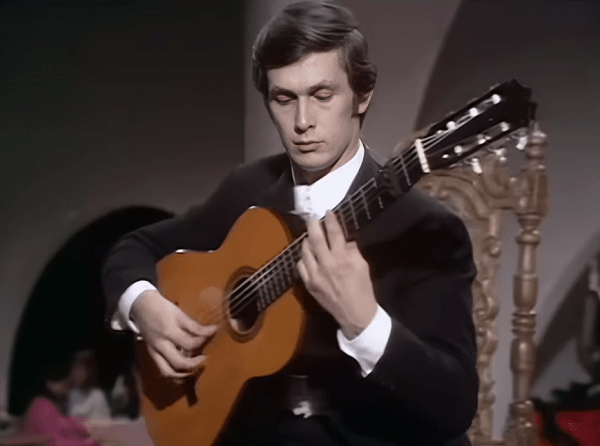
Many years later, specifically the year 1977, the cajón arrived in Europe. It was Spanish flamenco composer and guitarist Paco de Lucía who discovered the instrument during a tour of Latin America when he attended a reception hosted by the Spanish ambassador at the time. On that occasion, Paco heard Brazilian musician Rubem Dantas play it during a show by singer-songwriter Chabuca Granda, and he instantly realized that those sounds combined very well with flamenco percussion, which was always done with the palms, although it was not as consistent and precise as required. The cajón achieved this without a hitch. 

It is for this that Paco decided to take the cajón to his country and only added some inner strings to adapt it and tinge its sounds, thus becoming one of the most important elements of a flamenco show today. Both Paco and Rubem decided to release it at an open-air concert at the Parque de Atracciones de Madrid of the Casa de Campo, and the Peruvian instrument was a resounding success, marking the beginning of its addition to flamenco guitarists’ shows.

At the time, Paco said that this contribution to flamenco culture in his country made him very proud and with good reason, as it was a great revolution that continues to bear fruit.

Paco de Lucía playing
Paco de Lucía playing a guitar solo

The cajón today

Today, the flamenco cajón has three screws that allow the musician to adjust the tone and a system of strings that gives the Peruvian version a different resonance and offers a range of many different sounds in which the musician’s body plays a very important role. The Peruvian version remains the most traditional of all because it gets no strings and its sounds are deeper, while the Spanish version incorporates strings or bourdons in order to make more tearing and vibrant sounds.

There are also more modern versions that include the use of drumsticks and pedals to expand their sound range a lot further.

Read also: Creator of Salsa Vida Takeshi Young graced us with his presence in International Salsa Magazine

The Williamsburg Salsa Orchestra: electrifying fusion and salsa flavored with indie rock

The Williamsburg Salsa Orchestra is an 11-member musical group that, as the name suggests, uses salsa as its foundation but also mixes it with other genres such as funk and indie rock to make its music distinct. This combination of beats has led the orchestra to be internationally recognized for its explosive arrangements, modern touches, and repertoire inspired by Anglo-Saxon artists.

Today we are here with arranger and percussionist Gianni Mano (founder) and Argentine singer Solange Prat (vocalist) to find out about their beginnings, the current situation of the orchestra, their roles in the project, and much more. 

Solange Prat and Gianni Mano
Argentine singer Solange Prat and American bandleader Gianni Mano

Gianni and Solange’s musical awakening

Gianni began his first address by sharing that his family had some musicians back several generations, but his own interest in music aroused in his childhood. It was then that his parents enrolled him in piano lessons, but his taste for Afro-Cuban and Afro-Caribbean music settled in when he was a teenager, recently moved to Miami to attend college.

In the late 1980s, he got a job at a nightclub, where he discovered hits from great artists who would inspire him in the future, such as Cuban musician and percussionist Carlos “Patato” Valdés. When he listened to the artist, Gianni could hardly credit how wonderful and different it was what captivated his ears.

By the time, the young man was studying percussion focused mainly on classical music, but the impact of those rhythms he had heard was such that he wanted to know much more about them. This led him to move to New York and hire private teachers to know more about salsa, Afro-Cuban, and Nuyorican music, because when heard them, he discovered that this was what he wanted to dedicate himself on an artistic level. He assured us that it is always best to learn music directly from those who play it, so it was the best decision he could take.

The musician assured us that, at that moment, he could not believe the world he was missing, but when he found it, he did not let it slide.

At this point, Solange joined us and said her interest in music began in her native Argentina, where her parents always listened to Gloria Estefan, Juan Luis Guerra, and other artists of this type. On her mother’s side of the family, some relatives played the guitar and a lot of Argentine folk music such as sambas and chacareras, so she had a lot of contact with that music and eventually started singing at a very young age.

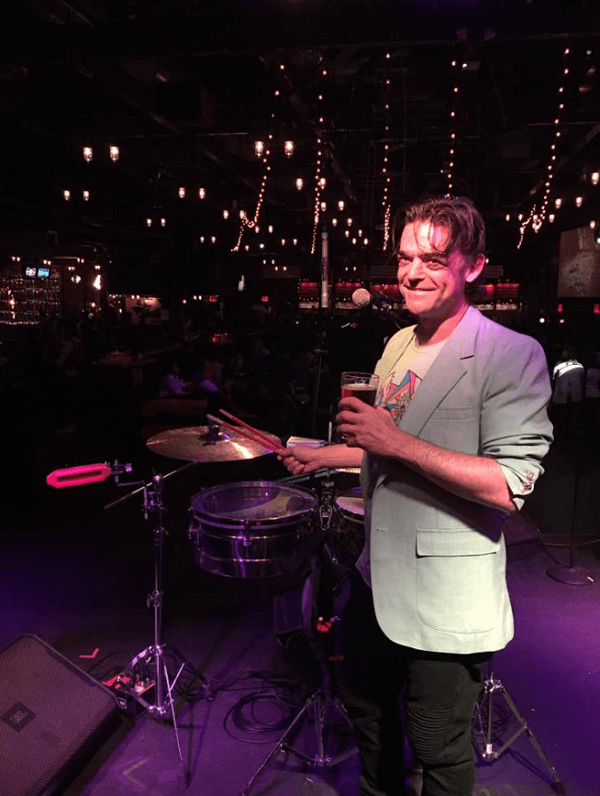
Gianni playing live
Gianni Mano playing live at Brooklyn Bowl

Since the girl used to sing all the time, her mother enrolled her in singing lessons until she got her first opportunity in a band at the age of 15. Added to that she spent about six months on a cruise in the Caribbean, and when she came back, she wanted to continue training on an artistic level, but with a focus on the music she had been listening to during her trip. 

Sometime later, she went to visit a friend in New York, and it was there that she met Gianni, who asked her to join The Williamsburg Salsa Orchestra, which was already founded. It was something very new for her, as she had never sung salsa before, but she accepted the challenge anyway, and Gianni served as a mentor for her at all times.

Gianni as an arranger

As for his role as an arranger, Gianni told us that, when he left his previous job to devote himself entirely to music, he spent oceans of time transcribing arrangements of other artists’ songs to see how they worked. He remembers that the first song with which he tried this was one by Tito Puente, but then he did the same thing with hundreds more.

For a long time, he listened to all these pieces hundreds of times to understand the form of a salsa-based song and how it needs to be structured for the enjoyment of the dancer on the dance floor. That is how he began to write his own arrangements, although acknowledging that they were not all that good at first, so he had to practice a lot.

His coexistence with groups of different genres and practice with various types of instruments helped him greatly to master this area in all styles.

Solange Prat singing
Solange Prat singing at the Sofar Sounds New York

The Williamsburg Salsa Orchestra

In 2009, Gianni was making some demos and garnered rave reviews, so he felt ready to start his own musical project, but obviously he could not do everything alone. He began to place ads in online newspapers to recruit artists to join his band, although there was a subject which worried him: language. He told us that he was looking for musicians who mastered both English and Spanish, and in that sense, Solange pleasantly surprised him with her singing ability in both languages. 

The orchestra’s first show was in 2010, which let it to gaining some popularity in the public of the city.

From Solange’s point of view, she describes her arrival in the orchestra as an unexpected event for her career, since in Argentina she had experienced a lot with soul, R&B, and funk. However, this would change with her move to New York, which is when she met Gianni and discovered a whole new world for her until then, but she loved it a lot.

So, she did his best to learn everything she could about this new music and keep up with required level. Gianni played a big role in this, as he taught her how to play certain instruments and gave him CDs from some of the great salsa legends to take them as a guide. 

She closed the subject by saying that moving to New York, meeting these musicians, and becoming part of this new music scene was great and inspiring.

Gianni, Solange, and the rest of the orchestra
From left to right: Angela Ortiz (piano), Rafael Gomez (bass), Jhohan Hernandez (congas), Felipe Fornier (bongo). Solange Prat (voice), Gianni Mano (Percussion), Alex Asher (trombone), John Challoner (trumpet), Jason Prover (trumpet), and Dimitri Modebacher (baritone sax)

How to maintain an 11-piece orchestra alive

Currently, the Williamsburg Salsa Orchestra has 11 members in total. At a time when bands and musical groups are getting smaller and smaller, we wanted to know what Gianni and his artists do to stay together in an environment that pushes them in the opposite direction. 

The percussionist says that one of his greatest dreams was to have a large salsa orchestra, and he has succeeded, but he admits that things were simpler before COVID-19. After that, far fewer people attended salsa dances or were willing to pay for such an event. Still, they have done everything humanly possible to keep the group together, since in the words of Gianni, an orchestra composed of six or seven people does not sound as good or as complete as one with nine or more musicians.

However, he does not deny that they have had some issues with certain venues due to the orchestra’s size, such as small stages or low ability to pay everyone, but in general, club owners and promoters just want a good show and for people to enjoy it. For this reason, they make an effort to hire bands like the Williamsburg Salsa Orchestra because they know what they have to offer.

Read also: Ania Bartelmus from La Candela Flamenco talks about her performance at the Hispanic Heritage Celebration

North America / October 2025

Tito Puente Jr 2025William cepeda 2025

Alberto Gonzalez and Hector LavoeAnia Bartelmus 2025PBSCanto Tropical 2025Luis MedinaThumbnail about the salsa museum

Las Maracas promo

Martinez attorney

Directory of North American nightclubs

Canada flag
CANADA

Ontario, Canada
ONTARIO

Canada, Vancouver
VANCOUVER

United States flag
UNITED STATES
California US circular flag

CALIFORNIA

Florida circle flag
FLORIDA
Illinois circle flag

ILLINOIS

Michigan Circle flag

MICHIGAN

NJ circle flag

NEW JERSEY

New York Cicle flaga

NEW YORK

Ohio State
OHIO

Pennsylvania Circle Flag
PENNSYLVANIA

tEXAS CIRCULAR FLAG
TEXAS

Virginia Cirular Flag
VIRGINIA

Washington DC circle flag
WASHINGTON DC


The Albuquerque Latin Dance Festival

North America / USA /

The Albuquerque Latin Dance Festival, Aug 24-27, 2017

The Albuquerque Latin Dance Festival - 2017
The Albuquerque Latin Dance Festival – 2017

Performances films Lectures Dance Workshops

What better way to enjoy Albuquerque’s warm summer nights than with Latin dancing!

The Albuquerque Latin Dance Festival is three days of instruction, workshops lectures and dancing under the stars. Learn at multifaceted workshops the many Latin dance styles, or for beginners the Salsa Dance Bootcamp. Music’s and concerts make it an unforgettable event.

Know the directors!

John E. Mancini:

John E. Mancini
John E. Mancini

Music and Arts have been a part of Mr. Mancini’s life since a young age, Performing in Musicals such as The Sound of Music as Maximilian Detweiler, Bubble Trouble, and in Camelot with the Albuquerque Civic Light Opera now Musical Theater Southwest. Mr. Mancini has participated in choral singing again since his youth, from elementary school through high school and college and was a member of the New Mexi-cords, the Barbershop Chorus.

He also studied professional voice with David Majoros professional Baritone from New York City. Within the past 3 years Mr. Mancini began to study dance at the Arthur Murry Dance Studio in ABQ, including smooth and rhythm forms. Mr. Mancini was introduced to Latin Club dancing about 3 years and has become an avid enthusiast. As a result of this he became actively involved with the formation and operation of Guanabana Productions, Inc. DBA the Albuquerque Latin Dance Festival.

Julie Brovko (Treasurer and Volunteer Coordinator):

John E. Mancini
John E. Mancini

Julie began dancing as a child but did not discover Latin dance until her freshman year of college. After her first salsa class, she knew she was hooked. Julie moved to Albuquerque in 2009 to start a doctoral program in clinical psychology at the University of New Mexico and immediately sought out the dance community. Her work with the ABQ Latin Dance Festival started in 2010 when she volunteered to run he registration table and she has been increasingly involved ever since.

Wellington Guzman (Vice President):

Wellington Guzman
Wellington Guzman

Wellington hails from Santo Domingo, Dominican Republic. He loves music, dancing and people. He has been involved in multiple aspects of Latin music offering in Albuquerque and New Mexico. Since moving his family to New Mexico in 1995, he’s been promoting and producing salsa and merengue music events here for the love of the genre ever since. He is a well-known radio personality on KUNM and has been DJing for over 18 years. If you haven’t had the pleasure of meeting Wellington [yet], you will soon! He is just ½ a degree of separation from anyone and everyone here in New Mexico.

Kari Leiting (Secretary):

Kari Leiting
Kari Leiting

Kari began with vaious forms of dance at the age of four. This love of dance led to teaching in Chicago and Minnesota. While teaching dance, she discovered her interest in Latin dance. Kari moved to Albuquerque in 2009 to start the clinical psychology doctoral program at the University of New Mexico. She has enjoyed the fact that the Latin dance community is so much broader in Albuquerque than in the Midwest. Her work with the ABQ Latin Dance Festival started in 2010 when she volunteered to help monitor classes and her involvement has increased each year since.

Idalia Lechuga – Tena:

Idalia is in her second year volunteering with the ABQ Latin Dance Festival and focuses on the Marketing/PR and Government Affairs strategy. A few of Idalia’s passions are music, dance and art. She dances salsa, flamenco and Tango, which she believes are three of the most passionate dances.

She has degrees in Economics, Political Science and International Politics and is fluent in four languages: Spanish, French, Italian and English, and has traveled to fifty four countries around the world. She has studied in several countries such as Chihuahua-Mexico, Pamplona-Spain, Paris-France and at the University New Mexico, to name a few.

Idalia Lechuga - Tena
Idalia Lechuga – Tena

During her undergraduate career, she wrote an electronic academic research bool on “The Positive Effects of the Immigration Spectrumin the United States in the Economic and Political Sector, with a concentration in Latino immigration” which she has written in Spanish, French and English and has presented in coferences at Universities throughout the U.S.

Idalia loves classical music, opera, mariachi music and is an avid violinist. She has played with the Albuquerque Philharmonic when she is not too busy with the many organizations she is also a painter, mostly oil and she describes her art style as early DaVinci and late Picasso. She loves spending time with her family and her Chihuahua dog Kochinada.

Idalia is the owner of ILT International, LLC a consulting firm that offers services in Government and Political Affarirs and Marketing and PR in English, Spanish, French and Italian. She also started a winery in Chihuahua, Mexico in partnership with her father. Idalia currently serves as Communications Director with the State Programs. She has served in high level administrations and is heavily involved in local and statewide politics, international groups, and in her local community, she serves as president of her neighborhood association in the International District in Albuquerque.

Santiago Candelaria:

Santiago Candelaria sits on the board of directors of the Albuquerque Latin Dance Festival as a representative of the National Hispanic Cultural Center (NHCC).

Santiago Candelaria
Santiago Candelaria

He has been a very proud staff member of the NHCC’s Performing Arts program for more than 11 years-an organization he’s proud to serve, humbled to represent, and grateful to be a part of.  It is part of the NHCC’s work ethic and organizational culture to encourange staff to work with the community and with presenting partners in this capacity.

Service on other organizational boards by NHCC staff members in an important part of the Center’s work culture because it strengthens community bonds, continues to raise the bar for programming quality, and allows the Center to be of service to the community, both locally and at-large.

Santiago has an extensive history with social styles of dance. Previously, he was ballroom dance instructor at Strictly Dancing in Santa Fe, now the Dance Station. He worked as an instructor with High Altitude Swimg, teaching swimg and Lindy Hop and was a founding member of The Santa Fe Social Club, teaching salsa and training instructors. In Albuquerque Santiago has worked with Salsa Baby and Salsasana. He has choreographed for Fright Night, 5$ a Day, and Disco Gravy on film as well as for numerous theatrical performances.

Jessica Montoya (Director of Programming for Dancers/Performers)

Jessica is a native New Mexican born and raised in Taos, NM. She began dancing at the age of 4 years old at the Betty Winslow Dance Studio. At the age of 16, Jessica studied abroad in Valencia, Spain, where she studied Flamenco.

Jessica Montoya
Jessica Montoya

Upon returning, she performed dinner shows at the Historical Taos Inn and festivals around New Mexico. She also continued studying Flamenco with Maria Benitez summer programs in Santa Fe, and later with Eva Enciña & Pablo Rodarte at the University of NM. Continuing her education at UNM, she also studied Jazz (Contemporary and lyrical) and Hip Hop with the renowned Loren Fletcher Nickerson.

After graduating from UNM with a BA in Psychology / Communications and an endorsement in Performing Arts, she decided to get back into her Latin Roots and put her energy into Salsa, Bachata, Cha Cha Cha and Reggaeton.

You can also find Jessica teaching Salsa skills and drills classes at Defined Fitness (Riverside) and Maple Street Dance Studio in Albuquerque, NM.


  • « Go to Previous Page
  • Page 1
  • Page 2
  • Page 3
  • Page 4
  • Page 5
  • Interim pages omitted …
  • Page 12
  • Go to Next Page »

International Salsa Magazine (ISM) is a monthly publication covering salsa activities around the world and has been publishing since 2007. It is a worldwide network of volunteers coordinated by ISM Magazine. Together, we work to strengthen salsa events around the world.