• Skip to primary navigation
  • Skip to main content

International Salsa Magazine

  • HOME
  • Previous editions
    • 2026
      • ISM / April 2026
      • ISM / March 2026
      • ISM / February 2026
      • ISM / January 2026
    • 2025
      • ISM / December 2025
      • ISM / November 2025
      • ISM / October 2025
      • ISM / September 2025
      • ISM / August 2025
      • ISM / July 2025
      • ISM / June 2025
      • ISM / May2025
      • ISM / April 2025
      • ISM / March 2025
      • ISM / February 2025
      • ISM / January 2025
    • 2024
      • ISM / December 2024
      • ISM / November 2024
      • ISM / October 2024
      • ISM / September 2024
      • ISM / August 2024
      • ISM / July 2024
      • ISM / June 2024
      • ISM / May 2024
      • ISM / April 2024
      • ISM / March 2024
      • ISM / February 2024
      • ISM / January 2024
    • 2023
      • ISM / December 2023
      • ISM / November 2023
      • ISM / October 2023
      • ISM – September 2023
      • ISM – August 2023
      • ISM July 2023
      • ISM Edition June 2023
      • ISM – May 2023
      • ISM April 2023
      • ISM March 2023
      • ISM February 2023
      • ISM January 2023
    • 2022
      • ISM December 2022
      • ISM November 2022
      • ISM October 2022
      • ISM September 2022
      • ISM August 2022
      • ISM July 2022
      • ISM June 2022
      • ISM May 2022
      • ISM February 2022
      • ISM January 2022
    • 2021
      • ISM December 2021
      • ISM November 2021
      • ISM October – 2021
      • ISM September 2021
      • ISM August 2021
      • ISM July 2021
      • ISM May 2021
      • ISM April 2021
      • ISM June 2021
      • ISM March 2021
      • ISM February 2021
      • ISM January 2021
    • 2020
      • ISM December 2020
      • ISM November 2020
      • ISM October 2020
      • ISM September 2020
      • ISM August 2020
      • ISM July 2020
      • ISM June 2020
      • ISM May 2020
      • ISM April 2020
      • ISM March 2020
      • ISM February 2020
      • ISM January 2020
    • 2019
      • ISM December 2019
      • ISM November 2019
      • ISM October 2019
      • ISM Septembre 2019
      • ISM August 2019
      • ISM July 2019
      • ISM June 2019
    • 2016
      • ISM December 2016
  • Spanish
  • Download Salsa App
    • Android
    • Apple

Search Results for: Flamenco

La Muñeca de La Salsa is here with us again

La Muñeca de La Salsa or La Chica del Bling

For the second time, we have here Puerto Rican artist Almodovar. She is a salsa singer and other genres, composer and dancer. Pleasure to meet you, Melina, how are you doing? Glad to have you here.

Thank you, Karina. Thank you for the time and I’m super pumped to be here with you for international salsa magazine (laughs).

Melina Almodóvar is a salsa singer, composer, and dancer

Why do they call you La Muñeca de la Salsa or La Chica del Bling?

La Chica del Bling comes from maestro Bobby Cruz, who did a song with me in 2016. We made a recording that was called Salsa Factory Bunch. He wrote that song specifically for me, which was called El Bling. That’s how he starts calling me La Chica del Bling and, as there are so many people who know the trajectory of Mr. Bobby Cruz, those who know that he wrote the song for me identify me as La Chica del Bling. That is something very special for me, since he is one of my salsa icons from day one.

In the case of La Muñeca de La Salsa, when I moved here to Miami, I was looking for a nickname similar to El Caballero de La Salsa or El Niño Bonito de La Salsa. Seeing how my name is like that of another renowned singer in Puerto Rico Melina Leon, I wanted to find another name that would identify me and noticed that many Latino men called me muñeca (doll in English). That’s how I came up with the name La Muñeca de La Salsa.

Your family has always been closely related to arts. Your father was a singer, your mother was a dancer and your grandmother was an artisan. What did you get from each of them?

That’s an excellent question. I’m often asked that, but not that way. My dad was a bolero singer and like ballads and old music like Camilo Sesto, and it was thanks to one of his songs that I was named Melina. He also liked Marco Antonio Muñiz and all the singers from that era. He would go to bars to sing until five in the morning and he used to take me to these gatherings in Puerto Rico. He always had his guitar in his car and was invited to parties to sing because he did it for free.

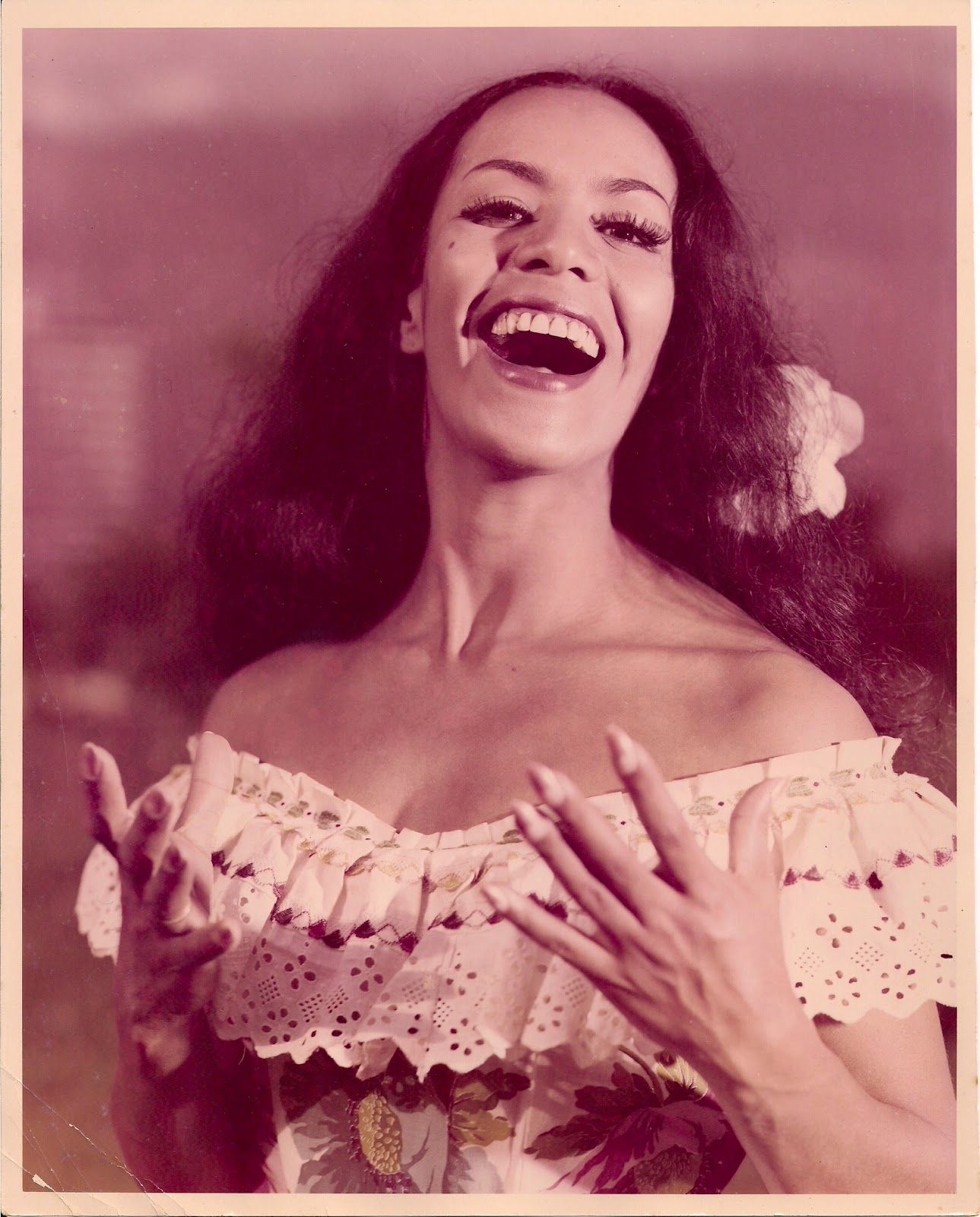
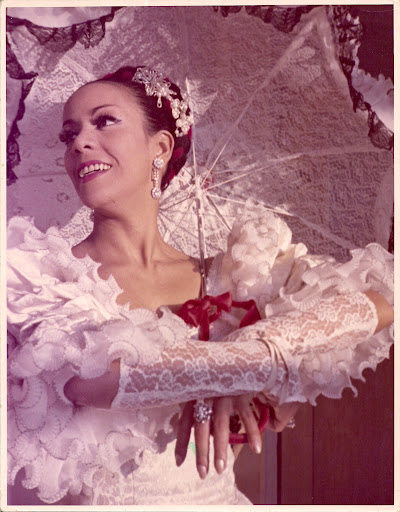
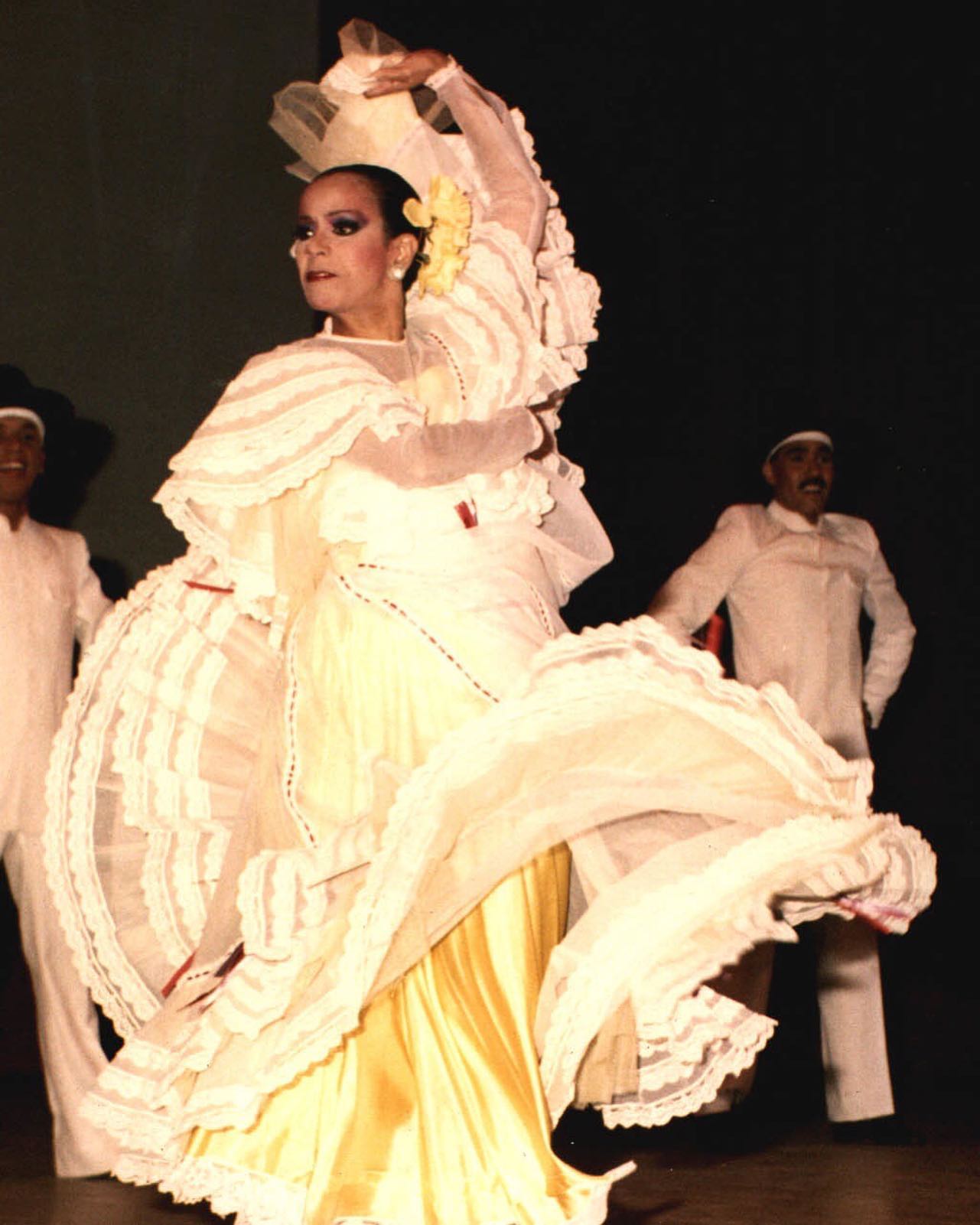
My mom was a flamenco dancer, she studied dance all her life and wanted me to dance too. So, she put me in jazz ballet classes since I was little. I studied with a lady whose name was Sophy Sanfiorenzo, who was also Chayanne, Ricky Martin, and Los Menudo’s teacher of that time. She was very well known in the city of Bayamón, Puerto Rico. Dancing was something secondary for me, but my mom wanted me to take it more seriously. At the end, we made a deal and agreed that I would study salsa and Caribbean dancing.

My grandmother always wanted me to be an artist and pushed me to be what I am today. She does a lot of crafts such as sculptures and paintings. I didn’t inherit those skills (laughs). My aunt is an architect and also paints very well, while another aunt is also very good with crafts. My family is very artistic and I followed that road.

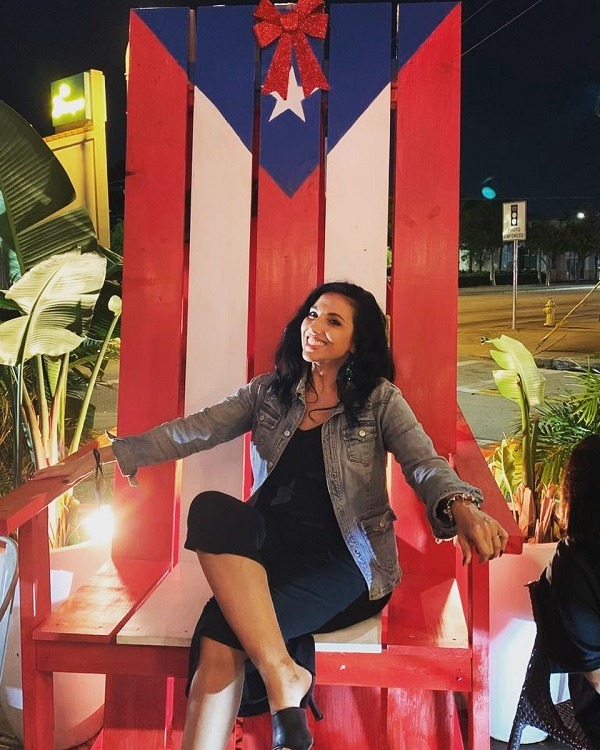
Melina Almodóvar is very proud to be boricua

Her referents

I understand that your grandmother gave you some cassettes with songs by Celia Cruz and Rubén Blades, did these artists influence you or were there others?

My grandmother gave me a Rubén Blades CD and my aunt was the one who introduced me to salsa music thanks to her taste for this genre. Most of the family liked bohemian songs made by Pedro Flores, Rafael Hernández, Bobby Capó, Sylvia Rexach, among others. My grandmother and the rest of my relatives liked bolero a lot. In my case, I like bolero very much and I have done concerts dedicated to this genre, but what moves and motivates me is salsa.

You always listened to tropical music as a kid in Puerto Rico, but I understood that I was cut out to sing salsa when started studying it and understand it deeply. In high school, I came to sing pop, jazz, country, merengue, bachata and many other genres. However, salsa is what I like the most.

You described your move from Puerto Rico to Memphis as a culture shock. What was the most shocking thing about that time?

It’s one thing to move from Puerto Rico to Los Angeles or New York or Florida where there are a lot of Latinos. When I moved, I was very young and went to live in the southern United States, where they listen to country and blues. For me, the most shocking thing was the culture. In Puerto Rico, everyone talks on the front doors and there was a lot of closeness. When we moved to Tennessee, we didn’t know anyone, so we had to start creating a new life and finding our way in this new city.

Melina Almodóvar performing at North Beach Bandshell

You were part of Orquesta Caliente. According to many, that was the first successful Latin salsa orchestra in Memphis. What do you think was the formula for success of this orchestra?

It was a combination of many things because I have been part of many groups and tried to organize orchestras in different places. After that experience, I tried to start an orchestra in Nashville, Tennessee, for a while and tried to start another one in Atlanta, Georgia.

When I was 17 years old, I was called and asked if I knew how to sing salsa, to which I replied yes. That’s when i was given a cassette tape with several songs made by Tito Puente, Ruben Blades, Celia Cruz, among others. I went home and started writing the songs down letter by letter to learn them by heart and audition for the orchestra. That day, I realized that all the musicians were American and extremely talented. I was 17 years old at the time and had no idea who I was playing with, which led me to look up their histories and they were really well trained and talented. Almost all of them were professors at the University of Memphis at the time, but they wanted to form a salsa orchestra.

So, we started playing in different places. Given that there was no internet and no social media, we had to create our own flyers by hand, make copies, go to the houses and put up them there. The first day we played, not a lot of people showed up, but it was a good start for us. After three months, not one more body fitted there.

For me, it was a beautiful experience because we started playing everywhere and were at plenty of festivals in South Florida. We were so into what we were doing and all the members wanted the music to work out spectacularly, so we were united in a common objective. I think that was the key to our success.

Tell me about the Hollywood Salsa Fest

We have been doing this festival for about seven years now and it was a dream come true because I never thought there would be more than 10,000 people there for throughout the day. It is a culmination of all the work we have done since I came to Miami. It was a great achievement.

This Hollywood Salsa Fest of this year included Maestro Charlie Aponte, Timba Live, Salsa Ballet de Cali, Maestro Bobby Cruz, Tito Puente Junior and many others.

Melina Almodóvar next to Oscar D’ León

The Tempo Latino Festival is Back

The major European festival of Latin and Afro-Cuban music will present Los Van Van, Pacific Mambo Orquestra, Interactivo, and Minyo Crusaders (H2)

The benchmark Festival of Latin and Afro-Cuban music in Europe, Tempo Latino, resumes its activities after the forced cessation of its activities for two years due to the Pandemic.

From Thursday, July 28th to Sunday, July 31st, on the main stage Les Arènes, the whole family, heterogeneous public, and inveterate traveler will enjoy the performances of Los Van Van, Pacific Mambo Orquestra, and Interactivo, as well as an exceptional set & exclusive presentation on Saturday, July 30th  at 11 PM of “Con Tumbao All Stars” with the winners of Best Traditional Tropical Album at the Latin Grammy 2021 for their album “Chachachá…Homenaje a lo Tradicional”, Issac Delgado and Alain Pérez, as well as Oscar Hernández, Robby Ameen, Tony Succar, and many more.

Minyo Crusaders rediscovered the songs associated with the working classes.

The festival to be held in Vic-Fezensac, the heart of the Gers de Gascony department (France), will open its doors on Thursday, July 28th, with Tempo Latino Social Club on the stage of its satellite “Geo-rhythmic” Conga with a special performance by the Tokyo band, Minyo Crusaders.

This Cumbia band with a Japanese identity aims to make reversals between the traditional and foreign rhythms. Guitarist Katsumi Tanaka was in charge of bringing together the twelve musicians to perform these magnificent melodies with a fusion of the Caribbean (Reggae, Cumbia, and Cuban Salsa), Africa (Afro-Blues, Afro-Funk, Ethiopian rhythm), and Asia (Thai Pop) after of the Fukushima accident in 2011. The ticket for this show costs €15.80, and the opening is at 6 PM.

Pacific Mambo Orchestra is the only active Latin Big Band on the West Coast of the United States.

Continue on Friday, July 29th with the concerts of the Pacific Mambo Orchestra and Los Van Van together with the Cuban trumpeter, composer, singer, and leader of the band Havana D’Primera, Alexander Abreu.

The first orchestra to perform at the festival in its twenty-eighth edition at 9 PM will be the Pacific Mambo Orchestra. This North American band, a winner of the Grammy Award in the category “Best Tropical Album” in 2014, is the revival of the Latin sound of the Big Bands of the 40s with the combination of Mambo, Pop, Cha Cha, Timba, and Bolero. Pacific Mambo Orchestra founded 12 years ago by the Mexican pianist Christian Tumalan and the German trumpeter Steffen Kuehn has collaborated with renowned artists such as Carlos Santana, Poncho Sánchez, Pete Escovedo, and Arturo Sandoval.

Currently, this Latin Big Band performs on the West Coast of the United States with elite musicians from the Bay Area, and their repertoire is in English and Spanish. Their third album “The III Side” (2020) fuses the traditions of the Mambo of the 50s with the musicality of the moment. This Latin Big Ban considered one of the best in the United States will also is at the prestigious San Francisco Annual Jazz Festival on Wednesday, June 8th from 7:30 PM to 9 PM. Address: Miner Auditorium, 201 Franklin Street, San Francisco (EEUU).

“Legado” is an album in homage to the legacy left by maestro Samuel Formell.

The second orchestra is to take the stage on Friday at 11 PM and will be Los Van Van with their special guest Alexander Abreu. The emblematic Cuban music orchestra will celebrate its more than 5 decades of history.

Los Van Van known by many as the “Rolling Stones of Salsa” was founded in 1969 by bassist and composer Juan Formell, a legend of Cuban music, who accompanied by José Luis Quintana, known as “Changuito” and César “Pupy ” Pedroso, invented the “Songo”, a Cuban rhythm predecessor of the “Timba” or “Salsa Cubana”, which generated the “Salsa – Son” with a Cuban sound that has made generations dance.

In 2018, they recorded their first record production “Legado” since the physical departure of Juan Formell in 2014. This tribute album has 14 songs with 3 new versions of the international singles Te extraño, Por qué lo haces y Amiga mía.

On the third day of the Festival, Saturday, July 30th, the Latin sound will be awakened by the performances of the Interactivo group and the exclusive presentation of “Con Tumbao All Stars”. On Sunday, July 31st, Tempo Latino will close its doors on the Les Arènes stage with London Afrobeat Collective and Alain Pérez & La Orquesta Bassiste.

Most of the members of Interactive are representatives of currents such as Nueva Trova, son, and Cuban jazz.

The avant-garde collective, Interactivo, is one of the most representative bands of the current Cuban generation and will take to the Tempo Latino stage at 9 PM.

This emerging orchestra of international stages brings together the most brilliant and eclectic composers and producers in Havana. Each member contributes their specialty: Timba, Funk, Jazz, Hip Hop, Rock, Rumba, traditional Cuban music, and Soul for a result of great richness, where individual originality, musical creativity, and avant-garde ideas enrich the group.

London Afrobeat Collective has hypnotic flashes and powerful percussive beats.

Similarly, the addictive London Afrobeat Collective has been offering festive music based on Jazz, Funk, Rock, Dumb, and African Vibes for ten years. Its international DNA made up of nine members from England, Italy, France, Congo, Argentina, and New Zealand with the powerful voice of the Congolese singer Juanita Euka has made its rhythm addictive music with powerful and committed messages. The London-based band will open the night of concerts on Sunday, July 31st at 9 PM.

Alain Perez and the Bassiste Orchestra will offer a mixed show of Salsa, Son, Timba, and Latin Jazz

This musical evening ends with Alain Perez, bassist, singer, arranger, and who composes his orchestra of 13 young musicians on stage to offer a mixed show of contemporary Cuban Salsa, Timba, and Latin Jazz. His talent has given him wonderful experiences with internationally famous orchestras and musicians such as Los Van Van, Irakere, Issac Delgado, Paquito D’Rivera, and Celia Cruz. Always accompanied by his elephant-headed cane, in homage to Cuban musician Benny Moré, Alain has been influenced by flamenco through his work with Cuban artist Paco de Lucía.

The versatile artist born in Havana was twice-nominated for the Latin Grammy Awards in the category of Best Traditional Tropical Music Album with “El alma del Son, tribute to Matamoros” (2015) and “ADN” as Best Salsa Album. (2017).

El Cuento de la Buena Pipa (2020) is his most recent record production, and you can enjoy it on the main stage of the festival at 11 PM.

You can get the tickets for Tempo Latino 2022 on their official site http://www.tempo-latino.com/ for a four-beat tempo. The Tickets for the four nights of concerts are €86.70.

And while you wait for the Tempo Latino Festival (28th edition) you can enjoy its free predecessor event Clutcho at La Grainerie this May 4th. This place is emblematic of the circus and itinerant disciplines that take place with a large space that involves a large open-air square, and a performance hall with a capacity for 230 people through an “interior street” that serves for creative studios and workshops.

All the best from Stockholm to the world with Fredrik Kinbom and Valter Percussion

Innovative Percussion Instruments designed in Sweden

Timba Valteriana is the salsa project of Swedish percussionist Valter Kinbom.

Renowned Swedish percussionist Valter Kinbom released this January 14, 2022 the first single from his salsa project Timba Valteriana, “Mil Colores”.

Valter founded Timba Valteriana in 2006, when he started composing salsa songs in collaboration with Cuban musicians Lesmer Solenzar and Pepe Espinosa.

These early songs were never officially released, but received attention in the Peruvian timba scene. Now – after 15 years of silence – it’s time for Timba Valterana’s first official single! The new track “Mil Colores” is a love song that addresses the human inability to see all the nuances and the whole spectrum in the other, and the ease with which we slip into a black and white point of view. A theme that seems more relevant than ever in this day and age.

Timba Valteriana plays Cuban timba (salsa) with influences from many other directions.

Innovative Percussion Instruments designed in Sweden Timba Valteriana is the salsa project of Swedish percussionist Valter Kinbom.
All the best from Stockholm to the world Fredrik Kinbom and Valter Percussion

The vision is to be innovative by introducing new elements into the music while at the same time there are strong roots in the Cuban soil, also giving space for new means of expression to flourish.

In “Mil Colores” this can be heard through the use of the tres (Cuban three-string, six-string guitar) instead of the piano, and in that Valter here plays four congas for a richer and more melodic “tumbao”.

“Mil Colores” has been written, arranged and recorded by Valter Kinbom in his Stockholm studio, mixed by Monsito Music, Stockholm, and mastered by Fredrik Kinbom at Madame Vega’s Boudoir, Berlin.

Musicians:

Valter Kinbom – lead vocals and backing vocals, congas, timbales, bongo, guiro, bell, tres, synth bass.

Karin Hammar – trombones

Nils Janson – trumpets

Julian Montilla – baby bass

Caroline Schröder – backing vocals

Rapson Espinosa Torres – backing vocals

About Valter Kinbom:

Valter Kinbom, born in Stockholm, is a musician (mainly percussionist) and instrument builder. He studied music mainly in Cuba (Censea, Havanna) and at the Royal College of Music (Kungliga Musikhögskolan) in Stockholm, and over the years has played with many different artists in the Swedish world music scene (Simone Moreno, Hedningarna, Ale Möller, Massivet, Tarabband, Erik Steen, to name a few).

Valter has extensive knowledge of Cuban, Brazilian, Arabic and Western music, as well as other styles such as Flamenco. He loves the complex intricacies of polyrhythmic African music, but also the clean simplicity of Western folk music. His fascination with rhythms and instruments from all parts of the world has led him to a deep understanding of how they interconnect and relate to each other. This, along with his passion to innovate and improve, led him to found his company Valter Percussion in 1997.

Since then, Valter has designed and produced several new percussion instruments that have been recognized by percussion masters around the world, such as Jamey Haddad (Paul Simon), Trilok Gurtu, Marilyn Mazur and many, many more.

Fredrik Kinbom y Valter Percussion

After many years in his workshop and playing behind other artists, the time has finally come for Valter to release his own music. “Mil Colores” is just the beginning – there is much more to come.

Private link to listen to “Mil Colores” on SoundCloud:

Private link to “Mil Colores” electronic press kit (WAV and MP3 files, cover art, photos, etc.):

https://www.dropbox.com/sh/q4jbkx3r6pb6md7/AADdwU4zGRsj-JlELNppOZNsa?dl=0

Valter Percussion’s Instagram: 

Valter Percussion Facebook:

Valter Percussion website: 

Release Date was this January 14, 2022 (digital).

ISRC: USCGH2204179

Article of Interest: Gerardo Rosales meets Orlando Poleo, who invites him to study Afro-Caribbean percussion in Caracas

What Ángel Meléndez has to say about his brilliant musical career

Who Ángel Meléndez is

Ángel Meléndez is a source of pride for Puerto Rico who lives in Chicago, United States, and has a bright musical career that has not gone unnoticed by great well-known people and record labels linked to Latin music. The producer, arranger, composer, music teacher and trombonist studied at VanderCook College of Music, where he gained most of the knowledge that would serve him to become the figure he is today.   

His hard work has allowed him to be nominated for the Best Tropical Music category at the Grammy Awards and the winner of the 2005 Annual Independent Music Awards thanks to the talent he displayed on his album Ángel Meléndez & the 911 Mambo Orchestra.   

Meléndez was great lick to collaborate with some of the greats of music such as Cheo Feliciano, Adalberto Santiago, Tito Puente, Tito Allen, Frankie Ruiz, Ismael Miranda, among many others. 

Trombonist Ángel Melendez
Producer, arranger, composer, music teacher and trombonist Ángel Meléndez

His most recent projects include the one he made with Gia Fu and Ralph Riley. Riley was in charge of the making of Big Band Maquina (album name) and was in charge of organizing the work of all the artists who lent their talent to carry out this ambitious project together with Meléndez and other producers. The album includes 11 tracks and a bonus track, as a result of the serious issue of fathering so many music professionals in a single project in the middle of the pandemic and from so many recording studios. 

We had the opportunity to talk to him to learn a little more about his career and what he is doing now. We hope everyone reading this pleasant talk will enjoy it. 

Interview 

Today we are pleased to welcome composer, arranger, instructor and trombonist Ángel Meléndez. Good afternoon, Mr. Meléndez, how are you today?  

I am doing very well, thank goodness. Although I am very cold here in Chicago, but it is not your fault (laugh). 

You once commented that you always liked the Big Band sound. How important is the number of musicians in an orchestra?  

When I was a kid, my family always organized parties and played the music of Machito, Tito Puente, Tito Rodríguez and many others. So when I went to college, the jazz band director made me his manager. When I had it in front of me, I knew that was what I wanted to. I love it. That is why I say the more the better, but there are also groups like Joe Cuba Sextet that sound great with only six or seven members.   

You have been a music teacher for several decades. Do you think training other artists has influenced your style? Do you think that you have learned from your students? 

I have had many students who have become professional musicians and also learned a lot from them. In college I learned to play many instruments on a very basic level. One of the things I have learned from my students is that you can learn to play two, three or four instruments properly. I love the piano, I bought a Spanish guitar and am learning to play flamenco late in life. 

Ángel playing his instrument
Ángel Meléndez performing and playing the trombone


So you never stop learning and are always looking for new instruments and rhythms to add to your work 

Yes! Right now I am working on a project with Hong Kong producer Gia Fu and she is going to kill me because she does not want anyone to know yet (laugh). It’s called the Borinchino Project and includes Chinese songs in Latin rhythms. The first song is a bolero cha cha chá. 

What was the experience of working together with Gia Fu, Ralph Raley and the rest of the team of musicians with whom you made this album? Are you happy with the result?  

Of course we are! We were all pleased with the record. What happened was that I made a jingle called Lisa La Boricua for a dance academy called Lisa La Boricua in swing dancing about 20 or 25 years ago. In Germany, it was a hit for about 14 weeks. Gia is also a salsa DJ, she was doing some work in Switzerland when she heard that track which was like a jam session. She liked it so much that she thought about collaborating with me. After many months of looking for me, he found me. So my former timbalero is now music director of Victor Manuelle and knows the best musicians in Puerto Rico. When they called me and offered me to collaborate with them, they only wanted to make two songs. I told them if I said yes, we were going to get it right and go to Puerto Rico. Since we are in times of Covid-19, the best musicians are available. We went to Puerto Rico, made two songs and loved the result, so they said to make four more songs. The second time, Gia came from Hong Kong. She is like a painter who knows exactly what she wants. She already bears in mind the idea of how this will all turn out. She can be a bit stubborn, but, at the end of the day, everything always goes as she hopes. If she imagines a song with Tito Allen singing, she got it. 

Something that got our attention at International Salsa Magazine is the way you did this project. We know that you were conceiving everything from different countries and studios thanks to new technologies. How was the process of recording from several places as far apart? How do you feel about what you achieved?   

Most of the recordings were made at Rolo Studios in Puerto Rico. The vocals for the two tracks recorded by Herman Olivera were created at Nino Cegarra’s studio, but vocals by Tito Allen were done in New York because he did not want to travel to Puerto Rico. That is why Ralph, Gia and I went to New York to record them there, but the base, percussion, brass and backing vocals were done at Rolo Studios.   

Album Big Band Máquina
Album cover Big Band Máquina

In addition, the pandemic made everything difficult, especially travel, how much do you think the pandemic has affected your work? Do you feel that things are coming back to normal? Is your work back to normal?  

It has made it impossible to go back to work. I had about three or four bookings, but everything got cancelled when the Covid pandemic was getting worse. As I told you, In part it was a blessing because no one was working. Luis Marín (Gilberto Santa Rosa’s piano player), bassist Pedro Pérez (he has worked in more than 500 recording productions), conguero Sammy García (musical director of Charlie Aponte), Pocorelli (musical director of Víctor Manuelle as I had said), Sammy Vélez (musical director of El Canario), Richie Bastar (El Gran Combo’s congocero) were available to work with us and that it was a blessing. 

Exactly. This whole situation has given you the opportunity to do other activities such as writing music, making new arrangements and many other things.  

That’s it. I put my students on an assignment and most of them paid no attention anyway. I gave them 10 or 15 minutes to practice while I sat at the piano and waited for them to tell me something. During that time, I used to write. As they say, everything happens for a reason. 

What plans do you have for 2022?  

There’s Borinchino, which is the project I am working on with Gia and Ralph wants to repeat what we already did in mambo. Right now I am writing two new musical productions with new songs. In the case of Borinchino, the album will include several Chinese songs with Latin genres such as salsa, bolero, merengue, cha cha chá, among others. In the case of the project with Ralph, it will be almost the same as we did with the previous album. 

This is Gia Fu
Hong Kong producer Gia Fu

This all means this partnership with Ralph and Gia will continue for an indefinite time? 

Of course it will! They are thrilled with me and I am thrilled with them. They are my family in Hong Kong. The two people I love most in Hong Kong. The only people I know there, but I still love them very much. 

What recommendations do you make to young people who want to do the same thing in the future? 

I would advise them to learn about their culture. Our music is incredible and has a very high level. We grew up with children’s songs like Cheki Morena, so a complicated rhythm is very easy for us. In contrast, Americans grow up listening to the A, B, C song. When kids from our Latin countries begin to learn music, it is much simpler for them to play things with complicated rhythms. What I would like to tell those who read this interview is that they have to learn about their culture and music.  

Latest News From Events In Netherlands

Alfredo Rodríguez Trio, Latin Weekender 2021, And Alain Pérez Quinteto

Two back dance couples on stage ready to dance
November will be packed with Latin events this November in the Netherlands

With the arrival of the penultimate month of the year, it’s normal, that we are eager to enjoy and start having memorable moments now that 2021 is almost over. That is why, as a first step, we offer you the latest news about the most important Latin events taking place in the country known to be partially below mean sea level, the Netherlands.

Alfredo Rodríguez Trio Live

Alfredo Rodríguez in a blue shirt sitting in front of a white piano
In this Cuban Jazz concert, you will enjoy the most recent record production: The Little Dream

Get ready to delight yourself with the masterful sound of Jazz and its fusions with the virtuoso Cuban pianist Alfredo Rodríguez along with the participation of Michael Olivera (Drums) and Yarel Hernández (Double Bass) in a dazzling Latin Jazz concert on November 19th at the Bimhuis auditorium in Amsterdam.

Energy, Latin Style, And Unique Enthusiasm Come Together In The Music Of This Trio

Alfredo Rodríguez (composer and pianist) was born into a family of artists whose father is the famous singer and TV host from the island of Cuba, Alfredito Rodríguez.

From a young age, he was a prodigy on the string instrument. “He studied classical piano at the prestigious Amadeo Roldán Conservatory and the Higher Institute of Art while playing popular music in his father’s orchestra at night. While performing at the 2006 Montreux Jazz Festival, he was discovered by his future mentor and producer, the legendary Quincy Jones.” Excerpt from his biography.

The 36-year-old pianist from Havana has classical training with nuances of styles of dance music from the bars of his hometown and the Progressive Jazz of Keith Jarrett and Chick Corea, which we can evidence in each composition and concert.

Rodríguez already has four studio albums, and one of his most emblematic presentations was made in 2019 with Richard Bona with a full house in one of the best concert halls in the world, Muziekgebouw aan ‘t IJ, located in the capital of the Netherlands.

Date: Friday, November 19th

Venue: Bimhuis. Piet Heinkade 31019Amsterdam, Netherlands

Time: 8:30 PM

Ticket: € 23 (Sitting) / € 19 (Standing)

Latin Weekender 2021

Main couple dancing. Man with hat and woman with flowered top
In Latin Weekender 2021, you will have three days of the hottest parties of Salsa, Kizomba, Bachata, Tango, and Afro Dance

Latin Weekender is the Latin festival per excellence in the Netherlands. This sixth edition will feature 25 workshops at all levels, boot camps, a pool party, shows, a concert with the Pegasaya Orchestra, and nine social events of Salsa, Bachata, Tango, Kizomba, and Afro Dance.

Get away from the routine with your group of friends and lovers of Latin music for a long weekend and experience the passion for dance.

Remember to buy your tickets in advance as there is currently less availability for Latin Weekender 2020 reservations.

Date: Friday, November 19th – Sunday, November 21st

Venue: Center Parcs Limburgse Peel. Peelheideweg 25, 5966 PJ America, Netherlands

  • You Can Keep Reading: Do You Know In Which Country Rubén Blades Start his Tour?

Pegasaya Orchestra dressed in white shirt and black tie
The Pegasaya Orchestra played for six consecutive hours in the Rotterdam Summer Carnival Party Parade 1998

The Pegasaya Orchestra will be present at the Latin Weekender 2021, and you can’t miss it. The band, made up of ten musicians, was founded in 1985 in Tilburg city (the sixth most populous city in the Netherlands).

This orchestra, the greatest leader on the Dutch Latin scene, has participated in national and international festivals. They have been the first band to win the audience award twice as The Most Popular Group at the Rotterdam Summer Carnival (1995 and 1999). In February 2001, Pegasaya released their compilation album “The Best of the Pegasaya Orchestra” and also featured live performances on the Holland Casino chain in the Netherlands for a year (2007/2008). They also accompanied Elvis Crespo on May 28th, 2009 during his concert at the Heineken Music Hall in Amsterdam as well as Jeniffer López at her presentation at the Hennie Huisman Soundmix show in 2003.

Double Concert: Alain Pérez Quinteto + Alfredo Rodríguez Trio

Alain Pérez playing bass
Alain Pérez was recently nominated for the Latin Grammy 2021 for the album Cha cha chá: Tribute to the traditional together with the Orquesta Aragón and Isaac Delgado

Music Meeting Concerts presents a special Sunday in the Cuban style with the musical meeting between Alain Pérez Quinteto and Alfredo Rodríguez Trío in two unique performances on the third Sunday of November.

Music Meeting Festival 2021 organizes for this fall a series of concerts at LUX and Brebl in Nijmegen, LantarenVenster in Rotterdam, Concertgebouw Amsterdam, and MuziekPublique in Brussels. Music lovers will be able to enjoy unique evenings with challenging compositions and collaborations by music teachers from all over the world as a prelude to the Music Meeting Festival 2022.

Alain Pérez, the Cuban artist with numerous Latin Grammy Award nominations, will present his magic and charm with his fusion of Salsa, Latin Jazz, and Flamenco on November 21st in Nijmegen. Alain, known for leading the legendary singer Celia Cruz’s orchestra before he turned thirty, consolidated his musical career by becoming the bassist of Paco de Lucia for six consecutive years. Currently, Pérez has his band and is one of the most important musicians in his native country. Alain Pérez plays bass, guitar, piano, percussion, and sings; he also works as a composer, arranger, and producer. For this event, Alain (Bass and Voice) will be accompanied by Andy García (Piano), Inoidel González (Tenor Saxophone), José Montaña (Percussion), and Alain Ladrón de Guevara on drums.

On the other hand, Cuban pianist Alfredo Rodríguez breaks the third wall between him and his audience when he shares his skill and technique live. Attendees feel close to the refined play of the notes with the rhythm and harmony of the melodies that can be sung with ease. For this Latin event, Rodríguez (Piano) has in collaboration with his two friends: Munir Hossn (Bass / Spanish Guitar) and Michael Olivera (Drums).

Date: Sunday, November 21st

Venue: Mariënburg 38-39, 6511 PS Nijmegen, Netherlands

Start: 3:00 PM

Admission: € 22.50

  • « Go to Previous Page
  • Page 1
  • Interim pages omitted …
  • Page 7
  • Page 8
  • Page 9
  • Page 10
  • Page 11
  • Go to Next Page »

International Salsa Magazine (ISM) is a monthly publication about Salsa activities around the world, that has been publishing since 2007. It is a world network of volunteers coordinated by ISM Magazine. We are working to strengthen all the events by working together.