



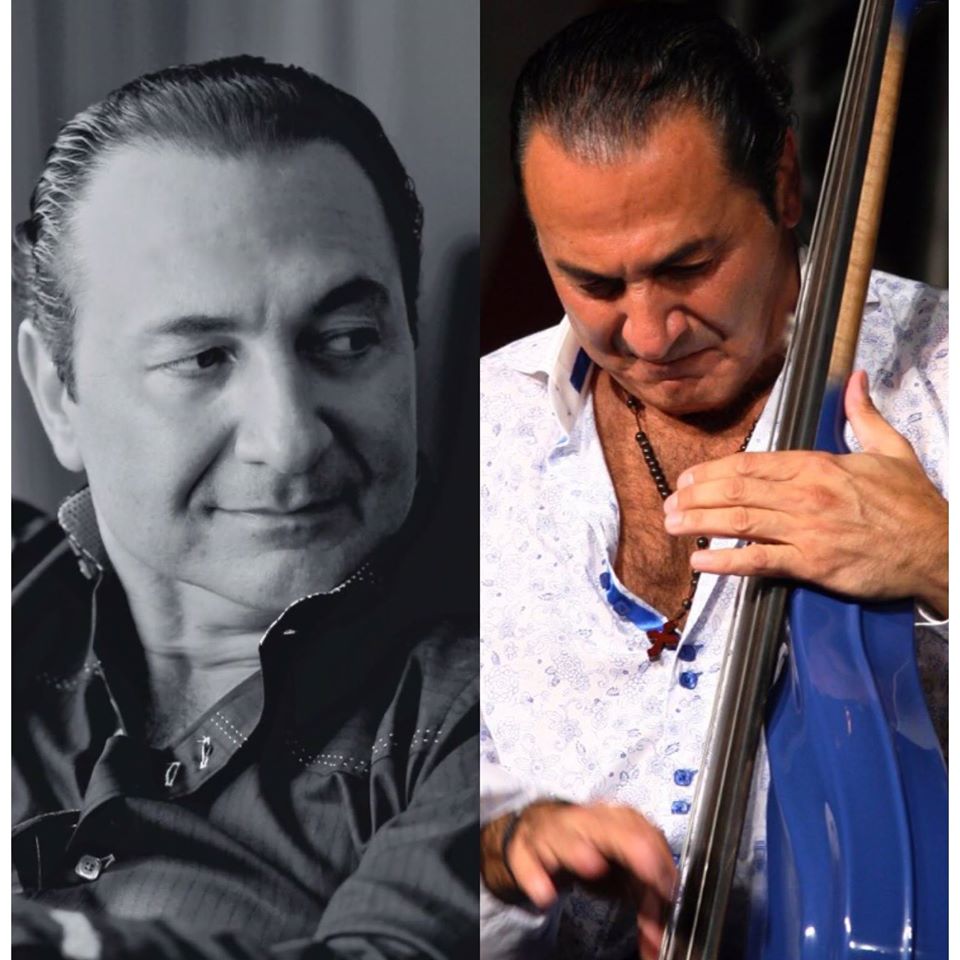
Sirak Miguel Baloyan, talented musical creator, prodigy son is now among the best exponents of music in the world.
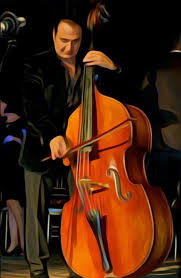
Sirak, from a very young age, was amazed at his creative ability that has led him to countless recognitions and satisfactions. His particular interpretative expression with different musical instruments gives an example of his originality and style.
The experience of living and traveling around the world has taught him the styles, culture, rhythms and different musical genres around the planet.
Now, with more than 20 years of experience, we see his impressive work both in his albums as an artist and in his productions and compositions for performers of the highest level.
In 2002 he obtained the PLATINUM AWARD for his production of the album “SABOR A MEXICO” by singer Bertín Osborne.
He is affiliated with the society of composers ASCAP. In his multifaceted experience and participation within the musical range we can include; Graduated from Dick Grove Music School Los Angeles, Graduated from San Diego State University, student at the Puerto Rico Conservatory of Music, artistic director and producer of the SBB Records record label, research studies in the Afro-Antillano genre and director of renowned radio programs , among others.
Sirak, with more than 130 musical works (Ballads, Bolero pop, Bolero Trio, Bossa Nova, Chachachá, Dance/Pop, Flamenco, Jazz, Latin Jazz, Mariachi, Norteño, Rock, Salsa, etc.) demonstrates his skill as a composer. His compositions have been recorded by artists of great international prestige.
In 2002, Sirak’s innovations still continue. His dream of bringing together excellent musicians from the Antilles (Caribbean) now comes true with the formation of his well-known orchestra LA SONORA ANTILLANA.
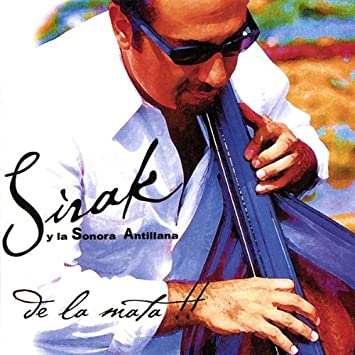
His new album DE LA MATA will surely become one of the most innovative albums of the moment. DE LA MATA, a top quality project, promises to be very successful in the Latin American and European markets. Album recorded in Puerto Rico, it has 10 songs inspired by Sirak and produced by himself, it includes the most prestigious arrangers of the tropical genre such as: Jose Madera, Tommy Villarini, Rafael Torres, Tito Rivera, Mandy Vizoso and Sirak.
On Feb 24, 2008, Sirak y Su Sonora Antillana performed on OSCAR night at a concert sponsored by Billboard Magazine and Children Uniting Nations. The guests at this annual event are movie and music personalities.
Previous years have featured artists such as Prince, Wyclef Jean, Ruben Studdard, Stevie Wonder, Chaka Khan, The Black Eyed Peas, Gladys Knight, Al Green and many more.
Singer-songwriter, 2 Shows at the Oscars, winner of awards: M.V.Award, cd triple platinum, walk of fame, 100 videos on YouTube, 150 compositions (salsa, bolero, ballad, latin jazz, bossa nova, etc.) 200+ articles press.
To see his YOUTUBE channel (98 videos):
http://www.youtube.com/user/sirakbaloyan
For more information:
Europe/ Israel / Galilee
Itamar Doari is an international percussion artist who has spent most of his adult life traveling around the world giving concerts, recording albums, appearing at music conferences and most importantly studying the ancient art of rhythm and drumming. He began his musical journey at the young age of six, when he played his first drum in the Israeli desert oasis of Wadi Farran.
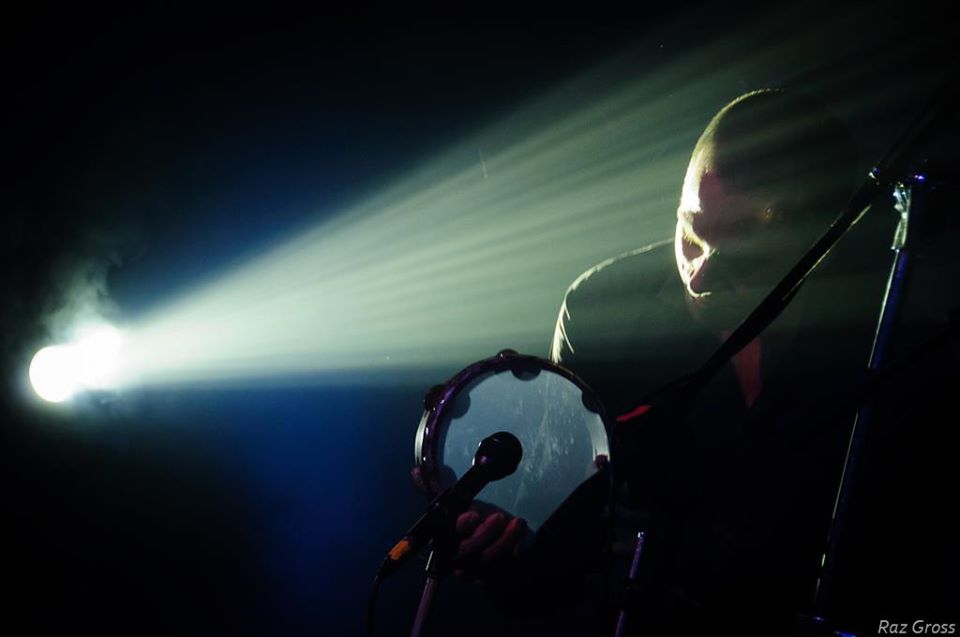
Itamar, born and raised in Galilee, grew up surrounded by a variety of musical traditions: Arabic, Sephardic, Turkish, Persian, Bedouin and many others which had a huge influence on his musical persona. During his early years of playing, he had the privilege of learning from some of the most prestigious teachers in percussion and hand drum technique in the world, among them; Zohar Fresco, Glen Vallez, Sallem Darwish and Ahmed Taher. Doari plays a wide range of instruments, including the Darbuka, Dohola and a variety of frame drums such as Bandir, Tar, Riq, Udu, and Cajon alongside Cymbals, bells, shakers and many others.
Itamar Doari’s wide ranging techniques have led him to work with an eclectic mix of some of the world’s finest musicians. Including prominent Jazz musician Avishai Cohen, with whom Doari has performed and recorded three albums, both as a musician and as a musical producer.
He was at the forefront of the Idan Raichal Project, which gained international success due to the unique Ethiopian musical exploration.
He has a continuing musical association with mandolinist and Grammy nominee Avi Avital, with whom Doari has collaborated in several projects including the “Between Worlds” Trio and with orchestras around the world. The great Ladino singer Yasmin Levy, Israeli Rock legend Berry Sakharof, oud player Samir Mekhul,Esther Ofarim, Yoni Rechter, Eviatar Banai, Amal Murcus, Ahuva Ozeri, Shotei Hanevuah, Nitin Sawhney, Omer Faruk, Tekbilek and Radiohead guitarist and composer Johnny Greenwood.
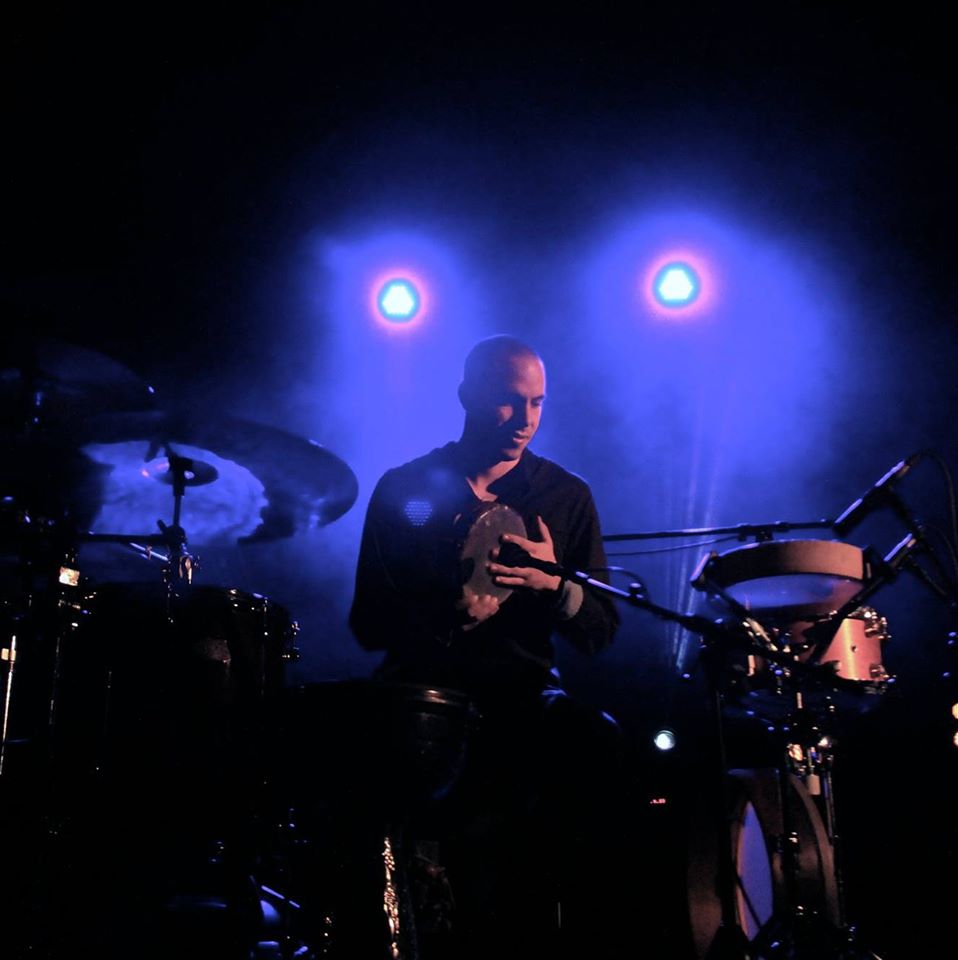
In 2010, Itamar became one of the founding members of the band Yemen Blues along with singer & composer Ravid Kahalani, the band explores music from a variety of different cultures from Yemen to West Africa inflected with contemporary grooves of funk, Arabic Music and the deep soul of old chants. A project particularly close to Itamar’s heart is one he created entitled WadiAtma.
In 2015, he put together a band of virtuoso musicians from the Flamenco and Middle Eastern traditions which created a musical melting pot of ancient art forms.
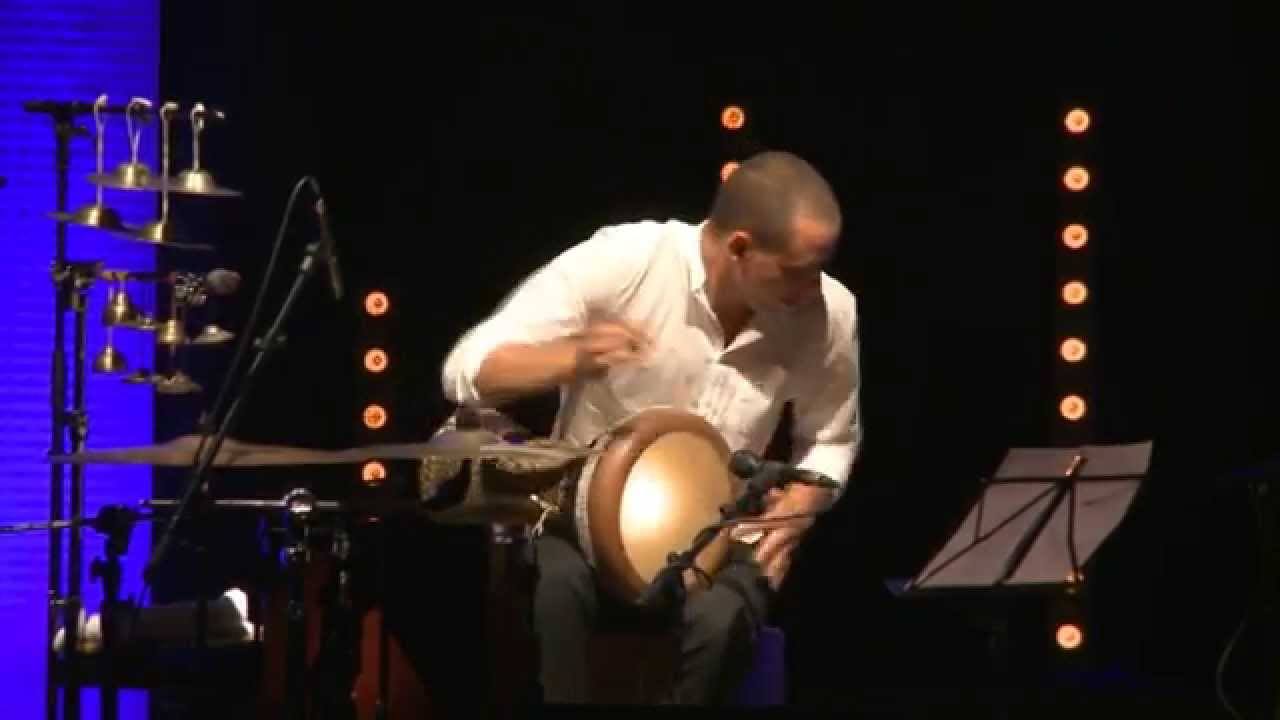
The name of the project unites souls (Atma in Sanskrit) with the wadi (originally an Arabic word that found its way to Spain via Andalusia) in a way that describes, in the best possible way, the meeting on stage: The Valley of the Souls. His collaborations have seen him perform on some of the world’s most prestigious stages and Festivals.
Itamar has recorded with several notable record labels, such as; Universal, EMI, Deutsche Grammophone, Sony, Helicon, Blue Note, Decca

He was an excellent musician of Cuban music and Afro-Cuban jazz, considered one of the central figures of the golden age of Cuban music.
In addition to being a pianist, his best known facet, he has been a composer, arranger and orchestra conductor.
He was born in Quivicán, Cuba, on October 9, 1918. He was the father of the Afro-Cuban jazz pianist Chucho Valdés (b. 1941). From 1931 to 1935 he studied piano in his hometown with Moraima González; in 1936 he moved with his family to Havana, where he studied music theory, harmony and composition with Oscar Bofartigue.
In 1938 he made his professional debut with Happy D’Ulacia’s orchestra. He played in Havana, since the 1940s, in the orchestras Ulacia, García Curbelo, Julio Cueva and Orquesta Tropicana, and recorded albums with groups dedicated to performing Afro-Cuban jazz.2
Known among his family and friends by the affectionate nickname of Caballón because of his considerable stature, he composed mambos, such as La rareza del siglo, which covers the genre recently introduced by Pérez Prado and which would change the course of Cuban music. From 1948 until 1957, he worked at the Tropicana cabaret as pianist and arranger for Rita Montaner.
The Sabor de Cuba orchestra, of Bebo Valdés, and that of Armando Romeu, made the show of this night club, in which Valdés stopped performing in 1957, when he was hired by Ernesto Roca, of the Peer International Music Publishers, to make arrangements for Xiomara Alfaro and Pío Leyva; at the same time, he joined Guillermo Álvarez Guedez, of the Panart and Rolando Laserie in Radio Progreso. With his orchestra Sabor de Cuba, he accompanied singers Reinaldo Henríquez, Orlando Guerra (Cascarita), Pío Leyva and Ada Rex; Beny Moré also sang with this group, and Chucho Valdés made his debut.
About the descarga or jam session, there are multiple versions, this is the one by Bebo Valdés which, due to the concreteness of data, dates and record labels that made the recordings, is the most objective: “One night in October 1952, I was resting in a cabaret in Havana with members of the Tropicana orchestra.

Sometimes the descargas were held at four o’clock in the morning, at the end of the [Tropicana] show. The percussionist Guillermo Barreto was the one who animated them; we had received Roy Haynes, Kenny Drew, Sarah Vaughan, Richard Davis and many other musicians passing through; in fact, all the great names of jazz paraded through the Tropicana.
All of that could have been recorded, but no one was interested. So, that night Irving Price, the owner of a record store on Galiano Street, announces to me that producer Norman Granz is in town and that he can’t believe that Cuban musicians are capable of playing jazz.
Granz and Price ask me to go to the studio to record. It was September 16, 1952. So, I called some musicians, but I myself was late for the session, because in the morning I had another recording for RCA: I was going to accompany a singer! When I finally arrived at Panart’s studio, Granz had already left for the United States.
We called the orchestra The Andre’s All Star, after the name of Irving Price’s record store. We had decided to play classic jazz tunes, such as Distrust, Taboo, Sleep and Blues for Andre. At the end of the session, as there were still a few minutes available for the record, I started playing a riff, from which we improvised. We called that track “Con poco coco.”
The record was titled Cubano! and the participating musicians were all from the Tropicana cabaret: Gustavo Más, tenor saxophone; Alejandro Vivar (El Negro Vivar), trumpet; Kiki Hernández, double bass; Guillermo Barreto, timbal; Rolando Alfonso, tumbadora and Bebo Valdés, piano.
The works it contains are the same as those mentioned by Bebo Valdés, and the label, Mercury. In 1955, Bebo Valdés recorded, in the studios of Radio Progreso, Holiday Habana and She Adores the Latin Type, for the Decca label, which contained mambo, chachachá, bolero, jazz descarga, even jazz with bebop tendencies.
According to Luc Delannoy, in 1956 the Panart recorded Cuban Jam Session, with Julio Gutiérrez and Pedro Jústiz (Peruchín), as directors, and the musicians Alejandro Vivar (El Negro Vivar), Edilberto Escrich, Osvaldo Urrutia (Mosquifin), Emilio Peñalver, José Silva (CHombo), Juan Pablo Miranda, Salvador Vivar, Jesús Esquijarrosa (Chucho), Oscar Valdés, father, Marcelino Valdés, Walfredo de los Reyes and José Antonio Méndez. The participation of Israel López (Cachao) in a descarga did not occur until 1957, when the Panart recorded Descargas cubanas, with the participation of Cachao himself, Guillermo Barreto, Gustavo Tamayo, Rogelio Iglesias, Richard Egües, Andrés Hechavarría (El Niño Rivera), Rolito Pérez, Alfredo León, Arístides Soto (Tata Güines), Alejandro Vivar (El Negro Vivar), Generoso Jiménez, Orestes López (Macho), Emilio Peñalver and Virgilio Vixama. In other years, there were also recordings of downloads, and some unrecorded ones, such as those recalled by Leonardo Acosta at the Cuban Jazz Club, held between 1958 and 1960, with the participation of Pedro Jústiz (Peruchín), piano; Guillermo Barreto, drums and pailas, and Arístides Soto (Tata Güines), tumbadora (drums). This proves -or at least shows another side of the coin- that Bebo Valdés was one of the initiators of descarga in Cuba, a resource used by Cuban musicians in the most diverse instrumental formats, genres and styles of our popular music, as, for example, did the composers of the filin movement.

That same year he travels to Mexico with the purpose of recording a disc with this new modality of Cuban music, which also included a new choreography; they were not successful, and, according to Bebo Valdés, “the batanga died a natural death”.
When he left Cuba in 1960 due to disagreements with the Cuban government, Bebo also abandoned his family, his wife Pilar Valdés and his five children (including Chucho). Bebo Valdés goes to Mexico, then moves to Los Angeles, California, where he works with singer Miguelito Valdés; from there he travels to Spain, where he records two albums as director of the orchestra that accompanies Chilean singer Lucho Gatica.
Later he toured England, France, Holland, Germany and Finland with the Lecuona Cuban Boys. In 1963 he settled in Sweden, and worked with the Hatuey Orchestra, a Swedish group playing Cuban music. In Sweden he formed a new family when he married in 1963.
International career
After thirty years of relative anonymity, on November 25, 1994, Valdés received a call from Paquito D’Rivera, who invited him to record a new album in Germany for the Messidor label. A new beginning in his career took place at the age of 76 with the recording of Bebo Rides Again.
He participated in Fernando Trueba’s film Calle 54, along with, among others, pianist and composer Chucho Valdés, Paquito D’Rivera, Elaine Elías, Chano Domínguez, Jerry González, Michel Camilo, Leandro J. Barbieri (Gato Barbieri), Ernesto Antonio Puente (Tito Puente), Arturo O’Farrill (Chico), Israel López (Cachao), Orlando Ríos (Puntilla) and Carlos Valdés (Patato).

An integral musician capable of tackling the most diverse genres and styles of music, not only as a pianist and composer, but also as an orchestrator and orchestra conductor of sublime values; of solid technical training, both theoretical and pianistic, Bebo Valdés is one of the all-time greats of Cuban music. He was, with Israel López (Cachao) and Patato Valdés, nominated for the Latin Grammy Award for El arte del sabor, best traditional tropical album 2002.
In 2002, Fernando Trueba produced Lágrimas negras, an album that unites flamenco singer Diego el Cigala with Bebo Valdés on piano.
After its release in 2003, it became an international success, recognized with a Grammy, three Music Awards, an Ondas Award, five Amigo Awards, three Platinum Discs in Spain and one each in Argentina, Mexico and Venezuela. The New York Times praised the album as Best Latin Music Album of the Year and opened the doors to a tour of Paris, New York, London, Havana, Buenos Aires, Tokyo, Mexico City, Madrid and Barcelona, among others. By the end of 2004 the album had sold more than 700,000 copies worldwide.
He retired to Benalmádena, a village in the province of Málaga (Spain), until his death in Stockholm (Sweden).
Read also: Carlos “Patato” Valdés one of the best percussionists in the history of Latin Jazz

At a time when entertainment is at our fingertips, Spirit of the Dance returns to the UK stage with more soul, strength, and passion to celebrate its 26th anniversary as one of the most successful dance acts of the 20th and 21st centuries. This local tour will kick off at the Grand Theater Blackpool (January 18th), tour New Theater Royal (January 24th), and continue at the Princess Theater on Sunday, February 19th. Tickets are available now and range from £13 to £45. So now you can take your phone and write “Spirit of the Dance Tickets” and book your tickets.
This almost two-hour show by British producer David King combines the sensual Latin rhythms of Salsa, Tango, and Flamenco with the explosive footwork of Irish dance and other rhythms such as Street Dance, Hip Hop, Techno, Can Can, and American Tap.
The singers (Three) during the transitions will interpret great international classics by artists such as Adele and Céline Dion, among others, as well as Celtic hits.
The more than 350 dancers throughout the production present uncompromising precision and astonishing technique and skill in this high-octane show that borders between thundering feet performing as one and the audience vociferously demanding more.
This vibrant choreography of musical fusions has been acclaimed by more than 20 million people around the world and has packed theaters in a matter of hours since its inception in 1996.
So join the biggest dance sensation in history that celebrates 26 years as one of the most successful dance acts in the world, and mark your calendars now. See you there!
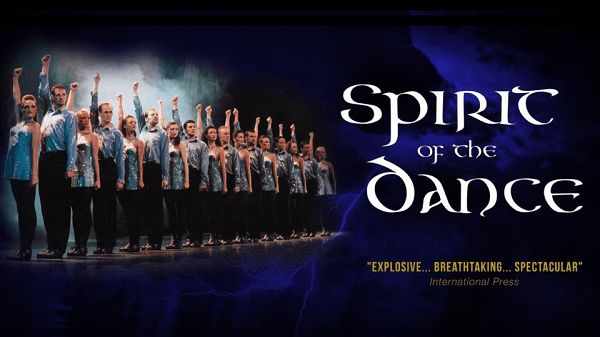
I’m going to tell you everything. You see, David King is one of the most applauded English theater producers by the public and specialized critics in Europe, Oceania (Australia), and Asia. He owns the King’s Castle Theater in Missouri (USA), the Broadway Theater at the New York-New York Hotel & Casino on the Las Vegas Strip (USA), and is the Executive Producer of Spirit Productions, becoming in this way in one of the largest employers in the world of entertainment in the last two decades.
His first musical, Spirit of the Dance https://www.spiritofthedance.com/, was created in the spring of 1996 when David was in the worst financial situation of his life, he wanted to start in the music industry entertainment but was not assertive in any business. One day he accompanied his friend to see the musical Riverdance starring the Irish dancer and choreographer Michael Flatley. At the end of the show, he watched the audience go crazy and during that moment he thought: “I can do this.”
When he left the theater he returned to his house and began the development of the play. In just three months he wrote the plot and used pieces of music that he had composed during his youth. “With my last £100, I printed copies of the poster and sent them to cinemas across the country. The phone in my kitchen started ringing and people were like, ‘Get me this show! I had the right idea at the right time.” David expressed to international media.
However, he tried to raise the money to put on the show but was rejected by everyone, “no one had faith in me to invest. I knocked on so many doors my knuckles ached. But despite all the refusals and all the doors that were closed in my face, I kept going despite everything… I sold everything I had, including my car and the family silver. It was time to sink or swim, and I jumped in with both feet. My luck changed for the better when Michael Flatley announced that he was leaving Riverdance to start his own show. Everyone assumed Spirit of the Dance was his new show and opening night sold out in hours.”
By 1998 and up to 2006 there were already 14 different Spirit of the Dance groups performing in 14 countries simultaneously.
This theatrical production updates its program every year to include current dance styles, so fans and curious viewers return to see the musical on several occasions.
You Can Also Read: 6 Clubs To Dance Salsa In London