• Skip to primary navigation
  • Skip to main content

International Salsa Magazine

  • HOME
  • Previous editions
    • 2026
      • ISM / April 2026
      • ISM / March 2026
      • ISM / February 2026
      • ISM / January 2026
    • 2025
      • ISM / December 2025
      • ISM / November 2025
      • ISM / October 2025
      • ISM / September 2025
      • ISM / August 2025
      • ISM / July 2025
      • ISM / June 2025
      • ISM / May2025
      • ISM / April 2025
      • ISM / March 2025
      • ISM / February 2025
      • ISM / January 2025
    • 2024
      • ISM / December 2024
      • ISM / November 2024
      • ISM / October 2024
      • ISM / September 2024
      • ISM / August 2024
      • ISM / July 2024
      • ISM / June 2024
      • ISM / May 2024
      • ISM / April 2024
      • ISM / March 2024
      • ISM / February 2024
      • ISM / January 2024
    • 2023
      • ISM / December 2023
      • ISM / November 2023
      • ISM / October 2023
      • ISM – September 2023
      • ISM – August 2023
      • ISM July 2023
      • ISM Edition June 2023
      • ISM – May 2023
      • ISM April 2023
      • ISM March 2023
      • ISM February 2023
      • ISM January 2023
    • 2022
      • ISM December 2022
      • ISM November 2022
      • ISM October 2022
      • ISM September 2022
      • ISM August 2022
      • ISM July 2022
      • ISM June 2022
      • ISM May 2022
      • ISM February 2022
      • ISM January 2022
    • 2021
      • ISM December 2021
      • ISM November 2021
      • ISM October – 2021
      • ISM September 2021
      • ISM August 2021
      • ISM July 2021
      • ISM May 2021
      • ISM April 2021
      • ISM June 2021
      • ISM March 2021
      • ISM February 2021
      • ISM January 2021
    • 2020
      • ISM December 2020
      • ISM November 2020
      • ISM October 2020
      • ISM September 2020
      • ISM August 2020
      • ISM July 2020
      • ISM June 2020
      • ISM May 2020
      • ISM April 2020
      • ISM March 2020
      • ISM February 2020
      • ISM January 2020
    • 2019
      • ISM December 2019
      • ISM November 2019
      • ISM October 2019
      • ISM Septembre 2019
      • ISM August 2019
      • ISM July 2019
      • ISM June 2019
    • 2016
      • ISM December 2016
  • Spanish
  • Download Salsa App
    • Android
    • Apple

Search Results for: Flamenco

Nicaraguan singer and guitarist Yelba Heaton in an exclusive interview

Yelba Heaton is a Nicaraguan-born bandleader, singer and guitarist whose strong musical heritage coming from her family has made her have close contact with music since before she could say her first words. 

The artist based in The Woodlands, Texas has been kind enough to answer a few questions for us in order to know more about her musical beginnings, the creation of her band, her projects outside of music, among other topics.    

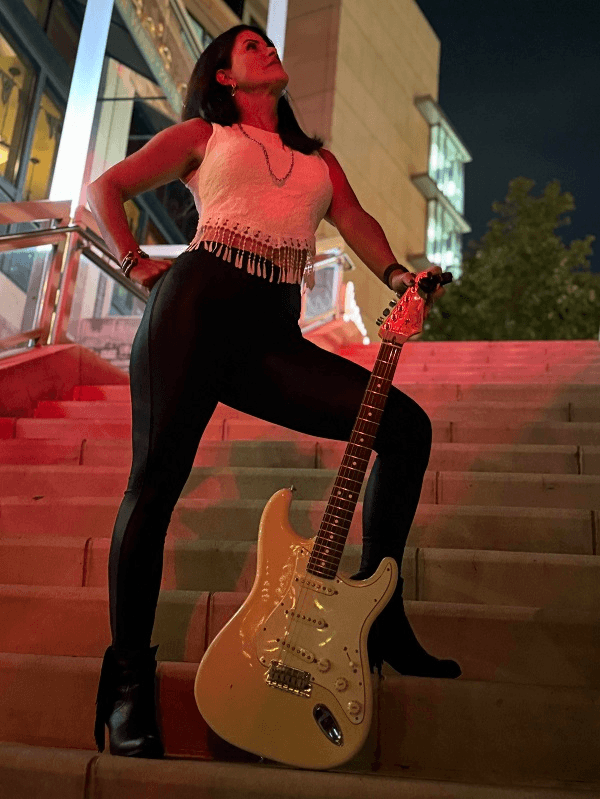
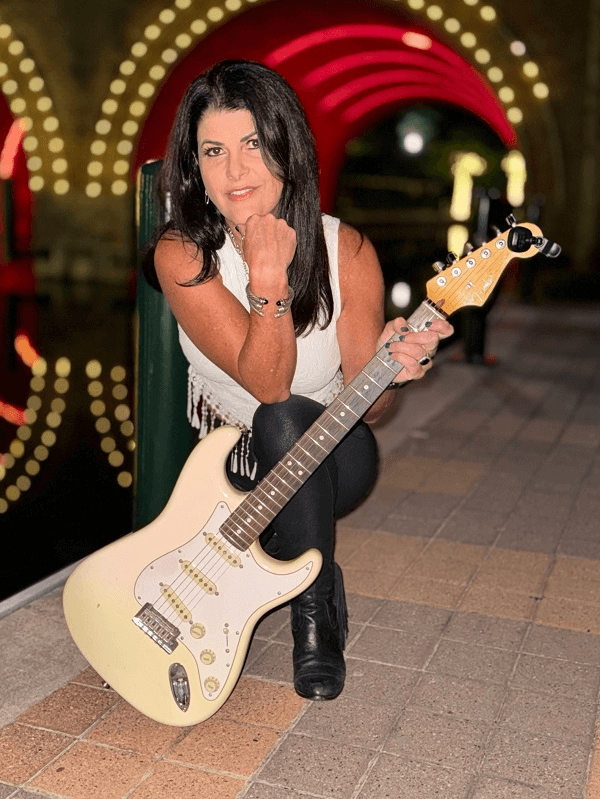
Yelba posing for pics
Singer and guitarist Yelba Heaton posing for pictures with her instrument

Yelba’s musical family   

For many generations, Yelba’s family had become very popular among her acquaintances for knowing how to carry a tune properly and having some guitarists and pianists in this melodic family tree.   

In her case, as she grew older, she and her siblings saw their father constantly serenading their mother and playing romantic boleros on his guitar, so this instrument was a day to day affair for the children. This is how the couple’s children began to experiment with music both together and separately, which little by little sparked Yelba’s interest in this branch of the arts.   

This interest reached such a point that both she and her sister Thelma began to compete in every talent show that was held at the school they attended, Yelba played the bandurria and Thelma played the guitar. Both of them were very good with each other on stage and their voices joined together in a very harmonious and pleasant way for the audience that heard them.   

When she turned nine, she participated in the tv show ”Junior Patherns”, which was very popular in her country at that time. Already at that time, she showed her great skill as an performer and the way she would follow later on.    

As she got older, she began to sing in the church she was attending at the time, but could not start her career formally until she became an adult after her divorce in the United States. This was a very stormy phase of life for Yelba, as she had recently separated from her husband and father of her five young children, leading her to suffer from depression and believe that her life was over. However, it was just beginning.    

At the same church, she met another guitarist, who when saw the bad stuff that she had gone through, decided to invite her to participate in an open mic night at a nightclub, which Yelba did not even know what it was at the time. Although she confesses to being extremely intimidated by the great artists with whom she shared that night, it was an experience that she is grateful to have had, as it gave her the opportunity to put aside her sadness for one night and experiment with music like she had never done before.   

After sitting down with her guitar and performing ”Besame mucho” to the audience that night, having heard those present applause and ask for more songs made her be truly happy and blissful. Immediately, she knew she wanted to experience that feeling again and again.   

music brought Yelba back to life
After her divorce, music brought Yelba back to life

Formal beginning of Yelba in music

That same night that Yelba performed at that venue, Jeremy Garcia, a flamenco guitarist accompanied her with his instrument and resulted in a beautiful combination of melodies that left all those present delighted, including the owner of the place, who proposed to both of them to make a paying gig for next Saturday, to which they replied ”of course”. That was how Yelba, Jeremy and bongo player Benny Rod (Yelba’s friend from church who joined later) started their paid musical careers as a trio.   

Over time, the three artists caught the attention of critically acclaimed guitarist Mark Towns, who invited Yelba to sing with him at an event in Clear Lake and also gave him some copies of their CDs. Towns was a key piece in the formal creation of the band and the trust that she was gaining to sing in public. 

Over the next few years, she was performing at larger and larger events and learning all she could about clave, song forms of various genres, stage presence and other important aspects of her nascent career.   

Creation of Yelba Variety’s Band and Latin Fire  

Although Yelba, Jeremy and Benny were already a trio, they still could not find a name that perfectly defined what they stood for, but that changed when one day they performed songs Yelba had learned to sing on her father’s knee when she was little. That night, everything went great and they received very positive feedback from the audience and the media who covered the concert.   

As a result of this performance, a reporter from the Houston Chronicle wrote an article about the band in which he was very complimentary about their show and described what he saw that day as ”Latin fire”. The first line of the article said that: ”Latino fire is what I heard last night…”. Yelba liked this opinion so much that she decided to baptize her band as ”Latin Fire”.   

Such was the impact this report had on her career that the Nicaraguan still keeps a copy of it and can be found on her website to this day. This was undoubtedly a very important event for her and her band mates.   

 Yelba and her husband
Yelba next to her husband and part of her band Roy Heaton

Yelba as a wedding planner and motivational speaker   

Just like Yelba performs very well in music, she has also found time to work as a wedding planner, a hobby for which she found out she is talented. The artist has assisted numerous marriages with minimum budget, but with her help, she was able to achieve great things with very little money. This is how she has made engaged couples ask for her help and she is always happy to collaborate with them.   

Another area in which she works on very well is motivational speaking. She found out she had a talent for this while doing her master’s degree in finance and learned to move in the corporate world, which gave her the necessary experience to address an audience properly. In addition, her career as an artist requires her to sing, play and dance in front of crowds, which also gives her the confidence she needs to speak to all kinds of audiences at a given time.   

Without a doubt, Yelba Heaton is a multifaceted Latina who leaves our culture on high and we are proud to have had her in this edition of International Salsa Magazine. 

Read also: Julio Vilchez and his orchestra conquer Miami 

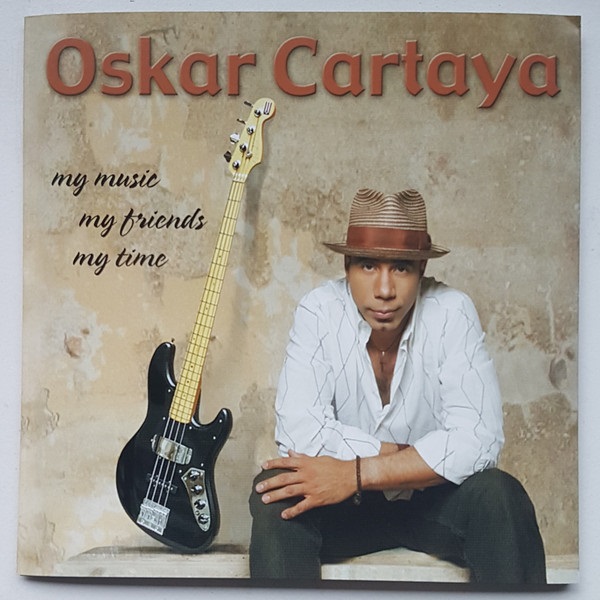
Oskar Cartaya “My Music, My Friends, My Time” He counted with the collaboration of illustrious friends such as Eddie Palmieri, Giovanni Hidalgo, Dave Valentín and Justo Almario.

Friendship and personal relationships seem to have always played a key role in Oskar Cartaya‘s recording career.

This was demonstrated Cartaya in his first recording, “My Music, My Friends, My Time” (2004) in which he had the collaboration of illustrious friends such as Eddie Palmieri, Giovanni Hidalgo, Dave Valentín and Justo Almario.

Bajista, arreglista, compositor y productor neoyorquino de nacimiento y bayamonés

This is also demonstrated by the second one, “Lifetime Friends”, which he co-led with trumpeter Humberto Ramírez and which was chosen as one of the best Puerto Rican productions of 2015.

For the bassist, arranger, composer and producer – born in New York and raised in Bayamon – connections with other people are a vital element for the development of any musician.

Those connections coupled with the tenacity Cartaya has always shown to continually improve himself as a musician allowed him to be part of the legendary progressive jazz-rock group Spyro Gyra for five years, produce albums for Willie Colón or Herb Alpert, and play with a long list of stars including Jennifer López, Christina Aguilera, Rubén Blades, Héctor Lavoe, Tito Nieves, Tania María, Arturo Sandoval, Steve Winwood and Randy Brecker, among others.

To all of them he has lent the sound of his electric bass, able to insert itself with total naturalness in modern jazz, Cuban rumba, Spanish flamenco or Brazilian cadences, but without ever losing its funky essence, which gives rhythmic impulse to the musical genre before him. For Cartaya, music is not a profession, but a passion of life.

That passion manifested itself at a very early age, when he told his Cuban-born father that he wanted to be a musician when he was just 10 years old. He completed his initial studies at the Escuela Libre de Música de San Juan, which he remembers with pride and affection.

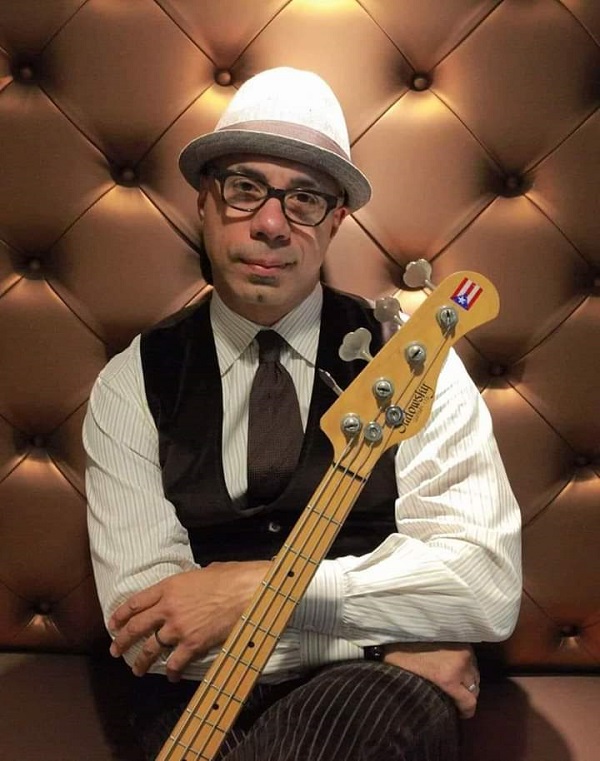
Oskar Cartaya
Oskar Cartaya

However, he has affirmed that his first real musical school were the records of Willie Colón and Héctor Lavoe, which he listened to at full volume in his room.

At the Escuela Libre de Música he was able to meet teachers and classmates who today are great masters of Latin music and colleagues of his, such as Humberto Ramírez himself. He also studied at the Conservatorio de Música de Puerto Rico.

Cartaya recalls that, although he studied chamber music in school, his real passion was Latin music…until he discovered jazz, thanks to an album by the great bassist Stanley Clarke. A new world opened up to his ears.

“I found a freedom in jazz that I didn’t find in Latin styles,” the musician said in an interview. “In salsa, for example, the maximum is when you are playing as part of a unit. Unlike jazz, whose pinnacle is when all the musicians improvise and go crazy playing, but everyone knows what they are doing.”

At 18, Cartaya moved to Los Angeles, where he began studying at the Musicians Institute of Technology. There he practiced for 15 hours a day, a devotion that brought him his first recognition: being accepted as a professor at the prestigious institution, two years after graduating from it.

However, his restless spirit and continuous desire to improve led him to make what he has described as the best decision of his life, moving to New York City. In the Big Apple – the place many consider the jazz capital of the world – he had the privilege of playing and recording with the late Argentine pianist Jorge Dalto; with Willie Colón and Rubén Blades; Celia Cruz, Tito Puente and Dave Valentín.

“I learned a lot, matured and saw firsthand what it was like to be on my own,” the bassist said in an interview about this period of his life. “If the opportunity was going to be given to me, it wasn’t going to come to my house. I would have to look for it.” And so he did.

At that time he also had the opportunity to meet the late rock icon Prince, at his Paisley Park, Minneapolis studios, and to become a member of Spyro Gyra. By being accepted into that group over 10 other bass players auditioning for the position, Cartaya realized that success belongs to those who work hard and have faith in themselves.

“I was able to show a lot of people that there’s nothing worse than feeling bad about yourself if you don’t try,” he said in an interview. “All the nights I played for free or for five bucks to earn a chance were well worth it.”

In 1997, the bassist produced the “Passion Dance” recording project for veteran trumpeter Herb Alpert, an experience he has described as a new learning experience in his career, as well as a chance to expose himself to a wider audience.

“My Music, My Friends, My Time,” released in 2004, is a fusion of Latin, Brazilian, American and Flamenco rhythms that was very well received by critics.

“My Music, My Friends, My Time”

“I wanted to do a project that would fill that gap that exists between Latin music and the world. I truly believe that the world needs to know that Latin musicians can do countless things within music, without throwing away their roots,” Cartaya said of the recording.

“Lifetime Friends,” produced alongside Ramirez, was described upon its release in 2015 as “an album of a cohesive and jubilant band,” in which all participating musicians – representatives of the new jazz generation in Puerto Rico – have a chance to stand out. “It’s the album we always wanted to make… to describe almost 40 years of friendship,” Cartaya and Ramírez indicated.

Cartaya
Cartaya

In 2017, Oskar presented the production “Bajo mundo” in tribute to the great Cuban bassist Israel “Cachao” López. This intense, exuberant album, with a multiplicity of rhythms, colors and guest musicians was distinguished as one of the most outstanding productions of the year by the National Foundation for Popular Culture.

It also won a Latin Grammy Award nomination in the category of Best Latin Jazz Album.

Source: Rafae Vega Curry

National Foundation for Popular Culture

“This biography is part of the archives of the National Foundation for Popular Culture. In our interest to disseminate knowledge about our great figures, it may be cited as a basis for research studies or as an assignment for pedagogical purposes, as long as credit is given to the Foundation and its author, if indicated. All rights reserved. The reproduction of the same in any printed, technical or mass media, with or without commercial purposes, is not authorized without prior written request to the Foundation and its consequent approval”.

Also Read: “The Sun of Latin Music” the first Grammy Award for Salsa Eddie Palmieri’s historic album

Eva Cortés at present, her music reflects the influences received from her cultural miscegenation

Fragile voice, delicate and powerful at the same time, that moves with devotion and good work through the multiple paths of jazz.

Eva Cortés, born in Tegucigalpa (Honduras), 1972, is a Honduran jazz singer and composer.

Eva Cortés en la actualidad, su música refleja las influencias recibidas de su mestizaje cultural
Eva Cortés at present, her music reflects the influences received from her cultural mestizaje.

More than a voice, she is our jazz star in the world.

She is part of the fusion movement, incorporating in her music the influences of traditional Latin American music (zamba, bolero), blues, traditional Andalusian music and jazz.

He sings with a Latin American Spanish cadence and Andalusian echoes and accent.

He grew up in Seville and currently resides between Madrid and New York.

He became known in 1980 after recording an album of children’s songs entitled Cosas de niños with singers such as Ana Belén, Víctor Manuel, Mocedades and Miguel Bosé.

Eva Cortés born in Tegucigalpa (Honduras), 1972 is a Honduran jazz singer and composer.

Nowadays, his music reflects the influences received from his cultural miscegenation, as well as from the different musical genres developed throughout his career.

Growing up in a family of great musical tradition, she was exposed to Latin American music. Although we hear in her first compositions, at the age of 16, a strong influence of blues.

In January 2006 she flew to Santiago de Chile to record and co-produce Sola Contigo, her first solo album, which was later mixed and mastered in Paris.

In this work we can find South American rhythms fused with jazz and a soft touch coming from the south of Spain.

Eva feels honored to have had the collaboration of musicians with great international prestige: Jerry Gonzalez,

Antonio Serrano, Pepe Rivero and Nono Garcia among others.

In April 2008 Eva recorded her second album Como Agua entre los Dedos, which is an album of original songs composed mostly by Eva Cortés, although they also stand out in the two Spanish adaptations of two standards such as You don’t know what love is and La Vie en Rose.

Fotos Eva Cortés – Instagram @evacortes777

They released their third album El Mar de Mi Vida on April 6, 2010. With his personal jazz fusion, he has managed to carve a niche for himself among the most interesting and promising proposals of the Spanish jazz scene. [El Mar de Mi Vida brings together 12 songs that are maximum exponents of cultural crossbreeding.

On this occasion, in addition, the flamenco great Miguel Poveda joins in the version of the song C’est si bon, Perico Sambeat, Lew Soloff (considered one of the most brilliant trumpet players of recent times and who has collaborated with Marianne Faithfull or Frank Sinatra, among others), Santiago Cañadada, Rémy Decormeille, Georvis Pico, the electric bassist of the moment Hadrien Feraud and the English drummer Mark Mondesir (both musicians of John McLaughlin).

Eva once again signs most of the tracks and shares authorship in a couple of songs with Brazilian guitarist Kiko Loureiro.

In addition, we find tracks such as Alfonsina y el Mar (Ariel Ramírez-Felix Luna), Une chanson Douce (Henrie Salvador- Maurice Pon), C’est si bon (André Hornez-Henri Betti) and Que reste-t-il de Nos Amours (Charles Trenet-Leo Chauliac).

Eva Cortes - El Mar De Mi Vida (2010)
Eva Cortes – El Mar De Mi Vida (2010)

Eva Cortes – The Sea Of My Life (2010)

Tracks:

  1. The Sea Of My Life
  2. Casi
  3. C’es Si Bon / What’s Better? (Feat. Miguel Poveda)
  4. Desterrado
  5. Valsa Da Menina
  6. Remembering Tomorrow
  7. Little Matter If Later
  8. Que Reste-T-Il De Nos Amours / I Wish You Love
  9. Woman
  10. Alfonsina And The Sea
  11. Da Igual
  12. Une Chanson Douce

Information realized (January 13, 2024)

Sources:

L’Òstia Latin Jazz 

Iconos Mag

Also Read: Orquesta la Identidad is one of the most nationally and internationally recognized groups in the salsa genre

The Rumba Madre and its roots in Basque culture

The Rumba Madre is a Nashville-based group whose characteristics are very interesting and make it different from many other artists and orchestras that have appeared in this section over the past few years.   

On this occasion, we had the pleasure of talking with Basque guitarist and tresero David Vila, who revealed the most important details about the creation of The Rumba Madre and his own musical career before and after the group, so just sit tight because there is a very interesting story coming on. 

guitarrist David Vila
Basque guitarist and tresero David Vila, who kindly talked to us

Music in David’s childhood 

When David was just a little boy, in his entire family, only his grandfather liked to sing. In contrary to the case of many other artists we have had the pleasure of interviewing here, David does not come from a family of musicians, but that did not keep him from developing a taste for this artistic side over time. 

Being very small, his parents moved from Galicia to the Basque Country to work and seek a new life. In this autonomous community, the cultural environment turned very lively and punk and other similar rhythms were at their peak of popularity, which got him interested in the tuna guitar and other instruments. He also started listening a lot to jazz and blues, which became fashionable in those years. 

Since David had no possibility to be formally educated in music, he just listened carefully and imitated the sounds the best he could until he decided that he needed to go one step further in his budding career as a musician. It was then when he moved to London, England, to study his degree in guitar. He had already worked as a musician in Spain, so this work experience was very useful to what he would do later on.   

Aside from having obtained his degree in music, David also toured around Europe with some local bands, which he continued to do in the United States when he moved to Nashville.  

Currently, he is a Hispanic popular music professor at the university level, so he teaches everything he has learned to young people who want to follow his same path.   

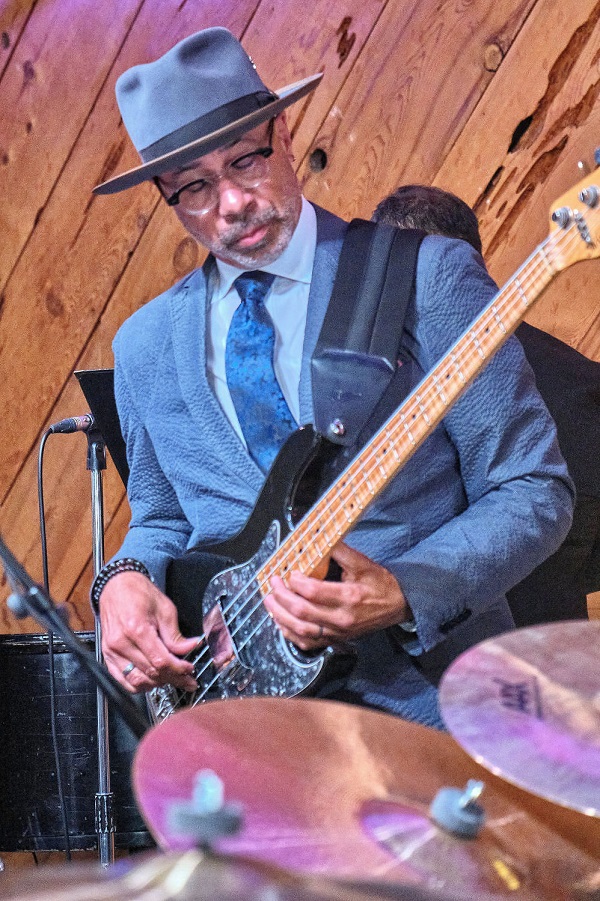
Rubén Darío, Benjamín Alexander, and David Vila
Nicaraguan guitarist Rubén Darío, Puerto Rican bassist Benjamín Alexander, and Basque guitar player David Vila

Nashville  

The first U.S. city David went to live in was Chicago because he was very interested in exploring the blues and other genres from that part of the country, but David did not have the visa required for entry into the U.S. at the time, so his plans to go there were inevitably postponed. When he was finally able to travel, he had no choice but to go to Nebraska and stay there for about two years for lack of a better option.   

Subsequently, he chose the city of Nashville as his final destination because of the large amount of musicians who live and work there. He even went so far as to call this place ”The Disneyland of musicians” because of all the opportunities it presents in this area.   

Another positive aspect for artists is that there are a lot of well-known record labels and studios to work with, making it an excellent choice for artists looking for a place to start or continue their careers. The locals themselves call it ”the music city” and have a saying that goes ”the worst waiter is a better musician than you,” making it clear how music is perceived in Nashville.   

David’s inclination for Latin music 

In England, David had already been studying some flamenco and, while it is true that he was not an expert yet, there were not many musicians in Nebraska who played that genre, so he caught the attention of many of his colleagues and groups that requested his services. The same thing happened in Nashville and the fact that he spoke Spanish reinforced the idea that he played Latin music.   

The above led many to believe that David was capable of playing both Flamenco and Cuban music without any problem, which was not entirely certain at the time. This is how he ended up playing guitar in a Cuban son band, thanks to which he had to learn to play the Cuban tres in order to be in the band.   

Although at first, it was too complicated for him, he focused on practicing a lot and listening to recordings of treseros to be able to imitate them as well as possible. Thanks to his effort and commitment, David learned how to play it and he spent five or six years doing it until he created his own group, The Rumba Madre.   

David laughingly recalls that his goal when moving to Nashville was to play country music as he did in England, but there were so many country musicians that he chose to explore another niche and ended up studying and playing Latin and Caribbean music.   

The Rumba Madre
The Rumba Madre playing live

The Rumba Madre  

After all the experience gained by David in those years, he thought it was time to create his own project and, for this, he chose two colleagues he met in that same musical context in Nashville, Nicaraguan guitarist Rubén Darío and Puerto Rican bassist Benjamín Alexander.   

The three artists coincided many times in different bands and concerts in which they played together, so they already knew each other’s styles very well. Since they were all Spanish-speaking, migrants and musicians, they saw that they had many things in common and established a friendship that led to a band.  

Both David and Ruben took advantage of the many compositions they had made in recent years and used them as repertoire for the project that was coming. Not much time would pass before music venues and festivals began to take them into account. 

On one such occasion, they met Cultura Profética keyboardist and composer Iván Gutiérrez Carrasquillo, who had lived in Miami his whole life, but decided to try his hand in Nashville, Gutiérrez was so impressed with the music made by The Rumba Madre that he proposed them to make an album. He also acted as a contact point for The Rumba Madre to be in touch with companies and labels that would be key to the success of the group later.   

They were going to release their first album in 2020, but could not present and promote it due to the pandemic, so they had no choice but to wait for things to die down.   

So far, The Rumba Madre has experimented with rumba, punk, Cuban son, salsa, flamenco, tango and many other genres. 

Read also: We welcome Patricio Angulo from Rumbaché to ISM 

Hindy & his Orchestra “The Sonera of the Moment”

Latin America / Buenos Aires / Argentina

Hindy Singer of the Latin genre, with a high and extensive artistic career in salsa.

Hindy born in San Félix – Edo. Bolívar, in the south east of Venezuela, in 27 years of artistic career, has enriched her musical career through her different participations as a soloist, chorister, singer-songwriter and producer.

Photo 1: Hindy dancing in a party festival

His beginnings in the Venezuelan salsa music elite are with a first place in the Record Report, at the hands of the international producer César Monges “Albóndiga” interpreting in his production “De Regreso a mi País” the version of the song A Flor de Piel del Venezuelan singer-songwriter Yordano Di Marzo, being in turn the leading voice of the Monges orchestra “Latín Girls” under the representation of Korta Records of the businessman “Negro Mendoza”.

Among some of the national and international celebrities with whom he has participated on different stages are: Cheo Feliciano, Viti Ruiz, Henry Fiol, Roberto Blades, Jr. Gonzáles, Paquito Guzmán, Richie Ray & Bobby Cruz, Gilberto S, Wladimir Lozano, Erick Franchesqui , Paquito Barón, Gustavo Rodríguez, Armando Manzanero, Pancho Céspedes, Gran Combo, S. Ponceña, Hildemaro, etc.

There is a long way to go, if it can be said, in the “short” artistic career of Hindy Castillo. His jump to internationalism was in 2007-08 to Europe, where he participated for two consecutive summers in different popular music orchestras touring more than 30 cities in Spain, and in France.

Photo 2: Hindy dancing in a party festival

His next artistic stop was in the state of Mexico.

Hindy was selected to assemble an international orchestra and travel from Venezuela to do a 3-month tour, which lasted another 13 months, the immediate rapport of all its members was a total success, profiling a true blunderbuss in the salsa environment. Veracruz.

She was also chosen to participate in the 1st Boca del Río salsa festival and, among other presentations, shared the stage with the great composer Armando Manzanero and Pancho Céspedes, extending her presentations to Guatemala City. Later, she travels to the capital, DF, invited by a local producer, who, seduced by her talent, encourages her with her orchestra to perform on different stages of the Aztec capital, capturing the taste of the Mexican music lover and salsa dancer, who turn to her presentations. to appreciate and enjoy his voice and the special talent of the soneo Salsoso.

Hindy musicalizes, produces her first songs and debuts as a singer-songwriter, under the executive production of her representative Carlos Zapata.

They record four songs sprinkled with romanticism, maintaining the bases of “hard” salsa and with novel musical variants.

Flamenco was one of these variants that played an important role in this product since its mixture with salsa resulted in a very genuine and fresh sound, from the pen of select Venezuelan arrangers. Graduated instructor of Popular Singing.

He has developed musical studies of: vocal technique, German singing method in Spain, Latin piano and modern harmony. He is currently doing his Bachelor of Music and Popular Singing at the José Ángel Lamas High School of Music. And preparatory studies of trombone. Caracas.

Photo 3: Hindy dancing in a party festival

As a musical producer, she manages the concepts “MujereSon & Boleros”, a musical of Boleros and sones, the social project Mujeres de la Escena, and her main project “Hindy & su Orquesta”, with a dynamic scene, full of salsa for all tastes, with the majestic quality that characterizes her performances.

Hindy is a talent full of energy, charisma, quality, with a Venezuelan flavor to export.

  • « Go to Previous Page
  • Page 1
  • Interim pages omitted …
  • Page 4
  • Page 5
  • Page 6
  • Page 7
  • Page 8
  • Interim pages omitted …
  • Page 11
  • Go to Next Page »

International Salsa Magazine (ISM) is a monthly publication about Salsa activities around the world, that has been publishing since 2007. It is a world network of volunteers coordinated by ISM Magazine. We are working to strengthen all the events by working together.