• Skip to primary navigation
  • Skip to main content

International Salsa Magazine

  • HOME
  • Previous editions
    • 2026
      • ISM / March 2026
      • ISM / February 2026
      • ISM / January 2026
    • 2025
      • ISM / December 2025
      • ISM / November 2025
      • ISM / October 2025
      • ISM / September 2025
      • ISM / August 2025
      • ISM / July 2025
      • ISM / June 2025
      • ISM / May2025
      • ISM / April 2025
      • ISM / March 2025
      • ISM / February 2025
      • ISM / January 2025
    • 2024
      • ISM / December 2024
      • ISM / November 2024
      • ISM / October 2024
      • ISM / September 2024
      • ISM / August 2024
      • ISM / July 2024
      • ISM / June 2024
      • ISM / May 2024
      • ISM / April 2024
      • ISM / March 2024
      • ISM / February 2024
      • ISM / January 2024
    • 2023
      • ISM / December 2023
      • ISM / November 2023
      • ISM / October 2023
      • ISM – September 2023
      • ISM – August 2023
      • ISM July 2023
      • ISM Edition June 2023
      • ISM – May 2023
      • ISM April 2023
      • ISM March 2023
      • ISM February 2023
      • ISM January 2023
    • 2022
      • ISM December 2022
      • ISM November 2022
      • ISM October 2022
      • ISM September 2022
      • ISM August 2022
      • ISM July 2022
      • ISM June 2022
      • ISM May 2022
      • ISM February 2022
      • ISM January 2022
    • 2021
      • ISM December 2021
      • ISM November 2021
      • ISM October – 2021
      • ISM September 2021
      • ISM August 2021
      • ISM July 2021
      • ISM May 2021
      • ISM April 2021
      • ISM June 2021
      • ISM March 2021
      • ISM February 2021
      • ISM January 2021
    • 2020
      • ISM December 2020
      • ISM November 2020
      • ISM October 2020
      • ISM September 2020
      • ISM August 2020
      • ISM July 2020
      • ISM June 2020
      • ISM May 2020
      • ISM April 2020
      • ISM March 2020
      • ISM February 2020
      • ISM January 2020
    • 2019
      • ISM December 2019
      • ISM November 2019
      • ISM October 2019
      • ISM Septembre 2019
      • ISM August 2019
      • ISM July 2019
      • ISM June 2019
  • Spanish
  • Download Salsa App
    • Android
    • Apple

Search Results for: GRAMMY

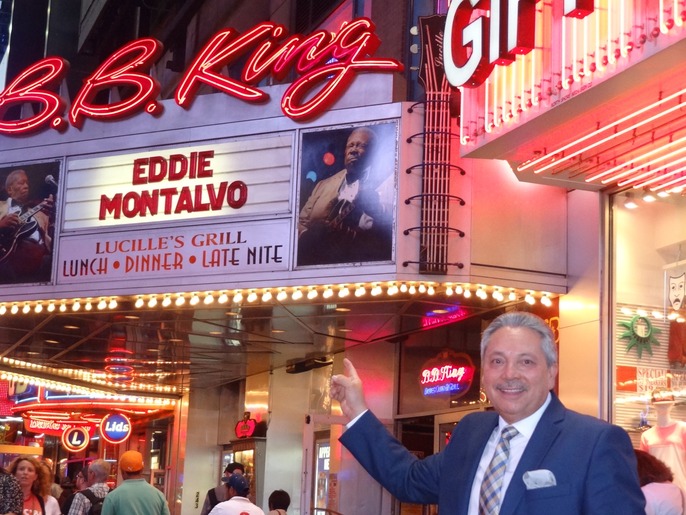
Eddie Montalvo

USA / New York / New York 

Eddie Montalvo, Was a personal friend of the singer and legend of Afro-Caribeña music Héctor Lavoe

Eddie Montalvo
Eddie Montalvo

Eddie Montalvo, two time Grammy award winner, born and raised in the South Bronx of New York City, descendent of Puerto Rican roots, found his passion for music at very early age.

His parents Leonardo and Carmen instilled in Eddie the richness of Latin music and the heritage of their Puerto Rican culture.

During his high school years, he ventured in the school band and decided to become a conga player.

In 1970 at the age of 17, Eddie’s first professional show was with Joey Pastrana which led to another show with Tony Pabon & La Protesta and Ernie Agosto y La Conspiracion.

Then immediately after studio recordings commenced with La Conquistadora de Martin Galagarza, Tony Pabon y La Protesta.

Then in 1976 Eddie joined the band Los Kimbos of Orestes Vilato as the band’ conga player.

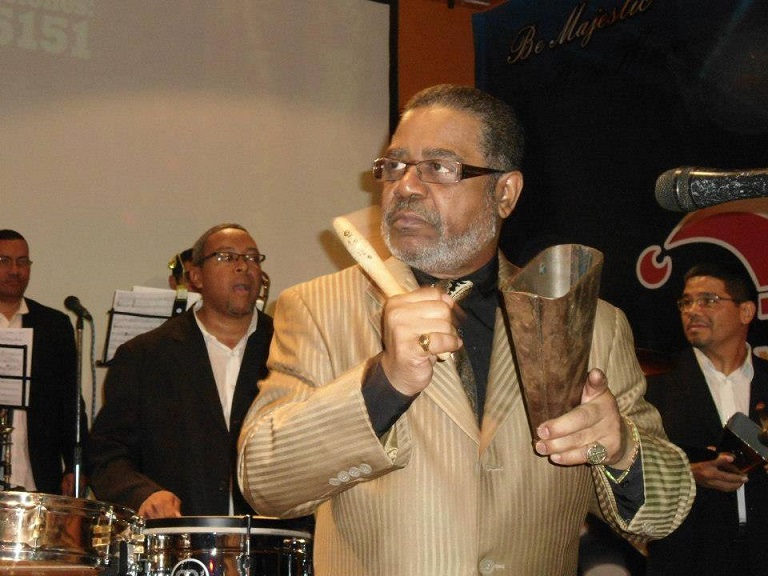
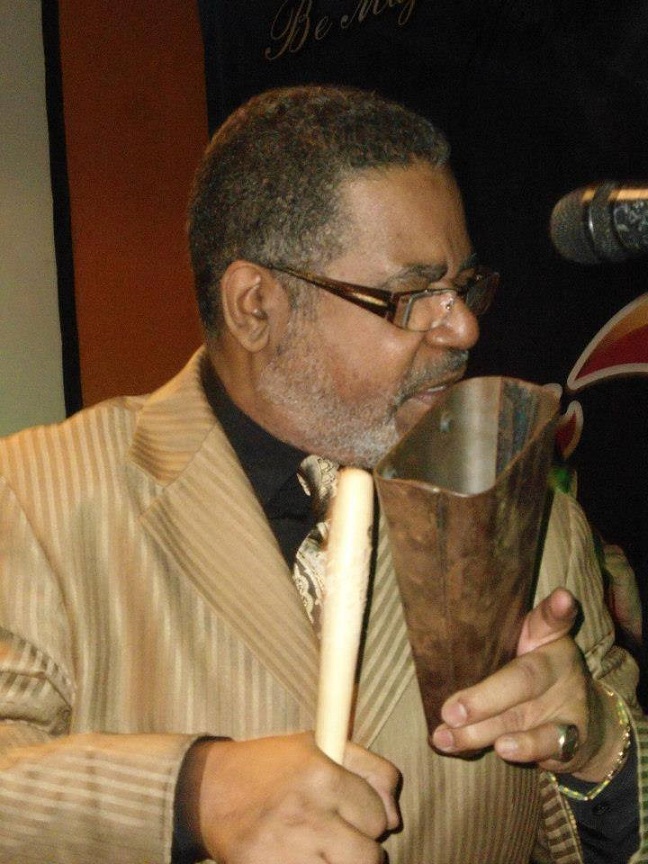
Eddie Montalvo and his congas

Montalvo’s distinctive and unique conga playing was spreading like wild fire among his peers and in the music industry which consequently led his endorsement in 1976 by the instrument company Latin Percussion and recordings with Luis Perico Ortiz, Nicky Marrero, Jose Fajardo, Pupi Lagaretta, Luigui Texidor, Los Kimbos, Hector Casanova, Santiago Ceron and renown artists such as Celia Cruz, Hector Lavoe, Fania All Stars and Juan Luis Guerra and with Johnny Pacheco where Eddie was a member of his band for two years.

Eddie has had the privilege to record in over 200 productions for renown artists, as well as up and coming artists.

In 1977 Eddie had the honor of joining the band of one of salsa’ greatest artists, Hector Lavoe. Not only did Eddie successfully embraced the roll of conga player with Hector Lavoe’s band, but also did back up chorus for him as well.

While his time with Lavoe, Montalvo was hired to record on the album “Siembra” with renown artists, Willie Colon and Ruben Blades which sold over 25 million copies worldwide and became one of the most prestigious Salsa productions of all times.

In 1979 Eddie proceeded to audition and became the youngest member of the renown Salsa band, Fania All-Stars.

Eddie Montalvo on stage

After numerous accolades, worldwide notoriety and sold out concerts, today Fania continues bringing to the world the very best of Salsa of which Eddie continues being a member and is about to embark on Fania All Stars 2013-2014 World Tour.

During this time it’s when the opportunity of a lifetime presented itself. Ruben Blades approached Eddie in 1983 to join his world renown group, Seis del Solar.

After a series of successful tours around the world, Eddie recorded on the 1986 Grammy award winning album “Escenas” with Seis del Solar.

Then in June 2009, Ruben Blades reunited the Seis del Solar for the 25th Anniversary of Buscando America in an ambitious tour of the Americas.

Culminating  with the world tour of  Todos Vuelven in 2010 which earned Eddie a Latin Grammy win in 2011 for the live recording of Todos Vuelven Live Vol 1 & 2.

Eddie Montalvo also had the privilege of performing with Ruben Blades and Sting at the Amnesty International in Santiago, Chile.

Eddie Montalvo has achieved many goals and one of them was to record his first production titled On My Own in 1995.

He also had the privilege of participating in a supporting roll in the 2006 movie “El Cantante” based on the life of his personal friend and Salsa legend, Hector Lavoe, and also recorded in the sound track of the Broadway play The Capeman with Paul Simon.

In August 2012, Eddie Montalvo finally launches his new recording project titled “Desde Nueva York a Puerto Rico”.

Eddie Montalvo
Eddie Montalvo

This amazing production is a master piece in the making which was brilliantly produced by Eddie Montalvo and Jose Lugo, which has gathered some of Salsa’ greatest like: Ruben Blades, Cheo Feliciano, Willie Rosario, Papo Lucca, Domingo Quiñones, Rico Walker, Issac Delgado, Wichy Camacho, Pichie Perez and Tito Gonzalez.

Since Nueva York a Puerto Rico took the music industry by storm and earned Eddie an American Grammy nomination on February 2013 for Best Tropical Latin Album.

The first single of the album titled El Hijo del Ricachon featuring Ruben Blades received airplay in the Northeast and Puerto Rico.

The following singles Caonabo featuring Cheo Feliciano and Abicu featuring Tito Gonzalez are currently receiving airplay in Puerto Rico and throughout the Northeast of the U.S with much success.

This is one production all hardcore Salsa lovers cannot miss. Eddie is also presently showcasing and featuring his talent with Jazz artists like Lou Caputo, Dave Chamberlin, Joe Battaglia and Pucho & Latin Soul Brothers.

As one of the most sought after conga players, Eddie will continue to build his legend as a skilled clinician who shares his limitless knowledge of music to congueros and percussionists around the world.

José Mangual Jr.

The son of the master and pioneer of Bongó, José Mangual “Buyú”

The son of the innovative and pioneering bongo musician, José Mangual Sr., aka “Buyú”, José Mangual Jr. was born and raised in East Harlem, the Spanish Quarter of New York City   known as “El Barrio”. By the age of fifteen, José Jr. was already playing in local groups.

In 1968, Mangual Jr. was invited to play bongos and sing background vocals for a fledgling orchestra led by a young man named Willie Colón.

The lead vocalist for this group was also a young singer named Hector Lavoe.

Along with his perennial rhythm section “compadre”, legendary percussionist Milton Cardona, Mangual would become a part of history, as they made some of the most important recordings in the annals of salsa music.

Mangual Jr. showed his skill as a composer, author, and lead vocalist with Colón’s orchestra.

José Mangual "Buyú"
Photo of José Mangual Jr in concert

With Kent Gomez in 1973, Mangual co-authored the song “San Miguel” for Tony Pabón y la Protesta. This song featured him as a lead vocalist.

After Willie Colón and Hector Lavoe parted ways to pursue different ventures, it was José Mangual Jr. who took over the musical direction of Lavoe’s band.

Shortly after this in 1977, Mangual formed his own record label, True Ventures Inc., and released A Tribute to Chano Pozo.

This album features the classic recordings, “Campanero” and “Cuero ‘Na Ma”. It also established Mangual as a lead vocalist to be reckoned with, and a serious record producer.

Live Jose Mangual Jr
Photo of José Mangual Jr on stage

The 1980’s saw José Mangual Jr.’s fame grow even more, as he became a premier artist for Velvet Records, and further solidified his fan base in South America, Europe and the Orient.

His skills as a percussionist, vocalist, composer, and musical director were sought out by many including Juan Luis Guerra, Rubén Blades, Herb Alpert, Dizzy Gillespie, David Byrne, Celia Cruz, Ramon Orlando, Mario Bauza, Mongo Santamaria, The Fania All-Stars, Junior Gonzalez, Ismael Miranda, Louie Ramirez and many others.

Perhaps the most fascinating aspect of Mangual’s career is his ability to evolve and refine the sounds of his music.

The 1990’s saw him forming and leading his band Sarabanda, while still pursuing the projects he always wanted to do.

In 1995, Mangual released his long-awaited Tribute to Chano Pozo Volume II. This album ranks among his finest, and gives listeners a glimpse into the mind of a master musician who grew up during the golden age of modern Latin music.

In 1998, Mangual produced and musically directed Caiman Records new salsa and Latin jazz release, “Son Boricua”, by his band of the same name.

This session features his original composition, “El Jibarito”, which pays homage to the island of Puerto Rico, and his Boricua heritage. The album and group was the recipient of the New York Latin Critics’ ACE Award as Best New Latin Release for 1998-1999.

Mangual’s recent new release with “Son Boricua”, entitled Homenaje a Cortijo y Rivera is a moving, swinging homage to the music of Rafael Cortijo and “El Sonero Mayor” Ismael Rivera.

What makes this work so noteworthy is that it marks an even deeper trip, not only into Latin jazz, but into the panorama of what the sounds of a Latin New York are: the sounds of the streets of  “El Barrio”.

Photo by Jose Mangual Jr
José Mangual Jr on stage

Here, Mangual displays all of the attributes of his professional career, from being the musical director and a lead vocalist, along with the “Smooth One”, Jimmy Sabater, to being a composer with his original composition, “Boricua Blues”.

With this release, Mangual, Sabater, and “Son Boricua” captured their second ACE Award in 2002.

A third ACE Award would follow in 2003 for “Son Boricua’s” 2002 release, Mo!

His most recent participation as a vocal leader in the production of the Quinteros, Quintero’s Salsa Project entitled Our Home, nominated for the Latin Grammy 2019.

Hansel and Raúl, The Charanga Legend duo

Hansel and Raúl, The Charanga Legend duo

Hansel and Raúl is a charismatic and transgressive Charanga duo of the line of romantic lyrics of the time. They positioned the Cuban “Charanga” rhythm on the top of global popularity, a danceable genre that they imposed on each stage they were invited to and which incorporated their unique Caribbean essence.

This particular duo with three decades of trajectory was born in Miami in 1984 after breaking from the orchestra “Charanga 76”, where they were co-founder members and their main vocalists. With this New York orchestra, born in Brooklyn, they won international recognition and their first Grammy for the album “Encore” in 1978.

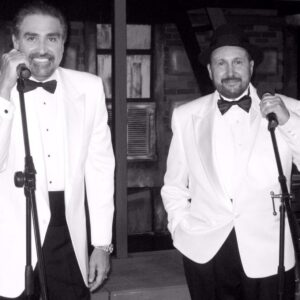
Photo of Hansel and Raúl
Hansel and Raúl – The Charanga Legend duo

“Many of the artists who recorded with them during their stay in “Charanga 76” include the renowned pianist – for many years – by Héctor Lavoe, Gilbert Colón and the first Jewish-American flutist woman, Andrea Brachfeld.”

Very pleasant memories come to Hansel‘s mind during this interview, especially his first composition “Si no te encuentras tú” for Charanga 76, his voice took a turn and he showed nostalgia as well as pride in remembering it: “I don’t sit to write a song with a guitar or piano. The Inspiration comes to me alone, there is nothing personal”.

Each anecdote that he tells us is remembered as facts that have led to their musical maturity. Each fun fact has been defined as part of their career, such was the case of the great master, Israel “Cachao” López, who with all his musical wisdom and mastery of his instrument, the Double Bass, taught the rhythmic base to the orchestra. “The conguero and the timbalero even the güirero he taught them to play well. He was a teacher of all, including us who learned a lot from him. R.I.P, he was a glory of music”, Hansel said to us.

But that wasn’t all he told us about the legend of Cuban music, “Cachao”, who was the Double Bassist of the “Charanga 76” orchestra for 12 years, also he told us that every time they wen a tour the “Inventor of Mambo” had them buy a plane seat to his Double Bass, he sat it next to him and even put the belt on the string instrument, as is dictated by airline regulations.

The funniest thing would come later when the Double Bass received the same attention as each member of the orchestra. Amazing! The Double Bass also had its portion of food during each trip as each musician of the orchestra, and when the flight attendant brought it was when the offer was presented by each musician for that fabulous portion, although the end was always the same, the trumpeter won!

Hansel y Raúl - Photo
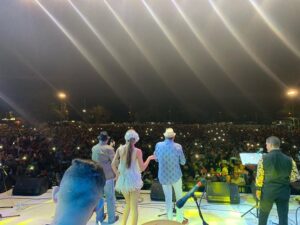
Hansel y Raúl concert
Photo in concert - Hansel and Raúl
Hansel and Raúl – Photo behind the scenes

Each experience with Charanga 76 made them evolve in music and although with this orchestra they made themselves renowned professionally, as a duo they flew the fence. They have received multiple musical awards, their sympathetic lyrics, and in some cases, satirical or burlesque have won the applause, admiration, and respect of colleagues in the music industry and the general public on three continents: America, Europe, and Asia.

“The Jersey Boys” was their first youth musical group with only 5 members and although the musical instruments they played were the basics of Rock, their rhythmic concept was Cuban music.

“María Teresa y Danilo” was one of the compositions that brought many satisfactions to this duo. Nowadays it’s still preferred by the fanatical public of the genre. Many debates and speculations were made about this song, but here we tell you the true story. “María Teresa y Danilo” dates its beginnings to the 80s when soap operas like “Dallas” were in fashion.

Hansel came up with the idea of diving and writing on this topic. He magically composed the lyric during the plane trip with San Francisco – Miami trajectory and the rest we already know, multiple copies sold, and hundreds of awards granted to them for the feeling that caused this popular theme.

Photo of Hansel and Raúl

Photo of Hansel and Raúl in their beginnings

After such overwhelming success as a duo, Hansel and Raúl decides to separate in 1988. What was the reason?

Everyone wanted to make another kind of music. Each one followed a different path, for his part, Hansel recorded five solo albums including metals, more trumpets and trombones, and in three of these albums, he included neither the violin nor the flute, assuming almost completely the end of the Charanga rhythm in his music. However, a short time later he realized that this Caribbean rhythm was what identified with his audience and two years later he joined Raúl again to continue their successful career.

Hansel and Raúl has a total of 330 songs recorded and on December 31 this Charanga duo will have a performance in Los Angeles, CA and you may be lucky and they play your favorite single and if don’t you can ask for it. Classics such as “Soy”, “Se me nota”, “El ayer”, “María Teresa y Danilo”, “Kukucha kucha”, “Balancea mi corazón” (Yordano), “Ojos Verdes” (Alfredo Gutiérrez), among many others, will be present at this 1: 45min show.

Hansel and Raúl
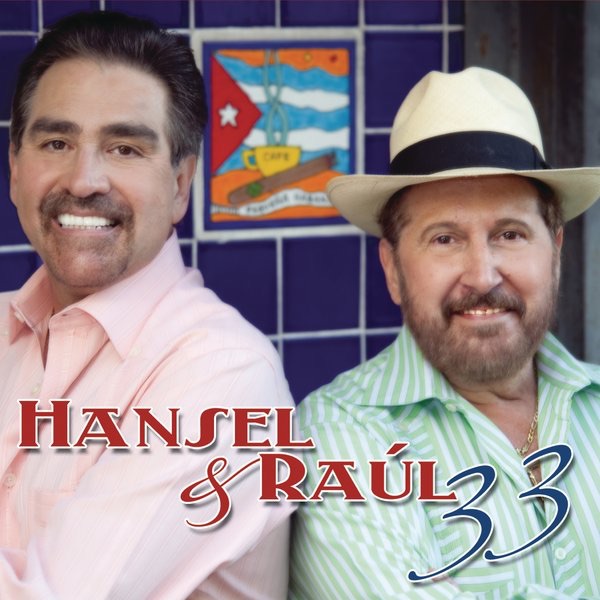
Cover of Hansel and Raúl, Discography 33

Purchase your Tickets quickly before it´s sold out

https://www.facebook.com/events/crown-plaza-hotel-and-casino/new-years-eve-2020-the-great-gatsby-presents-hansel-raul/271515257093512/

We hope to see them there singing each of their hits and if you later travel to New York, don’t be surprised to see Hansel in that city because he and his family will be celebrating their daughter’s sweet sixteen, on the second day of January 2020.

Is Hansel a stage name?

Although some may consider that Hansel is a characteristic name of the children’s story “Hansel and Gretel”, this name comes from Germany and it’s of Jewish origin. Hansel Enrique is the name of this singer and songwriter “Charanguero” and he is named so to differentiate himself from Hansel Horacio (father). In Cuba, the tradition is maintained that every male child must bear the name of his grandfather; this is the reason for all his cousins are called Hansel.


More Details visiting:

http://www.HANSELYRAUL.com

Social Channel:

https://www.facebook.com/pg/HANSELYRAUL/

Life, Career, and death of Juan Carlos Formell

Juan Carlos Formell

Latin entertainment is in mourning the departure of one of its most talented figures, who leaves a very big void in all his followers and fans. We are talking about former composer, bassist, guitarist and member of Los Van Van Juan Carlos Formell, who sadly departed from this world on Friday, May 26th after a live performance in New York City.

In view of such an unfortunate loss for those of us who have spent years of experience promoting Latin music in all four corners of the world, we consider it appropriate to recall the most important moments in the life and career of this extraordinary artist and all that he contributed to the salsa movement during his lifetime.

Juan Carlos Formell died on May 26th
Juan Carlos Formell died on Friday, May 26th after a live performance in New York City

Story of Juan Carlos Formell

Juan Carlos Formell was born in the city of Havana on February 18, 1964 and was the son of Juan Formell and Natalia Alfonso. He was the oldest of three brothers who would also dedicate themselves to music.

Contrary to what people might think, the fact of belonging to the fourth generation of a musical family and being the son of world famous bassist Juan Formell did not make things easier for him on the path with music. When he was barely three weeks old, he was sent to live with his grandparents in the outskirts of the Havana city.

They were through many financial needs and Juan Carlos himself would admit in an interview years later that other children used to make fun of him for having holes in his shoes, but that did not make him desist from his dreams, far from it. He became interested in music at a very young age, which led him to train professionally at the Alejandro García Cartula Conservatory and the Amadeo Roldán Conservatory. 

In the 1990s, he concluded his studies at the National School of Arts in Cuba with almost three decades of life, so he made the decision to move to New York City to fully exercise his career as a musician. Before this, Juan Carlos had already accompanied several jazz orchestras on stage, but Cuban authorities banned him from traveling due to his regular yoga practice (considered subversive in his native country).

Since he could not leave Cuba directly, he had to use a tour with the Rumbavana orchestra in Mexico to cross the Rio Grande in Texas and later settle in New York. His process of adapting to this new country was not easy from any point of view, but it was all so worth it.

From then on, what came was success for the artist. During the course of his solo career, he recorded some five solo albums, one of which earned him a Grammy nomination in the category of Best Traditional Tropical Latin Performance in 2000.

Juan Carlos Formell at PiPiKi Studios
Juan Carlos Formell recording at PiPiKi Studios

Entry into Los Van Van

Los Van Van is one of the most important Cuban musical groups of recent times, which was founded by Cuban bassist Juan Formell, Juan Carlos Formell’s father. After having participated in several son and jazz groups, the musician decided it was time to innovate and change the style he was using until now.

It was then that he decided to incorporate new instruments and voices, which gave rise to a completely different concept baptized as Los Van Van and that gave much to talk about among critics of the time, and for the better.

After a very successful career in the group, Juan Formell died on May 1, 2014 at the age of 71 as a result of a heart attack during a concert in his hometown, Havana.

This unfortunate event is what led his son, Juan Carlos Formell, to join Los Van Van as a bassist. His brother Samuel was on the drum kit and his sister Vanessa was on backing vocals, so it can be said that this was a bit of a family business.

Since that moment, the intense activity that he had together with the rest of the group in performances, concerts and new songs earned him the recognition of the public in a very short time.

In spite of carrying the fame of his father on his shoulders, he did not let this stop him or be a limiting factor for him. On the contrary, he always left his family name and his father’s legacy high.

Unfortunately, 10 years passed before the artist left a huge void among those who respected and loved him.

Juan Carlos Formell on stage
Juan Carlos Formell performing on stage

Death

On May 26 of this year, Los Van Van was performing at the Lehman Center for the Performing Arts in New York. About 40 minutes after the start of the concert, Juan collapsed on stage in front of all the attendants.

Minutes later, he was aided by ambulances and a fire truck. He was then taken to the nearest health-care center, but unfortunately the doctors could do nothing for him. This is how his bandmates announced the sad news through their social networks.

At the end of the concert, Eduardo Livia himself confirmed the death when he walked off the stage and greatly regretted what happened. The cause of death was determined to be a heart attack and his life came to an end at the age of 59.

After this, the group continued with the rest of the tour they had planned and the performances they had outstanding were in honor of the great Juan Carlos Formell and all that he gave to music during his life.

Read also: Khary Rios and Mayra Rivera from La Poderosa 360

Sony Music’s new talent, Luis Figueroa, is unstoppable…And, he is a salsa singer

The singer and songwriter of Puerto Rican descent, Luis Figueroa, is one of Sony Music’s most recent acquisitions. Most recently… La Luz is now available on all digital platforms. Listen to it HERE.

Imparable el nuevo talento de Sony Music, Luis Figueroa

He is not new to the music scene. He brings experience from other sounds and has been nominated twice for a Latin Grammy. For Luis Figueroa, the recently signed Sony Music talent, success in the salsa sound is already assured.

Proof of this is that he has already performed on the most important salsa stage in the world, during the 39th edition of the National Salsa Day at the Hiram Bithorn Stadium in San Juan, Puerto Rico.  The salsa public is betting on him, and Sony Music seems to know it.

He says he has not come to the salsa scene to change anything. He claims “to have come to make a new chapter in what salsa is and to leave my essence within what inspired me and motivated me to be a salsa artist…Learning from the pioneers, who also had resistance in their time. In spite of that, salsa erotica and salsa romántica came to stay.”

He started early on and decided to combine his academic and artistic work. From his academic application, he approached music as a business, which is very encouraging for the tropical genres.

El cantante y compositor de ascendencia boricua, Luis Figueroa

Luis confesses that it was always clear to him that he “was not going to be just another one of the horrendous stories that have been heard about the contractual environment”.

For the singer and composer it was “extremely important to know the business side of the music business, to know the contractual aspect and to protect my copyrights”.

Luis is an artist with his sights set high and his feet on the ground.  He is a humanistic and transparent person, allowing the positive in every story to prevail. He has been very judicious in applying the advice that more experienced artists offer him in good faith.

He recalls that when he was barely eight or nine years old, Gilberto Santa Rosa told him, “you have to keep studying because we are tired of brute singers, you know?” Luis took that statement almost as an instruction.  Eventually, he managed to get accepted into Berklee College of Music, from where he graduated with a concentration in Song Writing and Music Business.

As soon as he finished college, the invitations and requests from different producers began.

He came to Sony Music through Magnus with Marc Anthony’s endorsement, but he was polishing his songwriting skills with the band Magic. He says he was not fluent in Spanish at the time. However, his mother always instilled in him the obligation he owed to himself to keep his mother tongue, Spanish, alive.

Although he learned the structure and mechanics of songwriting in Los Angeles trying to keep the focus on both languages, he didn’t feel the confidence with Spanish that he had with English.

Nevertheless, his development as a songwriter flowed. Before signing with Sony Music, in 2018, he had the opportunity to position a single with Sebastian Yatra, spreading nothing more and nothing less than the urban pop hit, Por perro, which is from his audit.

Luis Figueroa y Bella Martinez  , Sony Music Latin

Today he reflects and understands that Por perro opened doors for him as a composer in both the American and Latin markets. Por perro has accumulated over 654 million views on YouTube and reached #16 on Billboard’s Latin Pop Songs chart. In addition, RIAA® certified it 4X-Platinum. And, the video went on to be nominated for Video of the Year at the 2019 HTV Heat Awards. Luis presented this single during Romeo Santos’ Golden Tour in stadiums throughout Latin America to sold-out crowds.

Says the artist, “We came to Sony at a time when we were not signed as a salsa artist. We were still finding our style, we wanted to go more on the urban pop side. We did songs for Janis and Sebastián Yatra and Manuel Turizo. I think from sharing with different songwriters on the Latin side I was able to develop more with my ideas and now I have the ability to be able to compose songs completely my own. It took me about four or five years to be able to generate that confidence to compose and to have the audacity to expose my inspiration.”

For Luis it was surprising that his interpretation of Hasta el sol de hoy was so well received.  For a moment he thought he was going to hear something like: “you’re crazy, like this is not what we want you to do”, but it was precisely that song one of the bases of the bridge that managed to unite the urban aspect to salsa.

With that hit, which is already a salsa classic, Luis Figueroa made the transition that turned him into a trend. With that song he continued to be known and received massive support. With that song he gained more confidence, not only in the compositions he was creating, but also strengthened his career within the salsa sound. Luis has nourished himself from other genres, refreshing and enriching salsa.

Luis Figueroa y Bella Martinez DNZ 2023

Salsa fans have long been calling for new injections of talent and suggesting new nuances. Luis seems to have picked up on those ideas, sharing new energy gained from his time in bachata, urban, romantic and pop.

I also find it fascinating that this recent salsa convert has made the long-awaited crossover from Spanish to English in reverse; that is, the innovative route from English to Spanish.  That reverse crossover gave Luis a clear understanding of the artistic route he is passionate about and which seems to be one in a continual evolutionary process.

Maybe that is the key, what made him one of the fastest growing exponents of salsa, of the so-called new generation.  He attributes this growth to the audacity to continue creating, which in turn has strengthened his roots in what he does: music. He reflects and affirms that: “seeing my friends take songs of mine, seeing them grow and seeing them be so successful gave me confidence in my pencil, as a composer on the Latin side, although it took me a while. Initially, I took the easy route; doing covers and interpretations of different songs, but I set out to focus on composing and I succeeded.

Before salsa it was bachata. The Caribbean rhythm was all around it.  When he was working with Romeo Santos, his life was all bachata. “I was living, sleeping, singing and speaking in the language of bachata music that inspired me a lot. That’s where my compositions began to stand out, while I was doing backing vocals for Romeo Santos and Juan Luis Guerra on certain songs. It was in that environment that he came into contact with my interpretation.”

However, his greatest inspiration is Jerry Rivera and he considers himself fortunate to have many mentors and several godfathers in salsa, including Johnny Rivera, whom he thanks for lending him a hand and his collaboration in various projects.

Artists such as Tito Allen, Marc Anthony’s musical director Angel Fernandez, Johnny Rivera and Ray Sepulveda have all been supportive. Songs like the one catapulted by the eternal daddy of salsa, Frankie Ruiz, Esta cobardía, and Borinquen -from the pen of Johnny Ortiz- in voice of Yolanda Rivera managed to tattoo themselves in his musical formation.

Two of the aforementioned referents, Tito Allen and Yolanda Rivera were performing on the same stage of the 39th edition of the National Zalsa Day, which was given by Luis Figueroa. For his part, the famous Borinquen composer, Johnny Ortiz, witnessed the great concert accompanied by his most loyal fans in the front row.

Other composers who have influenced Luis are: “The composer of Hasta el sol de hoy – Gustavo Márquez – and Omar Alfano, with whom I had the opportunity to share the stage in Panama when I went to share the stage with great musicians, opening a Marc Anthony concert”.

Luis says he doesn’t mind having the same blueprint of all the others who came before him, and adds: “if you see all my songs, they have to be four or five pregones. The songs from the times before were six minutes, five interludes, they were eight minutes long.” He says he has taken the basic structure to merge it with the modern one on the urban side of salsa. He assures to have adapted because the times require agility in the processes. Having refreshed the salsa scene is one of his great achievements, and by leaps and bounds, hand in hand with Sony Music Luis Figueroa reached the National Salsa Day, the most important salsa stage in the world.

Luis made it to the finish line. Of course, he can’t afford to relax his spirits in this competitive environment.  Nor can he afford to listen to criticism from detractors. His innovative spirit and the freshness of his pen make this salsa singer one of infinite possibilities and a forceful pace. From my corner, I will be supporting him, not only because of the clarity of what he is doing.

The public that follows salsa will support it because we all need salsa to do well. The coalition that we call salsa is now one of action and not complaints, because there is no Musical Productions, because there is no Fania, because everything has been changing, and now that the record companies have reduced their footprint, I affirm as a researcher, that there is nothing more true than the saying: “Nobody knows what he has until he loses it”.

I know that Luis is prepared for what is coming, and more. I know that he will continue to move forward like the snowball that continues to grow and as it moves, it becomes unstoppable. He has already reached the stage of the National Zalsa Day.  He is no longer an emerging artist, nor a new artist.  He arrived at the plaza by way of triumph.  Luis Figueroa is a fully-fledged salsa artist. What remains is for him to continue.

What’s next… For those who continue his unstoppable rise, the question is: What’s next? Luis Figueroa arrives with the album, Voy a ti, which includes the single, Bandido. We’ll keep an eye out for the release of what is sure to be another hit.

Chronology of an evolving salsero:

Awarded at the 2016 Premios Juventud for his version of Flor Pálida, performing with Marc Anthony.

In mid-2017, after being discovered through several videos uploaded on his YouTube page, Luis signed with Magnus Media, Marc Anthony’s entertainment company. His performance of Flor Pálida won him a Premio Juventud for Best Video Cover.

Combining his musical and acting abilities, Luis had a featured role in Telemundo’s acclaimed television series Guerra de idols. Along with Pedro Capó and Christian Pagan, he performed the series’ theme song, Tequila pa’la razón, presenting it live at the Billboard Latin Music Awards, 2017.

In 2018, he accompanied Romeo Santos as a vocalist on three of his international tours, including the world tour, Golden.

In 2019, he released his first single for Sony Music Latin, La Especialista, which reached #27 on the Billboard Latin Pop Airplay chart, remaining for 8 weeks, and the pre-release single from his debut album, Te Deseo, reached #24 on the Latin Pop Airplay chart, remaining 11 weeks on Billboard. La Especialista, boldly combines acoustic guitars and melodies that complement her voice.

Pandora named Luis to its Latin Artists to Watch 2020 music discovery playlist. That same year, Luis made Billboard’s list that consolidated 17 male Latin artists to be discovered during the forties. He was also named one of Billboard’s fastest rising Latin artists.

In July 2021 Luis scored his first #1 on Billboard with Hasta El Sol De Hoy, a track that also reached the top of the Mediabase and LATIN monitor charts. His follow-up single Si Tú Me Dices Ven became his second Top 10 hit, while Billboard chose Luis as part of its Latin Artist on the Rise series. Also in 2021, he was nominated for Best Pop Artist at the HTV Heat Latin Music Awards.

In 2022, Luis released his first salsa album. The production generated three consecutive Top 10 hits on the Billboard Tropical Airplay chart and earned him his first Latin GRAMMY Award nominations for “Best Salsa Album” and “Best Tropical Song”.

The album – self-titled Luis Figueroa – solidified his status as one of the salsa genre’s leading voices and rising stars. Luis was nominated for his first Premios Lo Nuestro in 2022 for Tropical Artist of the Year and Tropical Song of the Year for Hasta El Sol De Hoy.

Luis Figueroa has had a good year in 2023. In January he topped the Media Base – Tropical chart with his Latin GRAMMY® nominated song Fiesta Contigo, and was also nominated for three Premios Lo Nuestro Awards in the Tropical – Artist of the Year, Tropical – Song of the Year and Tropical – Album of the Year categories.

Bella Martinez  Sony Music Latin

By: Bella Martinez

bellamartínezescribe.com

Bella Martínez Writer, Researcher in Afro-Caribbean music.


Bella Martínez
Writer, Researcher in Afro-Caribbean music.


Read Also:  «Mambo Night in Miami Beach» celebra el centenario del natalicio de «El Inolvidable», nuestro Tito Rodríguez.

  • « Go to Previous Page
  • Page 1
  • Interim pages omitted …
  • Page 21
  • Page 22
  • Page 23
  • Page 24
  • Page 25
  • Interim pages omitted …
  • Page 52
  • Go to Next Page »

International Salsa Magazine (ISM) is a monthly publication about Salsa activities around the world, that has been publishing since 2007. It is a world network of volunteers coordinated by ISM Magazine. We are working to strengthen all the events by working together.