• Skip to primary navigation
  • Skip to main content

International Salsa Magazine

  • HOME
  • Previous editions
    • 2026
      • ISM / March 2026
      • ISM / February 2026
      • ISM / January 2026
    • 2025
      • ISM / December 2025
      • ISM / November 2025
      • ISM / October 2025
      • ISM / September 2025
      • ISM / August 2025
      • ISM / July 2025
      • ISM / June 2025
      • ISM / May2025
      • ISM / April 2025
      • ISM / March 2025
      • ISM / February 2025
      • ISM / January 2025
    • 2024
      • ISM / December 2024
      • ISM / November 2024
      • ISM / October 2024
      • ISM / September 2024
      • ISM / August 2024
      • ISM / July 2024
      • ISM / June 2024
      • ISM / May 2024
      • ISM / April 2024
      • ISM / March 2024
      • ISM / February 2024
      • ISM / January 2024
    • 2023
      • ISM / December 2023
      • ISM / November 2023
      • ISM / October 2023
      • ISM – September 2023
      • ISM – August 2023
      • ISM July 2023
      • ISM Edition June 2023
      • ISM – May 2023
      • ISM April 2023
      • ISM March 2023
      • ISM February 2023
      • ISM January 2023
    • 2022
      • ISM December 2022
      • ISM November 2022
      • ISM October 2022
      • ISM September 2022
      • ISM August 2022
      • ISM July 2022
      • ISM June 2022
      • ISM May 2022
      • ISM February 2022
      • ISM January 2022
    • 2021
      • ISM December 2021
      • ISM November 2021
      • ISM October – 2021
      • ISM September 2021
      • ISM August 2021
      • ISM July 2021
      • ISM May 2021
      • ISM April 2021
      • ISM June 2021
      • ISM March 2021
      • ISM February 2021
      • ISM January 2021
    • 2020
      • ISM December 2020
      • ISM November 2020
      • ISM October 2020
      • ISM September 2020
      • ISM August 2020
      • ISM July 2020
      • ISM June 2020
      • ISM May 2020
      • ISM April 2020
      • ISM March 2020
      • ISM February 2020
      • ISM January 2020
    • 2019
      • ISM December 2019
      • ISM November 2019
      • ISM October 2019
      • ISM Septembre 2019
      • ISM August 2019
      • ISM July 2019
      • ISM June 2019
  • Download Salsa App
    • Android
    • Apple
  • Spanish

Search Results for: Héctor Lavoe

Hansel and Raúl, The Charanga Legend duo

Hansel and Raúl, The Charanga Legend duo

Hansel and Raúl is a charismatic and transgressive Charanga duo of the line of romantic lyrics of the time. They positioned the Cuban “Charanga” rhythm on the top of global popularity, a danceable genre that they imposed on each stage they were invited to and which incorporated their unique Caribbean essence.

This particular duo with three decades of trajectory was born in Miami in 1984 after breaking from the orchestra “Charanga 76”, where they were co-founder members and their main vocalists. With this New York orchestra, born in Brooklyn, they won international recognition and their first Grammy for the album “Encore” in 1978.

Photo of Hansel and Raúl
Hansel and Raúl – The Charanga Legend duo

“Many of the artists who recorded with them during their stay in “Charanga 76” include the renowned pianist – for many years – by Héctor Lavoe, Gilbert Colón and the first Jewish-American flutist woman, Andrea Brachfeld.”

Very pleasant memories come to Hansel‘s mind during this interview, especially his first composition “Si no te encuentras tú” for Charanga 76, his voice took a turn and he showed nostalgia as well as pride in remembering it: “I don’t sit to write a song with a guitar or piano. The Inspiration comes to me alone, there is nothing personal”.

Each anecdote that he tells us is remembered as facts that have led to their musical maturity. Each fun fact has been defined as part of their career, such was the case of the great master, Israel “Cachao” López, who with all his musical wisdom and mastery of his instrument, the Double Bass, taught the rhythmic base to the orchestra. “The conguero and the timbalero even the güirero he taught them to play well. He was a teacher of all, including us who learned a lot from him. R.I.P, he was a glory of music”, Hansel said to us.

But that wasn’t all he told us about the legend of Cuban music, “Cachao”, who was the Double Bassist of the “Charanga 76” orchestra for 12 years, also he told us that every time they wen a tour the “Inventor of Mambo” had them buy a plane seat to his Double Bass, he sat it next to him and even put the belt on the string instrument, as is dictated by airline regulations.

The funniest thing would come later when the Double Bass received the same attention as each member of the orchestra. Amazing! The Double Bass also had its portion of food during each trip as each musician of the orchestra, and when the flight attendant brought it was when the offer was presented by each musician for that fabulous portion, although the end was always the same, the trumpeter won!
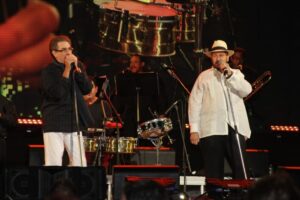
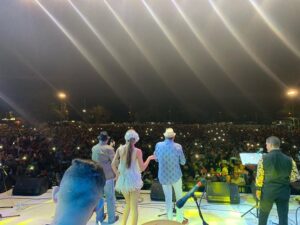
Hansel y Raúl - Photo
Hansel y Raúl concert
Photo in concert - Hansel and Raúl
Hansel and Raúl – Photo behind the scenes

Each experience with Charanga 76 made them evolve in music and although with this orchestra they made themselves renowned professionally, as a duo they flew the fence. They have received multiple musical awards, their sympathetic lyrics, and in some cases, satirical or burlesque have won the applause, admiration, and respect of colleagues in the music industry and the general public on three continents: America, Europe, and Asia.

“The Jersey Boys” was their first youth musical group with only 5 members and although the musical instruments they played were the basics of Rock, their rhythmic concept was Cuban music.

“María Teresa y Danilo” was one of the compositions that brought many satisfactions to this duo. Nowadays it’s still preferred by the fanatical public of the genre. Many debates and speculations were made about this song, but here we tell you the true story. “María Teresa y Danilo” dates its beginnings to the 80s when soap operas like “Dallas” were in fashion.

Hansel came up with the idea of diving and writing on this topic. He magically composed the lyric during the plane trip with San Francisco – Miami trajectory and the rest we already know, multiple copies sold, and hundreds of awards granted to them for the feeling that caused this popular theme.
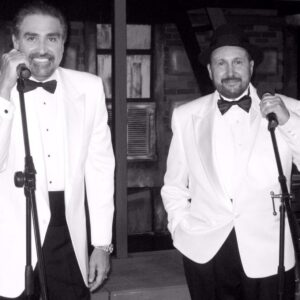
Photo of Hansel and Raúl

Photo of Hansel and Raúl in their beginnings

After such overwhelming success as a duo, Hansel and Raúl decides to separate in 1988. What was the reason?

Everyone wanted to make another kind of music. Each one followed a different path, for his part, Hansel recorded five solo albums including metals, more trumpets and trombones, and in three of these albums, he included neither the violin nor the flute, assuming almost completely the end of the Charanga rhythm in his music. However, a short time later he realized that this Caribbean rhythm was what identified with his audience and two years later he joined Raúl again to continue their successful career.

Hansel and Raúl has a total of 330 songs recorded and on December 31 this Charanga duo will have a performance in Los Angeles, CA and you may be lucky and they play your favorite single and if don’t you can ask for it. Classics such as “Soy”, “Se me nota”, “El ayer”, “María Teresa y Danilo”, “Kukucha kucha”, “Balancea mi corazón” (Yordano), “Ojos Verdes” (Alfredo Gutiérrez), among many others, will be present at this 1: 45min show.
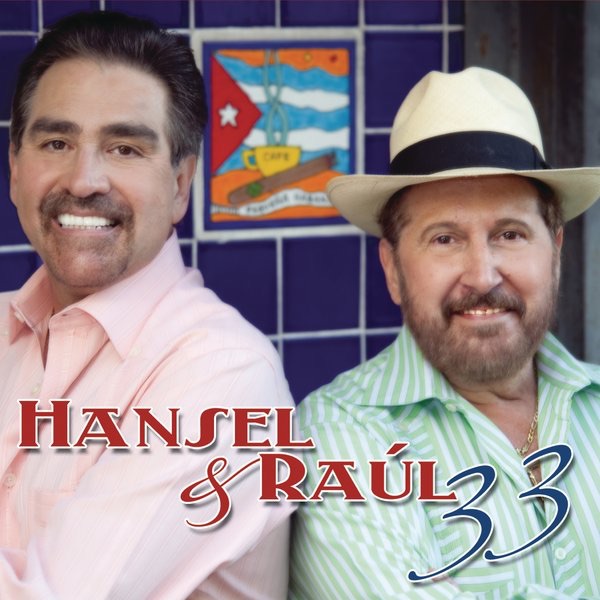
Hansel and Raúl
Cover of Hansel and Raúl, Discography 33

Purchase your Tickets quickly before it´s sold out

https://www.facebook.com/events/crown-plaza-hotel-and-casino/new-years-eve-2020-the-great-gatsby-presents-hansel-raul/271515257093512/

We hope to see them there singing each of their hits and if you later travel to New York, don’t be surprised to see Hansel in that city because he and his family will be celebrating their daughter’s sweet sixteen, on the second day of January 2020.

Is Hansel a stage name?

Although some may consider that Hansel is a characteristic name of the children’s story “Hansel and Gretel”, this name comes from Germany and it’s of Jewish origin. Hansel Enrique is the name of this singer and songwriter “Charanguero” and he is named so to differentiate himself from Hansel Horacio (father). In Cuba, the tradition is maintained that every male child must bear the name of his grandfather; this is the reason for all his cousins are called Hansel.


More Details visiting:

http://www.HANSELYRAUL.com

Social Channel:

https://www.facebook.com/pg/HANSELYRAUL/

The legacy of Leopoldo Pineda, the ambassador of the trombone in La Maquinaria Fania All Stars

The Dominican trombonist was part of Las Estrellas de Fania and stood out for his virtuosity on his instrument, as commented by musicians Joe de Jesús and Willie Álvarez.

Leopoldo Pineda, “Palma Sola” was born on May 8, 1939 in a small batey called Palma Sola, in Barahona, southern province, Dominican Republic.

El legado de Leopoldo Pineda, el embajador del trombón en La Maquinaria Fania All Stars

He passed away on June 27, 2019 in New York City. Due to his solvency on the instrument, Leopoldo was a participant in hundreds of salsa recordings for more than three decades.

At 80 years of age, Leopoldo Pineda, the Dominican trombonist who earned the respect of his colleagues in the most courageous years of salsa, has passed away.

A case of diabetes had undermined his health in recent years and the fatal outcome came on Thursday, June 27 in New York City.

In recent years, Pineda had been retired from musical activity, due to health problems and diabetes.

Willie Álvarez y Leopoldo Pineda (Foto Willie Álvarez)

He began at a very young age to seek out musical instruments. In his hometown, Pineda would often visit a neighbor’s house to watch him rehearse different instruments.

There he began his first lessons, learning to play trumpet and tambora.

He studied music at school for compulsory education and there he developed certain tropical rhythms.

In Barahona, there was a music school where Leopoldo graduated and later, because of his talent, he was referred to the National Conservatory of Music in Santo Domingo.

As he grew in knowledge, musically speaking, he learned to play several instruments, among them, the Saxophone and the Trombone, the latter being his weapon of choice for the rest of his life.

Leopoldo Pineda
Leopoldo Pineda

In his native Barahona, he was known as “Chanchito”, but it was at the Conservatory where the nickname “Palma Sola” was born, identifying him to his classmates by the name of the town where he was born.

After participating in various groups in the Republic, Leopoldo went to New York City and there he started playing with Tito Rodriguez’s orchestra in the 60’s.

He also recorded with Los Cachimbimbitos and Los Cachimbales.

He also recorded with Ismael Rivera’s Los Cachimbos and was producer of one of Milly Quesada’s first albums.

Musician Jimmy Bosch used to include Leopoldo Pineda in the select group of trombonists from whom he learned. Willie Colón, el Malo del Bronx, had emotional words for don Leo. Indeed, the Dominican Pineda is part of the glorious history of the best salsa, the one that was born in the neighborhood and that has deeply penetrated in this part of South America.

Alfredo de la Fe posted on his Facebook account: “Leopoldo Pineda, great musician, we played together with Típica 73 and Fania All Stars.

Lepoldo Pineda Trombonita de la Típica 73 y Fania All Stars

Then he began to walk the best paths of Salsa, being part of orchestras such as Típica 73, Orquesta Harlow, Willie Colón, Fania All Stars, Sar All Stars, Jose Mangual Jr, La Conquistadora, Jose Alberto “El Canario”, Rubén Blades, Orlando Watussi, Laba Sosseh, Monguito El Único and Héctor Lavoe, among others.

Fania Records

Read Also: Orestes Vilató is one of the most influential figures in the world of Latin percussion.

Allyson Briggs ”La Rubia de La Salsa”

A little of her story

Allyson Briggs ”La Rubia de La Salsa” is a bandleader and singer who has earned a lot of recognition in recent years. Currently, this talented woman leads the Fleur Seule orchestra, whose main musical genres are salsa, jazz, swing and ballroom dancing.

Also known as ”The Glamorous Girl of Jazz” is able to sing in seven different languages and several of her covers have been written by artists such as Edith Piaf, Ella Fitzgerald, Louis Armstrong, Frank Sinatra, Marc Anthony, Héctor Lavoe, among others.

We feel very fortunate to have been able to interview Allyson, who has kindly agreed to tell us about her life and career so that readers of International Salsa Magazine can get to know her better.

Allyson Briggs ''La Rubia de La Salsa'' performing on stage
Allyson Briggs ”La Rubia de La Salsa” performing on stage

How she became interested in music

When we hit the subject of her childhood, Allyson told us that her parents always played classical music. ”We listened to a lot of the classics, big bands, swing, blues, rock and roll, jazz, opera, among other genres,” she said. That’s how her love for these styles began, but the case of Latin music was different.

Her taste for Latin music is because she is married to a Puerto Rican, so she feels her husband and her in-laws have influenced her to end up falling in love with salsa, Puerto Rican music and its culture in general.

This inclusion of Latin rhythms has made her Fleur Seule orchestra collect a lot of fans who simply want to dance to these genres and, some of them, remember their roots.

How she learned to sing in Spanish

Long before she learned Spanish, Allyson began to learn German, which she considers her second language. This interest came from the German roots in her family, whose past always seemed very interesting to her. The same happened with French, as the artist also has French ancestors.

In the case of Spanish, she had some kind of contact with the language at school, but its actual use began when she got married and had to communicate in that way at home. In addition to that, Allyson has a lot of friends in New York, who have helped her a lot to understand certain things about the language.

Allyson learned Spanish thanks to her Puerto Rican husband

Hispanic artists she likes the most are Héctor Lavoe, Rubén Blades, Celia Cruz and Javier Solis. As for covers, she commented that she always tries very hard to understand what a composer wants to say with his lyrics in order to make the interpretation as faithful as possible.

Why is she called ”La Rubia de La Salsa”?

The name ”La Rubia de La Salsa” was not invented by Allyson herself, but by some concertgoers when she sang at La Marqueta, Spanish Harlem. The point is that no one could pronounce Fleur Seule, so they opted for something that everyone could pronounce with no problem.

Upon hearing it for the first time, she realized that this nickname captured her essence perfectly due to her physique, her costumes and the type of music she makes. For the same reason, she is still called by that name to this day.

Fleur Seule

Allyson revealed that she chose the name ”Fleur Seule” for her orchestra in honor of the French language. In addition to that, it sounds unique and elegant to anyone who hears it.

As for the beginning of her orchestra, she told that she met a guitarist with whom she started doing some musical projects. This same person provided her with certain recommendations in terms of singing and even language, which were taken into account until she was able to assemble a complete group.

She chose the name ''Fleur Seule'' for her orchestra because it sounds elegant and unique
She chose the name ”Fleur Seule” for her orchestra because it sounds elegant and unique

Activity during and after the pandemic

Allyson told us that the pandemic gave her the opportunity to meet multiple people through social networks due to online concerts she offered twice a week. When things began to return to normal, there were many fans who told her that they got to know her music through digital platforms like Instagram and Facebook.

At the moment, she has some performances planned in Puerto Rico and the state of Florida after the success he had the last time she went to those places. He also mentioned that she would like to go to Colombia and Japan, as both countries are big salsa fans.

Read also: Producer, film director and actor Jess Thomas

National Zalsa Day 2020

North America / Puerto Rico

In April 2000, the third Sunday of March was instituted as the National Zalsa Day under Law #100 of the Senate of Puerto Rico

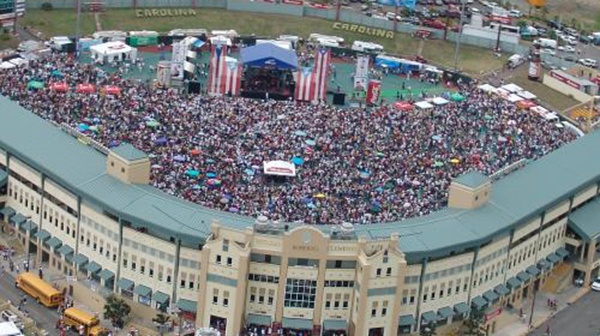
National Zalsa Day 2020 - Edicion Platino
National Zalsa Day 2020 – Edicion Platino

History

The National Zalsa Day was created in 1984 by Pedro Arroyo, Z-93 Programming Director, who always had the desire to celebrate an event where the talent of popular salsa music, its composers and performers would be recognized, to present it to the great public that loves this tropical genre.

Since its first year, the great event has seized a public eager to enjoy this live music.
The support was total and it immediately positioned itself as the annual concert of the people of Puerto Rico and visitors from other countries.

Since its inception, the National Day of the Zalsa was dedicated to some figure of this genre, as a recognition of their talent and their roots in the public.

  • 1984 – Dedicated in life to the Sonero Mayor, Ismael Rivera
  • 1985 – Rafael Ithier of the Great Combo of Puerto Rico
  • 1986 – Tito Puente and Santitos Colón
  • 1987 – Hector Lavoe
  • 1988 – Andy Montañez and Gilberto Santa Rosa
  • 1989 – Celia Cruz and the Sonora Ponceña
  • 1990 – Willie Colón and Tite Curet Alonso
  • 1991 – Bobby Valentín, Oscar D’ León and the composer Gloria González.
  • 1992 – For the Best 5 Trumpets of Puerto Rico: Elías Lopés, Charlie Sepúlveda, Juancito Torres, Mario Ortiz and Luis “Perico” Ortiz
  • 1993 – Celebration of the Tenth Anniversary of the National Day of the Zalsa, dedicated to the Salsero People 1994 – Ray Barreto and Adalberto Santiago
  • 1995 – “Sunset Duels”
  • 1996 – Dedicated to reunions: Classic Ensemble, Tito Nieves, Luis “Perico” Ortiz and Rafael De Jesús, El Gran Combo; Andy Montañez and Roberto Rohena; Sonora Ponceña with Luigi Texidor and Yolanda Rivera.
  • 1997 – To the salsa town
  • 1998 – Jerry Masucci
  • 1999 – Cheo Feliciano
  • 2000 – Richie Ray and Bobby Cruz
  • 2001 – Eddie Palmieri
  • 2002 – Ruben Blades
  • 2003 – Johnny Pacheco and Roberto Rohena
  • 2004 – Quique Lucca, Papo Lucca and Willie Rosario
  • 2005 – Tommy Olivencia and Roberto Angleró
  • 2006 – Los Hermanos Lebrón and posthumous tribute to Charlie Palmieri, Tito Rodríguez and Ray Barretto
  • 2007 – Ismael Miranda, Ramón Rodríguez, Raphy Leavitt and Sammy Marrero
  • 2008 – Larry Harlow and Manny Oquendo
  • 2009 – Celebration of the release of Tite Curet Alonso’s work on Puerto Rican radio. Dedicated to Louis Garcia.
  • 2010 – Johnny Ortiz. Special recognition to Héctor Maisonave and Ángel Luis Córdova García “Paleco”.
  • 2011 – Elvin Torres from Costa Brava, Luisito Ayala from Puerto Rican Power, Paquito Guzmán, Tito Allen and Luigi Texidor
  • 2012 – Posthumous tribute to Frankie Ruiz. Dedicated to the Zodiac Orchestra and the Latin Corporation.
  • 2013 – Posthumous tribute to Pedro Arroyo, former director of Z-93. Special recognition to Edwin Morales from La Mulenze, Pedro Brul, Pedro Conga from Orquesta Internacional and Cano Estremera.
  • 2014 – El Gran Combo, Joe Rodríguez de La Terríca, Justo Betancourt and Meñique
  • 2015 – Gilberto Santa Rosa receives the first National Zalsa Day Star Award. Dedicated to Sammy “Rolo” González, Mickey Cora, Nacho Sanabria.
  • 2016 – Eddie Palmieri receives the second National Zalsa Day Star Award. Dedicated to Lalo Rodríguez and Tito Rojas.

National Zalsa Day 2020

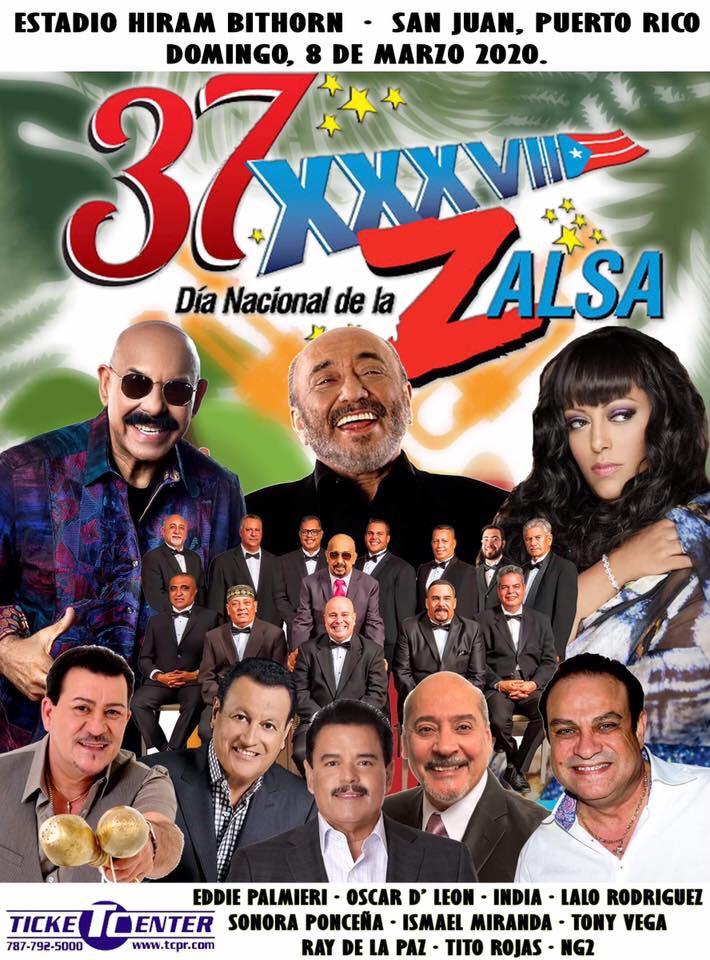
On March 8, the 37th edition of the National Salsa Day will be held at the Hiram Bithorn Stadium, in San Juan, Puerto Rico.

National Zalsa Day 2020 outside

We often hear that salsa in Puerto Rico is not having a good time or that the atmosphere is not what it used to be. However, each time before. However, every time National Salsa Day is announced, everything changes.

Those who live on the island rub their hands to wait for the big moment and those who arrive from abroad begin to check plane tickets and schedule a little vacation.

In 2020 it will not be the exception. The station Z93 announced a tremendous salsa billboard with Eddie Palmieri, Sonora Ponceña, Oscar D’ León, Ismael Miranda, Lalo Rodríguez and India.

In addition, Tony Vega, Ray de la Paz, Tito Rojas and NG2 have been confirmed as part of the great salsa party. This has caused fans on social networks to begin to express themselves with different opinions about the chosen artists.

Perhaps the balance tilts favorably towards the more classic salsa and not so much towards the proposals of the youngest (except NG2), but let’s see how this formula works for Zeta.

National Zalsa Day 2020 37 XXXVII

The Crazy Owl, a popular Puerto Rican radio host, announced that tickets can be purchased on the Ticket Center website (tcpr.com/). So you are already warned.

If you want to give yourself the pleasure of enjoying salsa on the Isla del Encanto itself, this may be your chance.

Flyer of National Zalsa Day 2020
  • V.I.P platinum $225.00
  • Area / V.I.P
  • Open bar / open bar
  • Quick access / Fast Pass
  • Private bathrooms / private bathrooms
  • Official T-shirt / official t-shirt
  • V.I.P arena $75.00
  • Numbered seat / reserved seating
  • Quick access / fast pass
  • Private bathrooms / private bathrooms
  • General admission $15.00
  • Christmas offer only 1000 tickets

For more information:

  • https://zeta93.lamusica.com/
  • https://www.facebook.com/zeta93fm/?ref=page_internal

Salsa: From New York to the world!

North America – United States – New York

Last February we actively participated in different activities in New York, promoted by different instances and always supported from the Spanish Harlem Salsa Gallery Museum and The Johnny Cruz Show.

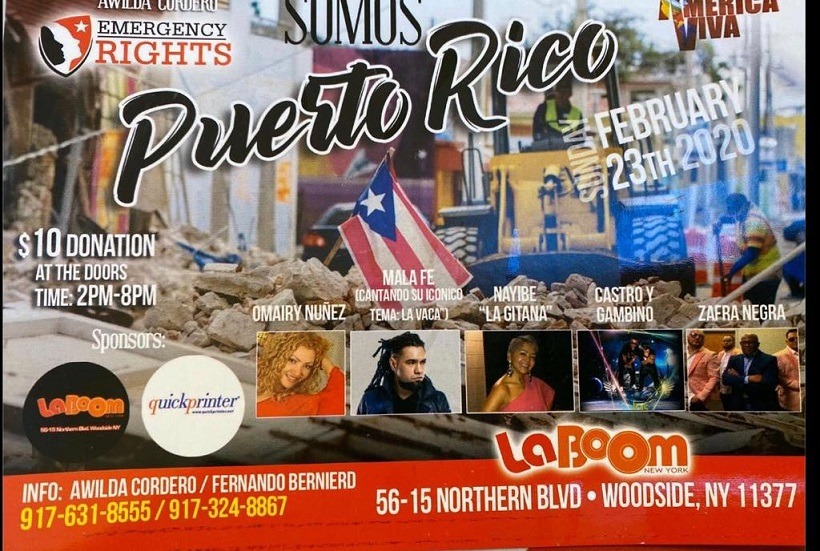
Johnny Cruz: We were part of the Somos Puerto Rico event, together with more than 25 artists and with the collaboration of La Boom, which allowed thousands of people to work for our island: Puerto Rico. There was a lot of music, and we were accompanied by artists such as Jova Rodríguez, Arlene, Roberto Vásquez, Anissa Gatners, Fernando Berniero, Alex Bautista, Jen Carrasco and Kevin Tapia, among others.

We also had typical food for sale and many initiatives aimed at saving so many lives in need. From this event we want to continue bringing families to the United States and they can be calm until they stop shaking in the south west of Puerto Rico. You are not alone!

In addition, we are working hard on a documentary about Frank Ferrer, always thinking of immortalizing figures that have consolidated Salsa in the world as a Latin genre of world projection.

Salsa, as you know, is a typically New York musical genre, the result of the influence of great Latin jazz musicians, and the existence of a youth of Latin origin born, or resident in New York, in slums where Salsa is the best expression, spiced up by the exile produced by the Cuban Revolution and the awareness of American racial minorities.

In 1964, Johnny Pacheco, a flutist of Dominican origin, and Jerry Masucci, a young businessman, founded the Fania label, which gave the old Latin labels, a more modern sense of Caribbean music. Musicians and singers of the previous generation were reinvented, but others were incorporated as a young Willie Colon, the Palmieri brothers, Eddy and Charlie; Papo Luca, Ray Barreto, Larry Harlow. And, there were also singers who put their voice to Salsa to tell stories of the street, daily or reflexive, that were the mirror of the life of the neighborhoods: Cheo Feliciano, Adalberto de Santiago, Andy Montáñez, the Ismaeles -Miranda and Ribera-, Justo Betancourt, Héctor Lavoe or Rubén Blades.

Johnny Cruz Salsa: From New York to the world!

The influence of the Cuban revolution had led composers and salsa musicians to become aware that it was necessary to compose songs that talked about what was happening in the streets from a critical perspective, giving way to a new salsa and foot reality for characters as Frank Ferrer started from folklore and protest to arrive at salsa mixing both concepts in an exemplary album: Yerbabuena. All this and much more can be enjoyed very soon.

For this month of March, Puerto Rico will organize the 1st World Salsa Collectors Meeting and of course we will be there representing New York with the Salsa Museum (SPAHA Salsa Gallery Museum). From March 7th, at least 15 organizations of this type of collector from seven countries will exhibit their collections of the Caribbean genre.

The collectors meeting will take place at the Sheraton Hotel, in Miramar, under the theme “La Salsa se baila así” and will be free admission. It will be attended by collectors from Puerto Rico, Colombia, Panama, Peru, Ecuador, Mexico and several cities in the United States.

That day will be the official release in LP format of the album “Mario Ortiz, 55 Aniversario”, nominated for the last edition of the Latin Grammys.

The event includes memorabilia exhibitors of legendary salsa artists such as Willie Rosario, Bobby Valentín, Roberto Roena o la Sonora Ponceña, as well as the Museo de la Salsa de Puerto Rico or the Fundación Nacional para la Cultura Popular.

Pieces from the Jairo Varela Museum, renowned deceased Colombian musician, whose orchestra Grupo Niche is still active and triumphing around the world will be presented. The writer Daniel Nina, will give a lecture about Salsa, and Puerto Rican dancer Tito Ortos will talk about the history of salsa dancing. We can enjoy live music with the group Cubaneo 54, and a great closing with the several times awarded Big Band of the Free School of Music of San Juan, directed by Professor Manuel García. See you there!

As always, remember that Spanish Harlem Salsa Gallery is in 1708 Lexington ave New York N.Y. 10029. Open free to the public all Thursdays & Fridays from 4 to 7 pm and Saturdays from 1 to 8 pm. Check the updates in our website: spahasalsagallery.com.

Johnny Cruz - Spaha Salsa Gallery
Johnny Cruz – Spaha Salsa Gallery

Also, The Johnny Cruz Show, the #1 Salsa Show on television on all 5 Boroughs of New York on CH67.  Saturdays from 3:30 to 4:30 pm.

Contact: Johnny Cruz. 917-747-8505.  [email protected].


By Johnny Cruz Correspondent, New York City, New York

  • « Go to Previous Page
  • Page 1
  • Interim pages omitted …
  • Page 10
  • Page 11
  • Page 12
  • Page 13
  • Page 14
  • Interim pages omitted …
  • Page 27
  • Go to Next Page »

International Salsa Magazine (ISM) is a monthly publication about Salsa activities around the world, that has been publishing since 2007. It is a world network of volunteers coordinated by ISM Magazine. We are working to strengthen all the events by working together.