






Joseph Gonzalez has been one of the greatest Latin percussion icons of our time and it is worth talking about his past and current accomplishments. He was born on March 12, 1953 in the San Juan Hill section of Manhattan and grew up in a mixture of cultures with Puerto Rican and Italian roots, which ensured that the young Joseph and the rest of his siblings were raised with the best of each.
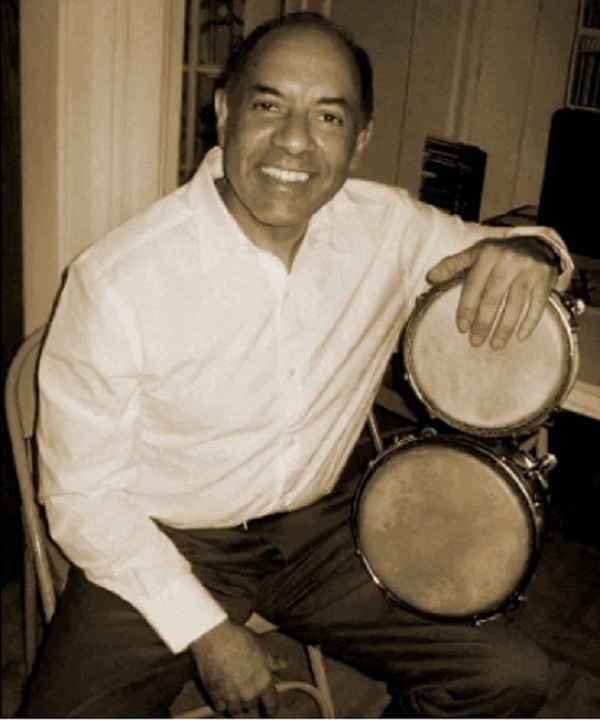
According to the musician himself, his passion for music started in the 1950s when he listened to all kinds of genres and rhythms at home, which trained the young man almost without him realizing it. At home, his family used to enjoy the talent of Frank Santana, Machito, Jerry Vale, Tito Puente, Mario Lanza, among many other artists of the time. Upon hearing these names, one can already get an idea of what Gonzalez’s vocational training would be like in the future.
From a young age, he would liven up family parties by playing the conga. At the age of 15, the boy first became interested in music as something more than just a hobby to kill some time. The teenager gave signs that music would be a very important part of his life.
Already in the 1960s, Gonzalez had made his first long-playing record with Frankie Nieves, vocalist and neighbor of the artist who had set himself the goal of taking over the boogaloo world and become one of its greatest exponents. The album was called ”The Terrible Frankie Nieves”, was under the direction of producer Stan Lewis and contained all kinds of popular genres for those years such as R&B, guaracha, mambo and much more.
Something very striking about this music is that he never attended an institute or school of arts, but learned everything by himself through the experience he gained in San Juan Hill, where the best Latin music orchestras were always heard and whose musicians lived and some even resided in Amsterdam Houses.
In 1971, he became a member of the Ruben Betancourt’s orchestra, with whom he would play the group’s first LP entitled ”Orquesta Tentación” and published by the record label Mañana Records. A few years later, he married and soon he and his wife had their first daughter, to whom they gave the name Audrey Valentina. Around the same time, he separated from Rubénm stayed with ”Felix Morales & Orchestra Caprí” for two years and was part of ”Son De La Loma”, whose members were veteran musicians who taught Joe everything they knew.
Cover of the album ‘’62nd and 10th’’
During the 1980s, there was a dramatic decline in the Latin music scene, which caused Gonzalez to look for a regular job that could support his family and provide them with the the finaltial security they need. In those years, he partnered with jazzman Mario Bauzá and his orchestra, a group with which the percussionist finally achieved the level he was destined to get to.
He started making very important appearances in a lot of concerts with the Bauzá’s orchestra and recordings that would lead him to have access to many other opportunities on TV shows, film soundtracks, tours, awards, among many other things. This led him to be worthy of the Latin Grammy on several occasions and perform with stars such as Celia Cruz, Papo Vázquez, Arturo O’Farrill, Daniel Poce and many more.
His most recent album is entitled ”62nd to 10th”, which is absolutely dominated by Latin jazz and whose compositions are written by Gonzalez himself, except for one track. In this album, Joe Gonzalez once again demonstrates that he has not forgotten everything he has learned and is still as strong as ever.
Read also: Tribute to Larry Harlow about a year after his departure

By Johnny Cruz, ISM Correspondents, New York, New York City





It is now a year since the unfortunate departure of one of the greatest icons of Latin music, who is none other than the one and only producer, composer and pianist Larry Harlow. Let’s remember that he passed away on August 20, 2021 in a health center located in the Bronx at the age of 82. His death was caused by heart failure due to a kidney condition from which he had been suffering from for some time.
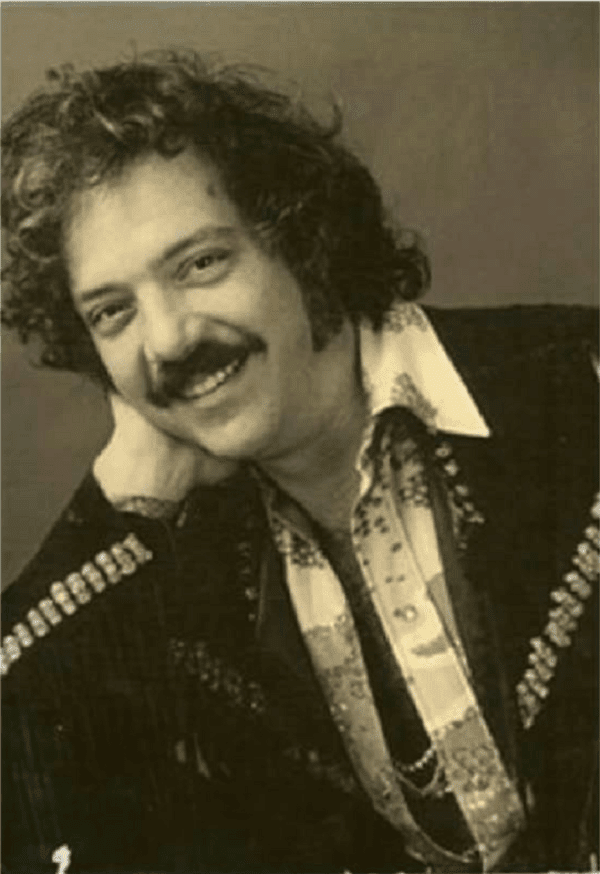
“El Judio Maravilloso” passed away on August 20, 2021
The also known as “El Judio Maravilloso” has a great success story behind him in the field of music, which began with the occupations of his parents. Recall that his mother was an opera singer and his father was a musician in the orchestras of Barrio Latino, which could explain his interest in the industry when he was very little. From a very young age, little Harry already handled certain instruments in a skilled way, showing what he could dedicate himself to in the future.
His great interest in Cuban music and culture led him to travel to Cuba, where he began his musical studies related to Afro-Cuban music. Unfortunately, the arrival of the Cuban Revolution prevented him from fulfilling his task and he had to leave the island prematurely due to the political crisis that started to develop.
Since then, the Harlow Orchestra became one of the first groups to be formed with the label of Fania Records. At the same time, Harlow was producing an tremendous amount of albums, both his and other musical stars’, catapulting him to becoming one of the most respected producers of that time. Reportedly, there were approximately 270 records in total, which gave us a lot of hits that continue to be heard to this day.
One of his greatest achievements was to have brought the world famous Cuban singer Celia Cruz to New York, thus becoming the first artist of Latin origin to perform at the Carnegie Hall, a famous concert hall located in Manhattan that had only had room for Anglo-Saxon artists until that time. It was “El Judio Maravilloso” who managed to bring Latin America to the Carnegie Hall for the first time from the hand of “La Guarachera de Cuba”, something unthinkable in those years.

Larry Harlow and Johnny Cruz in the 80’s
He also had an important role in the film “Our Latin Thing”, along with several transcendental figures of the Fania All Stars.
It is of common knwoledge that Larry and this server had a close relationship, since we knew each other for many years and lived many incredible experiences related to this wonderful genre called salsa. That is why the famous pianist sent me some of his most precious costumes to be exhibited in our gallery so that all his fans could be as close as possible to their idol. After his departure, seeing all those things donated by him leaves a deep emptiness in those who see them, but at the same time this reaffirms our commitment to offer our public the best salsa exhibittions they have ever seen.
Larry has left an indelible mark in the hearts of all of us who got to know him during his lifetime, but our duty is to move on with our heads held high.
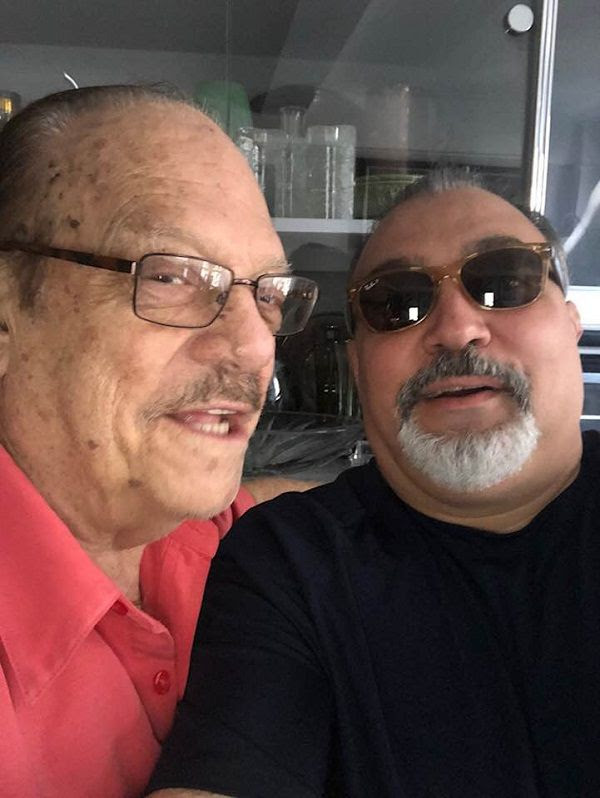
Harlow and Cruz in 2018
By Johnny Cruz, ISM Correspondents, New York, New York City
We are incredibly pleased to talk about Luis Alberto Rosario, better known as Papo Rosario, who can be considered one of the most beloved salseros by people who have enjoyed his music for decades. In addition to being a very cloase and kind man to everyone around him, his musical and acting talent is undeniable.

Isidro Infante next to Papo Rosario
After having sung along with El Gran Combo de Puerto Rico for more than 40 years, Rosario makes his debut as a soloist with his first recording work “Salsa de La Buena”, in which he receives the full support of maestro Isidro Infante. Both Rosario and Infante are part of Salsaneo Records, which is close to becoming one of the most important music labels thanks to its contemporary salsa. Thanks to the counselling and advice received from Isidro, Papo has managed to create one of the most important and interesting albums in 2002.
One of the things that makes the album stand out is the great amount of danceable rhythms, positive lyrics, good vocals and fresh sonority. It is evident that the essence of the artist always stands out and he does not let himself be dragged along by what he learned during his time in El Gran Combo. While it is true that there are some traits learned from his friend and former colleague Jerry Vivas, Rosario seems pretty determined to distance hemself from the past and focus on a vastly different future.

Rosario and Infante recording in the studio
What “Salsa de La Buena” is
“Salsa de La Buena” has many tracks that can perfectly mark a before and after in current Latin music. It starts with a beautiful hymn to optimism and perseverance called “Gracias”, which is one of the four songs composed by the pen of maestro Infante. In the case of “Salsa de La Buena”, the song that gives its name to the entire album, speaks of the connection the singer has with his people as an exponent of the salsa genre. The arrangements and piano melodies are reminiscent of what Richie Ray and Bobby Valentín did when they sang “Los Reyes de La Salsa”.
Isidro also shows his great talent with “Los refranes de Don Yeyo”, a beautiful piano solo where you can see how important the Caribbean collection of proverbs is for the culture at large.

Johnny Cruz with Papo Rosario
Promotion for Papo Rosario’s album
In a conversation between Papo Rosario and Johnny Cruz, director of the Spanish Harlem Salsa Gallery Museum, the two talk about this recording work and the artist tells how did the whole process go.
Rosario has said that both he and Infante had studied together, but had built their careers separately until they met again recently. That’s when he proposed him to make some arrangements to his songs, but they ended up collaborating to make the album in full. The main objective of the record production was to bring a positive message to the peoples and do what God has put on their shoulders.
In the same way, he pointed out that the salsa museum was quite empty the last time he went, but he was surprised to see that all those spaces have been filling up with truly valuable objects for salsa and its fans.
From there, they gave their regards to Isidro Infante and invited him to the museum to join them and talk about “Salsa de La Buena” and other issues that arise.

Johnny Cruz, Papo Rosario and Rubio Boris
By Johnny Cruz, ISM Correspondents, New York, New York City