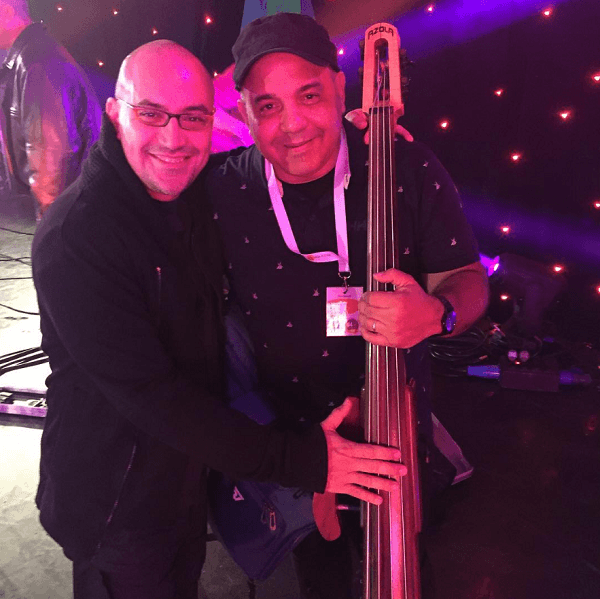
Israel Tenenbaum Interview: The Changing Music Industry
The music industry has evolved, and artists’ income streams are no longer limited to album sales. Today, an artist can monetize their work in multiple ways, with or without the support of a record label and digital platforms.
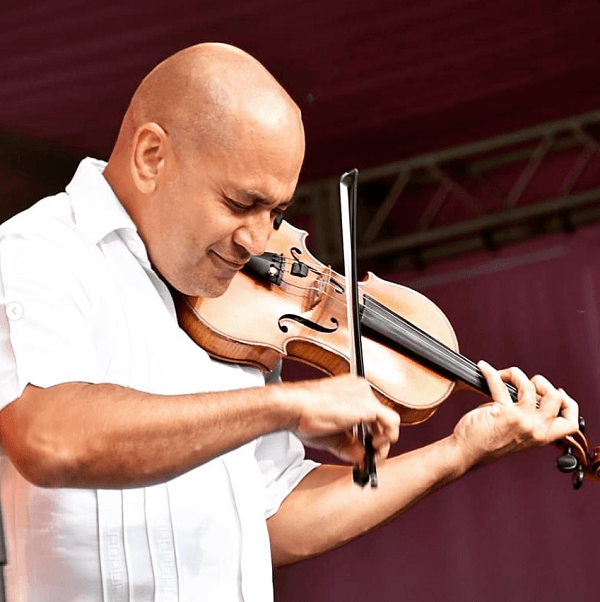
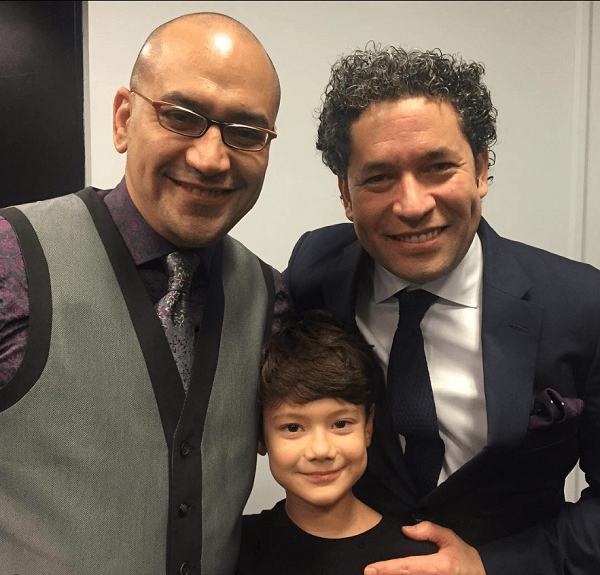
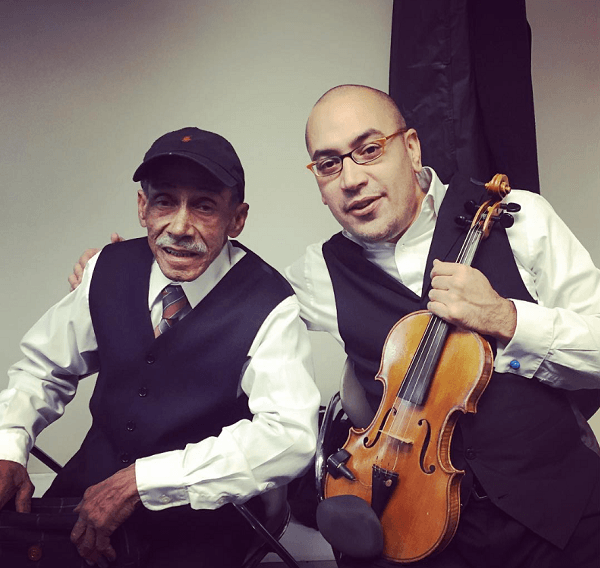
Israel Tenenbaum (Los Angeles, California) is an American pianist, arranger, and music producer with a notable career in salsa and Latin jazz. He has worked with renowned artists and has lived in several countries, including Puerto Rico and Colombia.
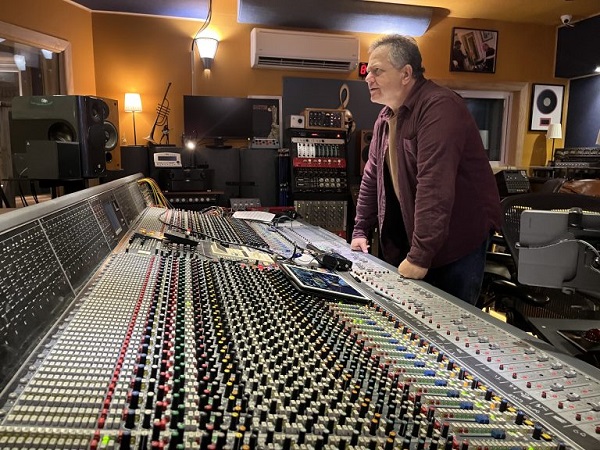
1) What is the current process for recording, music production, and royalty distribution for Mr. Tenenbaum?
Well, let’s see. You’re talking about the current recording process, which is essentially the same, but it’s now generally done remotely. We grew up with recording environments where we would gather everyone (the musicians) in one place and record everything there.
But with remote recording capabilities, many musicians are now very well-equipped and they record at home. You can also take advantage of this because it gives you access to other talents, beyond the local environment you’re in. They don’t compare to what a musician or band leader might have locally, or for finding other guests, and so on.
So, remote recording is definitely in operation. I’ve been working with remote production for a while. In fact, it was pure chance that about six or eight months before the pandemic hit, I had just moved to California and I started to solidify and organize my global network of musicians, recording studios, producers, and a bunch of arrangers, and so on.
And when the pandemic hit, I was ready because I had already organized everything. Everyone thought it was a 90-day vacation. After 90 days, they thought, “Well, it’ll take a little longer.” And by the time they realized it was going to be a long haul, six months had already passed. It took them almost six more months to get organized themselves.
It was advanced, pure chance. And so that served me a great deal. And currently, I have that very solidified. I work with a dozen cities in seven countries. Thank you, thank you.
How does royalty distribution work? Does that still exist?
Yes, royalties still exist. What has changed dramatically is the way royalties are generated.
Let me explain it very simply. When we lived in the era of the physical product—which was what sold the most, whether it was the LP or the CD—you might earn 7, 8 cents per song on each copy in the U.S. If you wrote all your compositions and recorded all your compositions and recorded 10 songs on your album, you would automatically get 8 cents for each song on every album sold. So if you sold, say, 10,000 copies, that’s 10 songs at 8 cents, which is 80 cents per album. Then you have about $8,000, more or less. And on top of that, you have royalties because you’re selling the album. The album has two sources of copyright: the recording itself.
The owner of the recording has one royalty, and the composer has a completely separate royalty. So, these are the royalties you earn money from through sales, usually.
So, the record label would give a piece to the artist, say, 10%. That’s a huge royalty. And has that changed today? Nowadays, that hasn’t changed. It’s still between 7 and 15%, maybe 20% if you’re a superstar, but it’s more or less the same, somewhere between 7 and 12%. The difference is that now, that’s not what’s selling.
So this hasn’t completely changed because it was one thing to earn 8 cents every time your song was sold. Those were very easy numbers. If I earned a dollar for the compositions and then I earned another dollar or two more from the album sales, that’s three dollars per album. And if it was 10,000 albums, it was thirty thousand dollars. Simple as that. Now, it’s not like that. Now you’ll be paid thirty thousand dollars at a rate of approximately a third of a cent.
2) What is the impact of digital platforms that artists use to place their music?
Of course, for Israel, the use of digital platforms is almost inevitable because that’s how music is being distributed.
So, there’s a certain “democratization” in a sense—there’s easier access to that distribution—but the thing is, thousands and thousands of songs are uploaded to platforms every day. So, you’re competing with hundreds of thousands and millions of people, artists, and songs that are being uploaded all the time. And you have to compete with that to be found among those millions of people who are all competing for the public’s attention.
So, there are some interesting impacts. For example, it forces those who are really looking to build a career to think of themselves as a business from a promotional standpoint. “What do I do to promote my music? How do I get afloat? How do I show myself? How do I stand out from the crowd to get noticed?”
So that’s one thing that happens with artists. The artist really just wants to create, so part of the impact is an additional burden that takes artists away from their creative space. They have to spend a lot of time worrying about whether they’re getting plays, whether the numbers are moving, whether they’re being heard, how they can promote, whether to invest money in promotion. I mean, there are a lot of scattered impacts. It’s a loaded question with many answers, depending on the act you’re listening to and what you’re looking at.
The impact is certainly very strong… there’s access, and as an artist, I can reach and distribute my music so that it’s accessible to a large number of people that I didn’t have access to before.
Of course, it forces me to make a much bigger effort to try to stand out in that environment, among so many others who are competing for listeners’ attention. The royalties don’t really justify all the effort; they don’t pay for the effort.
The album, the music, and the recording have always been a promotional tool for the artist itself. It has never been a major source of income, but at least before, there was a system where the possibility of a real income existed. Now it’s practically nil.
So, there are a number of things behind that loaded question.
3) How is income distributed once the product is finished? How is the distribution? You already explained it in the first question, but a little more in detail.
It depends on the arrangements, the agreements the artist has. If it’s a solo artist, they’re hiring other people to come to the studio to record their album. So, those people are working on a commission basis, and they don’t have any other benefits beyond the payment they receive for coming to do the recording.
But it could be a group, a band, and in that group, they divide what the group generates, what the recording generates, into equal parts, let’s say.
It depends if you’re with a record label or a performing rights organization. I don’t remember what it’s called in Venezuela. In Colombia, it’s called SAYCO. In the United States, it’s called ASCAP or BMI (here in Venezuela, it’s SACVEN). Correct, SACVEN.
So, how that distribution is made depends on many factors. But in general, let’s say that the distribution platforms, which are the most widely used means today for artists who are 90 to 95% independent, use these distribution platforms that are aggregators. They put your music and distribute it to Spotify, iTunes, etc., etc., all the others. They collect money and pay you normally between 80 and 100% of what it generates. That also generates other income; it generates author’s rights that are paid directly from the platform. That is, Spotify pays for author’s rights. So it pays two types of royalties: one is for the composition and the other is for the recording. So for the composition, it pays one amount of money, and for the recording, the performance, it pays another amount depending on how that platform is organized.
For the copyright, they pay for the performance of the album because it’s considered a sale.
At the moment, what’s the difference between platforms and radio? You’re listening to the radio, and you can’t choose what’s going to play. You’re at the mercy of the DJ or the programmer or the radio station and the playlist that person has made, and you’re bound to what they chose to play.
On platforms like Spotify, you can listen to a playlist, but if you want to skip a song, you skip it, and if you want to repeat it, you repeat it, or you can make your own playlist.
So, if you have control of the recording and you can arrange it, when that happens, it’s considered that they have to pay a royalty as if it were a sale. A different royalty is generated, which is different from what happened, for example, with Pandora. Pandora was basically sitting and listening, and you could give Pandora information, telling it, “I like this music more,” or you’re listening to a playlist. Perfect. Besides that, well, that’s basically it, and obviously, anything that sells physically, because it’s still selling, and vinyl and LP sales are increasing. That’s back in style and is growing.
CDs are still being made. There is still a CD market, depending on the music you make, but there is a market, for example, for Latin music, for jazz. Something moves in Japan and China, but in Japan and some European countries, the CD still moves in a real way.
4) Name some current business models. You as a producer.
Let’s say there are several possibilities of what can happen. I can work as a producer, I can work with an artist strictly on the production—a business model where the artist is completely the owner of their own work.
As the owner of the LatinBaum Records label, I have to manage and participate directly with the artist. We cover costs and make investments alongside the artist to produce and promote the music in exchange for an equitable distribution of the profits.
The big record labels, the multinationals, are working with artists on what are essentially called “360-degree contracts” in which the record label is involved and has a piece of all professional activity, including merchandise such as hats, t-shirts, mugs, pens, whatever. As a record label, I get a piece of what’s sold in souvenirs; that’s marketing. Also, the work you do physically, meaning your events and presentations.
So, they control your book, they control your schedule, they control the artist’s schedule. They earn between 20 and 50% from the artist’s presentations, depending on the artist, their popularity, etc. And they also earn from composition royalties, they earn from album royalties, they earn from every angle.
Now, that business model depends on the investment that each party is willing to make. As they say in Colombia, “you eat rarer.” In other words, it depends on the circumstances of the moment, the artist, a number of factors. There isn’t just one business model that works now. You can also consider the artist doing everything themselves.
That’s another possibility; the artist has to set up their entire production infrastructure, etc. That’s another matter. It’s more complicated because the artist has to understand that their career and their art are now part of a company’s assets. They have to think of themselves as a business and develop their own business model that works for them within their capabilities and what they’re willing to do and their knowledge, right? Above all, “How much can I do?” I’m a single person, so I can compose the songs, I can do the arrangements, I can make the sheet music, I can hire the musicians, hire the recording studio, do the promotion, design the ads, I can do the marketing, I can also sell myself as an artist for presentations. I also sweep the floor, I also make the coffee, and I also serve. Do you get me? I mean, there’s a point of being multi-talented.
Yes, but there’s a very important point where one, or the artist, feels this obligation or has the obligation to have to do so many things that they don’t do any of them well. This is where record labels still play an important role in helping to guide the artist and providing them with services at a moderate price or within the artist’s reach according to their sales, their popularity, the things they can do. And also, these independent labels play the role of guiding and helping the artist and making certain things easier for them because they have some infrastructure that makes the artists’ work a little easier. So, the record label hasn’t disappeared. What has disappeared is what never really existed, which is money. The musician is always fighting for a few bucks to be able to do things, and if they’re lucky, they find an independent label that’s willing to help and invest time, effort, and money in advancing and promoting their career.
But the matter of the dream of being “discovered,” that no longer happens. It no longer exists. The only one who discovers themselves is you, and it’s up to you to show yourself to the world and look for connections, look for opportunities, and for business.
5) What strategies do artists use to monetize their work in the digital environment?
The work that the artist has to do on platforms is definitely a matter of persistence. It’s about regularly posting and telling their story, showing their art, and sharing their art and the reason for their art with the public. We are trafficking in emotions. That’s what the artist does; that’s the currency. It’s about making those emotions known and moving them and telling your story so that people identify with your story, with your music, with your art, and become a support for your career.
The most important thing here is consistency, persistence, always being on top of it. It’s not about “I’m eating a fried egg, let me take a picture of the fried egg.” No. If that’s what moves you and that’s what moves your audience, then go for it, but that’s not what it’s about.
People sometimes confuse being regularly present with having to take selfies all the time, and pictures of their food, and a picture of the neighbor’s dog, and “I’m laughing, and I already put on some crazy pants,” and so on. It’s not that. It’s about sharing your personality with the public, and to the extent that you, as an artist, define it, you should do it regularly. That’s on one hand. On the other hand, advertising is key. You have to invest in advertising.
Someone once spent about $30,000 on a production and went to several record labels, and none of them wanted to buy it. They didn’t want to take the product. Finally, they told one record label, “I’ll give you the album for free. You don’t have to give me a dime in royalties. I’ll sign the contract, but please release it.” The obligation and the commitment here are for you to release the album. And they didn’t take the money. Why? Because a production that costs $30,000 still has a cost of $60,000 or $80,000 that needs to be put into promotion for it to be heard, for it to sell. That’s what it is; that’s what they say.
That’s why it’s so hard for the small musician or artist to compete with the big stars, because they have enormous budgets with which they can produce their work, and the small one can’t compete. That’s why consistency is important, because it’s a way to promote and advertise yourself in a way that is, shall we say, theoretically free, right? It’s at your fingertips or has a very low cost, and if you do it constantly, you gain a space.
But you definitely have to invest money in advertising and promotion. There’s nothing like running an ad and telling everyone on a massive scale, “Here I am, here’s my product, this is my music.” At the end of the day, it’s like selling a can of beans; it’s the same thing. You have to put a good label on it; you have to run an ad on television, in the newspaper, on the radio, whatever it takes to sell your brand of beans. It’s that simple.
When you’re in the recording studio, 90% of what you do is art, and 10% is profit, plotting the commercial side, the hook. The moment the product leaves the studio, that’s inverted 180 degrees. It becomes 10% art and 90% commerce, 90% business, and what you have to do is take advantage of the tools.
Bonus Track.
6) What do you think about us Latinos creating a campaign to create a platform like Spotify, on a global level, so that musicians receive their royalties and money directly without going through other hands?
What do you think? Latin music, all Latin artists.
I think it’s a good idea, but what would be the purpose of… for musicians to have all the royalties directly without having to go through all that advertising, but to do their productions directly.
“Here’s the public, they stream it, and the money goes directly to the musicians, to you.”
Well, advertising cannot be avoided. How is the public going to find out that the music is there and that your music is available?
First of all, there has to be promotion, which can’t be avoided. One or two, you’re going to have to deal with all the Latin artists. The circumstances and conditions of your platform are no different from Spotify’s, or iTunes’, or any other. Why? Because you have to deal with different conditions that already pre-exist. That is, there’s a system that already pre-exists. All the music that is created and distributed, they have to deal with those predispositions. You have to deal with the SACVENs of the world, ASCAP, SAYCO, or whatever. You have to deal with the distribution chains; you have to pay either the author or you have to pay SoundExchange. You have to go through that whole procedure anyway. It’s exactly the same.
The idea is nice, but it’s utopian because there are systems in place globally, and you have to find that other formula to try to achieve what you’re proposing behind your question.
Thanks, Augusto. Likewise, I’m at your service for whatever I can help with. Blessings and greetings to the family.
Ralph Riley (Hong Kong)
Music Producer
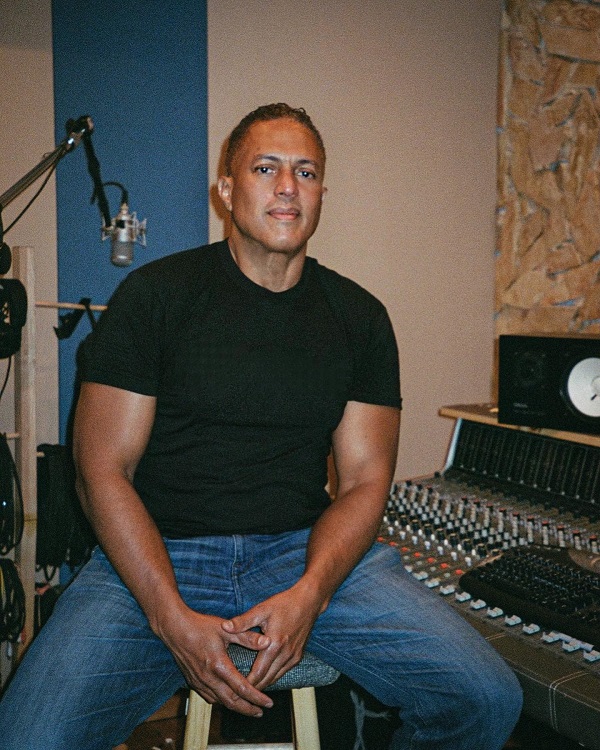
1. The Recording and Production Process
When it comes to recording and production, the proper process involves capturing tracks for multitrack recording on tape or disk, followed by mixing and mastering. The technical complexity of the process is directly proportional to the number of tracks and artists involved in the production. Production costs and logistics also affect the final quality of the music produced.
Regarding copyright, it involves several key players: composers, publishers, record labels, and Performing Rights Organizations (PROs). Copyright royalties are generated from different uses of the song, such as streaming, physical sales, public performances, and synchronization in other media. It can be a complicated process that a lot can be written about and one that is constantly changing. The best advice is to do a lot of research or enlist the help of professionals who offer this consultation and/or full service for a fee.
2. The Impact of Digital Music Platforms
Digital music distribution platforms have significantly impacted how artists create, share, and monetize their music. They have democratized access to audiences around the world, providing opportunities for independent artists to bypass traditional gatekeepers and reach global listeners directly. However, this shift has also created challenges related to revenue generation and competition for visibility.
Here are some of the key challenges:
- Revenue Inequity: Streaming royalties are often perceived as low, making it difficult for artists to generate substantial income from streaming alone.
- Market Saturation: The ease of access to digital distribution has led to a highly saturated market, making it challenging for artists to stand out and get noticed.
- Competition for Visibility: Artists need to actively promote their music and engage with their audience to compete with the sheer volume of content available on these platforms.
- Dependence on Algorithms: Success isn’t solely dependent on the quality of the music, but is also influenced by the platform’s algorithmic recommendations, which can be unpredictable and require a strategic approach to navigate.
In conclusion, digital platforms have revolutionized the music industry, offering unprecedented opportunities for artists to connect with global audiences and build their careers. However, navigating the complexities of these platforms and finding sustainable income models remains a key challenge for artists in the digital age. This revolution, especially in the age of AI, continues to evolve rapidly.
3. Final Thoughts on Fairness
In summary, it seems to be always a little unfair to the vast majority of artists. It’s a complicated topic and I’d recommend a resource such as, for example, https://www.indiemusicacademy.com/blog/music-royalties-explained for better insights.
4. Popular Business Models
Some popular business models used in the music industry for record production include traditional record label deals, revenue-sharing models, and direct-to-fan approaches. Sometimes, it’s a combination of these. Streaming services and digital distribution also play a significant role in the current landscape.
For example, the direct-to-fan approach can include:
- Direct Sales: Artists can sell their music directly to fans through their own websites, online stores (like Bandcamp), and social media platforms.
- Crowdfunding: Platforms like Patreon allow artists to connect with fans and receive direct financial support through subscriptions or one-time donations.
- Streaming Platforms: Artists can directly upload their music to platforms like SoundCloud, Bandcamp, and even Spotify and Apple Music.
5. How Artists Get Paid in the Digital Realm
Artists can typically monetize their music in the digital environment through streaming platforms, digital downloads, merchandise, fan subscriptions, live streaming, and licensing. Additionally, artists can explore opportunities in social media monetization, crowdfunding, and brand partnerships.
Here’s how the payment system works and the factors that influence an artist’s earnings:
The “Pro-Rata” Payment Model
Spotify doesn’t pay artists directly for each play. Instead, it uses a “pro-rata” model:
- The company pools all its revenue (from Premium users and advertising) into a common fund for a set period, typically a month.
- Spotify keeps a portion (about 30%), and the rest (around 70%) goes into a “royalty pool” for rights holders.
- An artist’s share of this pool is determined by their “stream share,” which is the percentage of their streams compared to the total streams on the platform during that period.
Average Per-Stream Rate
While there’s no fixed rate, many sources estimate the average payout to artists on Spotify is between $0.003 and $0.005 per stream. This means an artist would need approximately 1 million streams to earn between $3,000 and $5,000.
Factors Affecting the Payout Rate
The actual amount an artist receives can vary significantly based on these factors:
- Listener’s Location: Subscription prices and ad revenue vary by country. A stream from a user in a country with a higher subscription fee (like the US or UK) will generate more revenue than a stream from a country with a lower fee.
- Listener’s Subscription Type: A stream from a Premium subscriber is worth much more than a stream from a free user (with ads).
- Artist’s Deal: Spotify pays the rights holders (record labels, distributors, publishers), not the artists directly. The artist’s contract with their label or distributor determines what percentage of the royalties they receive. Independent artists who use a distribution service typically keep a larger percentage.
- Minimum Threshold: As of early 2024, Spotify requires a song to have at least 1,000 streams in the previous 12 months to be eligible to generate royalties.
In short, an artist’s earnings on Spotify aren’t a simple calculation. They are the result of a complex revenue-sharing system that is influenced by a global audience, different subscription types, and each artist’s specific contracts.
I also manage music production through cassiorecords.com
Also Read: Understanding the music business