• Skip to primary navigation
  • Skip to main content

International Salsa Magazine

  • HOME
  • Previous editions
    • 2026
      • ISM / April 2026
      • ISM / March 2026
      • ISM / February 2026
      • ISM / January 2026
    • 2025
      • ISM / December 2025
      • ISM / November 2025
      • ISM / October 2025
      • ISM / September 2025
      • ISM / August 2025
      • ISM / July 2025
      • ISM / June 2025
      • ISM / May2025
      • ISM / April 2025
      • ISM / March 2025
      • ISM / February 2025
      • ISM / January 2025
    • 2024
      • ISM / December 2024
      • ISM / November 2024
      • ISM / October 2024
      • ISM / September 2024
      • ISM / August 2024
      • ISM / July 2024
      • ISM / June 2024
      • ISM / May 2024
      • ISM / April 2024
      • ISM / March 2024
      • ISM / February 2024
      • ISM / January 2024
    • 2023
      • ISM / December 2023
      • ISM / November 2023
      • ISM / October 2023
      • ISM – September 2023
      • ISM – August 2023
      • ISM July 2023
      • ISM Edition June 2023
      • ISM – May 2023
      • ISM April 2023
      • ISM March 2023
      • ISM February 2023
      • ISM January 2023
    • 2022
      • ISM December 2022
      • ISM November 2022
      • ISM October 2022
      • ISM September 2022
      • ISM August 2022
      • ISM July 2022
      • ISM June 2022
      • ISM May 2022
      • ISM February 2022
      • ISM January 2022
    • 2021
      • ISM December 2021
      • ISM November 2021
      • ISM October – 2021
      • ISM September 2021
      • ISM August 2021
      • ISM July 2021
      • ISM May 2021
      • ISM April 2021
      • ISM June 2021
      • ISM March 2021
      • ISM February 2021
      • ISM January 2021
    • 2020
      • ISM December 2020
      • ISM November 2020
      • ISM October 2020
      • ISM September 2020
      • ISM August 2020
      • ISM July 2020
      • ISM June 2020
      • ISM May 2020
      • ISM April 2020
      • ISM March 2020
      • ISM February 2020
      • ISM January 2020
    • 2019
      • ISM December 2019
      • ISM November 2019
      • ISM October 2019
      • ISM Septembre 2019
      • ISM August 2019
      • ISM July 2019
      • ISM June 2019
    • 2016
      • ISM December 2016
  • Spanish
  • Download Salsa App
    • Android
    • Apple

Search Results for: Latin Jazz

Music reviewer and photojournalist Ricky Ricardo describes his work from the last 35 years

Ricky Richardson, better known as Ricky Ricardo, is one of those important figures who should be taken notice of for his significant contribution to Latin music, even if it is often not quite appreciated by the public. The Tampa-born photographer, writer, and music reviewer has honoured us by talking about his career and experience covering events related to Latin culture and music, so we invite our readers in the beginning of the year to enjoy the revelations of our talented guest.

Ricky Richardson at the festival
Ricky Richardson at the New Orleans Jazz & Heritage Festival entrance

How Ricky got started in the coverage and review to Latin music and cultural events

First of all, Ricky thanked us for the interview and went on to tell us that he started as a photographer for a local newspaper called California Crusader News. Over time, his superiors asked him to start writing articles to accompany his photographic work, resulting in music reviews based on his attendance at numerous events and festivals throughout Los Angeles and beyond.

His work also included meetings with newspaper and magazine publishers who were always searching for content for their own publications, which led Ricky to send reviews and photos to all kinds of publications.

Major publications Ricky has worked with

Among the most important publications Ricky has collaborated with is Latin Beat, which was the main means of communication related to Afro-Cuban music. The photographer met Rudy and Yvette Mangual many times at various concerts and festivals. They met backstage at the Hollywood Bowl during the Blue Note Jazz Festival, an event he covered just like all the artists who performed there.

He also covered events in other parts of the United States, such as the New Orleans & Jazz Heritage Festival and the French Quarter Fest.

Kathy, Lázaro, and Nelson. Photo by Ricky
Kathy “La Rumbera” Diaz, Lázaro Galarraga and Nelson Rodriguez (Photo by Ricky Richardson)

In the case of Vidasalsera, Ricky first heard that name coming out of a musician’s mouth at a Puerto Rican festival in Long Beach, where he often ran into Cal Sakaniwa, the photographer and videographer for this media outlet. That is when he reached out to the webmistress of Vidasalsera.com Dena Burroughs and began providing photo galleries for her website, even though they have never met in person.

What made Ricky fall in love with Afro-Cuban music

During his childhood and youth in Tampa, Ricky was very exposed to Latin music due to the large Cuban population living in the Ybor City area, and he and several of his friends used to frequent many places and stores where this music was played. 

When the young man heard Afro-Cuban music for the first time on radio stations KACE and KKGO (nowadays known as KJAZZ) was a point of no return for him. His love for this kind of music was greatly strengthened by radio programs such as Alma Del Barrio, Jazz on the Latin Side, Canto Tropical, Groove Time, and Canto Sin Fronteras. Not to mention that many international artists were constantly giving concerts at venues and festivals. 

Events covered by Ricky to date

Throughout his career as a photographer, Ricky covered a huge number of events, including the Long Beach Jazz Festival, Monterey Jazz Festival, Central Avenue Jazz Festival, Los Angeles Street Scene, San Diego Street Scene, Simon Rodia Watts Towers Jazz Festival, Watts Towers Day of The Drum Festival, Cuban-American Festival, Puerto Rican Festival, and many others. 

When we wanted to know more about his experiences at these events, he replied that he felt very honored to have been able to share with established and emerging artists over the past 35 years. He also feels very lucky to have been able to witness such wonderful performances by artists who always greet him and spend warm smiles at him whenever they meet him.

Kathy, Lázaro, and Nelson. Photo by Ricky
Kathy “La Rumbera” Diaz, Lázaro Galarraga and Nelson Rodriguez (Photo by Ricky Richardson)
Dionne, Monica, and James. Photo by Ricky
Councilwoman Dionne Faulk, Monica Bracho, Mayor James T. Butts Jr., Councilwoman, and Brendt Stallings, Chief Executive Officer & Chief Investment Officer-Inglewood Park Cemetery (Photo by Ricky Richardson)

Alma Del Barrio Fest 2025

Ricky told us that he had the honor of attending the first and second iteration of the Alma Del Barrio Salsa Festival, which took place at different locations at Loyola Marymount University. Future attendees got really excited about the current venue chosen by the organization to host the event, which is Lawton Plaza with its amphitheater, seating arrangement, abundance of grass, and the dance floor. 

“I love the fact that many people get to meet and greet some of Alma Del Barrio Program Hosts (DJ’s) in person. I like the fact that Alma Del Barrio Salsa Festival attracts several generations of salseros, that are diverse, multi-cultural, and from all walks of life.,” Ricky said on the subject.

Why Ricky retired last year

Last year, Ricky finally made the decision to retire from music critics and photography after covering the Latin music scene for so many years in order to allow new generations of talented journalists to take over and keep Afro-Cuban music alive. 

He is currently looking for opportunities to work in public relations and marketing for sporting events that will be held in the next three years such as the NBA All-Star Weekend, the FIFA Worzld Cup, the Super Bowl, and the Olympic Games. 

Read also: Cache Live Music puts Miami to dance to traditional Latin music

The Cajón throughout history

The main artists who put on a show always get the lead on stage, but nothing much is being said about the instruments accompanying them, which are a fundamental part of music as we know and enjoy it. One of these is the cajón, which has a most interesting and a little bit controversial origin, so there are certain considerations to express this regard.

This is the cajón
This is how the cajón looks today

What is the cajón?

The cajón, also known as the Paruvian cajón or flamenco cajón, is a percussion instrument consisting of a wooden box on which the musician sits and taps with his fingers and palms to produce the desired sounds, whether bass or treble. On certain occasions, it is used as a substitute for the drum kit and has gained popularity in jazz, flamenco, and some Latin genres. 

One reason it is so popular is because of its versatility, transportability, and ease to be played, even if the musician does not have much experience. Therefore, many prefer it to the drum kit, which is bigger and more cumbersome in certain cases.

Origins of the cajón

What is known about the origin of the cajón is that by the end of Spanish colonization, African slaves bound for America were not allowed to use their drums because the Catholic Church saw them as sinful and pagan tools. Not to mention that these prisoners also used these drums to communicate with each other, which is why the Spanish nicknamed them “talking drums.”

This led to the aforementioned instruments and several of their musicians being burned. Not to mention that slavers wanted to ban black songs that sent messages about slavery through their melodies. 

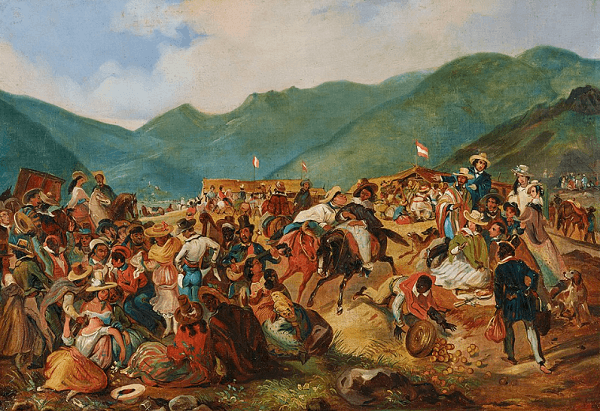
By the early 1800s, there was absolutely no record that the drum had existed in what we now know as Peru, and any viceregal document mentioning it disappeared. However, there is evidence of the existence of the cajón from 1840, and it is believed that the first to use it were Afro-Peruvians. 

fiesta de amancaes with the cajón
Painting by the German Painter Mauricio Rugendas on the occasion of the “Fiesta de Amancaes”

Afro-Peruvians encompass a collection of African ethnic groups who, unable to express themselves through music as they did before, had no choice but to find other instruments with which they could do so. They then saw wooden crates used to transport goods as a way to do percussion and thus continue to practice their sacred rites and play their music.

Initially, the cajones were used to play coastal and traditional dances to central and north Peru, which gradually popularized them. They also began to be used to play the “Fiesta de Amancaes,” which is a Limean festival held during the time of the Viceroyalty. This event usually brought together horse breeders, artisans, and bohemian musicians from the north and center of the country.

The arrival of the cajón in Spain

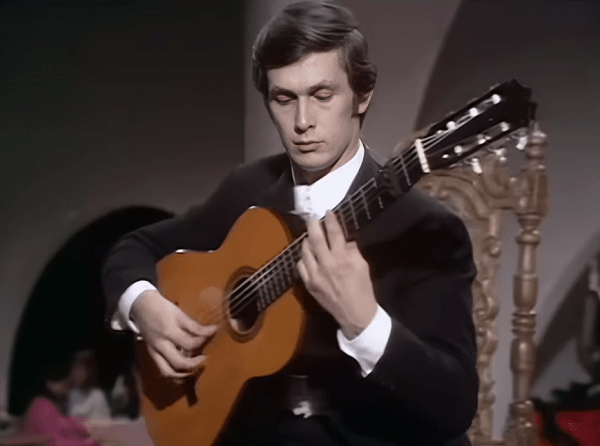
Many years later, specifically the year 1977, the cajón arrived in Europe. It was Spanish flamenco composer and guitarist Paco de Lucía who discovered the instrument during a tour of Latin America when he attended a reception hosted by the Spanish ambassador at the time. On that occasion, Paco heard Brazilian musician Rubem Dantas play it during a show by singer-songwriter Chabuca Granda, and he instantly realized that those sounds combined very well with flamenco percussion, which was always done with the palms, although it was not as consistent and precise as required. The cajón achieved this without a hitch. 

It is for this that Paco decided to take the cajón to his country and only added some inner strings to adapt it and tinge its sounds, thus becoming one of the most important elements of a flamenco show today. Both Paco and Rubem decided to release it at an open-air concert at the Parque de Atracciones de Madrid of the Casa de Campo, and the Peruvian instrument was a resounding success, marking the beginning of its addition to flamenco guitarists’ shows.

At the time, Paco said that this contribution to flamenco culture in his country made him very proud and with good reason, as it was a great revolution that continues to bear fruit.

Paco de Lucía playing
Paco de Lucía playing a guitar solo

The cajón today

Today, the flamenco cajón has three screws that allow the musician to adjust the tone and a system of strings that gives the Peruvian version a different resonance and offers a range of many different sounds in which the musician’s body plays a very important role. The Peruvian version remains the most traditional of all because it gets no strings and its sounds are deeper, while the Spanish version incorporates strings or bourdons in order to make more tearing and vibrant sounds.

There are also more modern versions that include the use of drumsticks and pedals to expand their sound range a lot further.

Read also: Creator of Salsa Vida Takeshi Young graced us with his presence in International Salsa Magazine

Dámaso Pérez Prado and the Succession of the “Mambo King”

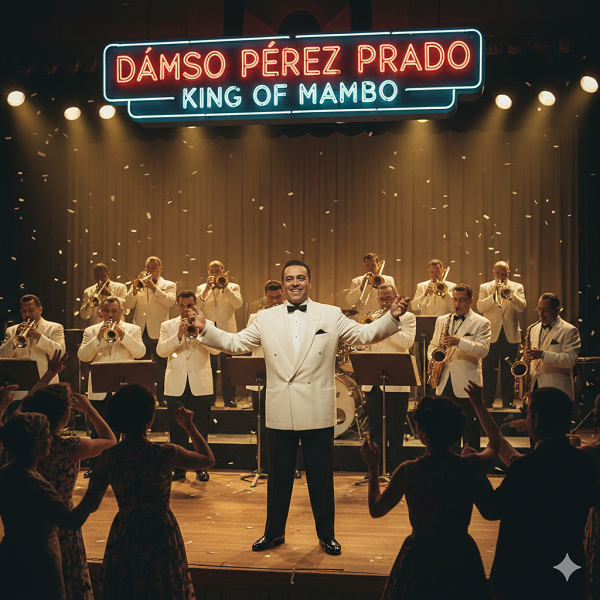
Dámaso Pérez Prado was a Cuban musician, composer, arranger, and orchestra conductor, known worldwide as the “Mambo King.”

On December 3, 1983, Pantaleón Pérez Prado, an excellent bass player and composer, passed away in Milan, Italy. He was born on December 27, 1926, in Matanzas, Cuba.

Pantaleón’s Beginnings and Career

Pantaleón followed in the footsteps of his famous older brother, Dámaso Pérez Prado. At age 18, he formed his first orchestra, which he left in 1950 to join Dámaso’s group as a double bassist, accompanying him for several years.

He also played for a short time in Havana with the Laito Castro Orchestra. In the mid-1950s, Pantaleón Pérez Prado went independent and traveled to Europe, where he led an orchestra of Cuban musicians. This group achieved great success performing the songs that Dámaso had popularized.

Dámaso Pérez Prado and the Succession of the King of Mambo

The Legal Dispute

In 1956, a dispute between Dámaso Pérez Prado and his younger brother, Pantaleón (1926–1983), led to an unusual legal conflict. Dámaso sued his brother for $500,000, accusing him of impersonation.

In Hispanic culture, it is common for children to receive both parents’ surnames. In this case, the brothers’ birth names were Dámaso Pérez Prado and Pantaleón Pérez Prado, respectively, with Pérez being the father’s surname and Prado the mother’s.

In Portugal, the song Pantaleón performed, “Mambo del Estudiante” (Student’s Mambo), became the “official anthem” of the University of Coimbra. He also succeeded in Spain, France, and Italy, where he was introduced as “Pérez Prado, Rey del Mambo” (King of Mambo), which produced intentional confusion with his brother Dámaso.

Dámaso initiated legal action that concluded with Pantaleón being prohibited from using the title “Mambo King,” while also being required to use his full name. Some suggest that, beyond the lawsuit, there was a tacit agreement between the two brothers, based on the fact that Dámaso visited Europe infrequently, focusing his activities in the Americas, while Pantaleón permanently settled in Milan.

Name Confusion and The Conflict’s Revival

Originally, RCA credited the recordings to Dámaso Pérez Prado. However, when his records began appearing in the US, the record company shortened his name to the more alliterative Pérez Prado. In 1955, Dámaso dropped his full name and legally changed it to Pérez Prado.

Around that time, Pantaleón, who played bass with his own group, appeared at the Alhambra theater in Paris under the name “Pérez Prado, el Rey del Mambo.” Pantaleón was subsequently restricted by court order from passing himself off as Pérez.

However, hostilities resumed when an angry French visitor called the Hollywood Palladium, where Pérez Prado was performing, and yelled at the management for featuring an “imposter,” claiming he had danced with the “real” Prado (actually Pantaleón) in Deauville a few weeks prior.

Dámaso Pérez Prado fue un músico, compositor, arreglista y director de orquesta cubano, conocido mundialmente como el Rey del Mambo.

The ensuing lawsuit effectively put Pantaleón out of commission, but the younger brother had a form of posthumous revenge. When Pantaleón died in 1983, a widely circulated obituary was headlined “Mambo King Dies in Milan,” leading many people to (erroneously) believe it was Dámaso who had passed away.

Pantaleón’s Career and Legacy

Pantaleón Pérez Prado performed in Greece and traveled to Iran at the invitation of the Shah himself and his wife, Princess Soraya. He remained active until shortly before his death in 1983.

Dámaso Pérez Prado’s Notable Hits

Dámaso Pérez Prado’s best-known songs include:

  • “Mambo No. 5”
  • “Qué rico el mambo” (also known as “Mambo Jambo”)
  • “Mambo No. 8”
  • “Cherry Pink and Apple Blossom White,” which was a number one hit in the United States.
  • “Patricia,” which was a worldwide hit and was included in Federico Fellini’s film La Dolce Vita.
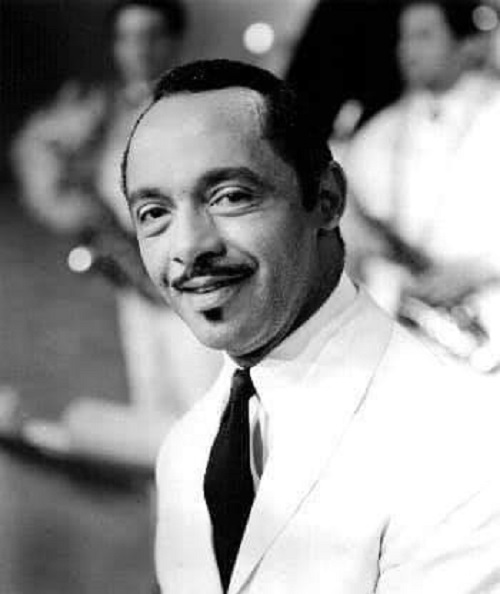
Dámaso Pérez Prado
Dámaso Pérez Prado

Legacy: In addition to his recordings, Dámaso Pérez Prado participated as an actor and musician in several Mexican films. His music was key to the international popularization of the mambo, and his style remains influential in Latin music and jazz.

Collaboration:

Los Mejores Salseros del Mundo 

Dj. Augusto Felibertt

Also Read: Israel “Cachao” López, a Cuban musician and composer, has been hailed as “the Inventor of Mambo

Spain is reborn in new Cuban music by Yalil Guerra

The immense Hispanic legacy is usually relegated to the background, while being a key part of our sound identity.

Reference Image about Spain
Reference Image
Yalil talking about Spain
Composer, bandleader, and Latin GRAMMY winner Yalil Guerra.
Image courtesy of RYCY Productions

By YALIL GUERRA

The birth of the Cuban nation, after gaining its independence from its former colonizer, Spain, marked a break that transcended political concerns and entered strongly in the cultural aspect. Cubans were “denaturalized” after the Treaty of Paris in 1898, leading to a profound metamorphosis of identity that was inevitably reflected in our music. Out of that process a fresh and powerful sound expression emerged: a vibrant fusion between European, African, and North American influences, something that had already begun in the 19th century but was driven by a growth music industry and the cultural magnet of its northern neighbor, the United States.

For years I have listened to, studied, and enjoyed Cuban popular music — both the old and contemporary— and what I notice is that most productions tend to highlight the folklore—especially the Afro-descendant roots and the imprint of jazz — while the immense Hispanic legacy is usually relegated to the background, while being a key part of our musical identity.

In Cuban music today, both on and off the island, the record business is committed to a modern and bold sound. Compositions explore contemporary harmonies, bitonality, and extended chords — resources that come from both classical music and jazz — entwined with surprising and refreshing harmonic cycles. In wind instruments, melodic lines and musical motifs reveal the virtuosity and creativity of a new generation of musicians and arrangers, who are raised in solid academic traditions but open to global influences. The percussion stands out for its polyrhythm and the number of sophisticated tutti that require a unique expertise, but the Spanish influence is quite absent or just present in the language.

In contrast, What caught my attention was the newest music of singer, composer, and multi-instrumentalist Alain Pérez on his new album Bingo, where Spain resonates powerfully and recognizably. I find this gesture very special, as it vindicates a Spanish legacy in Cuban music that is often forgotten or minimized. I also highlight the case of pianist and composer José (Pepe) Rivero and his new album Estampas y Raíces where he pays tribute to classical Spanish composers, mixing their works with his unique interpretive style, bringing it closer to the language of Cuban jazz that is so familiar to him.

What about the large mass of Cuban artists and musicians who do not pay homage to the mother country? It is that we lost our historical memory or has it been erased? Is the omission of certain elements of our Spanish traditions a symptom of what some call the “Spanish Black Legend,” a myth that has seeped into our musical history and present?

I remember when Juan Perón said:

“And through the figure and work of Cervantes, Argentina pays tribute to the mother country, fruitful, civilizing, eternal, and to all peoples who have emerged from its maternal womb.” “And through the figure and work of Cervantes, Argentina pays tribute to the mother country, fruitful, civilizing, eternal, and to all peoples who have emerged from her maternal womb.”

Cuba is no exception.

Over the years, in response to the previously exposed, I have tried to make Spain present in my work: incorporating harmonious colors, Andalusian cadences, and the Phrygian mode—so tied to the Iberian sound—creating compositions devoted specifically to Spanish culture, especially my new string quartet entitled “Noches de España”, following the line of our great composer Ernesto Lecuona, who knew how to bring to life both African and Spanish things. As for me, I seek to keep alive that heritage and project it onto 21st-century Cuban music, without forgetting our important African legacy.

Today, rescuing the Spanish heritage in Cuban music is not just an act of memory: it is also an opportunity to rediscover the richness of crossbreeding that continues to define who we are and how our history sounds. Contemporary Cuban music not only looks to the future: it sings to its African roots, but it also needs to reconnect with that other essential part of our identity. After all, we think, love, and communicate in Spanish. Every note, every guitar or lute that sounds, will evoke that heritage and bring us near to the fullness of what we are.

It does not matter the color our skin is, or whether our grandfather was from Asturias or the Congo: cultural fusion is what forged our identity and will remain the essence of Hispanic America. Mexican writer, philosopher, and politician José Vasconcelos said: “I am Hispanic, and nothing about Hispanic is alien to me.”

At this crucial time, Cuban music has the challenge—and the opportunity—to sing its entirety. And in doing so, it shows us that, beyond styles or labels, what unites us is the sound of a common history.

DMA Yalil Guerra

Read also: Yalil Guerra and the musical roots of his talent

Gabrielito Y La Verdad giving everything in Los Angeles and beyond

Gabriel González from the group Gabrielito Y La Verdad has been kind enough to speak exclusively with International Salsa Magazine and me, Karina García, about his beginnings, bands, and current career. The composer, actor, and musician gave us some of his time to address the most important issues concerning his successful career and everything that surrounds it, for which we are extremely grateful.

Gabriel performing at the museum
Composer, percussionist, singer, and actor Gabriel Gonzalez playing live at the Los Angeles County Museum of Art

How Gabriel started to become interested in music 

Gabriel was born and raised in Los Angeles, where he took his first steps towards what would become his lifelong vocation. Since his parents were Mexican immigrants, it was not uncommon for him to listen to rancheras, huapango, boleros, son jalisciense, and other genres typical of that country.

He liked music so much that he began participating in contests at “El Mercadito,” a place located east of Los Angeles, where amateur concerts and all kinds of musical events were held. After his father sang there several times, he told him he wanted to do the same, and that is how he began entertaining wider audiences with his voice.

Years later, after his passion for music was being shaped and getting more serious, he contacted his uncle, who was a promoter, and took him with him to Mexico to get some acting work in movies. This means that his artistic career was not just limited to singing but also to acting, but at some point, both areas would end up mixing. 

It should be noted that his work as an actor made him stay in Mexico for several years, so he shared with many great actors of the time who were also singers, such as Yolanda del Río, Federico Villa, David Reynoso, Lucha Villa, and many more. 

Upon returning to California, he experienced a significant culture impact. He realized that he was not Mexican enough for Mexicans nor American enough for Americans. This double identity made it much easier for him to cross cultural and musical boundaries, so from playing ranchera, huapango, and son jalisciense, he was given a chance to play other styles such as son montuno, which for Gabriel is the basis of salsa and much of Latin music. 

Gabrielito at the Vibrato Grill And Jazz
Gabrielito Y La Verdad performing at the Vibrato Grill And Jazz

Gabriel’s professional beginnings in music

Gabriel tells us that, during a huge part of his career, he worked as a solo artist, but he went on to collaborate with several groups and one of them was the Mexican band Quetzal, which specializes in playing Chicano rock and son jarocho. His sister Martha González was the lead singer, so he was able to work with them on and off for about 20 years. He describes his time with Quetzal as a very nice period in which he learned a lot and was even blessed to win a Grammy, but everything has an end, so he went ahead and worked with many other bands in the Los Angeles salsa scene.

In fact, today he is a member of Boogaloo Assassins and has been playing with them since 2015, while also having his own project, which he named Gabrielito Y La Verdad.

Gabrielito Y La Verdad

After all experience gained so far, Gabriel decided to form his own group Gabrielito Y La Verdad, with which he had his first big hit “Oye Muñeca,” released around 2019. Since the project began, the artist has had the same keyboardist and pianist, but the rest of the musicians have come and gone over the years, as it is not easy to maintain a cohesive musical group for a long time.

In fact, he usually has a list of musicians he can call, and their presence at an event depends almost entirely on their availability and ability to read sheet music. Gabriel often works with the same musicians Jimmy Bosch uses, so when the Puerto Rican travels to Los Angeles, Gabriel knows he can count on them if an event comes up. He also often uses some of Jerry Rivera’s musicians and those of many other exponents of the genre.

Gabriel with Oscar Hernandez
Gabriel Gonzalez and bandleader and pianist Oscar Hernandez

Facets additional to singing

In addition to being a singer and film actor, Gabriel has also participated in commercials and done a little musical theater, since the condition of being an artist forces you to learn a little about everything. Being still very young, he participated in the film ”Mojado de Nacimiento” alongside La Sonora Santanera.

One of those memorable experiences was his participation in the second national tour of the musical ”In The Heights” with Lin-Manuel Miranda. It was during this tour that Gabriel learned that he had won a Grammy with the band Quetzal. The news came during a bus trip, making it clear that he experienced several of these facets at the same time without any problems.

More recently, he has served as composer of several of Gabrielito Y La Verdad’s songs in collaboration with pianist Matt Amper, who is also actively involved in the creation of the group’s original songs. 

Collaborations with other artists

Gabriel has shared the stage and collaborated with big names in the industry like Bruno Mars, “El Divo de Juarez” Juan Gabriel, Los Van Van, Silk Sonic, and many others. Similarly, during his acting career, Gabriel also met many great actors of the time with whom he shot scenes during the day, and at night, did voice-overs at the studios, and went out singing.

All this led him to share the stage with Aida Cuevas, Rosenda Bernal, Los Lobos, and Lalo Guerrero. While still with Quetzal, he opened for Aerosmith, Taj Mahal, and others. 

Gabriel Gonzalez and Richie Perez
New York’s singer Hector ”Pichie” Perez and Gabriel Gonzalez

Read also: Creator of Afro-Rican Jazz William Cepeda talks about this subgenre

  • « Go to Previous Page
  • Page 1
  • Interim pages omitted …
  • Page 58
  • Page 59
  • Page 60
  • Page 61
  • Page 62
  • Interim pages omitted …
  • Page 95
  • Go to Next Page »

International Salsa Magazine (ISM) is a monthly publication about Salsa activities around the world, that has been publishing since 2007. It is a world network of volunteers coordinated by ISM Magazine. We are working to strengthen all the events by working together.