• Skip to primary navigation
  • Skip to main content

International Salsa Magazine

  • HOME
  • Previous editions
    • 2026
      • ISM / April 2026
      • ISM / March 2026
      • ISM / February 2026
      • ISM / January 2026
    • 2025
      • ISM / December 2025
      • ISM / November 2025
      • ISM / October 2025
      • ISM / September 2025
      • ISM / August 2025
      • ISM / July 2025
      • ISM / June 2025
      • ISM / May2025
      • ISM / April 2025
      • ISM / March 2025
      • ISM / February 2025
      • ISM / January 2025
    • 2024
      • ISM / December 2024
      • ISM / November 2024
      • ISM / October 2024
      • ISM / September 2024
      • ISM / August 2024
      • ISM / July 2024
      • ISM / June 2024
      • ISM / May 2024
      • ISM / April 2024
      • ISM / March 2024
      • ISM / February 2024
      • ISM / January 2024
    • 2023
      • ISM / December 2023
      • ISM / November 2023
      • ISM / October 2023
      • ISM – September 2023
      • ISM – August 2023
      • ISM July 2023
      • ISM Edition June 2023
      • ISM – May 2023
      • ISM April 2023
      • ISM March 2023
      • ISM February 2023
      • ISM January 2023
    • 2022
      • ISM December 2022
      • ISM November 2022
      • ISM October 2022
      • ISM September 2022
      • ISM August 2022
      • ISM July 2022
      • ISM June 2022
      • ISM May 2022
      • ISM February 2022
      • ISM January 2022
    • 2021
      • ISM December 2021
      • ISM November 2021
      • ISM October – 2021
      • ISM September 2021
      • ISM August 2021
      • ISM July 2021
      • ISM May 2021
      • ISM April 2021
      • ISM June 2021
      • ISM March 2021
      • ISM February 2021
      • ISM January 2021
    • 2020
      • ISM December 2020
      • ISM November 2020
      • ISM October 2020
      • ISM September 2020
      • ISM August 2020
      • ISM July 2020
      • ISM June 2020
      • ISM May 2020
      • ISM April 2020
      • ISM March 2020
      • ISM February 2020
      • ISM January 2020
    • 2019
      • ISM December 2019
      • ISM November 2019
      • ISM October 2019
      • ISM Septembre 2019
      • ISM August 2019
      • ISM July 2019
      • ISM June 2019
    • 2016
      • ISM December 2016
  • Spanish
  • Download Salsa App
    • Android
    • Apple

Search Results for: Latin Jazz

John and Liz reveal details of the 16th annual SF Salsa Festival

As is tradition every year, we went back in touch with the organizers of the San Francisco Salsa Festival, John Narváez and Elizabeth Rojas, who treated us with the kindness and affection of always. The dancers and dance instructors once again spoke about the details of the festival’s organization and one or another incident that did not become public, so fans of salsa and such events cannot miss it.

They also talked about how they have done since the 2025 edition and what they will do from now until next year’s edition.
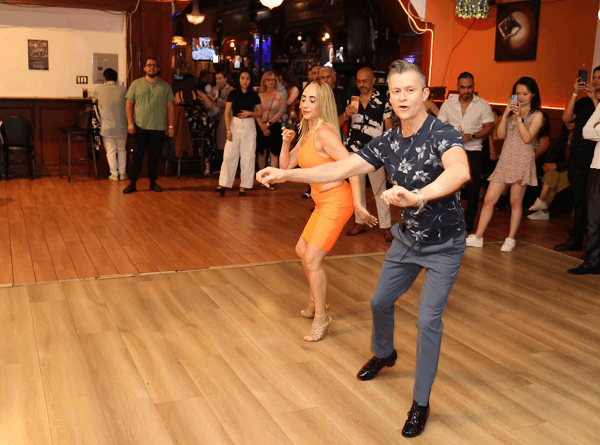
John and Liz dancing
John and Liz dancing at the San Francisco Salsa Festival

What John and Liz have done since the 2025 San Francisco Salsa Festival

After the 2025 edition, John described the rest of the year as sensational because his dance studio has maintained the expected success and his company enjoys the work of of new members who have contributed with their talent to help it grow. In addition to that, their classes are full of people eager to learn to dance, take care of their bodies, keep their minds healthy, and have a more active social life. 

He also recognizes that the Bad Bunny phenomenon helped them a lot, as they’ve welcomed many people who want to learn to dance salsa after the the boom caused by a Super Bowl full of latinidad everywhere. This has also made the celebrated ones at weddings and other family events to celebrate with salsa, so guests do not want to be left behind and seek to dance it as well as possible.

When an event has been organized for 16 years in a row, those involved already have a system by which they are ruled, so there are few surprises that John and Liz could find thanks to so much experience under their belt. However, there may be things that catch them off guard and ,in this case, it was the economy. This time, they found that everything was much more expensive.

After reviewing expenses, they noticed that the flights of the artists and hotel costs were much higher than in previous years, so they were forced to take certain actions, such as hiring fewer dance artists. They were careful to bring only the best they could find to do a tremendous show, which fortunately occurred.
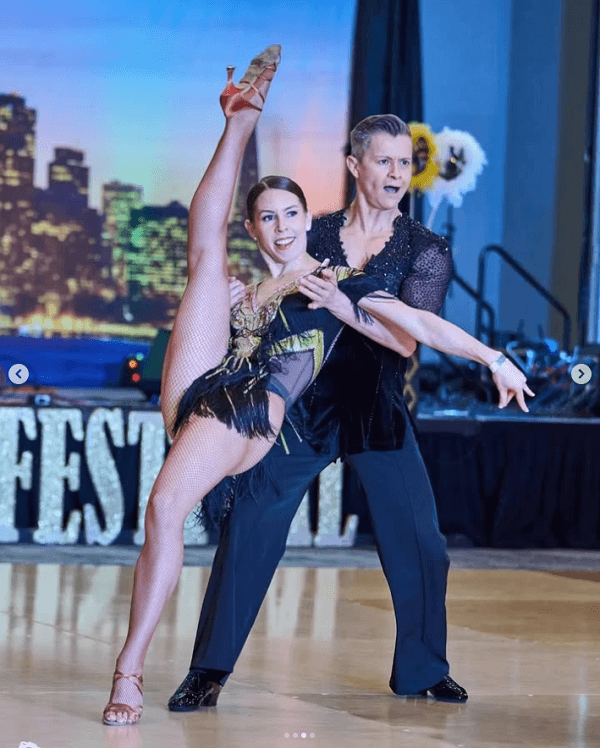
John and Aura dancing
John Narvaez and dancer Aura Moreno dancing at the San Francisco Salsa Festival

They also noticed that many people could not attend the festival, so they offered numerous discounts, press passes, and the opportunity to volunteer for the organization.

Visa problems

The main disadvantage faced by John and Liz last year was the delay in the approval of visas for the members of La Máxima 79, so we wanted to know how it had gone this year. Well, as it turns out, it did happen again and two couples of dancers were unable to attend because their visas were denied, so they had no choice but to invite residents of the United States to prevent that headache. 

Of course, it must be added that bringing people from other places implies additional costs that do not do any good to them right now. For the same reasons, other festival organizers are doing the same thing.

Principal guest artists

The main attractions at this festival were Charlie Aponte, Edgardo Cambón, and Cabanijazz, who of course, did a magnificent job. The big surprise of the festival was definitely Charlie Aponte, with whom they managed to have contact through a well-known Mexican promoter who acted as a link between the dancers and the artist. 

The agreement was made as recently only in January, that is, a couple of months before the event. That is when John contacted Jeannette Santiago, Charlie’s manager and wife, told her who he was, and mentioned the mutual friend they had in common. He then managed to close the deal with her and have the Puerto Rican singer at the event, which came as a very pleasant surprise to those who had been planning to attend for months.

Edgardo Cambón playing
Edgardo Cambón playing at the San Francisco Salsa Festival

Preparations for next year

As every year, after an edition is completed, John and Liz are already thinking about what they will do for the next one. In fact, just the day before this interview, they had a work meeting to start planning everything and thinking about who they will invite for 2027.

They are thinking about inviting La Máxima 79 again. In fact, they have already talked to their lawyer responsible these matters and agreed to carry out the relevant procedures to finally have them at the festival, as they have wanted for a long time. In case the invitation is not given effect, they also have their eyes on Jimmy Bosch and Hermán Olivera. Both have performed in previous editions prior to the pandemic and were sensational, so they are held in good esteem by the organization.

They also mentioned that the venue for the next two editions will continue to be the Marriott Hotel Waterfront, as the location is beautiful and very suitable for an event of this magnitude.

Cabanijazz playing
Cabanijazz Project playing at the San Francisco Salsa Festival

Read also: Uruguayan composer and multiinstrumentalist Sebastián Natal and his band Grupo Sensación


North America – January 2017

The Jazz Connect Conference thubnails - North America - January 2017

Latin Bayarea WebSite thubnails - North America - January 2017

Houston Salsa Congres 2017 thubnails - North America - January 2017

Clubs Tour in Tennessee thubnails - North America - January 2017

Miami Bachata Festival 2017 thubnails - North America - January 2017

Los Van Van Orchestra

European Union

Los Van Van Orchestra. The Flavor in Zurich

1960-1969

Vital to the success and peculiar sound of Van Van, was the career of its director Juan Formell. Before founding it on December 4, 1969, ventures as bassist in several groups, from the Orchestra of the Cuban Institute of Radio and Television, to several groups are and jazz, these multiple experiences conditioned their future.

Its passage by the Orquesta Reve marked a turning point in the search for the style I wanted to achieve. He tested his innovative spirit giving it some sound and format solutions.

It incorporates bass, organeta, electric guitar, violins and flute replaced the five by the system. The vocal work was replaced by mounting quartets own voices. This experiment served as a starting point for, once created the VAN VAN, their contagious rhythm patterns sit in popular dance music.

Los Van Van Orchestra

1970-1979

Earlier this decade important critics and connoisseurs of the subject could notice the successful future of the Van Van. Juan Formell maintaining the contributions made to the previous group (The Revé), enriched the set with other instruments such as percussion, that an exceptional and unique way, were weaving what would define as the SONGO.

This mode of address are elements taken from jazz and rock, it consists of a rhythmic design combined with a figurative percussion piano and bass. Then creating harmonic and melodic different timbres.

José Luis Quintana (Changuito), Raul Cardenas (the Yulo), Cesar Pedroso (Pupi), Fernando Leyva, Jesus Linares, Orlando Canto, José Luis Cortés (The rough), Julio Noronha, Gerardo Miró, William Sanchez, Jose Luis Martinez Miguel angel Rasalps (Lele), together with its director, explored all possible ways and then came to this rhythm that becomes the basis of its sound.

It is for these years that begin recording their first five albums and debuted on several international stages.

1980-1989

This represents an important period for the orchestra. They break their own style incorporating the bronco and cracking of the trombones sound. Turn introduced synthesizers, keyboards with multiple sound possibilities. The use of synthesized saxophone and electric violins draw much attention at the time. In addition to his recording material have new triumphs as: Báilalo eh! Ah! (1982), Come, see and move (1984), Havana itself (1985), Eso que anda (1986), We the Caribbean (1987), wanting (1988) is over, and finally Songo gives way to a new stage.

Van Van Orchestra collash 1980-1989

A hallmark of the group is the use of the picaresque, irony, manners in their songs. Becoming a sort of chronicle of the Cuban reality, his writings offer a social circumstance, themes that recreate the jocular of everyday life.

In these years his music transcends borders and Latin American venues like the Empire in London, England, Austria, Switzerland and Germany are witnessing a pace capable of passing the most skeptical of the dancers.

1990-1999

90 start with a tour around the country celebrating its 20 years, evolving into the contemporary timbre and go in search of more complex and preciosistas as the father expressions.

Their latest results leave no doubt that reach maturity. Pieces like “Give him cadela” and “That’s my problem” Disco Sugar (1993), “I am normal, natural” and “What a surprise” the latest in vivo (1994), “Let anger” and “De equals “Ay ampárame god (1995) and” This puts you bad head “and” Take her to your vacilón “Te puts the bad head (1997) are some of the records that predate came VAN VAN ( 1999) containing “Van Van arrived Permit”, “the black is cooking” and “Temba tomb timba”, works that have ravaged mercilessly in the context of salsa, for their contagious rhythm, joy and good taste. All retain the seal of the group even when using other orchestral resources.

Los Van Van Orchestra collash 1990-1999

2000

Thanks a work of more than thirty years with the Grammy award with Disco Van Van is here or Llego Van Van. Award for best salsa album recorded by soloists, duos and vocal and Instrumentalist groups. (It’s worth noting that the award received is not the Anglophone Grammy Latino) Such award is the result of its continued making magic for over thirty years.

Los Van Van Orchestra in concierto

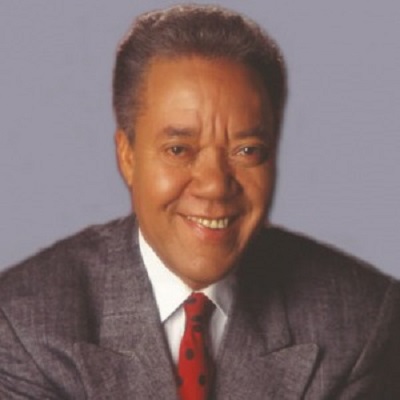
Willie Colón The “Architect of Salsa” Enters Immortality

February 21, 2026, will be etched into the history of Latin music as the day the “street trombone” fell silent to become an eternal echo.

A Sorrowful Farewell: February 2026

After several days of uncertainty and reports regarding his delicate health, the passing of William Anthony Colón Román was confirmed in New York City at the age of 75.

Willie Colón, the Architect of Salsa, Passes into Immortality

Producer, trombonist, visionary. He was the architect of a sound that broke the mold and redefined salsa from New York for the entire world.

With his aggressive trombone, his innovative musical concepts, and his leadership within the historic Fania All-Stars, he marked an era that can never be repeated.

The musician, who had already shown signs of physical frailty following his retirement from the stage in 2023, suffered severe respiratory complications that kept him hospitalized during his final days.

Iconic figures like Rubén Blades and the entire Fania family have expressed their grief, noting that we haven’t just lost a musician, but the “Malo” (The Bad Boy) who revolutionized the visual and sonic identity of Latinos in New York.

A Legacy of Rebellion and Sophistication

Unlike other bandleaders, Willie Colón didn’t just make music; he told cinematic stories. From his early days with Héctor Lavoe to his era of social consciousness with Rubén Blades, Colón transformed salsa into a vehicle for urban narrative.

With his aggressive trombone playing, innovative musical concept, and leadership within the historic Fania All-Stars
  • Innovation: He was responsible for putting the trombone at center stage, creating that “heavy,” raw sound that defined the Bronx.
  • Identity: Through his iconic album covers (emulating FBI “Wanted” posters), he constructed the mystique of the Latin anti-hero.

His Eternal Anthems

Willie Colón’s catalog is the backbone of every party and social reflection in Latin America. Among his most remembered tracks, more relevant today than ever, are:

Song Significance
El Gran Varón A milestone in social lyrics regarding identity and redemption.
Idilio The most romantic and melodic facet of his mature era.
Pedro Navaja The ultimate expression of narrative salsa produced alongside Blades.
Gitana A classic of sentiment and rhythmic fusion.

Beyond the Trombone: Activism and Service

In his later years, Willie Colón’s life was also defined by his work offstage. He served as an activist, a community leader in New York, and held positions in organizations advocating for Hispanic rights. His life was a testament to the fact that art and social commitment can walk hand-in-hand.

Producer, trombonist, visionary. Architect of a sound that broke molds and redefined salsa from New York to the world.

Producer, trombonist, visionary. Architect of a sound that broke molds and redefined salsa from New York to the world.

The Centennial on the Horizon

Though the Maestro has physically departed in 2026, his office and family have made it clear that his music will live on. Releases of unedited material and tribute concerts are expected as we pave the road toward the centennial of his birth in 2050.

“Time passes, and I am left unable to speak to you”  Willie Colón.

His music will continue to speak for him on every corner where a trombone sounds and in every heart that feels the pulse of urban salsa.

His talent was more than rhythm: it was identity, the barrio, resistance, and living history. Today, we don’t just say goodbye to a musician; we say goodbye to a pillar, a North Star, and an entire chapter of our Latin culture.

Anecdote:

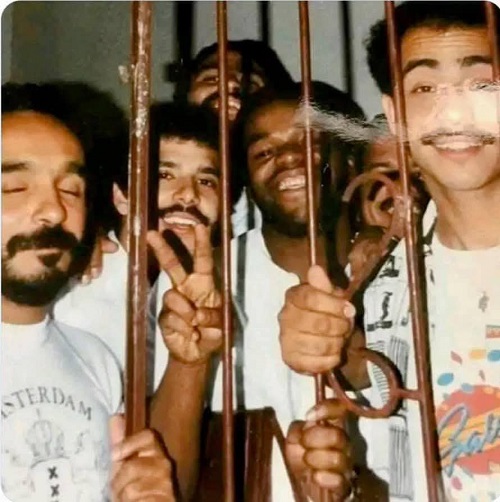
Willie Colón had a notorious incident in Medellín in 1985 when he refused to perform at the Iván de Bedout Coliseum because the promoters of “Rumba Producciones” failed to pay the agreed amount. Police arrested him along with 13 of his musicians, and they were detained for two days at the Belén neighborhood police station.

The audience, who had waited for hours, grew unruly, leading to riots that resulted in six injuries and significant property damage. This episode inspired the song “Especial No. 5,” which narrates Colón’s experience inside cell number five of that station.

Willie Colón had an incident in Medellín in 1985

Special Contribution by Julio Cesar Galindo Alarcón (Lima, Peru)

A posthumous tribute to the great Willie Colón (1950-2026): The greatest disciple of Mon Rivera by his own admission and today a legend of our passionate salsa.

Willie Colón: From “Classic Urban Salsa” to “Symphonic Salsa”

His musical production clarifies and proves that “salsa” does not only originate from Cuban and Puerto Rican rhythms, but also from American, Brazilian, and other Latin influences.

When Willie produced and recorded his 1977 instrumental-only album, El Baquiné de Angelitos Negros, he expanded the orchestral lineup to include violins, saxophone, flute, cello, and trumpet. While the work had little commercial success and went largely unnoticed during his triumphant career, it served as more than just a platform for his “salsa” fusions with Jazz, Funk, Soul, and R&B. It was the starting point for producing grander orchestral arrangements with a larger number of musicians, thus becoming the precursor to what is now known as “Symphonic Salsa.”

Four years after this beginning, in 1981, this “Symphonic Salsa” reached its peak when Willie released his second solo album, Fantasmas dedicated to and motivated by the loss of his younger sister, Cindy. The album included a track he composed, with musical arrangements by Luis Cruz, titled “Toma Mis Manos” (Take My Hands).

This piece, dealing with the somber theme of death, is considered by this author (due to the quality of the composition and the fabulous “Symphonic” orchestration) to be an authentic and grand masterpiece of “Classic Salsa.” It blends Funk, Soul, R&B, and Bossa Nova with Willie’s excellent vocals, serving as a spectacular prelude to that other legendary, yet often overlooked, symphonic track recorded in 1991 by the “Canary of Carolina,” the great Lalo Rodríguez: “El niño, el hombre, el soñador y el loco.”

To conclude, with the immense pain that his departure brings, I accompany this tribute with the aforementioned song: “Toma Mis Manos,” an unforgettable composition by the recent legend of our “salsa” the great Willie Colón, famously known as “The Bad Boy of the Bronx.”

The legendary musician and his wife Julia Colón were married for decades and share three children (

The legendary musician and his wife Julia Colón were married for decades and share three children

Also Read: The legacy of Leopoldo Pineda, the ambassador of the trombone in La Maquinaria Fania All Stars

Porfi Jiménez The Master of Rhythm Who United Two Nations

The life, work, and legacy of tropical music’s most “Venezuelan” Dominican.

Porfirio Antonio Jiménez Núñez, known universally as Porfi Jiménez, was more than just a musician; he was a cultural bridge.

A Dominican virtuoso by birth and Venezuelan by choice, he became one of the most iconic figures of Caribbean dance music.

His legacy endures as an exceptional trumpeter, arranger, and bandleader who possessed a unique gift for reading the pulse of the streets and elevating it to the level of fine art.

Porfi Jiménez El Maestro del Ritmo que Unió a dos Naciones

The Prodigy of Hato Mayor: Academic Training

Born on February 16, 1928, in Hato Mayor del Rey, Dominican Republic, Porfi’s destiny was sealed by music from an early age. A recognized child prodigy, he began his formal studies at age seven.

Following the death of his father, his mother gifted him his first trumpet when he was eight a tool that would eventually become his eternal voice.

Unlike many bandleaders of his era, Porfi sought technical excellence at the prestigious Berklee College of Music in Boston. This education granted him a superior technical command of jazz orchestration and tropical rhythms, allowing him to inject a unique harmonic sophistication into popular music.

Vida, obra y legado del dominicano más venezolano de la música tropical.

Putting Down Roots in Venezuela: A 50-Year “Layover”

On February 6, 1954, Porfi landed in Caracas at the invitation of his compatriot Rafael “Tata” Minaya for a brief Carnival tour.

What was planned as a temporary trip turned into a stay that lasted over half a century. Before founding his own sonic empire, he honed his craft within the country’s most elite musical institutions:

  • The Pedro J. Belisario Orchestra.
  • Billo’s Caracas Boys, under the baton of Maestro Billo Frómeta.
  • Staff orchestras for Venevisión and RCTV, where he shone as the lead arranger during the golden age of Venezuelan television.

The Birth of a Signature Sound

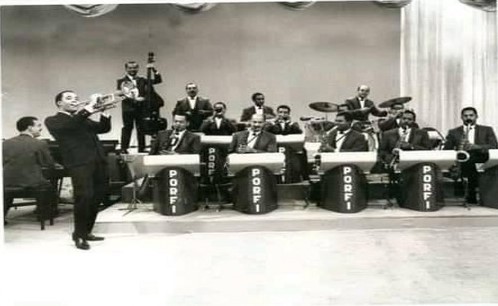
On December 31, 1963, as the world celebrated New Year’s Eve, a legend was born: Porfi debuted his own orchestra at the Tamanaco Hotel’s Naiguatá Hall.

31 de diciembre de 1963, en el Salón Naiguatá del Hotel Tamanaco Foto By El Universal

His style broke the mold by fusing Dominican merengue with salsa and jazz, achieving a modern, high-energy orchestration.

That same year, he released his first LP, A bailar con Porfi (Velvet Records). Featuring the vocals of Kiko Mendive and Chico Salas, the orchestra produced hits that are now staples of the Latin party songbook:

  • “La Negra Celina”
  • “La Resbalosa”
  • “La Banda está Borracha”

The “King of Carnival” and the Golden Years

Throughout the 80s and 90s, his name was synonymous with sold-out venues. Dubbed the “King of Carnival,” no festival in Venezuela was complete without his music. His ability to create “people’s anthems” is undeniable, leaving behind timeless tracks such as:

Iconic Songs Cultural Impact
La hierba se movía A massive sales and dance phenomenon across the region.
Culucucú An undisputed hit during the December holiday season.
Se hunde el barco A quintessential classic in the repertoire of great orchestras.
Dolores / Chivo Florete A masterclass in high-energy, danceable merengue.


Culucucú Éxito indiscutible en las festividades decembrinas.

 An Immortal Legacy

Maestro Porfi Jiménez passed away in Caracas on June 8, 2010, at the age of 82.

Though Dominican by birth, he always declared himself “Venezuelan at heart,” leaving behind a devoted family and a generation of musicians trained under his disciplined leadership.

As we approach the centenary of his birth in 2028, his influence remains more vibrant than ever.

The tributes held between 2024 and 2026 in both the Dominican Republic and Venezuela only confirm that Porfi Jiménez was, is, and will always be the man who defined the rhythm of the Caribbean identity.

Also Read: Federico Betancourt “Pioneer of Salsa in Venezuela”

  • « Go to Previous Page
  • Page 1
  • Interim pages omitted …
  • Page 56
  • Page 57
  • Page 58
  • Page 59
  • Page 60
  • Interim pages omitted …
  • Page 95
  • Go to Next Page »

International Salsa Magazine (ISM) is a monthly publication about Salsa activities around the world, that has been publishing since 2007. It is a world network of volunteers coordinated by ISM Magazine. We are working to strengthen all the events by working together.