• Skip to primary navigation
  • Skip to main content

International Salsa Magazine

  • HOME
  • Previous editions
    • 2026
      • ISM / April 2026
      • ISM / March 2026
      • ISM / February 2026
      • ISM / January 2026
    • 2025
      • ISM / December 2025
      • ISM / November 2025
      • ISM / October 2025
      • ISM / September 2025
      • ISM / August 2025
      • ISM / July 2025
      • ISM / June 2025
      • ISM / May2025
      • ISM / April 2025
      • ISM / March 2025
      • ISM / February 2025
      • ISM / January 2025
    • 2024
      • ISM / December 2024
      • ISM / November 2024
      • ISM / October 2024
      • ISM / September 2024
      • ISM / August 2024
      • ISM / July 2024
      • ISM / June 2024
      • ISM / May 2024
      • ISM / April 2024
      • ISM / March 2024
      • ISM / February 2024
      • ISM / January 2024
    • 2023
      • ISM / December 2023
      • ISM / November 2023
      • ISM / October 2023
      • ISM – September 2023
      • ISM – August 2023
      • ISM July 2023
      • ISM Edition June 2023
      • ISM – May 2023
      • ISM April 2023
      • ISM March 2023
      • ISM February 2023
      • ISM January 2023
    • 2022
      • ISM December 2022
      • ISM November 2022
      • ISM October 2022
      • ISM September 2022
      • ISM August 2022
      • ISM July 2022
      • ISM June 2022
      • ISM May 2022
      • ISM February 2022
      • ISM January 2022
    • 2021
      • ISM December 2021
      • ISM November 2021
      • ISM October – 2021
      • ISM September 2021
      • ISM August 2021
      • ISM July 2021
      • ISM May 2021
      • ISM April 2021
      • ISM June 2021
      • ISM March 2021
      • ISM February 2021
      • ISM January 2021
    • 2020
      • ISM December 2020
      • ISM November 2020
      • ISM October 2020
      • ISM September 2020
      • ISM August 2020
      • ISM July 2020
      • ISM June 2020
      • ISM May 2020
      • ISM April 2020
      • ISM March 2020
      • ISM February 2020
      • ISM January 2020
    • 2019
      • ISM December 2019
      • ISM November 2019
      • ISM October 2019
      • ISM Septembre 2019
      • ISM August 2019
      • ISM July 2019
      • ISM June 2019
  • Spanish
  • Download Salsa App
    • Android
    • Apple

Search Results for: Latin genres

The Soul of Latin American culture – Salsa, Merengue y Lambada

Latin American / Venezuela / Caracas

Did you know that Salsa, Merengue and Lambada are rhythms that have been enjoyed in the last decade? Well, this link that unites them is the energy and passion for life, expressing itself in music, showing itself in the romance of couples dancing in harmony and with dance it unites them even more in a sentimental way as in fellowship.

These rhythms were born from a very urban environment, where each dancer can freely show their personality in the movement, however, following certain rules that each genre has, where one can follow each step and technique or do it spontaneously. For example:

✓ Never use the same foot twice, it must be alternated (right, left, right…).

✓ Dance with your partner as a mirror, that is, if you go to the right, your partner goes to the left.

✓ Transfer of weight from one foot to another as steps are performed.

Salsa is a rhythm that originates from the synthesis of Cuban son and other Caribbean music genres, with jazz and other American rhythms. One of the main contributors comes from the African rumbas along with the cumbia, the guaguancó, the guajira, the Cuban son, the mambo, the montuno son, the cha cha cha, among others.

It can be said that salsa is one of the most important rhythms in the music industry where it has many characteristics of its contributors, for example, “salsa” is close to “mambo” due to the steps executed in counts of eight, its movements and patterns are unique, however, it is a side-by-side dance with different turns.

Couple dancing Salsa

The Merengue has its origin in the Dominican Republic and has a huge degree of popularity in the Caribbean area, it is a slow rhythm that increases its speed at the end of the dance, it is similar to the bolero but it is danced more than anything in groups than with a partner.

The secret of the dance is based on the transfer of weight from one foot to another, where each Latin genre has a characteristic that differentiates them, the best example is the similarity that everyone believes that “salsa” has with “merengue”, where Salsa has 4 beats, where the first beat touches the floor lightly with the tip of the foot quickly, which is known as “TAP” and this is repeated in four “4” and eight “8”, instead The merengue does not exist, this “TAP” is only 2 beats, it is a constant rhythm, very simple, whose speed of steps is marked by the musical rhythm.

But both genres have to have in the dance a movement of the hip, shoulders and position of the hands that characterizes them, marking the sensuality of Latin rhythms.

The “Lambada, a Brazilian genre that originated from the small cafes and bars that came from the garrafa dance, is believed to have been the product of rhythms such as the “Carimbo” and the “Merengue” with influences brought from the “Forro” and the “Samba” so it has a lot of Caribbean music influences, but the melody is the combination of Caribbean drums, brass and electric guitars with an added touch of Spanish elements and the flavor of the local indigenous people. It first spread to Bahia, Europe, Japan, the USA and the Middle East. It is currently danced in nightclubs and dance clubs, since its creation its jiv, merengue, rumba, even sevillanas and acrobatic maneuvers have evolved.

It is a 3-beat dance (fast – slow – fast) where the first step is taken with the first beat of the music, the second is the movement of one of the 2 senses and the third is the transfer of the weight back to the center moving the leg more slowly.

This dance is danced with the whole body, women dance pointe, flex the knees and the trunk moves in the opposite direction to the lower part of the body, if the hip rotates in one direction the rib cage rotates in the opposite direction. It can be danced alone or as a couple (they dance very close together giving the impression that it is one person), where the man molds his partner in the dance and the woman can embellish the dance with head movements or a controlled intentional fall producing a wave from the knee to the hips and shoulders.

If you want to know and learn some basic steps of the mentioned rhythms, look for the book in movement Latin Dance Dessi and Orod Ohanian and get passionate with these three “3” hot dances. Or follow us and watch the following videos to learn how to dance merengue, salsa and lambada.

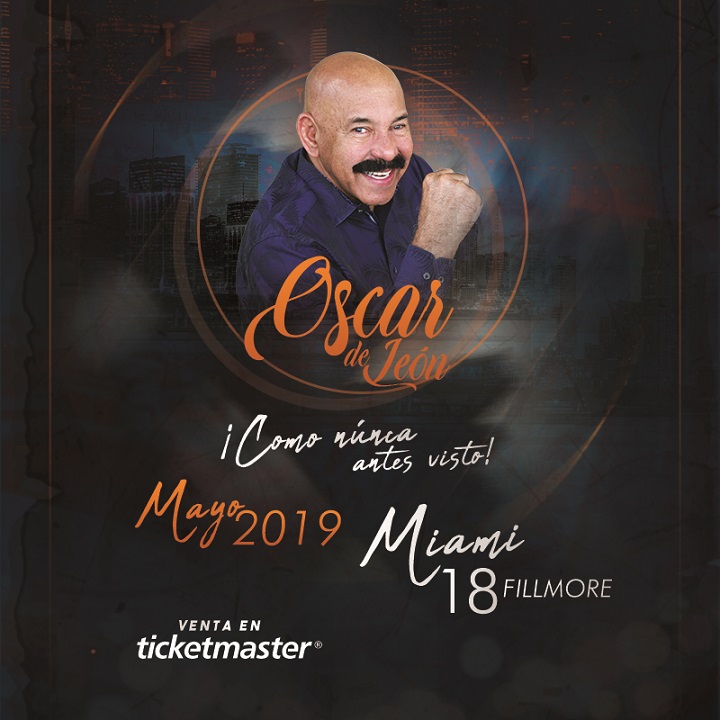
Oscar D’ León, A Universal Latin Artist

North America / USA / New York

Oscar Emilio León Simoza, better known as Oscar D’ León “El Sonero del Mundo”, is undoubtedly a man who throughout his career has made a name like a few others in the music world. An exceptional Venezuelan born in the west of the Capital, who from an early age, began to be interested in Caribbean music.

His innate talent was growing and nowadays is the biggest Venezuelan exponent of the Tropical rhythm and other musical genres, where he has proven to be a global artist.

He started his career at 28 years old in 1972, when he created La Dimensión Latina with Cesar Monje- Elio Pacheco- José Rodriguez- Rojitas and Chuito. A year after, they together recorded their first full-length record, obtaining their first hit: “Pensando en ti”, so they were hired to participate in the Maracaibo’s carnival celebrations … The success was immediate! The group ranks an important place in the musical spectrum of Latin music since then.

Oscar D' León
Oscar D’ León

In 1977, Oscar broke up with La Dimensión Latina and began the most successful part of his large trajectory, now as a soloist and with his own orchestra: “La Salsa Mayor”. HITS after HITS: : “Mi bajo y yo”, “El baile del suavecito”, “Bravo de verdad”, “Llorarás”, “La Vela”, “Divina Niña”, “Taboga”, “Juancito Trucupey”, “El frutero”, “Parampampam”, and “Dolor Cobarde”,are only part of his most famous songs at the time, today turned into Classics.

Oscar D’ León made a stop in his illustrious career to say “present” at one of the most important festivals on the American continent, the International Festival of Viña del Mar in Chile (2015), where El Sonero del Mundo served as Jury and closed the festival with a majestic show. Obtaining Silver and Gold Seagull for his great musical quality and public preference in this Latin Festival marked a milestone in the history of this event.

Separate chapter deserves his CD “Antológico”, already turned into a musical jewel with universal preference and in all honesty, “Oscar D’ León Clásicos de Big Band” was a mega production recorded between Nashville (cradle of Anglo music) and Miami. These two CDs were recorded in Spanish and English languages with emblematic world themes.

“Clásicos de Big Band” is a musical project with quality and sounds from that ancient era. 36 live musicians all gathered in a single recording studio, recreating the best of this musical genre that gave success to figures, such as:

Frank Sinatra, Tony Bennett, Dean Martin, Nat King Cole, among many others. For this project, its producer, Rodolfo Castillo, traveled to the city of Nashville- Tennessee (The musical city)

Where with a group of professionals, colleagues and talented musicians, arrangers and engineers of this great city, such as: Chris McDonald and Dan Rudin, decided to produce and develop a tribute to this musical genre for which he would need a voice, the voice of an artist, with the ability to interpret  in English and Spanish, a classic repertoire, such as:

“My Way, New York New York, Fly Me To The Moon, Sway, I’ve got you under my skin, Volare, I did it my way, Perhaps, Cachito Mio, Copacabana, Starngers in the night, among many others.

In addition, the image of Oscar D ‘León is a living example of perseverance, work and discipline, Not in vain has he been a motivational coach. He has given talks on proactivity and motivation in universities and private companies. Coincidentally, in 2015 he received the Doctorate Honoris Causa awarded by the Universidad Pedagógica Experimental Libertador (UPEL), belonging to the Caracas’ Pedagogical Institute.

Oscar D' León
Oscar D’ León

Oscar D’ León is a true global artist, multifaceted and a Venezuelan with a universal heart, a Latin per excellence who has undoubtedly been converted by his talent, actions and examples into a Latin ambassador in the world, the most charismatic and with the greatest penetration in the different music markets of the world.


NEXT SHOWS:

FRIDAY, MAY 31ST  

SHOW: 10:00PM – 4:00AM

PRICE: $38 – $70

VENUE: La Boom. 56-15 Northern BlvdWoodside, NY 11377

AGES: 21+


FRIDAY, MAY 17TH 

SHOW: 7:00PM

PRICE: $72 – $104+

VENUE: House of Blues Orlando, Orlando, Florida


SATURDAY, MAY 18TH 

SHOW: 9:00PM

PRICE: $40 – $84+

VENUE: The Fillmore Miami Beach at Jackie Gleason Theater, Miami Beach, Florida.


For more details and tickets:
http://www.OSCARDLEON.net/

Héctor Martignon has been one of the most sought-after pianists on the Latin jazz scene in New York

New York based-, Colombian born Hector Martignon has composed, orchestrated, produced, performed and recorded music in a wide spectrum of genres, from Classical and Crossover, to Jazz and World Music, to Rock and Pop.

His five albums as a leader, two as co-leader (MOZART’s BLUE FANTASIES and BACH’s SECRET FILES) as well as his work on over a hundred albums, scores for five feature films, three Broadway Musicals and multiple other projects, showcase his wide-ranging area of expertise.

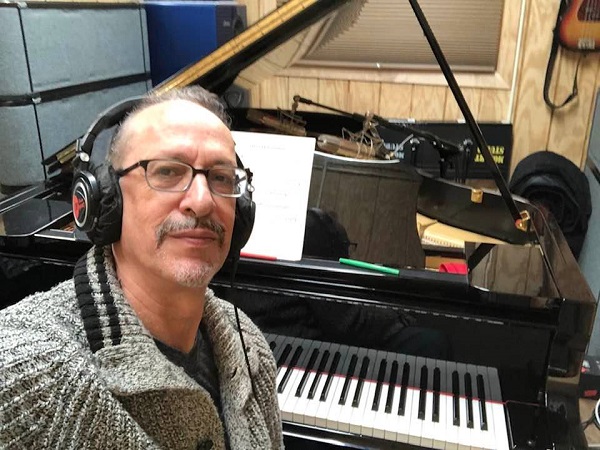
At Mozart Studios recording Carlos Jimenez’ second CD, + Ruben Rodriguez + Vince Cherico. A pleasure!

After several nominations as a sideman, two of his five solo CDs were nominated for a GRAMMY Award (REFUGEE, 2008, and SECOND CHANCE, 2010).

He arranged and performed parts of the score of Ang Lee’s OSCAR-nominated movie EAT, DRINK, MAN, WOMAN.

His first professional recording was at age 18 (Mikis Theodorakis’s “Canto General”) while one of the most recent was on legendary rock band CHICAGO’s latest production, the Latin-tinged “EXITOS”.

He has written symphonic orchestrations, performed and recorded by the Russian Philharmonic Orchestra and compositions like ABRE LOS OJOS, CIERRA LOS OJOS, commissioned and premiered by the MUSICA DE CAMARA STRING ORCHESTRA at St Patrick’s Cathedral in April 2011.

Hector Martignon is currently working on a first CD with his BANDAGRANDE Big Band + String Quartet as well as an album with selections out of a series of  7 solo piano recitals at the Ludwigsburg University of Education (Germany), where he conducts a “compact seminar” on Classic Music-based improvisation every November.

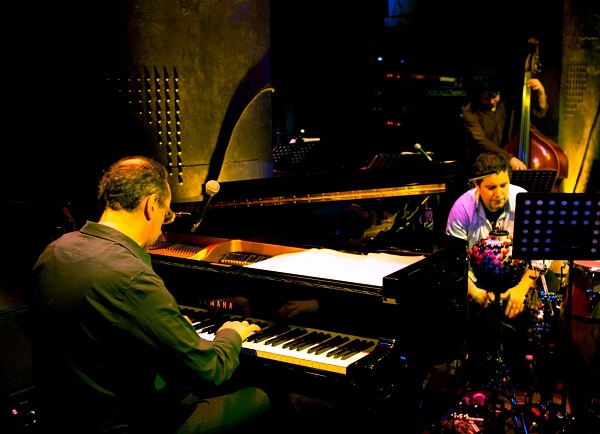
Our trio in Tokyo
Our trio in Tokyo

As a requested sideman he has toured the world with such greats as Paquito D’Rivera, Ray Barretto, Gato Barbieri, Steve Turre, Don Byron, Tito Puente and was featured pianist with Max Roach’s PROJECT AMERICA at the 92 St Y.

His joy of teaching has made him a requested guest-lecturer and performance teacher in music faculties and academies in several countries of Europe, Japan, North- and South America.

Hector wrote an instructional book on Latin piano commissioned and published by Hal Leonard, the SALSA PIANO BOOK.

Martignon’s abilities as a pianist have always been enriched by his interest in varied musical genres.

He paid for his studies of classical piano and composition at the prestigious Freiburger Musikhochschule in Germany by performing with the best Afro-Cuban and Brazilian bands of Europe, backing stars like Celia Cruz and Ismael Quintana on their European tours, and recording with Tata Güiness and Arturo Sandoval.

At the same time he was attending seminars of contemporary composition with masters like Gyorgi Ligetti, Luigi Nono and Karl Heinz Stockhausen.

He also performed classical music in recitals and concerts in Germany, Italy and his native Colombia, specializing in Chopin, Bach and Debussy.

One of his latest endeavors has been a Jazz-Classical crossover  project, co-lead with star virtuoso trumpeter Joe Burgstaller, in which the music of the classics, from Bach to Ellington is re-created in a chamber-jazz setting, to be enjoyed on their two releases, “Mozart’s Blue Fantasies” and “Bach’s Secret Files”.

Living in Brazil for a one-year love affair with that country and its music, Martignon soon became a requested studio musician and worked for star producer Carlinhos Brown.

Luquillo Beach, PR
Luquillo Beach, PR

Since relocating to New York City, Martignon has been one of the most sought-after pianists on the Latin jazz scene.

He’s toured North and South America, Europe, and Asia with the bands of Mongo Santamaría, Gato Barbieri, Steve Turre and Don Byron, who had him record in his latest CD.

He was featured pianist with the bands of Tito Puente, Mario Bauzá, Chico O’Farrill, Paquito D’Rivera, and Max Roach in his “Project America.”
Most notably, Martignon was pianist for the late Ray Barretto’s various ensembles.

During his eight-year association with Barretto, his contributions as pianist, arranger, and composer were fundamental in shaping the sound of the now famous New World Spirit Sextet.

One of his last collaborations with Barretto, “My Summertime,” was a favorite nominee for a Grammy award.
Martignon’s versatility has also made him extremely active in the film and television industries.

Besides playing all piano parts, he arranged and produced many parts of the score for the Oscar-nominated film “Eat, Drink, Man, Woman” by Ang Lee and performed the piano and keyboard parts for many movie scores (i.e., “Gloria”, “Relativity”).

He is composer of the original music of two feature films, one of which, “Septimo Cielo”, won international awards. He also collaborated in the production of many Broadway musicals (“Chronicle of a Death Foretold”, Paul Simon’s “The Capeman”, “Selena Forever”) as conductor, arranger, and co-composer.
In the fall of 2003 Hector visited Slovenia and Russia to collaborate with singer-songwriter Vitaly Osmsçko’s first symphonic CD.

The Russian Philharmonic Orchestra recorded in Moscow the orchestrations written by Hector.

As a composer, producer and arranger of TV and radio music his record is no less impressive. In 2001 he landed two spots for HBO Latino, and one for Coca Cola.

HECTOR” S FOREIGN AFFAIR
In 1998 Martignon performed with his quartet “Foreign Affair”at the Brooklyn Academy of Music’s famed annual festival “The Next Wave” on a triple bill with Tito Puente’s “Top Percussion” and Don Byron’s “Music for six Musicians”.

This proved to be a turning point for him and his ensemble, which evolved from the strictly acoustic trio sound of the first two CDs to a more eclectic and electric quartet sound.

The new configuration that evolved from that memorable concert started a series of concerts and recordings, with guitarist Mark Whitfield, Cameroonian bassist Richard Bona and Cuban drummer Horacio “Negro” Hernández.

This quartet performed and recorded live during a weeklong stint at New York’s famous Birdland.

The group has also performed on BET television festivals, at jazz clubs in Manhattan, and made various appearances in clubs and open-air festivals in his native Colombia and in Europe.

Martignon’s third solo project, to be released in the fall of 2003, is not only a reflection of the group’s new musical direction but also of his interaction with other world class musicians.

Eddie Gomez, Jeff Watts, Mathew Garrison, John Benitez, Dafnis Prieto, Willard Dyson have all made their unique contribution to this, Martignon’s new sound of Jazz.

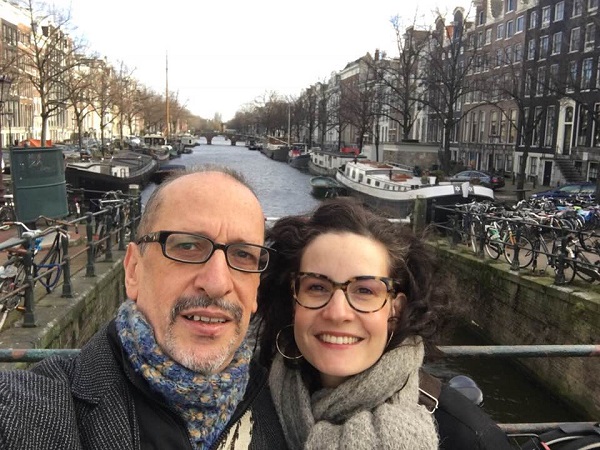
Hector In Amsterdam with daughter Leticia

Hector Martignon never fails to surprise, challenge and delight us. Stay tuned and get involved in this affair.

Site: Héctor Martignon

Also Read: “El Sol de la Música Latina” el primer premio Grammy para el histórico disco de Salsa Eddie Palmieri

Tempo Latino: Creating Connections Through Music

An Interview with Eric, Founder of Europe’s Premier Latin Music Festival

On the last week-end of July, a festival celebrates Latin and Afro-Cuban music and brings thousands of music lovers to a small town in France. Eric, the festival’s creator, shares its origins, inspirations, and evolution.

Interview with Eric Duffau
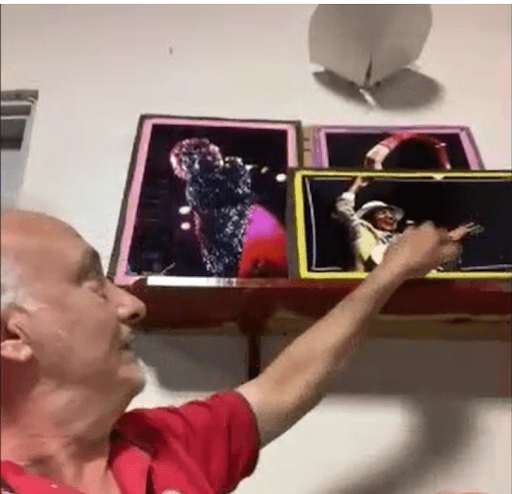
Eric Duffau showing a photo of Compay Segundo

Since its inception in 1994, the Tempo Latino festival has welcomed incredible artists to this small town in the Southwest of France.

Creating a Musical Oasis in Vic-Fezensac

Having lived across France, Eric settled in Vic-Fezensac, where he felt the need to create something beyond work. His passion for Latin and Afro-Cuban music led him to start Tempo Latino, aiming to provide what he missed – concerts of these genres.

A Journey of Music and Discovery

Eric’s radio inspiration and his love for vibrant rhythms ignited the idea for a music festival. He yearned to introduce others to the music he cherished, giving birth to Tempo Latino in 1994. The inaugural edition featured Fatal Mambo and Mambomania, attracting 2,800 attendees. Now the festival attracts over 10,000 people.

Eric’s selection process for artists is fueled by genuine connections, resulting in a diverse lineup that weaves different styles into a harmonious experience. His curation creates unique narratives each night. Pairing artists with contrasting energies, like Lila Downs and Cimafunk, creates a captivating tapestry that reflects the festival’s essence. Eric’s journey involves tireless pursuit and strong artist relationships. From Bernard Lavilliers to Excelencia, his commitment to music’s magic and meaningful collaborations remains steadfast.

A Melodic Journey Unfolds

The festival’s theme guides its trajectory, from Africa’s heart to New York’s energy. Lavilliers’ Paris and the Caribbean’s vibrancy unite through music, creating a diverse yet cohesive experience.

In a digital era, Tempo Latino reminds us of music’s power to unite. Eric’s dedication and knack for blending genres into harmonious narratives continue to resonate.

Tempo Latino: 28 Years of Latin Rhythms, Community, and Artistry

The charm of Vic-Fezensac, a small town in France, transforms every year as over fifty thousand people gather for the renowned Tempo Latino Festival. In an exclusive interview, Eric, the festival’s creator, discusses the intricacies of managing such an event in a local community and the relationship it shares with the town.

Mural for the entrance of the 2023 Festival, by Martin, a local graffiti artist.
Martin, the local graffiti artist, putting the final touches on the entrance mural.

Local Community and Involvement

Eric sheds light on the local engagement, emphasizing that while not everyone participates, the festival is supported by some local partners. What brings him contentment is the transformation he witnesses each year as the town welcomes an eclectic crowd of festival-goers. The festival’s vibrant audience, composed of diverse backgrounds, gives life to the town’s streets and squares in ways that were once unimaginable.

Eric reminisces about the support he received from the former mayor, Jean Arnaud, whose open-mindedness and appreciation for the festival’s diverse attendees left a mark. Jean Arnaud’s encouragement and acknowledgment of the festival’s contribution to cultural diversity added an emotional connection between the festival and the town.

Fostering Relationships with Artists

Eric’s dedication to music and fostering connections with artists has been at the heart of the festival’s growth. He shares anecdotes about musicians like Oscar D’Léon and Celia Cruz, who have left an indelible mark on the festival’s history. These relationships, he emphasizes, are more than business; they’re rooted in mutual respect and genuine affection.

Celia Cruz – Yuri Buonaventura
Oscar D’Léon – Cachao

Overcoming Challenges

Throughout its 28 editions, the festival has faced numerous challenges, both financial and logistical. Eric reflects on early deficits, weather-related disruptions, and organizational intricacies. Each year’s success has hinged on meeting these challenges head-on, often pushing the festival to its limits.

The Ever-Evolving Vision

Eric’s vision for the festival’s future remains unwavering – bringing together people from diverse backgrounds through music. He acknowledges the changing landscape of music and dance styles, highlighting the importance of maintaining a balance between cultural integrity and evolving tastes.

Looking Ahead

With the 30th edition approaching, Eric envisions continued growth while staying true to the festival’s roots. He expresses his desire to bring acclaimed artists like La India and Carlos Santana to the stage, continuing the legacy of diverse and passionate musical experiences.

In the grand tapestry of the Tempo Latino Festival, Eric’s passion, dedication, and genuine relationships have woven together a cultural masterpiece. The festival remains a beacon of unity, showcasing the power of music to transcend boundaries and create shared experiences. As the festival moves towards its next milestone, it stands as a testament to Eric’s unwavering commitment and the enduring magic of Latin and Afro-Cuban rhythms.

Mark your calendar and plan your trip for the 2024 Tempo Latino on the last weekend of July 25 to 28, 2024.

Visit for more information

[Read more…] about Tempo Latino: Creating Connections Through Music

Latin music Festival in France August 2023

Avoriaz Danse Festival

Aug 19 2023 – Aug 25 2023

https://www.avoriaz.com/fiche/avoriaz-danse-festival/

https://www.facebook.com/events/761451658242662

Avoriaz 1800

44 Promenade du Festival, Avoriaz, France, 74110

Description

Avoriaz Dance Festival offers workshops, parties & socials with local & international instructors, performers & Dj’s.

  • Genres: Tango, Bachata, Kizomba, Salsa, Swing, West Coast Swing
  • Artists Performers: Thomas & Sophie, Amandine & Lionel, Mauro & Angéla

Cost: from € 100

Free open air Eiffel Tower / 5 areas / Bachata / kizomba / salsa / konpa / Afro

12/08/2023 – 20/08/2023

https://www.facebook.com/AfrikainParis

TO CONFIRM

Stade Emile Anthoine

9 Rue Jean Rey, Paris, France

Description:

There will be 3 cruises on the boat: kizomba, bachata, konpa, semba and urbankiz) Our objective: to create a dance platform (Bachata, kizomba, salsa, konpa, afro) During the week of the Eiffel Tower kizomba festival: 14- August 21, 2023 August 18-21, 2023 paid festival with workshops, parties and more.

Only refuelings are free with mandatory online registration We plan to organize outdoor activities in front of the Eiffel Tower – bachata – kizomba – salsa – konpa – Afro Mandatory online registration because the number of people is limited SOCIAL TIME: 3pm-10pm.

Eiffel Tower Konpa & Kizomba Festival Official Édition 6

17/08/2023 – 21/08/2023

https://www.facebook.com/AfrikainParis


8 Port de Grenelle

75015 Paris, France

Description:

Exceptional live concert by the singer Milca on Thursday, August 17, 2023 aboard the Diamant Bleu, Luxury Boat followed by a DJ set until 02:00 a.m.

The concert is included in the Gold Pass at 120Euros currently instead of 190Euros or 70Euros discount with promo code =eko Amazing konpa/Zouk live performance with MILCA Singer Thursday 17th August 2023 inside Diamant festival venue Blue.

Live is included in the gold pass offer of 120Euros instead of 190Euros with promocode = eko Eiffel Tower Konpa & Kizomba Festival Edition 6 100% BOAT the festival in 2023 will take place on the boat: Diamant Bleu to the port of grenelle (area from the Eiffel Tower) from August 18 to 21.


  • « Go to Previous Page
  • Page 1
  • Page 2
  • Page 3
  • Page 4
  • Page 5
  • Page 6
  • Interim pages omitted …
  • Page 62
  • Go to Next Page »

International Salsa Magazine (ISM) is a monthly publication about Salsa activities around the world, that has been publishing since 2007. It is a world network of volunteers coordinated by ISM Magazine. We are working to strengthen all the events by working together.