
| DIRECTORY OF NIGHTCLUBS | ||
|
|
|
|
|
|
|
|
|
|
|
|
|
|
|
|
|
|
|
|
|
|
|
|



| DIRECTORY OF NIGHTCLUBS | ||
|
|
|
|
|
|
|
|
|
|
|
|
|
|
|
|
|
|
|
|
|
|
|
|









His five albums as a leader, two as co-leader (MOZART’s BLUE FANTASIES and BACH’s SECRET FILES) as well as his work on over a hundred albums, scores for five feature films, three Broadway Musicals and multiple other projects, showcase his wide-ranging area of expertise.
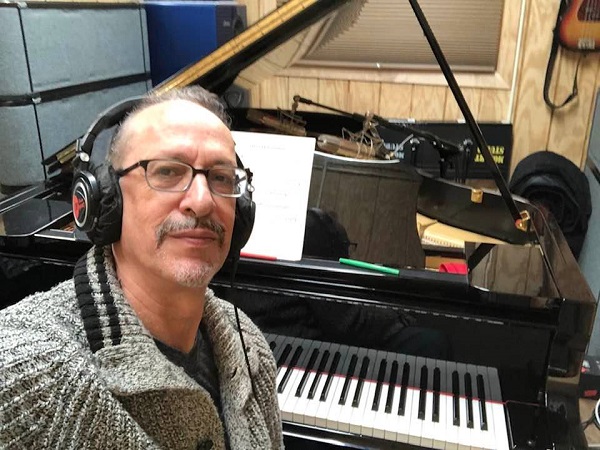
After several nominations as a sideman, two of his five solo CDs were nominated for a GRAMMY Award (REFUGEE, 2008, and SECOND CHANCE, 2010).
He arranged and performed parts of the score of Ang Lee’s OSCAR-nominated movie EAT, DRINK, MAN, WOMAN.
His first professional recording was at age 18 (Mikis Theodorakis’s “Canto General”) while one of the most recent was on legendary rock band CHICAGO’s latest production, the Latin-tinged “EXITOS”.
He has written symphonic orchestrations, performed and recorded by the Russian Philharmonic Orchestra and compositions like ABRE LOS OJOS, CIERRA LOS OJOS, commissioned and premiered by the MUSICA DE CAMARA STRING ORCHESTRA at St Patrick’s Cathedral in April 2011.
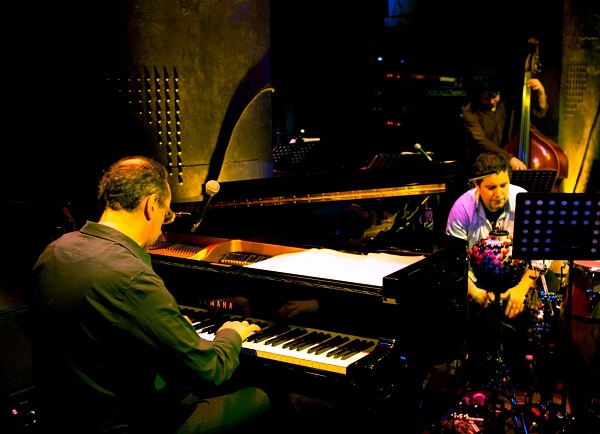
As a requested sideman he has toured the world with such greats as Paquito D’Rivera, Ray Barretto, Gato Barbieri, Steve Turre, Don Byron, Tito Puente and was featured pianist with Max Roach’s PROJECT AMERICA at the 92 St Y.
His joy of teaching has made him a requested guest-lecturer and performance teacher in music faculties and academies in several countries of Europe, Japan, North- and South America.
Hector wrote an instructional book on Latin piano commissioned and published by Hal Leonard, the SALSA PIANO BOOK.
Martignon’s abilities as a pianist have always been enriched by his interest in varied musical genres.
He paid for his studies of classical piano and composition at the prestigious Freiburger Musikhochschule in Germany by performing with the best Afro-Cuban and Brazilian bands of Europe, backing stars like Celia Cruz and Ismael Quintana on their European tours, and recording with Tata Güiness and Arturo Sandoval.
At the same time he was attending seminars of contemporary composition with masters like Gyorgi Ligetti, Luigi Nono and Karl Heinz Stockhausen.
He also performed classical music in recitals and concerts in Germany, Italy and his native Colombia, specializing in Chopin, Bach and Debussy.
Living in Brazil for a one-year love affair with that country and its music, Martignon soon became a requested studio musician and worked for star producer Carlinhos Brown.

Since relocating to New York City, Martignon has been one of the most sought-after pianists on the Latin jazz scene.
He’s toured North and South America, Europe, and Asia with the bands of Mongo Santamaría, Gato Barbieri, Steve Turre and Don Byron, who had him record in his latest CD.
He was featured pianist with the bands of Tito Puente, Mario Bauzá, Chico O’Farrill, Paquito D’Rivera, and Max Roach in his “Project America.” Most notably, Martignon was pianist for the late Ray Barretto’s various ensembles.
During his eight-year association with Barretto, his contributions as pianist, arranger, and composer were fundamental in shaping the sound of the now famous New World Spirit Sextet.
One of his last collaborations with Barretto, “My Summertime,” was a favorite nominee for a Grammy award. Martignon’s versatility has also made him extremely active in the film and television industries.
He is composer of the original music of two feature films, one of which, “Septimo Cielo”, won international awards. He also collaborated in the production of many Broadway musicals (“Chronicle of a Death Foretold”, Paul Simon’s “The Capeman”, “Selena Forever”) as conductor, arranger, and co-composer. In the fall of 2003 Hector visited Slovenia and Russia to collaborate with singer-songwriter Vitaly Osmsçko’s first symphonic CD.
The Russian Philharmonic Orchestra recorded in Moscow the orchestrations written by Hector.
As a composer, producer and arranger of TV and radio music his record is no less impressive. In 2001 he landed two spots for HBO Latino, and one for Coca Cola.
HECTOR” S FOREIGN AFFAIR In 1998 Martignon performed with his quartet “Foreign Affair”at the Brooklyn Academy of Music’s famed annual festival “The Next Wave” on a triple bill with Tito Puente’s “Top Percussion” and Don Byron’s “Music for six Musicians”.
This proved to be a turning point for him and his ensemble, which evolved from the strictly acoustic trio sound of the first two CDs to a more eclectic and electric quartet sound.
The new configuration that evolved from that memorable concert started a series of concerts and recordings, with guitarist Mark Whitfield, Cameroonian bassist Richard Bona and Cuban drummer Horacio “Negro” Hernández.
This quartet performed and recorded live during a weeklong stint at New York’s famous Birdland.
The group has also performed on BET television festivals, at jazz clubs in Manhattan, and made various appearances in clubs and open-air festivals in his native Colombia and in Europe.
Martignon’s third solo project, to be released in the fall of 2003, is not only a reflection of the group’s new musical direction but also of his interaction with other world class musicians.
Eddie Gomez, Jeff Watts, Mathew Garrison, John Benitez, Dafnis Prieto, Willard Dyson have all made their unique contribution to this, Martignon’s new sound of Jazz.

Hector Martignon never fails to surprise, challenge and delight us. Stay tuned and get involved in this affair.
Site: Héctor Martignon
Also Read: “El Sol de la Música Latina” el primer premio Grammy para el histórico disco de Salsa Eddie Palmieri





|
DIRECTORY OF NIGHTCLUBS Merry Christmas and Happy New Year |
||
|
|
|
|
|
|
|
|
|
|
|
|
|
|
|
|
|
|
|
|
|
|
|
|
| DECEMBER 2023 FESTIVALS | ||
|
|
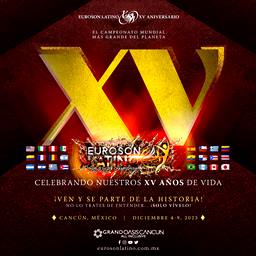 |
Euroson Latino World Salsa ChampionshipDec 04 / 09 2023 Hotel Grand Oasis Cancún Blvd. Kukulcan Km 16.5-Lt45-47, Zona Hotelera Cancun, Mexico, 77500 |
|
|
 |
Feria de Cali 2023Dec 25 / 30 2023 Parque de Las Banderas Santiago de Cali, Valle del Cauca, Colombia |
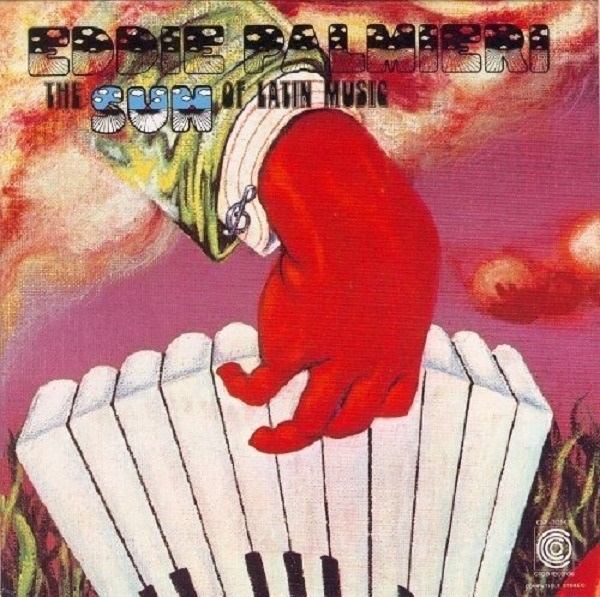
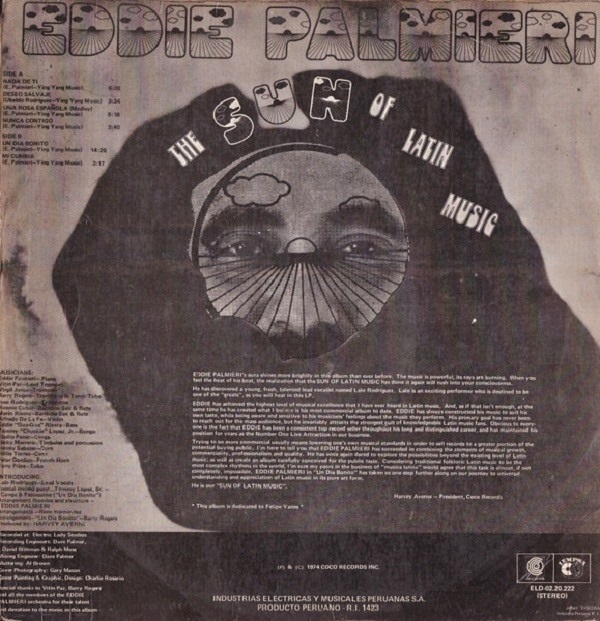
Recorded in New York at Electric Lady Studios, the album was released by Coco Records on Wednesday, September 18, 1974.
The album featured vocals by Lalo Rodríguez, who was only 16 years old at the time.
It includes: ‘Nada De Ti’, ‘Deseo Salvaje’, ‘Una Rosa Española’, ‘Nunca Contigo’, ‘Un Día Bonito’, ‘Mi Cumbia’.
Eddie Palmieri
The sun of Latin music
MP, 1990. MP-3109 CD
Recorded in 1975
The Sun of Latin Music was a controversial album. It was too far from the easy formula of the middle salsa boom – what César Miguel Rondón calls the “mtancerization of salsa”.
“Ahead of its time” was one of the comments; “a piece like Un día bonito, had to be mutilated” with a 6-minute piano intro just to be able to play it on the radio; a danzón (Una rosa española) with lyrics by the Beatles; a cumbia that is not very Colombian, despite the name (Mi cumbia) and the chorus that says “very Colombian…”.
Nevertheless, this album represents the strength of the spirit of salsa: the encounter between the harshness of the street and the majesty of the most sophisticated musical sound.
One of the best albums of Caribbean music ever released.
Palmieri was always in search of something new. The Sun Of Latin Music is the culmination of a phase that began with an earlier album, Sentido (1974).
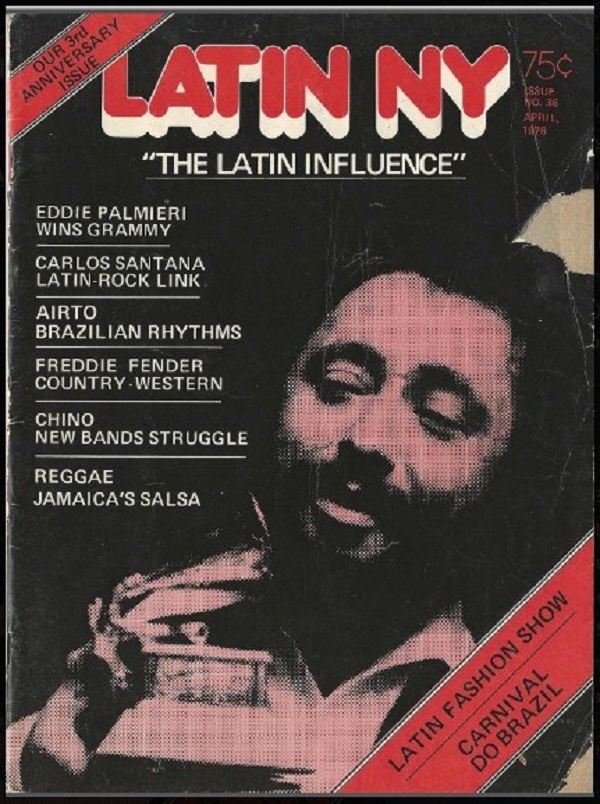
Ronnie Cuber and Mario Rivera were chosen as the first saxophonists in a Palmieri orchestra.
For many it is Palmieri’s best album, the most experimental and universal. One that borders on academic music, but without forgetting the dancer.
With spices like the violin of Alfredo de la Fe, who contributes his creativity everywhere, the tuba, the penetrating power of the brass, the overwhelming percussion.
Thus, Una rosa española is a modern danzón that later becomes a montuno that revives the joyful Palmerian game with the dignified uproar of trumpets, saxophones and trombones.
But the most amazing thing about this 1974 album is the 14:20-minute track Un día bonito, arranged by Barry Rogers, which would keep even the most trained dancers busy. But Palmieri wasn’t just thinking about leg sets or dance floors.
The piece begins with a long piano interlude, the same structure he used in the track Adoración from the album Sentido, which would mark a new musical phase in his career.
It was more than experimental, it had some electro-acoustic music; no one had ever had the audacity to do that on a salsa album. Palmieri made the leap, he could do it, it sounded more like Stravinsky or Milhaud than Puente or Fania.
Suddenly, back in the piece, the orchestra bursts in, harder and heavier than ever, wishing the city of Los Angeles a beautiful day and San Francisco a “warm greeting,” and it is certain that Keruack and Borrough heard the call.
Eddie Palmieri
The sun of Latin music
Produced by Harvey Averne
Eddie Palmieri: piano
Lalo Rodríguez: vocals
Vitín Paz: trumpet
Virgil Jones: trumpet
Barry Rogers: trombone, tenor tuba
José Rodrigues: trombone
Ronnie Cuber: Baritone Saxophone, Flute
Mario Rivera: Baritone Saxophone, Flute
Alfredo de la Fe: Violin
Eddie Guagua Rivera: Bass
Tommy Chuckie Lopez, Jr.: Bongo
Eladio Pérez: conga
Nicky Marrero: timbales, percussion
Peter Gordon: French Horn
Tony Price: Tuba
Jimmy Sabater: Chorus
Willie Torres: Chorus
Tommy López Sr.: conga
Tracks: Nada de ti; Deseo salvaje; Una rosa española; Nunca contigo; Un día bonito; Mi cumbia
Arrangements by René Hernández and Barry Rogers
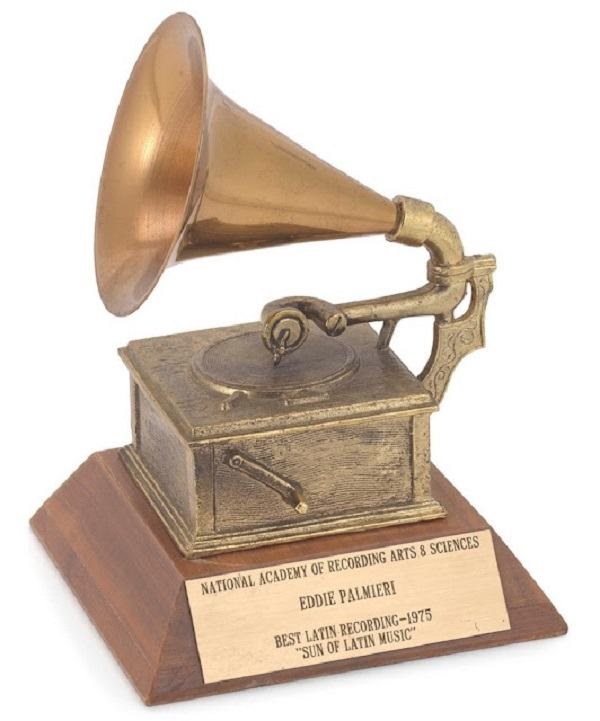
One of the most valuable pieces in the exhibition “Rhythm and Power: Salsa in New York”, which will be presented until next November at the Museum of the City of the Big Apple, is the first Grammy in the history of Latin music, awarded in 1976 to Eddie Palmieri for his album “Sun of Latin Music”.
Sources:
Also Read: Salsa and its detractors “Caiga quien Caiga”