
| ASIA SEPTEMBER 2024 FESTIVAL by Karina Bernales | ||
|
|
![]() |
CARAMELO FESTIVALSep 19 / 22 2024 Leonardo Club Eilat |

Search Results for: Nightclub
Europe / September 2024
North America / September 2024
UNITED STATESDIRECTORY OF NIGHTCLUBS |
||

| CALIFORNIA | FLORIDA | ILLINOIS |
| MICHIGAN | NEW JERSEY | NEW YORK |
| OHIO | PENNSYLVANIA | TEXAS |
| VIRGINIA | WASHINGTON | |
My mother sang tango
One of the Latin genres that is currently on the rise is tango, so it is common to find more and more people linked to it. There are even many who have made tango one of the most important passions of their lives, as in the case of Carlos Álvarez Guevara, with whom we have had the fortune to talk exclusively about this and other interesting topics.

Childhood with a tango singer mother
Carlos’ contact with tango began during his early childhood thanks to his mother, who was a tango singer and dancer.
Carlos describes his early live in El Salvador and points out that, back then, there were no cassettes or CD players with which to listen to music, so people had to make do with what they heard on the radio. His mother went to a well-known radio station to take part in singing competitions.
It is then that the boy would listen to his mother rehearse for the competitions with old tango songs, which made him memorize them perfectly and be able to sing them in full. The rest is history.
How Carlos sees tango today
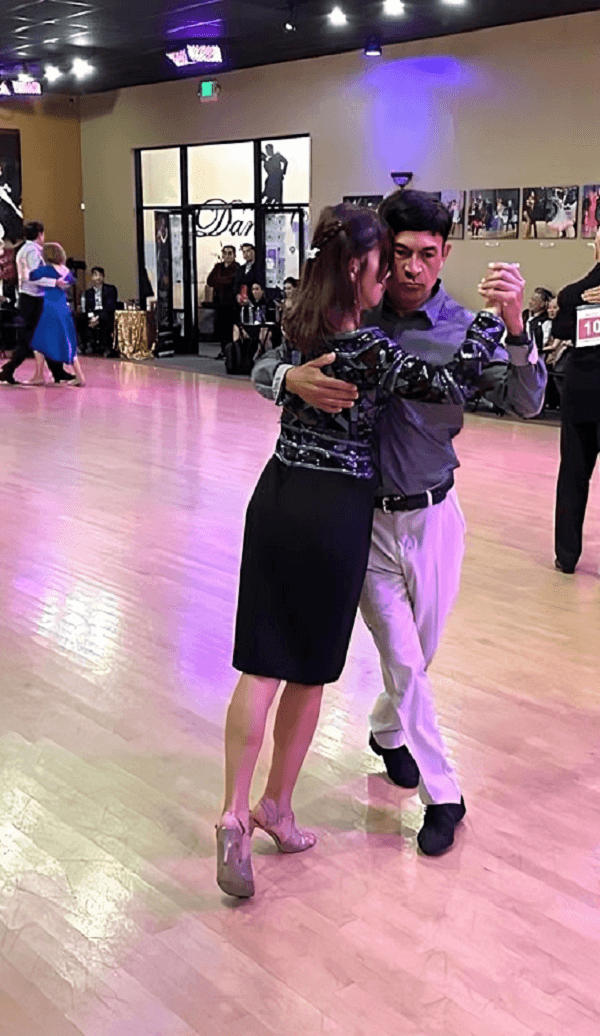
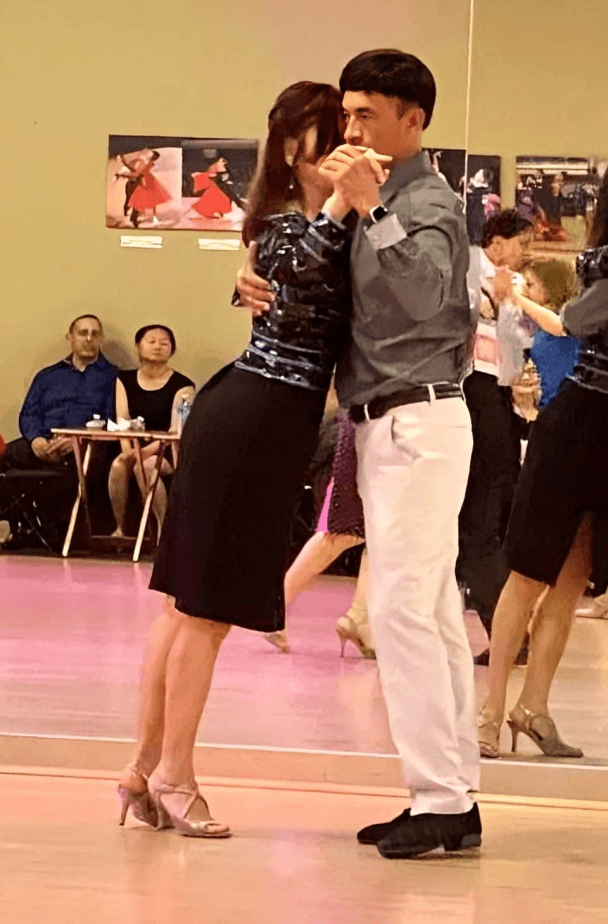
Today Carlos is a tango and salsa dancer, a genre that has also been important in his musical journey. However, he sings the songs he dances to at amateur level.
For many years, he left aside music to devote himself to become a mechanic, a job from which he recently retired after more than 40 years of hard work. It was when he turned 45 that he fully resumed his love for tango and enrolled in dance classes to remember everything he had learned with his mother.
This is why Carlos says that he is much more professional in dancing than in singing, since he dedicated much more time and effort to the former to become an expert in the field. Dancing, of course, is accompanied by singing, but it has less hierarchy in terms of the artist’s priorities.
He has reached such a level of excellence in these disciplines that some friends of his put him in touch with Eduardo Guilarte, director of International Salsa Magazine, so that he could talk to us and his talents would become better known.

Time dedicated to mechanics and dance
Regarding the time dedicated to his formal work and dancing, Carlos claims he never had any problems, since he knew how to organize very well in this aspect.
He always devotes his time to dance on weekends, days where he frequented, and still frequents, nightclubs with friends with whom he dances and spends very pleasant moments that clear his mind of everyday life.
In addition to that, he also has a karaoke machine at home with which he also sings and practices his repertoire to delight anyone who wants to hear him on any nightclub stage.
What Carlos has learned from tango
Just as Carlos has been dedicated to singing and dancing tango, he has also invested time in learning about its history to give more depth to the knowledge he has about this genre and he wanted to share with us a little of what he has learned.
He told us that one of the things he was most fascinated to learn is that tango has roots from many places and times around the world, although nowadays it is seen as an Argentine genre. Something that many do not know is that it has its origins in the arrival of Africans in the ”New World”, which played a fundamental role in the emergence of tango in Argentina and Uruguay, which were under Spanish rule.
Both countries were transit ports for slave traffic, so the new inhabitants of these places brought with the their music and customs, which were mixed with the local music and customs to give rise to what is known today as tango.
A very interesting detail he told us is that, when European sailors stopped in these countries and went to bars to look for drinks and some company, so the ladys in these places danced tango to seduce and provoke them. At that time, this kind of music was perceived as the lowest level of society to the point that the Catholic Church demanded its parishioners not to dance tango, but it turns out that the genre was pleasing to the people and nothing could be done about it.
In the end, puritans had no choice but to embrace this wonderful dance and, today, people of all social classes, ages and races enjoy it without any complex.

The lyrics and references of tango
Since Carlos has very extensive knowledge of everything about the genre and its lyrics, we wanted to know what he has studied about it.
‘‘Tango can be many things at the same time. It can touch on issues related to the moral conduct of the individuals and, like many Latin genres, it also serves to mock and criticize politicians. It can also be an ode to love, spite and regret for having lost the loved one” Carlos shared with us on the subject.
‘‘This genre can deal with many subjects at the same time, but one of the most recurrent is frustration with failed love and I don’t think that will change in a long time” said Carlos.
Regarding the issue of the greatest artists who have inspired him to dance and sing tango, he mentioned Carlos di Sarli, Carlos Gardel, Oswaldo Pugliese and Enrique Rodríguez.
What Carlos feels at singing and dancing tango
Carlos describes listening to any tango song as ”listening to your own national anthem in a foreign country”. For him, listening to any piece sung by his parents in the past is a source of pride and takes him back to the most beautiful moments of his childhood.
Carlos pointed out that ”when you are driven by loving emotions and some thoughts are trapped, you can express them through singing and dancing, which is what I always do”.
The artist pointed out that he loves this world and it is one of the things that fills him the most in life, so he is grateful to be able to talk about it in International Salsa Magazine and express what it makes him feel to the world.
Read also: Bolivian guitarist Gabriel Navia and his love for music
International Salsa Magazine presents the Dj, Jeferson Flores, triumphing in Europe
Currently, they are known through the abbreviation “Dj” or the term “deejay” respectively, and in previous times, they were called “disc jockey”, to those people, which select and mix recorded music and thus be heard by a certain audience, thus issuing its sound in locations such as: discos, mini clubs, clubs, dances, events, concerts, bars, restaurants and rumbas, demonstrating their versatility, knowledge and bringing joy to their followers, listeners and dancers.
In this issue of International Salsa Magazine, we present a Venezuelan musician, selector or dj, who is currently triumphing outside our borders and extolling the name of our country.

We refer to Jeferson Flores, born in Caracas in 1992, and from a very young age he was inclined to music, because his father, also worked as a professional dj of salsa music rhythm and this somehow influenced Flores to learn the trade and legacy acquired thanks to his father.
Beginning with only 15 years of age to musicalize, using in first place the formats of compact discs “cds” and “cuatromil quinientos”, in the Caracas saraos known as “Picoteros” and in the remembered “Minitecas”, and in second place demonstrates his skill in the “plates”, when using the formats of discs in acetates or vinyl, selecting salsa for the dancer and he also commented us that with the passing of the years and until the present time, he stands out and characterizes himself for being a professional salsa dj; he stands out and is characterized for being a “dj crossover”, that is to say, what it means in the Spanish language, dedicated to “mix” with the use of “controllers” his excellent musical repertoire. International Trajectory.
The performance abroad of our guest of this month in International Salsa Magazine, has been quite extensive and successful, beginning to work in Colombia, where he worked as a “resident dj” for five years in a prestigious nightclub in Bogota, then began his period, musicalizing in Ecuador, Poland, Germany and is currently based and makes professional life in Barcelona, Spain, being described by specialists as one of the “Dj Crossover” more complete and versatile, placing Latin music in their dances. And as a result of his excellent performance in the Iberian country, he was the winner last year of the “Latino de Oro” award, in the categories: Salsa Dj and Dj Crossover, respectively, and by the way, in this year’s edition 2024, he has been nominated again in both categories for this award, considered one of the most important of the music in the European continent.
As for his most recent performances as a “musical selector”, last Saturday, June 28, he was mixing salsa at a location in the city of Marbella, Spain, in an event called “Venezuelan Night”, and next Saturday, July 6, he travels to Madrid to make the rumberos of the “mother country” enjoy, integrating the line-up of the Dj show, the “Fiesta Blanca”, alternating in this opportunity with the musicalizers: Reni Herrera, Ditxon Mercado, Dj Argenis and Dj “El Negrito Caliente”.
Finally – he told us – Jeferson that his work in Spain has been very well liked and he is one of the most requested Djs in the rumbas every weekend. His social networks and contacts are, instagram: jefersonfloresoficial2, facebook: Yeferson Flores, Tik tok: @jefersonflores457, Youtube: jefferson flores.

Email: [email protected], Booking: +34691292564. From International Salsa Magazine in Palo Alto, CA www.salsagoogle.com, we wish Dj Jeferson Flores, the best of success and continue to succeed in Europe for the pride of Venezuelans, always putting good salsa for the dancer …! Until next time and let’s keep on salsaing. Dj. Augusto Felibertt and Carlos Alberto Colmenárez Oropeza.
The first DJ was British radio engineer Ron Diggins.
Contrary to what many may imagine, it was not a bohemian musician in a garage or some friends in a ghetto. The first DJ was British radio engineer Ron Diggins, who in 1949 invented the Diggola, which today is considered the first “mixing desk” in the history of music. The home-built Diggola had two turntables, lights, microphones, amplifier, speakers and was built on a wooden coffin (yes, coffin) base.
With his Diggola at the ready, and like a good DJ, he loaded his equipment into a van and began playing records at the hundreds of UK events where he was hired, causing the crowd to go wild. “I didn’t invent anything, I just put the same things to a different use,” he commented in the magazines of the time, never imagining that his creation would be the beginning of a revolution in music, where DJ’s and beatmakers would take beats to every corner of the planet.
Ron Diggins, throughout his life, played records in more than 20 thousand parties, retiring only in 1995, after 46 years of career in front of the decks. Passionate about music, he passed away in 2011 at the age of 91, leaving an eternal legacy.

In 2020 it will be 25 years since Diggins retired from the dancefloors. And we commemorate it with music, without a minute of silence, because a life with silence is the last thing the first DJ in history wanted.
Article written by @comte_con_eme, member of the Urban Roosters Army.