| Festivals – November 2025 | ||
|
|
![]() |
San Francisco SBK CongressNov 21 / 23 2025 Hyatt Regency San Francisco |
Directory of North American nightclubs |
||
CALIFORNIA |
ILLINOIS |
|
MICHIGAN |
NEW JERSEY |
NEW YORK |
| Festivals – November 2025 | ||
|
|

![]() |
San Francisco SBK CongressNov 21 / 23 2025 Hyatt Regency San Francisco |

Directory of North American nightclubs |
||
CALIFORNIA |
ILLINOIS |
|
MICHIGAN |
NEW JERSEY |
NEW YORK |
Latin America / Venezuela / Caracas
“There is a great variety of new artists who want to expand and promote their new talents to all lovers of salsa music. For this new edition, we present Jhonatan Araque, a Venezuelan born in Maracay, Aragua, on March 25, 1983. Since he was very young, he showed admiration and an inclination for music, especially singing. By the age of 14, he joined the Grupo Rumba Costeña for a year, performing as a soloist; later, he joined the quintet ‘Quinto Elemento,’ who interpret pop and ballad music. From that moment, he had the opportunity to perform at the ‘Forum’ of Valencia, his first experience performing in front of a significant audience.
He mentions that he began his studies at the ‘Tecnológico de Música de Valencia’ (Valencia Technological Institute of Music), where he graduated with a major in singing, obtaining excellent grades. By the age of 18, he decided to record his first solo demo, which opened the doors to his first record contract with the ‘Sonográfica’ record company, alongside the Moratinos brothers, forming part of a group called ‘Okey,’ experimenting with various genres on that album, such as ballads and pop with Latin and Spanish influences.

After performing in various nightclubs, he decided to join the salsa orchestra ‘Los Latinos,’ where he became known in the cities of Caracas, Maracay, and Valencia, having the opportunity to share the stage with great national and international performers of the genre, including: Hernan Olivera, Marcial Istúriz, Wilmer Lozano, Edgar ‘Dolor’ Quijada, Hildemaro, Erick Franchesqui, Rodrigo Mendoza, Ángel Flores, and Mariana La Sonera.
Additionally, he spent six months as the singer for La Dimensión Latina, performing with them in different cities across the country; he also auditioned and became part of the ‘Simón Bolívar Latin Caribbean Orchestra,’ belonging to the National System of Youth and Children’s Orchestras and Choirs of Venezuela, with which he had great experiences in various projects under the direction of maestro Alberto Vergara Icaza.
With all these new experiences, new opportunities arose for him in various forms to become part of renowned orchestras within the national salsa genre, such as Rumberos del Callejón, Orquesta Puma Band, El Combo de Venezuela, and the recording of two tracks with Fidel and Julito Antillano. In 2013, he decided to retire from La Latino Caribeña and form his own orchestra to lead ‘The Tribute Project to Jerry Rivera and Rey Ruiz.’
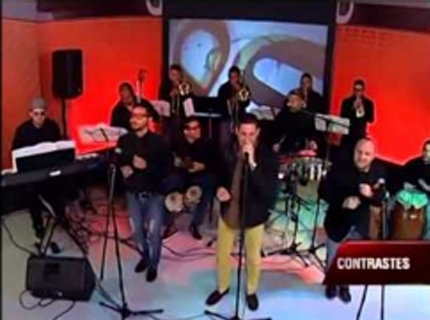
Jhonatan Araque’s orchestra is made up of very talented young Venezuelans with specific studies for each of the instruments they use. They are dedicated to presenting the audience with the interpretations that have been highly successful throughout their careers, thus paying tribute to these two singers of great international renown.
The members of this great orchestra are:
| Name | Role |
| Jonathan Araque | Solo Vocalist |
| Mauricio Marin | Backing Vocalist |
| Luis Martínez | Backing Vocalist |
| Angel Palma | Piano |
| Edwin Garcia | Bass |
| José “Puma” Reyna | Timbales |
| Braimy Mijares | Congas |
| Lukas Gomez | Bongos |
| Jose Anahole | Trumpet |
| William Rada | Trumpet |
| Pedro Xavier Moya | Trombone (Musical Director) |
| Leycester Licon | Trombone |

For more information, contact them at:
Contact Method
Phones
Jonathan Araque: +58 424-3443504 Pedro Xavier Moya: +58 416-3077868 0414-9276637
Facebook: https://www.facebook.com/ Bachology?hc_ref=SEARCH
Correo: [email protected]
YouTube: https://www.youtube.com/ channel/UCZP0snvp3tqkP24c X_fg1KQ
Twitter: @Bachology
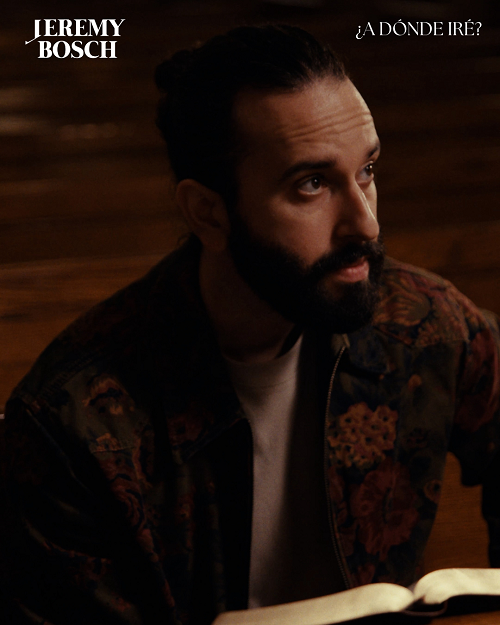
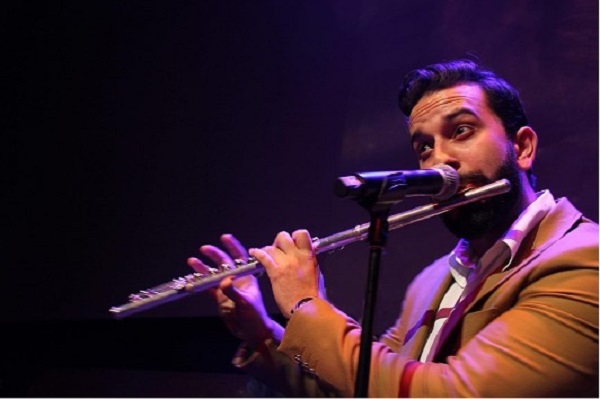
“¿A dónde iré?” was written by Bosch, who is also a virtuoso flutist. For the lyrics, he drew inspiration from Psalm 139. In a press release, Jeremy commented on his inspiration, “This song was born from a moment of introspection and gratitude. I wanted to capture how God finds and accompanies us everywhere, even when we don’t perceive Him. I hope that those who listen can feel that closeness and trust in Him.”
The lyrics “combine biblical verses with Jeremy’s personal experience, intertwining his life’s testimony with the spiritual richness of scripture,” according to the artist’s team.

Jeremy Bosch’s commitment to this production is evident. He is the composer of both the lyrics and melody, as well as the arranger, producer, vocalist, and background vocalist, in addition to playing the flute. The song features Álex “Apolo” Ayala on bass, interacting with Gabriel Chakarji on piano. Marcos Torres is on congas and minor percussion, and Marcos López is on timbales and bongos. The trumpets were handled by “Maneco” Ruiz and Jesús Ricardo. Doug Beavers played the trombone and Mario Castro the tenor saxophone. Edmar Castañeda is on harp, Roman Lajara on guitars and banjo, while Ali Bello played the violins, Samuel Marchan the violas, and Mara Navas the cellos.
About the Artist
Jeremy Bosch is a proud Puerto Rican. He was born in Ponce and raised in Las Piedras. He is a 2013 graduate of Berklee College of Music, with a degree in Jazz Composition.
Previously, Jeremy had the good sense to venture into a tribute to another notable Ponce native: Cheo Feliciano. The work, published under the title Prefacio, was recorded live at the Dizzy Club in New York. For this feat, he shared the stage with special guests such as Óscar Hernández, Johnny “Dandy” Rodríguez, and Nelson González. On that occasion, he stood out among compositions by Tite Curet Alonso, such as ‘Si por mí llueve,’ ‘Pa’ que afinquen,’ and ‘Los entierros’—to name a few—with arrangements by vibraphonist Felipe Fournier.

Another notable production from his distinguished career allowed him to share the studio with Luis Enrique and Alain Pérez for the production of Prólogo hoy. This was followed by Epílogo, an Afro-Caribbean music album. Jeremy doesn’t want to be associated solely with salsa. In fact, his musical journey has been bold and varied, experimenting with “salsa mixed, produced, and arranged from a more synthesized and minimalist perspective,” as he described in an interview for the National Foundation for Popular Culture of Puerto Rico.

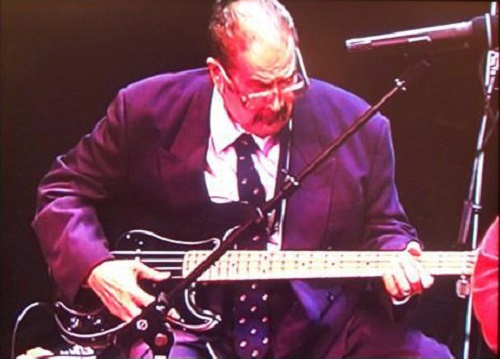
He worked with legendary artists and bands such as Charlie Parker, Dizzy Gillespie, Machito, Tito Puente, and The Alegre All Stars. Born in Tampa, Florida, to Cuban parents, he is often associated with the Baby Bass, a type of electric upright bass.
The Baby Bass is a specific type of electric upright bass developed by the Ampeg company. It has a distinctive sound and is very popular in Latin music, especially salsa.
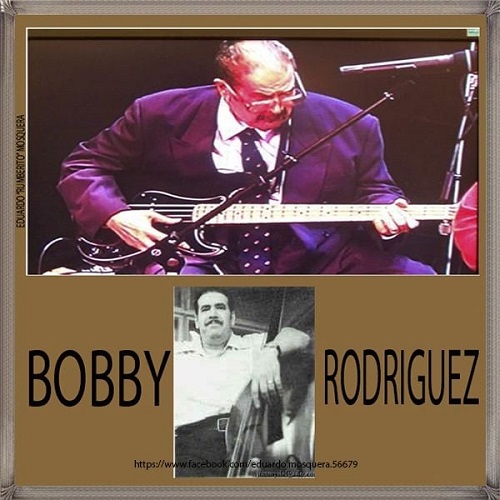
In summary, the connection between Roberto “Bobby” Rodríguez and the Baby Bass is that the famous bassist, Roberto “Bobby” Rodríguez “Big Daddy,” was a master of the instrument and was instrumental in its popularization within Latin music.
“Big Daddy’s” Career and Legacy.
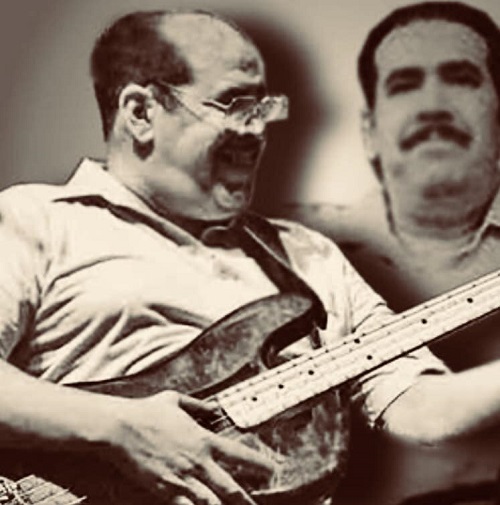
The son of Cuban and Puerto Rican parents, Roberto “Bobby” Rodríguez “Big Daddy” was born in Tampa, Florida, on May 2, 1927. His talent left a lasting mark on the performance of both the upright bass and the electric bass.
Rodríguez’s involvement with Puente’s band resulted in a catalog of countless tumbao basslines. He occasionally had the opportunity to lead the band with a solo, loaded with highly creative melodic improvisations.
On the 1990 album, Goza mi Timbal, the track “Ode to Cachao” features a large number of Bobby Rodríguez’s solos. In addition to being a tribute to Israel López, this track is a showcase of “Big Daddy’s” immense virtues and is considered one of the most unforgettable solos in Latin jazz. This partnership remained active from the 1950s to the 1990s.

One characteristic he was always recognized for was his unique ability to play the clave rhythm with his foot while performing on the bass. His musical experience always made him seem like a contributor with a jazzy style.
On July 29, 2002, after a life full of resounding successes and an impressive legacy, Bobby Rodríguez passed away in New York.
Ambiguities with the Name Roberto “Bobby” Rodríguez.
The name “Bobby Rodríguez” has been used by several artists within the universe of Caribbean music.
One common source of confusion is the flutist, clarinetist, and saxophonist from Manhattan, Robert “Bobby” Rodríguez, who founded the group “La Compañía.” His date of birth has not been confirmed.
A third artistic namesake is Dr. Bobby Rodríguez, a trumpet player born in Los Angeles, California, who is also a teacher and author of the book, ABC’s of Brass Warm-Up. He has been nominated for a Grammy and has received awards as an educator.

The list of names similar to Roberto “Bobby” Rodríguez becomes much longer if you search for homonyms of his given name. For example, there is Roberto (Reimundo) Rodríguez, a trumpet player from Cienfuegos, Cuba. He co-founded the orchestra Los Jóvenes Estrellas de Cuba and became a member of the Fania All Stars. He also appears in the documentary Nuestra Cosa Latina. In 1982, he founded the group Los Rodríguez with his sons, Roberto Jr. and Willie.
His son, Roberto Rodríguez Jr., is another homonym we encounter in these musical paths.
Los Mejores Salseros del Mundo
Also Read: Bobby Valentín, the King of the Bass in the Fania All-Stars Machine – The Mind of a Master
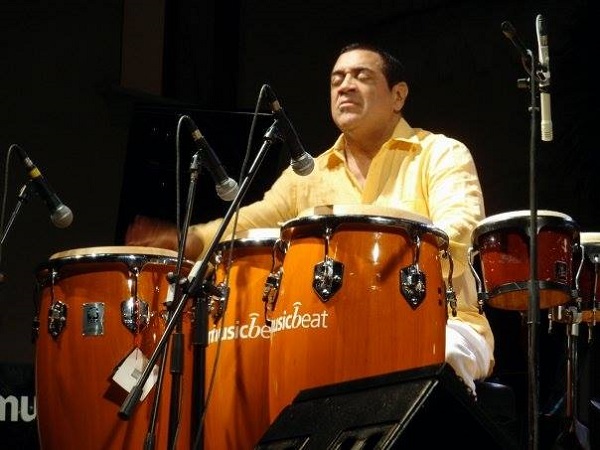
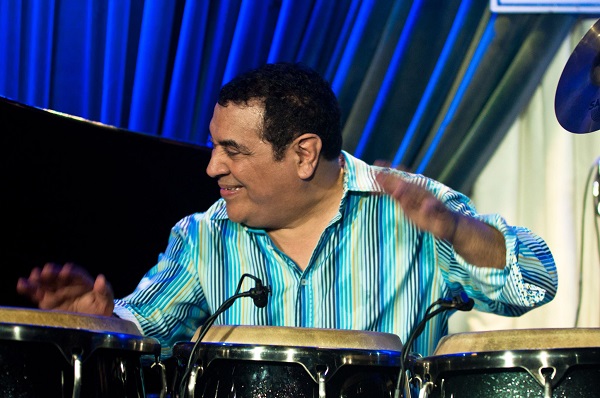
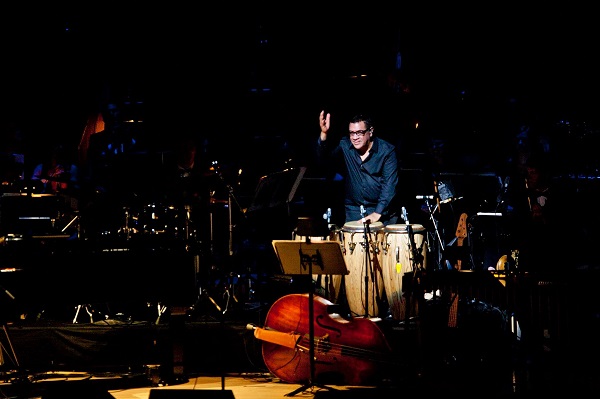
Sammy Figueroa, a percussionist with an excellent career.
Sammy moved to Puerto Rico as a child to live with his grandparents and escape the Bronx’s gang violence.

At 18, he started his professional career with bassist Bobby Valentín’s band. Throughout his career, he has stood out for his versatility, playing in a multitude of musical styles and contributing to nearly 400 albums, ten of which are platinum.
He has collaborated with major pop artists like David Bowie, Chaka Khan, and Mariah Carey, as well as with distinguished jazz musicians such as Miles Davis, Sonny Rollins, Quincy Jones, and George Benson. In 1977, he became a founding member of the Latin rock fusion group Raíces.
In 2001, Sammy Figueroa moved to South Florida and formed his own group, Sammy Figueroa and His Latin Jazz Explosion. His albums And Sammy Walked In and The Magician were nominated for a Grammy for Best Latin Jazz Album.

His 2023 album, Searching for a Memory / Busco Tu Recuerdo, is a tribute to his father. The project, produced by his wife, Rachel Faro, with whom he has also co-produced other albums, allowed Sammy to reconcile with his father’s legacy. On this album,
Sammy Figueroa has received numerous awards, including two Percussionist of the Year awards from the National Academy of Recording Arts and Sciences (NARAS), two Drummie Awards for Best Hand Percussion, and a Best Percussionist award from the Jazz Journalists Association.
Discovered by jazz flutist Herbie Mann, Figueroa became a well-known session and studio musician, touring and recording with The Brecker Brothers, Average White Band, Morrissey – Mullen, The Mahavishnu Orchestra John McLaughlin, and Miles Davis.
He has also appeared with Blondie, Sonny Rollins, David Sanborn, Quincy Jones, Dave Grusin, George Benson, Chet Baker, Stanley Clarke, Grover Washington Jr., Al Jarreau, Lena Horne, Joe Williams, Mark Murphy, Mike Mainieri, Néstor Torres, Chico O’Farrill, Mike Stern, Chuck Loeb, Bobby Watson, Dave Valentin, Arturo Sandoval, Paquito D’Rivera, Rubén Blades, Eddie Palmieri, Bobby Valentín, Tania Maria, Mariah Carey, James Taylor, Dr. John, Mick Jagger, David Bowie, Celine Dion, Blues Traveler, Natalie Merchant, David Lee Roth, Hall & Oates, Joe Cocker, Rickie Lee Jones, Annie Lennox, Whitney Houston, Anita Baker, Grace Jones, James Ingram, Diana Ross, Roberta Flack, Aretha Franklin, and many others.
Some of the R&B hits he is featured on include Sister Sledge’s “We Are Family,” Luther Vandross’s “The Night I Fell In Love,” and Ashford & Simpson’s “Solid (as a rock),” as well as most of Nile Rodgers and Bernard Edwards’ hits on the Chic and Sister Sledge record labels.
Michel Camilo wrote the song “And Sammy Walked In” in his honor, and it was also recorded by Giovanni Hidalgo. Two of his CDs, And Sammy Walked In and The Magician, have been nominated for Grammy Awards in the “Best Latin Jazz Album” category. Figueroa hosts a Latin jazz show on WDNA-FM in Miami, Florida.

If you’re not very familiar with Sammy Figueroa’s work, you can try an experiment with this album: listen closely to see if you can guess what his instrument is. In a medium-sized combo, what instrument seems to take center stage? The answer: it’s impossible to guess, which says something about Figueroa’s maturity as a leader.
But there are some very impressive horn arrangements (check out “Cha Cha Pa’ Ti” and the lovely “Cuco y Olga”), along with some of the sweetest, most tender ballads to appear on a jazz album of any genre in recent years (“Queen from the South” and “Zuliana” are the best examples).
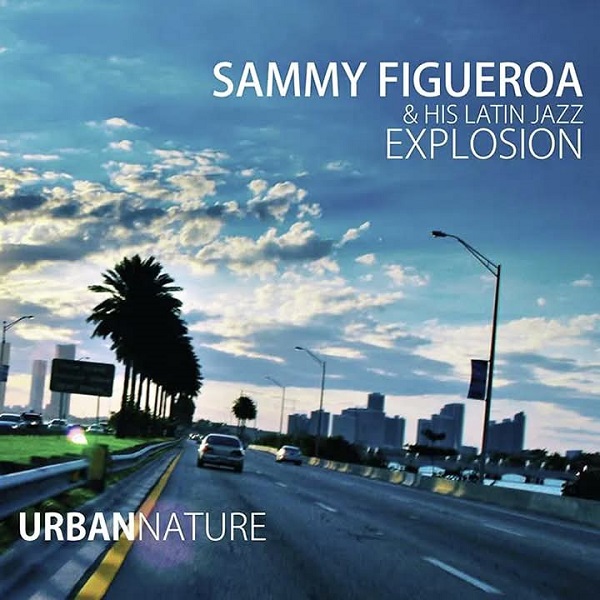
Sammy Figueroa & His Latin Jazz Explosion – Urban Nature (2011).

Tracks:
Musicians:
Guest Musicians:
Website: Sammy Figueroa
By:
Also Read: Carlos “Nene” Quintero comes from a family of musical prodigie