• Skip to primary navigation
  • Skip to main content

International Salsa Magazine

  • HOME
  • Previous editions
    • 2026
      • ISM / March 2026
      • ISM / February 2026
      • ISM / January 2026
    • 2025
      • ISM / December 2025
      • ISM / November 2025
      • ISM / October 2025
      • ISM / September 2025
      • ISM / August 2025
      • ISM / July 2025
      • ISM / June 2025
      • ISM / May2025
      • ISM / April 2025
      • ISM / March 2025
      • ISM / February 2025
      • ISM / January 2025
    • 2024
      • ISM / December 2024
      • ISM / November 2024
      • ISM / October 2024
      • ISM / September 2024
      • ISM / August 2024
      • ISM / July 2024
      • ISM / June 2024
      • ISM / May 2024
      • ISM / April 2024
      • ISM / March 2024
      • ISM / February 2024
      • ISM / January 2024
    • 2023
      • ISM / December 2023
      • ISM / November 2023
      • ISM / October 2023
      • ISM – September 2023
      • ISM – August 2023
      • ISM July 2023
      • ISM Edition June 2023
      • ISM – May 2023
      • ISM April 2023
      • ISM March 2023
      • ISM February 2023
      • ISM January 2023
    • 2022
      • ISM December 2022
      • ISM November 2022
      • ISM October 2022
      • ISM September 2022
      • ISM August 2022
      • ISM July 2022
      • ISM June 2022
      • ISM May 2022
      • ISM February 2022
      • ISM January 2022
    • 2021
      • ISM December 2021
      • ISM November 2021
      • ISM October – 2021
      • ISM September 2021
      • ISM August 2021
      • ISM July 2021
      • ISM May 2021
      • ISM April 2021
      • ISM June 2021
      • ISM March 2021
      • ISM February 2021
      • ISM January 2021
    • 2020
      • ISM December 2020
      • ISM November 2020
      • ISM October 2020
      • ISM September 2020
      • ISM August 2020
      • ISM July 2020
      • ISM June 2020
      • ISM May 2020
      • ISM April 2020
      • ISM March 2020
      • ISM February 2020
      • ISM January 2020
    • 2019
      • ISM December 2019
      • ISM November 2019
      • ISM October 2019
      • ISM Septembre 2019
      • ISM August 2019
      • ISM July 2019
      • ISM June 2019
  • Download Salsa App
    • Android
    • Apple
  • Spanish

Search Results for: Puerto+Rico

Bandleader and bongosero Ray Degaldo is here to talk about his life and career

The talented percussionist Ray Delgado has made room in his schedule to share some time with us and talk about some of the most curious details of his artistic career, which fills us with pride and gratitude in equal measure. The founder of the Ray Delgado Project has many interesting things to say, and we are more than willing to listen.
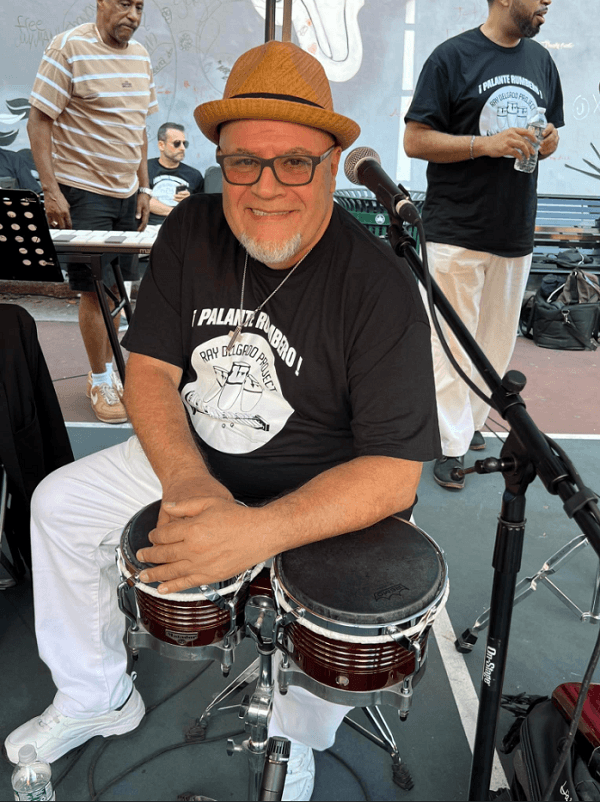
Ray playing the bongo
Ray Delgado playing the bongo live

Ray’s inspirations to become an artist

Ray grew up in a family with deep Puerto Rican roots and was raised between Puerto Rico and New York because his parents constantly moved from one place to another, which made him feel very fortunate because he was being formed between two cultures that allowed him to listen to all kinds of music. In his time, radio remained extremely popular, so this was his vehicle to travel just by listening to certain songs.

Music in English came from the United States and Europe, while music in Spanish came from Cuba, Venezuela, Puerto Rico, the Dominican Republic, Jamaica, and many other countries. Delgado was exposed to all genres, but as a New Yorker, the one that resonated the most with him was salsa and the atmosphere that it brings with it. In fact, he remembers having the joy of seeing the Machito Orchestra, Johnny Pacheco, Héctor Lavoe, Willie Colón, Pete Conde, and many others live.   

These great exponents were the ones who sparked off the young man’s desire to pursue music at some point, but his father did not like the idea at all, as he saw the men in this business as womanizers, drunks, and irresponsible. Obviously, no father wants his son to end up like that, so Ray had to wait to become a responsible adult with a steady job to finally realize his aspirations as a kid.
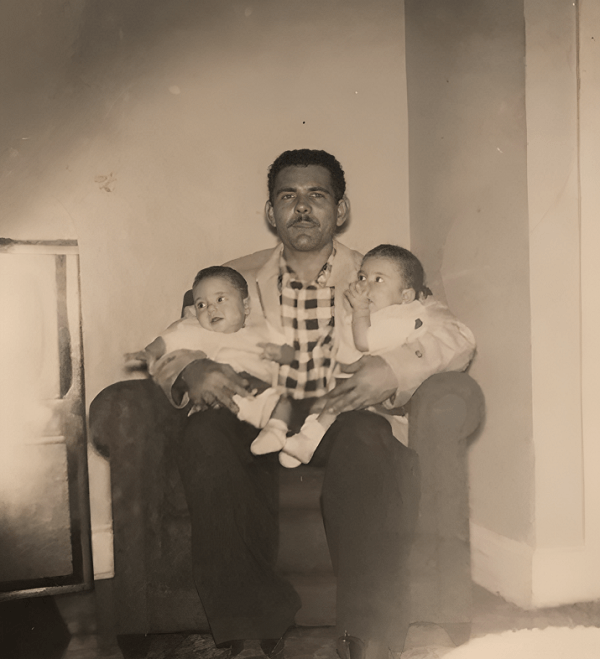
Ray and his father
Ramón Delgado Castro holding his son Ray Delgado and his brother when they were babies

It all started when some older men invited him to play with them, so he found an old bongo drum he kept in his closet and accepted the offer without a second thought.

That was the point of departure for him to play with many other bands in New York, and his consistent work led him to want to be better, to study hard and prepare himself much more.

Ray’s music education

Ray studied at the East Harlem Music School founded by legendary musician Johnny Colón in Manhattan, and focused on timbales with teacher Ray Cruz, but he left the instrument aside for a while when he moved back to Puerto Rico. When returning from the Island of Enchantment, he enrolled at the Harbor Conservatory for the Performing Arts. He also studied with Professor George Delgado, who is the current conguero for the Spanish Harlem Orchestra. He describes him as an excellent teacher and musician from whom he learned so much.

Additionally, he had the support of many musician friends who also helped him and taught him many things that are not learned in an educational institution, including Luis Rivera, Radamés Rojas, Eric Rivera, and many others. Close contact with other artists and groups made him see that many sounded exactly the same and there was little variety, so he decided to form his own orchestra.

In this way, he also learned percussion, which is the area by which he is best known today.
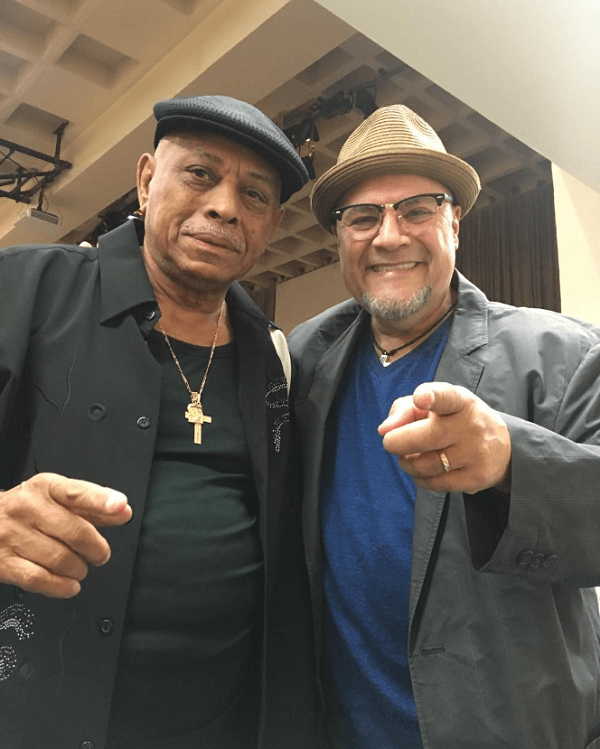
Joe and Ray
Joe Bataan and Ray Delgado

Ray Delgado Project’s birth

Driven by the lack of musical variety in his environment, he wanted to create his own musical project that included vibraphone, percussion, piano, bass, and vocalist. It all started with a workshop for musicians offered by Ray himself in a community room in the building where he lived and he was allowed to use it. After having played and experimented with different styles, the group was getting smaller until all the musicians who signed up ended up leaving.

From there, at every show and opportunity he had to meet new musicians, he would ask for their numbers to recruit them and achieve a chemistry and combination, resulting in the sound he wanted. Ray was in that process from 2009 until now. About three years ago, in 2023, he finally got what he was looking for. 

This group was called Ray Delgado Project, which takes up a huge amount of time and effort. However, the musician says that the New York where his youth was spent, which offered lots of places to go dancing, no longer exists, so there is not much work as back then.

Today, they play many covers of great hits from the 1970s, but they add their own touch to stand out with completely new arrangements. Not so long ago, they released their new version of “Lo Que Traigo es Sabroso,” a hit by Eddie Palmieri, and adapted it to their own style and arrangements. It can be found on Spotify and the main digital platforms. 
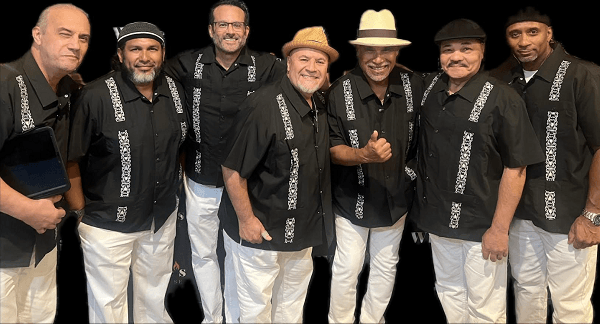
Ray and his orchestra
Ray Fuentes (piano), Abraham Saenz (bass), Danny Sieber (vibraphone), Ray Delgado (director and bongo), Rhadames ”Randy” Rojas (lead vocals) Izzy Diaz (congas), and José ”Cheo” Colón (timbales)

Ray is so happy with what he has achieved so far with their orchestra that ensures that when God calls him, he will be calm and happy to have been able to play and make audiences dance during his lifetime. God willing, we wish him many more years playing with the Ray Delgado Project, enjoying life and bringing joy to those who have the pleasure of listening to him. 

Read also: Leader of K’ndela Salsa Band Eric Cabanilla and all his entertainment company has to offer
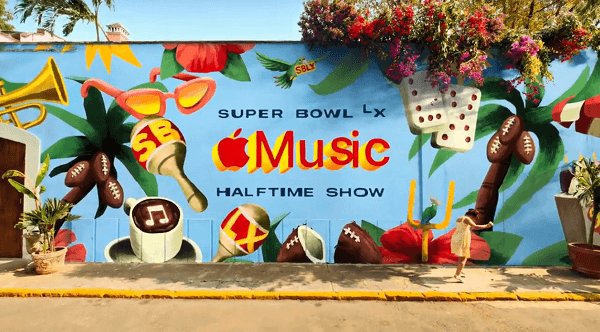
Background and reactions to Bad Bunny’s halftime show in The Super Bowl

The Super Bowl is the name given to the final match of the National Football League (or simply known as the NFL) championship, whose opponents are the winners of the National Football Conference and the American Football Conference. The match is due on the second Sunday of February every year and is one of the most watched broadcasts in the United States, but it is not the only thing that grabs viewers’ attention that day.

Over the years, the Super Bowl has become one of the most important social events in the country, to the point that it is one of the days of the year when more food and drink are consumed. One of its biggest attractions, and a matter of controversy from time to time, since its inception has been the Halftime Show. 

Absolutely every edition has featured a musical performance during halftime of the match. In the beginning, college marching bands were responsible for taking up the cudgel for the show, but its growing popularity got much more famous singers and bands be hired to take this prime spot.

There have been great and supremely talented artists, such as the exceptional case of Michael Jackson, who gave one of the most legendary and memorable performances to date. Likewise, artists such as U2, Justin Timberlake, Prince, Paul McCartney, The Rolling Stones, and Madonna, among others have also participated there. More recently, Shakira, Jennifer Lopez, Rihanna, and Usher have performed at the halftime show.
However, few musical performances have caused as much controversy as this year’s, which was performed by music producer, rapper, and reggaeton artist Benito Antonio Martínez Ocasio, known as Bad Bunny.

How Bad Bunny started his show
This is how the Bad Bunny’s halftime show started

Who is Bad Bunny?

Seeing everything he has achieved on a professional and artistic level, we could find it hard to believe the humble origins of the Puerto Rican artist, who grew up in a working-class household and was the son of a truck driver and a teacher who always instilled in their son the taste for music since childhood. By that time, many of his acquaintances started calling Benito “Bad Bunny” because of a sweet photo of him wearing bunny ears and having an annoying face.
What is known of his working life before becoming an artist is that for a time he worked as a bagger at Econo Supermarket while uploading the songs he composed to SoundCloud, material which reached the ears of producer DJ Luian. Through him, he managed to be signed to the label Hear This Music in 2016 and strengthened himself as an artist by collaborating with urban music greats such as J Balvin, Ozuna, and Cardi B. From there, his fame and popularity did nothing but grow and grow.

After that, what came next was a string of hits from his albums, which were “X 100PRE,” “YHLQMDLG,” “El Último Tour del Mundo,” “Un Verano Sin Ti,” “Nadie Sabe Lo Que Va A Pasar,” and “DeBÍ TiRAR MáS FOToS.” Following the release of “X 100PRE,” the Puerto Rican left Hear This Music and broke his professional relationships with DJ Luian and Mambo Kingz due to creative differences and the lack of support for their projects. 

Already in 2018, it was finally confirmed that “El Conejo Malo” left Hear The Music to join Rimas Entertainment led by his manager Noah Assad, who is the current CEO, public face, and majority owner of the company. However, the main investor since its founding in 2014 was former Venezuelan military officer and public official Rafael Jimenez Dan, whose links with the late President Hugo Chávez have made him a controversial figure and, to some extent, harmful to the company. For this reason, every effort has been made to disassociate Jiménez from the label until he finally sold his 60% stake in 2023, when Assad took full control of Rimas and Sony Music stepped in as a new investor.

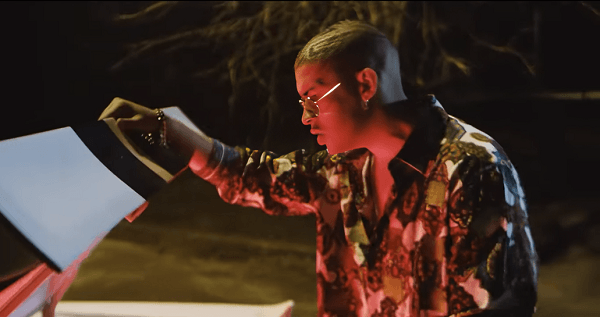
Bad Bunny singing ''Soy Peor''
Bad bunny in his videoclip ”Soy Peor” during his time with Hear The Music

However, this situation inflicts no injury on the image and great success of Bad Bunny, who clearly has nothing to do with these businesses and operations between the owners of his current record label.

Social and political stances

In recent years, Bad Bunny has used his art to put a magnifying glass on important issues for Puerto Rican and Latino communities. Some of them are the exodus of many inhabitants of the island, gentrification, the energy crisis, and the territory’s status of associated state. In fact, he participated in the 2019 protests demanding the resignation of then Governor Ricardo Rosselló and released the song “El Apagón” and financed a documentary of the same name denouncing the constant blackouts, the terrible service provided by the private company Luma Energy, the privatization of beaches, and the government’s abandonment of Puerto Rico’s infrastructure. 

As for the Latino community in the United States, the artist has been very vocal about Immigration and Customs Enforcement (ICE) proceedings against illegal immigrants and recent altercations with some protesters who claim that the institution has criminalized Latinos, no matter if they are criminals or not. Moreover, in his acceptance speech for his Grammy in the category of Best Urban Music Album, he said, “ICE out! We are not savages, we are not animals… we are humans and we are Americans.”

With this prelude, it is clear how Bad Bunny would focus his show at the Super Bowl a week later on February 8 of this year.

Bad Bunny during his performance
Bad Bunny during his performance in the Super Bowl

Bad Bunny’s participation in the Super Bowl

The NFL and the production company Roc Nation, led by American rapper Jay-Z, chose Bad Bunny as the main artist for the halftime show in order to attract a global and Latino audience, a decision that obtained Commissioner Roger Goodell‘s support, which earned him a tsunami of criticism from much of the American public. What is known about this is that Jay-Z took into account his cultural impact and status as a Spanish-language musical leader, aiming to go for freshness and novelty on stage. 

So, that was how February 8 arrived with a very high expectation for what the artist and his team had prepared for that day. And boy, did they have a few surprises.

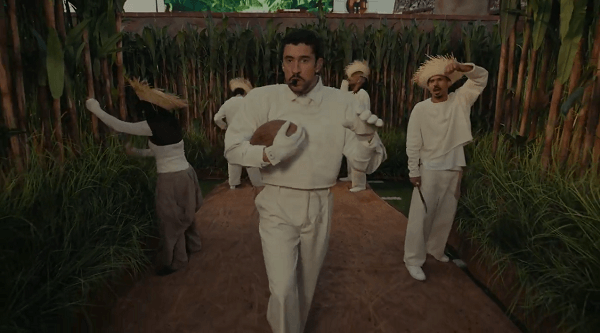
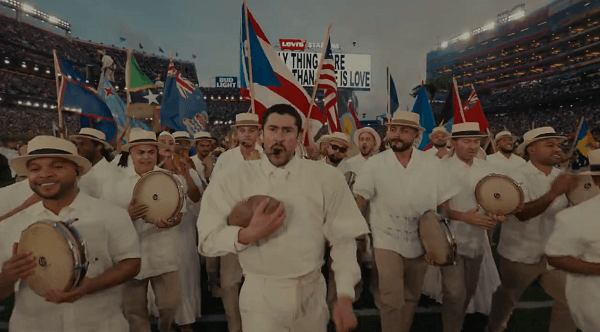
The performance, executed entirely in Spanish, was a tribute to Puerto Rico and Latin America in general. During the 15 minutes the Puerto Rican artist was on stage, scenography represented typical elements from the Island of Enchantment and much of Latin America, such as sugar cane fields, men playing dominoes, piragua stands, boxers, plastic chairs, barbershops, among others. 

He kicked off the concert with one of his greatest hits, “Tití Me Preguntó,” followed by a remix of some of the most iconic songs by reggaeton artists such as Daddy Yankee, Don Omar, and Tego Calderón. One of the big surprises was the appearance of Lady Gaga performing “Die With A Smile” in salsa version and dancing with Bad Bunny to make way for Ricky Martin singing “Lo Que Pasó En Hawaii” in open protest against the parallels between the situation in Hawaii and that of Puerto Rico today. 

The show closed with the urban artist saying “God Bless America” and proceeding to list all the countries that comprise the American continent alongside people waving their flags. 

Lady Gaga singing
Lady Gaga singing ”Die With A Smile’’ in salsa version

Some reactions after the show

Reactions to the show were extremely divided. While much of the Latino audience welcomed the Benito’s message, many Americans found it boring and confusing because of unfamiliar references and language barrier. However, it is clear that it had a profound impact and will extend the conversation about Latinos for a long time. 

Even aside from art and the quality of the performance, many understand that the show goes much further than the artist and his actions, but rather the social and political message he wanted to bring to the United States and the world, to the point that President Donald Trump himself described it as “absolutely terrible, one of the worst, EVER!” He also added that the show “doesn’t represent our standards of Success, Creativity, and Excellence” of the United States and that it was “a slap in the face to our country.”

However, other personalities like Jimmy Fallon, who has had Bad Bunny on his show, have shown his support to the artist on numerous occasions both on his show and social media. He also received support and praise from singers such as Katy Perry, Kacey Musgraves, and Alicia Keys. 

Bad Bunny with the flags
Bad Bunny with the flags of Latino countries

A Puerto Rican artist’s perspective on Bad Bunny’s show

There have been many reactions from all over the world, but what do Puerto Ricans themselves think about it? To know what a Puerto Rican artist thinks about this great event, we spoke with singer, comedian, and actress Carmen Nydia Velázquez, who shared her thoughts about “el conejo malo” and all the debate his show generated in the media and social networks. The performer noted the following:

”In common with the vast majority of Puerto Ricans, I am deeply proud of our Bad Bunny’s performance in the Benito Bowl. He was spectacular! The fact that our beautiful island has given birth to a world-famous artist who has reached the most coveted stage for any artist fills your heart with joy. But the most important thing about Benito is his commitment to give us a relevant place in the world, with our Spanish language and our culture. The noise surrounding Benito’s participation, before, during, and after the Super Bowl seems to have no end. It’s now history!”

Read also: Musician and entrepreneur of Latin origin Jorge Torres talks about his band and his company

Latin America / March 2026

Adriana Mosquea 03 2026Andy Durán 03 2026Porfi Jiménez 03 2026Willie Colón 03 2023El Caballero de la SalsaSymphonic Bestial Sound 2026

March 2026 – Festivals

Puerto Rico circular flag
PUERTO RICO
42 Zalsa 03 2026

Día Nacional de La Zalsa

Mar 22, 2026

Plaza de la Independencia
Av. Franklin Delano Roosevelt
San Juan 00920, Puerto Rico

$ 30.00 + ivu & c.s

Bella MartinezCalibrated maracas

DIRECTORY OF NIGHTCLUBS

Argentina flag
ARGENTINA

Aruba circular flag
ARUBA

Belize circular flag
BELIZE

Bolivia circular flag
BOLIVIA

Brazil flag
BRAZIL

Chile circular flag
CHILE

Colombia
COLOMBIA

Costa Rica circular flag
COSTA RICA

Cuba circular flag
CUBA

Dominican Republic
DOMINICAN REPUBLIC

Ecuador circular flag
ECUADOR

Guatenala circular flag
GUATEMALA

Mexico Circular flag
MEXICO

Panama circular flag
PANAMA

Peru circular flag
PERU

Puerto Rico circular flag
PUERTO RICO

Venezuela circular flag
VENEZUELA


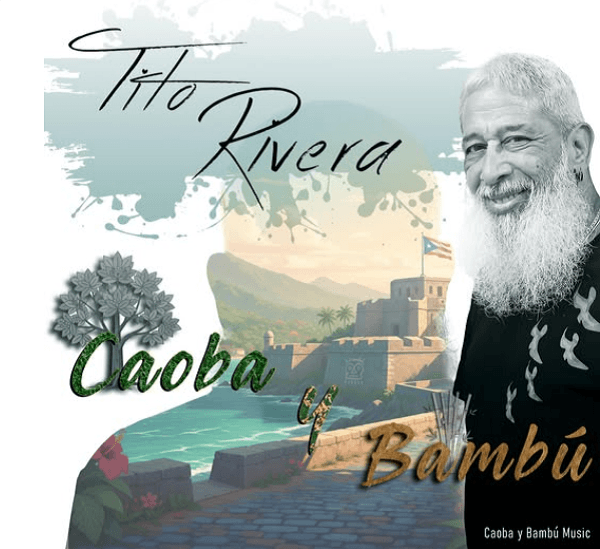
Caoba Y Bambú, Tito Rivera’s first discographic production

This month’s material is dedicated to the great arranger and trumpeter Ernesto “Tito” Rivera, who year after year has established himself as one of the most respected artists in the Puerto Rican music scene, especially in salsa. Below, we will mention some of the most important facts of his career to date and what he is doing presently.

Important facts of Tito Rivera’s career

One of the greatest contributions the virtuoso Tito has made to music in general has been his pen and the help he has provided to famous orchestras of all time, especially in the 1980s and 1990s. One of these is Roberto Roena y Su Apollo Sound, that to a large extent, is what fans remember today thanks to the Puerto Rican musician’s talented songwriting.

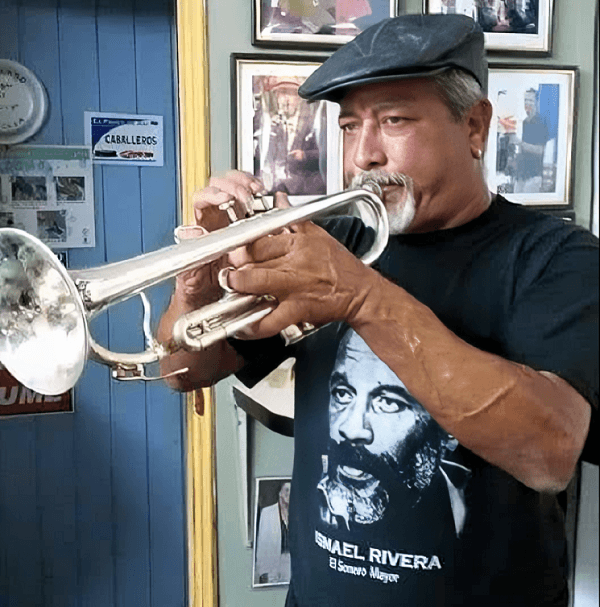
Tito Rivera playing the trumpet
Arranger and trumpeter Ernesto ”Tito” Rivera playing the trumpet

Another orchestra that was strongly influenced by Rivera was La Impacto Crea, which many remember as the group born of Hogares Crea and recorded for Vaya Records under the production of Bobby Valentín. Other groups we can mention on this long list include El Conjunto Borincuba de Justo Betancourt and Tony Yanz Y Su Orquesta Nacimiento.

Similarly, all this talent also gave him the opportunity to collaborate with many big stars, such as Marvin Santiago, who did not doubt to trust the trumpeter who lent his invaluable vision to a number of productions during those years. 

And not only that because Tito also left his mark on several songs by Kim De Los Santos Y Su Orquesta, which achieved impressive success in countries such as Colombia and Venezuela. 

Caoba y Bambú

Caoba Y Bambú is Tito’s first album as a leader, which represents a major challenge for the sonero’s career. Once again, he demonstrates all the experience he has acquired over decades through the work of other greats who trusted his judgment at the time. Now it is his turn to work on something of his own to which he could apply everything he has learned over the years.

Cover of Caoba Y Bambú
Cover of the album ”Caoba Y Bambú”

Something very interesting to note about the album is that it brings to life great pieces such as “Musa Y Letra,” which was originally recorded by La Impacto Crea in 1981 for Vaya Records. What changes this time is that the song will be performed by Puerto Rican Jesús “Gumbi” Navedo and Venezuelan Marcial Isturiz. The soneros will also be accompanied by Danny Guzmán’s piano solo. 

The fact that “Musa Y Letra” was chosen as the first preview of the album was not a random decision, since it shows that Tito seeks to build an immediate connection with the most classic salsa fans, which only a song as representative as this one can do.

Although this has been a much talked about piece, it is definitely not the only one worthy of mention. We should also talk about “Plaza Vacante,” which is one of El Gran Combo de Puerto Rico’s best-known songs. However, this time, it will be performed by José Luis “Papa Chu” de Jesús, who will, without a doubt, do a magnificent job like the rest of the vocalists.

Another important addition to the album is “Vete Pa’alla,” which was previously recorded by Bobby Valentín for his album “Rompecabezas,” but on this occasion, it will be performed by the talented Davian Raúl. 

Johnny Cruz ISM


Read also: The 2026 NAMM Show Took Center Stage as Historic Gathering Celebrating the Future of Global Music Industry

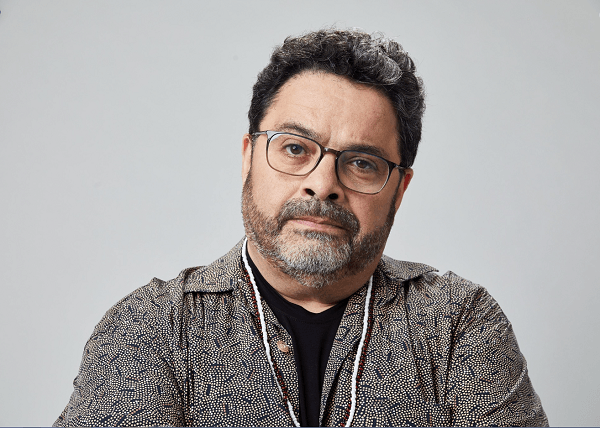
Bandleader Arturo O’Farrill leaves behind Birdland to look for other opportunities

After making some room in his packed schedule, we finally managed to meet with bandleader, composer, and pianist Arturo O’Farrill, who after arriving in Richmond, Virginia, greeted us and talked about various interesting topics related to his long and successful career.

Of course, we did not miss the opportunity to ask if it is true that he and his orchestra will drop out of performing at Birdland as they had done over the past 29 years and what other projects in door they have from now on.

Arturo O'Farrill posing for the camera
Bandleader and pianist Arturo O’Farrill posing for the camera

What was his childhood like with two artist parents?

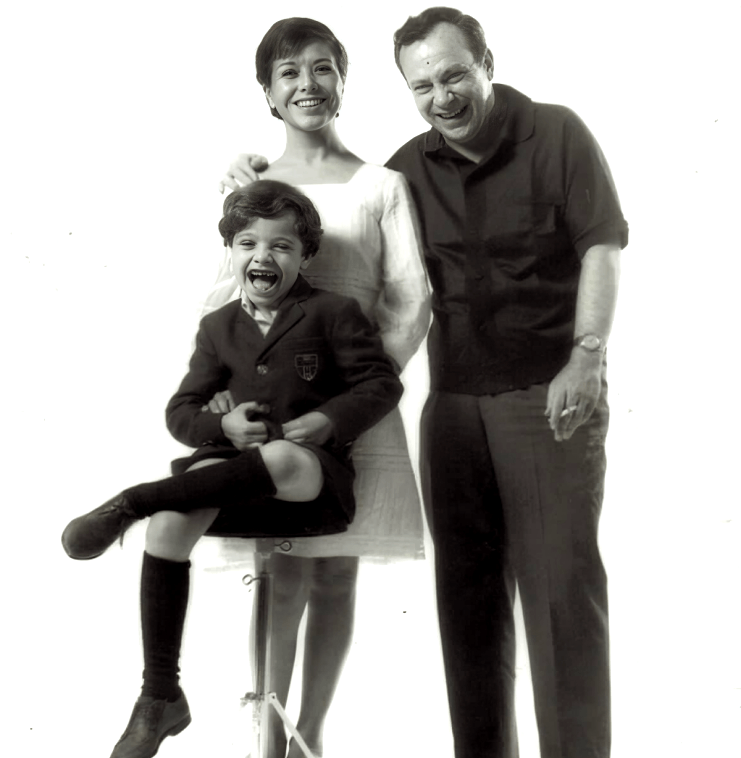
Arturo is the son of Cuban conductor, arranger, and musician Chico O’Farrill and Mexican singer Lupe Valero, so it is natural that he would show an interest in art like them. In addition, being the first male child in the family, there was lots of expectations on him and anything he could get, so he was enrolled in piano lessons and fortunately he had good aptitude for the instrument and was very present at his father’s parties and events with many other artists. 

So, he was for a time studying music on Saturdays until he discovered a Miles Davis album in his living room. He says that listening to it changed his life forever, and the song that most marked him was “Seven Steps to Heaven.” At that time, he knew he was going to become a professional musician by choice, not because his father had decided it for him.

He decided to become the best pianist he could be, and because of how busy Chico was with his own career, Arturo studied jazz alongside other young musicians. Some time later, he met bassist Andy González, who finally made him understand his Latin roots and encouraged him to study artists such as Charlie Palmieri and Eddie Palmieri.

“Precisely thanks to Andy, now I understand that our music is a treasure of the Afro-Latin diaspora, and the music my father and so many others of his generation made, for me, is the most incredible thing in the world,” said Arturo.

Arturo O'Farrill 02 2026
Arturo O’Farrill with his parents Lupe Valero and Chico O’Farrill

Arturo’s musical education

The artist studied at several top academic institutions, including LaGuardia High School of Music and Art, the Manhattan School of Music, the Brooklyn College Conservatory of Music, and the Aaron Copland School of Music. He clarified that he did not graduate from the Manhattan School of Music, but he does recognize that it was there that he began to truly understand music.

In the case of LaGuardia High School for Music and Art, his parents had to withdraw him because he never attended classes, as he was not interested in history and mathematics, but only in music. He was then enrolled in City As School and got his GED (General Educational Development). Later, at Brooklyn College, he met Professor Teófilo Ruiz, who taught him the importance of forging a social and political conscience, which had a profound impact on his development as a professional and a person. 

While working as a musician, Arturo earned his bachelor’s and master’s degrees at Queens College. He spent some time playing, studying, and teaching until Wynton Marsalis, artistic director of the jazz at Lincoln Center program, asked him to create an orchestra for the venue, which they called the Lincoln Center Jazz Orchestra. He worked there for five years until he knew he had to continue his career elsewhere.

Chico O’Farrill Afro-Cuban Jazz Orchestra

After playing along with the great jazz star Carla Bley and Machito, Arturo finally joined his father’s orchestra, the Chico O’Farrill Afro-Cuban Jazz Orchestra, at a time when they were creating many jingles for commercials. When the world was rediscovering Chico, his health was unfortunately in bad shape, so his son stood by his side to support him any way he could.

In the end, he had no other option than taking charge and, together with the rest of the musicians, recording the band’s last three albums. One thing that he had very clear when he took up this challenge was that he did not want to compete with his dad or be constantly compared to him, though he knew it was inevitable. In fact, after doing a concert with him, when he came home, he found a voicemail from someone saying: “You don’t have a fortieth of your father’s talent. In fact, I’ll see you picking through garbage.”

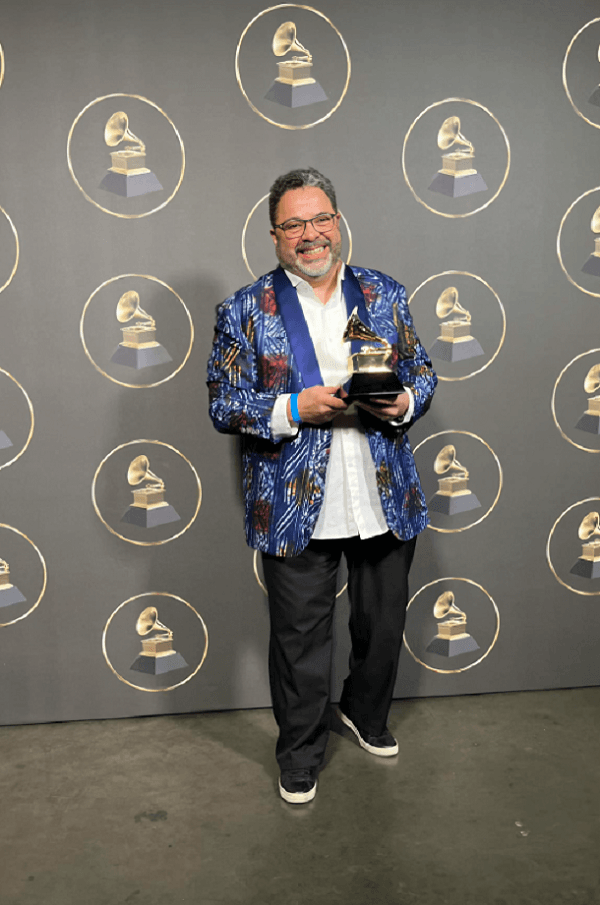
Arturo O'Farrill with the Grammy
Arturo O’Farrill posing with the Grammy he won in 2023

Despite the hurtful comments, it was liberating for him to hear it, since someone had the stupidity to compare him with his father when it did not make sense. That pushed him to use his own compositions in the orchestra, continue creating new music, and have a completely different path from Chico O’Farrill. Unknowingly, the man who insulted him had helped him throw off the mental and artistic chains that bound him by fear of being compared.

Afro Latin Jazz Orchestra

Although Arturo was sorry for leaving Chico’s orchestra, he knew he had to make many changes. One of them was that he wanted intergenerational musicians, more races and nationalities. This also led him to change the name of “Afro-Cuban Jazz Orchestra” to “Afro Latin Jazz Orchestra” because, from his point of view, Latin music must include not only Cuba, but also countries such as Puerto Rico, Colombia, Bolivia, Peru, Mexico, and many others.

Despite these changes, Arturo and his orchestra kept playing every Sunday at the prestigious Birdland jazz club, something they had been doing since 1997, before the death of Chico O’Farrill. However, 29 years after that important proposal, Arturo announced on social networks that he would not perform there anymore, but he was very grateful to the staff and management of Birdland for the opportunity they gave him over so many years.

When we wanted to know the reasons for this decision, the artist just told us that this was largely due to “creative and financial disagreements that were making the working environment very toxic,” so the best thing was to cut to the chase and seek pastures new. He assures us that his words do not want to disrespect anyone and that he wishes the best for both the club and its staff, who always treated him and his musicians the best. 

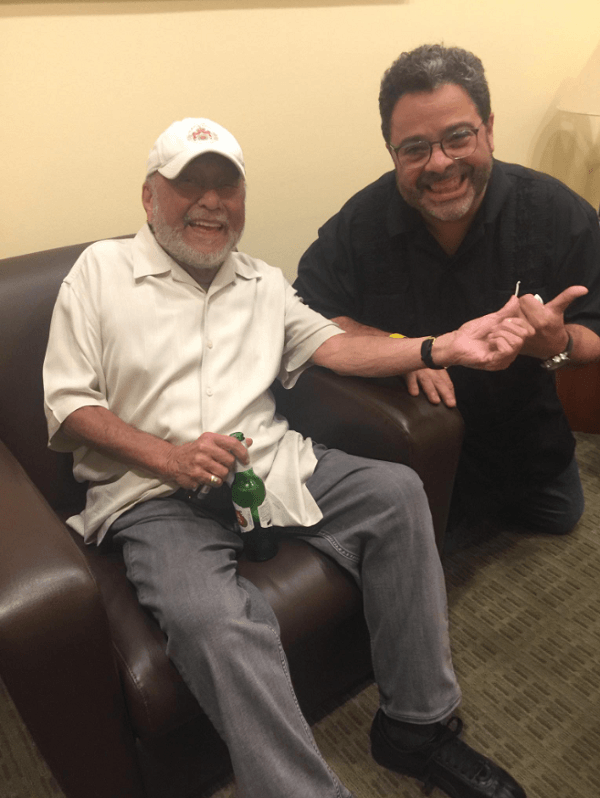
Eddie and Arturo
Eddie Palmieri and Arturo O’Farrill some years ago

Afro-Latin Jazz Alliance and Casa Belongó

The musician also wanted to talk about his foundation Afro Latin Jazz Alliance, which seeks to educate, play, and preserve. The project has grown so much that today it has 49 teachers, 21 public schools, and a preprofessional program known as “The Fat Cats,” which aims to help young musicians join an orchestra and exploit their talent as never before. 

After several formal requests, New York City finally agreed to construct a building with affordable apartments for residents of East Harlem and the first floors are destined to house Casa Belongó. These spaces will include a theater, a jazz club, a healthy restaurant, rehearsal rooms, classrooms, and much more. “Imagine that the power of our Latino community will physically change New York City history,” she concluded on this topic. 

Read also: Music reviewer and photojournalist Ricky Ricardo describes his work from the last 35 years

  • « Go to Previous Page
  • Page 1
  • Interim pages omitted …
  • Page 13
  • Page 14
  • Page 15
  • Page 16
  • Page 17
  • Interim pages omitted …
  • Page 97
  • Go to Next Page »

International Salsa Magazine (ISM) is a monthly publication about Salsa activities around the world, that has been publishing since 2007. It is a world network of volunteers coordinated by ISM Magazine. We are working to strengthen all the events by working together.