• Skip to primary navigation
  • Skip to main content

International Salsa Magazine

  • HOME
  • Previous editions
    • 2026
      • ISM / August 2026
      • ISM / July 2026
      • ISM / June 2026
      • ISM / May 2026
      • ISM / April 2026
      • ISM / March 2026
      • ISM / February 2026
      • ISM / January 2026
    • 2025
      • ISM / December 2025
      • ISM / November 2025
      • ISM / October 2025
      • ISM / September 2025
      • ISM / August 2025
      • ISM / July 2025
      • ISM / June 2025
      • ISM / May2025
      • ISM / April 2025
      • ISM / March 2025
      • ISM / February 2025
      • ISM / January 2025
    • 2024
      • ISM / December 2024
      • ISM / November 2024
      • ISM / October 2024
      • ISM / September 2024
      • ISM / August 2024
      • ISM / July 2024
      • ISM / June 2024
      • ISM / May 2024
      • ISM / April 2024
      • ISM / March 2024
      • ISM / February 2024
      • ISM / January 2024
    • 2023
      • ISM / December 2023
      • ISM / November 2023
      • ISM / October 2023
      • ISM – September 2023
      • ISM – August 2023
      • ISM July 2023
      • ISM Edition June 2023
      • ISM – May 2023
      • ISM April 2023
      • ISM March 2023
      • ISM February 2023
      • ISM January 2023
    • 2022
      • ISM December 2022
      • ISM November 2022
      • ISM October 2022
      • ISM September 2022
      • ISM August 2022
      • ISM July 2022
      • ISM June 2022
      • ISM May 2022
      • ISM February 2022
      • ISM January 2022
    • 2021
      • ISM December 2021
      • ISM November 2021
      • ISM October – 2021
      • ISM September 2021
      • ISM August 2021
      • ISM July 2021
      • ISM May 2021
      • ISM April 2021
      • ISM June 2021
      • ISM March 2021
      • ISM February 2021
      • ISM January 2021
    • 2020
      • ISM December 2020
      • ISM November 2020
      • ISM October 2020
      • ISM September 2020
      • ISM August 2020
      • ISM July 2020
      • ISM June 2020
      • ISM May 2020
      • ISM April 2020
      • ISM March 2020
      • ISM February 2020
      • ISM January 2020
    • 2019
      • ISM December 2019
      • ISM November 2019
      • ISM October 2019
      • ISM Septembre 2019
      • ISM August 2019
      • ISM July 2019
      • ISM June 2019
      • ISM May 2019
      • ISM April 2019
      • ISM March 2019
      • ISM February 2019
      • ISM January 2019
    • 2018
      • ISM December 2018
      • ISM November 2018
      • ISM October 2018
      • ISM September 2018
      • ISM August 2018
      • ISM July 2018
      • ISM June 2018
      • ISM May 2018
      • ISM April 2018
      • ISM March 2018
      • ISM February 2018
      • ISM January 2018
    • 2017
      • ISM December 2017
      • ISM November 2017
      • ISM October 2017
      • ISM September 2017
      • ISM August 2017
      • ISM July 2017
      • ISM June 2017
      • ISM May 2017
      • ISM April 2017
      • ISM March 2017
      • ISM February 2017
      • ISM January 2017
    • 2016
      • ISM December 2016
      • ISM November 2016
      • ISM October 2016
      • ISM September 2016
  • Spanish
  • Download Salsa App
    • Android
    • Apple

Search Results for: Puerto+Rico

Andy Montañez “El Niño de Trastalleres” His Eternal Voice and Generational Legacy

From the Streets of Santurce to the Pinnacle of the Global Salsa Movement.

The history of Latin music cannot be written without dedicating a chapter of honor to Andrés Montañez Rodríguez, known universally as Andy Montañez.

Born on May 7, 1942, in the working-class neighborhood of Trastalleres in Santurce, Puerto Rico, Andy didn’t just become one of the most prodigious and charismatic voices in the genre he also became a fundamental pillar in bringing salsa to international acclaim and preserving its legacy.

Andy Montañez El Niño de Trastalleres

Growing up in a humble environment rich with musical nuance shaped his artistic sensitivity from a young age. Influenced by the boleros of the era, música jíbara (Puerto Rican folk music), and the Afro-Caribbean rhythms echoing from every corner of his neighborhood, young Andrés quickly proved to have a powerful, pitch-perfect baritone voice packed with an incomparable emotional quality. However, no one could have imagined that the boy from Trastalleres would ultimately become a living legend of Caribbean music.

The Golden Era with El Gran Combo de Puerto Rico (1962–1977)

His definitive leap into professional music came in 1962. Following the breakup of Cortijo y su Combo, Rafael Ithier founded El Gran Combo de Puerto Rico and recruited Andy Montañez as a lead vocalist alongside Pellín Rodríguez. This vocal duo became the driving engine that propelled the group toward resounding success for fifteen years.

Together with “La Universidad de la Salsa” (The University of Salsa), Andy immortalized tropical music classics that remain alive in the collective memory of dancers to this day. Tracks like “Las Hojas Secas,” “Julia,” “Un Verano en Nueva York,” “El Barbero Loco,” “Vagabundo,” and “Un Alma Buena” not only dominated radio charts across Latin America, but also defined the sound of salsa throughout the 1970s.

Su Voz Eterna y su legado transciende en generaciones.

Key Milestone in His Career:

Andy Montañez’s time with the Puerto Rico All Stars represents a brilliant chapter in the history of salsa boricua. Conceived in the mid-1970s under the leadership and vision of trombonist and producer Frankie Gregory, the supergroup was born as Puerto Rico’s answer to the New York Fania All-Stars phenomenon, bringing together the island’s elite instrumentalists, arrangers, and vocalists.

“His participation in the Puerto Rico All Stars not only reaffirmed the group’s musical patriotism, but also served as a bridge to sonic maturity just before he went on to establish his own orchestra in 1980.”

For true connoisseurs and collectors of salsa dura, the presence of “El Niño de Trastalleres” in the Puerto Rico All Stars left an indelible mark, proving that his voice fit just as seamlessly into a charanga or combo format as it did into the technical rigor of a big band or all-star super-orchestra.

Andy Nacido el 7 de mayo de 1942 en el populoso barrio de Trastalleres, en Santurce, Puerto Rico

His ability to transition from a rhythmic guaguancó to a romantic bolero with equal mastery solidified the foundation of his popularity.

La Dimensión Latina and International Consolidation:

In 1977, Andy Montañez made one of the riskiest and most talked-about decisions of his career: leaving El Gran Combo to move to Caracas and join La Dimensión Latina, filling the shoes left by Oscar D’León.

Although the challenge was daunting given the massive void left by the departure of the “Sonero del Mundo,” Montañez showcased his versatility and profound respect for the clave.

In Venezuela, he built a brilliant era, recording timeless hits such as “El Eco de un Tambor,” “Son de la Loma,” “Cantares,” and “Pan de Piquito.”

His tenure with La Dimensión Latina reaffirmed his status as a premier vocalist and further strengthened his emotional bond with the Venezuelan public, where he became a beloved cultural icon.

Solo Career and New Sound Fusions:

In the early 1980s, Andy returned to his homeland to launch his solo career, backed by his own orchestra and collaborating consistently with top-tier arrangers.

During this period, he managed to stay at the top of the romantic and sensual salsa scene without losing the gritty street groove and authentic Caribbean sabrosura.

Memorable anthems that defined generations emerged from this era, including:

  • “Casi Te Envidio”
  • “Payaso”
  • “Cobarde, Cobarde”
  • “Me Gusta”
  • “Milonga para una Mirada”

True to his restless creative spirit, Andy never hesitated to experiment. Throughout the 1990s and 2000s, he explored musical fusions by incorporating elements of traditional bolero alongside Trío Los Andinos, as well as venturing into reggaeton and urban rhythms with young Puerto Rican artists like Daddy Yankee and Julio Voltio. This open-minded approach allowed him to connect with new generations of listeners without ever betraying his salsa roots.

Legacy, Cultural Impact, and the Stamp of “El Niño de Trastalleres”:

Andy Montañez’s legacy extends far beyond his discography; he represents a symbol of Caribbean identity and pride.

Andy dice Gracias Puerto Rico

His talent has been recognized with numerous global awards, including the prestigious Latin Grammy Lifetime Achievement Award in 2006 (for his album AM/PM Línea Directa alongside Cuban singer-songwriter Pablo Milanés), underscoring his ability to build bridges between salsa, trova, and the singer-songwriter tradition.

Beyond his flawless vocal range and undeniable stage presence, what truly sets Andy Montañez apart is his human warmth, genuine charisma, and the grounded humility he has always maintained.

Despite performing on the world’s grandest stages, he has never forgotten where he came from he will always proudly be “El Niño de Trastalleres.”
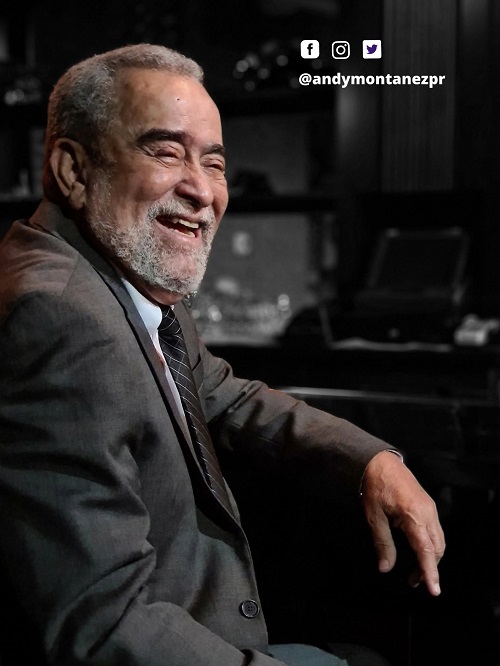
Andy Montañez de las Calles de Santurce a la Cúspide del Movimiento Salsero Mundial

His voice remains a guiding light and an essential reference point for soneros everywhere who seek to master the art of singing with heart, rhythm, and authentic Caribbean soul.

Read Also: El Mulato Mayor Jerry Rivas and His Half-Century Legacy with El Gran Combo de Puerto Rico


Domingo Quiñones The Greatest Singer, Sonero, Poet, and Salsa Warrior

A Talent Born in the Diaspora and Forged in the Neighborhood

Domingo Quiñones was born on August 9, 1963, in Perth Amboy, New Jersey. Born to Puerto Rican parents, he returned to the island with his family at four years old to settle in the municipality of Ceiba.

In 1977, a young Domingo returned to New York, where six years later he formally launched his professional career by joining Conjunto Nativo.

Domingo Quiñones The Greatest Singer, Sonero, Poet, and Salsa Warrior

In that New York scene, the up-and-coming sonero began polishing his talent, collaborating with renowned bands and artists such as Rafael de Jesús, José Alberto “El Canario,” Johnny Rodríguez, and Conjunto Clásico.

By 1985, he joined maestro Luis “Perico” Ortiz’s orchestra, becoming its lead vocalist just eight months later. With the group, he recorded four iconic albums, most notably La vida en broma (1985), In Tradition (1986), and Perico (1987).

Domingo A Talent born in the Diaspora and forged in the Barrio

His performance quickly established him in the industry, leading him to become the first winner of the prestigious “Festival de Soneros: Duelo al Anochecer.”

Solo Breakthrough and Musical Maturity

In 1990, Quiñones signed with the influential label RMM Records and released his debut solo album, Domingo es mi nombre, produced by Charlie Donato. Following a standout feature on the legendary Tito Puente’s 100th album, he released his second project, Pintando lunas. Tracks like the duet “Enséñame” with Tony Vega and his salsa rendition of “Crazy for You” showcased the young performer’s impressive versatility.

Later, following significant personal experiences, he released Se necesita un milagro, one of the most pivotal albums of his career.

In this fifth project under RMM produced by Carlos “Cuto” Soto, with whom he had previously worked on the album Mi meta Domingo tackled spiritual, emotional, and social themes. Following its release in late 1997, the work was honored by the National Foundation for Popular Culture of Puerto Rico as one of the year’s most outstanding productions.

Domingo y Tito el Bambino

Continuing along that same reflective path, he released the album La verdadera Navidad in late 1998. The production highlighted his composition “Si mi papá se quitara,” a poignant song portraying a child’s pain over a father’s addiction, which became one of the season’s biggest hits.

Artistic Versatility: From the Music Stage to Theater and Film

Ever evolving, Domingo Quiñones’ passion for the arts led him to successfully venture into theater and film. In March 1998, he made his debut at Puerto Rico’s Festival Hall as part of the cast for the tropical adaptation of the rock opera Jesus Christ Superstar. Shortly after, he was cast to portray the legendary singer in the stage play Quién mató a Héctor Lavoe, presented by the Puerto Rico Traveling Theater in New York.

Domingo Quiñones y Dj. Augusto Felibertt

Amid talks to adapt the play for the big screen, Domingo earned standing ovations during the historic Fania All-Stars reunion at the Hiram Bithorn Municipal Stadium in Puerto Rico. Following this triumph came the successful release of his album Poeta y guerrero, where he reaffirmed his talent as both a singer and songwriter.

Beyond music and theater, the Puerto Rican salsero made his silver screen debut in the movie Héroes de otra patria. His performance earned him an honorable mention at the Viña del Mar International Film Festival, and the film was chosen as Puerto Rico’s official submission for Best Foreign Language Film at the 1999 Academy Awards.

Today, his legacy as a songwriter, producer, actor, and performer cements him as one of the most complete and respected singers in contemporary salsa.

Also Read: Ralph Mercado: The Visionary Who Turned the Neighborhood Rhythm into a Global Phenomenon The Salsa Giant in New York

Latin America / September 2026

Tony Succar 9 2026Domingo Quiñones 9 2026Andy Montañez 9 2026

Edward Arcila 9 2026Bella MartinezCalibrated maracas

DIRECTORY OF NIGHTCLUBS

Argentina flag
ARGENTINA

Aruba circular flag
ARUBA

Belize circular flag
BELIZE

Bolivia circular flag
BOLIVIA

Brazil flag
BRAZIL

Chile circular flag
CHILE

Colombia
COLOMBIA

Costa Rica circular flag
COSTA RICA

Cuba circular flag
CUBA

Dominican Republic
DOMINICAN REPUBLIC

Ecuador circular flag
ECUADOR

Guatenala circular flag
GUATEMALA

Mexico Circular flag
MEXICO

Panama circular flag
PANAMA

Peru circular flag
PERU

Puerto Rico circular flag

PUERTO RICO

Venezuela circular flag
VENEZUELA


International Salsa Congress in Buenos Aires

Latin America / Argentina / Buenos Aires

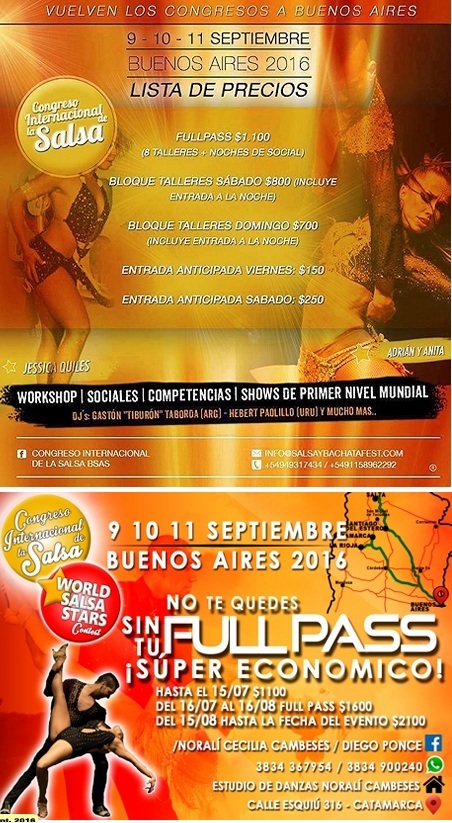
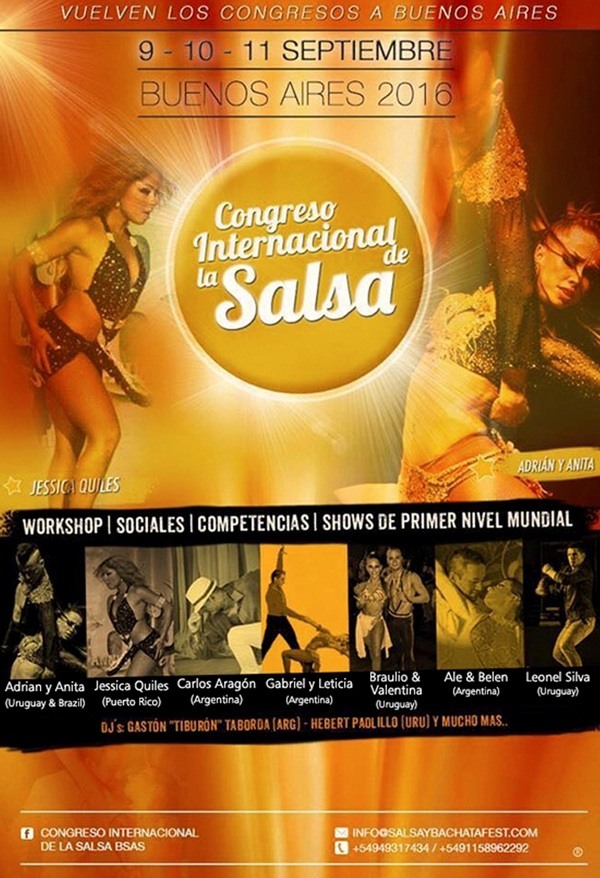
The International Salsa Congress in Buenos Aires, Argentina, runs from September 9th to 11th, featuring three incredible nights and eight workshops—all with high-quality production values ​​designed to make your weekend unforgettable.

International Salsa Congress in Buenos Aires
Congreso Internacional De La Salsa en Buenos Aires - Photo
Congreso Internacional De La Salsa en Buenos Aires – Photo

The participating artists include:

  • Adrián and Anita: five-time world champions (Uruguay and Brazil). Jessica Quiles: world champion in *pasos sueltos* (footwork) (Puerto Rico).
  • Gabriel Salgado and Leticia Beltrán: leading figures in Argentine bachata.
  • Carlos Aragón: Mambo-on-2 director and a key figure in the Argentine dance scene.
  • Braulio Carazo and Valentina Salari: International Bachata Contest (Uruguay) runners-up and leading figures in Uruguayan bachata. Leonel Silva: dancer and leading figure in Uruguayan salsa.
Congreso Internacional De La Salsa en Buenos Aires - Full Pass
Congreso Internacional De La Salsa en Buenos Aires – Full Pass

The event’s choreographers are:

Alumine Oye Chico

Habanna Mix

International Salsa Congress in Buenos Aires - Registration open
International Salsa Congress in Buenos Aires – Registration open

We were also presented with the schedule of activities for the three-day event, as follows:

  • Friday the 9th: Kicking off at 10:30 PM (22:30) with WORLD SALSASTARS (International Group Competition).
  • Saturday the 10th: Four workshops begin at 4:00 PM (16:00). The main congress party starts at 11:00 PM (23:00); guests will enter the VIP area for a surprise opening ceremony, followed by world-class national and international shows and incredible sets by national and international DJs.
  • Sunday the 11th: Four workshops take place starting at 4:00 PM (16:00), followed by the final party opening in the evening, marking the conclusion of the Salsa Congress.
International Salsa Congress in Buenos Aires - Boxes Vip
International Salsa Congress in Buenos Aires – Boxes Vip
International Salsa Congress in Buenos Aires - 2
International Salsa Congress in Buenos Aires – 2

Here is how the 2nd Edition of the “Ponce, Cuna de la Salsa Fest” Unfolded

The 2026 Ponce Cuna de la Salsa Fest honored the work of Don Tite Curet all weekend long.

The second edition of the Ponce Cuna de la Salsa Fest drew and welcomed more than 30,000 attendees to the Ciudad Señorial (The Majestic City), according to reports from the mayor’s office. The festival, which paid tribute to Don Tite Curet Alonso on the occasion of his centennial, took place at the Héctor Lavoe Stage inside the La Guancha Recreational and Cultural Complex, keeping salsa fans captivated throughout the entire weekend.

Willie Rosario
Willie Rosario

On Friday, July 31, 2026, the opening day kicked off right on schedule, delivering an organized, top-tier lineup.

El Junte Ponceño, under the direction of Julito Alvarado accompanying Dakota Flores, Kriptony Texeira, and Wito Colón opened the show, making it clear why Ponce retained its title as the “Cradle of Salsa” (Cuna de la Salsa) for the second consecutive year. To achieve this, the Ponce-born trumpeter, who is the director of the Juan Morel Campos Music Institute and the musical leader of El Gran Combo de Puerto Rico, assembled a roster of master musicians, including: José “Murcy” Reyes on congas, Richie Carrasco on bongo and cowbell, Pablo Padín on timbales, Reynaldo Burgos on piano, Efraín “Frao” Hernández on bass, Víctor “Yuka” Maldonado on baritone sax, Víctor Vázquez on trombone, Carlos Atiles on trumpet, Francisco Javier Quiñones and Juan Bautista on backing vocals, as well as emerging trombonist Carlos Malavé a recent graduate of the Juan Morel Campos Institute who stepped onto a major international stage within the salsa movement for the very first time.

Don Perignon y La Puertorriqueña

El Junte Ponceño was followed by Charlie Aponte and his orchestra, who, as always, kept the stage ablaze. This set the tone for the grand finale led by Luisito Figueroa’s Orquesta Abran Paso, backing Luigi Texidor, Anthony Colón, and the First Lady of Salsa, Yolanda Rivera.

The second day, Saturday, August 1, featured a stellar lineup: Los Guardiola, Don Perignon y La Puertorriqueña proving themselves to be a world-class orchestra in front of an audience represented by delegations from Italy, Venezuela, Mexico, Spain, Colombia, Peru, Costa Rica, Nicaragua, Argentina, Panama, Ecuador, Japan, and Thailand, along with many Puerto Ricans from across the island and the diaspora. Willie Rosario and his crowd-pleasing band showcased the ever-treasured playing of “Míster Afinque” behind his timbales, handing off the drumsticks to his grandson, Yoaquím Cintrón Rosario, between songs. The grand finale of the second night was delivered by Moncho Rivera, who faithfully upheld the legacy of El Sonero Mayor, blending in his now extensive repertoire as always. The municipal administration ensured smooth traffic flow by establishing designated transportation shuttles into the recreational complex.

multitud
multitud

The third and final day of the 2026 edition of this salsa landmark event kept the genre and its Puerto Rican exponents flying high right from its birthplace, Ponce. This was made possible by the Honorable Mayor of Ponce, Marlese Sifre, the Salsoul team under the programming of Ricardo Padilla-Núñez, and the production of Madera Events. Adding to the musical lineup was a cultural exchange with the city of Cali, featured through the voice of Willy García. The artists who kept the Sunday crowd fully locked into Ponce Cuna de la Salsa Fest mode until the very last minute were Papote y su Grupo Esencia, Bobby Valentín and his orchestra, José Alberto “El Canario”, Luis Enrique, and Andy Montañez and his orchestra. The event closed with a tribute to the late, legendary composer from Guayama, Catalino “Tite” Curet Alonso, featuring the Orquesta del Centenario performing his musical repertoire under the direction of Pete Perignon. They backed an extraordinary lineup of vocalists: Tito Allen, Herman Olivera, Papo Sánchez, Jeremy Bosch, and Caleño singer Willy García.

Carmencita DJ kept the music flowing, staying true to the central theme of the Ponce event and keeping Don Tite Curet’s music playing all weekend long.

Photo of Julito Alvarado: (c) Bella Martínez

All other images: (c) Ciudad de Ponce & (c) Visit Ponce

Bella Martinez Puerto Rico
Also Read: Bella Martínez, Salsa’s Irreverent Writer


  • « Go to Previous Page
  • Page 1
  • Interim pages omitted …
  • Page 12
  • Page 13
  • Page 14
  • Page 15
  • Page 16
  • Interim pages omitted …
  • Page 105
  • Go to Next Page »

International Salsa Magazine (ISM) is a monthly publication covering salsa activities around the world and has been publishing since 2007. It is a worldwide network of volunteers coordinated by ISM Magazine. Together, we work to strengthen salsa events around the world.