• Skip to primary navigation
  • Skip to main content

International Salsa Magazine

  • HOME
  • Previous editions
    • 2026
      • ISM / August 2026
      • ISM / July 2026
      • ISM / June 2026
      • ISM / May 2026
      • ISM / April 2026
      • ISM / March 2026
      • ISM / February 2026
      • ISM / January 2026
    • 2025
      • ISM / December 2025
      • ISM / November 2025
      • ISM / October 2025
      • ISM / September 2025
      • ISM / August 2025
      • ISM / July 2025
      • ISM / June 2025
      • ISM / May2025
      • ISM / April 2025
      • ISM / March 2025
      • ISM / February 2025
      • ISM / January 2025
    • 2024
      • ISM / December 2024
      • ISM / November 2024
      • ISM / October 2024
      • ISM / September 2024
      • ISM / August 2024
      • ISM / July 2024
      • ISM / June 2024
      • ISM / May 2024
      • ISM / April 2024
      • ISM / March 2024
      • ISM / February 2024
      • ISM / January 2024
    • 2023
      • ISM / December 2023
      • ISM / November 2023
      • ISM / October 2023
      • ISM – September 2023
      • ISM – August 2023
      • ISM July 2023
      • ISM Edition June 2023
      • ISM – May 2023
      • ISM April 2023
      • ISM March 2023
      • ISM February 2023
      • ISM January 2023
    • 2022
      • ISM December 2022
      • ISM November 2022
      • ISM October 2022
      • ISM September 2022
      • ISM August 2022
      • ISM July 2022
      • ISM June 2022
      • ISM May 2022
      • ISM February 2022
      • ISM January 2022
    • 2021
      • ISM December 2021
      • ISM November 2021
      • ISM October – 2021
      • ISM September 2021
      • ISM August 2021
      • ISM July 2021
      • ISM May 2021
      • ISM April 2021
      • ISM June 2021
      • ISM March 2021
      • ISM February 2021
      • ISM January 2021
    • 2020
      • ISM December 2020
      • ISM November 2020
      • ISM October 2020
      • ISM September 2020
      • ISM August 2020
      • ISM July 2020
      • ISM June 2020
      • ISM May 2020
      • ISM April 2020
      • ISM March 2020
      • ISM February 2020
      • ISM January 2020
    • 2019
      • ISM December 2019
      • ISM November 2019
      • ISM October 2019
      • ISM Septembre 2019
      • ISM August 2019
      • ISM July 2019
      • ISM June 2019
      • ISM May 2019
      • ISM April 2019
      • ISM March 2019
      • ISM February 2019
      • ISM January 2019
    • 2018
      • ISM December 2018
      • ISM November 2018
      • ISM October 2018
      • ISM September 2018
      • ISM August 2018
      • ISM July 2018
      • ISM June 2018
      • ISM May 2018
      • ISM April 2018
      • ISM March 2018
      • ISM February 2018
      • ISM January 2018
    • 2017
      • ISM December 2017
      • ISM November 2017
      • ISM October 2017
      • ISM September 2017
      • ISM August 2017
      • ISM July 2017
      • ISM June 2017
      • ISM May 2017
      • ISM April 2017
      • ISM March 2017
      • ISM February 2017
      • ISM January 2017
    • 2016
      • ISM December 2016
      • ISM November 2016
      • ISM October 2016
      • ISM September 2016
  • Spanish
  • Download Salsa App
    • Android
    • Apple

Search Results for: Puerto+Rico

Felipe Pirela The Immortal Voice of “The Bolero Singer of the Americas”

A Romantic Music Phenomenon

Few voices in the history of Latin American music have managed to convey melancholy, heartbreak, and love with the depth of Felipe Pirela.

Justifiably known as “El Bolerista de América” (“The Bolero Singer of the Americas”), the Venezuelan performer not only transformed the bolero genre during the 1960s, but also became a cultural icon whose vocal legacy remains an undeniable benchmark for generations to come.

Felipe Pirela
Felipe Pirela: The Immortal Voice of the “Bolerista de América”

A Talent Born in Zulia

Felipe Antonio Pirela Morón was born on September 4, 1941, in the El Empedrado neighborhood of Maracaibo, Zulia State, Venezuela. Raised in a large, humble family, he displayed a natural talent for singing from a very young age.

During his early years, he performed on amateur radio shows in his hometown and joined local groups such as the Orquesta San José and Los Peniques.

It didn’t take long for his extraordinary vocal timbrea lyrical tenor with velvety undertones and flawless pitchto catch the attention of the leading musical directors of the era.

Big Break with the Billo’s Caracas Boys

The year 1960 marked the ultimate turning point in Pirela’s career. Dominican maestro Billo Frómeta, while reorganizing his legendary orchestra, Billo’s Caracas Boys, was searching for a fresh male voice to lead their romantic repertoire. Upon hearing Pirela, he didn’t hesitate to sign him.

Felipe Pirela 2
The Immortal Legacy of an Unforgettable Voice

At just 19 years old, Pirela became the star crooner for the most popular orchestra in Venezuela. During his tenure with Billo’s, his voice immortalized essential classics of the Latin American songbook, including:

  • Ese bolero es mío
  • Únicamente tú
  • Para qué recordar
  • Por la vuelta

The synergy between Frómeta’s orchestral arrangements and Pirela’s dramatic expression sparked a true wave of “Pirelamania” across the country.

International Stardom and Solo Career

In 1963, driven by a desire to expand his artistic horizons, Pirela embarked on a solo career. He moved to Mexico the epicenter of the recording industry at the time where he was warmly embraced by both audiences and music critics.

It was precisely abroad where he was officially dubbed “El Bolerista de América.” Albums like Un solo camino: México solidified his international success.
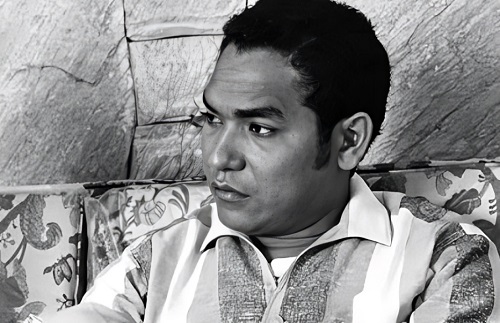
Felipe Pirela 4
Felipe Pirela A Musical Phenomenon

“Pirela packed venues in Santo Domingo, San Juan, New York, Bogotá, and Lima, reaching a level of popularity that rivaled legends like Lucho Gatica, Daniel Santos, and Javier Solís.” His ability to bring drama and elegance to songs by iconic composers such as Rafael Hernández, Pedro Flores, and Mario de Jesús turned him into a record-breaking phenomenon.

Lights, Shadows, and a Tragic End

Despite his overwhelming success on stage, Pirela’s personal life was plagued by controversy, heartache, and misfortune. A tumultuous, failed marriage, along with legal troubles and relentless harassment from the tabloid press of the era, eroded his personal stability and led him to settle outside his homeland.

On July 2, 1972, tragedy violently cut his life short. At the young age of 30, Felipe Pirela was murdered in San Juan, Puerto Rico. The news sent shockwaves across the Americas, leaving an irreplaceable void in romantic music.
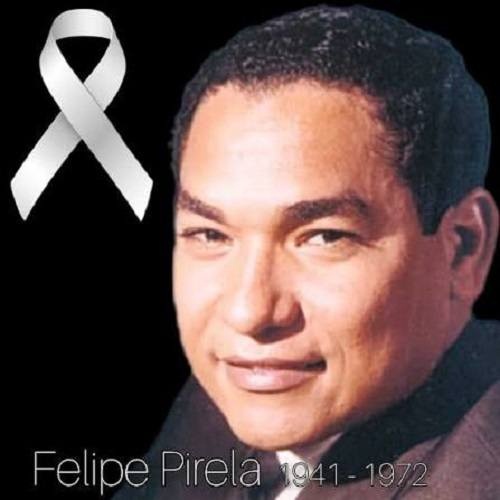
Felipe Pirela 3
On July 2, 1972, tragedy violently cut short his life

The Immortal Legacy of an Unforgettable Voice

More than five decades after his passing, Felipe Pirela remains vibrant in the collective memory. His discography continues to be reissued, honored, and studied by musicologists and music lovers alike.

Pirela possessed not only exceptional vocal technique, but a unique ability to phrase with heartbreak, elegance, and passion. His style directly influenced subsequent stars of salsa and bolero, proving that as long as heartbreak and romance exist, the voice of “The Bolero Singer of the Americas” will continue to resonate with the exact same power.

Read Also: Vicentico Valdés: “The Elastic Voice” of Bolero in Cuba and the Caribbean

Felipe Pirela |El Bolerista de América

Hector Rivera ‘‘Riverita’’ tells the story of how he created Riverita Y Su Orquesta Noche Caliente

After several attempts, we finally managed to meet with bandleader and saxophonist Héctor Rivera, known in the industry as Riverita, and ask him all kinds of questions about his artistic career and his current group, Riverita y Su Orquesta Noche Caliente.

Here are some of the most important issues we touch with the artist during our pleasant conversation:

Riverita posing for the camera

Riverita’s inspiration to become a musician

Despite not having musicians in his family, Riverita remembers growing up in an environment where music was always very present. He was born in New York, but spent long periods living with his grandparents in Puerto Rico while his parents settled down and eventually moved to the “Island of Enchantment” to give their son greater stability.

At his grandparents’ house, he used to listen to great artists of the time performing their unforgettable hits on the radio and one of them was Mon Rivera Y Su Orquesta performing “Karakatis-ki,” a song he never forgot, along with so many other musical pieces that gradually got him interested in this world. When his parents returned to Puerto Rico and he returned to live with them, he started listening to Cheo Feliciano, Pete “El Conde” Rodríguez, Felipe Rodríguez, and many others.

All these rhythms led the boy to play a sort of percussion on the table, a biscuit tin, or anything else that served as an instrument for him at the time.

His passion for music grew to the point that he began studying music education at the Escuela Libre de Música in Ponce and, subsequently at the Inter-American University of Puerto Rico in San Germán, where he studied for only about two years. Although he did not complete his studies, this helped him to understand even more the profession and apply what he learned during those years.

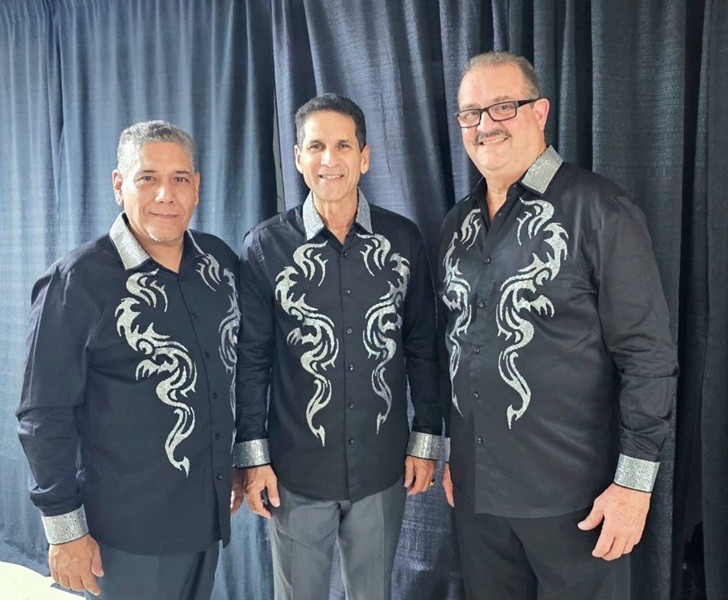
Danny, Riverita, and Jose
Riverita with two maracas

Being in Puerto Rico, he played with a merengue orchestra whose name he does not remember, but with which he learned to play alto saxophone professionally. After that, he moved to the United States permanently.

Year 2013

As he moved to Virginia, he took a long break from music until 2013, which is when his cousin, Michael Valladares, asked Riverita to found an orchestra, which was not in his plans. However, he accepted the challenge and carried forward the project.

Back then, the artist worked as a mailman at a post office, making it difficult for him to reconcile his previous professional activities with the direction of an orchestra. Still, he did not allow that to discourage him and chose to give priority to this new ensemble.

It all started when Michael was looking for an orchestra to perform at a gala event to celebrate 500 years of the city of Melbourne, Florida, so he contacted Riverita and proposed him to create an orchestra in which he would serve as musical director for the sole purpose of performing there. That was when the saxophonist set about finding musicians and producing a repertoire, which was not easy, since he did not know any professional musicians and did not have any arrangements he could use.

Danny, riverita, and Jose
Danny Rivera Jr., Riverita, and Jose Reyes

He was so distressed that he spent sleepless nights thinking about how to proceed to complete the mission entrusted to him. With three months to go, he had no time to spare. That is when he managed to make contact with a group of musicians of different nationalities, of whom only the singer, José Reyes, continues to work with him.

Finally, he relaunched the project with a new group of musicians—since the previous ones had left and called it Orquesta Noche Caliente, a name that it still bears today.

Among the most frequently recurring members, we can mention singer José Reyes, singer Danny Rivera Jr., pianist Kevin Figueroa, and trombonist Derick Harris.

To date, they have recorded three CDs and 26 songs. Some of them are “Noche Caliente,” “En Tiempos de Bolero,” and “Mi Linda Música.” They are also preparing their Christmas song several months in advance and will name it “Rabito de Lechón.”

Read also: Cuban-American dancer and actress Jessica Pacheco presents us her own dance company Flamenco Tropical

Mambo City 5 Star Congress

Europe / United Kingdom / London
28 Apr 2017 – 01 May 2017
Photo 1: Mambo City 5 Star Congress

Mambo City was founded by Robert and Jean White in August 1999, they both started dancing Salsa in 1992 and gained seven years of dance experience in Colombian, Cuban and Cross body Style Salsa before going on to teach, they quickly established themselves as teachers, promoters and gained a reputation for running great events.

They were introduced to ‘cross-body’ Salsa by Pedro Gomez, a Puerto Rican Instructor based in Italy. This lead them to go on to take classes with many famous US proponents of that style including Eddie Torres, Nelson Flores, Tomas Guerrero, Frankie Martinez and Delille Thomas. Classes with these instructors lead them to promote workshops in the UK and the production of the inspirational video in 2001, “MamboCity Presents SantoRico”. This was instrumental in inspiring a generation of dancers from the early 2000’s, helping to shape cross body dancing in the UK and further afield.

Photo 2: Mambo City 5 Star Congress

The London 5 Star Salsa Congress

In 2003, they started their International festival, The London 5 Star Salsa Congress, currently the longest running Congress in the UK, since establishing this Festival they have gone on to collaborate with other promoters and dancers in organizing events around the UK and abroad and continue to work regularly with international performers, Instructors, bands and Djs.

Both Robert and Jean teach at Mambo City venues and Robert also DJs (as Cruz and Bobby Blanco). He has a diverse musical background and is a former session musician who has played Reggae and R&B on a semi-professional basis.

Photo 3: Mambo City 5 Star Congress

Come and experience 2 Days of Dance Workshops catering for all levels, from absolute Beginners to Advanced, in various dance styles: Cuban Son, Afro Cuban, Rumba, Cha Cha Cha, Cross Body Style Salsa “On1?, New York Style Mambo “On2?

  • Address: Radisson Blu Edwardian, Heathrow Airport, 140 Bath Road, Hayes, Middlesex, UB3 5AW, England
  • Phone: +44 (0)7050 696 480
  • Location: UK
  • Email: [email protected]
Photo 4: Mambo City 5 Star Congress

Enjoy the Tempo Latino 31st edition with the best of Latin music in Europe

That has been a very long year waiting a new edition of the biggest Latin music event in Europe! This July, fans of our music will finally be able to enjoy the 31st edition of Tempo Latino, which is one of the largest international festivals of Afro-Cuban, Afro-Caribbean, and Latin music. During the four days of the festival, the audience can enjoy the best of salsa, Latin jazz, mambo, timba, and fused rhythms every year.

This festival is usually held in the small village of Vic-Fezensac in southwestern France, since 1994, which is when its first edition took place. Nowadays, the event is typically held during the last days of July and the first days of August. 

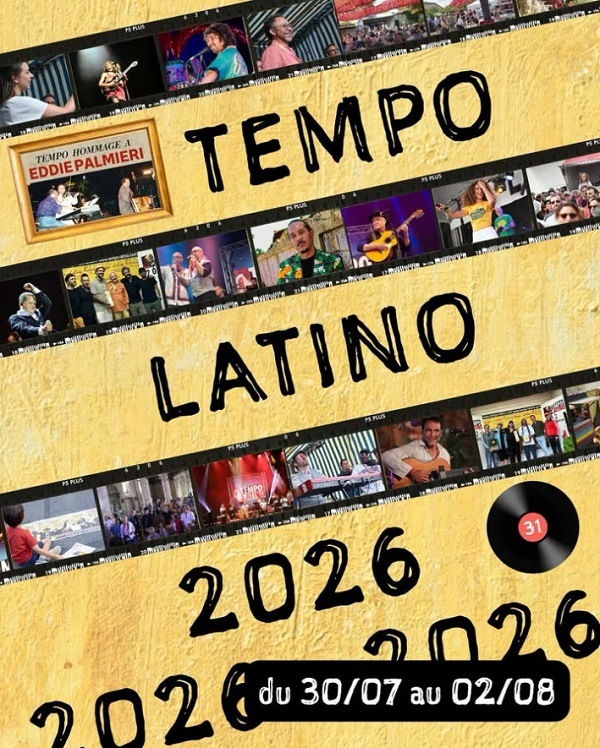
Tempo Latino 2026
One of the arts for Tempo Latino 2026

A little of the history of Tempo Latino

As mentioned previously, the festival began, and is still held, in Vic-Fezensac, a small village of around 3,700 inhabitants located in the Gers, which is well known for its bullfighting tradition. This association was founded in 1993 by music lover and Latin music DJ Eric Duffau, an artist who sought a different alternative to traditional commercial communities and aimed to bring traditional musical roots to the heart of Europe.

The first edition, which took place in the summer of 1994, aimed to transform the small French village into the mecca of salsa, Cuban son, and Afro-Latin jazz for four days a year.

An initiative that began as a small project has grown into one of the biggest salsa festivals of the world, which already enjoys the support of 500 local volunteers who organize into neighborhoods and homes. To this day, Tempo Latino has achieved a perfect balance between an ambitious production and a local and friendly atmosphere. It should also be stressed that it has been held on a regular basis since 1994, except for 2020 and 2021 due to the COVID-19 pandemic.

Evolution and golden age

The festival expanded so much thanks to its authenticity and freshness that it has come to be known as “The One” and has established itself as a mandatory stop for the greatest Latin music glories, including Celia Cruz, Eddie Palmieri, Rubén Blades, Willie Colón, Tito Puente, Los Van Van, El Gran Combo de Puerto Rico, La Sonora Ponceña, Oscar D’León, Cheo Feliciano, Ismael Miranda, Johnny Pacheco, and many others.

Maite Hontelé Y La Novia

Similarly, since its foundation, the festival has also served as a springboard for new musical talent, including solo artists and groups performing salsa brava, Latin hip-hop, Afro-Cuban funk, and other genres from places such as Cuba, Colombia, Venezuela, Puerto Rico, and New York. 

Activities beyond the concerts

Tempo Latino has come to a point where it is no limited only to stage performances, which are still the main attractions for attendees. They also offer dance workshops, which are designed for both amateurs and professional dancers interested in learning more about the roots and evolution of Latin rhythms.

Similarly, the festival also offers music and percussion workshops, introducing both amateur and professional musicians to important topics such as the clave, rhythm, and a bit of the history of Latin and Afro-Cuban music. In the case of percussion workshops, instructors teach students how to play the congas, timbales, bongos, and campana. As for wind instruments and musical combos, classes are given in trombone, trumpet, and saxophone.

We also cannot fail to mention the international market, where attendees can buy all sorts of things from our countries, such as instruments, clothing, traditional cuisine, handicrafts, souvenirs, and more.

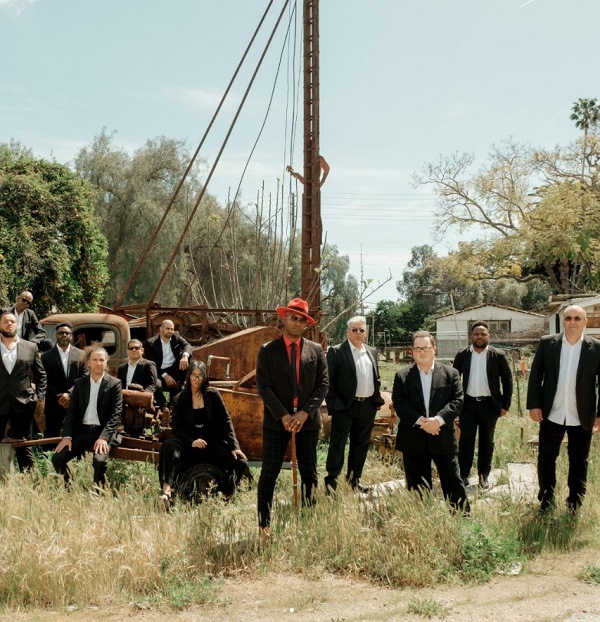
Orquesta Akokan, which is going to perform in this edition

Stages and structuring of the festival

Another of the great attractions of Tempo Latino is its “geo-rhythmic” network of locations, where you can find both concerts and peripheral activities that can be enjoyed simultaneously. Below are some of those that will be available for the 2026 edition:

  • Tempo Arena: This stage is located in the Vic-Fezensac bullring, known for its open acoustics and intense energy every night of the festival. Among the top artists that will perform there are Maïté Hontelé Y La Novia, Orquesta Akokán (Friday, July 31), Matt Bianco, Rogê (Saturday, August 1), Alfredo Rodríguez, and Tony Succar (Sunday, August 2).
  • La Conga (Tempo Social Club): This other stage is also very popular because it has a beachy vibe with real sand and operates from early morning until late into the night. As for the artists who will be performing, we can mention the queen of Argentine electronic cumbia, La Yegros, DJ Çarava, and DJ Lafuriosa.
  • Camp Tempo: This open-air format is packed every year with new musical proposals, alternative fusions, brass bands, and street groups that give life to the village during the day. In the 2026 edition, some of the alternative bands will include Chicos y Méndez, Chicharrón, Pixvae, and Aguanomas. 
  • Saint-Pierre Church: This venue is solely and exclusively reserved to small, intimate acoustic concerts where, as a general rule, only pianists and Latin jazz artists perform in the festival’s most solemn format.

Read also: How Artificial Intelligence changed the music biz forever

Angie Machado, “El Colorao” The Trumpeter’s Trumpeter and a Living Musical Legend

A legacy carved in brass and talent.

The history of Latin music especially Salsa and Afro-Cuban Jazz could never be written without mentioning the bright, precise, and melodic tone of a trumpet that has shaped the course of countless hit records.

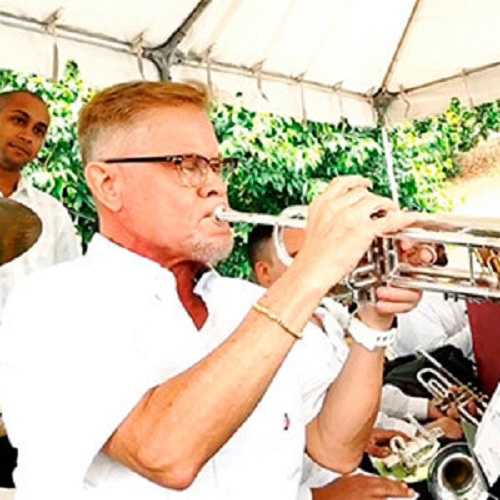
Angie Machado Un legado tallado en bronce y talento

That signature sound belongs to one man: Ángel Vicente Machado Santiago, known universally throughout the artistic community as Angie Machado.

On June 23, 2026, the music world dressed to the nines to celebrate the birthday of this titan. Born in 1954 in the picturesque municipality of Arroyo, Puerto Rico, Angie Machado has not only witnessed the evolution of tropical music over the last five decades; he has been one of its foundational architects.

His career stands as living proof that musical genius, when cultivated with rigorous discipline, transcends passing trends and becomes legendary.

The Forging of a Virtuoso

His path to excellence was no accident. From a very young age, Angie understood that a natural gift for music required a solid vehicle for expression. His formal training began at the prestigious Escuela Libre de Música, a breeding ground for talent in Puerto Rico, where he developed the foundational skills to understand the language of brass and wind instruments.

Later, he made the leap to the Conservatory a space where, beyond musical theory, he absorbed a philosophy of life: discipline as the only route to mastery.

Angie Machado y Dj Andy Rodriguez

Under the tutelage of rigorous maestros and fueling his growth by analytically listening to history’s greatest trumpet virtuosos, Machado understood that music is not just played; it is studied, reflected upon, and felt deeply.

Those grueling hours of constant practice, where the sound of his trumpet filled every corner, became the bedrock of the “old school” style that distinguishes him today.

That school didn’t just teach notes; it taught phrasing, style, respect for the arrangement, and, above all, the intuition to know when the trumpet should lead and when it should elegantly embrace the melody.

The Trumpet That Defined an Era To speak of Angie Machado is to speak of the history of Salsa itself. His talent was never confined to classrooms or local bands; he rapidly became an indispensable session musician.

If you look at the liner notes of the most iconic albums that defined the “Golden Era” of Salsa, you are almost guaranteed to find his name in the credits.

Dj Augusto Felibertt y Angie Machado

His ability to adapt to diverse styles from the required grit in Willie Rosario’s orchestra or the explosiveness of Tommy Olivencia, to the subtle elegance demanded by Gilberto Santa Rosa or the unmatched swing of Bobby Valentín positioned him as the most sought-after trumpet player in the industry.

The roster of icons with whom he has shared the stage and the studio is, quite simply, staggering. He has been the musical partner-in-crime to Cheo Feliciano, the soul of Frankie Ruiz’s recordings, the technical and creative backbone for Eddie Palmieri, and a brother-in-arms to Oscar D’León.

His trumpet has traveled the world, backing maestros like Justo Betancourt, Andy Montañez, Lalo Rodríguez, Paquito Guzmán, and Viti Ruiz, as well as a powerhouse of artists ranging from traditional sounds to contemporary fusions, including Luis Enrique and Alex León.

A Living Legend What makes Angie Machado a truly singular figure is not just his résumé, but his enduring relevance. In an industry in constant flux, he has preserved the absolute integrity of his sound.

His “privileged old-school” pedigree doesn’t mean he is stuck in the past; it means he possesses a technical foundation so robust that it allows him to collaborate seamlessly with any generation of musicians.

To those who know him, Angie is not just the trumpet player who can nail a recording session in minutes with breathtaking precision; he is a silent mentor a man who has watched the decades roll by while maintaining the same humility and love for the instrument he had when he first started out in Arroyo.

As we celebrate another year of his life, we are not just celebrating an exceptional musician; we are honoring a living piece of our cultural heritage.

Angie Machado reminds us that behind every great song that has made us dance or cry, there is a human being whose dedication and discipline have turned the brass of a trumpet into pure poetry.

Also Read: The King of Bass Mr. Bobby Valentin

  • « Go to Previous Page
  • Page 1
  • Interim pages omitted …
  • Page 14
  • Page 15
  • Page 16
  • Page 17
  • Page 18
  • Interim pages omitted …
  • Page 105
  • Go to Next Page »

International Salsa Magazine (ISM) is a monthly publication covering salsa activities around the world and has been publishing since 2007. It is a worldwide network of volunteers coordinated by ISM Magazine. Together, we work to strengthen salsa events around the world.